Search This Blog

Saturday, April 19, 2025

DOJ asks Supreme Court to reject ACLU request to pause deportations

 The Trump administration asked the Supreme Court on Saturday afternoon to reject an emergency request to temporarily pause the use of the Alien Enemies Act to deport migrants to El Salvador swiftly detained in portions of Texas.

In a court filing, Solicitor General D. John Sauer asked the high court to “dissolve its current administrative stay” issued early Saturday and to allow “lower courts to address the relevant legal and factual questions.”

The emergency order temporarily blocks the deportations until the high court resolves the American Civil Liberties Union’s (ACLU) emergency appeal, filed hours before the pause over concerns that more deportation flights were imminent.

Justices Clarence Thomas and Samuel Alito, two of the court’s leading conservatives, dissented.  

In Sauer’s filing, he claimed that lawyers for the migrants had “improperly skilled over the lower courts,” making their request that the Supreme Court step in “fatally premature.”

He also claimed “the government has provided advance notice” before commencing removals, giving detainees “adequate time to file” to file a petition disputing the removals. Sauer said the government had agreed not to remove detainees who had filed those claims.

The ACLU simultaneously asked several courts to immediately intervene Friday, warning that the Venezuelan migrants could otherwise be given life sentences in a notorious Salvadoran megaprison without the opportunity for judicial review. 

“The Government is directed not to remove any member of the putative class of detainees from the United States until further order of this Court,” the Supreme Court’s order reads. 

The class extends to any migrant detained in the Northern District of Texas who is being removed under the 18th century Alien Enemies Act. It does not apply elsewhere, though judges overseeing separate cases have temporarily blocked deportations for those detained in the Southern District of New York, the District of Colorado and the Southern District of Texas.  

The 1798 law enables migrants to be summarily deported amid a declared war or an “invasion” by a foreign nation. The law has been leveraged just three previous times, all during wars, but Trump contends he can use it because the Venezuelan gang Tren de Aragua is effectively invading the U.S.

The administration first invoked the law last month to deport more than 100 migrants to a Salvadoran megaprison. On Friday, the ACLU pulled out all the stops as it raised alarm that another wave of deportations was actively underway, saying the administration was already busing migrants to the airport. 

https://thehill.com/regulation/court-battles/5257495-doj-supreme-court-reject-aclu-request-to-pause-deportations/

Can Trump fire Powell? The Supreme Court could make it easier

 President Trump is threatening to remove Federal Reserve Chair Jerome Powell. Whether such a move is legal could soon be decided by the Supreme Court.

The president has asked the nation’s highest court in an emergency petition to endorse his decision to fire the chairs of two other independent agencies — the National Labor Relations Board and the Merit Systems Protection Board.

It is a direct challenge to a 90-year-old Supreme Court precedent limiting the power of the president to dismiss independent agency board members except in cases of neglect or malfeasance. If that precedent falls, a Powell firing could be a lot easier to pull off at the Fed.

Trump has also delivered pink slips to leaders of other federal agencies, including the Federal Trade Commission and the Federal Election Commission, and those firings are also being challenged in lower courts.

"There is no legal difference between Jerome Powell and me," one FTC board member let go by Trump told Bloomberg. "If the president can legally remove me, he can legally remove Jerome Powell."

The president is now musing publicly about his wish to show Powell the door, saying this week in a post to Truth Social that his "termination cannot come fast enough" and telling reporters, "If I want him out, he’ll be out of there real fast, believe me."

WASHINGTON, DC - NOVEMBER 02: (L to R) U.S. President Donald Trump looks on as his nominee for the chairman of the Federal Reserve Jerome Powell takes to the podium during a press event in the Rose Garden at the White House, November 2, 2017 in Washington, DC. Current Federal Reserve chair Janet Yellen's term expires in February. (Photo by Drew Angerer/Getty Images)
U.S. President Donald Trump looks on as his nominee for the chairman of the Federal Reserve Jerome Powell takes to the podium during a press event in the Rose Garden at the White House, in 2017. (Photo by Drew Angerer/Getty Images) · Drew Angerer via Getty Images

Trump has held private talks with a potential replacement for Powell, former Fed governor Kevin Warsh, the Wall Street Journal reported, but some of Trump’s economic aides have advised against removing Powell before his term is up in May 2026.

National Economic Council Director Kevin Hassett told a reporter Friday that Trump and his team were indeed studying whether to fire Powell.

Powell, for his part, has repeatedly stressed that his firing is not permitted by law — and did so again this past week.

He acknowledged he is following the case now before the Supreme Court testing Trump’s ability to remove board members at other independent agencies, but Powell said, "I don’t think that’s a case that will apply to the Fed."

Nonetheless, the central bank is "monitoring it carefully."

The only language in law pertaining specifically to the removal of Fed board members can be found in Section 10 of the Federal Reserve Act. The law states that each member of the board shall hold office for 14 years "unless sooner removed for cause by the President."

The statute doesn't have any language that specifically addresses the chairman of the Board of Governors, nor does it detail what exactly constitutes "for cause." The term has been interpreted in legal rulings to mean “inefficiency, neglect of duty, or malfeasance."

From FDR to Trump

Trump’s legal authority to fire Powell and other agency chiefs is no sure thing, according to constitutional law experts who note that a complicated mix of legal, political, and financial risks makes it hard to handicap whether Trump would get his way.

Key to Trump’s argument that he has the power to remove board members of independent agencies is Article II of the US Constitution. Article II vests "executive power" in the president to "take care that the laws be faithfully executed."

The Supreme Court’s first major case to wrestle with the president's Article II removal power goes back to the 1920s in a case titled Myers v. United States.

There, the court rejected a 1876 law that empowered the Senate to protect US postmasters from being fired by the president, ruling that the law infringed on the president’s Article II power.

But a decade later, the Supreme Court clamped down on the president's power in a 1935 case titled Humphrey's Executor v. US that challenged President Franklin Roosevelt’s termination of the US Federal Trade Commissioner.

The court held that the president’s authority to terminate agency officials at will was limited to purely executive officers, and not those leading independent agencies that engage in regulation and adjudication.

Franklin Delano Roosevelt (1882-1945), 32nd President of the United States of America (1933-1945), giving one of his 'fireside' broadcasts to the American nation. (Photo by: Photo12/Universal Images Group via Getty Images)
Franklin Delano Roosevelt, 32nd President of the United States. (Photo by: Photo12/Universal Images Group via Getty Images) · Photo 12 via Getty Images

The court distinguished between executive branch officers within agencies that carried out legislative and judicial functions — such as the Securities and Exchange Commission and the Federal Trade Commission — and those that did not.

Congress, the court said, had power to limit the president's removal power over those officials "for cause" — then describing that term to mean inefficiency, neglect of duty, or malfeasance.

That precedent was stable for five decades. President Carter even suggested the expansion of removal protections to protect the US attorney general from being terminated by the president at will, according to University of Michigan law professor Julian Davis Mortenson.

But in the 1980s, he said, things began to shift.

In a 1988 case titled Morrison v. Olson, the Supreme Court was asked to decide the president’s authority to terminate the independent counsel Alexia Morrison, who launched an investigation into President Reagan’s Assistant Attorney General Ted Olson.

Olson allegedly lied to Congress concerning a document provided to the Environmental Protection Agency.

U.S. Supreme Court Justice Antonin Scalia speaks at a Reuters Newsmaker event in New York September 17, 2012. Scalia on Monday escalated a war of words with a prominent appeals court judge, saying the judge lied in a recent criticism of Scalia's judicial philosophy. Scalia, 76, the longest-serving justice and a leading conservative on the court, said Judge Richard Posner, of the 7th U.S. Circuit Court of Appeals, lied in a review in August of a book co-authored by Scalia. Picture taken September 17, 2012. REUTERS/Brendan McDermid (UNITED STATES - Tags: POLITICS CRIME LAW)
U.S. Supreme Court Justice Antonin Scalia in 2012. Photo: REUTERS/Brendan McDermid · REUTERS / Reuters

The court upheld Congress’s removal limitation under the Ethics in Government Act of 1978, reasoning that Congress could protect the special counsel and the role’s quasi-prosecutorial functions.

But that decision didn’t sit well with ideologically conservative jurists, lawyers, and politicians. They focused instead on an argument made in a lone dissent from Justice Antonin Scalia, who argued the president has to be able to control all uses of the executive power.

Scalia reasoned that if the president can’t fire someone, then the president can’t control how that person implements laws.

There has been persistent debate ever since about whether Scalia’s theory can hold up.

"There's been a lot of embracing that's already happened of Scalia’s theory," said Mortenson, the professor at the University of Michigan’s School of Law.

Another decision in 2010, Free Enterprise Fund v. Public Company Accounting Oversight Board, confirmed the court’s position that Congress could protect certain agency officials. But in 2020 the Supreme Court did give Trump the power during his first term to fire the head of the CFPB.

'No such thing as an independent agency'

Mortenson and Duke Law’s Jeff Powell said only time will tell how today’s Supreme Court would rule.

Some legal scholars, they said, are confident the court would shy away from handing the president enough power to disrupt the agency that controls the nation’s money supply.

Every time the modern court has been presented an opportunity to expand the president’s removal power, Mortenson said, it has carved out exceptions that suggest some reluctance by at least some of the justices to take the theory all the way to its completely logical conclusion.

Powell, the Duke professor, said he thinks there’s an argument that the court might make another exception, this time for the Fed chair.

FILE PHOTO: The Federal Reserve building is seen in Washington, U.S., January 26, 2022. REUTERS/Joshua Roberts/File Photo
The Federal Reserve building in Washington. REUTERS/Joshua Roberts/File Photo · Reuters / Reuters

"The thinking is that under the Constitution, finances are the crucial point at which Congress controls the executive, because it’s Congress alone that can raise money, and it's Congress alone that can dispense money," Powell said.

"And the Fed is the central mechanism by which Congress regulates financial matters."

But he isn’t convinced that the court would hold on to the exact reasoning that past justices relied upon to Congress over the president.

"Don’t be fooled by talk of independent agencies," Powell said. "I'm quite sure that the modern Supreme Court majority would say there's really no such thing as an independent agency."

The Fed chair this past week was adamant that the independence of his agency was assured.

It is a "matter of law," he said, and something that is "very widely understood and supported in Washington and in Congress, where it really matters."

https://finance.yahoo.com/news/can-trump-fire-powell-the-supreme-court-could-make-it-easier-133026526.html

US And Iran Conclude Second Round Of Nuclear Talks, Agree To Third

 by Andrew Thornebrooke via The Epoch Times,

Iran and the United States have ended their second round of talks aimed at curbing Iran’s nuclear weapons development and agreed to hold a third next week.
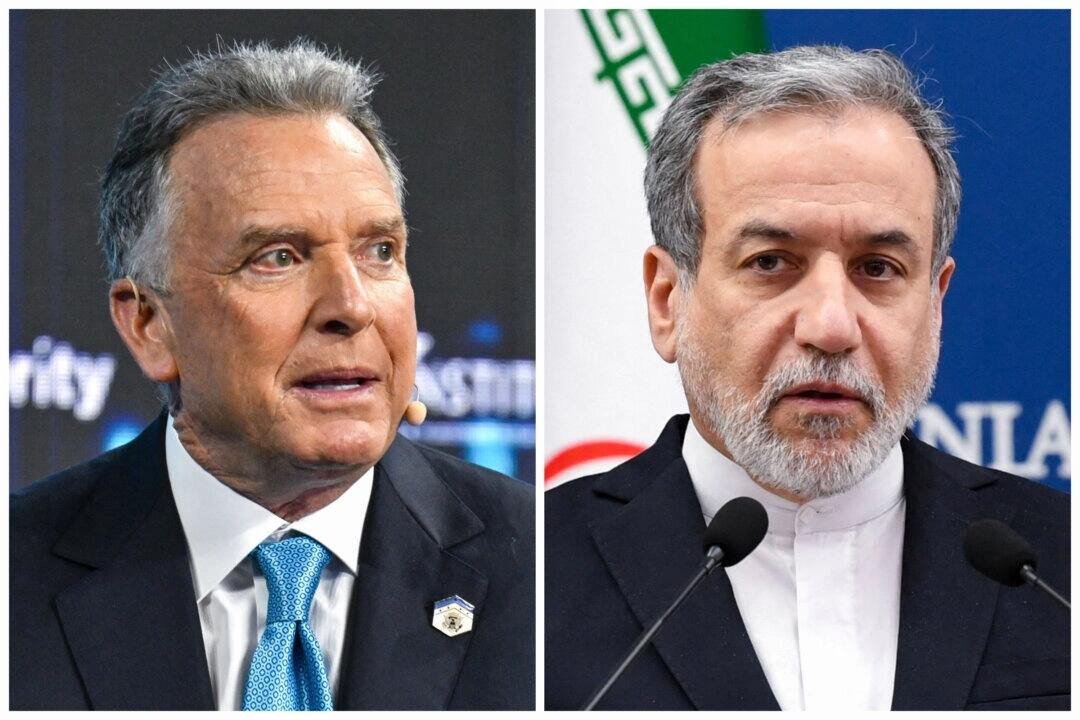
Iran’s Foreign Minister Abbas Araghchi and presidential envoy Steve Witkoff held the second round of talks in Rome on April 19.

As with the first round of talks, which were held in the Omani capital of Muscat last week, the pair negotiated indirectly through an Omani official who shuttled messages between the two sides.

Witkoff and Araghchi interacted with one another briefly at the end of the first round of talks, but officials from the two countries have not held direct negotiations since 2015 under President Barack Obama.

The pair agreed on Saturday to meet again in Oman on April 26. Additional experts from both sides will also meet between now and that time, suggesting that there has been some movement in the second round of talks between the two countries.

The experts will discuss details of a possible deal on a technical level, according to Iran.

“The talks were held in a constructive environment and I can say that is moving forward,” Araghchi told Iranian state television. “I hope that we will be in a better position after the technical talks.”

The high-stakes talks largely hinge on Witkoff and Araghchi’s ability to find common ground on Iran’s nuclear program and regional security issues.

Araghchi said ahead of the talks that Tehran was committed to diplomacy and called on “all parties involved in the talks to seize the opportunity to reach a reasonable and logical nuclear deal.”

“Such an agreement should respect Iran’s legitimate rights and lead to the lifting of unjust sanctions on the country while addressing any doubts about its nuclear work,” Araghchi said, according to Iranian state media.

Tehran has sought to tamp down expectations of a quick deal, however, and Iranian Supreme Leader Ayatollah Ali Khamenei said this week he was “neither overly optimistic nor pessimistic” that a deal would be reached.

Iran’s Nuclear Weapons Capability in Focus

It is unclear what the current contours of negotiations hinge on. Iranian officials last week said the initial rounds of talks would be focused on laying out each party’s position and any red lines.

To that end, U.S. President Donald Trump has made preventing Tehran’s acquisition of a nuclear weapon a priority of his foreign policy platform. He appears willing to allow the Middle Eastern country to maintain its nuclear power facilities, provided its uranium enrichment is brought to lower thresholds.

“I’m for stopping Iran, very simply, from having a nuclear weapon,” Trump told reporters at the White House on Friday. “They can’t have a nuclear weapon. [But] I want Iran to be great and prosperous and terrific.”

Trump first sent a letter to Khamenei in March, suggesting a new deal to curb Iran’s nuclear program, which Tehran refused at the time.

Since then, Trump has doubled down on his stance that the United States “can’t let [Iran] have a nuclear weapon” and has threatened to use military action against Iran if a deal is not reached.

“If they don’t make a deal, there will be bombing, and it will be bombing the likes of which they have never seen before,” Trump wrote in a March 30 social media post.

Trump also restored a “maximum pressure” campaign on Tehran in February, reimposing sanctions on Tehran as part of the wider effort to push Iran to the negotiating table.

Tehran does not have nuclear weapons and has continued to enrich uranium at near weapons-grade levels since Trump unilaterally terminated a bilateral nuclear agreement in 2018 that had placed limits on such activities. At the time, Trump criticized the deal as “one of the worst and most one-sided transactions the United States has ever entered into” and said it “gave the Iranian regime too much in exchange for too little.”

A report by the United Nations’ nuclear watchdog released early in the year suggested that Iran had accelerated its production of near-weapons-grade uranium to such an extent that Tehran could likely produce about a half dozen warheads if it so chose.

Tehran maintains that its nuclear program is peaceful and that it is willing to negotiate some curbs in return for the lifting of sanctions, but wants watertight guarantees that Washington will not renege again.

46 Years of Enmity

Overcoming the historical enmity between Washington and Tehran is no easy feat. Relations between the two powers have been antagonistic for nearly half a century.

Iran was once one of the United States’ top allies in the Middle East. The Iranian monarchy purchased American-made weapons and was seen by U.S. leaders as an authoritarian but modernizing force that provided a bulwark against the spread of communism.

That relationship came to an end in 1979, when Iran’s last ruling monarch fled the nation amid popular uprisings, and power was seized by Islamist forces. Since that time, the Islamic Republic of Iran has opposed the secular modernism associated with the United States and called for the destruction of the nation of Israel.

Tensions between Washington and Tehran have reached a near breaking point in recent years, however, owing in part to Iran’s financial and military support of terror groups including Hamas in the Gaza Strip, Hezbollah in Lebanon, and the Houthis in Yemen.

Tehran has also signed extensive military technology agreements with Russia in recent years and conducted oil-for-services deals with China that skirt international sanctions. Though it is unclear to what extent, if any, those issues will weigh on current talks.

https://www.zerohedge.com/geopolitical/us-and-iran-conclude-second-round-nuclear-talks-agree-third