Search This Blog

Thursday, August 21, 2025

US DOJ to back off money transmitter cases in shift backed by crypto

 The U.S. Justice Department does not plan to target software developers that create decentralized platforms for transmitting cryptocurrencies without criminal intent, a Justice official said on Thursday.

Marking the latest sign of the U.S. government's changing views on crypto, acting Assistant Attorney General Matthew Galeotti of the DOJ's criminal division said the department will move away from bringing charges over failure to register as a money transmitter business.

"Our view is that merely writing code, without ill-intent, is not a crime," Galeotti said in remarks prepared for a crypto summit in Wyoming.

Money transmitters, such as Western Union and payment apps like Venmo, need to be licensed and follow certain rules for vetting customers and reporting suspicious activity to prevent money laundering.

Such rules have become a flashpoint for the crypto sector, especially for decentralized exchanges which often say they have no visibility or oversight over transactions on their platforms.

A jury earlier this month found a co-founder of Tornado Cash, a firm which makes cryptocurrency transactions harder to track, guilty of a conspiracy to operate an unlicensed money transmitting business. Anti-corruption advocates say such firms make it easier to launder illicit funds.

But critics of the case said the co-founder, Roman Storm, merely created the computer code. The jury in the case deadlocked over whether he was guilty of money laundering and sanctions evasion.

Those charges were brought by the U.S. attorney's office in Manhattan under the Biden administration. The DOJ under Republican President Donald Trump, whose family has been building a crypto business, has dramatically shifted its approach to the crypto sector.

The Justice Department has disbanded its crypto enforcement team, and the U.S. Securities and Exchange Commission, a civil regulator, has walked away from a number of cases against crypto firms and executives.

https://ca.news.yahoo.com/us-doj-back-off-money-183819927.html

FTC Chair warns tech firms not to weaken data privacy to comply with EU, UK laws

 The chairman of the U.S. Federal Trade Commission warned Apple, Alphabet, and other technology companies on Thursday that efforts to comply with British and European digital content laws could violate U.S. law if they weaken privacy and data security protections for American users.

FTC Chairman Andrew Ferguson expressed concerns about the EU Digital Services Act, and the UK Online Safety Act, which are aimed at cracking down on illegal and harmful online content, and the UK Investigatory Powers Act.

"Foreign governments seeking to limit free expression or weaken data security in the United States might count on the fact that companies have an incentive to simplify their operations and legal compliance measures by applying uniform policies across jurisdictions," Ferguson said.

The letters are part of a broader Trump administration effort to push back on foreign regulatory requirements.

On Tuesday, U.S. officials said Britain had dropped its demand for Apple to provide a "backdoor" that would have enabled access to American citizens' encrypted data. Earlier in August, Reuters reported that the U.S. had instructed its diplomats in Europe to lobby against the Digital Services Act.

Ferguson called tech giants Apple, Alphabet, Amazon, Microsoft, and Meta, as well as smaller companies including X, Signal and Slack to meet with him and discuss how they plan to balance U.S. compliance with competing pressures from abroad.

https://www.yahoo.com/news/articles/ftc-chair-warns-tech-firms-155324064.html

Hunger Games: AI’s Demand for Resources Poses Promise and Peril to Rural America

by James Varney

 HOLLY RIDGE, La. – More than three millennia ago, indigenous people built a massive ceremonial mound a few miles from here, an engineering marvel called Poverty Point and one of the oldest known building projects in North America. Today, this is ground zero for what may prove a defining feature of the 21st century’s landscape.

Meta, the parent company of Facebook, is constructing a gargantuan, $10 billion data center that tech executives, lawmakers, and business leaders say will bring much-needed prosperity to this rural area in northeast Louisiana. Set to be operational by 2030, the project has also disturbed local homeowners and drawn opposition from environmental and government activists who worry that it will suck up vast resources, especially water and energy, from surrounding communities. 

As tech companies plan to build more data centers around the country to fuel the boom in artificial intelligence, this massive project provides a window into the issues swirling around what many see as the next phase of the digital revolution. 

Meta’s Hyperion project in Richland Parish will be the company’s biggest in a constellation of 28 centers across 19 states, Europe, and Singapore. With tech giants investing heavily in AI, it is estimated that the current crop of more than 5,000 U.S. data centers, which first sprouted to handle cloud computing, represent just half of what will be needed as AI brings radical change to computing, education, medicine, and other fields by mid-century.

AP
Mark Zuckerberg has dubbed 2025 “the defining year of AI.”

Already, millions of Americans have signed up for various AI programs, such as ChatGPT (Microsoft) or Grok (Elon Musk) or Meta AI, and last month, the Trump administration released an “American AI Action Plan.” Meta co-founder Mark Zuckerberg has dubbed 2025 “the defining year of AI,” and, as if to prove it, his company is spending $65 billion this year building out its platform.

Although AI is not producing the profits Wall Street craves, Meta, the parent of Facebook, Instagram, and WhatsApp, and other big tech stocks continue to soar. Just as cloud computing services have become major profit generators for Amazon, Apple, Meta, and others, AI is expected to bring billions into individual and corporate accounts.

AI’s Energy Appetite

Whether AI becomes the amoral killer of the human race, as Hollywood and many futurists have envisioned, or improves the lives of billions of people, as its champions insist, there is no disputing that data centers are insatiable in their power demands. The high-tech warehouses require energy to operate millions of GPU servers stacked in rows that stretch out like banks of speakers at a Rolling Stones concert, as well as their futuristic air conditioning and water-cooling systems. By 2028, the centers, which are also known as “hyperscalers,” are expected to consume 12% of all U.S. energy, or more than California, Florida, and New Jersey combined.

The scale of the operation here is immense. At the moment, Hyperion sprawls over 2,250 acres, but eventually it is expected to cover six square miles of the flat American plain that begins on the west bank of the Mississippi River. Holly Ridge is so small its population is not listed in the most recent census, but the data center plot here could contain Heathrow International Airport.

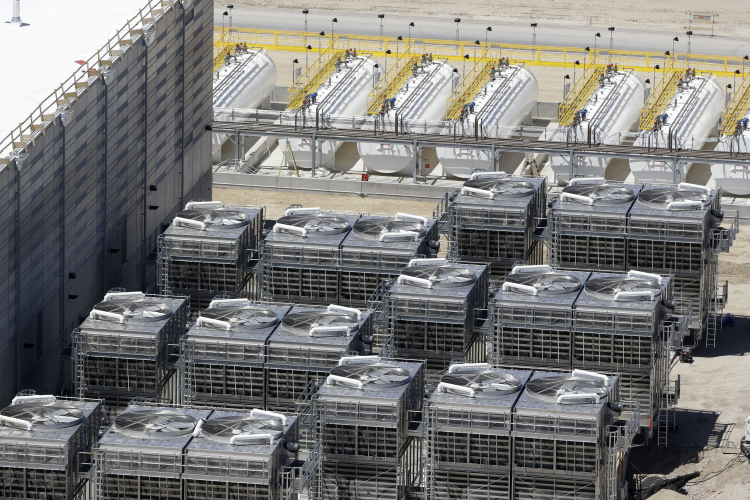
The centers also require lakes of water. As the servers run nonstop, they are sometimes surrounded by a network of cooling tubes and towers of chilled water to absorb heat. In some cases, the servers even sit in a pool of liquid that absorbs heat. A Meta data center in Georgia that is much smaller than Hyperion uses around 500,000 gallons of water each day, and residents near data centers have reported issues with their home’s water systems, according to a New York Times report last month.

AP
Data center cooling systems require vast amounts of water. 
 
AP

Holly Ridge's operation will need more than 1 million gallons of water daily, according to a RealClearInvestigations estimate. That has raised concerns among environmental groups like the Sierra Club’s Delta chapter.

“We don’t believe it is sustainable,” the Sierra Club’s Angelle Bradford told RCI. “Our farmers in the area are concerned.”

Meta disputed Bradford’s assertion, saying Hyperion will use a “closed-loop system,” and that the company will disclose its water use annually, although Meta does so in the aggregate, making it difficult to determine what each individual hyperscaler uses. Meta says at no point will the local water table be imperiled. 

“The Richland Parish Data Center will use little to no water during the majority of the year,” a Meta spokesperson said. “We anticipate the data center may use less water than the site’s previous agricultural use.” 

In a sign of the distrust that surrounds such massive projects, the Sierra Club disputes that claim. “They are not using a closed cycle with water,” Bradford said.

The project’s backers say Louisiana is not called the Bayou State for nothing. Given the roughly 56 inches of annual rainfall in the state’s northeast, water should be plentiful. Michael Echols, a Republican state representative from Ouachita Parish, which adjoins Richland, said he is convinced there is sufficient water in the area now. If need be, Echols adds, Meta could have an endless supply by building a pipeline to the Mississippi River some 50 miles to the east – an idea that Bradford and others find impracticable.

Then there is the energy required to support such an undertaking. Take the tens of thousands of air conditioners blasting in New Orleans on a mid-August day and double that demand for Hyperion’s use, or 2.26 megawatts daily. The electricity is expected to be provided by Entergy, which this month urged state regulators to fast-track construction of three new gas-powered plants. 

Meta, which received major tax breaks when picking the Richland Parish site, has agreed to a 15-year power supply contract with Entergy,  while also promising to match what it uses with renewable energy. 

AP
Meta has promised to bring on "at least 1,500 megawatts of renewable energy" to power the data center.

A Meta spokesperson said it was “working closely with Entergy to bring on at least 1,500 megawatts of renewable energy,” or the equivalent of the data center’s needs. In addition, the company has said it will contribute $1 million annually to Entergy’s customer assistance program.

Entergy did not respond to multiple requests for comment.

Such voracious energy consumption bothers some groups that are concerned about global warming and the potential impact on residential electricity bills. Given gas plants like those Entergy is building have a 30-year lifespan, Meta’s deal will only cover half of that time, according to the Alliance for Affordable Energy, opening the door to rate increases after 15 years.

“It’s hard to understand or believe the numbers Meta and Entergy are using,” Alliance Executive Director Logan Burke said. “We have seen this happen with data centers in Georgia, Virginia, and Ohio, where the cost of electricity absolutely goes up as a result of all this.”

Virginia ratepayers have indeed seen increases since data centers began to crop up, an RCI analysis of the area showed. In April, Dominion Energy proposed substantial rate spikes that would increase costs for residential customers in Virginia by an average of $10 per month. 

Halcyon, a data platform that uses AI to analyze energy information from all 50 states, confirms that rates have been on the rise in Virginia and elsewhere. But it’s not clear those increases are because of data centers, Halcyon’s Jeff Fisher told RCI. 

Dominion noted this would mark its first increase in basic rates since 1992, and a more than 7.5% increase in Virginia’s population between 2010 and 2020 means supply and demand pressures would raise rates.

“Based on the information we've collected, there is legitimacy to the Alliance's concerns, but I'm not seeing any causal evidence that consumers are actually paying more due to data centers,” Fisher said. “That doesn't mean that they aren’t, just that the information that we have doesn't explicitly demonstrate it.” 

Dan Golding, a former Google executive who is now a partner with data center consulting firm ASG in Virginia, bristled at the idea that they are to blame for higher rates. He cited power companies’ profits and the loss of other plants as more likely culprits.

“The other big reason is that with the planned shutdown of coal and nuclear-powered plants and their replacement by gas and eventually small modular reactors, the large transmission lines have to shift end-point locations,” he said. “That is extremely expensive.”

The Job Promise

Pool The Advocate
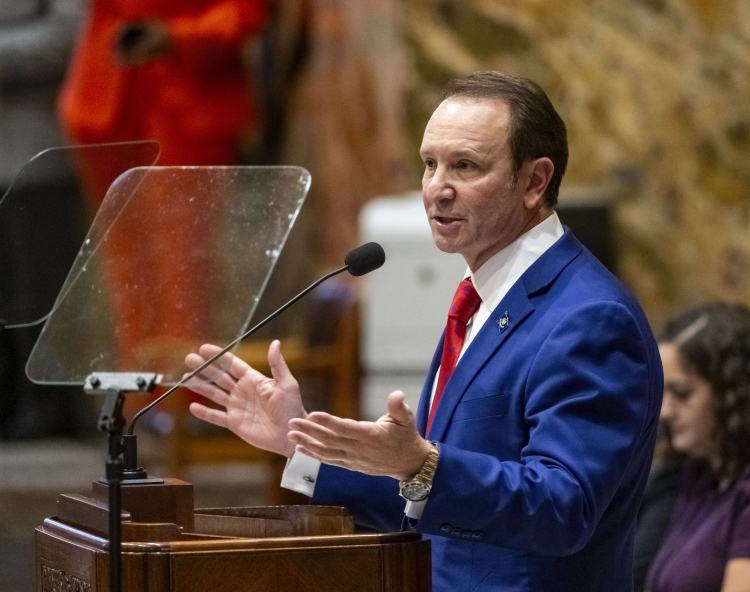
Louisiana Gov. Jeff Landry hailed Meta’s selection of Holly Ridge as the site for its massive project.

Louisiana Gov. Jeff Landry and state business development agencies hailed Meta’s selection of the Holly Ridge site when it was announced last December. At the same time, Entergy said it would spend $3 billion building the three new power plants, two near the site and another near the capital in Baton Rouge. The combined operation would bring some 5,000 construction jobs and 500 permanent jobs at the data center and 300 more at the power plants, according to the companies and the government.

Hyperion jobs will pay an average of $75,000, which is 150% of the median salary in the area, according to a recent report from Grow NELA, a Monroe, La., consulting firm.

Just what those jobs might be at centers that whir 24/7 remains unclear. At a minimum, they will need round-the-clock elite security, skilled electricians, air conditioning operators, engineers, and some tech wizards, most of whom must be available in three to four shifts, according to  Golding, who said the idea that a data center only needs a handful of unskilled workers is incorrect.

“I guarantee you that all these people raising concerns about data centers have never set foot in one and don’t know the first thing about how it works,” he said.

Grow NELA President Rob Cleveland said that to some degree, “we’re going on faith” regarding the center’s economic impact. But he added that there are already tangible benefits and anticipates a pronounced positive impact throughout northeast Louisiana.

The study commissioned by Grow NELA puts construction wages at more than $1.2 billion, of which $240 million is expected to go to local residents. The state should realize some $160 million in new sales taxes during the first five years, and nearly $62 million more in income tax, according to Grow NELA estimates. The project will also create many non-local jobs – including for those who design, build, program, and use the massive servers.

“I have never felt for one moment Meta was trying to take advantage of the local community,” Cleveland said. “People have no concept of what this will do for our communities, especially as before, you couldn’t find Holly Ridge on a map. My own land value has already doubled, and I can’t put a dollar amount on what it’s worth to have Mark Zuckerberg talking about our community for months now.” 

In all cases, Meta said it picks data center locations that are “shovel-ready sites that offer excellent access to fiber and a robust electric grid with access to reliable and renewable energy resources, and a strong pool of talent for both construction and operations staff.”

AP
Construction of the Meta's Richland Parish Data Center has increased truck traffic and dust in Holly Ridge, La.

To better understand the economic impact of data centers, RCI surveyed facilities in Virginia, where, since 1992, about 200 of them have sprouted within 100 miles of Washington, D.C. Today, there are another 117 under active development, continuing a pace that has seen one under construction every day for the past 14 years in Loudoun County, Virginia.

This modern tech forest has brought an estimated “74,000 jobs, $5.5 billion in labor income and $9.1 billion in GDP to Virginia’s economy annually,” a state commission found in 2024. A typical 250,000 square foot data center in the state employs some 50 skilled workers, and a construction force of up to 1,500 spends 12 to 18 months building them.

Meta’s Louisiana facility dwarfs those currently operating in Old Dominion, but the figures used by the company, Grow NELA, and others seem accurate if one extrapolates from Virginia’s experience. 

“This is a critical facility and it’s phenomenally complicated,” Golding, the consultant, said. “You’re going to need IT technicians, super security, you’re going to have to spend millions over the years stacking up teams of people.”

The Great Unknown

At the moment, the shining future looks dirty. Just a few days before classes begin at Holly Ridge Elementary School, the air above the former corn and soybean fields was shot through with a fine, rust colored dust that arises from dozens of massive Caterpillar earth movers and dump trucks that crawl across the site. Construction cranes and freshly cut phone poles line the western side, and on the eastern squat, huge piles of dirt look like Mesopotamian ruins. Truck traffic on the freshly paved highways running along the eastern and southern sides is rumbling and nonstop.

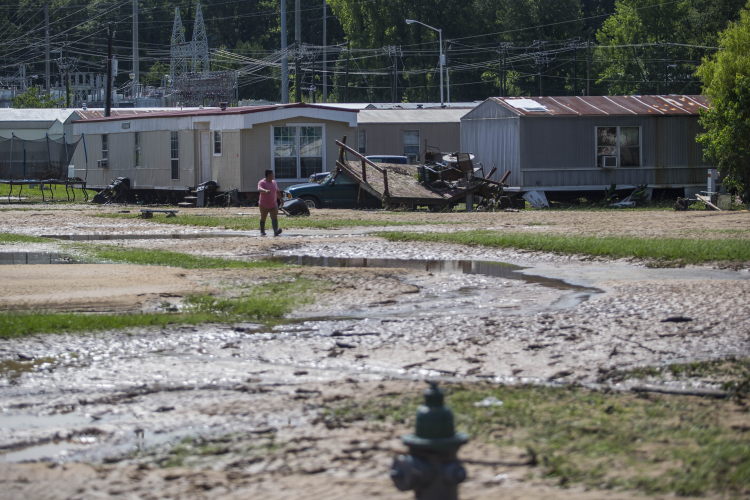
Some Richland Parish residents – many who live in modest homes and trailer parks on the farmland surrounding the construction site, where church steeples can be seen from miles across the flat land - are wary of this modern tech wave. The hubbub, disruption, and congestion, and even the brave new future itself, have them expressing apprehension.


FR171624 AP
A town filled with small homes and trailer parks, economic relief and rising property values could be a welcome change in Holly Ridge.

“I think there’s some concerns just in the change; people are nervous about all the unknowns,” said Larry Morris, who said his tire company in nearby Rayville has already seen a sizable boost in sales. “A lot of people are having trouble wrapping their heads around something this big.”

Meta is spending $200 million on infrastructure improvements, including roads, water systems, and housing. However, one resident noted that the improvements have actually increased her commute time to Holly Ridge Elementary School, now taking her three times longer on a freshly paved road.

The population in Richland and surrounding parishes is about 57% white and 37% black, and a majority of residents have high school diplomas with some college credit, according to the Grow NELA study. About one in four residents receive food stamps, with slightly less – about 20% – living on the poverty line.

Several residents said their concerns have been heightened by what they consider the silence surrounding the project. There were no town hall meetings and no public notices to provide information or give locals a voice in the sea change coming to their lives. The Sierra Club’s Bradford characterized the situation as one “that lacks clarity.”

Local critics who accuse Meta and Entergy of being too secretive point to redacted portions of the various contracts. Earlier this month, at an administrative law hearing in Baton Rouge, activists and reporters were frustrated that they were removed for considerable portions of the hearing due to executive session rules.

Several residents, all of whom expressed some fear of Meta and political figures and requested anonymity, told RCI they would be interested in selling their homes and land. Others said they are reluctant to leave the only area they have ever known. One woman said she owns roughly 70 acres near the data center site. An offer has been made to her for that property – she quoted a price of $55,000 an acre – which would leave her a millionaire several times over. But the family has lived there for decades and does not want to move.

Such uncertainty is understandable in a community that has been largely unruffled by change for decades, Rep. Echols said. But he and others said Richland Parish is getting with the times.

“I’d rather be hopeful about future progress than terrified about future poverty,” he said.

https://www.realclearinvestigations.com/articles/2025/08/21/hunger_games_ais_demand_for_resources_poses_promise_and_peril_to_rural_america_1130081.html


What ACIP Wasn’t Shown

 In June 2025, the Advisory Committee on Immunization Practices (ACIP) held its first meeting under the new leadership appointed by Health Secretary Robert F. Kennedy, Jr. The public expectation was clear: that this newly appointed committee would restore rigor, independence, and critical examination of evidence before recommending routine use of new pharmaceutical products.

One of the most significant items on the agenda was whether to recommend Merck’s new RSV monoclonal antibody, Clesrovimab, for routine use in healthy newborns. Though marketed as a new product, it is nearly identical in structure and function to Sanofi–AstraZeneca’s nirsevimab, approved in 2023.

The committee ultimately voted 5 to 2 in favor of the recommendation. That vote followed a CDC presentation, which framed the safety data as reassuring, leading most members to conclude there were no outstanding safety concerns. 

But was that reassurance justified? And on what exactly was it based?

The Seizure Signal, and How It Was Presented

During its June 2025 meeting, ACIP members were shown a safety slide from the CDC’s Vaccine Safety Datalink (VSD), focusing on seizures after administration of nirsevimab. The data were split into two age groups: infants aged 0-37 days and those aged 38 days to under 8 months. Each group showed elevated risk ratios for seizures (3.50 and 4.38, respectively), but both were labeled “not significant.” No pooled analysis was displayed.

However, as Dr. Maryanne Demasi later reported, combining the two groups into a single cohort yields a very different picture: a nearly four-fold increase in seizure risk (RR 3.93, 95% CI 1.21–12.79, p=0.02), a result that is statistically significant. That consolidated signal was never presented to the committee.

The decision to stratify at 38 days – precisely the point in US schedules when routine infant vaccinations begin – had no clear biological justification, and by dispersing the signal across two smaller groups, it effectively erased the statistical significance.

A second design choice compounded the problem. The CDC’s analysis applied a self-controlled risk interval with only the first 7 days designated as “risk” and days 8-21 treated as the “control” period. Any seizure occurring on day 8 or later was thus counted against the background rate, even though such timing could plausibly reflect a product-related effect. Standard pharmacovigilance practice calls for testing multiple windows, not a single narrow cutoff.

These analytical decisions mattered. The vote to recommend clesrovimab passed 5-2. Had members been shown the pooled seizure risk alongside the consistent trial-level imbalances in nervous system events, shifting just two votes would have changed the outcome.

Finally, as Demasi emphasized, the concern is not confined to one brand. Given the structural similarity between nirsevimab and clesrovimab, the seizure risk is likely a class effect. This means the omission of the pooled analysis did not just obscure a statistical detail. It withheld information with direct implications for every RSV monoclonal antibody now in use.

These findings emerged only through independent reanalysis. Without Dr. Demasi’s work, they may have remained unknown – not only to the public, but even to ACIP members casting their votes.

The Mortality Picture ACIP Did Not Weigh

The CDC’s presentation to ACIP did not include any integrated review of mortality data from the clinical trials of either RSV monoclonal – not Merck’s clesrovimab, and not Sanofi-AstraZeneca’s nirsevimab. This omission is striking, given that across both product lines, trial results show a consistent and notable imbalance in deaths between treatment and control arms.

Nirsevimab: Deaths by Arm

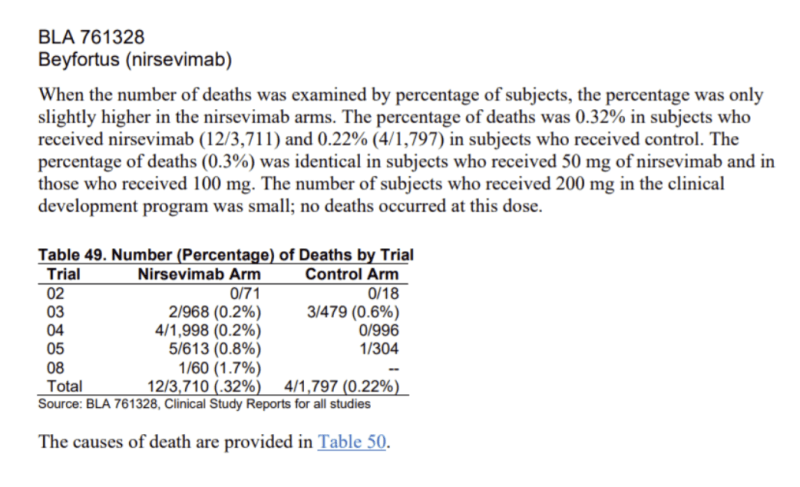
FDA’s Integrated Review for nirsevimab explicitly flagged an “unexpected imbalance” in deaths observed across pediatric trials. The data are as follows (Table 49, p.117):

  • Trial 03: 2 deaths among 968 nirsevimab recipients; 3 among 479 controls.
  • Trial 04 (MELODY): 4 deaths among 1,998 nirsevimab recipients; 0 among 996 placebo.
  • Trial 05 (MEDLEY): 5 deaths among 613 nirsevimab recipients; 1 among 304 given palivizumab.
  • Trial 08: 1 death among 60 nirsevimab recipients; no concurrent control arm.

In total: 12 deaths among 3,710 nirsevimab recipients versus 4 deaths among 1,797 controls – a mortality rate of 0.32% in the treatment arms compared to 0.22% in the control arms. The imbalance may appear small in absolute terms, but it was unexpected, and it runs consistently in one direction.

Clesrovimab: Deaths by Arm

The FDA’s 2025 risk review for clesrovimab – the product under ACIP consideration – shows a similar trend across its two main trials:

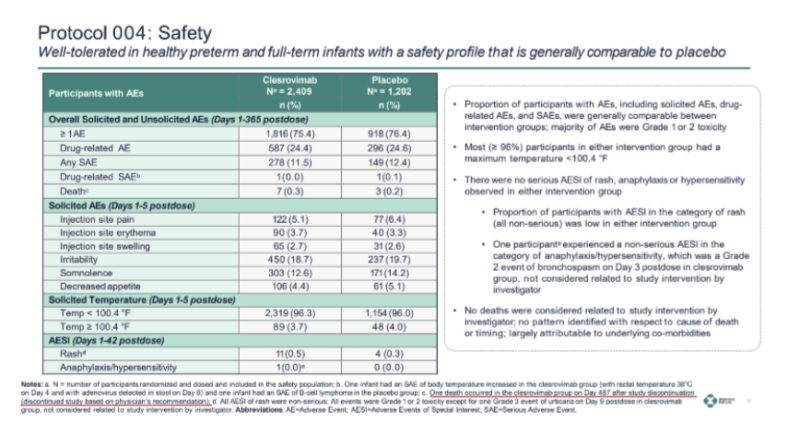
  • CLEVER (MK-1654-004): 7 deaths among 2,409 clesrovimab recipients; 3 among 1,202 placebo.
  • SMART (MK-1654-007): 8 deaths among approximately 500 clesrovimab recipients; 4 among approximately 500 receiving palivizumab.

Across both studies: 15 deaths in the treatment arms versus 7 in controls.
While FDA reviewers did not attribute the deaths to clesrovimab after case review, they explicitly acknowledged the numerical imbalance.

Deaths Hidden in Footnotes

In the 2023 update to the MELODY trial, the published manuscript in the New England Journal of Medicine reported four deaths in the nirsevimab arm and zero in the placebo arm, concluding that the product remained safe because those deaths were judged unrelated to treatment. 

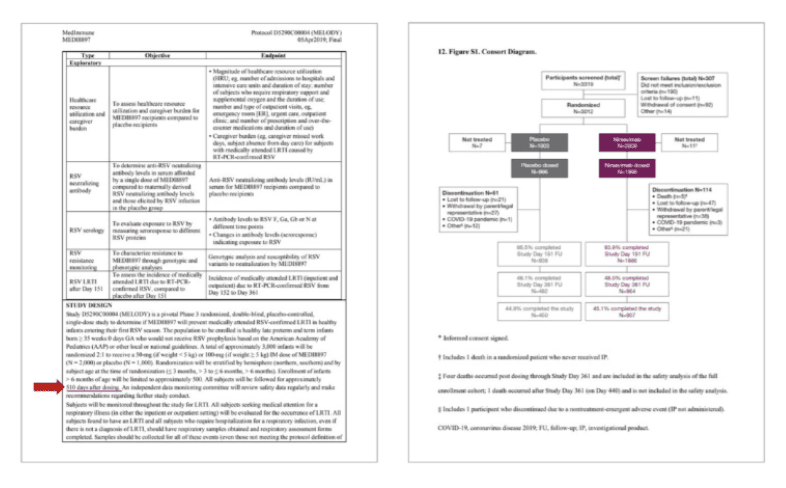
But a closer look at the trial’s Supplementary Appendix tells a different story. Beneath the CONSORT flow diagram, a footnote records a fifth death in the nirsevimab arm. The note explains that four deaths up to Day 361 were included in the safety analysis, while one additional death on Day 440 was excluded.

That exclusion does not align with the trial’s own protocol, which prespecified safety follow-up of approximately 510 days after dosing. By that definition, a death occurring on Day 440 falls inside the intended safety window.

A similar ambiguity appears in Merck’s CLEVER trial. Seven deaths in the clesrovimab arm and three in the placebo arm were reported within the 365-day observation period, all dismissed as “unrelated.”

Yet the CDC presentation also included a footnote about an additional death on day 487, after the infant had formally discontinued participation at the physician’s instruction. It remains unclear whether this case was counted among the seven or treated separately.

The fact that this out-of-window case was highlighted in detail, while the seven in-window deaths were only presented as totals with no breakdown of causes or timing, points to a selective approach to transparency. Such reporting practices prevent independent reviewers from assessing whether mortality patterns were plausibly due to chance or warranted closer investigation.

The same pattern is seen again in Merck’s SMART trial. There, eight deaths occurred among clesrovimab recipients versus four among infants given palivizumab. Once again, investigators concluded that none of the deaths were “related,” and no detailed breakdown by timing or cause was provided.

The key issue here is not causality but transparency. Readers and advisers should be able to see every death in the main dataset when totals are this small. Instead, the published article reports one number, while the supplementary materials reveal another.

This selective reporting leaves advisers without the ability to fully assess mortality risks. And when all the trials are considered together, a troubling consistency emerges. None of the individual trials was powered to detect differences in mortality, and the total numbers are small. Nonetheless, when four independent randomized comparisons – across two products and multiple geographies – all show more deaths in the treatment arms than in controls, the consistency is hard to ignore.

As Prof. Retsef Levi, one of only two ACIP members who voted against approval, pointed out: “Four different trials all show deaths going in the same direction.”

For a product intended for routine administration in healthy full-term newborns, even modest safety signals should trigger close scrutiny. That did not happen in this case, and the full mortality picture was never placed on the table.

Missing Transparency on Causes of Death

A complete and transparent briefing to ACIP should have included not only the raw death counts by trial arm but also a structured table listing cause of death, timing, and arm assignment for every case. That level of detail is essential according to current methodological and regulatory standards. The CONSORT Harms 2022 extension (which integrates into the main CONSORT checklist) emphasizes the need for complete, prespecified reporting of harms in randomized clinical trials. Similarly, the ICH E9(R1) guideline underscores the importance of defining estimands (in plain terms: the exact outcome the trial claims to measure) and conducting transparent analyses that allow independent scrutiny, rather than relying only on narrative judgments.

Nevertheless, the FDA’s public summaries largely rely on narrative statements that deaths were “not related,” without presenting arm-level breakdowns that would allow independent reviewers to check for clustering by time, syndrome, or comorbidity. Neither the CDC nor the product sponsors supplied ACIP with such a side-by-side accounting.

This gap is not theoretical. In the phase 2b trial of nirsevimab, for example, two deaths in the treatment arm were attributed to gastroenteritis in otherwise healthy infants – one on Day 143 and another on Day 338. Such outcomes are rare. Without a transparent arm-level table of causes and timing, together with even a basic statistical check of the overall imbalance, advisers are left unable to judge whether these deaths reflect random variation or a meaningful safety signal warranting further investigation.

One Surveillance Source, No Triangulation

At its June 2025 meeting, the CDC’s safety briefing to ACIP drew exclusively on the Vaccine Safety Datalink (VSD), an active surveillance system linking electronic health records across 13 US health systems. No parallel analysis was shown from VAERS or FDA’s MedWatch, even though federal guidance explicitly splits reporting for RSV monoclonals: when the antibody is given alone, adverse events are to be reported to MedWatch; when given together with vaccines, reports go to VAERS.

By limiting its analysis to a single source, the CDC presented ACIP with a one-system view of safety. This narrow lens risks overlooking signals that might emerge first in another surveillance stream, precisely the reason why triangulation across systems is considered a baseline expectation in pharmacovigilance.

That selectivity extended beyond US borders. Independent real-world data from France, presented by researcher Hélène Banoun, further underlines the importance of a comprehensive viewpoint. During the first nationwide rollout of nirsevimab in autumn 2023, deaths occurring in infants aged 2-6 days exhibited a striking temporal pattern:

  • September 2023: 55 deaths (statistically significant increase)
  • October 2023: 62 deaths (statistically significant increase)

When distribution was limited and supply-rationed in November 2023, death counts dropped sharply to 26. Later, as distribution resumed, mortality rose again to 50 in December and 52 in January 2024, both representing statistically significant peaks. 

These shifts closely aligned with the pattern of rollout and supply constraints – suggesting a temporal clustering that, while not proving causation, constitutes a meaningful signal. Such real-world patterns – with accompanying methodological caveats – should have been presented alongside US VSD data, yet were omitted from the ACIP briefing.

Taken together, the omission of both domestic and international signals meant that ACIP members were shown only a reassuring slice of the available evidence, not the full picture.

A Built-In Reporting Blind Spot

The issues are not limited to what ACIP showed in June. The very classification of RSV monoclonals creates a built-in blind spot in US safety reporting. These are biologic drugs, yet for liability purposes, they have been slotted into the childhood vaccine schedule, which affords manufacturers immunity under the National Vaccine Injury Compensation Program. For billing, they are treated as drugs. For safety reporting, they are split: given alone, they are directed to MedWatch; co-administered with vaccines, they are routed to VAERS.

This dual identity creates what experts call a “reporting blind spot.” Providers often default to VAERS when treating infants, but VAERS has no dedicated field for nirsevimab or clesrovimab. Reports can end up misfiled under “unknown vaccine type” or siloed in the FDA’s drug database, invisible to the CDC’s vaccine safety analysts. Events can therefore fall through the cracks entirely, undermining the very system meant to capture early warnings.

Beyond the Data: Confidence in ACIP

The omissions in June 2025 were not technical footnotes, but decisions that shaped how evidence was framed for those tasked with safeguarding public health. ACIP members were shown partial analyses that downplayed safety concerns, while broader and more troubling patterns remained off the table.

If an advisory committee rebuilt under promises of independence can still be steered by incomplete presentations, the issue goes far beyond one antibody. What is at stake is whether ACIP can live up to its role as a truly independent arbiter of risks and benefits – and whether the public can trust that its youngest members are being protected with full transparency.

Yaffa Shir-Raz, PhD, is a risk communication researcher and a teaching fellow at the University of Haifa and Reichman University. Her area of research focuses on health and risk communication, including Emerging Infectious Disease (EID) communication, such as the H1N1 and the COVID-19 outbreaks. She examines the practices used by the pharmaceutical industries and by health authorities and organizations to promote health issues and brand medical treatments, as well as censorship practices used by corporations and by health organizations to suppress dissenting voices in the scientific discourse. She is also a health journalist, and the editor of the Israeli Real-Time Magazine and a member of the PECC general assembly.