Search This Blog

Thursday, June 4, 2026

'Iran says was ready to make northern Israel ‘hell’ if Lebanon attacked'


Mohsen Rezaei, an adviser to Iran’s supreme leader, said Iran’s missiles were ready to turn northern Israel into “hell” if enemy forces moved toward Beirut’s southern suburbs.

Speaking on Iran's state TV, Rezaei also warned the UAE, Bahrain and Kuwait that Tehran would not leave them alone after the war if they continued their current approach.

https://www.iranintl.com/en/liveblog/202605308417

What leaders need to know about the breakthrough pancreatic cancer pill

 When compared to chemotherapy, a drug targeting oncogenic RAS mutations extended overall and progression-free survival for patients with metastatic pancreatic cancer, according to a study published May 31 in The New England Journal of Medicine.

The third-leading cause of cancer death in the U.S., researchers have spent decades attempting to improve pancreatic cancer outcomes. Most recently, healthcare organizations have turned to AI and robotics to improve the detection, prediction and treatment. Now a single pill may completely transform how health systems provide pancreatic cancer care. 

“For a disease that has long been marked by limited treatment options and often devastating outcomes, seeing a therapy double overall survival and progression-free survival and triple the response rate compared with standard-of-care chemotherapy […] is unprecedented,” Anna Berkenblit, MD, chief scientific and medical officer of the Pancreatic Cancer Action Network, said in a June 1 statement.

The study results were met with a standing ovation when presented at the American Society of Clinical Oncology’s annual meeting.

“I’ve gone to this meeting for 25 years and it is rare to see the plenary session receive a standing ovation; it’s very moving,” William Oh, MD, director of precision medicine at New Haven, Conn.-based Yale Cancer Center and Smilow Cancer Hospital and service line medical director of the Smilow Cancer Hospital at Greenwich (Conn.) Hospital, told Becker’s. “All oncologists know how disappointing the treatments for pancreas cancer have been. That spontaneous standing ovation really summarizes just how difficult it has been to treat.”

The drug, called daraxonrasib and manufactured by Revolution Medicines, has yet to receive FDA approval, though the agency did grant expanded access to the drug through a May 1 “safe to proceed” letter.

Excitement around daraxonrasib has created a swell of patient demand, which health system leaders are now preparing to meet. Without FDA approval, that process requires organizations to join an expanded access program with the drug manufacturer, Daniel King, MD, PhD, told Becker’s

A gastrointestinal medical oncologist, Dr. King is director of research and development for the Center for Genomic Medicine at New Hyde Park, N.Y.-based Northwell Health Cancer Institute.

“Right now healthcare systems are wrestling with requests from not only our own patients, but from patients all around, even overseas. They have no options left and they’re looking for this as a salvage,” he said. “Many of them come with sort of desperate emails asking to access the drug. We have to say simply, ‘The drug is available through this EAP and we have to apply for each individual patient.’ It’s a process.”

Beyond patient approval, the current drug distribution pathway also takes a nonstandard route. Though daraxonrasib comes in an easy-to-use pill form, the drug manufacturer’s EAP will use a specific specialty pharmacy for drug distribution that is not part of a healthcare system, Dr. King said. Additionally, health systems will not receive money to help distribute the drug or collect safety data. 

While health system leaders weigh these considerations as they decide whether to participate in the EAP, Dr. King foresees downstream benefits alongside potential pressures in the near future. 

“Most patients get treated in communities that are not part of academic sites. Those health system leaders may have less familiarity with navigating an EAP,” he said. “What that ultimately may translate to is that for the majority of healthcare leaders in America, their patient populations will have less access to this drug, which may put more pressure on academic healthcare centers, who are now going to get more patients from the community.”

“Something that’s favorable is that it’s a pill and distributed more easily. One constraint for healthcare administrators is that their infusion rooms are very busy. It is conceivable that, because [this drug] is an oral therapy, infusion chairs will no longer be needed for these patients. It may actually let up a little bit of demand for pancreas cancer patients who normally would have been in infusion care for 46 hours. Now these patients go to the lab, take the pill and go home. That’s something to keep in mind if you’re running an infusion center, more infusion room space may help you offset some of the [initial] cost.”

Organizational and operational pressures aside, the drug is proven to be “a true game changer,” according to Dr. Oh.

“Part of what is really exciting about this drug is the mechanism by which it works. RAS is a cancer gene that is also important in other cancers and was considered untargetable or untreatable for decades,” he said. “[The study results suggest] mechanistically that this will work in lung cancer and other cancers that are driven by RAS.

“It’s not curing these patients; what makes oncologists excited is that it’s the first step. It’s not enough to melt away the cancer, but in oncology, incremental benefits are — especially for very difficult-to-treat cancers like pancreas cancer — a big deal.”

https://www.beckershospitalreview.com/pharmacy/what-leaders-need-to-know-about-the-breakthrough-pancreatic-cancer-pill/

3 years and up to 15,000 fake nursing degrees later, Operation Nightingale reaches trial

 More than three years after federal agents exposed a scheme that sold thousands of fake nursing credentials, the last contested case is before a jury — and for the first time, prosecutors are tying the fraud scheme to a patient’s death.

The federal fraud trial that opened June 1 in Fort Lauderdale, Fla., is the first case in a yearslong fake nursing degree scheme, called Operation Nightingale, in which prosecutors have alleged the scheme contributed to a patient’s death.

Carleen Noreus, who operated two South Florida nursing schools, is the rare defendant in the sprawling diploma-mill investigation to reject a plea deal and take her case to a jury, according to the Miami Herald. She was charged in a 10-count indictment with conspiracy, wire fraud and money laundering tied to the sale of fraudulent diplomas and transcripts, according to court documents accessed by Becker’s

Her trial appears to be the final contested matter in a scandal that has produced roughly 50 defendants since the first indictments in 2023, the Herald reported June 2.

‘Money and greed’ on trial

In opening statements, Assistant U.S. Attorney Christopher Clark invoked Florence Nightingale, the name of the federal operation and the founder of modern nursing, to frame the stakes. 

“We as patients put our trust in nurses — that they are equipped to perform the job,” Mr. Clark told the jury, according to the Herald. “However, in this case that whole paradigm was turned on its head.” 

He argued Ms. Noreus was driven by “money and greed,” enrolling about 2,750 students across schools in Plantation and West Palm Beach and charging $10,000 to $20,000 for bogus credentials between 2018 and 2023. Mr. Clark said she coached students to pass state licensing exams rather than educating them.

The death allegation is what sets this case apart. 

Mr. Clark said in court filings that Ms. Noreus sold a fake associate’s degree to a student who took a few part-time classes, passed the registered nurse licensing exam in early 2021, and later worked as a traveling nurse who “contributed” to a patient’s death at a St. Louis hospital in 2023. 

The nurse — identified in Ms. Noreus’ indictment only as “co-conspirator No. 1” — did not recognize the patient’s irregular heart rhythm in time or escalate it to the attending physician, according to the filing.

Ms. Noreus’ attorney, Andrew Feldman, urged jurors to separate the nurse’s conduct from his client’s. 

“The government can say ‘fake school, fake diploma,’ but these nurses have never practiced without a license,” he said, according to the Herald, arguing the case is not about medical malpractice and that the nurse’s mistakes “have nothing to do with Carleen Noreus.”


Operation Nightingale, by the numbers

Between 7,500 to 15,000
fraudulent nursing degrees sold
$220 million paid by students to bypass their training (prosecutor’s trial estimate)
~50 defendants charged since 2023
20+ now-shuttered nursing schools implicated
37% of diploma buyers estimated to have passed the NCLEX and gone on to work
94 nurses disciplined in Connecticut, of more than 175 with licenses from the schools
47 nurse licenses revoked in Florida, where the schools operated

A cleanup moving at different speeds

Ms. Noreus’ trial unfolds against a regulatory cleanup that is still incomplete and uneven from state to state.

In a separate development, the Orlando Sentinel reported in May that Florida had moved to sanction a nurse, Tahira Bastien, who holds a Florida license but was barred from practicing in Missouri in 2023 after errors that ended in a patient’s death at a St. Louis hospital. 

The state referred her case to an administrative judge. Ms. Bastien, who received a degree from an implicated South Florida school, remains eligible to work in Florida pending a hearing; she and her attorney did not respond to the Sentinel’s requests for comment, and the allegations against her are unresolved.

The Sentinel reported that Florida has revoked the licenses of 47 nurses who attended schools named in the probe while allowing others to keep working, even after other states moved against them.

Some states, like Connecticut, have reported a stream of regulatory actions against 94 of more than 175 people who attained degrees at these schools, CT Insider reported May 20. Florida, where the schools were based, has so far disciplined about 47. 

Prosecutors are working through what they call phase 2 of the broader scheme. In September, the U.S. Attorney’s Office for the Southern District of Florida said the phase 2 schools alone generated roughly 7,300 fraudulent diplomas. Mr. Clark put the full South Florida estimate far higher, claiming in Ms. Noreus’ trial that more than 20 schools sold about 15,000 fake degrees to students who paid more than $220 million to shortcut their training, the Herald reported. 

Officials have estimated that about 37% of buyers passed the National Council Licensure Examination and went on to work. And because Florida participates in the Nurse Licensure Compact — adopted by more than 40 states — some who obtained licenses through fraud were cleared to practice in other compact states without additional licensing, spreading the exposure nationwide.

Regulators stress that attendance at an implicated school is not by itself proof of fraud, which is part of why the cases move slowly. 

Dawn Kappel, director of marketing and communications for the National Council of State Boards of Nursing, told CT Insider that some students received legitimate training and faced no discipline, while others may have been swindled by the schools, sometimes because of language barriers. 

Nurses found to have likely known their credentials were fraudulent had their licenses revoked, Ms. Kappel said, and each licensee is entitled to due process and a hearing.


How the scheme unfolded

2019 — Federal investigation begins after a tip out of Maryland, leading to an FBI undercover operation.
January 2023 — First indictments unsealed; 25 people charged as the scheme becomes public.
December 2023 — First trial convictions — registrar Gail Russ and recruiters Cassandre Jean and Vilaire Duroseau found guilty.
September 2025 — Phase 2: 12 more nursing-school owners and employees charged.
May 2026 — State licensing scrutiny intensifies; reporting highlights uneven enforcement in Florida and Connecticut.
June 1, 2026 — Carleen Noreus, the last contested defendant, goes to trial in Fort Lauderdale, Fla.

Most cases resolved by plea

Ms. Noreus’ trial is the exception in a docket largely resolved by guilty pleas and convictions.

Gail Russ, the former registrar at the Palm Beach School of Nursing, was sentenced to more than six years in federal prison after a December 2023 trial. Student recruiters Cassandre Jean and Vilaire Duroseau drew three years and two years and nine months, respectively. Johanah Napoleon, the school’s former president, pleaded guilty, cooperated with prosecutors and received a sentence of 21 months. 

For hospitals, the through line is credentialing risk that has not closed with the criminal cases. A nurse blocked in one state can remain licensed and employable in another, and the patient safety exposure that healthcare attorneys flagged when the scheme first surfaced is now, for the first time, at the center of a federal trial. 

When Operation Nightingale was announced in 2023, officials said there were no known reports of patient harm tied to the scheme at that point. A jury in Fort Lauderdale is now weighing an allegation that tests that initial report. 

https://www.beckershospitalreview.com/legal-regulatory-issues/3-years-and-up-to-15000-fake-nursing-degrees-later-operation-nightingale-reaches-trial/

61% of high-risk Minnesota Medicaid providers face disenrollment amid $2B threat

 In Minnesota’s review of 5,583 “high-risk” Medicaid providers, 2,061 were revalidated, but 3,411 were notified of their disenrollment.

A state report confirmed Minnesota completed its revalidation by May 31. The review removed 111 providers who were no longer offering high-risk services, and it referred 59 to the state’s Department of Human Services Office of Inspector General.

Of the 3,411 notified about disenrollment, 2,491 had incomplete or inaccurate administrative data, 916 failed verification during site visits and four did not pass an owner background check.

The state’s review spanned five months. The rest of the country has two years to submit a provider revalidation strategy after the federal government called for broader audits. Minnesota providers had to submit ownership disclosures, location and contact information, licenses, and proof of qualified service providers. The review also included on-site visits and fingerprint background checks for owners.

Common issues included failures to disclose management, maintain credentials and grant access. Incomplete applications also contributed to disenrollment notices. The state said it tried contacting individual providers multiple times, in writing and over the phone.

“The paperwork is a critical step,” DHS Deputy Commissioner Shireen Gandhi said in a June 4 news release. “This is just not checking the box. DHS uses the information to check requirements are met. And when we go on site what we see must match what was submitted to us.”

Providers have 60 days to appeal their revalidation decision, and the state is offering support to Medicaid beneficiaries needing a new provider.

At the beginning of the year, CMS directed Minnesota to pause provider enrollment across 13 service categories. The agency also froze nearly $260 million in Medicaid funding — and was met with a lawsuit by the state — and planned to withhold up to $2 billion annually.

https://www.beckershospitalreview.com/finance/61-of-high-risk-minnesota-medicaid-providers-face-disenrollment-amid-2b-threat-to-program/

Health systems said to welcome Anthropic cybersecurity collaboration

 Health system leaders told Becker’s they’re encouraged by AI developer Anthropic opening up its Project Glasswing cybersecurity initiative to healthcare.

The company launched the project in April after opting not to publicly release Mythos, its latest iteration of Claude, because the AI could autonomously detect and exploit cybersecurity vulnerabilities, some decades old. Project Glasswing initially included about 50 partners, mostly tech giants and leading cybersecurity firms, but expanded June 2 to another roughly 150 organizations representing critical industries, including healthcare.

“The combination of Anthropic, big tech and health system CISOs working together to mitigate cyber risk is both logical and smart,” said Scott Arnold, executive vice president and chief digital and innovation officer at Tampa (Fla.) General Hospital. “In fact, as an Anthropic customer, I volunteered our CISO at Tampa General Hospital to participate in Project Glasswing and provide insight as an expert — fingers crossed.”

Health system CIOs told Becker’s last month that they wanted to be “at the table” on using Mythos Preview to solve cybersecurity flaws, particularly because of healthcare’s unique IT considerations.

“Mythos is valuable because it surfaces vulnerabilities that were previously unknown or hard to exploit — but those findings then have to be fixed or mitigated inside that same window, before the ability to exploit them becomes widely available, said Sha Edathumparampil, chief digital and information officer of Coral Gables-based Baptist Health South Florida. “In healthcare, that’s a lot of work: legacy software, slow upgrade and patching cycles because downtime affects clinical care, and the funding and resources these changes require.”

He also pointed to Anthropic’s prediction that in six to 12 months, other AI companies will have Mythos-class AI models — but could release them without the same type of cybersecurity safeguards.

“Anthropic deserves credit for moving quickly and bringing healthcare in,” Mr. Edathumparampil said. “The announcement also raises the urgency for the entire healthcare ecosystem — vendors and providers alike — to both detect and remediate, against a clock that’s now in months, not years.”

Mr. Edathumparampil said he’s eager to learn the list of participants, whether it be EHR vendors, biomedical device makers or even health systems. An Anthropic spokesperson told Becker’s it isn’t disclosing specific organizations for security reasons, though partners can share their participation if they wish. In its June 2 announcement, Anthropic said the 150 new participants are largely vendors with big client bases covering critical infrastructure industries, including healthcare but also power, water, communications and hardware.

“The expansion was necessary and required, and it should continue in a controlled manner in an expanding concentric circles of trust approach,” said Glynn Stanton, senior vice president and CIO and chief information security officer of Yale New Haven (Conn.) Health. “Focus for expansion must be to ensure that critical infrastructure providers such as healthcare are prioritized. Giving as much lead time on the announcement of new threats and vulnerabilities is key to ensure that patient care is uninterrupted.”

Yale New Haven Health has been receiving communication from its partners about their participation, he added.

Baltimore-based Johns Hopkins Medicine is part of another cybersecurity project with another AI developer, which it can’t disclose because of a nondisclosure agreement, said Senior Vice President and CIO Richard Mendola, PhD.

“If I were betting, I would say I think the next two years are going to be some of the most difficult years we face from a cybersecurity standpoint, given the emergence of these models, until we’ve literally got workflows baked so that nothing ever gets out with a zero-day flaw or any other type of vulnerability,” he said.

Dr. Mendola said he is grateful that healthcare and academia — he’s also the enterprise CIO of Johns Hopkins University — are part of this discussion but understands AI companies’ hesitation to open it up to more partners.

“Tell 150 people a secret,” he said. “It’s not a secret.”

https://www.beckershospitalreview.com/healthcare-information-technology/cybersecurity/health-systems-welcome-anthropic-cybersecurity-collaboration/

Hospital CEO: BCBS Alabama must pay us by June 25, or closure begins

 John Quinlivan, CEO of financially challenged Montgomery, Ala.-based Jackson Hospital, has warned of imminent closure unless BCBS Alabama agrees to raise reimbursement rates to match Baptist Medical Center South, located three miles away. 

“We filed a brief in our bankruptcy court, sharing a resolution of the board that was voted on [June 2] at our board meeting,” Mr. Quinlivan told Becker’s. “The resolution was that if we don’t have a solution to the rate problem we have with Blue Cross by the 25th of June, we will then announce our closure, and we will spend the month of July closing the hospital. We remain hopeful that we’ll get some resolution from Blue Cross.”

Should the hospital close, Mr. Quinlivan, who has been CEO since November, said in a June 2 news release shared with Becker’s that more than 71,000 patients would need to find new physicians, 500,000 prescriptions would need to be written by someone else and more than 50,000 emergency room patients annually would be directed to other facilities. He warned that the closure would also result in job loss, access and capacity in Montgomery.

“Jackson Hospital is dying. And one company has the power to save it,” he said. “The recovery plan we built is comprehensive — new leadership, disciplined cost reductions, physician recruitment, service-line growth, public support and private financing. But it has one essential requirement: fair reimbursement from Blue Cross and Blue Shield of Alabama.”

The dispute between the two parties has been building for months. Jackson Hospital sued BCBS Alabama in February for $1.4 million in offsets the hospital claimed the insurer improperly withheld after it sought Chapter 11 protection in February 2025. 

Jackson Hospital claimed BCBS Alabama started collecting on a 2023 cash advance of more than $1.5 million in May 2025, which violated the bankruptcy’s automatic stay. BCBS Alabama disputed that narrative, and said recoupment started after a seven-month delay made at the hospital’s request and with its “express agreement and knowledge.” 

Mr. Quinlivan said in the news release that commercial reimbursement offsets the losses from Medicare, Medicaid and uninsured patients, and that BCBS Alabama’s differential payments to one hospital and not theirs “becomes a public health emergency.” 

In a June 4 statement shared with Becker’s, BCBS Alabama said it has been “more than fair” in its increased reimbursements and additional support to Jackson Hospital, both prior and during its bankruptcy. 

“We have tried to work with Jackson Hospital to help find a reasonable solution to its financial challenges, but we are less than 20% of its revenues,” the BCBS Alabama statement said. “Unfortunately, what Jackson Hospital seeks is neither affordable nor fair to our customers. Our members must be our priority, as we are committed to managing healthcare costs and maintaining access to high-quality care.”

In late February, Alabama Gov. Kay Ivey committed $40 million for capital expenses at Jackson Hospital once it exits bankruptcy. Jackson Investment Group, a company that provided Jackson Hospital its initial debtor-in-possession financing, has also provided $35 million in financing to keep the hospital open while a solution is pursued.

“But private capital alone cannot fix a broken reimbursement system propped up by a monopoly insurer which benefits from this arrangement,” Mr. Quinlivan said. “The plan exists. The hospital can be saved. The solution is straightforward. Blue Cross must pay Jackson Hospital the same fair rates it already pays Baptist South — rates that reflect the care we provide, the community we serve, and the mission we carry.”

Montgomery Mayor Steven Reed said in a June 4 statement shared with Becker’s that the city is aware of discussions between Jackson Hospital and BCBS Alabama and is hopeful the parties can come to a resolution. 

“Jackson Hospital plays an important role in providing healthcare services to Montgomery residents and the surrounding region,” Mr. Reed said. “Our primary concern remains ensuring that patients continue to have access to quality healthcare and that our community maintains a strong healthcare infrastructure.”

https://www.beckershospitalreview.com/finance/hospital-ceo-bcbs-alabama-must-pay-us-by-june-25-or-closure-begins/

Trump officials want to speed up college mergers

 The US Department of Education wants to grease the wheels for college mergers and acquisitions, a rare Trump administration proposal with broad support from university leaders who see the policy helping the sector withstand a wave of financial distress.

The agency aims to expedite and simplify M&A reviews within the next year, according to Under Secretary Nicholas Kent, the top federal official overseeing higher education.

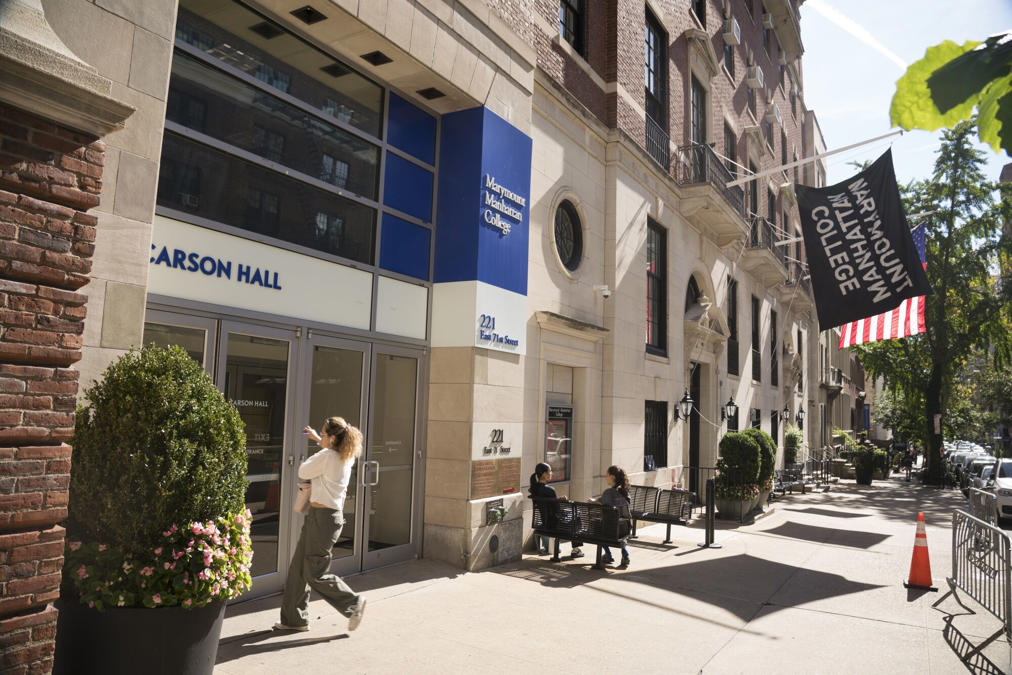
A soon-to-close transaction underscores how drawn out the timeline can be: Northeastern University’s purchase of Marymount Manhattan College is expected to get final approval next month, more than two years after the initial announcement. The lag partly reflects a long federal regulatory process.

Many schools seeking a lifeline simply don’t have that much time. And for prolific acquirers like Northeastern, which fields inquiries about once a week from small colleges offering themselves up, it’s an obstacle to expansion.

Now, Kent aims to undo a two-step process implemented by former President Joe Biden, as well as a slew of decades-old hurdles that he said can jam up a transaction for months. 

Northeastern's Merger With NYC College Finally Nears Finish Line
Northeastern's Merger With NYC College Finally Nears Finish Line© Photographer: Ben Sklari/Bloomberg

“We’ve made it increasingly complicated and really time-consuming for institutions to enter into these partnerships,” he said in an interview with Bloomberg. “We need to be facilitating a process that moves a lot quicker.”

The change could benefit many struggling schools looking to engineer a rescue. But it would also leave the sector more vulnerable to profiteers, from private capital to hostile competitors, at a moment of unprecedented tumult. 

Common Offramp  

Colleges contending with lower enrollment, federal funding cuts and rising operating costs often find themselves on the verge of closure. Mergers and acquisitions are becoming a common offramp. More than 50 such deals have been announced since 2020, according to data from Huron.

Joseph Aoun, president of Boston-based Northeastern, said that delays in closing mergers make it harder to recruit students, faculty and staff and to start investing in infrastructure. 

“The transition period is always a period of uncertainty. This uncertainty impacts the students, the families, the staff and the faculty,” Aoun said. “You want to move as fast as you can.” 

For schools with short financial runways, a multiyear regulatory horizon can be a deal killer. In 2023 Notre Dame College — not the football powerhouse in Indiana, but a tiny Catholic school in northern Ohio — floated a possible merger with Cleveland State University. Notre Dame had been hemorrhaging students and money for years and was looking for an exit. 

They announced their talks in January 2024. But within a matter of weeks, Notre Dame suddenly moved to close its doors.

A few hours west, Bluffton University, another small Ohio religious college, thought it had found a partner in neighboring University of Findlay. The pair signed a formal agreement and started down the regulatory road toward approval. A year later, they aborted their merger.

Jane Wood, Bluffton’s former president, stepped down shortly after the deal fell apart. She said there was more to the dissolution than regulatory hurdles, but that the federal approval timeline was “certainly a key factor.” 

Ricardo Azziz, principal at SPH Consulting Group, advised Bluffton and Findlay throughout their abandoned merger process. He said their situation was just one example of an issue that he’s seen scuttle deals time and again. 

“If you examine the closures across the country, many had sought to merge before they ran into the issue of the regulatory timeline,” Azziz said.

Northeastern's Merger With NYC College Finally Nears Finish Line
Northeastern's Merger With NYC College Finally Nears Finish Line© Photographer: Sophie Park/Bloomberg

Buyer’s Market

Struggling colleges are more eager than ever to partner with stable institutions, in part due to pressure from board members and bondholders nervous about credit downgrades. Many colleges, Azziz said, “are starting to violate bond covenants,” an issue “at the heart of some mergers.”

Larger schools with more spending power are pouncing on the chance not only to boost their enrollment capacity, but to buy up valuable real estate. Northeastern’s acquisition of Marymount delivered the school more than $200 million in assets; its acquisition of Mills College in Oakland, California, added around $700 million. 

Brian Weinblatt, founder of Higher Ed Consolidation Solutions, which helps colleges plan for mergers, said interest from “buy-side” schools has spiked in the past two years. “They’re like sharks smelling the blood in the water,” he said. 

The market has also piqued the interest of private capital.

“Private equity is and was interested in higher ed institutions, but the requirements the department imposed made ownership of a college by a PE firm essentially impossible,” said Jonathan Helwink, a higher education lawyer who served in the first Trump administration. 

Kent said changes to the oversight process would likely open doors for those frustrated investors. “We’re not going to give them a free pass just because it’s the private market, but we’re certainly not going to put our foot on the necks of private capital,” he said. 

Clare McCann, a former policy adviser at the Education Department under Biden who helped fortify the M&A review process, said those measures were meant to protect the students, staff and local economies most affected by changes in ownership. Part of their focus was on for-profit colleges applying to convert to nonprofit status, a transaction covered by the same federal oversight rules as mergers. 

Still, McCann said the process was never meant to take as long as it has. She blames that on understaffing, not regulatory burdens. 

Even before Trump laid off nearly half of the Education Department, “there already were not very many people at the department who had that kind of expertise,” she said. “There are now next to none.” 

Kent said he was confident he has the appropriate staff to handle approvals.

Schools looking to expand aren’t necessarily relying on M&A; they’re sometimes buying up campuses where enrollment has dwindled, purchasing the real estate outright. Wagner College, a small private school in New York, is taking on debt to buy the Staten Island campus of Queens-based St. John’s University. Those transactions don’t require federal approval.

New England Closures

A report from Huron found 442 private colleges are at risk of closure or serious financial downturn. That’s more than a quarter of the country’s private schools. 

Many recent closures have been concentrated in New England, where two colleges have shuttered already this year: Anna Maria College in Massachusetts and Sterling College in Vermont. Another, Hampshire College, announced in April that it would close after the fall 2026 semester.

Larry Schall, president of the New England Commission of Higher Education, the accreditor overseeing all three of those schools and hundreds more across the Northeast, said the organization has tried to make consolidation as seamless as possible. But while more of his members are exploring partnerships, he said the timeline for approval usually deters them.

“Virtually every school you end up reading about that closes, certainly at the board level there’s been conversations about finding a partner,” he said. “If you have 30 days of cash on hand and the process takes — in part because of federal requirements — years to happen, you just don’t have the funds to do it.” 

Still, a quicker federal review won’t always mean approvals. Kent said the government is not in the business of bailing out colleges.

“We have 6,000 institutions of higher education in this country, and not all of them are going to make it out of this decade,” he said. “Nor should we incentivize that.” 

https://www.msn.com/en-us/money/careersandeducation/college-mergers-take-a-long-time-trump-officials-want-to-speed-them-up/ar-AA24lsYb