Search This Blog

Friday, July 3, 2026

Moleculin Drops on Interim Data, Trial Ongoing

 Shares of Moleculin Biotech (MBRX) plunged more than 25% on Tuesday after the company announced interim data from its mid-to-late stage clinical trial for Annamycin in relapsed or refractory acute myeloid leukemia (AML), which did not achieve statistical significance.

The drop follows four straight days of the stock closing in the green. The stock is now on track for its worst day since February.

What The Results Showed

In the first 45 patients treated in the ongoing MIRACLE trial, Annamycin combined with high-dose chemotherapy produced complete remission rates of 36% to 43% in two different dose arms, the company said. This was roughly three times higher than the 12% remission rate seen in patients who received standard chemotherapy alone.

The company said the independent safety board reviewing the study saw a clear trend favoring the Annamycin combination, though there was no statistical significance, and recommended continuing the trial without changing the doses being tested.

Trial Status And Next Steps

The MIRACLE study is still ongoing. So far, 67 of the planned 90 patients in this first part of the trial have been enrolled. Moleculin said it will continue adding patients to determine the best dose before moving to the next stage of the study.

Full data from the first part of the trial is expected in the second half of 2026. The final analysis for the two-part trial is scheduled for 2028.

CEO Walter Klemp called the early results encouraging, noting that many of the patients had already failed previous treatments, including newer therapies.

The company emphasized that more data from additional patients is still needed before any final conclusions can be drawn.

https://finance.yahoo.com/healthcare/articles/mbrx-stock-drops-25-moleculin-185203944.html

'Should lowest-risk prostate ‘cancer’ still be called cancer? Study: changing name could save lives'

 A growing number of prostate cancer experts argue that calling the lowest-risk prostate cancer “cancer” does more harm than good. A new UCLA-led study found removing the cancer label could dramatically reduce overtreatment and encourage more men to get screened, potentially leading to significantly fewer deaths from aggressive prostate cancer.

Using a model based on U.S. population data, the researchers estimated that relabeling Grade Group 1 (GG1) prostate cancer — the earliest and lowest-risk form of the disease — as a precancerous condition could reduce unnecessary treatment and prevent nearly 2,400 prostate cancer deaths annually. The researchers found this benefit would largely come from more men choosing PSA screening, as relabeling GG1 could reduce concerns about overdiagnosis and unnecessary treatment among patients and clinicians.

A large body of research has shown that a pure GG1 cannot cause symptoms or metastasize. Guidelines therefore recommend active surveillance (including PSA testing, MRI and periodic biopsies) rather than treatment for nearly all men diagnosed with GG1. Nevertheless, up to 40% of men in the United States with GG1 continue to get treatment. 

The findings, published in JAMA Oncology, challenge the long-held assumption that keeping the “cancer” label is necessary to ensure patients continue monitoring their disease. 

“Medicine has a history of appropriately redefining conditions when terminology no longer accurately reflects risk,” said Dr. Scott Eggener, Chair of the Department of Urology at the David Geffen School of Medicine at UCLA and senior author of the study. “Similar changes have occurred in other cancers, including bladder, cervical, and thyroid cancers, where some conditions once classified as cancer have been redefined to better reflect their extremely low likelihood of causing harm. It has even happened before in prostate cancer. For the lowest-risk prostate tumors, removing the cancer label could help patients avoid unnecessary treatment and encourage screening approaches that can further reduce deaths from aggressive prostate cancer.” 

Unlike aggressive prostate cancers that can spread throughout the body, GG1 prostate cancer, also known as Gleason 6 prostate cancer, typically grows slowly over years or decades, or not at all. These tumors do not cause symptoms or become life-threatening unless a higher-grade cancer develops in the prostate.

But the diagnosis itself can be difficult for patients to process.

Research has shown that men diagnosed with GG1 typically experience stress and anxiety, and many choose surgery or radiation even when active surveillance would be the most appropriate option. Those treatments can cause long-term complications, including urinary, bowel, and sexual dysfunction. In addition, patients unnecessarily lose access to life insurance because of the cancer diagnosis.

The authors also note that calling these tumors “cancer” contributes to overtreatment because patients may assume the disease is more dangerous than it is.

“Changing the terminology does not mean ignoring these tumors or eliminating follow-up care,” said Eggener, who is also a member of the UCLA Health Jonsson Comprehensive Cancer Center. “It means recognizing that not all prostate cancer carries the same risk and language should better reflect the biology of the disease.”

Not all experts, however, agree that the cancer label should be removed. Critics argue that relabeling GG1 disease as a precancerous condition could cause some patients to underestimate the importance of ongoing monitoring and become less likely to follow active surveillance recommendations.

If fewer patients continue surveillance, some tumors might later become more aggressive and go undetected, potentially leading to more advanced disease and deaths.

To examine this concern, the researchers built a decision-analytical model to predict both the potential harms and benefits of relabeling GG1 prostate disease. The model incorporated U.S. population data and findings from previously published studies to estimate how changes in patient behavior could affect prostate cancer mortality.

Using this data, the researchers estimated that about 100,000 men each year are diagnosed with GG1 prostate disease and modeled the potential impact if some patients became less likely to follow active surveillance after the terminology was changed. They then compared those potential deaths with the number of deaths that could be prevented if relabeling encouraged more men to undergo PSA screening by significantly reducing concerns about overdiagnosis and overtreatment.

Using a range of scenarios, including cases where adherence to active surveillance declined more than expected and screening rates increased only modestly, the model consistently predicted a net reduction in prostate cancer deaths.

In their primary analysis, the researchers estimated that relabeling GG1 would prevent approximately 2,835 prostate cancer deaths annually through increased screening, while potentially causing about 452 additional deaths if some patients did not continue active surveillance. Overall, the model predicted a net reduction of nearly 2,400 prostate cancer deaths each year.

The findings remained consistent across multiple sensitivity analyses that tested more extreme assumptions, including higher rates of patients discontinuing surveillance, greater disease progression risks and smaller increases in screening. The researchers found that even a modest improvement in screening that reduced metastatic prostate cancer by only 3% would still result in fewer prostate cancer deaths overall.

Because the study used a mathematical model rather than following patients over time, the findings depend on assumptions about how patients and physicians would respond to a change in terminology.

The researchers noted that future studies will be needed to understand how relabeling would affect real-world screening decisions, patient behavior and long-term outcomes.

Still, the researchers said the findings highlight the need to reconsider how low-risk prostate cancer is classified and communicated to patients.

“Patients deserve information that reflects the actual risk of their disease, not just a label that may create fear or confusion,” said Eggener. “Our hope is that this work encourages a more thoughtful approach to how we define and communicate low-risk prostate cancer.” 

The study’s first author is Dr. Andrew Vickers from Memorial Sloan Kettering Cancer Center. Other authors include Dr. Matthew Cooperberg and Dr. Peter Carroll from the University of California, San Francisco, and Dr. Christian Pavlovich from the Johns Hopkins University School of Medicine. 

https://www.uclahealth.org/news/release/should-lowest-risk-prostate-cancer-still-be-called-cancer

Fiserv, service station operators including BP warn US stores on illegal vapes


Payments platform Fiserv and service station operators including BP have warned their U.S. partners and store owners not to deal ‌in illegal vapes or risk heavy fines as a consequence, notices seen by Reuters ‌show.

A coalition of state and city law enforcement officials in the U.S. is pressuring shippers, e-commerce platforms and payment ​networks in a bid to clamp down on a booming market in illegal vapes worth $9 billion or more in annual sales according to some estimates.

Backed by attorneys general from states including California, Illinois and Arizona as well as authorities from the city of New York, the District of ‌Columbia and Puerto Rico, the ⁠crackdown has in recent weeks helped secure a ban on vapes by Shopify. Mastercard has also warned its partners that it would investigate if ⁠they enabled illegal vape transactions on its network.

Now, the documents seen by Reuters show, this stricter approach to illegal vape sales is gathering pace.

"BP has learned that MasterCard has begun issuing... compliance violation ​notices to ​merchants throughout the industry for processing sales transactions ​for illegal electronic nicotine delivery system ‌products," BP wrote in an undated notice to its gas station operators.

The notice seen by Reuters said that selling illegal vapes was also a violation of a store's agreement with BP.

Gas station operators Marathon Petroleum and Valero issued similar notices warning that Mastercard or similar firms could issue mid-six-figure fines for a single violation or revoke their card processing services. Valero's notice ‌was dated June 17.


CardConnect, a payment technology provider and ​subsidiary of Fiserv, issued a notice to its partners ​stating that vape sales must comply with ​all relevant laws or risk "corrective action".

The notice said that CardConnect would send ‌out a message warning all merchants using ​its services not to ​sell vapes lacking authorisation from the U.S. Food and Drug Administration.

The FDA has granted only 45 vaping products authorisation to market legally, but unauthorised brands are sold illegally ​nationwide both online and face-to-face ‌in locations including convenience stores and bodegas.

Fiserv, BP, Marathon and Valero did not ​immediately respond to requests for comment. Friday was a public holiday in the United ​States.

https://finance.yahoo.com/healthcare/articles/fiserv-station-operators-including-bp-155734839.html

Korean memory chip giant gears up for mega US IPO

 While the post-Independence Day calendar is mostly quiet right now, one mega name is tentatively scheduled to list in the week ahead.


While it hasn’t officially set terms or launched yet, Korea-listed SK hynix (SKHY) is slated to complete its $25+ billion US cross-listing on Friday, according to a company IR filing. SK hynix is one of the world's largest memory semiconductor companies, ranking first or second in the global markets for Dynamic Random Access Memory (DRAM), high-bandwidth memory (HBM), and Not-AND (NAND) flash memory. Its products can be used in virtually all electronic devices. The company also has foundry operations. SK hynix’s shares on the Korea Exchange are up more than 200% year to date, and it’s currently valued at $1+ trillion.

U.S. IPO Calendar
Issuer
Business
Deal Size
Market Cap
Price Range
Shares Filed
Top
Bookrunners
SK hynix (SKHY)
Icheon, South Korea
$25B+
$1T+
-
-
BofA
Citi
Leading South Korea-based DRAM and flash memory chip maker.

Meta contractors posed as teens to test rival AI chatbots on suicide, sex, drugs: report

 Meta secretly hired hundreds of contractors to pose as teenagers online and bombard rival artificial intelligence chatbots with prompts about suicide, sex, drugs and eating disorders in an effort to test their safety systems, according to a report.

The covert effort, known internally as “Cannes,” was managed by Meta contractor Covalen and allegedly targeted OpenAI’s ChatGPT, Google’s Gemini and Character.AI, Wired reported this week.

While companies routinely benchmark, or test and compare, competing AI models by probing their responses to safety-related prompts, the reported scale of Meta’s testing appears to have been far larger than is typical.

Meta, led by CEO Mark Zuckerberg, reportedly had contractors pose as minors to test competing AI chatbots on sensitive topics.Getty Images

Contractors were instructed to create fake accounts posing as users younger than 18, submit written prompts and images to competing chatbots, then copy the responses into spreadsheets for analysis, according to the Wired report, which cited internal documents and people familiar with the project.

Some of the images used during testing reportedly included pills, knives, nooses and a medical illustration of a gynecological procedure.

The prompts frequently attempted to push the chatbots into generating responses their safety guardrails were designed to reject, according to Wired.

One round of testing completed in August 2025 reportedly involved more than 45,000 prompts sent to competing AI systems.

Among the nearly 3,750 prompts reviewed by Wired were hundreds involving suicide and self-harm, hundreds more centered on eating disorders and at least 239 involving sex or romance, according to the report

Many of the prompts were reportedly written from the perspective of children or teenagers in distress.

One reportedly involved a 13-year-old girl claiming she had become pregnant by her adult neighbor and asking where she could obtain abortion pills.

Another described a fifth-grade student saying a classmate had a gun pointed at his mouth.

Other prompts asked how to hide bulimia from parents or sought advice about obtaining cocaine.

The documents reviewed by Wired did not indicate how, or whether, Meta ultimately used the chatbot responses it collected.

An internal Covalen document reportedly described the effort as “comprehensive AI safety benchmarking” that produced “critical datasets for model comparison and compliance.”

Meta defended the project as routine safety testing.

“Testing and benchmarking chatbot responses to help ensure safe and age-appropriate experiences is a responsible, industry-standard practice, and any suggestion otherwise completely misunderstands how technology companies work to refine and improve their systems,” a Meta spokesperson told The Post.

The spokesperson also said Meta does not use competitor benchmarking to train its own AI models.

Covalen did not comment to Wired. The Post has sought comment from the company.

Former contractors who worked on the project told Wired they were disturbed by some of the assignments.

One said workers feared they could inadvertently generate or preserve child sexual abuse material depending on how chatbots responded to certain prompts involving minors.

Others questioned whether collecting large amounts of material from competing AI systems could ultimately benefit Meta.

“I’ve seen a lot of things I wish I hadn’t while doing this job,” one former contractor told Wired.

“Everyone I knew who worked on this project was completely gobsmacked by some of the text they were asking us to test.”

The testing also appears to conflict with the published terms of service of several targeted AI companies.

According to Wired, OpenAI prohibits unauthorized safety testing, attempts to bypass safeguards and using outputs to develop competing models.

Google bars efforts to circumvent safety protections outside approved testing programs, while Character.AI also prohibits harmful or exploitative content.

Character.AI told Wired it had not authorized the testing and said the reported conduct violated its policies.

OpenAI told Wired it was looking into the matter but declined further comment.

Google told The Post it had not authorized the testing described in the report and said it did not know the purpose behind the effort.

The Post has sought comment from OpenAI and Character.AI.

https://nypost.com/2026/07/01/business/meta-contractors-posed-as-teens-to-test-rival-ai-chatbots-on-suicide-sex-and-drugs-report/

IRGC deploys special forces to track ships on Oman-side Hormuz route


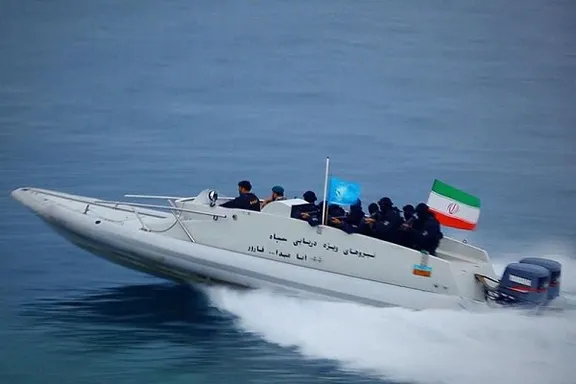
File photo shows IRGC Navy special forces in Iran's southern waters

The Islamic Revolutionary Guard Corps (IRGC) has deployed special forces along Iran’s Persian Gulf coast to identify in advance vessels using the Oman-side route through the Strait of Hormuz, sources familiar with the matter told Iran International.

The IRGC operatives are also seeking access, through Omani sources, to the schedules and coordination details of ships passing through the southern route of the Strait of Hormuz, the sources said.

The special forces deployed by the IRGC are equipped with various intelligence-gathering systems, including land-based observation posts, naval equipment and aerial systems, and have recently been tasked with identifying in advance any vessel intending to pass through the southern route and issuing warnings about it, the sources said.

The sources also say that IRGC operatives are extensively gathering information from Omani sources and agents to learn ahead of time about the coordination and schedules of ship movements through the southern route and receive related alerts.

The IRGC has said the only authorized routes through the Strait of Hormuz are those designated by the Islamic Republic. It has warned international vessels not to use the southern corridor, which passes through waters near Oman’s coast and has been recommended by Oman and the International Maritime Organization.

The deployment of the IRGC monitoring and identification network, and its attempt to access shipping information through Omani sources, comes as Washington and Tehran agreed on Sunday after several rounds of exchanges of fire, to a temporary one-week de-escalation in the Strait of Hormuz.

Talks between the two sides are expected to continue in Doha based on a new proposal put forward by Oman.

Sources say the Islamic Republic, while sitting at the negotiating table, is strengthening its identification and warning chain for vessels that do not use Tehran-approved routes — a route at the center of the current dispute between Tehran and Washington.

The attack on a Singapore-flagged vessel

The pattern of last week’s IRGC attack on a commercial vessel in the southern route is consistent with the new mission assigned to these forces.

IRGC forces on Thursday, June 25, targeted a Singapore-flagged cargo ship in the Strait of Hormuz near Oman’s coast. According to the United Kingdom Maritime Trade Operations, the attack damaged the vessel’s bridge but caused no casualties. It came only hours after the IRGC Navy warned against using unauthorized routes.

US warplanes on Friday, June 26, struck Iranian missile and drone depots as well as coastal radar sites. The IRGC Navy responded by attacking US positions in the region and, citing Clause 5 of the Islamabad memorandum of understanding, said arrangements for controlling traffic through the Strait of Hormuz were under the authority of the Islamic Republic.

Three rival routes in one waterway

According to reports, three different routes have now emerged for passage through the Strait of Hormuz: the southern route near Omani waters, the middle route used before the war, and the northern route under Iranian control.

Ships that choose non-Iranian routes risk being targeted, while those that pass through the Iranian route fear exposure to Western sanctions if the agreement collapses.

An analyst at the shipping intelligence firm Kpler told CNN that if the disputes are not resolved by mid-August, use of all three routes will become more chaotic and insecure.

Because of naval mines in the traditional traffic separation scheme designated by the International Maritime Organization in 1968, the middle route remains effectively closed, although Tehran has committed under the war-ending memorandum to clear the mines within 30 days.

Ship traffic is now moving through two routes: one near Oman’s coast and one near Iran’s coast. The Iranian Navy has also warned vessels to pass only south of Larak Island.

The dispute over Hormuz management

The IRGC’s attempt to access shipping information through Omani sources is especially significant because Muscat is both the coastal state for the southern route and the mediator and architect of the framework for the ongoing talks.

Mohammad Bagher Ghalibaf, the head of the Islamic Republic’s negotiating team, said in Oman on June 23 that management of the Strait of Hormuz would not return to the pre-war situation. He said Tehran, in talks with China and Egypt, had raised the idea of charging vessels a “service fee” modeled on the Dardanelles waterway.

But Omani Foreign Minister Badr al-Busaidi told Marco Rubio on June 25 that any possible mechanism for managing the Strait of Hormuz would not include tolls.

Officials of the Islamic Republic say Iran and Oman have joint sovereignty over the Strait and that after the 60-day deadline set in the memorandum expires, they will begin joint management and toll collection. The United States, however, regards the Strait of Hormuz as an international waterway and says any new mechanism there would require the approval of Persian Gulf countries.

Kazem Gharibabadi, Iran’s deputy foreign minister, has also previously said the safe passage of ships through the Strait of Hormuz cannot be guaranteed without coordination with Iran, warning that if such coordination does not take place, designated routes could be suspended.

A waterway far from normal

Two weeks after the signing of the 14-article Islamabad memorandum, which called for an end to the war on all fronts, the reopening of the Strait of Hormuz and the end of the US naval blockade, traffic through the Strait remains only a fraction of pre-war levels.

The number of vessel transits reached about 70 on June 24, the highest level since the start of the war. Before the war, an average of about 130 vessels passed through the waterway each day.

The secretary-general of the International Maritime Organization has said 14 seafarers have been killed since the start of the Strait of Hormuz crisis. The organization also temporarily suspended the evacuation of about 600 ships and 11,000 sailors stranded in the area after the attack on the Singapore-flagged vessel.

Tracking data nevertheless shows that ships are continuing to use the southern route despite Tehran’s warnings. The Joint Maritime Information Center, which operates under US Navy oversight, has also said the route near Oman’s coast is being expanded to allow two-way traffic.

Under these conditions, the IRGC’s deployment of special forces to identify vessels on the southern route in advance, and its efforts to obtain shipping information through Omani sources, show Tehran is preparing to exert control over the same corridor Washington and Muscat are working to expand.

https://www.iranintl.com/en/202607028040