Search This Blog

Tuesday, October 6, 2026

KUDLOW: Democratic talk of affordability is absolutely hilarious

 by Larry Kudlow

You just have to love it, while these Democratic candidates are out there tweeting and chirping and criticizing President Trump and the GOP on the issue of affordability. Hahaha. In the first place, Mr. Trump way back in 2016 invented the term affordability, amidst much derision as he successfully ran in his first term. 

Now with a temporary gasoline spike from the Iran war, Democrats have latched on to the term affordability as some kind of midterm election life raft. I don’t believe it’s going to work. Republicans are reminding voters that it was the big government socialist, President Biden, and all his Democratic followers who generated a 9 percent inflation peak, and 21 percent cumulative inflation over the four-year term.

Meanwhile, the consumer price index averaged over 5 percent yearly during the Biden Presidency, versus only 1.9 percent during Mr. Trump’s first term, and is averaging only 2.9 percent so far during the second Trump term. And as for $4.36 gasoline, the Democrats can fire away, but the party of radical climate change and the misbegotten Green New Deal, would love to have $8 or $10 a gallon, or more. That has always been their agenda. 

Indeed, if they are elected, they will fight to end gasoline powered cars altogether. So who are they kidding? The Committee to Unleash Prosperity notes in a piece called "Who Shut Down American Energy?" that it was Mr. Biden who shut down offshore drilling. Mr. Biden shut down Alaska drilling. Mr. Biden shut down the Keystone Pipeline.

And he shut down new oil and gas leasing on federal lands. And he slashed the pace and size of federal drilling. Mr. Biden drained our oil reserves. Given the new socialist tilt of the Democrats these days, you can expect an instant replay or more.

California is a perfect example, where the Green New Deal utopia has led to gasoline at $6.37 a gallon. That’s $2 higher than the national average. Diesel is running similarly $2 above the national average. They’re taxing fossil fuels to death and this is precisely what will happen in Congress if the Democrats take over.

Meanwhile, speaking of affordability and socialism, let’s add the recent $50 trillion estimate from the Council of Economic Advisers, for the Democratic Socialists of America’s platform.  And that’s just for starters. More welfare. More housing subsidies. More free lunches. More free colleges. More free everything.

The cost of socialism is truly incalculable. It’s up to the Republicans to hammer this home in the next 28 days, because the idea of Democratic affordability is hilarious.

https://www.foxbusiness.com/politics/larry-kudlow-democratic-talk-affordability-absolutely-hilarious

The AI Race With China Has Seven Fronts

 by Noosheen Hashemi via RealClearMarkets,

At the White House on Tuesday, President Trump, Speaker Mike Johnson and leaders of America's major AI companies emerged with a voluntary accord calling for robust internal controls, independent auditing and safeguards against AI systems accessing technical systems in unintended ways. The agreement is limited and its implementation will matter. It also offers a useful example of government bringing fierce competitors together around a concrete problem while leaving competition intact.

That example matters because much of the federal machinery is already in motion. The White House AI Action Plan spans more than 90 federal actions across innovation, infrastructure and international policy. The American AI Exports Program is organizing full-stack offerings that include chips, cloud infrastructure, models, cybersecurity and applications. A June executive order created an AI cybersecurity clearinghouse and a voluntary framework for frontier-model security while expressly declining to authorize mandatory federal licensing, preclearance or permitting. This week, America.gov put advanced AI directly into federal service delivery, while the new U.S.- China Super Intelligence Dialogue created a bilateral channel for incidents related to advanced AI. Taken together, these efforts show how much activity is already underway.

The phrase "AI race" is too singular for the competition now unfolding. The United States and China are competing across at least seven fronts, and leadership in the most capable model does not guarantee leadership across the other six.

Frontier intelligence.

The most obvious contest is over who develops the strongest systems in reasoning, coding, science, agents and robotics. Frontier capability still matters enormously because breakthroughs at the top eventually propagate through products, research and the wider economy.

Capacity.

AI is digital, while its limits are increasingly physical. Chips, advanced packaging, networking, data centers, electricity generation, transmission, interconnection, cooling and skilled labor all determine how much intelligence can actually be trained and deployed. The administration already treats infrastructure as a core condition of AI leadership, and its June national-security directive also calls for next-generation high-security computing capacity. National-security AI directive.

Industrial AI.

The strategic question reaches far beyond model benchmarks. It includes how rapidly intelligence moves into factories, robotics, logistics, healthcare, energy systems and supply chains. A country can extract enormous economic and strategic value from capable AI if it deploys that intelligence broadly and compounds the productivity gains across its industrial base.

Global diffusion.

The technology stack that becomes easiest to buy, finance, integrate and operate can shape markets and dependencies for years. America's export program recognizes this as a full stack competition. China is pursuing another form of diffusion through inexpensive and open models. The U.S.-China Economic and Security Review Commission reported this year that Alibaba's Qwen ecosystem had produced more than 100,000 derivatives on Hugging Face, creating a feedback loop in which adoption drives iteration and iteration drives further adoption. USCC analysis.

National security and control.

Advanced AI increasingly touches cybersecurity, intelligence, critical infrastructure, autonomous systems and the security of the models themselves. Tuesday's White House accord sits squarely in this lane, as does the June security order. The emerging challenge is to build credible safeguards while preserving the competitive pressure and speed that drive technical progress.

Productive power at home.

The country that invents the most capable AI and the country that absorbs AI most effectively throughout its economy may end up capturing very different amounts of value. Productivity depends on deployment across businesses, workers, science, healthcare and government. America.gov is a visible example of the federal government putting AI directly into service delivery, alongside private-sector adoption.

The information layer.

AI is becoming an intermediary between people and knowledge. Increasingly, users will ask a model a question and receive an answer instead of navigating dozens of links. Accuracy, provenance, language coverage, resilience to manipulation and trust therefore carry strategic significance well beyond conventional software competition.

These fronts interact constantly, which is where the current architecture becomes harder to read. A decision about advanced-chip exports can affect national security, the economics of American semiconductor companies, the cost of frontier development, the attractiveness of the U.S. stack abroad and the incentive for other countries to build around Chinese alternatives. A rule written for frontier safety can also change fixed compliance costs and market structure. A transmission bottleneck can delay a data center, constrain compute, slow industrial adoption and alter the economics of exporting American AI. Each policy lane has its own logic, but the competitive effects travel across lanes.

The missing capability is a better operating picture across the machinery already in place. Three questions would make the existing architecture much more legible. The first is whether we have a real scoreboard across all seven fronts. GAO has already built a framework for assessing U.S. AI competitiveness across science and technology, human capital, governance and the economy. The next step is a current view of frontier capability, compute, energy, cost, industrial adoption, global deployment and productivity, so policymakers can see where America is actually gaining or losing ground.

The second question is what a major decision on one front does to the other six. That discipline would make tradeoffs visible before they become unintended consequences. Export controls, open-weight policy, safety standards, data-center rules and federal procurement can all improve one objective while changing incentives somewhere else in the system.

The third question is ownership when a strategic bottleneck crosses institutional lines. Global deployment can involve Commerce, State, financing agencies, cybersecurity authorities and private companies at the same time. Infrastructure can involve Energy, permitting agencies, states, utilities and capital providers. Many institutions can perform their assigned tasks well while an outcome that spans them remains nobody's job to deliver.

Tuesday's White House meeting offers one possible operating habit. A specific problem was defined, the companies with the relevant capability were brought together, responsibilities were made more explicit, and competition remained intact. The accord will ultimately be judged by what the companies implement. The method is worth applying more broadly when problems fall between established lanes.

China's centralized system gives Beijing a natural view across infrastructure, industrial policy and national strategy. America is built around distributed power, private capital, competing firms, universities and experimentation, an architecture that has produced extraordinary technological dynamism. The work now is to add visibility across the system while preserving the forces that make it move quickly.

Seven fronts are moving at once, and every major decision changes the position on more than one of them. Seeing those interactions early would help the United States compound its strengths, expose tradeoffs before they become expensive, and clear bottlenecks while they are still solvable. America already has extraordinary companies, capital, universities, infrastructure programs and diplomatic tools. The advantage now is to see them as one strategic picture and move at AI speed.

Noosheen Hashemi is an Iranian-born American entrepreneur, philanthropist, and the founder and CEO of January.ai, a health company based in Menlo Park, California. She was previously vice president of finance and administration at Oracle Corporation.

https://www.zerohedge.com/markets/ai-race-china-has-seven-fronts

Former Sunrise Movement NGO Director El-Sayed Tied To Far-Left Group Whose Leader Urges 'Direct Action'

 Leaders of Sunrise Movement, a far-left climate nonprofit legally classified as a 501(c)(4) organization, said in a recent online meeting that they want to "engage in civil disobedience and get arrested."

The video of the nonprofit's far-left radical leaders was published on X by Karlyn Borysenko, who describes herself as an anti-communist analyst and observer of the far left.

The transcript of remarks by one of Sunrise Movement's leaders is as follows:

What's holding you back from getting involved, right? Like, I would assume that everyone on this call is here because they want to do something, but what's holding you back, right? And what's holding you back from getting more involved than you already are.

And I'll share again for me, right? Like, one thing that's structural for me is like, I really would love to do a direct action. I would love to get arrested doing some good trouble, some civil disobedience, as they say, but I can't. Like structurally, that's just something I can't do. I would love to get arrested, but that would be a bad look.

Now, why would that be a bad look?

For Sunrise specifically, organizing riots and deliberate lawbreaking can jeopardize the nonprofit's tax-exempt status in the Trump era, as a multi-agency task force led by the US Treasury has homed in on these nonprofits for their revolutionary Marxist work.

A New York Post report from late August detailed the Treasury task force that could soon strip tax-exempt status from George Soros' far-left Open Society Foundations, the Southern Poverty Law Center, and the Council on American-Islamic Relations.

One source said Treasury Department officials were "like a dog with a bone" and reckoned that many NGOs and their donor bases could be "on borrowed time."

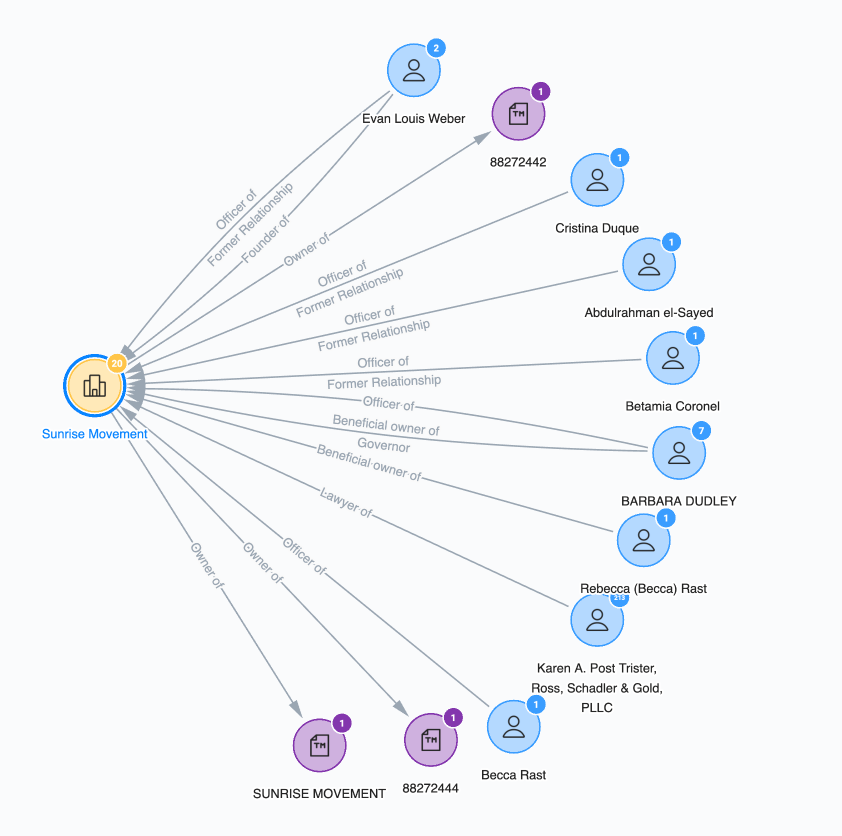
Publicly available records accessed through Sayari map show the organizational structure and linked entities surrounding Sunrise Movement. 

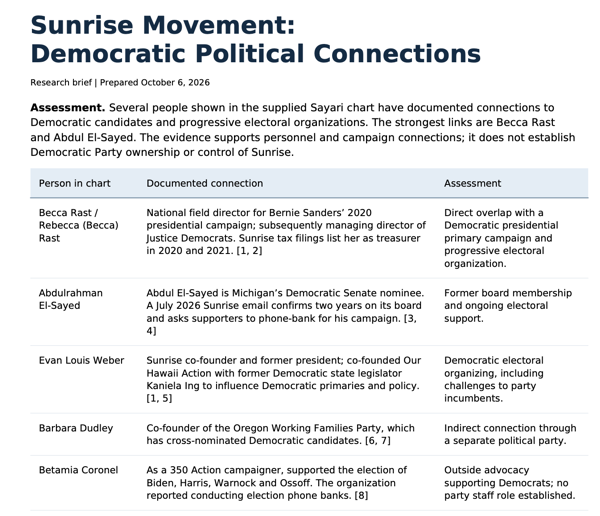
Sunrise Movement Links To The Democratic Machine 

The clearest connections are Becca Rast and Abdul El-Sayed. 

Via Linkedin:

Scrutiny of NGOs, whether used as foreign subversion networks or to carry out the dirty work of left-wing billionaire foundations waging war against the West, has been in full force this summer. 

That may help explain why there were no riots: billionaire foundations, such as the Gates Foundation, are likely afraid of losing their tax-exempt status. 

Meanwhile.... Obama.

Read: "The Riots Never Came: Has The Protest Machine Stalled, Or Is It Regrouping." 

https://www.zerohedge.com/political/former-sunrise-movement-ngo-board-member-abdul-el-sayed-linked-far-left-group-whose


Low-Calorie Diet, Exercise Reversed Type 2 Diabetes Without Meds

 A low-calorie diet and exercise reversed early-onset type 2 diabetes for more than half of young adults, the randomized RESET for Remission trial showed.

Among 96 participants, the intervention put diabetes into remission for 54% at 24 weeks, bringing HbA1c below 6.5% without glucose-lowering medications for at least 12 weeks, compared with a 4% remission rate in the usual care group (adjusted OR 21.6, 95% CI 6.2-114.5).

The intervention featured an 800-900 calorie daily meal-replacement diet, twice-weekly supervised aerobic and resistance exercise, and once-weekly independent exercise for 12 weeks. Participants then transitioned into a 12-week maintenance phase featuring a nutritionally optimized diet, tapering of meal replacements, and independent exercise.

Remission rates were consistent in subgroup analyses by sex, ethnicity, and study country, Kaberi Dasgupta, MD, MSc, of McGill University in Montreal, said at the European Association for the Study of Diabetes (EASD) annual meeting in Milan.

The findings were simultaneously published in Lancet Regional Health Americas.

Prior studies have established low-energy meal replacement diets as effective non-surgical tools for diabetes remission. However, few studies have evaluated this approach combined with structured, supervised exercise.

"It's already quite a lot to ask someone to adhere to a meal-replacement diet," Dasgupta said. "Adding supervised exercise makes it even more challenging. Will they be able to do it? The nice thing is, if they can do it, they stand to have the benefits of the low-energy diet -- the weight loss and the remission -- and perhaps also the benefits of exercise."

Many could do it. Indeed, 90% of participants completed their final assessment. "Even though it was a big ask, people liked it, they liked the exercise, and they stayed in the study," Dasgupta noted, adding that non-completers were assumed not to have achieved remission.

The open-label trial randomized participants 1:1 to either the intervention or routine clinical care. Eligible adults were ages 18 to 45 (average 38), had been diagnosed within the prior 6 years, and had a baseline HbA1c between 6.5% (or 6.0% if taking medication) and 10.0% (mean 7.2%). At baseline, 74% of participants were taking metformin, 20% an SGLT2 inhibitor, and a small minority a GLP-1 drug.

The study focused on those with early-onset type 2 diabetes, defined as onset prior to age 45, marked by rapid deterioration in glucose levels and increased risk of premature complications.

"Those complications can hit when they're about to start a family, start a relationship, start a job -- it's very inconvenient, and it causes a lot of suffering," Dasgupta emphasized.

Study co-investigator Thomas Yates, PhD, of the University of Leicester in England, highlighted how these findings contrast with current anti-obesity medications like GLP-1 drugs: "We know that these therapies produce substantial weight loss, ... but 25% to 45% of weight loss with therapies comes from lean mass."

When compared with tirzepatide (Mounjaro) in SURPASS-3, the RESET trial showed less overall weight loss (16.5 lb at 24 weeks vs 28.4 lb at 52 weeks) but greater reductions in visceral fat and liver fat fraction. "It's really important when we're talking about exercise that we look beyond total weight, ... because that is what's going to be driving the metabolic benefits," Yates added.

Whole-body MRI scans revealed improvements in pancreatic fat fraction, abdominal and thigh subcutaneous fat, abdominal and thigh intermuscular fat, and thigh intramuscular fat.

Intervention participants also demonstrated greater improvements in handgrip strength, depression symptoms, diabetes distress, quality of life, blood pressure, resting heart rate, triglyceride levels, and cardiac geometry. Also, more participants in the intervention group achieved hypertension remission compared with controls (56% vs 27%).

No serious adverse events were reported. Common effects included transient diet-initiation symptoms including headaches, constipation, dizziness, and fatigue, plus a slightly higher rate of mild infections in the intervention arm.

"Because it was a two-arm study, we need further research to confirm the added benefit of exercise," Yates concluded.

Disclosures

The study was funded by the United Kingdom Medical Research Council, Canadian Institutes of Health Research, and John R. McConnell Foundation.

Dasgupta holds peer-reviewed funds from the Canadian Institutes of Health Research, Diabetes Canada, and the Lawson Foundation.

Yates reported relationships with Biomea Fusion, Abbott, and Regeneron.

'New Guideline Recommends Hormone Therapy First for Menopausal Symptoms'


  • Menopausal hormone therapy is recommended as first-line treatment for vasomotor symptoms.
  • Certain serotonin–norepinephrine reuptake inhibitors (SNRIs) are second-line treatments and certain selective serotonin reuptake inhibitors (SSRIs) and NK receptor antagonists, as well as gabapentin, are third-line options.
  • More evidence is needed in populations contraindicated to hormone therapy and on newer non-hormonal agents.

Hormone therapy should be the first-line treatment for women with menopausal vasomotor symptoms, according to new guidance from the American College of Physicians (ACP).

Women with a uterus should receive estrogen in combination with progestogen, while those without a uterus can receive estrogen monotherapy as first-line therapy, according to ACP's new clinical guideline on pharmacologic treatments for vasomotor symptoms.

Both are listed as strong recommendations based on high-certainty evidence, Amir Qaseem, MD, PhD, MHA, and guideline authors wrote in the Annals of Internal Medicine.

The serotonin-norepinephrine reuptake inhibitors (SNRIs) desvenlafaxine (Pristiq) or venlafaxine (Effexor) can be used as second-line treatment for those who have contraindications to or don't tolerate first-line treatment, a recommendation based on moderate-certainty evidence, they reported.

Finally, third-line treatments include the selective serotonin reuptake inhibitors (SSRIs) escitalopram (Lexapro) or paroxetine (Paxil), or gabapentin -- both based on low-certainty evidence -- or the neurokinin (NK) receptor antagonists fezolinetant (Veozah) and elinzanetant (Lynkuet), based on moderate-certainty evidence.

The recommendations were based on a systematic review and meta-analysis by Susan Diem, MD, MPH, of the VA Health Care System in Minneapolis, and colleagues, also published in the Annals of Internal Medicine.

Vasomotor symptoms -- hot flashes and night sweats -- affect most women during the menopause transition and can greatly disrupt a patient's life. Menopausal hormone therapy has long been known to be effective at treating vasomotor symptoms. However, findings about increased risks of cardiovascular disease and breast cancer from the Women's Health Initiative (WHI) study led to boxed warnings and a decline in use of the therapy over the past two decades.

Recently, however, the FDA removed warnings about cardiovascular disease and breast cancer, and re-analyses of the WHI data have been completed, suggesting better outcomes with hormone therapy for women closer to menopause. In 2022, the Menopause Society released a position statement on hormone therapy, concluding that for women under 60 who are within 10 years of menopause onset and have no contraindications, the risk-benefit ratio is favorable for treatment of vasomotor symptoms.

In an accompanying editorial also published in Annals of Internal Medicine, Stephanie Faubion, MD, MBA, and Regina Castaneda, MD, both of the Mayo Clinic, in Jacksonville, Florida, wrote the decline in menopause hormone therapy use "reflects patient and clinician concerns and misconceptions about the risks" as well as barriers to accessing care and undertreatment of vasomotor symptoms.

"It is therefore noteworthy that the guideline encourages clinicians to proactively initiate conversations about menopause and provide education," they wrote. "Explicitly incorporating these actions into the guideline reinforces their importance as part of comprehensive menopause care."

To evaluate the overall benefits and harms of treatments, as well as the role of economics and patients' values and preferences, Diem and colleagues searched Embase, Cochrane, and Medline from inception to March 3, 2026, ultimately including 90 trials in 102 publications. These randomized controlled trials had a treatment duration of at least 8 weeks (median of 12 weeks), and enrolled peri- or postmenopausal women 18 and older.

Patients in these trials tended to be healthy, postmenopausal white women ages 49 to 57 who experienced several episodes of vasomotor symptoms a day. Trials took place from 1980 to 2024, mostly in North America and Europe. Older trials were more likely to evaluate high-dose estrogen and newer ones were more likely to evaluate nonhormonal treatments. There were only 8 studies on perimenopausal women. Compounded estrogens were not evaluated.

Common exclusion criteria included history of breast cancer, endometrial hyperplasia or cancer, cardiovascular disease, stroke, or venous thromboembolism. Editorialists said future research should assess "populations excluded from the current evidence base who require evidence specific to their clinical circumstances rather than extrapolation from healthier populations."

The review showed that the efficacy of menopausal hormone therapy didn't vary by route of administration. However, the effects of estrogens alone or with progestogens was more pronounced with higher doses.

Reduction in the frequency of vasomotor symptoms was greatest with estrogens with or without progestogens, oxybutynin, and NK-receptor antagonists. Menopause-related quality of life, measured by the Hot Flash Related Daily Interference Scale, was modestly improved by estrogens with or without progestogen, NK-receptor antagonists, SNRIs, and SSRIs.

"Our results are consistent with previous systematic reviews reporting that estrogens, with and without progestogens, are highly effective for VMS [vasomotor symptoms]," Diem and colleagues wrote.

While oxybutynin reduced the frequency and severity of vasomotor symptoms and improved sleep quality, the evidence was low- to moderate-certainty from a small trial. ACP noted that more research is needed on this topic to ascertain benefits and harms. There was also insufficient evidence to determine how results vary by age, race, ethnicity, and menopausal status, which authors suggest as another avenue for future research.

They also noted some limitations, including that most of the studies were short-term and not designed to evaluate severe adverse events. Observational studies that could have provided insight on long-term harms were not included, they noted.

Menopausal vasomotor symptoms last a median of 7 years, meaning that "patients seeking treatment are likely to continue using these agents longer than the brief duration of existing trials." There also was a "paucity of head-to-head comparisons of drug classes" and eligibility criteria varied between trials, the researchers wrote.

Editorialists noted that the pooling of fezolinetant and elinzanetant may obscure differences between the two NK-receptor agonists, and that the review identified several gaps in the evidence that still require robust trials.

They also commended ACP for considering patient-centered outcomes like "menopause-related quality of life, adverse events, endometrial safety, patients' values and preferences, and cost-effectiveness" in addition to reductions in frequency and severity of vasomotor symptoms.

Disclosures

This study was supported by the American College of Physicians (ACP).

Qaseem reported being the chief science officer at ACP.

Other guideline authors reported relationships with Adventist Health Portland, the Center for Evidence-based Policy, Edward Hines Jr. VA Hospital, Loyola University Chicago Stritch School of Medicine, Medical Society of Metropolitan Portland, Milbank Memorial Fund, National Conference of State Legislatures, Oregon Medical Association, Oregon Health & Science University School of Medicine, ACP, Agency for Healthcare Research and Quality, American Association of Gynecologic Laparoscopists, American Society of Hematology, Brown University, CDC, National Academies of Sciences, Engineering, and Medicine, Society of Gynecologic Surgeons, Wolters Klewer Health, Inc., KeyCare, Ochsner Health System, Sam Houston State University College of Medicine, Evidence Based Research Network, Villanova University, Hazelden Betty Ford Foundation, U.S. Department of Veterans Affairs, and Huntington Hospital.

Diem reported ties to ACP, Agency for Healthcare Research and Quality, U.S. Department of Veterans Affairs, and the University of Minnesota.

Systematic review co-authors reported relationships with ACP, Minneapolis VA Hospital, Agency for Healthcare Research and Quality, Health Resources and Services Administration, HealthPartners, Inc., Presagio Group Pty Ltd, University of Minnesota, American Thyroid Association, Cline Law Group, Finley Law Firm, and Hennepin County Medical Center.

Faubion reported ties to AiCME, Era Women's Health Platform, Mayo Clinic, MedAll, Medscape Education, North American Menopause Society, PriMed, and Weight Watchers.

Castaneda had no disclosures.