In a historic first, the Mecca Defense Pact between Saudi Arabia, Pakistan and Turkey is now in force, according to the allies at an emergency meeting in Riyadh.
It was only signed in August, but soon after it was formalized an all-out war between the Houthis and Saudi coalition in Yemen erupted, with the Ansar Allah movement now increasingly targeting Saudi civilian infrastructure, including airports and energy infrastructure.
The Monday emergency meeting of foreign and defense ministers resulted in the top committee agreeing to deploy Pakistani and Turkish forces to Saudi territory. The pact is modeled on NATO's Article 5 and 'collective defense'. Saudi authorities have argued the kingdom is under direct attack from neighboring Yemen and its Houthi rebels, backed by Tehran.
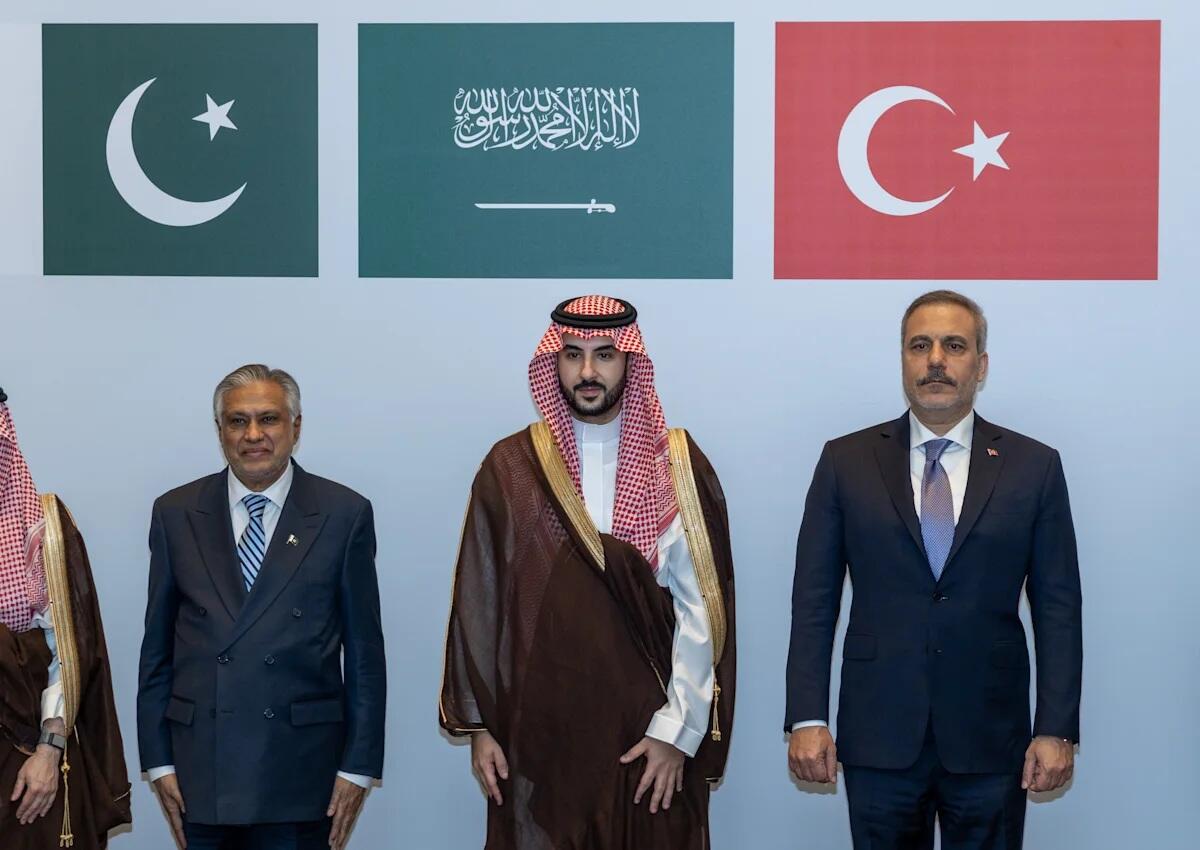
It marks a quite a dramatic, though somewhat anticipated step, but it remains an open question the degree to which the external troops will directly support the ongoing anti-Houthi operation, which has focused on recapturing the Red Sea coast of late.
"The Committee decided to move immediately to the practical implementation of the collective defense commitments and to take the necessary measures to provide the agreed military forces and capabilities and ensure their rapid deployment in the Kingdom, in accordance with the approved arrangements and the national legislation of the Parties," said a joint statement made public by Pakistan's Foreign Office.
Pakistani Defense Minister Khawaja Asif sought to clarify in a statement to Geo News while speaking from Riyadh, "The forces of Turkiye and Pakistan are playing a supporting role. We are definitely involved in reconnaissance and such things, but the combat is practically being conducted by Saudi Arabia's own forces, and they are the ones retaking those areas."
Apparently the Mecca pact took on more urgency after claims that the Houthis targeted the Islamic holy site of Mecca last month - something which the Houthis vehemently denied. Pakistan has said when pressed by reporters for details: "The operational details of the actualization of the collective deterrence are a matter of operational confidentiality and may not be made subject of media speculation."
It should be noted that Pakistan has already long had a large and long-running contingent of troops inside the kingdom, and working with the Saudi armed forces. Pakistan's air force has also had fighter jets and support aircraft in the kingdom.
Turkey's role will be much less clear, and Turkish parliament must ultimately authorize sending troops abroad for any kind of large-scale deployment. Unlike Pakistan, the Turks do not have any level of an existent official military footprint in Saudi Arabia.
Emerging reports say the Turks preparing aircraft deployments along with troops...
A big question remains, with the Mecca pact having been formally triggered, will the situation spiral into Pakistani and Turkish troops actually joining the fighting in Yemen? If so it would have serious implications for the broader region as the conflict spills over borders and into strategic waterways like the Bab al-Mandab Strait.

No comments:
Post a Comment
Note: Only a member of this blog may post a comment.