Search This Blog

Sunday, January 6, 2019

Key Dem:Trump Has Authority To Declare National Emergency, Build Wall


Democratic Rep. Adam Smith (D-WA), chair of the House Armed Services Committee, admitted that President Trump has the authority to declare a national emergency and have the military build a wall along the US-Mexico border.
ABC‘s “This Week” host George Stephanopoulos asked Smith “Does President Trump have the ability, have the authority to declare a national emergency and have the military build his wall?”
“Well, unfortunately, the short answer is yes,” replied Smith. “There is a provision in the law that says the president can declare an emergency. It’s been done a number of times, but primarily it’s been done to build facilities in Afghanistan and Iraq. In this case, I think the president would be wide open to a court challenge saying, where is the emergency? You have to establish that in order to do this. Beyond that, this would be a terrible use of Department of Defense dollars.
“The president spends most of his time talking about how we’re not spending enough on national security, now he wants to take $20 billion out of defense budget to build a wall. Which by the way, is not going to improve our border security. The president seems unaware of this, but we have actually already built a wall across much of the border, and all border security experts that I talk to say, where a wall makes sense, it’s already been built. We should have a conversation about border security, but first, we should we open the government and pay our border patrol agents and the federal agents that are furloughed,” Smith added.
Watch:
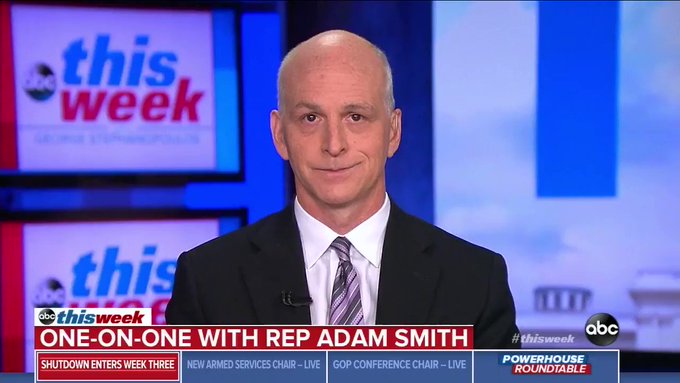
Embedded video
Rep. Adam Smith
✔@RepAdamSmith
I joined @ThisweekABC to discuss the government shutdown and the President’s plan to declare a nat’l emergency to pay for his proposed border wall. He is shutting down the gov’t to break his signature campaign promise – that taxpayers weren’t going to have to pay for the wall.

Praluent not worth the price, finds study


Sanofi and Regeneron’s Praluent may still not be cost effective compared to other cholesterol-lowering drugs despite a recent price cut, a new study has claimed.
The drug’s high price point has long been a sticking point for payers and in March 2018 the companies halved the price from $14,000 a year to $7,000 in the US.
But research published in the Annals of Internal Medicine concluded that, despite its effectiveness, the drug would need to be priced lower, at $874 to $2311, to be considered cost effective, depending on the regimen it is compared to.
Study author Dr Dhruv Kazi said that the availability of cheap, effective generic versions of statins and ezetimibe makes the price of Praluent (alirocumab) harder to swallow.
“Your additional drugs have to work harder to be cost-effective,” he commented.
The authors’ cost effectiveness analysis was based on results from the ODYSSEY OUTCOMES trial, which studied patients with a recent acute coronary syndrome and found that, compared with participants receiving statins alone, those receiving a statin plus Praluent had lower rates of a composite outcome including myocardial infarction (MI), stroke, and death.
Compared with a statin alone, the addition of Praluent cost $308 000 per quality-adjusted life year (QALY) gained. But the addition of ezetimibe cost $81 000 per QALY compared with a statin alone. Compared with the combination of statin and ezetimibe, replacing ezetimibe with Praluent cost $997 000 per QALY.
“We do think these drugs are useful to patients,” Kazi added, “and cost is a major barrier to access at this point.
“Perhaps the right thing here is to acknowledge the efforts the manufacturers have made to respond to these pricing pressures. But I don’t think we’re there yet.”
Regeneron said that it disagreed with the cost analysis, pointing out that its own analysis found that the drug would be cost-effective at an annual price of $6319 to $9346 for patients with serious heart problems and $13 357 to $19 805 for patients whose cholesterol levels were not reduced by other treatments.
“These results are well within the current price range paid for Praluent in the US, and aligned to our March announcement to lower the Praluent US net price to between $4,500 and $8,000 to payers who would allow for more straightforward, affordable patient access,” the company said in its statement.
Praluent’s main rival in the PCSK9 space, Amgen’s Repatha (evolocumab) also had a major price cut in October last year.

‘Regeneron Stock Is the Latest Biotech Bottle Rocket’


Regeneron was trading higher Friday, following an upgrade from Guggenheim.
Where we were: Regeneron fared better than some biotech peers last year, and is up 2.4% in the past 12 months.
Where we’re headed: Major drugs are doing well for Regeneron, and at the stock’s current levels, investors are basically getting its pipeline for free.
Just a few days into 2019 and biotech has already been in the headlines, with Celgene (CELG) leaping on a takeover offer from Bristol-Myers Squibb .Gilead Sciences (GILD) was also upgraded on Thursday, and Friday was Regeneron’s turn.
Guggenheim’s Adnan Butt boosted his rating on the stock to Buy from Hold, with a $461 price target, citing valuation, and more confidence that the company can overcome headwinds.
Butt writes that there were two major reasons he had been on the sidelines in terms of Regeneron stock, namely concerns about competition for its chemotherapy drug Eylea and sales trends for its eczema treatment Dupixent. Yet he’s feeling more upbeat about both. “Eylea competitors may be weaker than imagined and Dupixent launch trajectory is sound and likely to get better.”
The analyst’s estimates for Dupixent are above the Street’s for both this year and next, and he writes that most of the stock’s valuation can be supported by just these two drug franchises. That means investors are essentially getting its pipeline for free, not a bad deal considering that new product approvals could be a “meaningful driver” through 2020. Indeed, the company has some 20 drugs in clinical development at the moment, including eight in partnership with Sanofi (SNY). Butt also likes that Regeneron has a solid balance sheet.
Regeneron is up 6.4% to $396 in recent trading. The upgrade certainly helps, along with perhaps residual optimism following the Celgene deal. With a market cap of $40 billion, some investors may be hopeful that it too could be a takeover target, especially if much larger biotechs are being placed in the same category.

Solasia Initiates Phase III Program for Cancer Treatment Effect Med in Japan


Solasia Pharma K.K. (TOKYO:4597, Headquarters: Tokyo, Japan, President & CEO: Yoshihiro Arai, hereinafter “Solasia”) announced the initiation of Phase III clinical trial for PledOx® in Japan.
In November 2017, Solasia acquired exclusive development and commercialization rights for PledOx® in Japan, China, Hong Kong, Macau, South Korea and Taiwan from PledPharma.
This Phase III clinical trial in Asia (Japan, South Korea, Taiwan and Hong Kong) is an expansion of the Global Phase III trial led by PledPharma in the rest of the world where the first patient was included in the United States in November. The Asian region including Japan is now officially part of this Global Phase III clinical trial.
Following Japan, Solasia will also initiate in South Korea, Taiwan and Hong Kong successively.
This trial is for colorectal cancer patients treated with mFOLFOX6 (*1) which contains antioxidant drug “oxaliplatin” and to examine the effect of suppressing the development of peripheral neuropathy by administering PledOx®. Oxaliplatin is a platinum-based drug and is indicated for colorectal cancer, pancreatic cancer, gastric cancer etc.
Peripheral neuropathy is known as one of the serious side effects caused by administration of oxaliplatin, and one of the causes is that neurons develop by being damaged due to oxidative stress induced by the drug. Peripheral neuropathy is also known as the main side effect of other platinum-based drugs such as cisplatin. There are currently no drugs approved for the treatment of chemotherapy induced peripheral neuropathy. PledOx® is a superoxide dismutase analogue that is an enzyme that degrades active oxygen generated in cells and has the effect of protecting nerve cells from damage caused by drug-induced oxidative stress.
The initiation of this trial is a significant milestone for Solasia as this trial is positioned as a registration trial and its success is expected to contribute to patients suffering from peripheral neuropathy due to cancer chemotherapy.
Study description:
  • Phase III, International, multicenter, double-blind, randomized, placebo-controlled study
Purpose of the study:
  • The effect of reduce the peripheral neuropathy associated with administration of oxaliplatin by PledOx® administration compared with placebo.
Study design:
  • POLAR-M study: Colorectal cancer patients who undergo mFOLFOX6 therapy with distant metastases are included.
  • POLAR-A study: Colorectal cancer patients who undergo mFOLFOX6 therapy as an adjuvant therapy for postoperative surgery are included.
Primary outcome measures:
  • Both the POLAR-M and POLAR-A studies will evaluate the proportion of patients with moderate or severe chronic peripheral neuropathy at 9 months after (first day of FOLFOX therapy) the initial administration of PledOx®.
Estimated enrollment:
  • POLAR-M study: 420 patients (of which 120 patients in Asian region)
  • POLAR-A study: 280 patients (of which 80 patients in Asian region)
Solasia is a specialty pharmaceutical company based in Asia, with a mission of “Better Medicine for a Brighter Tomorrow”. In order to address the unmet medical needs within the oncology area, we develop innovative medicines to contribute to the patient’s healthy living and to provide treatment options for the healthcare providers. Additional information is available at http://www.solasia.co.jp/en/

Samsung Bioepis Partners with 3SBio to Expand Biosimilar Business into China


  • Samsung Bioepis’ rapidly growing biosimilar business to expand into Chinese market through partnership with 3SBio, bringing together Samsung Bioepis’ proven development platform with 3SBio’s strong commercialization platform
  • Partnership with 3SBio follows successful biosimilar commercialization partnerships in the European and US markets with Biogen and Merck, also known as MSD outside of the United States and Canada.
Samsung Bioepis Co., Ltd. today announced that its rapidly growing biosimilar business will expand into mainland China through a licensing agreement with 3SBio Inc. The agreement covers multiple biosimilar candidates from Samsung Bioepis, including SB8, a biosimilar candidate referencing AVASTIN® 1 (bevacizumab).
Under the agreement, Samsung Bioepis and 3SBio will collaborate across a number of areas, including clinical development, regulatory registration and commercialization in China. Samsung Bioepis will receive upfront and milestone payments, as well as royalties on sales. Additional financial details were not disclosed.
“We are very excited to expand our biosimilar business into China, where we hope to see our biosimilars play an important role in widening patient access to high-quality healthcare. We are confident we will achieve this goal through our partnership with 3SBio, which brings together Samsung Bioepis’ proven development platform with 3SBio’s strong commercialization platform,” said Christopher Hansung Ko, President and Chief Executive Officer, Samsung Bioepis. “At Samsung Bioepis, we will continue to demonstrate our enduring commitment to biosimilars by further strengthening our pipeline and widening their availability for patients and healthcare systems across the world.”
Established in February 2012, Samsung Bioepis currently has four biosimilars approved and marketed across Europe, which include the anti-TNF trio of BENEPALI™ (etanercept), FLIXABI™ (infliximab) and IMRALDI™ (adalimumab), as well as an oncologic biosimilar, ONTRUZANT® (trastuzumab). In the United States, the company has one biosimilar approved and marketed, RENFLEXIS® (infliximab), with both SB5 (adalimumab) and SB3 (trastuzumab) biosimilar candidates currently under regulatory review.
In total, over 100,000 patients across the world are currently under treatment with Samsung Bioepis’ biosimilars, with over 6 million doses administered.

Gates backs Schrödinger’s $85M for computational drug discovery platform


Computational chemistry in drug discovery is nothing new — the idea that more precise molecular design can speed up and optimize R&D is always appealing to an industry desperate for a higher return of investment — but it might just be gaining steam again. Just look at the list of investors in Schrödinger’s latest round.

Deerfield Management, Baron, Qiming Venture Partners, and GV (formerly Google Ventures) all chipped into the $85 million Series E, co-led by two of Schrödinger’s big believers: Bill Gates, who’s supported previous rounds; and WuXi AppTec, which launched a drug discovery joint venture with the company just weeks ago.
A storied shop that’s been selling software to biopharma companies since 1990, Schrödinger has been wading deeper into therapeutics in the past decade. With a suite of molecular simulation tools, it has helped launch splashy biotechs like Nimbus Therapeutics and Morphic Therapeutic and convinced Takeda last year to take a try on its in silico platform for $170 million per program in neurodegenerative diseases and schizophrenia. That followed a similar partnership with Sanofi, which wanted to look into autoimmune diseases and oncology.
“The investment will allow us to continue to advance our technology platform to help our users accelerate their work in life sciences and materials design,” said Schrödinger CEO Ramy Farid. “We are also excited to expand our drug discovery efforts, leveraging our platform to grow our pipeline and discover new medicines more efficiently.”
The company didn’t specify what area its discovery programs will focus on. Its worldwide team of around 400 currently covers an extensive range of therapeutic areas, from antifungal and fibrosis to metabolic diseases and type 2 diabetes.

Galapagos initiates NOVESA Phase 2a trial in patients with systemic sclerosis


Galapagos NV expands its clinical study program with GLPG1690 in systemic sclerosis, following the recent start of the ISABELA Phase 3 program with ‘1690 in IPF. NOVESA is a double-blind, placebo-controlled Phase 2a trial evaluating the efficacy, safety and PK/PD of ‘1690 in patients with systemic sclerosis. NOVESA is planned to recruit 30 patients with diffuse cutaneous SSc, an autoimmune disease involving multiorgan fibrosis, which has one of the highest mortality rates among rheumatic diseases. One of the most visible manifestations is hardening of the skin. In diffuse cutaneous SSc, skin thickening affects several body areas, and patients have a higher risk of developing fibrosis of various internal organs, such as the lung. Currently, there are no approved drugs for this disease. SSc affects approximately 90,000 patients in the US and Europe, with a predominance of female patients. The primary endpoint of NOVESA is the modified Rodnan skin score at 24 weeks. mRRS measures the skin thickness as a surrogate measure of disease severity and mortality, with an increase in thickness associated with involvement of internal organs and increased mortality. Secondary objectives and exploratory endpoints include FVC, HRCT, quality of life as measured by QoL-Q, and CRISS, a SSc disease composite score.