Search This Blog

Saturday, August 29, 2020

FDA Covid Vaccines & Related Biological Products Advisory Committee Meet Oct 22

Agenda
The meeting presentations will be heard, viewed, captioned, and recorded through an online teleconferencing platform. On October 22, 2020, the Center for Biologics Evaluation and Research’s (CBER), Vaccines and Related Biological Products Advisory Committee (VRBPAC) will meet in open session, to discuss, in general, the development, authorization and/or licensure of vaccines to prevent COVID-19. No specific application will be discussed at this meeting.

Meeting Materials
FDA intends to make background material available to the public no later than 2 business days before the meeting. If FDA is unable to post the background material on its website prior to the meeting, any background material will be made publicly available at the time of the advisory committee meeting, and additional materials will be posted on FDA’s website after the meeting.

Materials for this meeting will be available at the Vaccines and Related Biological Products Advisory Committee meetings main page.

The meeting will include slide presentations with audio components to allow the presentation of materials in a manner that most closely resembles an in-person advisory committee meeting.

Public Participation Information
Interested persons may present data, information, or views, orally or in writing, on issues pending before the committee.

  • Written submissions may be made to the contact person on or before October 15, 2020.
  • On October 22, 2020, oral presentations from the public will be scheduled between approximately 2:30 p.m. and 3:30 p.m. EST.

Those individuals interested in making formal oral presentations should notify the contact person and submit a brief statement of the general nature of the evidence or arguments they wish to present, the names and addresses of proposed participants, and an indication of the approximate time requested to make their presentation on or before October 7, 2020. Time allotted for each presentation may be limited. If the number of registrants requesting to speak is greater than can be reasonably accommodated during the scheduled open public hearing session, FDA may conduct a lottery to determine the speakers for the scheduled open public hearing session. The contact person will notify interested persons regarding their request to speak by October 8, 2020.

Webcast Information
CBER plans to provide a free of charge, live webcast of the Vaccines and Related Biological Products Advisory Committee meeting. If there are instances where the webcast transmission is not successful; staff will work to re-establish the transmission as soon as possible.

The online web conference meeting will be available at:
Main link – https://collaboration.fda.gov/vrbpac102220/
Overflow link – https://collaboration.fda.gov/vrbpac102220overflow/

Contact Information

  • Prabhakara Atreya, 240-506-4946, e-mail: Prabhakara.Atreya@fda.hhs.gov
    or Monique Hill, 301-796-4620, e-mail: Monique.Hill@fda.hhs.gov
  • FDA Advisory Committee Information Line:
    1-800-741-8138 (301-443-0572 in the Washington, DC area) Please call the Information Line for up-to-date information on this meeting.
  • For press inquiries, please contact the Office of Media Affairs at fdaoma@fda.hhs.gov or 301-796-4540.

A notice in the Federal Register about last minute modifications that impact a previously announced advisory committee meeting cannot always be published quickly enough to provide timely notice. Therefore, you should always check the meetings main page or call the appropriate advisory committee hot line/phone line to learn about possible modifications before coming to the meeting.

FDA welcomes the attendance of the public at its advisory committee meetings and will make every effort to accommodate persons with physical disabilities or special needs. If you require special accommodations due to a disability, please contact Prabhakara Atreya at least 7 days in advance of the meeting.

FDA is committed to the orderly conduct of its advisory committee meetings. Please visit our Web site for procedures on public conduct during advisory committee meetings.

UK Phase 2 psilocybin biotech COMPASS Pathways files for a $100 million IPO

COMPASS Pathways, a British Phase 2 biotech developing a psilocybin-based therapy for depression, filed on Friday with the SEC to raise up to $100 million in an initial public offering.

The company is focusing on using its proprietary formulation of psilocybin, COMP360, in conjunction with psychological support as a way to help individuals who have treatment-resistant depression, or TRD, a subset of major depressive disorder, or MDD. COMPASS is currently evaluating COMP360 in conjunction with psychological support in a Phase 2b trial and plans to report data from this trial in late 2021.

The Cheshire, United Kingdom-based company was founded in 2015 and plans to list on the Nasdaq under the symbol CMPS. COMPASS Pathways filed confidentially on July 2, 2020. Cowen, Evercore ISI and Berenberg are the joint bookrunners on the deal. No pricing terms were disclosed.

Relevant Profile: CMPS


Moscow announces advanced trials for new COVID-19 vaccine

The mayor of Moscow invited residents Wednesday to join trials of a coronavirus vaccine that Russia approved for use earlier this month in what officials described as a breakthrough on par with the Soviet Union’s launch of the world’s first satellite in 1957.

The world’s first vaccine against the coronavirus to receive a government go-ahead has caused unease among international medical experts, who called Russia’s fast-tracked approval and failure to share any data supporting claims of the vaccine’s efficacy a major breach of scientific protocol.

Scientists around the world say any widely-used vaccine should first be tested in advanced trials involving tens of thousands of people to prove it is safe and effective before being licensed.

In his invitation to the Russian capital’s residents, Moscow Mayor Sergei Sobyanin appeared to announce those kind of broad studies would be launched soon. He said the “post-registration research” will last six months and involve 40,000 people.

Sobyanin encouraged Moscow residents to sign up, arguing that the vaccine was based on longtime previous research and proven to be safe.

“We all were eager to see the creation of a vaccine, and now we have it,” Sobyanin said. “Now, Moscow residents have a unique chance to become the main participants in clinical research that will help defeat the coronavirus.”

Moscow announces advanced trials for new COVID-19 vaccine
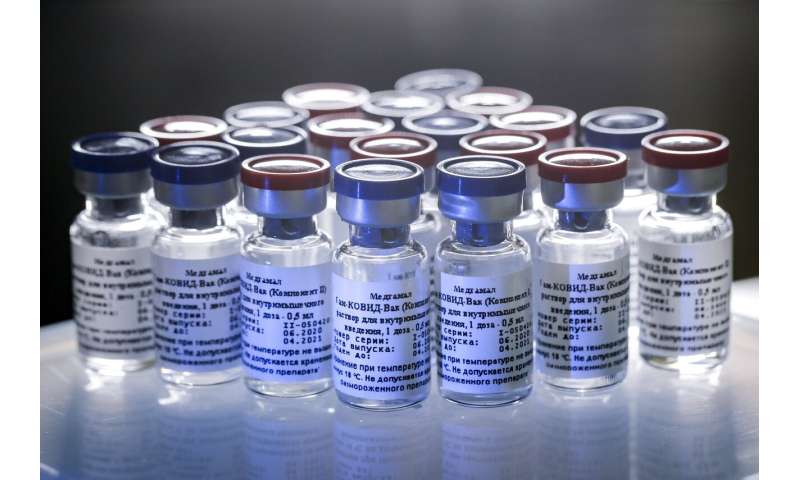
In this handout photo taken on Thursday, Aug. 6, 2020, and provided by Russian Direct Investment Fund, a new vaccine is on display at the Nikolai Gamaleya National Center of Epidemiology and Microbiology in Moscow, Russia. Russian President Vladimir Putin’s announcement that his country is the first to approve a coronavirus vaccine hasn’t provoked the awe and wonder of the Soviet Union’s launch of the first satellite into orbit in 1957. Instead the announcement was met by doubts about the science and safety of the vaccine. (Alexander Zemlianichenko Jr/ Russian Direct Investment Fund via AP)

Scientists at the World Health Organization said last week that although they had begun discussions with Russia about its vaccine, they had not yet received any detailed data about it.

In announcing the vaccine’s approval on Aug. 11, Russian President Vladimir Putin said one of his two adult daughters already had been inoculated with it. He said the vaccine underwent the necessary tests and was shown to provide lasting immunity to the coronavirus, although Russian authorities have offered no proof to back up claims of safety or effectiveness.

Experts warn that using an untested vaccine that has not yet proven to be safe or effective could ultimately undermine the response to the pandemic and cause more distrust among people about whether or not to be vaccinated.

As of Wednesday, Russia had reported a total of over 970,000 confirmed virus cases and 16,683 deaths. Russian officials have said the vaccine would initially be made available to high-risk groups, including medical workers and teachers before it comes to broad use.

The vaccine developed by the Gamaleya Institute in Moscow with assistance from Russia’s Defense Ministry uses a different virus—the common cold-causing adenovirus—that’s been modified to carry genes for the “spike” protein that coats the coronavirus, as a way to prime the body to recognize if a real COVID-19 infection comes along.

Moscow announces advanced trials for new COVID-19 vaccine
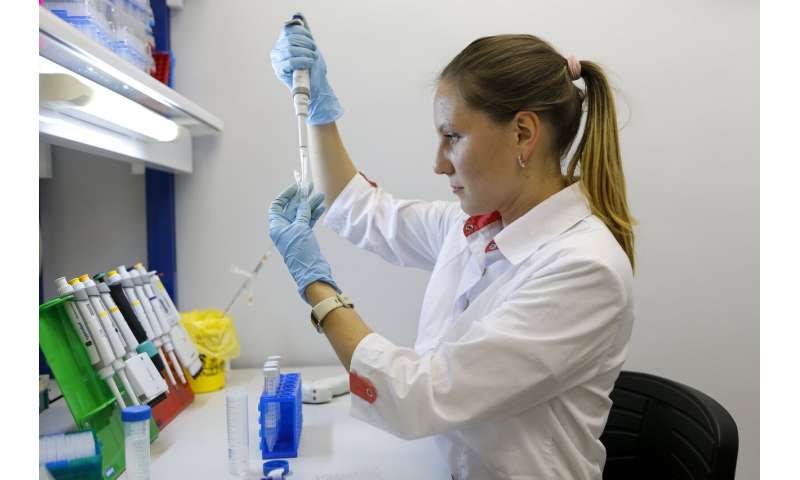
In this handout photo taken on Thursday, Aug. 6, 2020, and provided by Russian Direct Investment Fund, an employee works with a coronavirus vaccine at the Nikolai Gamaleya National Center of Epidemiology and Microbiology in Moscow, Russia. Russia on Tuesday, Aug. 11 became the first country to approve a coronavirus vaccine for use in tens of thousands of its citizens despite international skepticism about injections that have not completed clinical trials and were studied in only dozens of people for less than two months. (Alexander Zemlianichenko Jr/ Russian Direct Investment Fund via AP)

That’s a similar technology as vaccines being developed by China’s CanSino Biologics and Britain’s Oxford University and AstraZeneca—but unlike those companies, Russian scientists haven’t published any scientific information about how the vaccine has performed in animal tests or in early-stage human studies.

Putin said one of his daughters has received two doses, and had minor side effects such as slight fever, and was “feeling well and has a high number of antibodies.”

However, many international experts remained skeptical as the experimental shots so far have been tested on just a few dozen people and there’s no published scientific evidence backing official claims of its efficiency.

The Russian Health Ministry said in a statement Tuesday that the vaccine is expected to provide immunity from the coronavirus for up to two years, citing its experience with vaccines made with similar technology.

Becoming the first country in the world to approve a vaccine was a matter of national prestige for the Kremlin as it tries to assert the image of Russia as a global power. Putin repeatedly praised Russia’s effective response to the outbreak in televised addresses to the nation, while some of Moscow’s top officials—including the country’s prime minister and Putin’s own spokesperson—became infected.

Moscow announces advanced trials for new COVID-19 vaccine
In this file photo dated Friday, Aug. 7, 2020, a medical worker performs a COVID-19 test at a test centre at Vnukovo airport outside Moscow, Russia. The World Health Organization’s Europe office senior emergency official Catherine Smallwood, said Thursday Aug. 20, 2020, the agency had begun “direct discussions” with Russia to try obtaining more information about the experimental COVID-19 vaccine the country recently approved. (AP Photo/Pavel Golovkin, FILE)

Last month, the U.S., Britain and Canada accused Russia of using hackers to steal vaccine research from Western labs. Russia has denied involvement.

Several vaccines, including those developed by Oxford and the U.S. National Institutes of Health, are currently in advanced testing and hope to have results later this year.


Programming plants to grow biomolecules: the future of vaccines?

On the southern outskirts of the city of Owensboro in Kentucky, US, there is a square, nondescript building. Inside, rows and rows of small plants are growing under artificial lights. This is a new generation biotech venture: a molecular farm. Others are springing up across the US and elsewhere—and they farm vaccines. This means that if we find a coronavirus vaccine that works, their produce could be used by households worldwide.

The basic idea of molecular farming is to genetically modify plants so that, alongside all their usual biochemicals, their cells produce biomolecules that are useful to us. It’s not a new idea.

The field was kicked off in 1989, when researchers fixed tobacco plants so that they produced a proof of concept antibody protein. Plenty of hype ensued in the following decade or so. One of the early ideas was that this could produce edible medicines – bananas, for instance, that expressed vaccines in their cells. Molecular farming seemed like a world changing idea, capable of providing medicine easily and cheaply to billions of people.

One reason it didn’t take off, says Professor Julian Ma at St George’s, University of London, UK, is that it can be difficult to control dosage with edible vaccines: “How do you stop somebody eating 20 bananas because they think it’s good for them? There was a moment where everybody got seriously excited. And then realised—oh no, it’s actually not going to be quite so straightforward.”

Living things have biomachinery that uses a nucleic acid code as an instruction manual for building proteins. Molecular farming hijacks this machinery and gets it to use synthetic instructions to produce new proteins. But bacteria and other mammalian cells, such as the Chinese hamster ovary (CHO) cell, can do this too. Indeed, CHO cells are the most common way of culturing proteins. Cultured proteins are mostly used as drugs, for treating conditions like diabetes and problems with blood clotting. Culturing methods are more expensive and time consuming than molecular farming but the processes involved are well established and validated for safety—molecular farming hasn’t got there yet. But it is beginning to catch up.

Plants

A few years ago, Prof. Ma conducted a proof of concept study to show that an antibody could be produced in plants and isolated from them using simple separation techniques and that the resulting proteins could be just as pure and thus safe for medical use.

Another helpful factor is the rise of a genetic modification technology called transient expression. This is a technique that involves having cells express some DNA temporarily. Crucially, it is easy in plants. It involves dipping them in a special solution and then allowing them to grow. This means that in some cases plant scientists can go from genetically modifying plants to having them express new proteins in two weeks or less.

Molecular farming facilities are getting more common. That farm in Owensboro belongs to Kentucky BioProcessing, a long-established firm that helped produce the ZMapp antibodies to help treat Ebola during the 2015 outbreak. Another large facility is being built in Quebec, Canada. And Brazil has also announced it intends to build one, says Prof. Ma. “I see that as a bit of a breakthough. It’s the first one in the southern hemisphere.”

It is in this context that Dr. Diego Orzáez at the Institute for Plant Molecular and Cellular Biology in Valencia, Spain, is running the Newcotiana project. Dr. Orzáez says that although lots of large farms exist, no one has yet put much effort into breeding the plants they use to improve their productivity—he and his team are now doing just that.

They are working on two closely related plants. The first is Nicotiana benthamiana, a fragile, dwarf cousin of the tobacco plant, which is the species grown in most commercial molecular farms because it is so easy to genetically modify. The second is Nicotiana tabacum, the larger, hardy plant that is grown commercially for tobacco. The plan is to optimise both.

Tobacco

There’s a special reason why Dr. Orzáez wants to work with Nicotiana tabacum. He says that there are communities across Europe who have traditionally grown tobacco for use in cigarettes but face a certain stigma for doing so. Some such communities can be found in the relatively wet area of La Vera, in the Extremadura region of Spain, for instance. Many of these communities are keen to switch to growing tobacco that could be put to better use—providing medicines rather than tobacco—according to Dr. Orzáez.

Admittedly, there’s a wrinkle in the plan because plants that have been genetically modified can’t legally be grown outdoors in the EU because of the rules on genetically modified organisms. However, Dr. Orzáez says he hopes to convince the authorities this ought to change. This is because the plants in his project, while officially classed as GMOs, have been produced by gene editing and they don’t contain genes from other organisms as most GMOs do.

In the meantime, he says he has some encouraging results from his project. He has produced a cultivar of Nicotiana tabacum that does not flower, which means it cannot spread seeds or pollen and so should be safe to grow outside—and separately a cultivar that produces an anti-inflammatory compound. The next step is to combine these into a single plant line. He also has improved versions of Nicotiana benthamiana in field trials.

In all of Dr. Orzáez’s work the proteins are expressed in the plants’ leaves. But there are reasons why expressing them in other parts of a plant would be handy.

“If you wanted to stockpile (a vaccine), for example, seeds would be brilliant,” said Prof. Ma. “They are natural protein storage organs and they’re incredibly stable. You could produce a barn full of seed and keep it almost forever.”

Prof. Ma coordinates a project called Pharma-Factory, which is developing new farming platforms, so that proteins can be expressed in not just leaves but seeds, roots and algae. The project includes five small firms, and the plan is to have several protein therapeutics, including an HIV-neutralising antibody, developed to the point where they can be commercialised.

Coronavirus

So what of coronavirus? Several large molecular farming companies are already working on vaccines. For example, Medicago, headquartered in Quebec, has succeeded in directing plants to produce proteins that can be assembled into a virus-like particle, which is essentially the protein shell of the SARS-CoV-2 virus with nothing inside it. The company says results from tests in mice initiated the production of antibodies and it expects to begin phase I clinical trials in humans this summer.

For their part, the Newcotiana team released the genome sequence of Nicotiana benthamiana before being ready to publish it formally in an academic journal. “Plenty of companies and academics will benefit from knowing as much as possible about the plants themselves through this genome,” said Dr. Orzáez.

Dr. Orzáez also says his team have pivoted to working on coronavirus, modifying some of their plants so that they produce the spike protein from SARS-CoV-2 virus. This spike protein is an important reagent in serological tests that determine if a person has developed COVID-19 antibodies. In plants, it can be produced quickly and easily in places where supplies of the protein are low. The team still need to work to make sure the proteins they produce are validated for safety—but if they are, molecular farming could be a way of helping mass testing.

The fundamental attractions of molecular farming have not changed since the 1980s: it is cheap, it’s safe and it can be scaled up easily and quickly. As the coronavirus pandemic continues and the race is on to develop working vaccines, that last fact may prove to be extremely attractive, especially in poor parts of the world.


Telehealth’s hidden downside

August 29, 2020

Doctors are quick to adopt new technologies when they are used to treat illnesses, but they are practically luddites when it comes to the technology used to communicate with us, their patients. But one of the pandemic’s more surprising side effects has been the new drive to treat patients remotely via telemedicine. Now, in the rush to expand contactless medicine, doctors are moving much faster than the regulators, potentially leaving some patients at risk.
Routine appointments that once happened in person are moving onto digital platforms, raising the risk of hacking in real time and threatening doctor-patient confidentiality. Telehealth was a multibillion-dollar industry before the arrival of COVID-19, but use increased nationally by more than 5,000% in both April and May 2020 when compared to the prior year. The money involved is staggering. Earlier this month virtual healthcare provider Teledoc announced the purchase of Livongo, a mobile health management platform, for $18.5 billion in what amounted to the largest digital health deal in history. But there was consolidation even prior to the pandemic.
In 2019, Amazon purchased PillPack for $753 million, giving the tech behemoth an entry point to the consumer prescription delivery sector. Google attempted to snap up Fitbit for a cool $2.1 billion, but the acquisition is delayed pending a European Union investigation into data protection.
It is easy to see why companies like Amazon are interested in exploiting the telehealth market. The average PillPack user in 2018 generated $5,000 in revenue, nearly four times the typical Prime user. And as most PillPack users are in their 50s and 60s, they are statistically less likely to switch away to rival firms.
More importantly, these patients are an invaluable source of data. Amazon is already utilizing AWS and the Alexa voice division to consolidate medical records and data mine customer information. Independent pharmacists have warned that Amazon violates patient privacy, calling rival pharmacists’ customers to request that they transfer their prescriptions to Amazon. Amazon has refused to reveal how it obtained these patients health and contact data. Additionally, one Amazon data vendor, ReMy Health, recently came under fire for concealing who has access to its sensitive patient information.
Even without corporate consolidation, telemedicine poses pronounced privacy and security risks. As the number of telehealth transactions grows, so too does the attractiveness of telehealth providers as targets for hackers and other malicious actors. Last year, prior to the pandemic, the healthcare industry already saw a 49% increase in hacking, impacting 41.4 million patient records.
Sadly, the federal laws that protect this growing pool of data have gone largely unchanged for a quarter century. The Health Insurance Portability and Accountability Act of 1996 (HIPAA) offers several protections for patient data. But in March, the Department of Health and Human Services Office for Civil Rights announced it would “exercise enforcement discretion and waive penalties for HIPAA violations” for remote healthcare service. In other words, telemedicine providers got a free pass on privacy. Suspending privacy protections as an emergency measure makes sense, but more than five months later, there’s a real risk that this temporary workaround will become a permanent loophole.
HIPAA was enacted to protect Americans with preexisting conditions from discrimination and marginalization. Without HIPAA’s minimal protections, our health data is vulnerable to an array of abuses. While these dangers have to be balanced out against the exigencies of our current public health crisis, they shouldn’t be ignored. Rather than simply responding to the latest crisis, policy makers should create privacy protections that balance patient safety and the need for flexibility.
As remote healthcare services are extended beyond the pandemic, providers must take all steps necessary to secure our sensitive health data. Encryption, threat monitoring, risk assessment, user training, and informed consent are all vital to reducing the risk of data breaches. The companies capitalizing on the rapid expansion of the telehealth industry must also formalize and document their security practices, with real accountability when they fall short. When reassessing the HIPAA waivers enacted during the pandemic, regulators must take the time to consider data security concerns unique to digital healthcare and interoperable technology, updating the standards accordingly.
Lastly, regulators and lawmakers should tend to those left behind in the transition to telehealth. Video consultations and other online services threaten to leave many untreated, with broadband internet access becoming a literal lifeline. Americans on the far side of the digital divide—those without smartphones, computers, or consistent connectivity—are increasingly shut out from the virtual physician’s office. This means that many of those lower-income communities hit hardest by COVID-19 will also have the hardest time finding medical help.
It won’t be easy to create rules for an entire subfield of medicine, but it is certainly urgent. Health data is held to a heightened privacy standard for a reason. As we open the door to the provision of digital healthcare and the development of related technology, we cannot leave that door open to new and dangerous security risks.

Airlines, lodging are the next wave of this rally – PIMCO CIO

Bond giant PIMCO is already overweight the travel and tourism sector, anticipating the companies can ride out the pandemic, Mark Kiesel, co-manager of PIMCO’s $71B total return fund, says.

“Even if you look at the deeply-affected COVID-hit sectors, these companies have 20 to 36 months of liquidity,” Kiesel tells Bloomberg. “Any vaccine that comes out in the next 6 to 12 months, I think you could see a rebound and that’s the next wave or the rally.”

PIMCO is overweight the sector “in a prudent way,” aware that the recovery won’t be a straight line, and inventing “eyes wide open”, he says.

“We’ve lent to airlines through secured bonds, which are basically collateralized by very new planes” and also to lodging companies that are leaders in the field and gaming companies, Kiesel adds.

As far as interest rates are concerned, the U.S. is probably closer to the lows, he says. Monetary policy has been “unbelievably supportive” and fiscal stimulus, even after the election, such as infrastructure spending, could lead to a steepened curve.

Looking to the Fed, Jerome Powell is making a smart move after 16 years of undershooting inflation, Kiesel says.

He points out that the Fed’s Secondary Market Corporate Credit Facility has only used 5%, just $13B of $250B allocated, put $1.4T in investment grade supply has been priced, a “100 multiplier on the Fed’s money, one of the most successful central bank programs in history.”

Related stocks: American (NASDAQ:AAL), United (NASDAQ:UAL), Delta (NYSE:DAL), Southwest (NYSE:LUV), JetBlue (NASDAQ:JBLU), Marriott (NASDAQ:MAR), Hilton (NYSE:HLT), Hyatt (NYSE:H), InterContinental Hotels (NYSE:IHG), MGM (NYSE:MGM), Wynn (NASDAQ:WYNN), Las Vegas Sands (NYSE:LVS)