Four radical American socialists have been charged with election meddling and spreading Vladimir Putin’s propaganda after they were arrested in dramatic FBI raids.
The four, two of them white, are members of the African People’s Socialist Party, a 50-year-old black empowerment organization.
Omali Yeshitela, the group’s founder and chairman was one of the four Americans and three Russian nationals indicted Tuesday for “sowing discord, spreading pro-Russia propaganda and interfering in elections within the United States.”
Yeshitela said he was zip-tied outside his St. Louis home in a raid last July by FBI agents who used flashbangs as they stormed in.
He claims the FBI has been targeting his group for decades.
The DOJ says that the 81-year-old veteran leader of the far-left group conspired along with three others — one of whom is alleged to run a cult-like group called Black Hammer — to help Russian efforts to meddle in elections.
Yeshitela has called the charges an “asinine” attack on his organization.
Moscow-based Aleksandr Viktorovich Ionov, the head of the Kremlin-funded Anti-Globalization Movement of Russia, allegedly worked with the Russian Federal Security Service to carry out a “malign influence campaign” on US elections, the DOJ wrote in a statement.
FBI agents raided the home of Omali Yeshitela, 81, leader of the African People’s Socialist Party, and his wife last summer.ZUMAPRESS.comOne of the defendants, Romain Augustus Jr., is the head of the Black Hammer group that has been described as cult-like.
It also named Natalia Burlinova as part of the alleged plot and put her on the FBI’s most wanted list.
The indictment alleged that four Florida and Missouri-based members of the African People’s Socialist Party and the Uhuru Movement joined the effort.
“Russia’s foreign intelligence service allegedly weaponized our First Amendment rights — freedoms Russia denies to its own citizens — to divide Americans and interfere in elections in the United States,” said Assistant Attorney General Matthew Olsen of the Justice Department’s National Security Division.
The black liberation group published dramatic security footage of the FBI storming the group’s offices and homes.The group used its own website to show the raid and its aftermath.The Burning Spear/YouTube
“The department will not hesitate to expose and prosecute those who sow discord and corrupt US elections in service of hostile foreign interests, regardless of whether the culprits are US citizens or foreign individuals abroad,” Olsen said in a news release.
Yeshitela is the leader of the African People’s Socialist Party, which includes the Uhuru movement.
Penny Joanne Hess, Jesse Nevel and Augustus Romain Jr. were the others named in the indictment.
Romain is also the head of Black Hammer, a fringe black separatist group. Romain is also known as Gazi Kodzo.
Penny Joanne Hess, one of the members of the socialist group, was charged with being part of a Russian plot.Jesse Nevel was also charged with being part of Putin’s alleged election-meddling scheme.
Kodzo was thrown out of the Uhuru group in 2018 and started up the Black Hammer group which has been described as “cult-like.”
He has been charged in the past with sexual assault and a corpse was found in his house last summer.
Yeshitela, who declined to comment and referred questions to his lawyer, who was not reachable Friday, has previously denied being a Russian agent.
Yeshitela is the group’s founder and chairman.
He says the US government targeted him because of his activism for the black community — and because he has been to Russia.
“This case is not about whether or not I went to Russia, or whether or not I have a position around the war in Ukraine that was the same as what the Russians had,” Yeshitela wrote in an article late in 2022.
“This attack was perpetrated against us because we have always fought for the liberation of Africa and African people everywhere.”
The four Americans are accused of spreading election-meddling propaganda for the Russian leader Vladimir Putin.SPUTNIK/AFP via Getty Images
“At five o’clock in the morning, pre-dawn, an army of assault weapon-toting, camouflage-wearing military sources identifying themselves as the FBI attacked my home,” Yeshitela said at a rally last month.
“They used flashbang grenades, and vehicles. They threaten my wife. They use drones.
” This was in St. Louis Missouri, and it was in the economically depressed sector of that city.”
“It seems to be a lot of BS from what I can see,” a source familiar with the defense told The Post.
“There doesn’t seem to be any actual evidence that they did the actual bidding of Russia.”
One of the alleged plotters, Russian Natalia Burlinova, is now on the FBI’s most wanted list.
“They use Russia, they use this nonsense, even at a time when we’ve seen white people scaling the walls of the Capitol, threatening to kill the vice president, the feet on the desk of Nancy Pelosi,” Yeshitela said.
“And you talk about we have some role under the Russians of contaminating the pristine elections that happen in this country?”
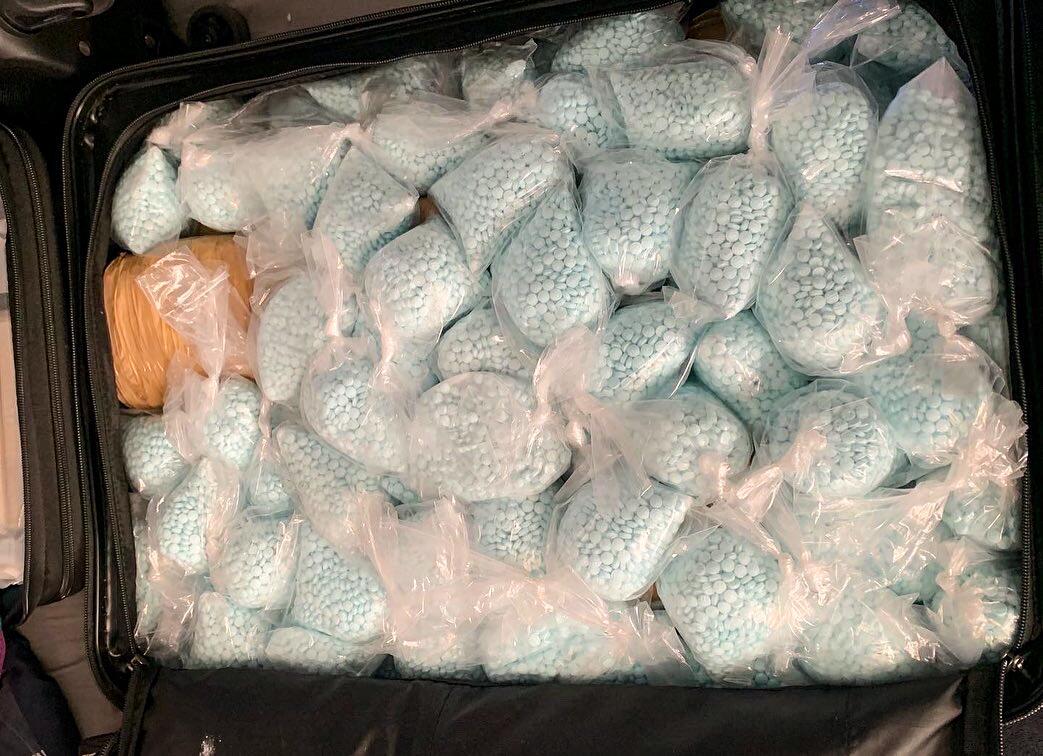
California Gov. Gavin Newsom has directed the National Guard and California Highway Patrol to help combat San Francisco’s fentanyl trafficking crisis.
On Friday, Newsom announced an effort to have both agencies assist local authorities to address the rise in fentanyl use.
The agreement will focus on “dismantling fentanyl trafficking and disrupting the supply of the deadly drug in the city by holding the operators of large-scale drug trafficking operations accountable,” the Democratic governor’s office said.
“Two truths can co-exist at the same time: San Francisco’s violent crime rate is below comparably sized cities like Jacksonville [Florida] and Fort Worth [Texas] — and there is also more we must do to address public safety concerns, especially the fentanyl crisis,” said Newsom in a news release.
CHP will assist the San Francisco Police Department by assigning personnel and training,drug trafficking enforcement within certain areas of the city, specifically the Tenderloin area.
The National Guard, or CalGuard, has been directed by Newsom to identify personnel and resources that will help dismantle fentanyl trafficking rings.
The city’s Tenderloin neighborhood has been called the epicenter of the region’s homelessness and drug crisis.
Members of the National Guard from California on the steps of the House, on Capitol Hill on March 11, 2021, in Washington, DC.Los Angeles Times via Getty ImagA man holds a piece of foil containing Fentanyl while on McAllister Street in the Tenderloin district of San Francisco, Calif. on June 21, 2019.Hearst Newspapers via Getty ImagIn 2021, Mayor London Breed issued a state of emergency for the neighborhood in an effort to address drug overdose deaths. The city saw a 40% jump in overdose deaths from January through March.
San Francisco had the second-highest overdose rate in the nation along with the second-highest death rate from fentanyl overdose in 2020, according to the San Francisco Chronicle.
Rep. Gabe Evans isn’t a career politician. Before being elected to his first term as a Colorado State representative on Nov. 8, 2022, Evans served 12 years in the U.S. Army and Colorado Army National Guard, and 10 years as an Arvada, Colorado, police officer, sergeant, and lieutenant.
As such, Evans has extensive experience in law enforcement and combating crime. When he was asked about a March report from the U.S. Department of Justice (DOJ) that found that among the 22 most populous states, Colorado was number one for violent crime and what’s led to the increase, Evans was quick to answer.
“In 2012, 2013, 2014, what we really started to see was this push to either reduce penalties or to completely decriminalize a whole bunch of different—and I’ll call them addictive substances because, to me, that’s the important part of this—but I’m talking drugs,” Evans told The Epoch Times.
“It’s the addiction power of drugs that I think kind of laid part of the foundation for where we’re at. There’s a lot of [legislation] we’ve [passed] to reduce penalties on meth, on cocaine, on heroin, on fentanyl. We just legalized, via a popular referendum, psilocybin this last election.
“And the unfortunate side effect of all that is there is still a massive international presence dedicated to the drug trade. You know, you’ve got huge cartels in Mexico that the Mexican government has trouble controlling.”
Evans said the push to reduce drug penalties encouraged cartels to “set up shop” in Colorado, as did the push to make it harder to enforce existing laws. “What happens is, inadvertently or not, [these policies] attract a huge criminal presence from the people who make a living distributing and trafficking this stuff,” Evans said.
That, Evans added, led to an increase in other crimes, like vehicle theft and robberies, to fuel drug habits.
Still, lax drug laws aren’t entirely responsible for Colorado’s escalating crime. The other factor, Evans explained, is what’s happening to officers.
“You don’t usually see a lot of attrition in law enforcement in the 5-to-15-year range,” Evan said. “When Senate Bill 20-217 kicked in, most of the attrition occurred in that 5-to-15-year range.
Among other provisions, SB 217 requires all local law enforcement to wear body-worn cameras—except in undercover, and certain situations—updating reporting requirements, and updated penalties for unlawful use of force. It also limits how officers can respond to a protest or demonstration, and allows for civil action suits against officers.
“I mean, look at me. I was 10 years into my career. I was the youngest lieutenant in recent history at Arvada. I was making a solid six figures, and I walked away from that career, in which I was on a trajectory to be a chief or a sheriff in a few more years if I wanted to be competitive.
“And I walked away from it. And there are, from my agency alone—my agency is less than 200 cops—from my agency alone, I can tell you dozens of similar stories of solid cops, solid detectives, solid sergeants with 5-to-15 years of experience that said, ‘I’m out. I cannot work in this toxic environment.’ That goes back to Senate Bill 217.”
Escalating Crime
The DOJ March report analyzed data from the National Crime Victimization Survey (NCVS) from 2017–2019 and found 45 “violent victimizations per 1,000 persons age 12 or older” in Colorado. Violent victimization includes sexual assault or rape, robbery, and aggravated and simple assault.
The NCVS is considered the nation’s primary source for data on criminal victimization because it includes crimes reported and not reported to the police. The March report is the first time the Bureau of Justice Statistics (BJS) has released the NCVS’s victimization data.
Moreover, while the report covers 2017–2019, the most recent data shows Colorado crimes have escalated. The Common Sense Institute reports that in 2022, crimes increased in seven major categories—arson, prostitution/pandering, robbery, motor vehicle theft, buying stolen property, vandalism, and drug possession/sales. In fact, for drug trafficking, the Colorado State Patrol reports that Colorado is in the middle of a 10-year drug trafficking record.
In the first five months of 2022, Colorado law enforcement seized more fentanyl than it did for all of 2021—enough to kill 93 million people.
The report states, “Concurrent with Colorado’s rising crime rates, since the start of the pandemic, incarceration in Department of Corrections facilities dropped by 15.5 percent, the number of offenders on parole by 14.1 percent, and the number of offenders on probation by 14.4 percent. A rise in crime should catalyze a corresponding rise in arrests, convictions, and incarceration for the sake of public safety and justice for victims.”
The reason escalating crime hasn’t resulted in a corresponding rise in law enforcement is because of changing laws.
Legislation’s Impact
“The vast majority of our general assembly is pushing bills that lower penalties for crimes and otherwise find ways of turning the criminals into victims in Colorado,” Colorado State Republican Rep. Ryan Armagost told The Epoch Times. Like Evans, Armagost served in the military and was in law enforcement for 10 years.
“The bills that [Republicans] push forward that would raise penalties for auto thefts and things like that are being killed before they even get to the floor,” Armagost said. “And then bills that are otherwise helping to find alternative means for those who offend—other than going through the correctional system—is kind of the means that the Democrats have been pushing. So, we’ve been seeing a lot more of the alternative sentencing and alternative means for detention.”
Armagost noted that people are showing up to support the Democrat’s bills lowering penalties, while also showing up to protest the Republican’s bills looking to stiffen penalties. But he pointed out that there’s a distinct criminal thread.
“The rallying and support for [the Democrats’ bills] have been [from] the people who have offended and the people who are going to have a criminal record. They are coming out and speaking in support of these bills that [Democrats are] pushing. It is the same group that comes out to oppose the bills that the Republican side is pushing to stiffen penalties and stiffen sensors and corrections, correctional facilities, and stuff like that,” he said.
Evans, in agreement with Armagost, added, “You know, when certain narcotics are either legalized or penalties reduced, we see people come in—and when I say people, I’m talking cartels, organized crime, drug traffickers, things like that—they come in with the billions of dollars at their disposal and set up shop. That’s one of the things that drives our No. 1-in-the-nation auto theft rate. That’s one of the things that helps drive our violent crime rate up.
“I remember a particular case that we had shortly after a particular drug was legalized, where there was a daytime burglary, and this mid-70s gentleman homeowner was assaulted and thrown down the stairs in his own home by somebody who had just gotten off of probation for drugs and assault in Texas that came to Colorado. He told me after I Mirandized him, he told me to my face, ‘The reason I came to Colorado is because I like your drug laws.'”
Former Colorado State Rep. Dave Williams, who now serves as the Colorado GOP chair, concurred. “Colorado has certainly been at the forefront of legalizing drugs, and this all started back when Colorado legalized marijuana in 2012,” Williams told The Epoch Times.
“We were one of the few states that actually legalized recreational marijuana. And that brought in a huge influx of folks wanting to partake in and get involved in marijuana. And that sort of kick-started it all.
“You had transients or homeless individuals, people with mental health conditions, that just came and started out panhandling. But then they started to engage in other types of crime, like burglary, armed robbery, or things of that nature to obtain resources to get marijuana. It’s only gotten worse from there as time has gone on.”
Williams added, “Democrats are absolutely incentivizing crime. For whatever reason, they care more about criminals that mean us harm or harm to themselves. And they’re more interested in letting criminals run loose on the streets than enforcing the law and making sure that hardworking taxpayers can conduct their affairs safely in a safe environment.”
Still, lax drug laws and laws that incentive crime are only part of the problem.
Demonizing Police
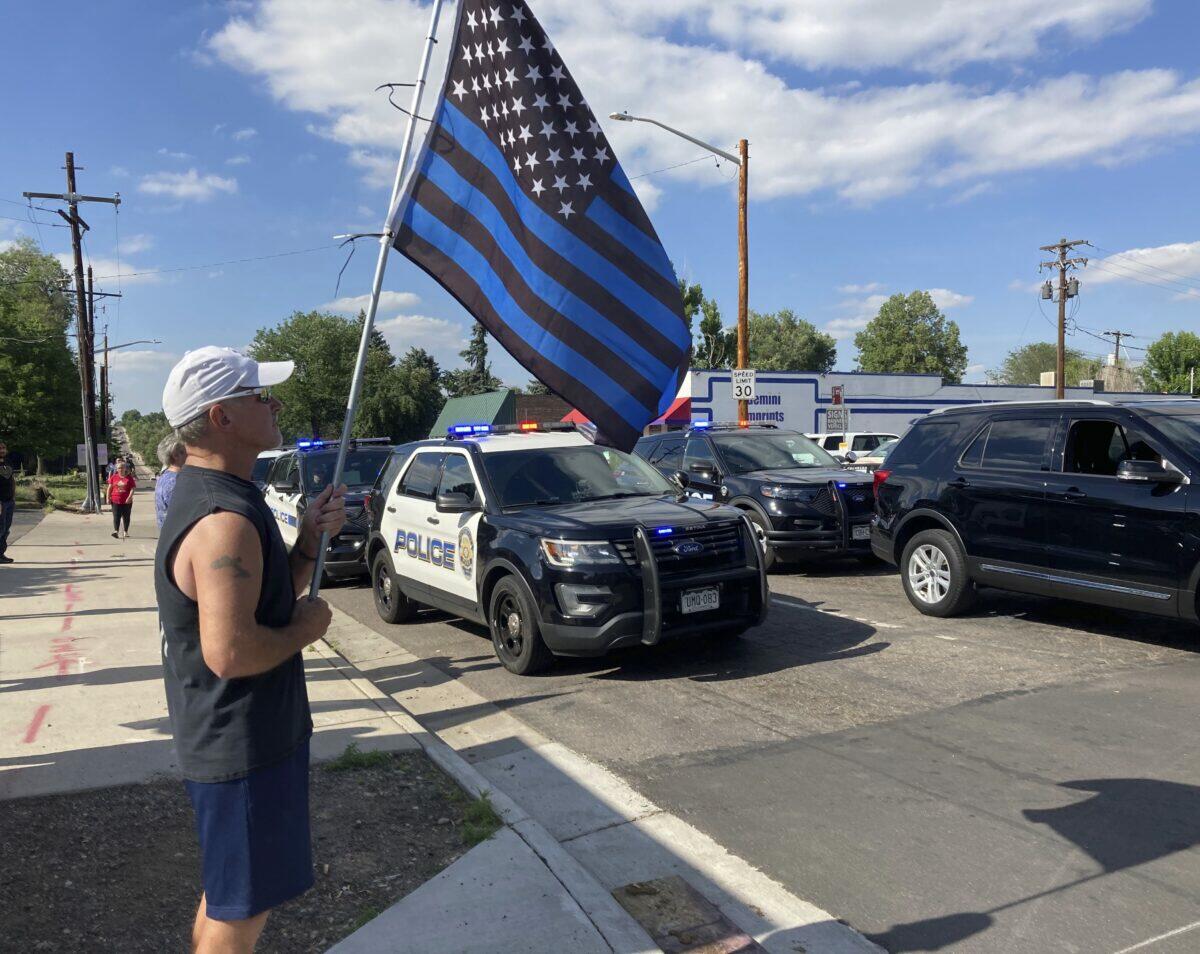
“Law enforcement in Colorado is facing a historic recruiting, retention, and morale crisis,” Evans said. “Nobody wants to be a cop. The cops that were cops are fleeing the profession in droves. And that’s the second prong of this kind of two-pronged issue that’s driving crime up in Colorado.” Specifically, according to Evans, one of the policies that “broke the back” of law enforcement was the passage of SB 217.
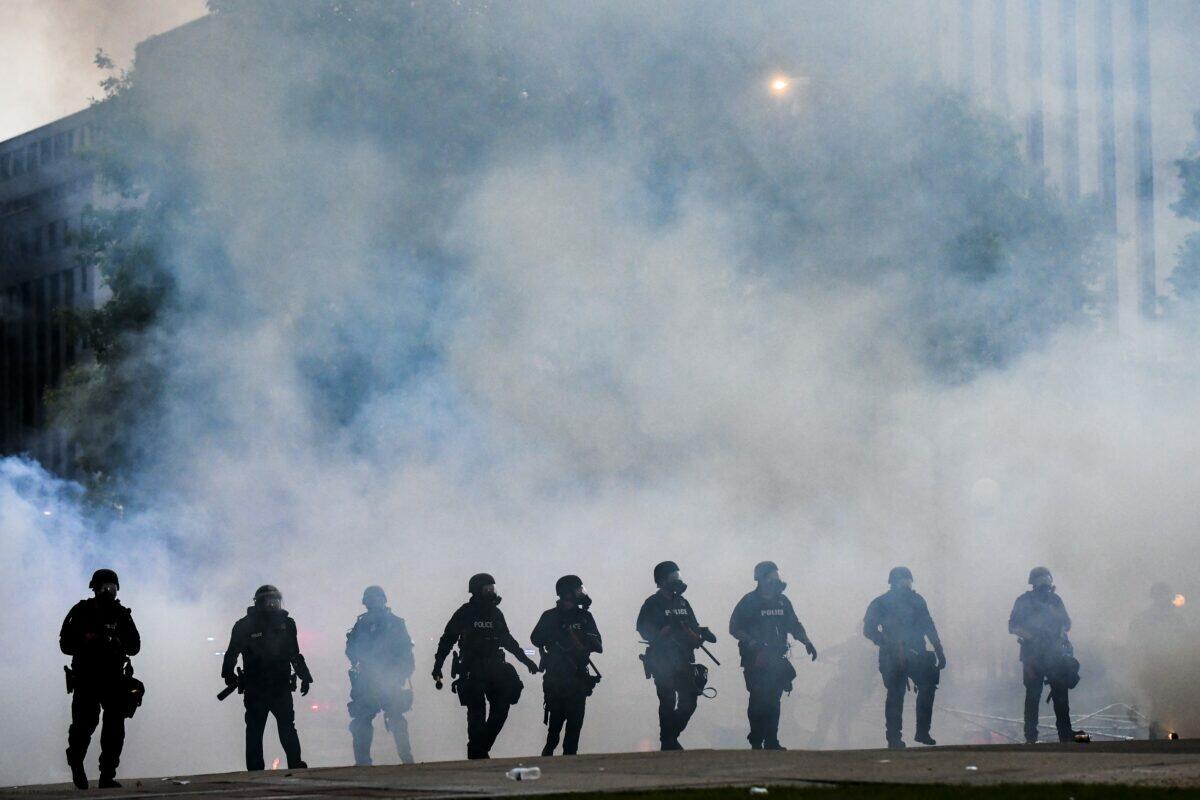
Evans explained that after the police custody death of George Floyd on May 31, 2020, Denver experienced massive riots—the third most violent in the nation—and lawmakers, hoping to quell the fury, passed SB 217, the “Enhanced Law Enforcement Integrity” Act. It was signed into law on June 19, 2020, having passed through the general assembly and into law in 16 days.
According to Evans, two parts of SB 217 are particularly demoralizing to law enforcement. The first was the requirement that every encounter be extensively documented, adding significant paperwork to an already demanding job, and the second was a body camera requirement.
“The insidious part of how Senate Bill 217 implemented body cams was that it basically put a guilty-until-proven-innocent mandate in there which said that if something is not captured on law enforcement body camera—and whatever that was that was not captured is challenged in court—the courts are allowed to assume misconduct on the part of the officer, and it’s up to the cop to prove that they didn’t behave in an inappropriate manner,” Evans explained.
Evans said that when he was an officer, he loved his body cam, but added that there are numerous reasons why it might not capture footage. “If somebody makes an allegation against you, and the body cam didn’t capture it—the battery died, you forgot to turn it on, you know, whatever—there are 101 reasons why the good well-meaning cop who’s doing the right thing, the body cam might not be ready. … [Then] the courts are allowed to impugn and basically assume misconduct on behalf of the officer.
“Now it’s on you to prove that misconduct did not occur. So, every time cops are putting on their body camera, it’s a visible reminder to them that, look, the state of Colorado thinks that you’re actually the bad guy and you’re the one that’s out here terrorizing and causing problems in the community.”
Armagost agreed with Evans, adding that most of the anti-law enforcement legislation originates in California, and is then adopted by the Colorado General Assembly.
“Watching what’s going on nationally, pretty much you’ll notice that whatever is passing legislation in California, becomes a proposed bill the next year in Colorado,” said Armagost.
“The anti-law enforcement sentiment is definitely one of those. They keep finding bills that are working in California and trying them here to further tie the hands of law enforcement and their ability to do their job.”
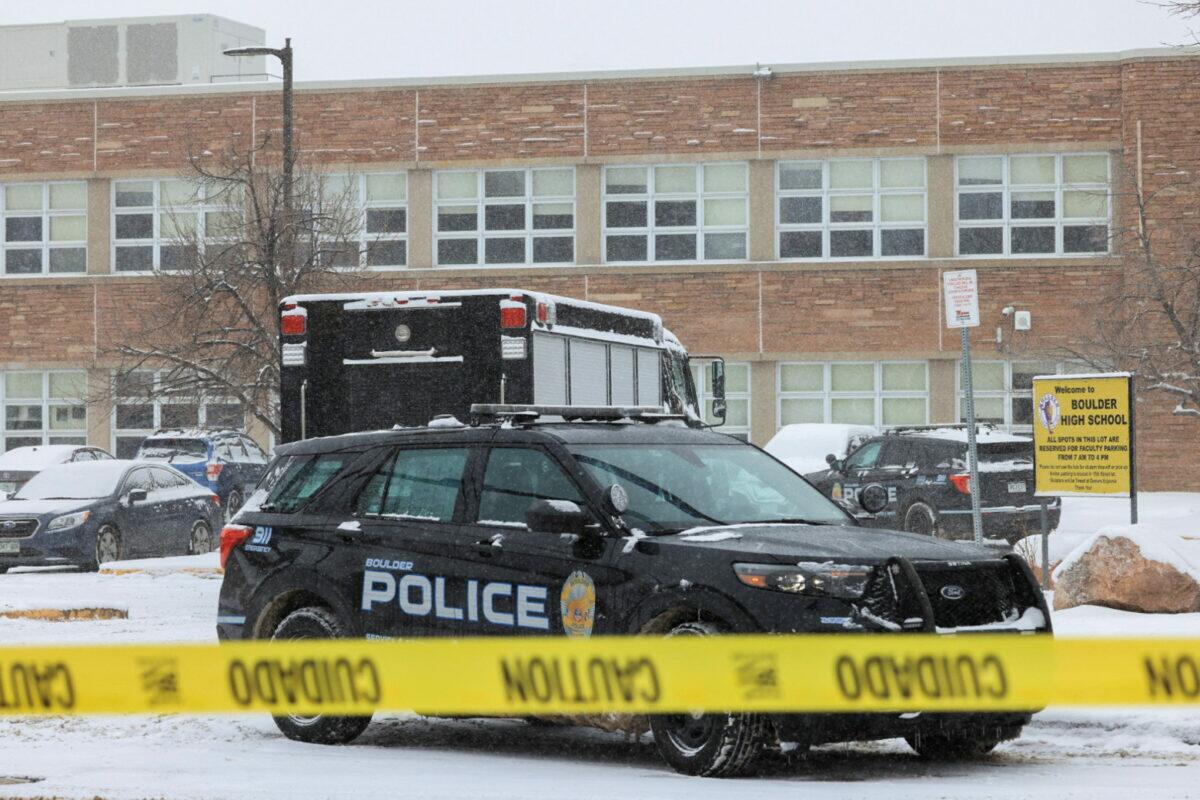
Armagost added that in Denver, school resource officers were removed from almost all the schools, which he said “led to an uptick in incidences within our schools. We just had a shooting a couple of weeks ago in a Denver school.”
Armagost said that currently, Republicans have one of the smallest Caucuses they’ve ever had in the General Assembly, and Democrats have used that to attack police officers.
“[Democrats] made the law enforcement career the most toxic career to be in by basically giving everyone the right to be as belligerent and disrespectful to law enforcement as possible, and get away with it.
“You have law enforcement officers leaving early, not even finishing to retirement, at rates that we’ve never seen before. So, I mean, the retention in law enforcement agencies is very, very slim. It’s very disturbing. … Nobody wants to be a cop. Nobody really wants to be subjected to that kind of abuse on a daily basis anymore.”
Reversing Rising Crime
To reverse flagging retention and recruitment rates in law enforcement, and also reverse escalating violent crime in Colorado, Armagost said, “We need to evaluate, I think as a whole, and hopefully convince our democratic counterparts that we need to focus more on taking care of our protectors, not on taking care of criminals.”
Evans concurred, “’I’m always up for criminal justice reform, but not if it’s making cops out to be the bad guys. We have to support law enforcement. And you know, I was a lieutenant. I’m very familiar with vicarious liability, all the bad stuff that happens when we got cops doing bad things, so I’m all for more training. I’m all for more education.
“But we have to make it an environment in which people actually want to join this career and dedicate a significant chunk of their life to it. Because that’s the only option that we got. We have to be able to fix that recruiting and retention problem.”
Specifically, to reduce rising violent crime, Evans added, “We need to have a nice balance of carrot and stick. If you harm your fellow human beings, you’re gonna be caught, you’re gonna be held accountable for it. That’s the stick.
“But we also have to have the carrot, of look, we need to increase our mental health, behavioral health, substance abuse, we need to increase the focus on those programs to help those individuals that do want to be productive citizens actually have a productive life. … If you want a hand-up, we extend you an open hand of assistance. But if you continue to want to victimize your community, you will be met with a closed fist.”
The Epoch Times’ requests for comment from Democratic lawmakers in Colorado were not returned by the time of publication.
Germany continues to be rocked by disruptive strikes against its entire transportation networks, as workers demand large pay hikes to help offset surging price inflationunleashed by central bank money creation, western sanctions against Russia, and Germany'sdeeply flawed energy policies.
On Thursday, members of the Verdi trade union walked out of the Dusseldorf, Hamburg and Cologne airports. That prompted the cancellation of some 700 flights and, as the strike continues into Friday, will affect nearly 100,000 people, according to the airport association ADV.
On Friday, security workers at the Stuttgart airport will join the strike. In anticipation, the airport cancelled all scheduled departures.
That's just the beginning of Friday's misery in Deutschland:The EVG union has called for a nationwide transportation strike from 3am to 11 am, freezing rail and bus travel and throwing a wrench in commuter's lives, to say nothing of tourists caught up in the mess.
The Deutsche Bahn national rail service said the impact would be enormous, and extend beyond the hours of the strike itself. "The EVG has completely lost its sense of proportion and is only bent on chaos,"said Deutsche Bahn human resources board member Martin Seiler.
"Not a single train will run," EVG rep Cosima Ingenschay tells Reuters. Deutsche Bahn confirmed as much, saying all long-distance service was cancelled and few commuter trains will operate.
Germany's March year-over-year inflation rate clocked in at 7.3%. That's a modest deceleration from the 8.7% rate seen in both January and February. However, March saw a jarring 22.3% rise in food prices, up from January's 20.2% and February's 21.8% rise.
EVG is demanding a 12% pay hike for its 230,000 members. Verdi is angling for bonuses for working nights, weekends and on public holidays. "Work at airports must become more attractive in order to be able to keep aviation security specialists and recruit new ones in order to avoid longer waiting times for holidaymakers," Verdi rep Wolfgang Pieper tells DW.
A similar one-day mega-strike slammed Germany in late March. However, ratcheting up the pressure, another rep threatened that the next strike will span multiple days.
The cumulative toll is mounting, as more than 900,000 passengers have had to reschedule or cancel air travel so far this year. The bus and rail impact is surely well higher than that.
For drug producers trying to bring their lifesaving treatments to market, sky-high approval costs are a formidable, and sometimes unbeatable, foe. The cost of creating a new medication and getting it approved tops an astounding $5 billion. And now, the Food and Drug Administration (FDA) is poised to make it more difficult to get cancer medications approved. The agency is proposing to subject cancer drugs to costlier and lengthier pre-approval trials, even if there’s promising preliminary evidence that these therapeutics shrink tumors. It’s unclear if drug sponsors will even be able to recruit enough volunteers needed to run a fully randomized clinical trial, given the rarity of cancer types being treated. Policymakers and FDA officials must recognize the changing landscape of therapeutics testing. It’s critical that patients have access to game-changing medications without red tape and regulatory delay.
In announcing its new draft guidance, the FDA bemoaned small datasets and “reliance on cross-trial comparisons to historical trials to assess whether the observed treatment effect represents an improvement over available therapy...” This status-quo is admittedly not ideal. In a perfect world, researchers would be able to recruit an army of volunteers, randomly assign them medications (vs. placebos) and assess medication impacts with a high degree of certainty. This becomes difficult to pull off when about a quarter of all cancers diagnosed in the U.S. are types that afflict fewer than 40,000 people per year. As a team of researchers at the University of Rochester point out, “[b]y necessity, clinical trials in rare disorders enroll small samples. In combination with high inter-individual variability in clinical course observed in many rare diseases, this diminishes a study’s power.”
The FDA already has a poor track-record addressing these concerns. One poorly reasoned rejection centered around a medication called omburtamab, designed to treat a rare pediatric brain cancer. At first, the agency granted some leeway and allowed omburtamab’s sponsor (Y-mAbs Therapeutics) to give the drug to a small number of patients and compare survival outcomes to a historic dataset of similar patients who never had access to the drug. While impressive outcomes were reported, regulators were skeptical because the patients being given omburtamab also had access to other treatments that were out of reach for at least some of the patients in the “control group” dataset. Additionally, the dataset contained some information collected during the 1990s and early 2000s when cancer treatments may have been less effective.
The agency extensively communicated these concerns with its advisory committee, concluding that the FDA, “cannot reliably attribute the observed [overall survival] OS difference to omburtamab.” In the same analysis, though, the FDA reported that it was in fact able to control for patients’ use of other treatment (i.e., radiation therapy, surgery, chemotherapy) and the time-period of treatment. And, even after adding the controls, the results appear encouraging for the medication. The data suggests that patients taking omburtamab live 7-12 months longer than their non-medicated peers. Despite these sustained positive findings, the advisory committee bought into the FDA’s critical briefing and voted to reject the drug. The FDA followed suit and sent Y-mAbs a rejection letter.
If the FDA’s draft guidance becomes agency policy, far more medications such as omburtamab will be rejected and the use of historic data will effectively be banished. This would further slow down FDA approvals, which were already 25 percent lower in 2022 than 2021.
The agency must reverse course and commit to a faster, more flexible approvals process. Patients need all the tools they can get to fight deadly, unrelenting diseases.
David Williams is the president of the Taxpayers Protection Alliance.
In a dissent from the Supreme Court’sorderpausing mifepristone restrictions from taking effect, JusticeSamuel Alito said there were “legitimate doubts” that theBiden administration would have followed a court decision that went the other way.
“Here, the Government has not dispelled legitimate doubts that it would even obey an unfavorable order in these cases, much less that it would choose to take enforcement actions to which it has strong objections,” Alito, one of the court’s conservatives, wrote.
The high court on Friday granted requests from the Biden administration and Danco Laboratories to preserve access to mifepristone, part of a two-drug regimen used in medication abortions, as its appeal of a lower court ruling proceeds.
When a federal judge in Texas originally revoked the Food and Drug Administration’s (FDA) approval of mifepristone earlier this month, some lawmakers called on the administration to ignore the ruling.
Federal officials had been cool to the suggestion as their request for a pause worked its way up to the Supreme Court, although Health and Human Services Secretary Xavier Becerra said all options remained on the table.
Alito suggested in his dissent that if the government failed in court, the FDA may have leveraged its practice of enforcement discretion, in which the agency sometimes chooses to not impose regulations and requirements on products and manufacturers, oftentimes to ensure an adequate supply will be available.
Danco Laboratories, which makes the brand name version called Mifeprex, had told the justices that the company would have needed to completely change the drug’s packaging and label and then ask FDA to approve it, typically a monthslong process.
“That would not take place, however, unless the FDA elected to use its enforcement discretion to stop Danco, and the applicants’ papers do not provide any reason to believe the FDA would make that choice,” Alito wrote.
He suggested that the federal government had not “dispelled legitimate doubts” that it would obey such an order entirely.
Alito, who authored the court’s majority opinion overturning the constitutional right to an abortion last year, ultimately decided to vote against granting the pause.
“Contrary to the impression that may be held by many, that disposition would not express any view on the merits of the question whether the FDA acted lawfully in any of its actions regarding mifepristone,” he continued. “Rather, it would simply refuse to take a step that has not been shown as necessary to avoid the threat of any real harm during the presumably short period at issue.”
Justice Clarence Thomas, another conservative, indicated that he would have denied the administration’s request, but he did not join Alito’s statement.
None of the other seven justices publicly dissented from the order, although it is possible more did so without disclosing their vote. At least five votes were required to grant the stay.
White House spokespersonIan Sams accused House Judiciary ChairJim Jordan (R-Ohio) of a “highly misleading” leak aboutHunter Biden on Twitter Friday.
The House Judiciary GOP tweeted a letter sent to Secretary of State Antony Blinken on Thursday that included excerpts of a testimony from Michael Morell, a former deputy director of the Central Intelligence Agency (CIA), about the Hunter Biden laptop story published by the New York Post ahead of the 2020 election. The letter contained leaked data reportedly obtained from a laptop belonging to Hunter Biden.
It states that the committee was looking into a public statement signed by former intelligence officials who denounced the laptop story, and accused Blinken of having a role in it by calling Morell about the statement at the time.
Sams disputed this claim and suggested that the excerpts from Morell’s testimony revealed a “misleading” leak from Jordan, Rep. Michael Turner (R-Ohio) and the Republicans on the House Judiciary Committee.
“Wow. Fuller transcript newly released by @HouseJudiciary reveals this was a highly misleading selective leak by @Jim_Jordan, @RepMikeTurner and @JudiciaryGOP,” Sams tweeted Friday.
He also tweeted a portion of the testimony that was not included in the letter that showed the committee asking Morell: “When he called you, did he direct, suggest, or insinuate in any way that you should write a letter or statement on this topic?”
According to the excerpt, Morell responded: “My memory is that he did not, right. My memory is that he asked me what I thought.”
When pressed further by the committee about whether Blinken, who was a campaign advisor at the time, had said “the campaign could use some help on this,” Morell responded that Blinken “did not say that.”
“Think about this: instead of working with President Biden on solutions to real problems Americans care about — like lowering costs or tackling gun violence — House Republicans keep weaponizing their power to re-litigate the 2020 election in a wacky strategy to get on Fox News,” Sams tweeted Thursday in response to the letter.