Search This Blog

Wednesday, August 9, 2023

Palisade misses topline for lead asset in Phase 2

  Study did not achieve primary efficacy endpoint of reducing adhesions in LB1148 treated patients compared to placebo treated patients post bowel resection surgery

 Palisade Bio (Nasdaq: PALI), a biopharmaceutical company advancing therapies for acute and chronic gastrointestinal (GI) complications, today reported that the Company’s U.S. Phase 2 PROFILE study evaluating LB1148 for reduction in intra-abdominal adhesions in subjects following elective bowel resection did not achieve its primary endpoint.

“First and foremost, I would like to extend our appreciation to all of the study participants, the clinical staff at the study sites, as well as our team. The PROFILE study has provided us with a definitive outcome and enabled us to quickly make the decision to no longer pursue the adhesions indication,” commented J.D. Finley, Chief Executive Officer of Palisade Bio.

https://finance.yahoo.com/news/palisade-bio-announces-topline-results-120500677.html

ANI ups guidance after Q2

 Record quarterly net revenues of $116.5 million, representing year-over-year growth of 57.8%; net income available to common shareholders of $5.8 million and diluted GAAP income per share of $0.29 --

-- Record quarterly adjusted non-GAAP EBITDA of $34.1 million representing year-over-year growth of 246.0%; adjusted non-GAAP diluted earnings per share of $1.28 --

-- Lead Rare Disease asset, Purified Cortrophin® Gel (Repository Corticotrophin Injection USP) 80 U/ml (Cortrophin Gel) reported net sales of $24.3 million, a year-over-year increase of 138.2% --

-- Generics, Established Brands and Others reported net sales of $92.2 million, representing year-over-year growth of 44.9% --

Full Year 2023 Guidance

-- Company is raising net revenue guidance to $425 million to $445 million from $385 million to $410 million; adjusted non-GAAP EBITDA guidance is raised to $115 million to $125 million from $97 million to $107 million; adjusted non-GAAP earnings per share guidance is raised to $3.62 to $4.11 from $2.99 to $3.45 –

-- Company is raising Cortrophin Gel specific revenue guidance to $90 million to $100 million from $80 million to $90 million, representing 116% to 140% growth as compared to $41.7 million recognized in 2022 --

-- Mid-point of revised total Company guidance represents year-over-year growth in net revenues of 37%, adjusted non-GAAP EBITDA of 115%, and adjusted non-GAAP earnings per diluted share of 184% --

https://finance.yahoo.com/news/ani-pharmaceuticals-reports-record-second-105000842.html

Regeneron buying small cap Decibel Therapeutics for $4 a share

 Regeneron Pharmaceuticals Inc. (REGN) said Wednesday it would pay $4 a share for Decibel Therapeutics Inc. (DBTX), a 43% premium over its closing price of $2.79 a share in the previous session. Boston-based Decibel Therapeutics is a clinical-stage biotechnology company with a focus on discovering and developing transformative treatments to restore and improve hearing and balance. Regeneron's acquisition price values Decibel Therapeutics at $109 million. Decibel Therapeutics stock is up 36% so far in 2023, compared to a 32.7% increase by the Nasdaq.

https://www.morningstar.com/news/marketwatch/20230809165/regeneron-buying-small-cap-decibel-therapeutics-for-4-a-share

Kenya Kicks Eye-Scanning Worldcoin To The Curb -- Refuses To Be 'Data Harvesting Guinea Pigs'

 The Kenyan Ministry of the Interior last week suspended the controversial tech firm WorldCoin and any similar entities from operating in the country.

A photo of Kenyans lined up at KICC (left) to register for WorldCoin and a retina scanner used for the registration exercise. Photo Seth Olale / WorldCoin

Co-founded by OpenAI's Sam Altman, WorldCoin offers free crypto tokens worth roughly $50 to people willing to have their eyeballs scanned by a device called the Orb.

Relevant security, financial services and data protection agencies have commenced inquiries and investigations to establish the authenticity and legality of the aforesaid activities, the safety and protection of the data being harvested, and how the harvesters intend to use the data," reads a statement from the Ministry issued last week.

Kenyan Cabinet Secretary Alfred Mutua was enraged over the technology, saying in a statement: "Let us support the stoppage of Kenyans being used as guinea pigs and their data being harvested.

"You have to ask yourself why your eyes are being scanned and information gathered. What does it mean and what will it mean to you and your offspring?"

Another CS, Kithure Kindiki, assured citizens that the government would undertake all measures to ensure public safety and the integrity of financial transactions involving so many citizens, according to Kenyans.co.ke.

Further, appropriate action will be taken on any natural or juristic person who furthers, aids, abets or otherwise engages in or is connected with the activities until the government deems WorldCoin is safe. 

Following the directive, police officers were deployed to disperse hundreds queuing at KICC, Nairobi for the exercise

The directive comes minutes after ICT Eliud Owalo had stated that the government was yet to kick out the international company as it had not broken any laws.

That said, WorldCoin technically hasn't broken any Kenyan laws - which, we imagine, is one of the reasons it was rolled out there.

"There are security issues even though in relation to the current data laws, they have not breached anything. Our laws, regulations are not comprehensive," said Owalo. "Within the existing legal framework today, there are no provisions in the law that the organisation has negated. However, there could be security and regulatory issues around it."

In response to the ban, WorldCoin co-founder Alex Blania claimed that the company's intentions are above board.

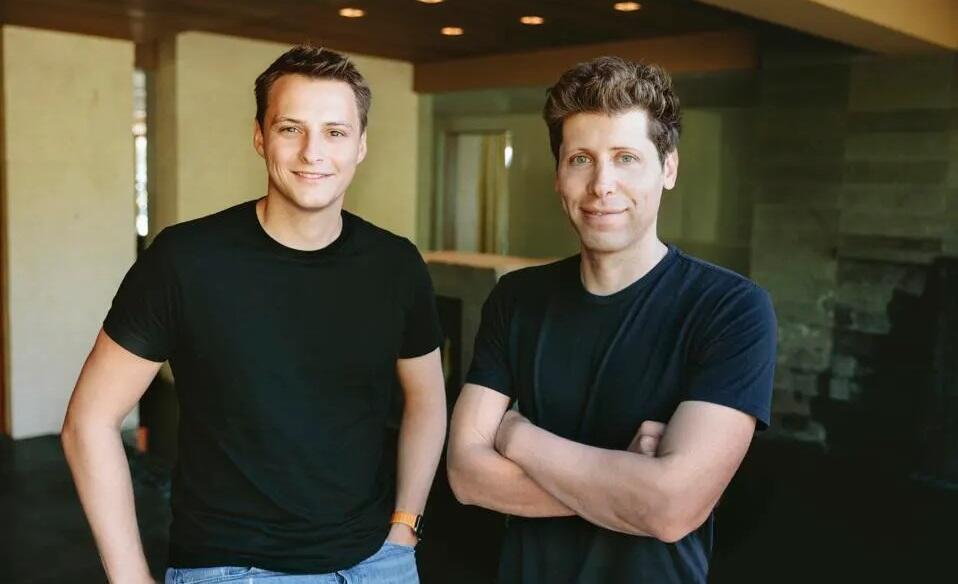
Alex Blania and Sam Altman, founders of Worldcoin.

"Tools for Humanity (TFH) has paused World ID verifications in Kenya as we continue to work with local regulators to address their questions. We apologise to everyone in Kenya for the delay," he stated.

Worldcoin's stated purpose is to build a global identification system using iris scans, which can prove that a person is human. The company argues that in the future, when Artificial Intelligence (AI) is 'fully functional,' it will be difficult to determine whether a subject is human or machine.

However, the company's conduct in collecting biometric data from across the world has attracted criticism and investigations from data protection regulators.

Investigators have pointed out that some of the techniques being used by the company, especially in developing countries, are exploitative.

In Kenya for instance, the company has been collecting data in exchange for crypto tokens equivalent to Ksh7,000. -Kenyans.co.ke

Blania defended his company with a lawyer-approved: "World ID is built for privacy. We look forward to resuming operations while continuing global rollout."

https://www.zerohedge.com/technology/kenya-kicks-eye-scanning-worldcoin-curb-refuses-become-data-harvesting-guinea-pigs

Biden Has Handed Taliban Over $2 Billion In 2 Years: SIGAR Report

 by Steve Watson via Summit News,

A report by the Special Inspector General for Afghan Reconstruction (SIGAR) notes that the Biden administration has given $2.35 billion to Afghanistan over the past two years, despite the fact that it is now ruled by the Taliban again following the disastrous U.S. withdrawal in 2021.

The Washington Free Beacon shared details of the findings Tuesday, noting that the funds could be propping up the Taliban’s terrorist government.

The SIGAR report found that approximately $1.7 billion “remained available for possible disbursement” at the time writing. The Beacon notes that “it is more than likely that a sizable portion of these funds will end up in the terror group’s coffers.”

The Taliban are viewing international aide as a “revenue stream,” according to the report, which further states that the group is “comfortable accepting foreign support insofar as they can closely monitor the organizations, including restricting and controlling them, and claim some credit for the provision of the benefits.”

The findings come after John Sopko, head of SIGAR, told the House Foreign Affairs Committee in April that he “cannot assure this committee or the American taxpayer we are not currently funding the Taliban,” and accused the Biden administration of blocking his efforts to find out.

Meanwhile, yet another aid package has been approved by Biden for Ukraine totalling $200 million, bringing the United States’ contributions to the country this year alone to more than $18 billion.

A recent CNN/Ipsos poll found that a majority of Americans have had enough of taxpayer money being siphoned into the war against Russia.

https://www.zerohedge.com/political/biden-has-handed-taliban-over-2-billion-2-years-sigar-report-finds

SK: Equity Investment in Novavax to Strengthen Strategic Partnership


  • SK bioscience will make strategic equity investment into Novavax to respond to the endemic and strengthen strategic partnership.
  • SK bioscience and Novavax also extended their existing license agreement for Novavax's updated COVID vaccine.
  • Companies to shift focus from contract manufacturing to commercialization model

SK bioscience, an innovative vaccine and biotech company committed to promoting human health from prevention to cure, announced that its board of directors has decided to make an equity investment in Novavax, a global company advancing protein-based vaccines with its novel Matrix-M™ adjuvant, securing 6.5 million shares of common stock through a private placement.

SK bioscience's strategic equity investment comes at a time when the two companies aim to transition from a CMO/CDMO partnership formed during the pandemic to a long-term synergistic relationship in the endemic era.

Concurrent to the equity investment announcement, SK bioscience and Novavax have extended their current license agreement, adding Novavax's updated COVID vaccine, which is currently under development for annual vaccination. The agreement serves as a strategic shift of partnership from the pandemic period to the endemic phase, in which SK bioscience will obtain exclusive rights to Novavax's COVID variant vaccine in South Korea and non-exclusive rights in Thailand and Vietnam to supply and commercialize the vaccine.

SK bioscience will manufacture and commercialize drug substance and vaccine products (including pre-filled syringe at L HOUSE) utilizing Novavax' proprietary variant strain antigens and Matrix-M adjuvant.

John C. Jacobs, President and CEO of Novavax said, "This agreement is grounded in a productive multiyear relationship through which the companies have come to know each other's strengths well. SK bioscience's significant decision to invest in Novavax reflects their confidence in our scientific and commercial expertise, and the potential to increase value for both companies and their stakeholders. We look forward to evolving our relationship to focus on commercialization and identifying strategic future opportunities while we continue to pursue our shared goal of delivering life-saving vaccines in the region."

Jaeyong Ahn, CEO of SK bioscience said, "We believe that the strategic equity investment and the continuous cooperation between SK bioscience and Novavax, which are among the few companies that focused on developing COVID-19 vaccines during the pandemic, will create powerful synergy. SK bioscience is focused on developing a successful global cooperative model in terms of company growth, health promotion, and response to the next pandemic."

Through the enhanced partnership, SK bioscience will explore potential future collaborations with Novavax such as utilizing the Novavax's adjuvant, 'Matrix-M.'

Novavax is also developing COVID-Influenza combination, stand-alone influenza, and high-dose COVID vaccine candidates.

https://www.biospace.com/article/releases/sk-bioscience-announces-equity-investment-in-novavax-to-strengthen-strategic-partnership/

Amid IRA Legal Battle, House Democrats Push to Expand Its Scope

 Biopharma giants have begun dropping programs for drugs in an attempt to mitigate the potential loss in profit that might occur when the government starts negotiating drug prices in a few months. In addition, some companies, plus PhRMA, the US Chamber of Commerce and several state chambers of commerce, have sued the Biden administration over the negotiation program encompassed in the recently passed Inflation Reduction Act (IRA), seeking to block its implementation.

But amid these actions, House Democrats have unveiled legislation that would expand the scope of drug price negotiations. The new legislation, introduced late last month, would extend the program to people with private health insurance and increase the number of drugs in the program from 20 to 50 annually. 

As it stands, the price negotiations only cover drugs for the 64 million people on Medicare, about 18% of the U.S. population. This expansion would include another 164 million and their families who have private health insurance and 16 million on Marketplace coverage, including almost everyone in the country. 

“This legislation is another step to bringing down the costs of prescription drugs and putting an end to the unconscionable decision to forgo life-saving medication,” Ways and Means Committee Ranking Member Richard E. Neal, D-MA, said in a press release

But the biopharma industry sees it differently.

“It’s troubling that some policymakers prefer scoring political points over driving real, bipartisan reforms that would help patients,” Sarah Ryan, a PhRMA spokesperson, told BioSpace. “This proposal takes us one step closer to giving the government full control over our health care system—including in the private market. Government intervention of this magnitude leads to restricted access and fewer cures and treatments. It’s the wrong approach for Americans.”

The Legal Road Ahead

The lawsuits brought by the biopharma industry allege that the price negotiation program is unconstitutional, in part because the legislation violates the Fifth Amendment, which states “nor shall private property be taken for public use, without just compensation.”

But the group “will have a heavy lift to convince the courts that these words apply,” said Robin Feldman, a healthcare law expert and professor at University of California College of the Law-San Francisco.

“The state is acting as a purchaser for Medicare,” she told BioSpace. “If the state can decide what it is willing to spend on a pencil or a desk, why not for prescription drugs? To avoid any penalty, a company can choose not to sell the drug to Medicare. Unlike a tax, the company can choose to take its business elsewhere.”

Regardless, the case is most likely headed to the Supreme Court, she said. Looking at historical, textual and other precedents, Feldman argued that patents are not private property for the purposes of the Fifth Amendment’s Compensation Clause.

“The reverence that the founders gave to property like land is worlds apart from what is reflected in the patent clause of the Constitution,” she said. “Patents are limited grants given for the specific purpose of benefiting the public. Applying this clause to patents makes no sense from a patent perspective.

“As the Supreme Court has repeatedly reminded, we grant patents not for the benefit of inventors, but because we believe that creating incentives for inventors will benefit society,” she said. “Thus, patents fall within the notion of a public right, rather than the core, private rights enshrined in the Constitution.”

Feldman said it’s too early to comment on what legal challenges the newly introduced legislation might face because constitutionality so often depends on the final language used.

Potential Industry Fallout

In the meantime, the new bill could further influence the R&D decisions made by biopharma companies. The new legislation might make it impossible for companies like Europe-based Novartis to avoid impacts from the IRA as well as it initially thought.

“We are disappointed in the new policies put forward by some members of Congress that have the potential to further harm patients,” Novartis Director of US External Engagement Michael Meo told BioSpace. “We have begun to see the negative impact that price controls in the IRA are having on research and development decisions for critical new medicines.”

Novartis has already discontinued some early-stage projects because of the IRA, Meo said, although he would not disclose which ones.

On its Q2 earnings call, Novartis CEO Vas Narasimhan said that the company was “carefully looking at assets in terms of potential IRA impact” to ensure it can manage or avoid losing profit. He expressed confidence Novartis' renal portfolio, in which patient profiles are largely outside of the Medicare population, would not be impacted. But this new legislation, if made into law, would include those younger patient populations as well.

“Rather than expand on a policy that will hurt patients and future innovation,” Meo said, “we would hope that members of Congress would address the harmful, unintended consequences that will result from the IRA.”

https://www.biospace.com/article/amid-ira-legal-battle-house-democrats-push-to-expand-its-scope/