Search This Blog

Wednesday, August 9, 2023

Elite Universities Strategize To Maintain Diversity In Admissions Despite SCOTUS Ruling

 by Charlotte Allen via The Epoch Times,

It's no secret that the vast majority of the people who operate U.S. colleges and universities are unhappy about the Supreme Court's June 29 decisions that the use of race in admissions decisions at Harvard and the University of North Carolina violated the 14th Amendment's equal protection guarantees and Title VI of the 1964 Civil Rights Act, which forbids recipients of federal funds to discriminate “on the ground of race, color, or national origin.”

The official reaction of the country's top-tier institutions of higher learning - the ones that typically employ racial preferences (in contrast to their less-selective counterparts that admit almost all applicants of any race) - was dismay.

Within hours of the release of the court's 6–3 ruling in Students for Fair Admissions v. Harvard, incoming Harvard President Claudine Gay issued a video message.

Its tone wasn't outright defiance of the Supreme Court's ruling, but it evidenced a distinct resolve to work around it.

“For nearly nine years, Harvard vigorously defended our admissions process and our belief that we all benefit from learning, living, and working alongside people of different backgrounds and experiences," Ms. Gay said.

"We will comply with the court's decision, but it does not change our values. We continue to believe—deeply—that a thriving, diverse intellectual community is essential to academic excellence and critical to shaping the next generation of leaders."

The word “diverse” is, of course, code for achieving levels of ethnic-minority representation (typically blacks, Latinos, and Native Americans) that progressives find acceptable, whether or not the applicants' academic records and SAT scores match those of other groups such as Asians and whites.

Other elite universities have followed Harvard's lead.

Columbia University spokesman Ben Chang said“Diversity is a positive force across every dimension of Columbia, and we can and must find a durable and meaningful path to preserve it.”

Ron Daniels, president of Johns Hopkins University, issued a statement declaring:

“In the coming days, we will closely examine the court's decisions and assess its implications for our admissions programs. Over the last several months, we have been reviewing the approaches taken by universities in states where a referendum or statute has restricted the use of race as one of many factors in a holistic admissions process.”

So the strategizing - aimed at maintaining pre-Students levels of black and Latino enrollments - has clearly begun.
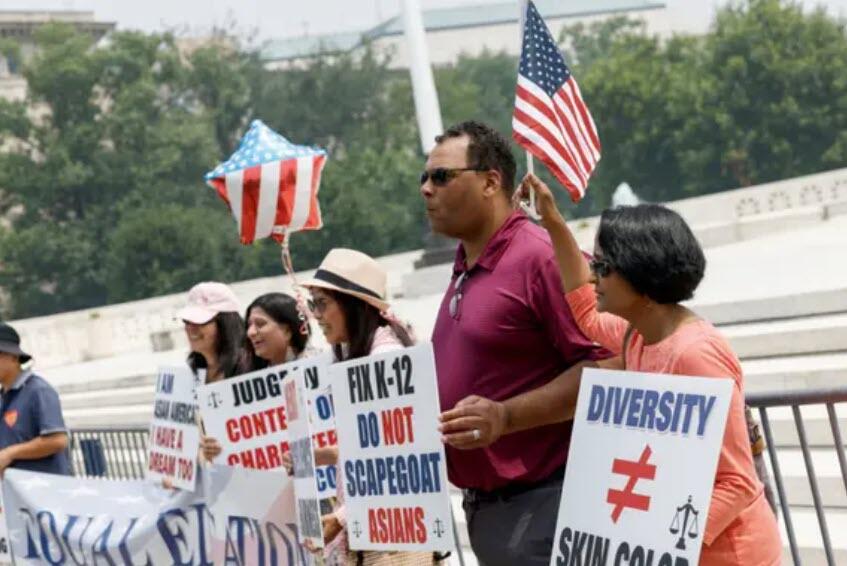
The most obvious of the possible “approaches” is the application essay, which allows prospective students to reveal their race, among other things about themselves. Chief Justice John Roberts, author of the majority opinion in Students, seemed to shine a green light (pdf): “Nothing in this opinion should be construed as prohibiting universities from considering an applicant’s discussion of how race affected his or her life, be it through discrimination, inspiration, or otherwise.”

Although Justice Roberts warned universities to not use the essays to bypass the Supreme Court's ruling (“the student must be treated based on his or her experiences as an individual—not on the basis of race”), several institutions have already established “overcome adversity” as a proxy for race.

The University of California–Davis's medical school, for example, gives preference to students asserting a “disadvantaged” background.

The upshot: A full 84 percent of Davis's medical school entering class for this fall claimed economic and social disadvantages growing up (pdf).

The result is an entering class that is 14 percent black and 30 percent Latino (blacks and Latinos make up 6 percent and 39 percent of California's general population, respectively). Some 20 other colleges and universities have inquired about Davis's complex—and so far secret—“adversity score” methodology, according to a New York Times report.

A more subtle tactic is likely to be dropping requirements that prospective students submit their SAT or ACT scores. Standardized test scores offer a clear metric for determining a student's ability to perform college or graduate-level work, but they also provide evidence of racial bias when institutions reject higher-scoring applicants from one ethnic group in favor of lower-scoring applicants from another. Some 80 percent of colleges and universities—including all eight Ivy League campuses and other prestigious institutions such as Stanford and Rice—have already made SAT and ACT results optional in their admissions processes. That makes admissions procedures more opaque and thus more difficult for courts to scrutinize in lawsuits challenging admissions procedures on racial grounds.

Finally, there's the ingenious tactic for getting around racial preferences proffered in an amicus curiae brief filed in Students by more than 50 Catholic colleges led by the Jesuit-run Georgetown University. The colleges averred that their religious mission to train leaders devoted to the common good gave them a right, protected by the First Amendment's religious freedom guarantees, to consider race and ethnicity in their admissions practices, asserting that “as a crucial component of their efforts, Catholic colleges and universities strive to admit and educate racially diverse student bodies.”

That First Amendment argument made little impression on the Supreme Court, even on its three dissenters who would have upheld racial preferences. But it has gained new life, at least according to some law school professors.

The Supreme Court, in another 6–3 decision, ruled on June 30 that the First Amendment protected Christian web designer Lorie Smith's refusal to create wedding websites for same-sex couples on the grounds that she would be forced to express support for views contrary to her religious beliefs. The ruling in 303 Creative LLC v. Elenis carved out an exemption from a Colorado law barring discrimination on the basis of sexual orientation. It continued a recent line of Supreme Court decisions upholding the right of individuals, businesses, and religious communities to not comply with laws that interfere with their beliefs about such issues as homosexual conduct, abortion, and birth control.

“The admissions decisions of religious universities to create diverse student bodies are expressive of those schools’ values  in ways that would seem to merit the same kind of protection from state interference the court has granted in cases like 303 Creative,” Kent Greenfield, a constitutional law professor at Boston College, and Eduardo PeƱalver, president of Seattle University (both Catholic institutions), wrote in a July 19 article for The Hill headlined “How the First Amendment Can Save Affirmative Action.”

Should First Amendment arguments such as these prevail in court, we might see secular universities such as Harvard suddenly rediscovering their 17th-century roots as training grounds for religious ministers.

At the very least, they demonstrate the extent to which institutions are willing to go - and the complex, even contorted strategies they plan to use - to preserve consideration of race in admissions policies even after the Supreme Court has pretty much ruled out that practice.

https://www.zerohedge.com/political/elite-universities-strategize-maintain-diversity-admissions-despite-supreme-court-ruling

Bots Have Taken Over Nearly Half The Internet, But One-Third Of Users Can't Tell

 by Autumn Spredemann via The Epoch Times (emphasis ours),

Crossing paths with a robot or "bot" online is as common as finding a pair of shoes in your closet.

It's a fundamental part of the internet, but users have hit a critical tipping point: An increasing number of people are losing the ability to distinguish between bots and humans.

It's a scenario developers have warned about for years, and it's easy to see why.

A recent study concluded 47 percent of all internet traffic is now comprised of bot-generated content. That's an increase of more than 5 percent between 2022 and 2021. Concurrently, human activity on the internet just hit its lowest point in eight years.

Coupled with advances in human-like exchanges driven by artificial intelligence (AI), almost a third of internet users can't tell if they're interacting with a person any more.

In April, a landmark study called "Human or Not?" was launched to determine whether people could identify if they were talking to another person or an AI chatbot.

More than 2 million volunteers and 15 million conversations later, 32 percent of participants picked incorrectly.

There was also little difference in the results based on age categories. Older and younger adults both struggled at a similar level to discern who—or what—was on the other end of the conversation.

The bottom line: While super realistic bots have taken over nearly half the internet, a rising number of folks can't even tell.

Moreover, this historic intersection of swiftly evolving technology and decreasing perception within the general population is already causing problems in the real world.

Fool Me Once

"The bot-human blur is like a magic trick ... As bots get smarter, we risk losing trust in online interactions," Daniel Cooper told The Epoch Times.

Mr. Cooper is a tech developer and a managing partner at Lolly. He noted company and website transparency is key for people's confidence in their online interactions. But in the meantime, there's no substitute for good old-fashioned human instinct.

"Spotting bots is like finding Waldo in a crowd. Look for repetitive patterns, lack of personalization, or rapid responses. Also, trust your gut. If it feels off, it might just be," he said.

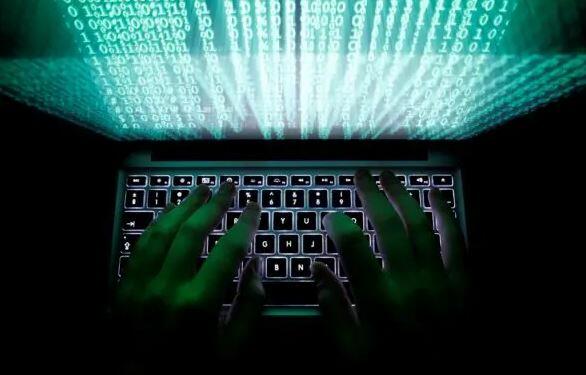
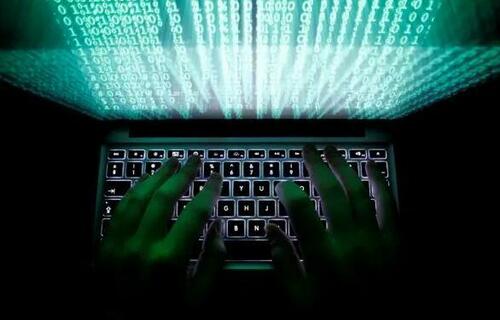
A man types on a computer keyboard on Feb. 28, 2013. (Kacper Pempel/Reuters)

While much of the discussion of malicious or "bad bot" traffic centers on social media, the influence of maligned AI interactions has much farther-reaching consequences.

Consumer confidence in reading online reviews for a product or service has been problematic for years, but it appears to have passed a new milestone.

Reports of AI language models leaving reviews for products on sites like Amazon emerged in April this year. The bot reviews were easy to identify since the chatbot literally told readers that it was an AI language model in the first sentence.

But not every bot masquerading as a human is so easy to catch.

Consequently, major companies and search engines like Google have been plagued with a sharp rise in false reviews.

Last year, Amazon filed a lawsuit against fake review brokers on Facebook, and Google had to remove 115 million counterfeit evaluations.

This is troubling, given the number of people who rely on product reviews. One 2023 survey noted online reviews factored into purchasing decisions for 93 percent of internet users.

"More bot traffic could indeed open the floodgates for online scams," Mr. Cooper said.

Though it appears those gates have already been opened.

Fox in the Henhouse

Bad bot traffic has increased 102 percent since last year and may outpace human-generated content entirely. Yet again.

This happened in 2016 and was especially problematic during the U.S. presidential election. Since then, AI-generated content has grown more sophisticated, and tech insiders say people need to be prepared for another bot surge in 2024.

And with more people struggling to tell the difference, online scammers have a significant advantage.

"The difficulties in distinguishing between bots and actual humans will probably get worse as this technology develops, which will hurt internet users. The possibility of being used by bad actors is a major worry," Vikas Kaushik, CEO of TechAhead, told The Epoch Times.

Mr. Kaushik said without the ability to identify bots, people can easily get caught up in disinformation and phishing scams. Further, these digital cons aren't always obvious.

Tech security researcher Kai Greshake told Vice in March that hackers could trick Bing's AI chatbot into asking for personal information from users through the use of hidden text prompts.

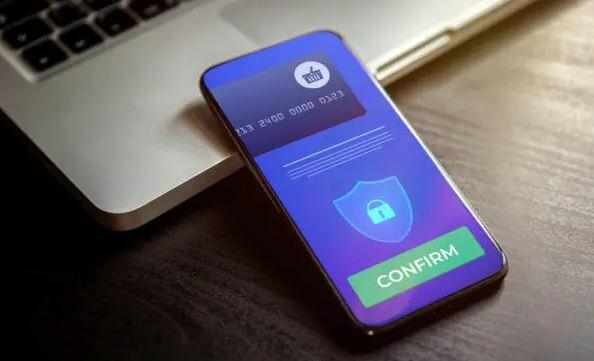
Some phone scams claim to be from a financial services organization and ask you to update information—but don’t do it! This may be a phishing attack aimed at stealing your personal information.(BestForBest/Shutterstock)

"As a member of the sector, I see this developing into a serious problem,"  Kaushik said, adding: "To create more complex detection techniques and build open standards for recognizing bots, developers and academics must collaborate."

He believes education and awareness campaigns are essential so the public can be more cautious and confident while "conversing online with strangers."

Mr. Cooper agreed.

"The bot-human confusion could lead to misunderstandings, mistrust, and misuse of personal data. It's like chatting with a parrot, thinking it's a person: amusing until it repeats your secrets."

He compared the rise in bot traffic to inviting a fox into the henhouse. "We need to be vigilant and proactive in our defenses."

Taking Action

For some, the solution is simple. Just "unplug" from the digital world.

It's a sentiment shared often alongside notions of moving off the grid and a longing for the days when the "dead internet theory" seemed much less plausible. But for many, this isn't realistic.

Alternatively, some are striving for a balance with their online usage, including limiting social media usage.

Humanity's love-hate relationship with social media, especially Facebook and Twitter, has created anxiety, anger, and depression for millions.

Despite an uptick in social media usage this year, roughly two-thirds of Americans believe the platforms have a primarily negative effect on life.

And the surge in bot traffic is throwing gas on this fire.

Stepping back from social media and its bot swarms has its merits.

Findings from a 2022 study noted participants who took a one-week break from the platforms experienced improvements in anxiety, depression, and their overall sense of well-being.

As humanity's day-to-day interactions continue shifting from physical to virtual, people have become increasingly dependent on the web. So it begs to question: Can humans take back the internet from the bots?

Some tech experts believe it's possible. And it starts with helping people identify what they're engaging with.

"There are a few strategies users can employ to identify bots," Zachary Kann, the founder of Smart Geek Home, told The Epoch Times.

In his experience as a network security professional, Mr. Kann said there are methods a user can employ to determine if they're interacting with another person.

Like Mr. Cooper, he suggested watching response patterns carefully.

"Bots often respond instantly and may use repetitive language."

Mr. Kann also said people should check profiles since bots often have generic or incomplete online profiles.

He added an inability to distinguish between bots and humans could lead to research accuracy challenges.

"It can lead to skewed data analytics, as bot interactions can inflate website traffic and engagement metrics."

https://www.zerohedge.com/technology/bots-have-taken-over-nearly-half-internet-almost-third-users-cant-tell-difference

WaPo quietly ‘updates’ Hunter Biden laptop story after Devon Archer testimony

 The Washington Post’s fact-checking department has yet again quietly updated — rather than corrected — its most-read story, which contained glaring errors about first son Hunter Biden’s laptop and an infamous dinner involving then-Vice President Joe Biden and Burisma executive Vadym Pozharskyi.

Glenn Kessler, the paper’s chief fact-checker, has made six updates and authored an entirely new article about The Post’s bombshell reports in October 2020 and May 2021 that revealed Hunter Biden introduced his father to Pozharskyi at CafĆ© Milano in Georgetown months after joining the natural gas firm’s board.

The initial fact check relied on statements from Andrew Bates — then a spokesman for the Biden campaign and now deputy White House press secretary — and Michael Carpenter, a former Biden foreign policy adviser and now a permanent US representative to the Organization for Security and Cooperation in Europe (OSCE).

First son Hunter Biden
The Washington Post’s fact check department has yet again quietly updated rather than corrected its most-read story, which contained glaring errors about first son Hunter Biden’s laptop.
Glenn Kessler
Glenn Kessler, the paper’s chief fact checker, has made six updates and authored an entirely new article about The Post’s bombshell reports in October 2020 and May 2021.
Washington Post

Bates said there was no record of the 2015 dinner on the vice president’s public schedule. Carpenter said he did not recognize Pozharskyi’s name, except apparently from The Post’s reporting. Other Biden reps denied the event happened at all.

Throughout the 2020 campaign, Biden also denied he spoke with his son about any foreign business arrangements, a line his representatives parroted for years.

Devon Archer, Hunter’s former business partner, blew a hole in those claims earlier this month when he testified before the House Oversight Committee that the Biden/Kessler characterization of the matter was “not correct.”

Devon Archer
Devon Archer, Hunter’s former business partner, blew a hole in those comments earlier this month when he testified before the House Oversight Committee that Kessler’s coverage of the incident was “not correct.”
Getty Images

Biden was an expected guest, met Pozharskyi and stayed for the entirety of the dinner in a private room at the back of the restaurant, according to Archer.

“[T]here was no business-deals specifics discussed ever at any of these things, but it was — it was a nice, you know, conversation,” he added, later clarifying that such appearances sold his and Hunter’s associates on the Biden family “brand.”

No corrections have been made to either of Kessler’s stories, despite the Washington Post both correcting and rectracting portions of two articles from 2017 and 2019 based on the discredited Christopher Steele dossier.

Instead, several updates were made following Archer’s testimony following prompts from RealClearInvestigations, which first reported on the omissions.

The Washington Post
No corrections have been made to the stories, despite The Washington Post having corrected and rectracted portions of two articles from 2017 and 2019 based on the discredited Steele dossier.
AP

Kessler’s Oct. 14, 2020, article on Hunter’s abandoned laptop still uses the terms “alleged” and “purported” when talking about emails taken from its hard drive, even though the outlet confirmed its authenticity in March 2022.

One of those emails included an April 17, 2015, missive that Pozharskyi sent Hunter after the CafĆ© Milano affair, thanking the then-second son “for inviting me to DC and giving an opportunity to meet your father,” which formed the basis of The Post’s very first report on the laptop.

The fact-checker also implied the laptop was “part of a broader disinformation campaign” by Russia, adding that former President Donald Trump’s personal lawyer Rudy Giuliani “regularly interacted with a Ukrainian lawmaker who was recently sanctioned by the US Treasury Department as being an ‘active Russian agent for over a decade’ and was engaged in an influence operation to affect the 2020 election.”

First son Hunter Biden
References in Kessler’s Oct. 14, 2020, article on Hunter’s laptop still use the terms “alleged” and “purported” when talking about emails taken from its hard drive.
Garrett Press Photo/ MEGA

That implication was echoed five days after the initial laptop fact-check in a letter signed by 51 former intelligence officials, who said the hard drive’s contents had “all the classic earmarks of a Russian information operation.”

On June 7, 2021, Kessler published an additional article that acknowledged Biden was present at the CafĆ© Milano dinner but downplayed his involvement, saying the vice president had “only dropped by briefly” to greet a Greek Orthodox priest with whom he had a longstanding friendship and “didn’t even sit down.”

The new fact-check, which was based partly on the priest’s testimony, did not take into account emails showing “Vadym” on the guest list that Hunter shared with Archer before the event, prompting The Post’s Miranda Devine to call the report “sloppy.”

Devon Archer
Biden was an expected guest, met Pozharskyi and stayed for the entirety of the dinner in a private room at the back of the restaurant, according to Archer.
Julia Nikhinson – CNP for NY Post / MEGA

Kessler also cast doubt on Khazakh businessman Kenes Rakishev and former Kazakhstan prime minister Karim Massimov being present at the Cafe Milano meeting, but added a note following Archer’s testimony before Congress that Rakishev had attended a dinner there one year before and Massimov had been in attendance at the April 2015 dinner.

On March 30, 2022, the Washington Post updated the first Hunter piece to say security experts could only verify “some of the data on the portable drive appears to be authentic” and “concluded that nearly 22,000 emails among those files carried cryptographic signatures that could be verified using technology that would be difficult for even the most sophisticated hackers to fake.”

In May of this year, IRS supervisory agent Gary Shapley told the House Ways and Means Committee that the laptop had been authenticated by investigators all the way back in November 2019.

Washington Post Publisher Fred Ryan, foreground from left, Executive Editor Marty Baron, and National Security Editor Peter Finn, applaud as investigative reporter Tom Hamburger speaks to the newsroom
Neither Washington Post spokeswoman Kathy Baird nor Kessler immediately responded to a request for comment.
AP

Hunter earned roughly $1 million annually while serving on the board of Burisma from 2014 to 2019.

“Glenn’s story has been updated as new information emerged which you can see is clearly noted within the story,” Washington Post spokeswoman Kathy Baird told The Post. “We don’t have any comment to make on this.”

The homepage for the paper’s fact-checker lists various journalism awards and describes its efforts as “dispassionate and non-partisan, drawing attention to inaccurate statements on both left and right.”

“We will adopt a ‘reasonable person’ standard for reaching conclusions,” it states. “We do not demand 100[%] proof. The burden for proving the accuracy of a claim rests with the speaker, however.”

https://nypost.com/2023/08/09/washington-post-quietly-updates-hunter-biden-story-after-devon-archer-testimony/