Search This Blog

Monday, September 18, 2023

Why Acelyrin Stock Plummeted

 Shares of Acelyrin (SLRN 3.27%) fell 58.5% this week, according to data provided by S&P Global Market Intelligence, after the recently public biopharmaceuticals company announced discouraging results in a clinical trial evaluating the efficacy of its experimental lead drug, izokibep, in treating an inflammatory skin disease.

Hidradenitis suppurativa (HS) is a chronic inflammatory skin disease that causes scarring, abscesses, malodor, and severe pain. HiSCR (Hidradenitis Suppurativa Clinical Response) measures response to treatment in HS, with HiSCR75 and HiSCR100 indicating at least 75% and 100% reductions, respectively, in total abscess and inflammatory nodule count (and with no worsening of symptoms relative to a baseline measurement).

Late Monday, Acelyrin issued a press release stating the primary endpoint of its HiSCR75 at week 16 of a phase 2b/3 trial did not meet statistical significance -- essentially meaning the treatment failed to demonstrate superiority to placebo in reducing symptoms of moderate-to-severe HS. Shares of the biotech stock plummeted more than 50% on Tuesday in response, and closed the trading week at $11.38 per share. The move effectively wiped out all of the company's gains since going public in an upsized IPO at $18 per share in May. 

Acelyrin added that response rates for izokibep did show early HiSCR100 responses and good safety and tolerability properties.

"The consistent and early achievement of HiSCR100, along with our prior izokibep experience in Psoriatic Arthritis, continues to demonstrate the potential of izokibep for resolution of disease, especially in difficult to treat tissues," stated Acelyrin CEO, Shao-Lee Lin, M.D., Ph.D. The company interprets these results as supporting further investigation of the weekly dosing of the drug in HS and other indications, including uveitis and psoriatic arthritis.

Acelyrin believes its key drug candidate still holds a promise. But investors are right be disappointed with the study results, and the high-flying biotech stock understandably plunged as a result. 

https://www.fool.com/investing/2023/09/15/why-acelyrin-stock-plummeted-59-this-week/

Adams says soaring cost of migrant crisis ‘is going to hurt low-income New Yorkers’

 Mayor Eric Adams warned that the cost of the ongoing migrant crisis will hurt low-income New Yorkers as he’s forced to dip into the city coffers and address the disaster without more federal or state help.

Adams made the dire warning during an interview with Rev. Al Sharpton about a week after he said all NYC agencies may have to slash up to 15% from their budgets by springtime to cover the expenses tied to the crisis.

The Democrat said the city has already spent $2 billion and is projected to spend $5 billion to care for and house asylum seekers pouring into the Biggle Apple.

“That money is going to come from somewhere… If we don’t receive help from the federal government and additional help from the state government, then this is going to come from somewhere,” Adams said on MSNBC’s “PoliticsNation.” “And it’s going to hurt low-income New Yorkers.”

He called New York “a city of immigrants,” but said no one is winning from the current situation.

“This is wrong for the migrants and asylum-seekers to be going through this. And it’s wrong for long-term New Yorkers that depend on this revenue,” Hizzoner said.

“I have to go back in November and find $5 billion out of our budget. This is just not right to the city.”

Migrant and asylum seekers line up outside a repurposed shelter at the Roosevelt Hotel on Wednesday, August 2, 2023.
The city has already spent $2 billion on the migrant crisis as it opened more than 200 emergency shelters across the five boroughs.
James Keivom

Adams has already informed all city agencies that they will need to slash 5% from their budget by November — which adds up to a several billion-dollar trim from the city-funded portion of his $107 billion spending plan.

Additional 5% cuts could follow in both January and April if the city doesn’t receive adequate financial aid from the Biden administration or state legislators by early next year.

“I want to be clear: these tough decisions are a direct result of inaction in Washington and in Albany,” the mayor said in a YouTube video released announcing the budget cuts on Sept. 9.

Eric Adams
Adams said the money to address the crisis “is going to come from somewhere and it’s going to hurt low-income New Yorkers.”
âPoliticsNation,â MSNBC
NYC Mayor Eric Adams, Rev Al Sharpton and Houston Mayor Sylvester Turner call in for an interview.
Adams made the comments Sunday during an interview with Rev. Al Sharpton on MSNBC’s “PoliticsNation.”
âPoliticsNation,â MSNBC

The city has opened more than 200 emergency shelters to house over 110,000 migrants who are fleeing turmoil and violence in their own countries.

The effort could cost the city up to $12 billion by July 2025.

Last Sunday, Adams double-downed on his controversial claim that the overwhelming crisis would “destroy” NYC, calling it a “financial tsunami.”

“I have to be honest with New Yorkers with what we’re about to experience — a financial tsunami that I don’t think this city has ever experienced,” Adams told PIX 11’s “PIX on Politics.”

“This is not utopia. New York City cannot manage 10,000 people a month with no end in sight,” he said. “That can’t happen, and that is going to undermine this entire city.”

https://nypost.com/2023/09/17/eric-adams-says-migrant-crisis-is-going-to-hurt-low-income-new-yorkers/

Northwell slashes ambulance coverage, ups concerns about NYC emergency response

 New York’s largest private hospital provider is cutting ambulance coverage in parts of the city — raising concern about the ability of the FDNY EMS system to pick up the slack amid Mayor Eric Adams’ demand for 5% spending cuts next month and up to 15% by spring.

The FDNY is already grappling with slower 911 emergency response times, according to the newly released mayor’s management report.

Northwell Health, effective Sunday, is reducing coverage in eastern and central Queens, The Post has learned. It cut ambulance tours on Staten Island earlier this year.

The cuts include elimination of advanced life support on night/overnight ambulance tours in Douglaston, Little Neck, Bayside, Forest Hills and Rego Park, according to a union official briefed on the reduction.

Northwell Health hospitals in Queens and along the Nassau border include Long Island Jewish in Forest Hills, and Cohen’s Children’s Medical Center and Long Island Jewish, both in New Hyde Park.

The city’s FDNY EMS ambulance service handles about 70% of 911 calls for transporting patients to medical facilities while private hospitals respond to 30% of the calls, said Oren Barzilay, president of the Local 2507, the union representing 4,100 of the city’s EMTs and paramedics.

Northwelll Health ambulances
The FDNY is already grappling with slower 911 emergency response times, according to the newly released mayor’s management report.

Barzilay said FDNY EMS had agreed to cover the tours abandoned by Northwell Health, but is worried that may be in jeopardy due to Adams’ order that the Fire Department and all other agencies slash their budgets to address a projected multi-billion dollar gap exacerbated by the migrant crisis

“The budget cuts are a problem. Our ambulance crews were supposed to take over Northwell Health’s units,” Barzilay said, adding: Every second counts and can be a difference between life and death. Minutes count here.”

He claimed the FDNY would have to pay overtime to cover the Queens tours because of a lack of staff.

Adams ordered a crackdown on OT spending for all uniformed services including FDNY as well as the police, corrections and sanitation departments.

Northwelll Health ambulances
Response times to 911 life threatening emergency calls has climbed since the pandemic — from 9 minutes and 22 seconds in fiscal year 2019, to 10 minutes and 17 seconds in fiscal year 2022, and 10 minutes, 43 seconds in fiscal year 2023.
William Farrington

Barzilay also said paramedics may have to travel longer distances to pick up the tours dropped by Northwell Health.

“It impacts our positions,” he said. “Our system is already overwhelmed.” 

Northwell Health’s Center for Emergency Medical Services announced the cuts in ambulance coverage in a memo to staff.

“We continually monitor our ambulance deployment strategies to assure we are meeting the needs of the Health System, our partnerships and our patients,” the memo stated.

Northwell Health spokeswoman Barbara Osborn confirmed the ambulance cutbacks, some of which went into effect Sunday.

“After a thorough review of our ambulance utilization and deployment within the FDNY EMS system a decision was made to modify a small contingent of our units. This change enables us to enhance the effectiveness of our participation in the NYC 911 system along with continuing to be one of the largest providers of EMS services to the City of New York,” Osborn said.  

“This change is in conjunction with FDNY EMS leadership.” 

FDNY had no immediate comment.

But the fire department reported a  7% uptick in life-threatening medical emergency calls in the mayor’s management report released Friday, jumping from 564,412 in fiscal year 2022 to 605,140 last fiscal year.  

Response times to 911 life threatening emergency calls has climbed since the pandemic — from 9 minutes and 22 seconds in fiscal year 2019, to 10 minutes and 17 seconds in fiscal year 2022, and 10 minutes, 43 seconds in fiscal year 2023.

The FDNY attributed part of the increase to fewer ambulances in service last year, after older vehicles were taken out of service after the COVID-19 outbreak subsided — and to traffic congestion.

Fire Department officials added “increases in dispatch and travel time can (also) be attributed to a seven percent increase in life-threatening medical emergency incidents.”

https://nypost.com/2023/09/17/northwell-health-slashes-nyc-ambulance-coverage-raising-concerns/

Sunday, September 17, 2023

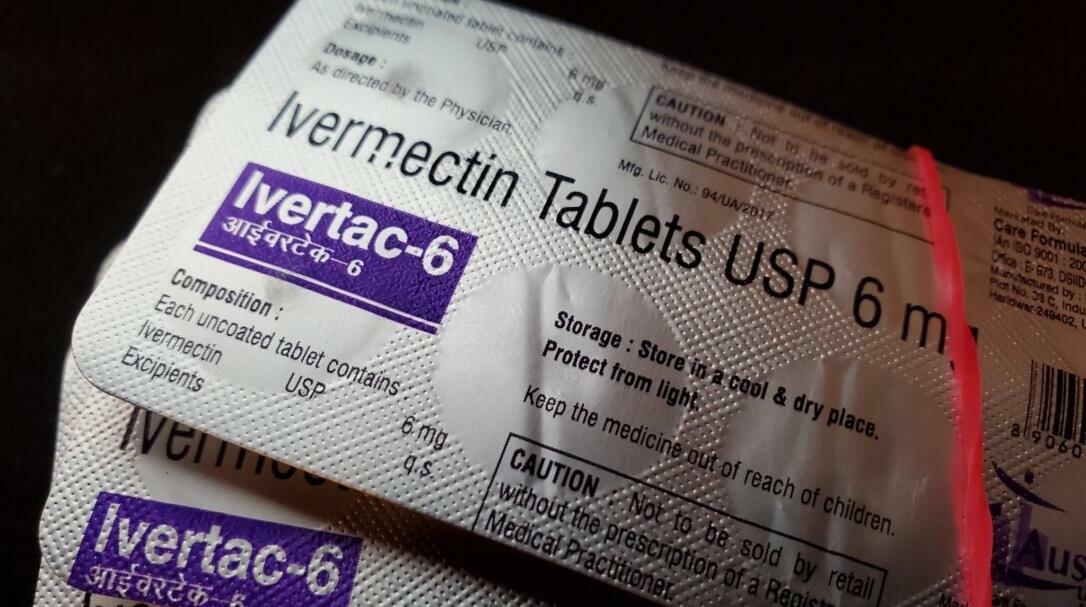
FDA Refuses To Change Anti-Ivermectin Statements After Court Ruling

 by Zachary Stieber via The Epoch Times (emphasis ours),

Anti-ivermectin statements made by the FDA are not being changed, even after an appeals court ruled against the agency.

The U.S. Food and Drug Administration (FDA) is refusing to change its statements against ivermectin, even after a court said it acted outside of its authority when it told people to stop using it to treat COVID-19.

The U.S. appeals court said that the FDA's statements, including one telling people to "stop" using ivermectin as a COVID-19 treatment, went beyond the authority conferred on the agency by Congress.

“FDA can inform, but it has identified no authority allowing it to recommend consumers ‘stop’ taking medicine,” U.S. Circuit Judge Don Willett wrote in the Sept. 1 ruling.

Two weeks later, FDA social media posts and a key webpage remain unchanged.

That includes an Aug. 21, 2021, Twitter post, on the social media site since renamed X, that hyperlinked to a FDA webpage and stated: "You are not a horse. You are not a cow. Seriously, y'all. Stop it."

The page has not been updated either. It says people "should not use ivermectin to treat or prevent COVID-19."

The appeals court did not order the FDA to take any action and remanded the case to a lower court for consideration on standing.

But Dr. Robert Apter, the lead plaintiff in the case that led to the ruling, said that the FDA should still take action.

"From an ethical point of view, the FDA has been told not to do what they are doing. They have an ethical and moral obligation to follow the court’s directive and stop giving advice against using effective repurposed drugs for early treatment of COVID," Dr. Apter told The Epoch Times in a message.

The FDA declined to comment.

"The FDA does not comment on possible, pending, or ongoing litigation," a spokesperson told The Epoch Times via email.

In a statement after the ruling was handed down, the agency noted that ivermectin is approved by the FDA but for other uses. The FDA "has not authorized or approved ivermectin for use in preventing or treating COVID-19, nor has the agency stated that it is safe or effective for that use," the agency said.

"Health care professionals generally may choose to prescribe an approved human drug for an unapproved use when they judge that the unapproved use is medically appropriate for an individual patient," it added.

Such prescriptions are known as off-label prescriptions and are common in the United States.

Another FDA page may have been removed in the wake of the ruling. That page said, in part: "Q: Should I take ivermectin to prevent or treat COVID-19? A: No."

Archives show it was still up as of this year but it's unclear exactly when it was taken down.

Ruling

In the ruling, a U.S. Court of Appeals for the Fifth Circuit panel found in favor of Drs. Apter, Mary Talley Bowden, and Paul Marik, overturning a previous decision.

The doctors sued the FDA in 2022 over its anti-ivermectin statements, arguing the agency was illegally interfering with their practice of medicine.

While the Federal Food, Drug, and Cosmetic Act enables the FDA to inform consumers, it does not let the agency give medical advise, Jared Kelson, an attorney representing the doctors, told the panel during oral arguments.

U.S. District Judge Jeffrey Brown had ruled against the plaintiffs, finding the FDA acted within the authority conferred by the act.

The panel disagreed.

"FDA never points to any authority that allows it to issue recommendations or give medical advice," Judge Willett wrote. “Nothing in the act’s plain text authorizes FDA to issue medical advice or recommendations,” he also said.

"The decision is pretty clear that the FDA is not a physician, and that while it might have authority to inform the public, it can't endorse particular treatments or advise on how to approach any specific illness," Mr. Kelson told The Epoch Times.

He declined to comment on whether the FDA should update its statements.

The appeals court decision trumps the previous ruling, but the panel also sent the case back to Judge Brown.

The FDA had asked the appeals court to dismiss the case based on lack of standing. The court said it chose not to decide on the standing issue.

"We see greater wisdom in remanding for the district court to address standing and any other jurisdictional issues in the first instance," the panel said. "We express no view on those issues, and instead we trust their initial determination to the district court’s sound judgment."

That means Judge Brown will take up the case again, but that his ruling on standing could be overturned.

The government could also appeal the recent appeals court ruling. That appeal would go to the U.S. Supreme Court. The U.S. Department of Justice, which is representing the FDA, did not respond to a request for comment.

https://www.zerohedge.com/political/fda-refuses-change-anti-ivermectin-statements-after-court-ruling

Newly discovered trigger of Parkinson's upends common beliefs

 A new Northwestern Medicine study challenges a common belief in what triggers Parkinson's disease.

Degeneration of dopaminergic neurons is widely accepted as the first event that leads to Parkinson's. But the new study suggests that a dysfunction in the neuron's synapses—the tiny gap across which a neuron can send an impulse to another neuron—leads to deficits in dopamine and precedes the neurodegeneration.

Parkinson's  affects 1% to 2% of the population and is characterized by resting tremor, rigidity and bradykinesia (slowness of movement). These  are due to the progressive loss of dopaminergic neurons in the midbrain.

The study, "Parkinson's disease linked  mutation disrupts recycling of synaptic vesicles in human dopaminergic neurons," published in Neuron, opens a new avenue for therapies, the scientists said.

"We showed that dopaminergic synapses become dysfunctional before neuronal death occurs," said lead author Dr. Dimitri Krainc, chair of neurology at Northwestern University Feinberg School of Medicine and director of the Simpson Querrey Center for Neurogenetics.

"Based on these findings, we hypothesize that targeting dysfunctional synapses before the neurons are degenerated may represent a better therapeutic strategy."

The study investigated patient-derived midbrain neurons, which is critical because mouse and human dopamine neurons have a different physiology and findings in the mouse neurons are not translatable to humans, as highlighted in Krainc's research published in Science.

Northwestern scientists found that dopaminergic synapses are not functioning correctly in various genetic forms of Parkinson's disease. This work, together with other recent studies by Krainc's lab, addresses one of the major gaps in the field: how different genes linked to Parkinson's lead to degeneration of human dopaminergic neurons.

Imagine two workers in a neuronal recycling plant. It's their job to recycle mitochondria, the energy producers of the cell, that are too old or overworked. If the dysfunctional mitochondria remain in the cell, they can cause cellular dysfunction. T

he process of recycling or removing these old mitochondria is called mitophagy. The two workers in this recycling process are the genes Parkin and PINK1. In a normal situation, PINK1 activates Parkin to move the old mitochondria into the path to be recycled or disposed of.

It has been well-established that people who carry mutations in both copies of either PINK1 or Parkin develop Parkinson's disease because of ineffective mitophagy.

Two  had the misfortune of being born without the PINK1 gene, because their parents were each missing a copy of the critical gene. This put the sisters at high risk for Parkinson's disease, but one sister was diagnosed at age 16, while the other was not diagnosed until she was 48.

The reason for the disparity led to an important new discovery by Krainc and his group. The sister who was diagnosed at 16 also had partial loss of Parkin, which, by itself, should not cause Parkinson's.

"There must be a complete loss of Parkin to cause Parkinson's disease. So, why did the sister with only a partial loss of Parkin get the disease more than 30 years earlier?" Krainc asked.

As a result, the scientists realized that Parkin has another important job that had previously been unknown. The gene also functions in a different pathway in the synaptic terminal—unrelated to its recycling work— where it controls dopamine release. With this new understanding of what went wrong for the sister, Northwestern scientists saw a new opportunity to boost Parkin and the potential to prevent the degeneration of dopamine neurons.

"We discovered a new mechanism to activate Parkin in patient neurons," Krainc said. "Now, we need to develop drugs that stimulate this pathway, correct synaptic dysfunction and hopefully prevent neuronal degeneration in Parkinson's."

The first author of the study is Pingping Song, research assistant professor in Krainc's lab. Other authors are Wesley Peng, Zhong Xie, Daniel Ysselstein, Talia Krainc, Yvette Wong, Niccolò Mencacci, Jeffrey Savas, and D. James Surmeier from Northwestern and Kalle Gehring from McGill University.

More information: Dimitri Krainc et al, Parkinson's disease linked parkin mutation disrupts recycling of synaptic vesicles in human dopaminergic neurons, Neuron (2023).


https://medicalxpress.com/news/2023-09-newly-trigger-parkinson-upends-common.html

'Study: No evidence that YouTube promoted anti-vaccine content during COVID-19 pandemic'

 New research led by data science experts at the University of Illinois Urbana-Champaign and United Nations Global Pulse found that there is no strong evidence that YouTube promoted anti-vaccine sentiment during the COVID-19 pandemic.

The study, published in the Journal of Medical Internet Research, performed an algorithmic audit to examine if YouTube's  system acted as a "rabbit hole," leading users searching for vaccine-related videos to anti-vaccine content.

For the study, the researchers asked World Health Organization-trained participants and workers from Amazon Mechanical Turk to intentionally find an anti-vaccine video with as few clicks as possible, starting from an initial informational COVID-19 video posted by the WHO.

They compared the recommendations seen by these users to related videos that are obtained from the YouTube application programming interface and to YouTube's Up-Next recommended videos that were seen by clean browsers without any user-identifying cookies.

The team then used machine learning methods to classify anti-vaccine content, analyzing more than 27,000 video recommendations made by YouTube.

"We found no evidence that YouTube promotes anti-vaccine content to its users," said Margaret Yee Man Ng, an Illinois journalism professor with an appointment in the Institute of Communications Research and lead author of the study. "The average share of anti-vaccine or vaccine hesitancy videos remained below 6% at all steps in users' recommendation trajectories."

The initial goal of the research was to better understand YouTube's famously opaque techniques for content recommendations—going beyond querying the platform's application programming interfaces to collect real-world data—and whether these techniques funnel users toward anti-vaccine sentiment and vaccine hesitancy.

"We wanted to learn about how different entities were using the platform to disseminate their content so that we could develop recommendations for how YouTube could do a better job of not pushing misinformation," said UN Global Pulse researcher Katherine Hoffmann Pham, a co-author of the study. "Contrary to public belief, YouTube wasn't promoting anti-vaccine content. The study reveals that YouTube's algorithms instead recommended other health-related content that was not explicitly related to vaccination."

"The videos that users were directed to were longer and contained more popular content, and attempted to push a blockbuster strategy to engage users by promoting other reliably successful content across the platform," Ng said.

The study also allowed the researchers to examine how users' real-world experiences differ from the personalized recommendations obtained by querying YouTube's "RelatedToVideo" application programming interface. This API is designed to help programmers search for related content on the platform or using clean browsers, replicating the experience of a new user visiting YouTube with no search or view history, which is often used to study the platform's recommendation system.

The study reports that the watch histories of users significantly affect video recommendations, suggesting that data from the API or a clean browser does not offer an accurate picture of the suggestions that real users are seeing. Real users saw slightly more pro-vaccine content as they advanced through their recommendation trajectories. In contrast, searches performed by the API or clean browsers during the study were drawn toward irrelevant recommendations as they advanced.

"I think one benefit of this study relative to others is that it proposes a relatively lightweight methodology to gather real data on how people navigate through YouTube's  recommendations," Pham said. "So unlike the APIs, which will just sort of randomly suggest new links, the  can critically review the links and pick one, which sort of mimics the behavior that many people would use on YouTube in reality."

Understanding recommendation systems is important because it promotes transparency and holds them accountable," added co-author Miguel Luengo-Oroz, a professor at the Telecommunications School of the Universidad Politecnica de Madrid. "This helps people understand the choices being made for them by platform designers."

More information: Yee Man Margaret Ng et al, Exploring YouTube's Recommendation System in the Context of COVID-19 Vaccines: Computational and Comparative Analysis of Video Trajectories, Journal of Medical Internet Research (2023). DOI: 10.2196/49061


https://medicalxpress.com/news/2023-09-evidence-youtube-anti-vaccine-content-covid-.html