Search This Blog

Friday, April 5, 2024

Biden set to announce another new student-debt-forgiveness plan next week

 It's unclear how many borrowers would be impacted, but officials have said they want to get relief to as many borrowers as possible, as fast as possible

President Joe Biden could announce a proposal for mass student-debt relief as early as next week, the Wall Street Journal reported, the latest development in his effort to take a second stab at student-debt forgiveness after the Supreme Court struck down his initial plan last year.

The announcement would come a little bit less than a year after the Supreme Court's conservative majority rejected the administration's plan to cancel up to $20,000 for a wide swath of borrowers. In the hours after the court blocked his plan, Biden vowed to try another route for achieving mass debt relief.

The proposal, which Biden is planning to outline on Monday, according to the Journal, would be the next step in that effort. The plan will likely be different from the one the Supreme Court struck down in some key ways; over the past several months, the administration has outlined what's likely to be included in the proposal.

Here's what you need to know:

Who could it impact?

Previously, the administration has said plans to target borrowers who have been particularly impacted by student debt in a few key ways. Some categories officials have signaled would be eligible for relief under the new plan include borrowers who entered repayment decades ago and are still paying; borrowers who owe more than when they borrowed; borrowers who are eligible for debt relief under existing programs, but haven't applied for forgiveness, and more.

In addition, the administration has also said that borrowers whose student-loan payments are causing them financial hardship could be eligible for relief. Signals of hardship may include things like whether a borrower receives certain public benefits, whether they pay high monthly health care, housing or caretaking costs and more.

How many borrowers might be affected?

Officials haven't indicated how many borrowers could be affected by the new student-debt-relief plan. Still, they have said many times over the past several months that their goal is for the student-debt forgiveness efforts to impact as many people as possible as quickly as possible.

The plan that was struck down by the Supreme Court last year would have impacted up to 43 million borrowers.

When will borrowers start seeing relief?

Any relief under the new rule likely wouldn't come for at least several weeks. After the administration announces its proposed rule, which the Journal is reporting will come next week, they are required to take public comments and consider them. Then officials will release and implement a final rule.

Depending on how quickly this process goes, borrowers could start seeing their debt canceled under the new rule before the November election. That could be key for the president, given that more than 40% of Gen Z swing-state voters have said he's not doing enough on student-debt relief.

How is this different from the other debt forgiveness the Biden administration has announced?

The plan that could be announced in the next several weeks would designate new categories of borrowers as eligible for debt cancellation.

It would be separate from the nearly $138 billion in debt cancellation for nearly 3.9 million borrowers, the Biden administration has announced over the past several weeks. The bulk of that debt forgiveness was for borrowers who were eligible for relief under existing programs, but were stymied from accessing the cancellation due to technicalities.

For example, the Biden administration streamlined the process for public servants seeking debt cancellation under the Public Service Loan Forgiveness program, which has been notoriously hard to access. They also made it easier for borrowers who had been in repayment on their debt for more than 20 years to receive the relief they are entitled to under certain repayment programs.

Will the new plan face legal challenges?

It is likely the new plan will face legal challenges. The administration is currently facing a lawsuit from several Republican-led states over other debt-relief efforts.

The challenges to this debt-forgiveness plan probably won't come until the agency announces its final rule. It's possible that the new plan could face a different fate in the courts.

The debt-relief plan the Biden administration announced in 2022 was grounded in the HEROES Act, which allows the Secretary of Education to waive and modify student loans in the case of a national emergency. The Supreme Court's conservative majority didn't buy that the HEROES Act gave the Secretary the authority to enact a mass-debt-relief program during the pandemic.

The Biden administration is using the Higher Education Act as the legal basis for its new plan. Some advocates have said for years that the HEA gives the Secretary of Education to cancel student debt. The agency has used it in one-off cases.

In addition, the administration has gone through the rulemaking process to develop this new relief program, which gives critics a formal forum in which to air their grievances and for the administration to answer them before finalizing the rule. The plan the Supreme Court struck down didn't go through a formal rulemaking process because the HEROES Act didn't require it.

https://www.morningstar.com/news/marketwatch/20240405365/biden-set-to-announce-new-student-debt-forgiveness-plan-next-week-heres-what-you-need-to-know

Hundreds Of 99 Cents Only Stores Liquidated, Failed Bidenomics & Retail Theft Blamed

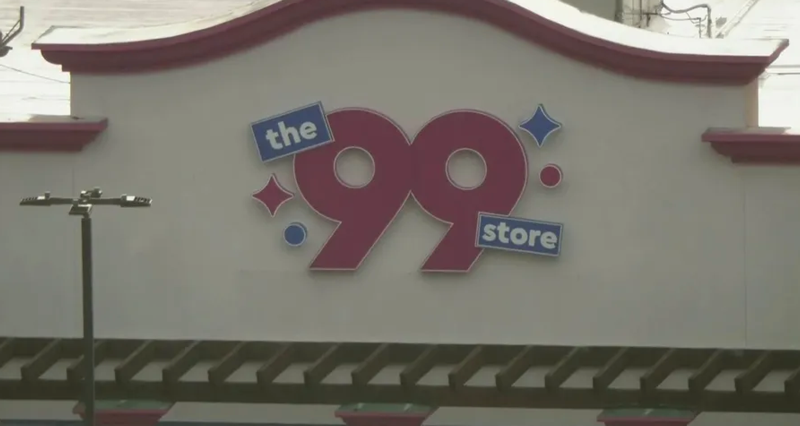
A combination of failed 'Bidenomics,' i.e., elevated inflation, disastrous progressive social justice reforms that ignited a tsunami of retail theft nationwide, and snarled supply chains left over from the Covid era have led to the demise of "99 Cents Only" stores nationwide, which began the liquidation process on Friday. 

"This was an extremely difficult decision and is not the outcome we expected or hoped to achieve," interim company CEO Mike Simoncic said in a statement.

Simoncic said, "Unfortunately, the last several years have presented significant and lasting challenges in the retail environment, including the unprecedented impact of the COVID-19 pandemic, shifting consumer demand, rising levels of shrink, persistent inflationary pressures and other macroeconomic headwinds, all of which have greatly hindered the company's ability to operate. We deeply appreciate the dedicated employees, customers, partners, and communities who have collectively supported 99 Cents Only Stores for decades."

99 Cents Only's press release stated the retail company began liquidating "all 371 of the Company's store locations" on Friday and is using Hilco Real Estate to manage the sale of real estate assets.

The liquidation will result in the closing of all stores across California, Arizona, Nevada, and Texas.

Founded in 1982, the store initially offered consumers "closeout branded merchandise, general merchandise, and fresh foods." 

The cost of doing business in the era of failed Bidenomics and disastrous social justice reforms makes it hard for even the most seasoned companies to operate. 


https://www.zerohedge.com/markets/hundreds-99-cents-only-stores-liquidated-failed-bidenomics-retail-theft-blamed

Inside Big Tech's underground race to buy AI training data

 At its peak in the early 2000s, Photobucket was the world's top image-hosting site. The media backbone for once-hot services like Myspace and Friendster, it boasted 70 million users and accounted for nearly half of the U.S. online photo market.

Today only 2 million people still use Photobucket, according to analytics tracker Similarweb. But the generative AI revolution may give it a new lease of life.

CEO Ted Leonard, who runs the 40-strong company out of Edwards, Colorado, told Reuters he is in talks with multiple tech companies to license Photobucket's 13 billion photos and videos to be used to train generative AI models that can produce new content in response to text prompts.

He has discussed rates of between 5 cents and $1 dollar per photo and more than $1 per video, he said, with prices varying widely both by the buyer and the types of imagery sought.

"We've spoken to companies that have said, 'we need way more,' Leonard added, with one buyer telling him they wanted over a billion videos, more than his platform has.

"You scratch your head and say, where do you get that?"

Photobucket declined to identify its prospective buyers, citing commercial confidentiality. The ongoing negotiations, which haven't been previously reported, suggest the company could be sitting on billions of dollars' worth of content and give a glimpse into a bustling data market that's arising in the rush to dominate generative AI technology.

Tech giants like Google, Meta and Microsoft-backed OpenAI initially used reams of data scraped from the internet for free to train generative AI models like ChatGPT that can mimic human creativity. They have said that doing so is both legal and ethical, though they face lawsuits from a string of copyright holders over the practice.

At the same time, these tech companies are also quietly paying for content locked behind paywalls and login screens, giving rise to a hidden trade in everything from chat logs to long forgotten personal photos from faded social media apps.

"There is a rush right now to go for copyright holders that have private collections of stuff that is not available to be scraped," said Edward Klaris from law firm Klaris Law, which says it's advising content owners on deals worth tens of millions of dollars apiece to license archives of photos, movies and books for AI training.

Reuters spoke to more than 30 people with knowledge of AI data deals, including current and former executives at companies involved, lawyers and consultants, to provide the first in-depth exploration of this fledgling market - detailing the types of content being bought, the prices materializing, plus emerging concerns about the risk of personal data making its way into AI models without people's knowledge or explicit consent.

OpenAI, Google, Meta, Microsoft, Apple and Amazon all declined to comment on specific data deals and discussions for this article, although Microsoft and Google referred Reuters to supplier codes of conduct that include data-privacy provisions.

Google added that it would "take immediate action, up to and including termination" of its agreement with a supplier if it discovered a violation.

Many major market research firms say they have not even begun to estimate the size of the opaque AI data market, where companies often don't disclose agreements. Those researchers who do, such as Business Research Insights, put the market at roughly $2.5 billion now and forecast it could grow close to $30 billion within a decade.

GENERATIVE DATA GOLD RUSH

The data land grab comes as makers of big generative AI "foundation" models face increasing pressure to account for the massive amounts of content they feed into their systems, a process known as "training" that requires intensive computing power and often takes months to complete.

Tech companies say the technology would be cost-prohibitive if they couldn't use vast archives of free scraped web page data, such as those provided by non-profit repository Common Crawl, which they describe as "publicly available."

Their approach has nonetheless drawn a wave of copyright lawsuits and regulatory heat, while prompting publishers to add code to their websites to block scraping.

In response, AI model makers have started hedging risks and securing data-supply chains, both through deals with content owners and via a burgeoning industry of data brokers that has popped up to satisfy demand.

In the months after ChatGPT debuted in late 2022, for instance, companies including Meta, Google, Amazon and Apple all struck agreements with stock image provider Shutterstock to use hundreds of millions of images, videos and music files in its library for training, according to a person familiar with the arrangements.

The deals with Big Tech firms initially ranged from $25 million to $50 million each, though most were later expanded, Shutterstock's Chief Financial Officer Jarrod Yahes told Reuters. Smaller tech players have followed suit, spurring a fresh "flurry of activity" in the past two months, he added.

Yahes declined to comment on individual contracts. The Apple agreement, and the size of the other deals, haven't previously been made public.

A Shutterstock competitor, Freepik, told Reuters it had struck agreements with two large tech companies to license the majority of its archive of 200 million images at 2 to 4 cents per image. There are five more similar deals in the pipeline, said CEO Joaquin Cuenca Abela, declining to identify buyers.

OpenAI, an early Shutterstock customer, has also signed licensing agreements with at least four news organizations, including The Associated Press and Axel Springer. Thomson Reuters, the owner of Reuters News, separately said it has struck deals to license news content to help train AI large language models, but didn't disclose details.

'ETHICALLY SOURCED' CONTENT

An industry of dedicated AI data firms is emerging too, securing rights to real-world content like podcasts, short-form videos and interactions with digital assistants, while also building networks of short-term contract workers to produce custom visuals and voice samples from scratch, akin to an Uber-esque gig economy for data.

Seattle-based Defined.ai licenses data to a range of companies including Google, Meta, Apple, Amazon and Microsoft, CEO Daniela Braga told Reuters.

Rates vary by buyer and content type, but Braga said companies are generally willing to pay $1 to $2 per image, $2 to $4 per short-form video and $100 to $300 per hour of longer films. The market rate for text is $0.001 per word, she added.

Images of nudity, which require the most sensitive handling, go for $5 to $7, she said.

Defined.ai splits those earnings with content providers, Braga said. It markets its datasets as "ethically sourced," as it obtains consent from people whose data it uses and strips out personally identifying information, she added.

One of the firm's suppliers, a Brazil-based entrepreneur, said he pays owners of the photos, podcasts and medical data he sources about 20% to 30% of total deal amounts.

The priciest images in his portfolio are those used to train AI systems that block content like graphic violence barred by the tech companies, said the supplier, who spoke on condition his company wasn't identified, citing commercial sensitivity.

To fulfill those requests, he obtains images of crime scenes, conflict violence and surgeries - mainly from police, freelance photojournalists and medical students, respectively - often in places in South America and Africa where distributing graphic images is more common, he said.

He said he has received images from freelance photographers in Gaza since the start of the war there in October, plus some from Israel at the outset of hostilities.

His company hires nurses accustomed to seeing violent injuries to anonymize and annotate the images, which are disturbing to untrained eyes, he added.

'I WOULD FIND IT RISKY'

While licensing could resolve some legal and ethical issues, resurrecting the archives of old internet names like Photobucket as fuel for the latest AI models raises others, particularly around user privacy, according to many of the industry players interviewed.

AI systems have been caught regurgitating exact copies of their training data, spitting out, for example, the Getty Images watermark, verbatim paragraphs of New York Times articles and images of real people. That means a person's private photos or intimate thoughts posted decades ago could potentially wind up in generative AI outputs without notice or explicit consent.

Photobucket CEO Leonard says he is on solid legal ground, citing an update to the company's terms of service in October that grants it the "unrestricted right" to sell any uploaded content for the purpose of training AI systems. He sees licensing data as an alternative to selling ads.

"We need to pay our bills, and this could give us the ability to continue to support free accounts," he said.

Defined.ai's Braga said she avoids acquiring content from "platform" companies like Photobucket and prefers to source social media photos from influencers who create them, who she said have a clearer claim to licensing rights.

"I would find it very risky," Braga said of platform content. "If there's some AI that generates something that resembles a picture of someone who never approved that, that's a problem."

Photobucket is not alone among platforms in embracing licensing. Tumblr's parent company Automattic said last month it was sharing content with "select AI companies." In February, Reuters reported Reddit struck a deal with Google to make its content available for training the latter's AI models.

Ahead of its initial public offering in March, Reddit disclosed that its data-licensing business is the subject of a U.S. Federal Trade Commission inquiry and acknowledged it could fall foul of evolving privacy and intellectual-property regulations.

The FTC, which warned businesses in February against retroactively changing terms of service for AI usage, declined to comment on the Reddit inquiry or say whether it was looking into other training data deals. 

https://www.marketscreener.com/quote/stock/ALPHABET-INC-24203373/news/Inside-Big-Tech-s-underground-race-to-buy-AI-training-data-46371670/

Musk Says Reuters Is "Lying" About Tesla's Plans To Scrap Model 2

Before reading the Reuters report on Tesla Motors. Consider what Elon Musk has just said:

In recent years, we have cited several reports, including a Reuters report from late January, explaining how Tesla Motors was preparing to debut a mass-market electric vehicle for under $25,000.

According to a new Reuters report, citing "three sources," Tesla has canceled plans for a "long-promised inexpensive car that investors have been counting on to drive its growth into a mass-market automaker."  Instead, Tesla plans to focus on "developing self-driving robotaxis on the same small-vehicle platform," the sources said.

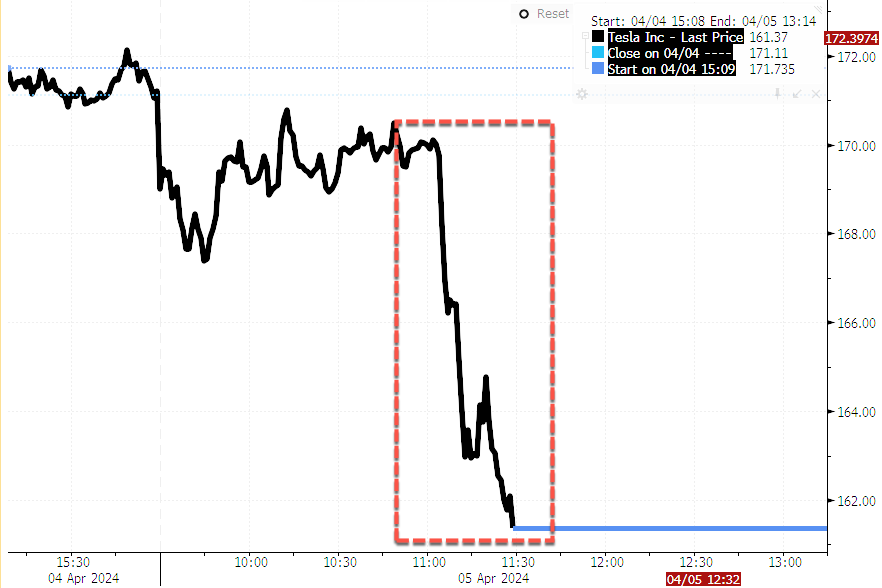
Tesla shares tumbled as much as 5% on the report. 

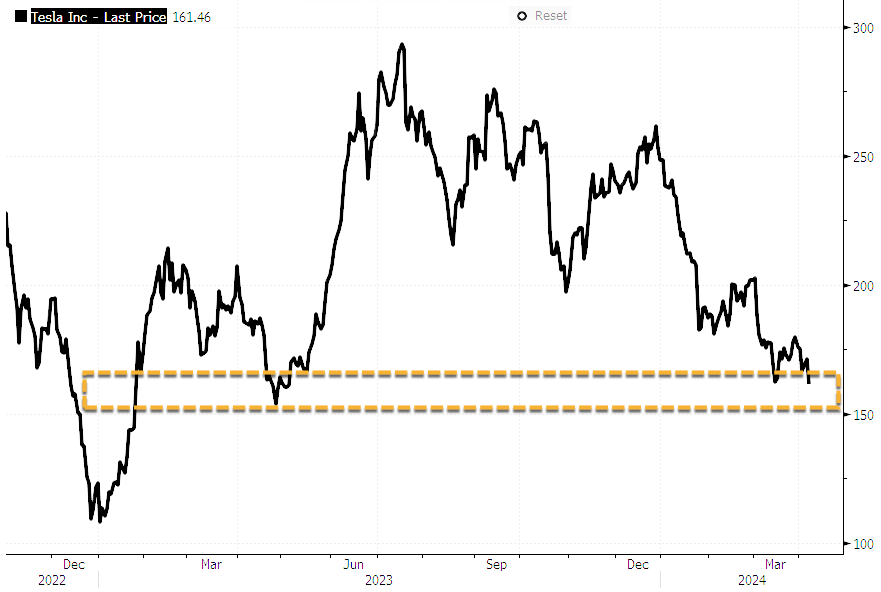
So far, shares have slid 34% on the year. 

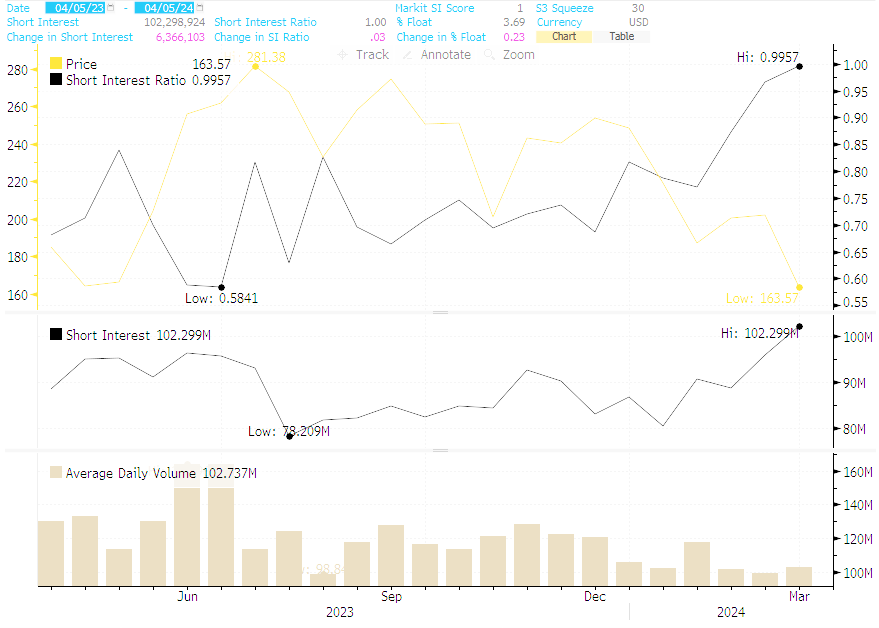
Short interest also jumped from 80 million shares to 102 million shares from mid-January. Current Bloomberg data shows that about 3.69% of the float is short. 

Elon Musk repeatedly told investors that Tesla planned to start producing an affordable model at its Texas factory next year. This was detailed in a Reuters report earlier this year. 

Sources said in the earlier report that the new mass-market EV would be a "compact crossover" that would compete with cheaper petrol-powered cars and inexpensive Chinese EVs, such as those made by BYD.

Tesla's Model 3 sedan is the cheapest EV the automotive company offers at $39,000 in the US. Tesla initially planned for the affordable EV, dubbed Model 2, to start around $25,000. 

Two Reuters sources said they heard about the plan to scrap the Model 2 in meetings attended by employees, one of which occurred in late February. 

"Elon's directive is to go all in on robotaxi," that person said.

Another source with knowledge of Tesla's plans said that pivoting away from the Model 2 strategy for robotaxis is a good idea. They cautioned that Tesla's product changes could be altered again based on economic conditions. 

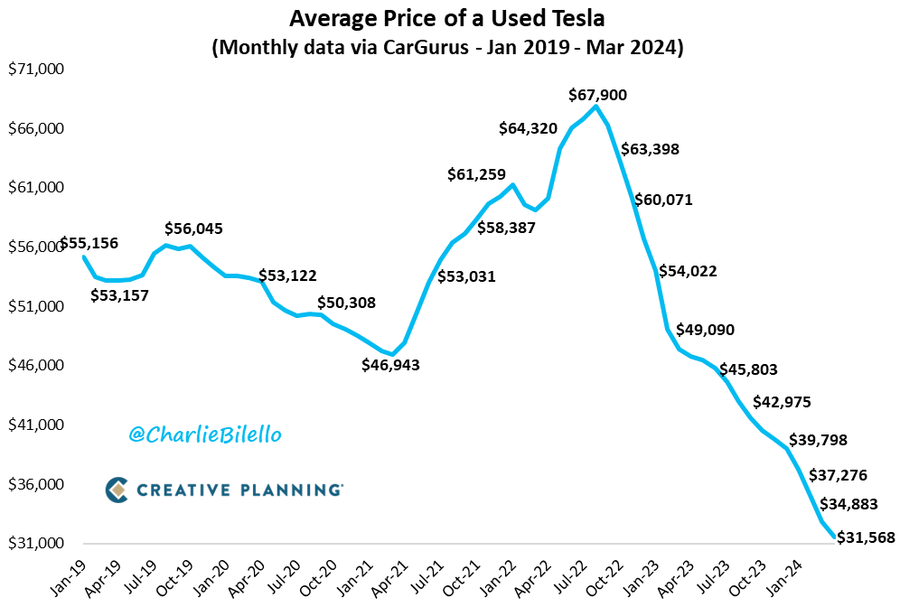
Tesla's delay of the Model 2 comes as the average price of a used Tesla has been more than halved since peaking at $67,900 in late 2022. 

Meanwhile, the Xiaomi SU7 EV launch was a huge success in China as the Chinese company took on Tesla. 

And robotaxis it is... 

https://www.zerohedge.com/markets/musk-says-reuters-lying-about-teslas-plans-scrap-model-2

Tesla scraps low-cost car plans amid fierce Chinese EV competition

 Tesla has canceled the long-promised inexpensive car that investors have been counting on to drive its growth into a mass-market automaker, according to three sources familiar with the matter and company messages seen by Reuters.

The automaker will continue developing self-driving robotaxis on the same small-vehicle platform, the sources said.

The decision represents an abandonment of a longstanding goal that Tesla chief Elon Musk has often characterized as its primary mission: affordable electric cars for the masses. His first “master plan” for the company in 2006 called for manufacturing luxury models first, then using the profits to finance a “low cost family car.”

He has since repeatedly promised such a vehicle to investors and consumers. As recently as January, Musk told investors that Tesla planned to start production of the affordable model at its Texas factory in the second half of 2025, following an exclusive Reuters report detailing those plans.

Tesla’s cheapest current model, the Model 3 sedan, retails for about $39,000 in the United States. The now-defunct entry-level vehicle, sometimes described as the Model 2, was expected to start at about $25,000.

Tesla did not respond to requests for comment.

The stark reversal comes as Tesla faces fierce competition globally from Chinese electric-vehicle makers flooding the market with cars priced as low as $10,000. The plan for driverless robotaxis, which could take longer to deliver, presents a stiffer engineering challenge and more regulatory risk.

Two sources said they learned of Tesla's decision to scrap the Model 2 in a meeting attended by scores of employees, with one of them saying the gathering happened in late February.

“Elon’s directive is to go all in on robotaxi,” that person said.

The third source confirmed the cancellation and said new plans call for robotaxis to be produced, but in much lower volumes than had been projected for the Model 2.

Several company messages reviewed by Reuters about the decision included one on March 1 from an unnamed program manager for the affordable car discussing the project’s demise with engineering staff and advising them to hold off on telling suppliers “about program cancellation.”

A fourth person with knowledge of Tesla’s plans expressed optimism about the decision to pivot away from the cheap-car strategy in favor of robotaxis, a segment Musk has envisioned as the future of mobility. The source cautioned that Tesla’s product plans could change again based on economic conditions.

Squeezing profits from entry-level vehicles is a challenge for any automaker. But Tesla’s delay in pursuing the car Musk once called his dream made it much tougher because it now faces far more competition in that price range.

While Tesla spent years developing its highly experimental Cybertruck, a pricey electric pickup, Chinese automakers have raced ahead on affordable EVs, grabbing market share, gaining economies of scale and offering consumers bargain prices that Western automakers are struggling to match.

As Chinese EVs surged to challenge Tesla’s dominance, Musk was tending to his sprawling empire, which includes rocket-maker SpaceX, brain-chip developer Neuralink, and social media giant X, which Musk acquired in 2022. Formerly called Twitter, the platform has foundered under Musk’s volatile management, shedding most of its value as the company has lost revenue and advertisers.

Plans for the affordable Tesla have been seen as key to delivering on Musk’s stratospheric ambitions for sales growth. Musk said in 2020 that Tesla aspired by 2030 to sell 20 million vehicles – twice as many as the world’s largest automaker, Toyota, sells today. With the death of the Model 2, it’s unclear how he’ll get there.

Expectations for a $25,000 vehicle have underpinned Wall Street analysts’ more modest, but still ambitious, forecasts for Tesla sales. Those forecasts, according to a Tesla investor-relations document, call for vehicle sales rising to 4.2 million by 2028 from 1.8 million last year.

Musk has wavered on the project before. In a biography of the entrepreneur released last year, author Walter Issacson reported that Musk in 2022 “put a hold on” the entry-level EV plans, reasoning that a Tesla robotaxi would make the car irrelevant. Musk’s advisors urged him to stay the course, the book said.

‘HALT ALL FURTHER ACTIVITIES’

Tesla called the affordable-car project NV91 internally and H422 externally when discussing it with suppliers, according to two of the sources and company messages reviewed by Reuters.

Messages from the unnamed Tesla program manager to staffers referenced those code names in discussing the project’s termination. One of those messages sent March 1 said that “suppliers should halt all further activities related to H422/NV91.”

The sources said they did not know all the reasons behind the decision to kill the project.

In another March 1 message, the manager thanked engineering staffers for their efforts and urged them to document what they had learned.

“I’d like to thank everyone for all your hard work and dedication to pushing boundaries and executing the best design possible given the aggressive constraints we had to work within,” the message said. “We would not want all our hard work to go to waste, so it’s important that we tie things off and document things properly.”

The messages showed meetings on the affordable-car project being canceled. The two sources said some engineers have been reassigned.

Tesla’s timeline and business model for robotaxis remain unclear. Musk has publicly predicted a future of mobility in which driverless taxis could eventually become a more common mode of transport than human-driven cars. He has said Tesla, the world’s most valuable automaker, would be "worth basically zero" without achieving full self-driving capability.

Currently, self-driving cars have only been approved by U.S. and Chinese regulators for tightly limited, experimental use on public roads.

Tesla has yet to prove it can produce an autonomous car despite years of predictions by Musk that one was just around the corner, an expectation that partly underpinned Tesla’s soaring valuation. The automaker faces lawsuits and investigations into crashes involving its Autopilot and Full Self-Driving driver-assistance systems, which are not fully autonomous. Tesla has blamed the accidents on inattentive drivers.

Tesla's Autopilot woes are among a number of problems that have drawn scrutiny. The automaker faces another investigation into the driving-range estimates of its cars, launched after Reuters reported last year that Tesla had rigged the in-dash range meters in its vehicles to give rosy projections. Reuters reported in December that the automaker blamed “driver abuse” for chronic failures of suspension and steering parts it long knew were defective.

Tesla's image as a climate-friendly innovator has also suffered with Musk’s tilt toward right-wing politics and polarizing public statements, which have turned away some prospective Tesla buyers, according to surveys and experts.

The automaker reported an 8% year-over-year drop in deliveries on Tuesday, just after its chief Chinese competitor, BYD, reported a 13% gain. Tesla shares dropped 5% on the news, deepening a slide of more than 40% since last July, amounting to a loss of about $400 billion in market value.

Still, Tesla’s market capitalization of $545 billion is higher than the combined worth of the next three most valuable carmakers, Toyota, Porsche and Mercedes-Benz. Tesla’s stock value has long been based on future expectations for mass-market sales and driverless cars rather than its current sales and profits.

RUNNING LATE

The affordable-car project’s cancellation comes as Tesla and other established automakers have been rocked by slowing EV demand growth in the United States and Europe, and cut-throat competition in China.

If Tesla had moved forward with the low-cost car, it wouldn’t have arrived on the market until the latter half of 2025, by the company’s estimate. But the entry-level EV segment is already crowded with compelling models from BYD and many other Chinese brands.

Tesla is late to the segment in part because of a pivotal decision by Musk. In 2020, after releasing its hit crossover, the Model Y, Tesla focused on the highly experimental Cybertruck instead of an affordable car.

Musk unveiled a prototype of the angular, stainless steel-clad truck in 2019 and predicted a starting price of about $40,000. The vehicle finally arrived last year as a 2024 model. The two versions available now start at about $80,000 and $100,000. Tesla says a lower-end Cybertruck costing about $61,000 won't be ready for delivery until 2025.

The company has also struggled to work through manufacturing problems, particularly with the truck's pioneering battery technology. Musk hopes to sell the vehicle in high volumes but warned investors last fall about "enormous challenges" ramping up production and making the vehicle profitable.

"We dug our own grave with the Cybertruck," he said.

During the same period, BYD has seen its electric-vehicle sales soar in China, growing from about 130,000 to more than 1.5 million, not including its thriving business in plug-in hybrids or its fast-growing exports.

BYD already offers a slew of low- and mid-range models, including its Seagull hatchback for less than $10,000. The Chinese automaker now plans to export that car for more than double that price - but still lower than the target for the cheap car Tesla had planned to build.

https://www.marketscreener.com/quote/stock/TESLA-INC-6344549/news/Tesla-scraps-low-cost-car-plans-amid-fierce-Chinese-EV-competition-46374159/

Trump Says Truth Social Has Zero Debt, $200 Million Cash Despite Media Fixation On 2023 Loss

 by Tom Ozimek via The Epoch Times (emphasis ours),

Former President Donald Trump said Thursday that media fixation on the $58 million loss of the company behind Truth Social is misguided, touting its fundamentals—which he said include over $200 million cash and no debt—as “very solid.”

President Trump took to Truth Social on April 4 to say that the platform’s performance is “amazing” and its fundamentals are “very solid,” with over $200 million in cash and “zero debt.”

Official first-quarter financial information for Trump Media & Technology Group, the parent company of Truth Social, isn’t available yet.

Very good for a startup, and growing fast,” President Trump said in a follow-up message, while touting the platform’s growing popularity.

The 45th president’s remarks come after a turbulent week for Trump Media, which went public last week after finalizing its long-awaited merger with Digital World Acquisition Corp. (DWAC), a special purpose acquisition company.

Market Interest Explodes, Then Cools

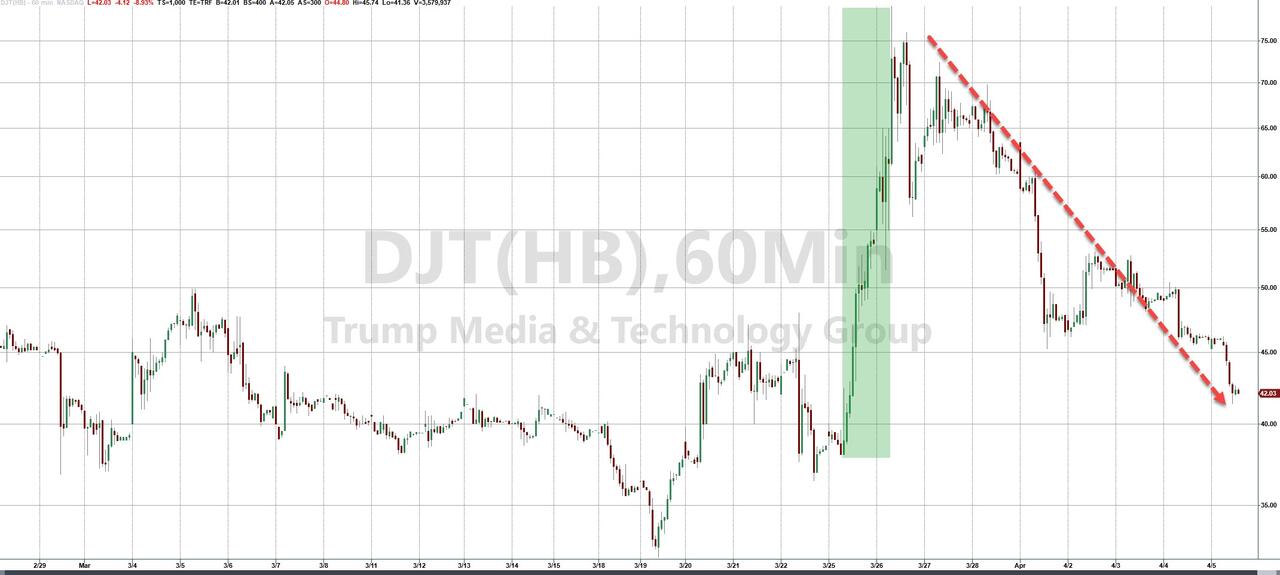
Following the merger and initial public offering (IPO) last week, market interest exploded in Trump Media, which trades under the ticker symbol DJT. Its stock price soared above $79 per share on its first day of trading, sending the company’s market cap to over $7 billion.

This meant that President Trump, who owns around 57 percent of the combined company, on paper became over $4 billion richer, though a lock-in arrangement prevents him from selling his shares for six months.

After the initial surge of interest, Trump Media shares pulled back to around the $62 mark, where they traded until news broke on April 1 that, in 2023, the company suffered a $58 billion loss.

Word of the loss sent Trump Media shares plunging by roughly 20 percent to around the $45 mark, a price around which it’s traded sideways until today, at a market cap of around $6.3 billion.

Much of the loss appears to be related to an interest expense of $39.4 million on its outstanding debt, according to the 8-K filing. In 2022, the company made a net profit of $50.5 million.

The merger with DWAC gave Trump Media a $300 million cash infusion, with the company notching $4.1 million in revenue last year.

Trump Media executives said in Monday’s 8-K filing that they expect the company to continue taking losses as they burn through some of that cash in order to aggressively expand Truth Social’s user base.

“TMTG expects to continue to incur operating losses and negative cash flows from operating activities for the foreseeable future, as it works to expand its user base, attracting more platform partners and advertisers,” the company said in the filing.

President Trump’s stake in the company is now worth roughly $3.8 billion.

Trump Media’s meteoric rise and subsequent wobble has sparked massive interest in shorting the stock—meaning betting money on its potential price decline.

According to financial data company S3 Partners, Trump Media is the most “shorted” special purpose acquisition vehicle in the country at the moment.

New Media Giant?

Trump Media executives said in Monday’s 8-K filing that they’re looking to enhance the platform’s appeal by new initiatives such as acquiring new technologies.

They said they’ve already started testing “a particular, state-of-the-art technology that supports video streaming and provides a ‘home’ for cancelled content creators,” which Trump Media aims to acquire soon and incorporate into its offering.

“Such initiatives and potential acquisitions are still preliminary and subject to material changes and risks, some of which are beyond TMTG’s control,” the company stated.

Given these uncertainties, TMTG believes it is premature for TMTG to predict when it will attain profitability and positive cash flows from its operations.”

Trump Media executives noted that the platform’s success depends in part on the popularity of its brand and the reputation of President Trump.

“The value of TMTG’s brand may diminish if the popularity of President Trump were to suffer,” the executives wrote in Monday’s 8-K filing. “Adverse reactions to publicity relating to President Trump, or the loss of his services, could adversely affect TMTG’s revenues, results of operations and its ability to maintain or generate a consumer base.”

It’s a message the former commander-in-chief appears to have taken to heart, with his posts on Thursday touting the impact of the Truth Social platform and blasting its detractors.

“All of the competitors to TRUTH SOCIAL, especially those in the Radical Left Democrats Party who are failing at every level, like to use their vaunted ‘disinformation machine’ to try and convince people, and it is not easy to do, that TRUTH is not such a big deal and doesn’t ‘get the word out’ as well as various others, which they know to be false,” President Trump wrote in one of his posts.

Besides sharing the state of Trump Media’s financials—which TMTG CEO Devin Nunes echoed in a statement: “Truth Social today has no debt and over $200 million in the bank”—the former president said the platform is the main way he communicates with the public.

“It is the primary way I get the word out and, for better or worse, people want to hear what I have to say, perhaps, according to experts, more than anyone else in the World,” he wrote, adding that competing social media platforms, which he said canceled him for largely political reasons, would love to have him back.

“Look, using TRUTH, I became the Republican Nominee for President of the United States, and in record time! When I ENDORSE a politician on TRUTH, they almost ALWAYS WIN,” he continued, adding that if the platform didn’t work to get the message out, he wouldn’t use it.

Meanwhile, as President Trump paints the fate of Truth Social in bright colors, there appears to be no shortage of investors willing to bet on its demise.

“They are looking for this stock to crater and crater very quickly,” Ihor Dusaniwsky, managing director of predictive analytics at S3, told The New York Times of the big interest in shorting Trump Media.

https://www.zerohedge.com/political/trump-says-truth-social-has-zero-debt-200-million-cash-despite-media-fixation-2023-loss

Bristol, 2seventy Abecma OKd for Multiple Myeloma

 Abecma tripled progression-free survival compared to standard regimens in the Phase 3 KarMMa-3 trial, with a 51% reduction in risk of disease progression or death and a well-established safety profile

Expanded approval brings this personalized CAR T cell therapy to more patients with relapsed or refractory multiple myeloma earlier in their treatment journey as a one-time infusion offering meaningful treatment-free intervals when responding to therapy

Abecma is now approved in the U.S., Japan, Switzerland and the EU for earlier use for triple-class exposed relapsed and/or refractory multiple myeloma, underscoring BMS’ commitment to delivering Abecma globally, with consistently high manufacturing success rates and continuous increases in capacity

https://www.biospace.com/article/releases/u-s-fda-approves-bristol-myers-squibb-and-2seventy-bio-s-abecma-for-triple-class-exposed-relapsed-or-refractory-multiple-myeloma-after-two-prior-lines-of-therapy/