Search This Blog

Tuesday, April 9, 2024

Pfizer And A Corruption Too Deep To Fix

 by Jeffrey Tucker via The Epoch Times,

Old movies and new ones often turn on the theme of corruption. For generations, viewers have enjoyed discovering the ins and outs of a gang of people who are up to no good, financially and otherwise.

It’s always a shock to see the way the insiders treat each other so brutally, and how they lie, cheat, and steal to get their way. It’s especially satisfying when they get caught in the end.

Countless movies in the old days followed this basic plot.

One of my favorites is the American classic “On the Waterfront” (1954) with Marlon Brando, Eva Marie Saint, and Karl Malden. It’s the story of a rough gang of thugs that has taken control of a longshoreman’s union. They pillage the workers for dues and make paychecks contingent on loyalty.

For years, everyone in the union is told to be “D&D” or deaf and dumb, never saying a word to the authorities for fear of bad outcomes. As the corruption gets worse, the tactics of enforcement grow more violent. New Jersey kicks off a crime commission to look into the problem with the focus on a murder. A local priest plays a role in convincing a worker who is tight with the gang to rat on the bad guys.

It all turns out well in the end, even if Brando gets badly beaten up. The bad guys are overturned and the workers get their union back. The movie is a brilliant reflection of a culture at the time: yes, there are imperfections but we are making great progress to root out the bad and replace it with the good, thanks to moral leadership and courage.

But notice how the plot absolutely depends on the existence of a not-corrupt higher power.

That’s almost always the case in the old movies. Once the authorities find out that something bad is happening, they work to clean it up. Their success turns on the ethical tenacity of one insider who is willing to stand up for what is right. To make that courage operational, you need means of redress that are not part of the problem.

That’s all great but we have a different problem in our own time. The higher powers on which we depend for redress are themselves part of the issue.

This truly came home to me lately with the Supreme Court hearing for Murthy v. Missouri, which documented how dozens of federal agencies worked with social media companies, directly and indirectly, to censor free speech.

Seems like a no-brainer of a case. But based on the oral arguments, a third of the court couldn’t see the problem at all. A third was confused. The last third got that this was a problem for the First Amendment.

This is alarming but a realistic accounting of where we are in the United States today: divided by thirds into clear, confused, and corrupt.

In other words, we can no longer count on the highest powers and the most authoritative institutions to save us from evil.

Let’s cite an astonishing example from this past week that should have been headline news but was utterly invisible to legacy media (speaking of corruption at the very top). The case involves the COVID medication Paxlovid. It was approved under “emergency use” in December 2021, and trumpeted by Fauci, President Biden, and the rest of the usual crowd. It was 90 percent effective, they said!
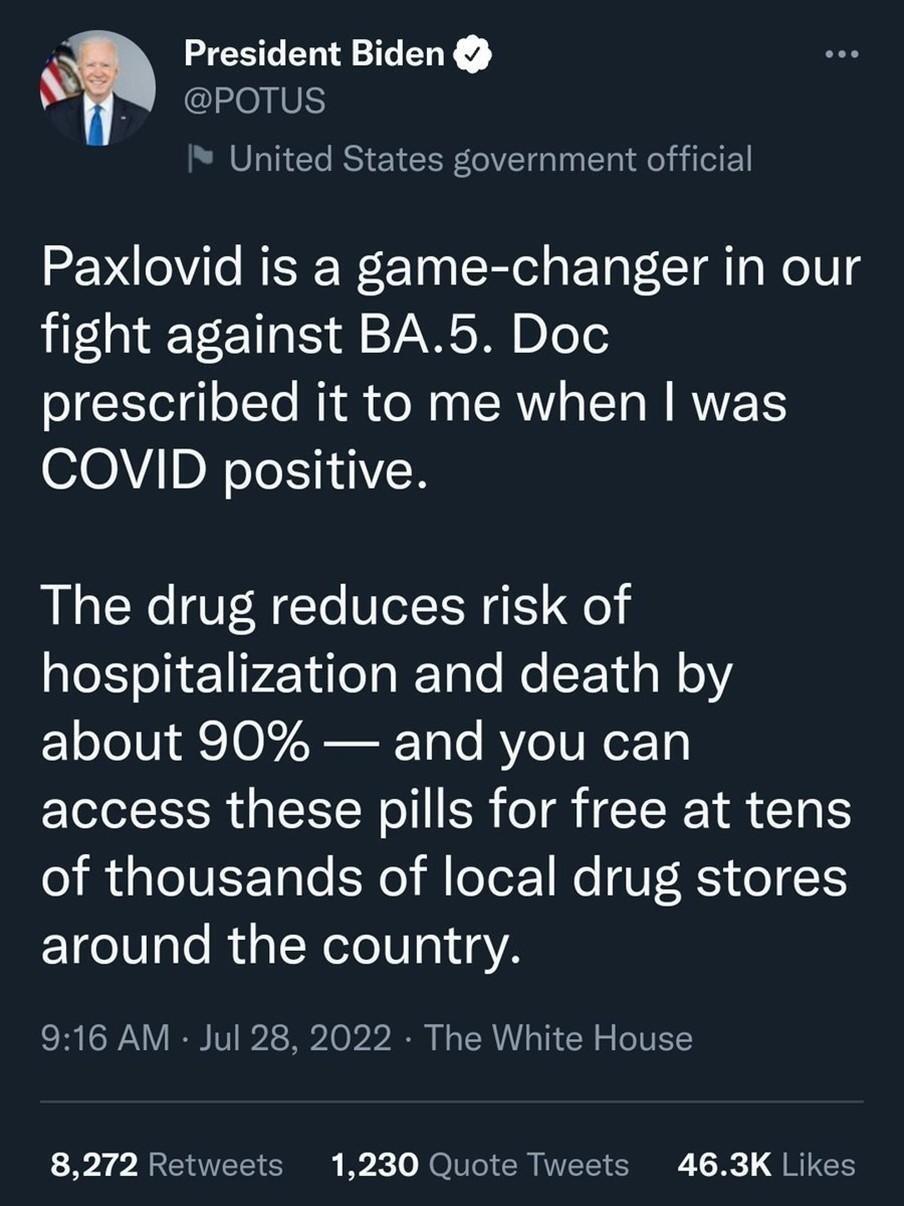
The White House authorized $11 billion and more to pay for it, and dispatched the whole army of media mavens to push this thing. The White House was able to claim it was free, if you had insurance but even that would last only for so long. Eventually, the consumer had to pay and it was nearly $1,500 for 20 pills.

In many places, the entire medical profession was insisting that this was the way to treat COVID, even as Ivermectin and Hydroxychloroquine were banned or impossible to get.

Paxlovid was greeted with all the usual hosannas from the drug company as echoed by big media. The drug is 89 percent effective, they kept saying. The governments of Canada, the United States, and the UK all celebrated and showered Pfizer with multiple rounds of billions of dollars.

But even from the outset, it seems there were many reports of rebounds. The drug would reduce symptoms for a few days even to the point of generating a negative test but then COVID would come back. This happened often enough that pharma skeptics grew deeply suspicious of it, especially because of such a very long run of patented failings in this realm.

Mr. Biden, for example, seems to have gotten COVID four times after being treated repeatedly with Paxlovid. So too with Biden’s wife. The same happened with Fauci himself. Most every prominent person reported something similar. But that did not stop the gravy train from running, with the entire medical professional rallying around this drug.
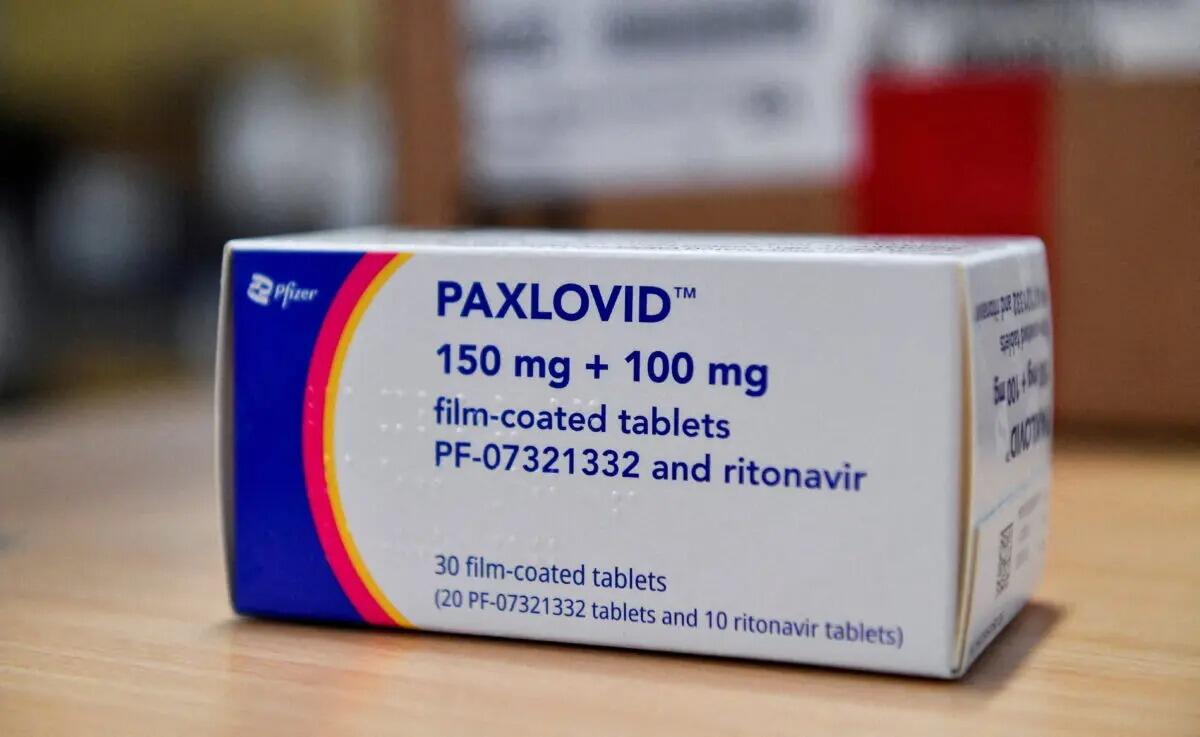
COVID-19 treatment pill Paxlovid in a box at Misericordia hospital in Grosseto, Italy, on Feb. 8, 2022. (Jennifer Lorenzini/Reuters)

From the outset, The Epoch Times was reporting skeptically about it, the only media venue to do so. More and more doubts emerged, not in official circles but online in alternative media.

Now we come to the kicker. Pfizer itself has finally published its randomized placebo-controlled trial of several hundred individuals with the Delta variant, which would have been two and a half years ago. The title of the results as published in the New England Journal of Medicine: “Nirmatrelvir for Vaccinated or Unvaccinated Adult Outpatients with Covid-19.”

Notice the absence of the word Paxlovid, making it all the more difficult for regular people to find. Nirmatrelvir is the clinical name.

And the conclusion: “Nirmatrelvir–ritonavir was not associated with a significantly shorter time to sustained alleviation of Covid-19 symptoms than placebo, and the usefulness of nirmatrelvir–ritonavir in patients who are not at high risk for severe Covid-19 has not been established.”

In other words: this drug does not work. At all. It is no better than nothing. It is not useful. Countless billions later and this is what we have, a completely useless thing. At best. In fact, that Pfizer itself admits that its own drug is useless, one wonders what the bad news is!

The drug was not a game changer at all. It was a vast waste of money.

This whole thing stuns me, even now, even after everything we know about the industry, its relationship to government, the way the media goes along with all the nonsense, the manner in which all top officials go along with the racket. This to me is as much a scandal as the vaccine in some ways.

You will notice that you have not seen this reported in any mainstream media, even though it appears in the top medicine journal in the United States. That’s because the mainstream media is entirely in the pay of pharma.

The conspiracy is out in the open, and all official channels are implicated. There seems to be zero accountability or appeal. It’s no wonder that RFK, Jr., is calling for racketeering investigations to be made against the whole industry and its industrial partners. This is aggressive robbery and fraud.

Very few people even know to care because they are not being told the brutal facts of the case.

One also wonders how it is that Pfizer held onto this study for two years before releasing it.
Why would Pfizer choose just now to announce that its wonder drug is actually useless? My own theory: its accounting ledgers are showing that the drug’s period of high profitability is at an end. There’s no more high-margin profits associated with it. Might as well retire it.

With a complicit legacy media, it has no egg on its face. It can just chalk up its wild Paxlovid push as profitable and done, like a seasonal beer or a pumpkin-spice latte. There is essentially no downside to moving onward to other products in its arsenal.

But think about what this means for this company and for the system that protects it. What does this say about the vaccine? What does it mean for the whole network of protection, from regulators to journals to media? They are all in on the game. And how deep and wide is this game?

What we have in operation here is a form of vampiric capitalism, an entire industry that has colonized our health and bodies in the interest of wealth extraction even though its products do not work and actually make us more sick, providing more opportunities to innovate products that do more of the same.

It’s time that this system came to an end, but where is the crime commission to investigate and stop it?

It doesn’t exist. That’s the great dilemma of our time.

https://www.zerohedge.com/political/pfizer-and-corruption-too-deep-fix

Genprex Collaborators: Positive Preclinical Data on Reqorsa, Gene Therapy for Lung Cancer

 Compelling Data Validates the Potential of Reqorsa® Immunogene Therapy and the Oncoprex® Delivery System as Innovative Cancer Treatments

REQORSA Has Anti-Tumor Mechanisms and Ability to Trigger Cancer Cell Death

Genprex, Inc. ("Genprex" or the "Company") (NASDAQ: GNPX), a clinical-stage gene therapy company focused on developing life-changing therapies for patients with cancer and diabetes, today announced that its research collaborators presented positive preclinical data for Reqorsa® Immunogene Therapy (quaratusugene ozeplasmid) and NPRL2 gene therapy, which both utilize the Company's non-viral Oncoprex® Delivery System for the treatment of lung cancer. These studies were presented at the 2024 American Association for Cancer Research (AACR) Annual Meeting, which is being held April 5-10, 2024 in San Diego, California.

https://www.biospace.com/article/releases/genprex-collaborators-report-positive-preclinical-data-on-the-use-of-reqorsa-and-on-nprl2-gene-therapy-utilizing-non-viral-oncoprex-delivery-system-for-the-treatment-of-lung-cancers-at-the-2024-aacr-annual-meeting/

NeuroSense Collaborates with Lonza on Biomarkers of Neurodegenerative Disease


  • NeuroSense will leverage its extensive experience in biomarker utilization to advance early diagnosis and treatment in the neurodegeneration field
  • Lonza to develop, optimize, and qualify a method utilizing Neuron-Derived Exosomes ("NDEs"), set to be integrated into the clinical development program of PrimeC by NeuroSense
  • Lonza's Dev-on-Demand solution to enable NeuroSense to access Lonza's process development with rapid initiation, execution, and delivery of work

AbbVie’s Humira Loses Only 4% of Market Share to Biosimilars: Report

 Despite hitting the market more than a year ago with steep discounts, biosimilars for AbbVie’s blockbuster arthritis treatment Humira (adalimumab) have managed to take only 4% of the market share away from the branded reference product, according to the latest quarterly report from Samsung Bioepis.

As of February 2024, Humira still controls 96% of the market, finds the report. Still, biosimilars seem to be slowly gaining ground. Compared with the previous quarter, market share for the copycat products rose 2%, according to Samsung Bioepis.

Humira biosimilars first entered the U.S. in January 2023, led by Amgen’s Amjevita (adalimumab-atto). A few months later, several other companies launched their own products including Celltrino’s Yuflyma (adalimumab-aaty), Sandoz’s Hyrimoz (adalimumab-adaz) as well as Organon and Samsung Bioepis’ Hadlima (adalimumab-bwwd).

Boehringer Ingelheim also debuted its own biosimilar Cyltezo (adalimumab-adbm), which at the time was the only interchangeable product, allowing it to be substituted for the branded product without needing to change the prescription.

Most recently, Alvotech and Teva won the FDA’s approval for their own copycat product Simlandi (adalimumab-ryvk), following years of regulatory difficulties. Like Cyltezo, Simlandi is interchangeable with the reference product and is the first high-concentration citrate-free Humira biosimilar.

These biosimilar manufacturers have found it difficult to break Humira’s hold on the market despite offering steep discounts. Hadlima and Yusimry cost around 85% to 86% lower than Humira, respectively, according to Samsung Bioepis’ report. Most companies also offer flexible pricing options, with dual or multiple price points, but have still failed to pose a real threat to Humira.

Boehringer Ingelheim launched an unbranded version of Cyltezo in October 2023 at a wholesale acquisition cost 81% lower than Humira. However, uptake for the biosimilar has remained slow, pushing the company last week to lay off an undisclosed number of its sales staff and transition to a hybrid model.

In justifying the changes to its sales approach, Boehringer Ingelheim pointed to pharmacy benefit managers (PBM), which have chosen to keep Humira on their list of drugs up for reimbursement, which have allowed patients to choose the branded product over biosimilars.

report earlier this month from healthcare analytics firm Iqvia also identified PBMs as a key barrier to greater biosimilar uptake. Transitioning all adalimumab-treated patients to biosimilars could generate up to $6 billion in savings for the U.S. healthcare system but would cost PBMs around 84% of their profits.

Nevertheless, the Iqvia report expects “more favorable payer access” this year, especially as the three biggest formularies are set to shift their coverage. Starting this month, CVS Caremark removed Humira from its major national commercial template formularies in favor of biosimilars. At the same time, Humira will still stay on CVS Caremark’s Choice and Standard Opt Out commercial formularies.

https://www.biospace.com/article/abbvie-s-humira-has-lost-only-4-percent-of-market-share-to-biosimilars-report/

FDA Backs BrainStorm’s Design for Phase IIIb Trial in Early-Stage ALS

 BrainStorm Cell Therapeutics announced Tuesday that under a Special Protocol Assessment the FDA has agreed to the design of a Phase IIIb trial for the company’s NurOwn amyotrophic lateral sclerosis candidate. 

After an FDA advisory committee voted 17-1 against NurOwn in September 2023, BrainStorm withdrew its Biologics License Application in October 2023 and plotted a potential path forward with plans for a Phase IIIb trial. Tuesday’s announcement about the Special Protocol Assessment (SPA) agreement with the FDA validates the trial’s protocol and statistical analysis for the planned late-stage study. 

“We are pleased to have reached an agreement with the FDA on key elements of the Phase IIIb trial design that provides a potential path forward towards obtaining regulatory approval,” BrainStorm CEO Chaim Lebovits said in a statement. 

While the agreement holds no guarantee of approval or indicates FDA concurrence on every trial protocol, Lebovits contends that the SPA will “de-risk” aspects of the clinical program and potentially bring the asset one step closer to market. The trial will commence this year with two parts—a placebo-controlled period of 24 weeks followed by an open-label extension. 

The trial design validated by the agency’s SPA sets the primary endpoint as a change in the Revised Amyotrophic Lateral Sclerosis Functional Rating (ALSFRS-R) total score from baseline to Week 24. A combined assessment of function and survival will be utilized. Blood samples and spinal fluid collected will showcase biomarkers of neuroinflammation, neurodegeneration and neuroprotection. 

NurOwn is a stem cell therapeutic in which a patient’s bone marrow is drawn out and mesenchymal stem cells (MSC) are procured to manufacture each treatment. The MSC cells are induced to secrete neurotrophic factors, which support neuronal growth and survival to potentially combat the degeneration of the motor neurons affected by ALS. 

The FDA’s advisory committee in September 2023 voted overwhelmingly against approving NurOwn, citing “conflicting” information and a “lack of efficacy” in terms of survival. The trial showed a response rate only slightly higher than the placebo response—34.7% versus 27.7%, a higher than usual placebo response rate than other ALS trials. However, a subgroup of patients with earlier stage disease showed a wider margin with 34.6% of NurOwn treated patients showing a clinically significant response compared to only 15.6% in the placebo group. Early-stage ALS is the target population for BrainStorm’s upcoming Phase IIIb trial. 

BrainStorm’s stock traded higher in premarket trading Tuesday on news of the FDA’s trial design agreement. The company’s stock price nosedived last fall and is down 85% over the last year, though it has been slowly recovering since the submission of its SPA request in February 2024. 

https://www.biospace.com/article/fda-backs-brainstorm-s-design-for-early-stage-als-phase-iiib-trial-/

Pfizer Eyes Broader Label for RSV Vaccine Abrysvo After Promising Phase III Data

 Pfizer on Tuesday unveiled top-line data from its Phase III MONeT trial, showing that its respiratory syncytial virus vaccine Abrysvo could induce immune protection in adults 18 to 59 years of age.

Abrysvo hit MONeT’s co-primary immunogenicity endpoints, eliciting a non-inferior neutralizing response to the RSV-A and RSV-B virus subgroups, compared with the vaccine’s effect in elderly adults aged 60 and older, as demonstrated in the Phase III RENOIR study which established the safety and efficacy of the vaccine.

According to Tuesday’s results, vaccination with Abrysvo also elicited a fourfold increase in serum neutralizing titers against RSV-A and RSV-B one month after inoculation.

In terms of safety, MONeT found Abrysvo to be well-tolerated. The vaccine’s safety and adverse event profile was consistent with what had been established in previous studies.

Annaliesa Anderson, head of vaccine research and development at Pfizer, in a statement called these findings “encouraging,” adding that they provide strong evidence of Abrysvo’s protective effects in younger adults who are at higher risk of respiratory syncytial virus (RSV)-associated illnesses.

Pfizer will file these data with regulatory health agencies, proposing a broader label for Abrysvo. If approved, Abrysvo could become “the first and only RSV vaccine for adults 18 years and older,” Anderson said.

Abrysvo snagged the FDA’s approval in June 2023one month behind its chief competitor Arexvy, which is being developed and commercialized by GSK. Both vaccines are indicated for the prevention of lower respiratory tract disease (LRTD) in adults 60 years of age and older.

In August 2023, Pfizer secured a label expansion for Abrysvo, allowing its use in pregnant women at 32 through 36 weeks of gestation, to prevent RSV-associated LRTD in their infants.

Despite having a broader label and a potentially larger target patient population, Abrysvo has lagged far behind Arexvy. In November 2023, CFO David Denton said in an investor event that the pharma is “disappointed” in Abrysvo’s performance.

GSK’s Arexvy at the time was well on its way to blockbuster status. The company in its third-quarter 2023 earnings report claimed that Arexvy had captured two-thirds of retail vaccinations in the U.S. and brought in nearly $860 million in its first full quarter on the market.

Like Pfizer, GSK is also working to expand Arexvy’s label, though it has so far focused on the adult population. In October 2023, GSK unveiled early results from a Phase III trial testing Arexvy in younger seniors—those 50 to 59 years of age. The British pharma did not reveal specific data but said that the vaccine was just as safe and effective in the younger age group as in its currently approved population.

https://www.biospace.com/article/pfizer-eyes-broader-label-for-rsv-vaccine-abrysvo-after-promising-phase-iii-data/

Why Is Vincerx Pharma Stock Plummeting

 On Monday, Vincerx Pharma Inc (NASDAQ:VINC) presented preliminary Phase 1 data for VIP236 and updates on pipeline progress at the American Association for Cancer Research Annual Meeting 2024.

VNC-236-101 is a Phase 1 dose-escalation study with monotherapy VIP236 for metastatic tumor patients who have exhausted all standard therapy options.

  • Fifteen patients have been dosed to date on the once-every-three-weeks (Q3W) schedule:

  • The Q3W schedule is well tolerated with no dose-limiting toxicity (DLT) in any patients, and no patients have discontinued VIP236 due to an adverse event.

  • No severe or life-threatening diarrhea has been observed, validating the purposeful design of VIP236’s optimized camptothecin payload.

  • Seven patients have achieved objective stable disease, including tumor reduction. Four patients remain on the study, with the longest-treated patient for 168 days.

VNC-943-101 is a Phase 1 dose-escalation study with monotherapy VIP943 for CD123+ acute myeloid leukemia, B-cell acute lymphocytic leukemia, or myelodysplastic syndromes.

  • VIP943 is administered once per week.

  • No DLTs occurred in Cohort 1 and 2. Four patients have been enrolled in Cohort 3 (0.7 mg/kg) and are undergoing DLT assessment.

  • VIP943 PK data shows very little free payload in circulation, consistent with the favorable safety profile observed preclinically and clinically.

Vincerx will present additional Phase 1 data for VIP236 and VIP943 on or around the 2024 European Hematology Association Annual Meeting in June 2024.

Vincerx also reported preclinical experiments applying the next-generation effector chemistry of its VersAptx platform to the antibodies of approved antibody-drug conjugates (ADCs), Trodelvy and Enhertu, demonstrating the potential to improve tumor toxicity of ADCs by orders of magnitude.

  • In in vitro tumor models, Vincerx’s sacituzumab-legumain-KSPi ADC had a 20-fold improvement in tumor toxicity compared with Trodelvy (sacituzumab-govitecan).

  • The company’s trastuzumab-legumain-KSPi ADC demonstrated an 8-fold increase in tumor toxicity compared with Enhertu (fam-trastuzumab-deruxtecan).