Search This Blog

Friday, April 19, 2024

How Big Tech Is Consuming America's Electricity And Water

 by Kevin Stocklin via The Epoch Times (emphasis ours),

As federal net-zero policies attempt to shift transportation, heating, and other essentials onto the electric grid, one of the hottest growth sectors of America’s economy is poised to increase electricity demand exponentially, further straining an energy infrastructure that is being pushed into the red.

Data centers, the so-called “brains of the internet,” are industrial warehouses packed with rows upon rows of servers. They process, communicate, and store the data behind everything from bank records, online retailers, and social media platforms to Netflix shows and your personal iPhone videos.

Data centers are essential to cloud computing and its ability to give users remote access to data,” a 2023 Federal Reserve report states, quoting a Science article that calls them the “information backbone of an increasingly digitalized world.”

Many analysts laud data centers as one of the fastest-growing sectors of the real estate market, but the industry may soon find itself hitting a wall as local communities put up increasing resistance to the industry’s seemingly insatiable appetite for power and water.

“While other commercial real estate sectors are experiencing a decline in construction pipelines, data center development has reached an all-time high,” according to a January report by Newmark, a commercial real estate advisory.

“However, growth is increasingly constrained by land and power availability, supply chain challenges and construction delays, not to mention increasing resistance from some local jurisdictions.”

The report said the rapid growth of artificial intelligence (AI) and other technologies is fueling the demand.

The industry is led by cloud computing behemoths like Amazon Web Services (AWS), Microsoft Azure, Google Cloud, and Meta. It also includes digital landlords, called co-location companies, which rent storage space out to third parties. These include Equinix, Digital Realty, and CyrusOne.

Electricity Demand From Data to Double by 2030

Data warehouses consumed 17 gigawatts of electricity in 2022, or about 4 percent of total U.S. consumption. This is projected to double to 35 gigawatts by 2030.

Eric Woodell, who holds a doctorate of science in information systems and communications and is the founder of Amerruss, a tech infrastructure management company, referred to data centers as “energy hogs.”

But now your data center for AI applications is no longer a hog, it’s an elephant and it’s living in your backyard,” he told The Epoch Times.

Mr. Woodell has been managing data centers for 25 years, formerly for Vanguard, the world’s second-largest asset manager.

A mere 10-foot-square space within the average data center consumes about 10 times as much electricity as the average home, he said.
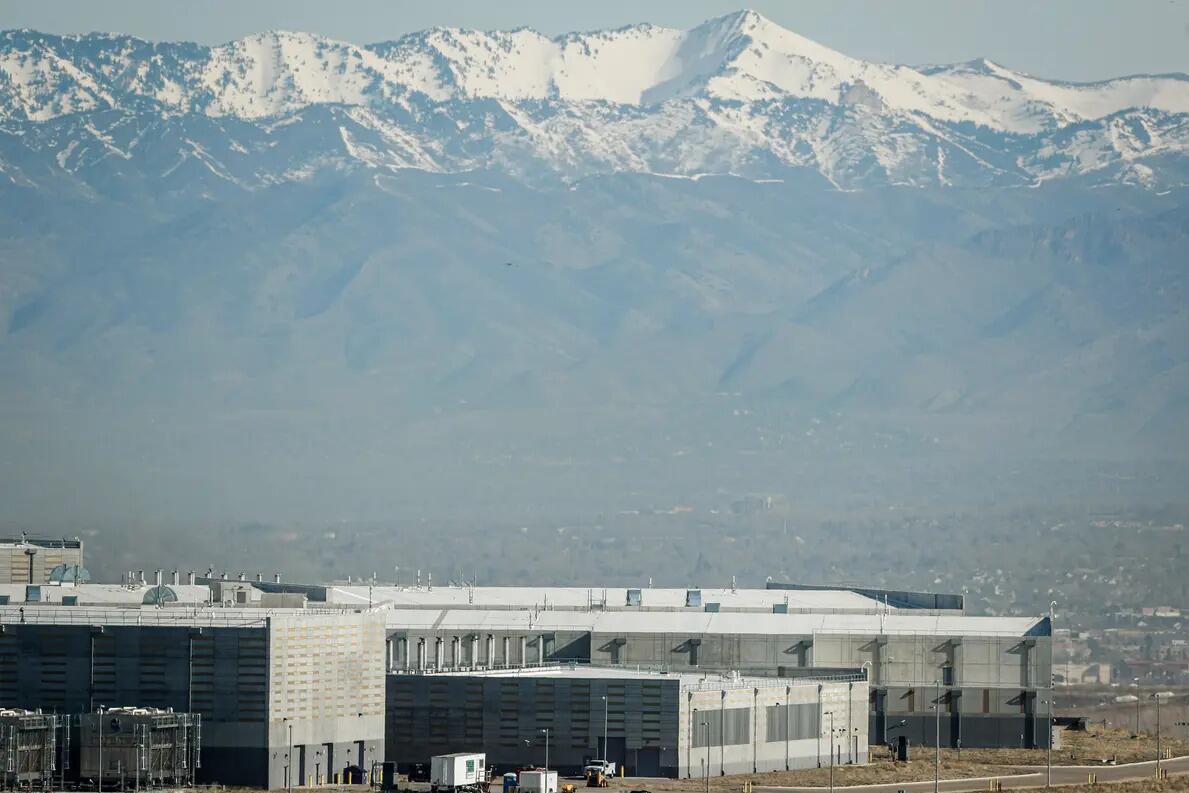
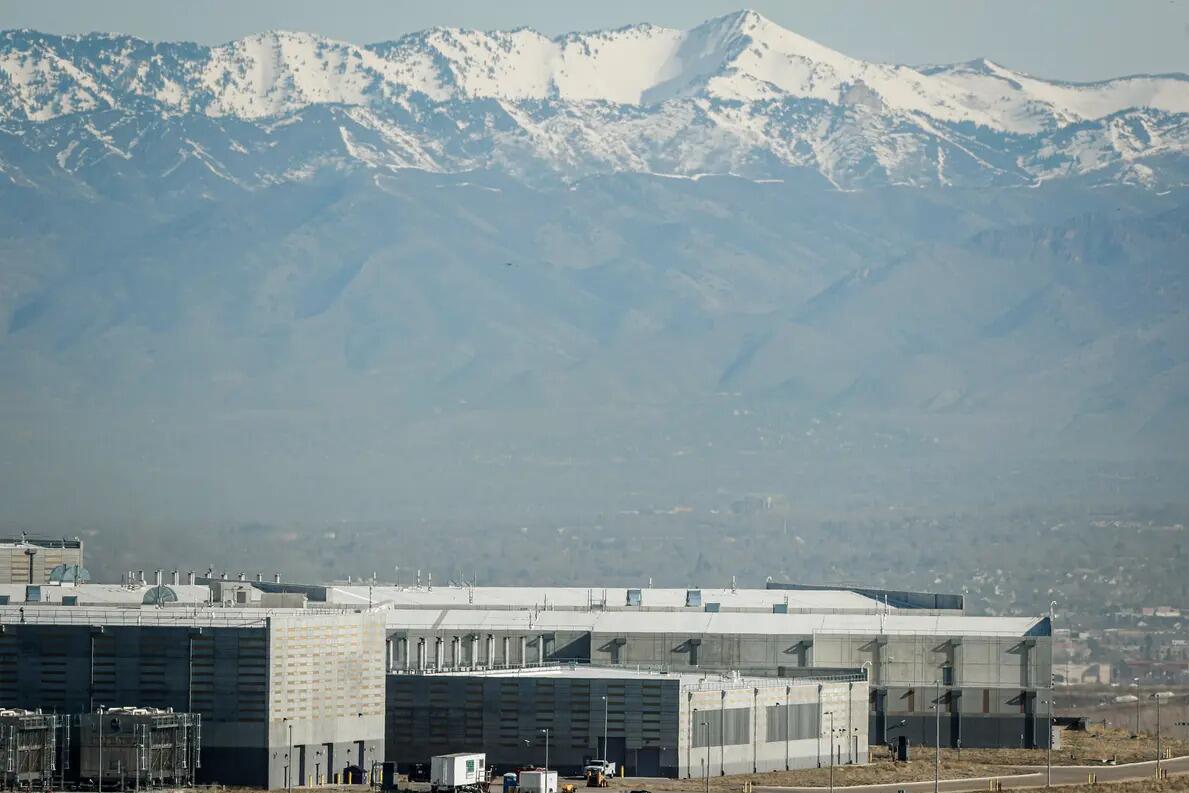
The NSA's Utah data collection center has Salt Lake City in the background, in Bluffdale, Utah, on March 17, 2017. The $1.5 billion data center is thought to be the worlds largest

“While conventional data centers are already pulling an enormous amount of power, AI computing doesn’t use CPUs [central processing units], but GPU-based systems instead, as the GPUs [graphics processing units] are tailored to better handle complex mathematical functions,” he said. “But there’s a catch: they draw between five and 10 times more power than similarly equipped CPU systems.”

This hefty increase in electricity demand strains a grid that is already predicted to feature power shortages and routine rolling blackouts in the coming years. This is due to more demands being placed on the grid at a time when utilities are aggressively shutting down coal and gas plants in their transition to wind and solar energy.

According to a February case study of one large regional electric utility, PJM, by Quanta Technologies, the next several years will feature “equipment overloads that trigger as much as 6,826 MW of load shedding during average winter peak demand.”

Load shedding means cutting power to consumers, also known as blackouts, to prevent a system collapse.

PJM serves a dozen eastern Mid-Atlantic states as a wholesale provider.

“The analysis reveals the expected overload of 30 bulk transmission facilities (230 kV and higher) in the 2028 summer due primarily to high load growth associated mostly with new data centers,” the report states.
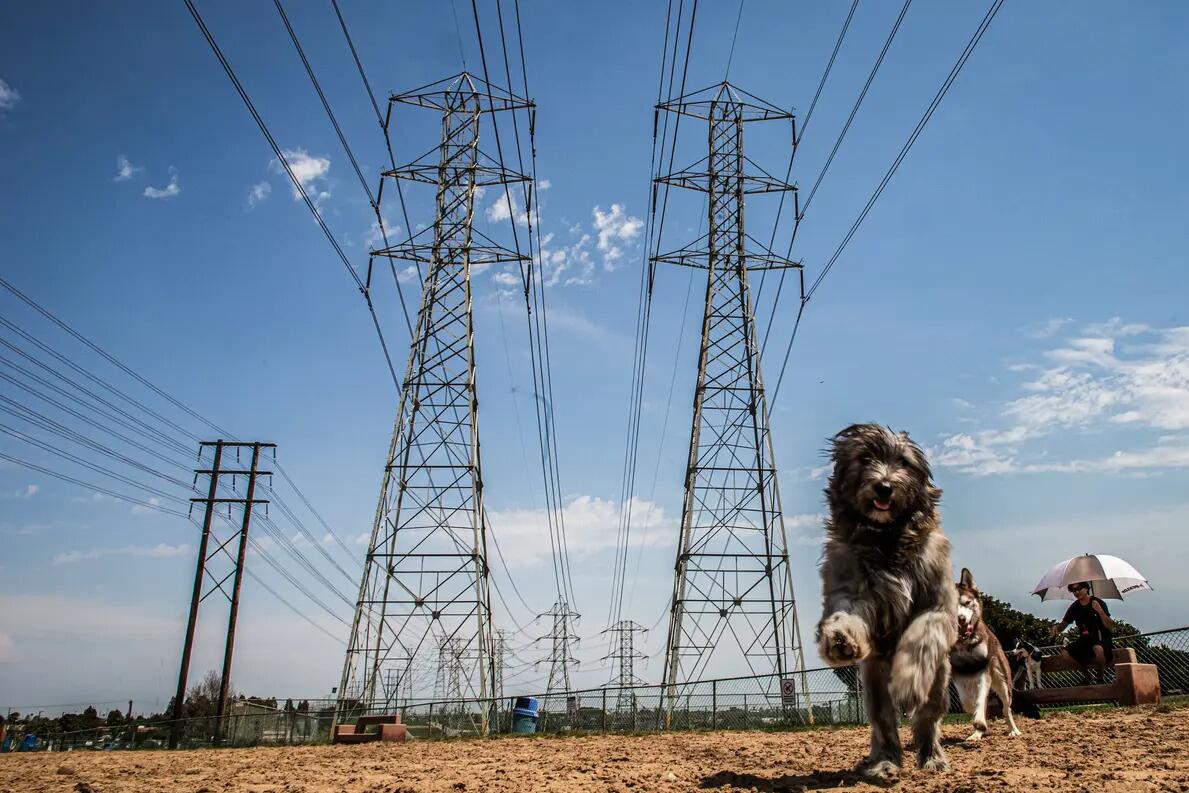
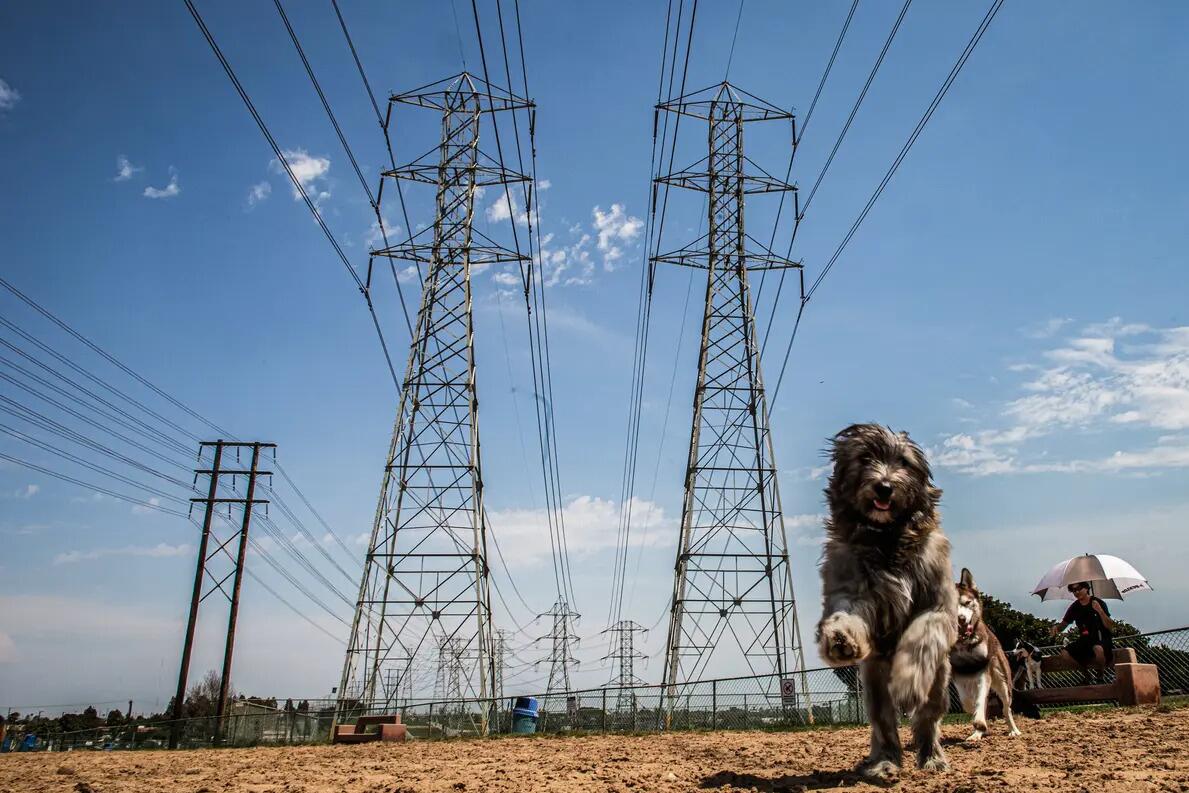
A man sits in the shade of his umbrella while dogs play in the park under high tension power lines in Redondo Beach, Calif., on Aug. 16, 2020. California has ordered rolling power outages as a heat wave strains its electrical system. (Apu Gomes/AFP via Getty Images)

Curiously, given that the transition to renewable energy is ostensibly to fight rising temperatures, the Quanta report finds that “electric demand is peaking less in summer and more in winter.” This is particularly worrisome as states on the West Coast and in the northeast, representing nearly one-third of natural gas consumers across the United States, are banning gas heating in new homes, forcing those households to rely on electricity for essential heating.

PJM forecasts new data center load growth of 7,500 MW by 2028, while deactivating 11,100 MW of fossil fuel production, leaving an 18.6 Gigawatt gap between new demand and remaining supply in this sector, according to Mr. Woodell.

“18.6 Gigawatts would power roughly 3 million homes or New York City three times over,” he stated. “The ramifications are massive.”

Data Center Alley

Globally, data centers consume about 3 percent of the world’s electricity, according to Ryan Yonk, an economist at the American Institute for Economic Research. This consumption tends to be steady and predictable, and utilities can expand to accommodate it, he said.

However, problems arise when centers become concentrated in a single area, especially if that area is transitioning away from fossil fuels.

“For individual communities, there are some real questions about data centers going in, particularly if they’re going to be clustered, and they often are,” Mr. Yonk told The Epoch Times.

Data centers end up having consistent power requirements, which means that the grid can be pretty well expanded so long as production capacity is high enough,” he said. “But as we transition more to renewables ... the greater the baseline demand, the more problematic it can be.”

The region covered by PJM and the Quanta study is significant because it includes the world’s largest data hub, where about half of all U.S. data centers are located and through which an estimated 70 percent of the world’s internet traffic passes.

For anyone who conducts a Google search or makes an Amazon purchase, that transaction will likely be processed in what is known as Data Center Alley, home to about 150 data warehouses in Loudoun County, northern Virginia.

Data Center Alley had its beginnings in the 1980s when America Online (AOL) located its headquarters there. It quickly drew in others due to its proximity to Washington, its construction of the “world’s densest” fiber optic network, a supply of relatively cheap electricity, and local tax incentives.

This is the area where you want to locate to connect up to everything else,” Julie Bolthouse, director of land use at the Piedmont Environmental Council (PEC), told The Epoch Times.

“Everybody is building off of each other in these data centers; you have to think about it as one giant network that is all communicating with each other,” she said.

“What’s happened from the ‘90s to now is that we’ve supersized them. We’ve gone from a small building that was part of a larger business campus and was only five megawatts, to these hyper-scale warehouse-type buildings that are now 200,000 square feet, and they’re using up to 90 megawatts per building.”

For scale, 90 megawatts is about the electricity consumption of 22,000 homes, according to a PEC report.

https://www.zerohedge.com/markets/how-big-tech-consuming-americas-electricity-and-water

'FAA issues new rules to combat air traffic controller fatigue'

 The Federal Aviation Administration (FAA) is issuing new rules and guidelines to combat reports of fatigue among air traffic controllers.

To lower the risk of exhaustion and burnout, the controllers will be mandated to take 12 hours off before midnight shifts and 10 hours off between shifts in general, FAA Administrator Michael Whitaker said in a statement released on Friday. 

The requirements will be effective in 90 days. 

The new guidelines come after the FAA commissioned a panel of fatigue experts in late 2023 to find new avenues on how to “better address controller fatigue.” 

The 114-page report said that lack of sleep, particularly with night shifts can compromise safety and lead to accidents. 

“In my first few months at the helm of the FAA, I toured air traffic control facilities around the country — and heard concerns about schedules that do not always allow controllers to get enough rest,” Whitaker said. “With the safety of our controllers and national airspace always top of mind for FAA, I took this very seriously — and we’re taking action.” 

After the guidelines were released by the FAA, the National Air Traffic Controllers Association (NATCA) said they were “encouraged” by agency action they have taken on the issue. 

But the NATCA was also “disappointed” that collaboration between the union and the FAA was not executed. 

The union warned the “immediate” implementation of the new guidelines could lead to schedules not being adequately covered with an already short-staffed roster. 

“For more than a decade, NATCA has been sounding the alarm about the FAA’s staffing shortage and the fatigue and stress that places on the hardworking controllers we represent,” NATCA said in a Friday statement.  

“NATCA is concerned that with an already understaffed controller workforce, immediate application of the Administrator’s new rules may lead to coverage holes in air traffic facilities’ schedules. These holes may affect National Airspace System capacity. Requiring controllers to work mandatory overtime to fill those holes would increase fatigue and make the new policy nothing more than window dressing.”

https://thehill.com/regulation/transportation/4605749-faa-rules-air-traffic-controller-fatigue/

Biden teases tax hikes for everyone, saying Trump cuts will ‘stay expired’ if re-elected

 President Biden vowed Friday that former President Donald Trump’s 2017 tax cuts will be allowed to lapse next year if he’s re-elected and will “stay expired” — which could mean higher taxes for middle class and low-income Americans.

Biden, 81, slammed Trump’s Tax Cuts and Jobs Act (TCJA), which permanently lowered corporate tax rates from 35% to 21% and temporarily lowered personal income tax rates through 2025, as a giveaway to the rich in a speech to electrical union members in Washington.

“[Trump] was proud, very proud of his $2 trillion tax cut when he was president that overwhelmingly benefited the wealthy and the biggest corporations and exploded, exploded the federal debt,” Biden said of his predecessor ahead of their expected November election rematch.

President Joe Biden delivering a speech at the International Brotherhood of Electrical Workers Construction and Maintenance Conference in Washington DC, April 19, 2024
President Joe Biden speaks at the International Brotherhood of Electrical Workers (IBEW) Construction and Maintenance Conference in Washington DC on Friday, April 19, 2024.Jim Lo Scalzo/UPI/Shutterstock

“There is no exaggeration here: It’s going to expire and if I’m re-elected, it is going to stay expired,” the president added.

Biden has repeatedly pledged not to raise taxes on people who earn under $400,000 annually and it was not immediately clear if his remarks on allowing the tax law to expire was a considered policy position or an off-the-cuff remark.

The White House and Biden campaign did not immediately provide comment.

The Tax Foundation says that Americans would be hit by across-the board income tax hikes if the TCJA is allowed to lapse.

“Congress has less than two years to prevent tax hikes on the vast majority of Americans from taking place,” the foundation said in a blog post last month promoting a calculator tool that allows people to determine their own likely tax hike.

The top 1% of earners had their average federal income tax rate lowered from 26.8% to 25.4% under the law, according to the Tax Foundation’s review of IRS records.

Donald Trump
Biden slammed Trump’s Tax Cuts and Jobs Act (TCJA), which permanently lowered corporate tax rates from 35% to 21%.Maansi Srivastava/POOL/EPA-EFE/Shutterstock

Democrats have noted that because that cohort earns more than lower-income people, the effect of the cuts was to save them much more money.

But other groups also saw cuts — with those in the next-highest 4% of earners seeing rates drop from 19.5% to 17.3% and those in between the 10% and 5% benchmarks having their rates dip from 14.3% to 13.1%.

Poorer people also had their taxes reduced, with the bottom 50% of filers having their rate lowered from 4% to 3.4%, according to the foundation’s analysis.

The quarter of Americans comprising the income group spanning the top 50% and 75% of earners had their taxes reduced from 8.1% to 6.9%.

https://nypost.com/2024/04/19/us-news/biden-teases-tax-hikes-for-everyone-saying-trump-cuts-will-stay-expired-if-re-elected/

'Bird flu virus now found in milk, is of “great concern” to WHO'

 A recent statement from the World Health Organization is sure to ruffle a few feathers.

The international health group expressed “great concern” over the rising number of bird flu cases in humans. The organization also announced Friday that the virus has been found in raw milk. 

Dr. Jeremy Farrar, chief scientist at the WHO, noted that the avian flu, also called H5N1, had an “extremely high” mortality rate among those who had been infected around the world. 

Avian flu has now been identified in raw milk, the WHO said Friday.panyawat – stock.adobe.com

The illness remains extremely rare in the US, with just two known cases, one that occurred earlier this month and one that occurred in 2022, according to the Centers for Disease Control and Prevention. In both of those cases, the infected individuals worked in close proximity to livestock. 

No human-to-human transmissions of the disease have occurred. 

“The great concern, of course, is that … [the] virus now evolves and develops the ability to infect humans. And then critically, the ability to go from human-to-human transmission,” Farrar warned.

On Friday, the WHO further warned that the virus has been found in raw milk. Officials said that drinking pasteurized milk — which is the kind sold throughout the US in grocery stores — is still safe. Dairy farmers in the US are also required to destroy milk from infected cows, so it should not make its way into the food supply chain in the first place.

The WHO warned that the virus has been found in raw milk. Drinking pasteurized milk is still safe, officials said.88studio – stock.adobe.com

Dr. Wenqing Zhang, who leads the WHO’s global flu program, said that the virus had been identified in a “very high virus concentration in raw milk” from infected cows, according to the Daily Mail. Researchers are still trying to determine how long the virus might be able to survive in milk.

In general, drinking raw milk is always a bad idea, as raw milk can carry other contaminants, like salmonella, listeria and E. coli — all of which can make you sick.

Cases of avian flu in humans remain very rare, with just two known infections identified in the US.ZUMAPRESS.com

Zhang also reiterated the cases that have been identified in the US and in Europe have been relatively mild.

There are two types of avian flu tracked by the CDC — low pathogenic and highly pathogenic. The latter, as you can probably guess, is more serious because it has a higher mortality rate in poultry, 90% – 100% and often within 48 hours. The person in Texas who contracted the illness earlier this month has the highly pathogenic form of the virus.

Since January 2022, the CDC notes that over 90 million birds have been infected in 48 states. But the current outbreak isn’t just affecting birds, it’s affecting cattle as well. Currently, eight states have avian flu cattle outbreaks.

The WHO urged US officials to monitor the situation closely because the virus could “evolve into transmitting in different ways.”

Experts have warned of the potential for an avian flu pandemic for years, with some saying it could be “100 times worse” than COVID-19.REUTERS
“Do the milking structures of cows create aerosols? Is it the environment which they’re living in? Is it the transport system that is spreading this around the country?” Farrar questioned. “This is a huge concern and I think we have to … make sure that if H5N1 did come across to humans with human-to-human transmission, that we were in a position to immediately respond with access equitably to vaccines, therapeutics and diagnostics.”

This is hardly the first warning of a potential bird flu pandemic. 

Earlier this month, scientists sounded the alarm that such a pandemic could be “100 times worse than COVID.”

“This virus [has been] on the top of the pandemic list for many, many years and probably decades,” said Dr. Suresh Kuchipudi, a bird flu researcher from Pittsburgh, according to the Daily Mail.

The only hope, officials went on, is that the virus would be less deadly in humans than it is in birds.

“Once it’s mutated to infect humans, we can only hope that the [fatality rate] drops,” said John Fulton, a pharmaceutical industry consultant for vaccines, according to the Mail.

Between 2003 and 2019, 861 cases of the avian flu were identified globally and 455 people have died, meaning that the fatality rate is nearly 53%, according to the CDC.

If a pandemic were to occur, the Food and Drug Administration has a few vaccines for humans on hand, Forbes reported. Currently, there’s not enough to protect all Americans, and the CDC has previously stated that it would “take months” and be a multi-step process to create enough in the event of a pandemic.

https://nypost.com/2024/04/19/lifestyle/bird-flu-virus-found-in-milk-is-of-great-concern-to-who/

US designates PFAS chemicals as Superfund hazardous substances

 The U.S. Environmental Protection Agency on Friday designated a pair of widely used industrial chemicals as hazardous substances under the country's Superfund program, accelerating a crackdown on toxic compounds known as "forever chemicals."

The rule will require companies to report leaks of two of the most commonly used per- and polyfluoroalkyl substances, or PFAS, and help pay to clean up existing contamination.

The EPA last week announced its first drinking water standards to guard against PFAS pollution.

PFAS are a family of thousands of chemicals used in consumer and commercial products like firefighting foams, nonstick pans and stain resistant fabrics. They have been linked to cancer and other health concerns, and are often called forever chemicals because they do not easily break down in the human body or the environment.

The new rule targets contamination from two PFAS known as PFOA and PFOS. It does not ban the chemicals.

The Superfund designations will ensure that those responsible "pay for the costs to clean up pollution threatening the health of communities," EPA Administrator Michael Regan said in a statement.

The Comprehensive Environmental Response Compensation and Liability Act, known as the Superfund law, allows the EPA and state regulators to undertake or order remediation of hazardous sites and seek reimbursement from site owners, hazardous waste generators, waste transporters and others.

The EPA said on Friday it would prioritize enforcement against significant contributors to the release of PFAS, such as federal facilities and manufacturers.

The American Chemistry Council, a leading industry trade association, called the rule "severely flawed" on Friday and said the chemicals have not been produced in the United States in nearly a decade.

The Superfund program "is an expensive, ineffective and unworkable means to achieve remediation for these chemicals," the group said in a statement.

The new rule, one of the most aggressive moves yet by the Biden administration to regulate PFAS, also makes public funds available for remediation.

The regulation could spur additional litigation over liability for PFAS cleanup efforts.

Lawsuits filed by public water systems and others accusing major chemical companies of polluting U.S. drinking water with PFAS chemicals led to more than $11 billion in settlements last year.

https://finance.yahoo.com/news/1-us-designates-pfas-chemicals-154834067.html