4D Molecular TherapeuticsFDMTreleased data from a clinical trial for cysticfibrosis lung disease.
What Happened: The company unveiled results from the 4D-710 Phase 1/2 AEROW study:
At high dose – 2E15 vg (n=4), complete resolution of previously reported serious adverse event (SAE) was observed; ppFEV1 in this participant improved by 6% from baseline to month 12.
Lung biopsy results: No evidence of inflammation or toxicity from histological analysis of tissue samples
Widespread expression of CFTR protein compared to normal (non-CF) lung samples and no increase vs. 1E15 vg dose
There is evidence of consistent CFTR protein expression in all major airway epithelial cell types and interstitial tissue cells; interstitial CFTR expression was not detected in normal lung control samples.
Lower Doses – 2.5E14 to 1E15 vg (n=6): 4D-710 was well tolerated, with no 4D–710–related adverse events after administration, no dose-limiting toxicities, and no SAEs.
Based on all available data for 2E15 and 1E15 vg dose level participants, 1E15 vg was selected as the highest dose for Dose Expansion; 2E15 vg dose will not be further evaluated.
Biomarker analyses demonstrated robust, consistent and widespread CFTRDR transgene mRNA and CFTR protein expression throughout all lung biopsy samples from all participants at all four dose levels.
All participants in 2E15 vg and 1E15 vg Cohorts had at least 12 months of follow-up and had generally stable or improved in ppFEV1 at 12 months.
Two of three participants with baseline mild to moderate lung function impairment (ppFEV1 40-80%) showed clinically meaningful improvement in ppFEV1 at 12 months.
The company expects to share interim data updates from the AEROW clinical trial in mid-2025.
Following Phase 2 data, Phase 3 initiation is expected in H2 2025.
Later this month, people in Berlin will be able to book an hour with an AI sex doll as the world’s first cyber brothel rolls out the service following a test phase.
Customers will be able to interact verbally with the AI dolls as well as physically.
“Many people feel more comfortable sharing private matters with a machine because it doesn’t judge,” says Philipp Fussenegger, founder and owner of Cybrothel.
“Previously, there was significant interest in a doll with a voice actress, where users could only hear the voice and interact with the doll. Now, there is an even greater demand for interacting with artificial intelligence.”
It's just one of many ways that generative AI is being used by the adult entertainment business.
Analysis by SplitMetrics revealed that AI companion apps reached 225 million downloads in the Google Play Store.
“I would expect more app developers to take note of this trend and look at ways this category can be further innovative and monetised,” said SplitMetrics general manager Thomas Kriebernegg.
AI companions can be lucrative, says Misha Rykov, privacy researcher with Mozilla’s Privacy Not Included guide.
“Given that most of the chatbots are charging fees, and the core technology has been developed elsewhere [such as Open AI], it looks like a high-margin business. Also, these apps collect personal data and often share it with third parties like advertisers - a tried and true business model.”
Jason Sheldon/Junction 10 Photography
Kerry McInerney says we need to know about the data sets that sex chatbots are being trained on
But the merger of AI and the adult entertainment business has set off alarm bells.
One problem lies in the bias inherent in generative AI, which produces new content based on the data on which it has been trained.
There is a risk that retrograde gender stereotypes about sex and pleasure get encoded into sex chatbots, says Dr Kerry McInerney, senior research fellow at the Leverhulme Centre for the Future of Intelligence, at the University of Cambridge.
“It's crucial that we understand what kinds of data sets are used to train sex chatbots, otherwise we risk replicating ideas about sex that demean female pleasure and ignore sex that exists outside of heterosexual intercourse.”
There is also the risk of addiction says Mr Rykov, who says that AI chatbots target lonely people, notably men.
“Most of the AI chatbots we reviewed have high addictive potential and several potential harms, especially to users with mental health challenges.”
Mozilla has added content warnings to several AI chatbots “as we found themes of abuse, violence, and underage relationships,” says Mr Rykov.
He also raised the issue of privacy. Partnership chatbots are designed to collect “an unprecedented amount of personal data”.
Mr Rykov adds that that 90% of apps reviewed by Mozilla “may share or sell personal data”, while more than half of the apps won’t let users delete personal data.
Others warn about the possible danger such AI could have on real-world relationships.
Tamara Hoyton, senior practice consultant at the counselling service Relate, points out: “Some difficulties may come about if real encounters are profoundly disappointing because they don't match up to the strictly defined requirements that users experience in AI porn.”
Ms Hoyton adds that, in some cases, AI porn could take users into dangerous areas.
“There is nothing wrong with a bit of fantasy, and many people get aroused by thoughts that they have absolutely no intention of acting on; AI porn might be seen like this.
“If it's crossed over into an assumption of consent for example, a sense of entitlement, or that everyone will be what turns you on, based on the user’s experience of the compliance of the AI object, then it's an issue.”
Getty Images
Some argue that AI could replace human sex workers
Companies using AI within the adult entertainment industry acknowledge that there is a need for caution, but maintain that AI has an important role to play.
Philipp Hamburger, head of AI at Lovehoney, says the company is aiming “to enhance the sexual experience of its customers, rather than replace it, which is an important line to draw".
Others believe AI will have a positive effect on the sector. Ruben Cruz is the co-founder of Barcelona-based The Clueless Agency, which created one of the first AI influencers, Aitana Lopez.
He points out that the sex industry will always exist, and AI can help mitigate ethical concerns by ensuring that the content is not created using real people.
“This shift aims to ensure that no person, male or female, has to be explicitly sexualized in the future.”
Other senior executives also cashed out as the company faced a $1.6 billion threat that wreaked havoc throughout the health care system.
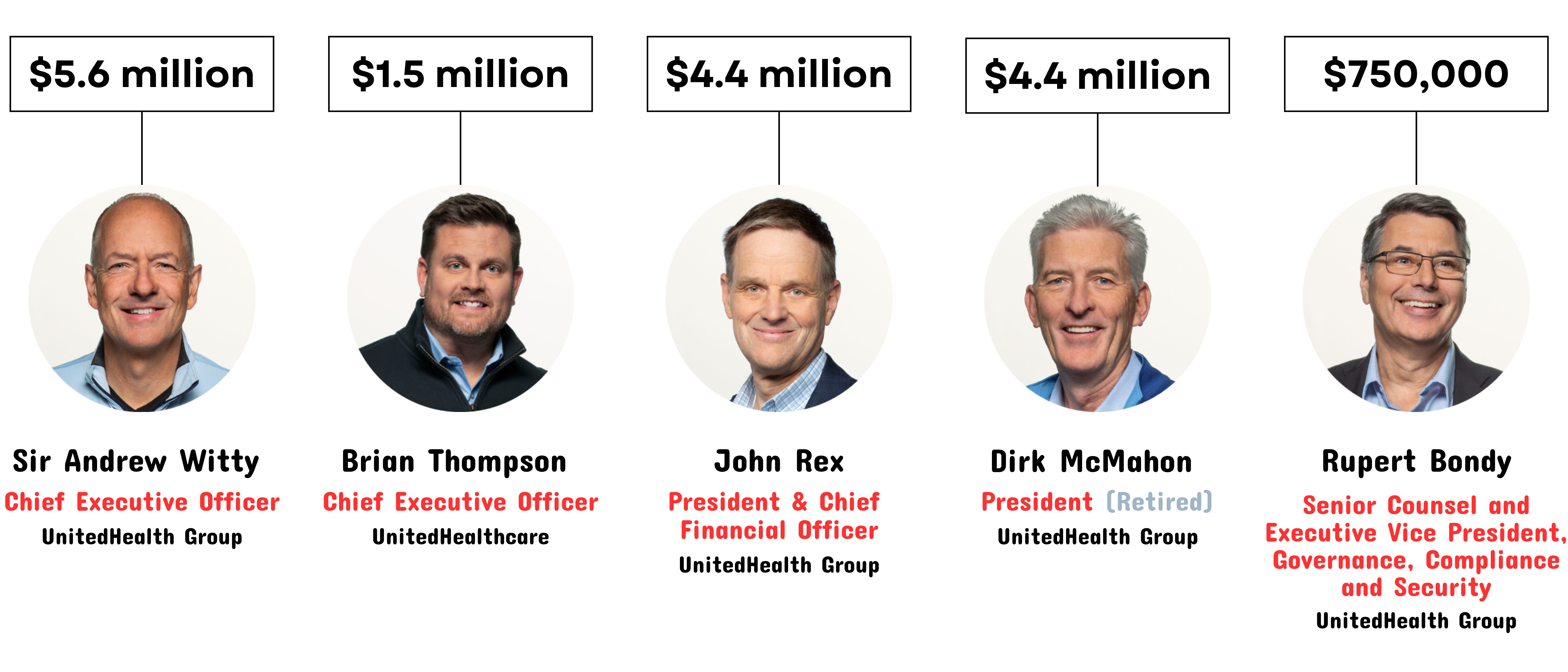
On February 21, the same day that a ransomware attack began to wreak havoc throughout UnitedHealth Group and the U.S. health care system, five of UnitedHealth’s C-suite executives, including CEO Andrew Witty and the company’s chief legal officer, sold $17.7 million worth of their stock in the company. Witty alone accounted for $5.6 million of those sales.
The company’s stock has not recovered since the ransomware attack and has underperformed the S&P 500 index of major stocks by 8% during that time. In the two weeks following the ransomware attack, the company’s stock slid by 10.4%, wiping out more than $46 billion in market cap and greatly reducing the value of shares held by non-insiders. The slide continued for several weeks. On the day Witty and the other executives sold their shares, the stock price closed at $521.97. By April 12, it had fallen to $439.20.
“He (Witty) sold the shares on the same day that he learned of the ransomware attack,” said Richard Painter, a professor at the University of Minnesota School of Law who is also the vice chair of Citizens for Responsibility and Ethics in Washington. “That’s not good. For the SEC to prove a civil case of insider trading they just have to prove that it's more probable than not that executives acted on inside information. CEOs have got to be a heck of a lot more careful. You’re the CEO of a company, you should not be buying or selling the stock right in the middle of a material event like a ransomware attack. You’re asking for trouble. You’re going to end up with an SEC investigation. If that goes badly you could end up with a DOJ investigation.”
How much UnitedHealth’s C-suite executives sold in company stock on February 21, 2024:
Brian Thompson, the CEO of UHG’s insurance arm, sold $1.5 million on the same day. John Rex, then the CFO and now the CFO and president, sold $4.4 million, as did Dirk McMahon, now the former president. Chief Legal Officer Rupert Bondy, who would likely have to have signed off on the sales, sold $750,000. HEALTH CARE un-covered is the first media outlet to report these disclosures.
The ransomware attack was caused at least in part by negligence on UnitedHealth’s part, Witty admitted at the Finance Committee hearing. He acknowledged that the company had failed to use multi-factor authentication — requiring more than just a password to access information — to secure its data. The cyberattack exposed the personal health information of as much as a third of Americans’ health information.
“This incident and the harm that it caused was, like so many other security breaches, completely preventable and the direct result of corporate negligence,” Sen. Ron Wyden (D-Ore.) wrote to federal regulators on May 30. “UHG has publicly confirmed that the hackers gained their initial foothold by logging into a remote access server that was not protected with multi-factor authentication (MFA). MFA is an industry-standard cyber defense that protects against hackers who have guessed or stolen a valid username and password for a system.”
UnitedHealth exploited the crisis created by its own negligence to further entrench its position as the largest employer of doctors in the country, acquiring medical practices that were unable to pay their bills due at least in part to the chaos created by the ransomware attack. The American Medical Association is considering legal action against the company for the attack, with a proposal for its House of Delegates conference beginning June 8 stating that “Optum is the largest employer of physicians and has acquired practices when the ransomware disruption made those practices unable to survive without acquisition… Even the practices that survive will have ongoing damages including but not limited to denials related to giving therapy when it was impossible to obtain prior authorization, from using lines of credit and having to pay interest, from having billing departments and others work overtime to submit claims, to losing key employees from inability to make payroll.”
Other well-timed insider stock transactions
In April, Bloomberg reported that in the lead up to the disclosure of an FTC investigation into UnitedHealth’s monopolistic practices, other UnitedHealth insiders, including Chairman Stephen Hemsley, had sold $102 million worth of their shares. News of that investigation and the stock sales led Sen. Elizabeth Warren (D-Mass.) and other lawmakers to call for an SEC investigation into the trading.
The disclosures revealed here, however, are potentially more incriminating: the executives sold the stock the same day the company became aware of the devastating ransomware attack. When Witty was supposed to be all hands on deck strategizing how to protect health care providers and millions of patients, he spent at least part of his day taking action to preserve his net worth.
EDITOR’S NOTE: This is not the first time UnitedHealth executives have engaged in questionable or illegal stock transactions. In 2007, former CEO William McGuire agreed to a record $468 million settlement with the SEC after it was learned that for more than a decade he had engaged in a scheme to inflate the value of his holdings in the company and, consequently, his net worth.
An SEC investigation that year found that over a 12-year period, “McGuire repeatedly caused the company to grant undisclosed, in-the-money stock options to himself and other UnitedHealth officers and employees without recording in the company's books and disclosing to shareholders material amounts of compensation expenses as required by applicable accounting rules.” In other words, he was back-dating his stock options.
As the SEC explained:
[F]rom at least 1994 through 2005, McGuire looked back over a window of time and picked grant dates for UnitedHealth options that coincided with dates of historically low quarterly closing prices for the company's common stock, resulting in grants of in-the-money options. According to the complaint, McGuire signed and approved backdated documents falsely indicating that the options had actually been granted on these earlier dates when UnitedHealth's stock price was at or near these low points. These inaccurate documents caused the company to understate compensation expenses for stock options, and were routinely provided to the company's external auditors in connection with their audits and reviews of UnitedHealth's financial statements.
New data from a phase 2b trial of Moderna and MSD’s neoantigen melanoma vaccine may be strong enough to consider filing for accelerated approval before a phase 3 programme.
The new results from the KEYNOTE-942 study, presented at ASCO, come after a median follow-up period of nearly three years after adjuvant treatment with mRNA-4157 (V940) given in combination with MSD’s immunotherapy Keytruda (pembrolizumab) for high-risk stage III/IV melanoma that has been removed with surgery.
At 34.9 months, the vaccine/Keytruda combination reduced the risk of recurrence or death by 49% – from around 50% to 25% – while the risk of distant metastasis or death fell 62% compared to Keytruda alone, with very little addition to the side-effect burden.
Crucially, the difference between the groups seems to be getting better over time, with a separation in the curves on the efficacy plot. At the two-and-a-half-year endpoint, the recurrence-free survival rate was 74.8% with the combination versus 55.6% for Keytruda.
Moderna’s head of development for therapeutics and oncology, Kyle Holen, said it was particularly encouraging that the benefit was observed “across various patient exploratory subgroups, reflecting the potential of mRNA-4157…for a broad range of these patients.”
mRNA-4157 is a personalised vaccine targeting 34 cancer neoantigens, derived from a biopsy of a patient’s tumour, and uses the same underlying technology as Moderna’s SpikeVax COVID-19 vaccine. It is designed to prime the immune system to attack the tumour cells, while Keytruda blocks an immunological ‘brake’ that protects the cancer.
The primary endpoint of the trial is disease-free survival (DFS) with an overall follow-up period of up to 78 months, so the strong efficacy signal point at this point is impressive and points to the potential of Moderna’s neoantigen vaccination approach in oncology. An early filing would of course depend on the outcome of discussions with the FDA.
In the meantime, Moderna and MSD – known as Merck & Co in the US and Canada – have already started phase 3 trials in patients with high-risk melanoma and non-small cell lung cancer (NSCLC). They are also running a phase 2/3 study in cutaneous squamous cell carcinoma (CSCC), another form of skin cancer and midstage studies in renal cell carcinoma (RCC) and urothelial carcinoma (UC).
The two companies are meanwhile working on additional cancer vaccines and recently started dosing patients in a phase 1/2 trial of mRNA-4359 – designed to generate antibodies against PD-L1 and IDO1 – in advanced solid tumours.