Search This Blog

Sunday, September 16, 2018

Bacteria in the gut found to produce electricity


Researchers at the University of California, Berkeley have discovered hundreds of bacterial species, including those in the human gut, that can generate electricity.

Blue electric boltImage Credit: Martin Capek / Shutterstock
While scientists already knew that bacteria in exotic environments such as mines and lakes can produce electricity, they had not known that bacteria such as the common diarrhea-causing Listeria monocytogenes are also electrogenic.
The study found that this bacterium and hundreds of others produces electricity using a completely different process to the one that known electrogenic bacteria use.
Many of these bacterial species are found in the gut microbiome and many of them are pathogenic such as the Clostridium perfringens bacteria that causes gangrene and some disease-causing streptococcus bacteria.
The fact that so many bugs that interact with humans, either as pathogens or in probiotics or in our microbiota or involved in fermentation of human products, are electrogenic – that had been missed before. It could tell us a lot about how these bacteria infect us or help us have a healthy gut.”
Dr, Dan Portnoy, Study Author
Bacteria produce electricity to remove the electrons generated during metabolic processes and to support the production of energy.
In animals and plants, electrons are transferred to oxygen inside the mitochondria of cells, but bacteria in environments without oxygen (including the human gut) have to find an alternative electron acceptor.
In some environments, that electron acceptor has been a mineral such as iron.
The transfer of electrons to a mineral involves a series of chemical reactions referred to as the electron transfer chain, which some scientists have tapped to generate electricity and make batteries.
The new electron transfer system discovered by Portnoy and colleagues is simpler than this known system and seems to only be used by bacteria when necessary such as when there is a poor oxygen supply.
So far, the new system has been found in gram-positive bacteria that live in flavin-rich environments.
It seems that the cell structure of these bacteria and the vitamin-rich ecological niche that they occupy makes it significantly easier and more cost effective to transfer electrons out of the cell.
Dr. Sam Light, First Author
“We think that the conventionally studied mineral-respiring bacteria are using extracellular electron transfer because it is crucial for survival, whereas these newly identified bacteria are using it because it is ‘easy’,” he added.
To test how robust this system is, Light and colleagues used an electrode to measure the electric current generated by the bacteria.
They found the bacteria produced up to 500 microamps and that they make about the same amount of electricity as known electrogenic bacteria.
The finding, which is published in the journal Nature, will be welcome news to people interested in “green” technologies and the possibility of creating living batteries from microbes, for example.
Source:

Sepsis Complications and Prevention


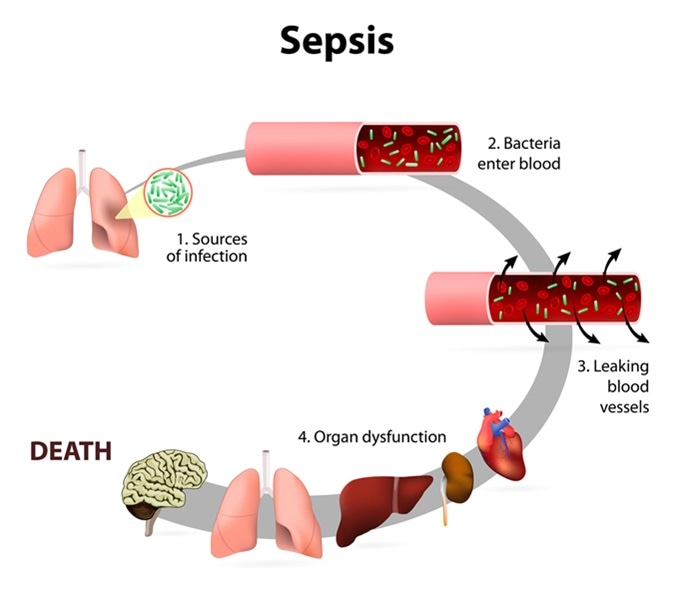
Sepsis is a condition brought on by infection of a pathogen, wherein the body reacts in such a way that it harms itself. This can be by overreacting to the infection, imbalances between the proinflammatory and anti-inflammatory responses, and the action of various mediators of the immune system.
Sepsis can be deadly, with severe complications including multiple organ failure and amputations. Despite the presence of sepsis being traced back to Roman times, sepsis is still one of the hardest conditions to treat and is responsible for thousands of hospital deaths every year.
Sepsis or septicaemia is a life-threatening illness. Presence of numerous bacteria in the blood, causes the body to respond in organ dysfunction. Image Credit: Designua / Shutterstock

Severe Sepsis

There are different conditions of varying severity within the sepsis disease.. Sepsis itself is defined as known or suspected infections along with symptoms of systemic inflammatory response syndrome (SIRS). Severe sepsis is a complication of sepsis, wherein in addition to sepsis there is acute organ dysfunction. Such dysfunction can include hypoperfusion (decreased blood flow through organs) and hypotension (low blood pressure), which are commonly implicated in sepsis and severe sepsis.
Severe sepsis is the middle stage, between sepsis and septic shock. It is estimated that 20-50% of patients who develop severe sepsis die as a result. Improvements have decreased the proportional fatality rates, but the number of people dying from sepsis at any stage increases due to increased cases. Therefore, preventing sepsis is of increased focus.

Complications

The chances of developing complications of severe sepsis can depend on the type of infection and its location. Septic patients with respiratory infections are at higher risk of developing respiratory organ dysfunction, including complications such as acute respiratory distress syndrome (ARDS). The exact causes of organ dysfunction are not fully elucidated, but link partially to lack of oxygen. Impaired tissue oxygenation is caused by various factors including low blood pressure, reduced red blood cell deformability, and microvascular thrombosis. Reduced red blood cell deformability refers to the blood cell’s ability to change shape under stress without rupturing. Reduced deformability contributes to decreased stress resistance. Microvascular thrombosis refers to blood clotting, which during sepsis, occurs within blood vessels and can therefore block them.
Intracellularly, mitochondrial damage impairs oxygen use once oxygen arrives at tissues and cells. This is caused by the oxidative stress the mitochondria experiences during sepsis complication leading to severe sepsis. Injured mitochondria also release alarmins, a type of danger signal, into the extracellular environment. These alarmins can include mitochondrial DNA (mtDNA) and formyl peptides. The alarmins activate neutrophils, which cause tissue damage.
In serious severe sepsis cases, the brain can be injured as a complication of sepsis. During severe sepsis the brain is often the first organ to fail and up to 70% of sepsis patients experience disturbances in brain function as a result of the immune reaction. Nitric oxide, produced during the immune reaction in sepsis, affects the brain and the aforementioned mitochondrial function. Because it is easily diffusible, it can cross the blood-brain barrier and form oxygen radicals. The following oxidative stress in brain tissue encumbers function.

Prevention

Sepsis is caused by the body’s reaction to infectious pathogens. Therefore, preventative treatment focuses on eliminating infections that would trigger that kind of reaction from your body. Basic hygiene, such as good handwashing habits and cleaning of wounds, is one of the easier courses of action. This includes using antibiotic creams or sanitizers on wounds and hands, covering wounds from exposure, and not breaking blisters.
Vaccinations against viral diseases form an effective preventative treatment against sepsis. Once a vaccination has been administered, the body has dealt with the weakened form of the virus and becomes immune. This prevents the onset of a big immune reaction if the virus is encountered again, thereby not causing the cascade leading to sepsis. Some people, such as those who are immunocompromised or allergic to vaccination ingredients, may not be able to get vaccinated against certain diseases. These will have to rely on herd immunity, where the rest of the population is vaccinated to such a degree that viral diseases cannot be carried in the population and will therefore not reach the person in question.
Other demographics are harder to protect from sepsis. Newborn babies, infected with a pathogen within one month of life, pose one such group in which prevention methods are not immediately obvious. Maternal immunization can help; however, this is often poorly advertised and not always available in poorer countries. During delivery, the cleanliness of the facility and people involved have been shown to affect occurrence of neonatal sepsis. Similarly, post delivery, the nurses and associated people’s cleanliness is important. There is some evidence suggesting cleaning of the umbilical stump with antiseptics can reduce sepsis instances, particularly in poorer settings.

Further Reading

Lung cancer risk factors


Smoking remains the biggest risk to developing lung cancer, and is responsible for more than 85% of cases. Without smoking, it is believed that lung cancer would be a rare disease. However, there are many other risk factors associated with increased lung cancer incidence.

Age

Lung cancer is more common in older people. Lung cancer is rare in those under 40, and about 80% of lung cancers are found in people over the age of 60.
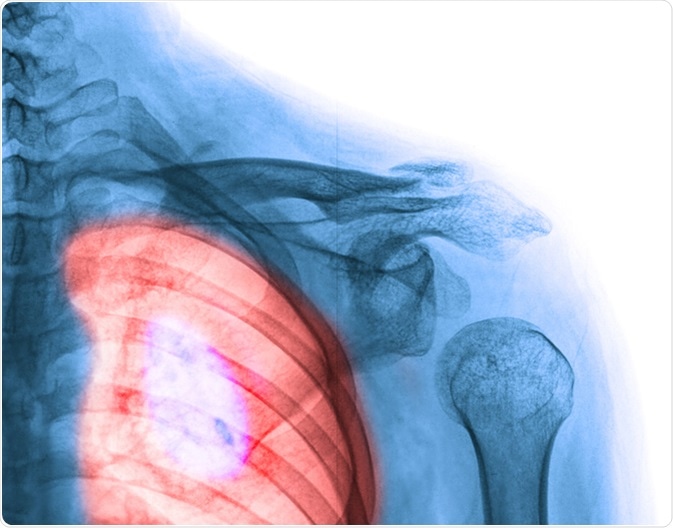
Lung cancer. Image Credit: Wonderisland / Shutterstock

Gender

There is evidence that women are more susceptible to the carcinogenic effects of tobacco smoke, but women’s lung cancer survival rates are better than men’s, when compared stage by stage. There is evidence that estrogen may play a role in lung cancer development, and molecular differences have been found when comparing the tumours of men and women.

Ethnicity and Race

Geographically there is a lot of variation in lung cancer risk, both globally and within nations. A particular high-risk population is currently Chinese men, due to the large population in China and the increased trend of cigarette smoking. Lung cancer burden between developed and developing countries was nearly equal in 2002, and this concentration of lung cancer burden is thought to increase further in developing countries in the future.

Genetics

Although the main causes of lung cancer stems from environmental factors, the evidence for genetic susceptibility to lung cancer is compelling as genome-wide association studies have shown several regions associated with cancer risk and accumulation of familial cases have been observed in clinical studies. However, knowledge in this area is still lacking because environmental factors often cover or confuse results in familial lung cancer studies. Studies have shown that the risk of lung cancer is increased by approximately 50% in those with a family history of lung cancer in first-degree relatives, when compared with those without a family history. Hereditary predisposition is attributed to 10-15% of cancer cases, not limited to lung cancer.
Chromosomal abnormalities have also been identified in lung cancer. These include:
  • Allelic loss
  • Isochromosomes
  • Unbalanced translocation
  • Loss of heterozygosity
  • Extensive aneusomy.

Diet

Smokers have been advised not to take beta-carotene supplements as studies have shown an increased risk of lung cancer associated with this dietary supplement. Alcohol consumption has also been linked to increased lung cancer risk.

Lifestyle

Smoking
There are over 60 different toxic substances in tobacco smoke, and can lead to lung cancer developing. This risk increases with the duration and amount of smoking, but duration has the biggest effect on lung cancer risk. Starting smoking at a younger age increases risk of lung cancer. Using other types of tobacco including cigars, pipe tobacco, snuff or chewing tobacco also poses increased risks of developing lung cancer, mouth cancer and oesophageal cancer.
Cannabis also contains substances that can cause cancer. Smokers will often mix cannabis with tobacco and inhale for longer and deeper than when smoking regular cigarettes.
Environmental tobacco smoke (ETS)
ETS, otherwise known as passive smoking or second-hand smoking, where smoke is inhaled from someone else’s cigarette, pipe, or cigar, can increase the risk of developing lung cancer even though you are not smoking yourself. People exposed to ETS who have never smoked before are believed to have a lung cancer risk 31% higher than those who have never smoked and were not exposed to ETS.
There are several statistics that show the benefits of quitting smoking in regards to lung cancer. 15.9% of men who have smoked all their lives die from lung cancer by age 75 versus 9.9% of men who stop smoking by age 60. This reduces to 6% if a person quits by age 50, 3% by age 40 and 1.7% by age 30. With women, 9.5% of women who have smoked all their lives die from lung cancer by age 75, versus 5.3% of women who stop by age 60 and 2.2% by age 50.

Environmental Factors

Radon
Radon is a naturally occurring radioactive gas that is found in rocks and dirt and can be present in buildings. It doesn’t present any visible traces, nor can it be tasted or smelled. Homes can be tested for the presence of radon and measures undertaken to reduce the amount of radon present in homes.
Diesel fumes
Long term exposure to high levels of diesel fumes may increase the risk of developing lung cancer by 50%.

Occupational Exposure

There are a number of materials people will regularly come into contact with through their work that may increase lung cancer risk. These materials include:
  • Arsenic (naturally occurring element sometimes found in drinking water, i.e from private wells)
  • Asbestos in all forms (naturally occurring fibrous minerals found in building materials, friction products such as car clutches and brakes, as well as some fabrics)
  • Beryllium and its compounds
  • Cadmium and its compounds
  • Coal and coke fumes
  • Silica
  • Nickel.

Further Reading

Cost-Effective to Expand Age Base for Hep C Screening?


Compared with currently recommended birth cohort screening, universal one-time screening for hepatitis C virus (HCV) for U.S. adults would be highly cost-effective, resulting in an expenditure of $11,378 per quality-adjusted life year (QALY) gained, researchers reported
The findings support broadening the current age cohort for one-time screening to all U.S. adults, concluded Mark H. Eckman, MD, of the University of Cincinnati, and colleagues. “A recommendation for HCV testing of all adults will support the national response to the epidemic of HCV infection among young persons in the United States.”
Their study aimed to determine the prevalence of HCV antibody above which one-time HCV testing for all U.S. adults 18 years and older is cost effective. Using a Markov state transition model, the team found that a threshold prevalence of HCV antibody above 0.07% in the general adult population outside of the 1945-1965 cohort would cost less than $50,000/QALY compared with no screening. But compared with cohort testing, universal screening and treatment would cost $11,378 per QALY gained.
The analysis was based on healthcare system expenditures using 2017 U.S. dollars and factored in the toll taken by fibrosis, cirrhosis, hepatocellular carcinoma, and liver transplantation, as well as the impact of excess mortality, and also addressed patient quality of life and the cost of treatment with direct-acting antivirals. The researchers calculated a mean age of 40.85 for the expanded-base cohort versus the 61.85 years for referent birth cohort.
Asked for his perspective, Jagpreet Chhatwal, PhD, of Harvard Medical School, who was not involved in the study, said it “provides the compelling evidence needed to update HCV screening guidelines in the United States.”
“The current screening guidelines predate the availability of all-oral direct-acting antivirals, now the current standard of care. This study shows that universal one-time screening will further reduce HCV-associated burden, will be cost-effective, and will bring us closer to the goal of HCV elimination by 2030.”
Broader-based recommendations are needed, since the incidence of acute HCV infection rose almost three-fold in the period 2010-2015, an increase associated with more widespread injection drug use and was most pronounced in persons younger than 40. Furthermore, the new generation of potent, non-interferon-based, direct-acting oral regimens with fewer side effects and shorter treatment courses has altered the discussion around screening.
The authors noted that the estimated prevalence of HCV in the 1945-1965 cohort is 2.6% and 1.0% in the general population, while the calculated prevalence in adults outside the 1945-1965 cohort is 0.29%. “Our estimate for the prevalence of HCV antibody positivity in adults who are not part of the cohort of adults born between 1945 and 1965 is likely low, as it is based on estimates made prior to the steep rise in new cases of HCV infection associated with the opioid epidemic,” they wrote.
Another recent analysis also found an age-expanded strategy of one-time testing of all adults ages 18 and older to be cost effective at $28,000/QALY versus birth cohort-based screening. Those authors noted that targeted screening is not cost effective in very low-risk subgroups, such as Caucasian women ages 20 to 59 with no or only one lifetime sexual partner and no history of drug use or other HCV risk factors, as well as Caucasians older than age 60 with no history of blood transfusions before 1992 and no other HCV risk factors.
The study was supported in part by the National Foundation for the Centers for Disease Control and Prevention.
Eckman reported grant support from Merck; other co-authors reported financial relationships with AbbVie, Bristol-Myers Squibb, Gilead, Inovio, Intercept, MedImmune, Abbott, Merck, Watermark, and Pace.
Chhatwal reported having no relevant conflicts of interest related to his comments.
LAST UPDATED 

Obesity alters airway muscle function, increases asthma risk


New research suggests that obesity changes how airway muscles function, increasing the risk of developing asthma. The study is published ahead of print in the American Journal of Physiology — Lung Cellular and Molecular Physiology.
The prevalence of asthma and obesity — as both separate and coexisting conditions — has grown considerably in the U.S. in recent years. Obesity is a major risk factor for asthma, in part because of the systemic and localized inflammation of the airways that occurs in people with a high body mass index.
People with obesity “also manifest a higher risk of severe asthma, decreased disease control and decreased response to corticosteroids therapy,” explained the bicoastal team of scientists who conducted the research. However, previous studies suggest that some people with obesity may have a type of asthma that is not caused by airway inflammation, but by hyperresponsiveness — a higher-than-normal response to an allergen — in the airway smooth muscle. Hyperresponsiveness causes the airways to narrow, obstructing ease of breathing, and can occur when the muscles contract or begin to spasm.
The research team combined human airway smooth muscle cells with histamine, a chemical the immune system makes in response to an allergen, and carbachol, a drug that stimulates the part of the nervous system that controls the airways. Stimulating airway cells with these substances causes the cells to release calcium, which mimics muscle contraction. The researchers found that muscle cells from obese donors released more calcium and had greater shortening — a function that occurs during muscle contraction — than the cells from normal-weight donors. In addition, the cells from female obese donors released more calcium than cells from male obese donors.
These results suggest that obesity “imprints on structural cells [or airway smooth muscle cells] a unique signature that can be identified and that may lead to novel targeted approaches to improve asthma management without the use of steroids,” explained Reynold Panettieri Jr., MD, director of the Rutgers Institute for Translational Medicine and Science and corresponding author of the study.
Story Source:
Materials provided by American Physiological SocietyNote: Content may be edited for style and length.

Journal Reference:
  1. Sarah Orfanos, Joseph Jude, Brian Thomas Deeney, Gaoyuan Cao, Deepa Rastogi, Mark van Zee, Ivan Pushkarsky, Hector E Munoz, Robert Damoiseaux, Dino Di Carlo, Reynold Panettieri. Obesity increases airway smooth muscle responses to contractile agonists.American Journal of Physiology-Lung Cellular and Molecular Physiology, 2018; DOI: 10.1152/ajplung.00459.2017

Testosterone replacement therapy may slow the progression of COPD


Researchers from The University of Texas Medical Branch at Galveston found that testosterone replacement therapy may slow disease progression of chronic obstructive pulmonary disease. The paper is currently available in Chronic Respiratory Disease.
Chronic obstructive pulmonary disease, or COPD, is predicted by the World Health Organization to be the third-leading cause of illness and death internationally by 2030. Low testosterone is common in men with COPD and may worsen their condition. Men with COPD have shortness of breath and often take steroid-based medications for an extended time, both of which increase their risk of low testosterone.
“Previous studies have suggested that testosterone replacement therapy may have a positive effect on lung function in men with COPD,” said Jacques Baillargeon, UTMB professor in preventive medicine and community health. “However, we are the first to conduct a large scale nationally representative study on this association.”
The goal of the study was to find out whether testosterone replacement therapy reduced the risk of respiratory hospitalizations in middle-aged and older men with COPD.
Using the Clinformatics Data Mart, a database of one of the largest commercially insured populations in the U.S., Baillargeon and colleagues examined data of 450 men aged 40 to 63 with COPD who began testosterone replacement therapy between 2005 and 2014. They also used the national Medicare database to study data from 253 men with COPD aged 66 and older who initiated testosterone replacement therapy between 2008 and 2013.
“We found that testosterone users had a greater decrease in respiratory hospitalizations compared with non-users. Specifically, middle-aged testosterone replacement therapy users had a 4.2 percent greater decrease in respiratory hospitalizations compared with non-users and older testosterone replacement therapy users had a 9.1 percent greater decrease in respiratory hospitalizations compared with non-users,” said Baillargeon. “The findings suggest that testosterone replacement therapy may slow the progression of disease in men with COPD.”
Other authors include UTMB’s Dr. Randall Urban, Wei Zhang, Mohammed Zaiden, Zulqarnain Javed, Melinda Sheffield-Moore, Yong-Fang Kuo, and Dr. Gulshan Sharma.
Story Source:
Materials provided by The University of Texas Medical Branch at GalvestonNote: Content may be edited for style and length.

Journal Reference:
  1. Jacques Baillargeon, Randall James Urban, Wei Zhang, Mohammed Fathi Zaiden, Zulqarnain Javed, Melinda Sheffield-Moore, Yong-Fang Kuo, Gulshan Sharma. Testosterone replacement therapy and hospitalization rates in men with COPDChronic Respiratory Disease, 2018; 147997231879300 DOI: 10.1177/1479972318793004

Saturday, September 15, 2018

Some startup insurers are ditching the deductible


Fed up with rising healthcare costs, Dove Healthcare, a skilled-nursing facility in South Eau Claire, Wis., opted to do away with its Medica high-deductible health plans and offer its 500 full-time workers coverage with no deductibles and no coinsurance through startup Bind Benefits.
The plan features lower premiums and straightforward copayments; employees can use a web tool to determine copayments before buying a healthcare service.
“With other plans we’ve had, you may not have known what the cost would be because it may be subject to the deductible and you’d have to wait for that (explanation of benefits) to arrive to know what your share of the cost is,” said Jenny Risinger, Dove’s regional director of human resources. But Bind, she said, is helping workers become better consumers “because they have the information ahead of time.”
Minneapolis-based Bind, which has financial backing from industry giants UnitedHealth Group and Ascension, isn’t the only anti-deductible insurance startup bucking the trend of shifting more costs onto employees’ shoulders in favor of models that offer better price certainty. (Ascension Ventures, the venture capital arm of the health system, could not be reached for comment; no one at UnitedHealth was available for comment.)
Another startup called Centivo also eliminated deductibles if members seek care that is coordinated by a primary-care doctor.
While employers are not yet dumping their high-deductible health plans en masse, the startups’ movement away from deductibles illustrates a growing sentiment that exposing patients to more out-of-pocket healthcare costs doesn’t solve the cost conundrum and could harm patients’ health.
Bind CEO Tony Miller helped pioneer high-deductible health plans paired with health savings accounts when he was CEO of Definity Health, which he sold to UnitedHealth in 2004. But he came to consider deductibles “a bad idea” as they rose higher and employers contributed less to savings accounts.
People end up avoiding both necessary and unnecessary care, he said. Eliminating the deductible allows patients in self-funded employer plans to shop with more certainty of the cost. So far, Bind has enrolled 50,000 members.
Bind covers primary and specialty care, emergency and hospital services, chronic care and pharmaceuticals as part of its main benefits package. Members must buy additional coverage for expensive treatments that can be planned for, such as knee replacements.
A little more than half of all workers with employer-sponsored coverage had a deductible of $1,000 or more in 2017, up from a third of workers in 2012, according to the Kaiser Family Foundation. The average deductible among workers with a deductible rose to $1,505 in 2017 for single coverage, about 2% higher than in 2016.
Average deductibles, 2016-17, for single coverage
But even with employees shouldering a larger share of their costs under a high deductible, employers haven’t been able to blunt rising healthcare spending. Employers and employees spent $6,690 for single-coverage premiums in 2017, up 4% over 2016, and $18,764 for family coverage, up 3%, according to the Kaiser Family Foundation.
That’s partly because few consumers shop for healthcare services. In a July 2018 National Bureau of Economic Research working paper, economists found that privately insured individuals often got lower-limb MRI scans at high-priced locations even when lower-priced options were available. The researchers concluded that referring physicians had more influence over where consumers sought care than cost did.
Employer-sponsored insurance startup Centivo has taken that knowledge to heart. CEO Ashok Subramanian said the health plan, launching January 2019, gives incentives to primary-care physicians and patients to work together to lower the total cost of care, rather than relying on high deductibles to influence where and when the patient seeks care.
Providers receive incentive payments for coordinating care and promoting quality and good outcomes. And patients never see a deductible or co-insurance if they get the care that is directed by the primary-care doctor. They pay easy-to-understand flat copayments and premiums. Subramanian said the Centivo plan should cost 20% to 30% less than a typical plan with equal benefits because it holds both the patient and provider accountable.
“We believe that there needs to be a new model,” Subramanian said. “There are a lot of employers out there silently hoping that they have some alternative to give their employees.”
Centivo also offers a program that allows members to get free care for certain chronic conditions if they follow a treatment plan set by the primary-care doctor. The conditions include diabetes, complex cardiovascular disease, high-risk maternity, smoking, depression and anxiety.
Benefit consultants say most employers are not backing away from offering high-deductible health plans, though the National Business Group on Health’s latest annual survey showed that fewer large employers are offering high-deductible plans as the sole option.
Employers are, however, “trying to be less and less about cost-shifting” and instead are “helping (employees) make the right decisions and provide them with transparency to get them the care they need,” said Regina Ihrke, a Willis Towers Watson health and benefits consultant. That could mean allowing first-dollar coverage for certain conditions, such as diabetes, to encourage workers to get needed care.
Likewise, Lauren Vela, senior director of member value at the Pacific Business Group on Health, said employers are “more mindful” of the costs that employees incur under high-deductible plans and are looking for ways to protect them. But she warned that eliminating deductibles completely could lead employees to disregard how much a service costs and just spend more.
“A deductible is a good thing if it can be used to encourage somebody to get a second opinion before getting a back surgery or an MRI for no good reason,” she said.