Search This Blog

Wednesday, January 9, 2019

Piper Bullish On Tilray, Canopy Growth; ‘Cannabis Market May Grow Tenfold’


Cannabis stocks were trading mostly up Wednesday morning after Piper Jaffray started coverage of the group.

What Happened

Piper Jaffray’s Michael Lavery said in his initiation note that the cannabis industry is in its early stages, with “much to learn,” according to CNBC.
The long-term growth opportunities are “significant” as the global cannabis market benefits from a transition from illicit trade to legal sales, along with usage in the medical space, in the analyst’s view.
Piper Jaffray initiated coverage of Tilray Inc TLRY 4.28% and Canopy Growth Corp CGC 13.41% with Overweight ratings and $90 and $40 price targets, respectively.
Tilray boasts the right structure for long-term global growth from its global existing relationships across the medical and beverage sectors, according to Piper Jaffray.
On the other hand, Canopy Growth’s existing large size can be leveraged to create near-term momentum that should generate the necessary resources to help fuel long-term opportunities, Lavery said.

Why It’s Important

The legalization of cannabis for recreational use in Canada, coupled with the medical market in Europe and CBD-infused products in the U.S. created a $15 to $50-billion market, Lavery said. The global cannabis market has the long-term potential to increase tenfold to $250 billion to $500 billion in size, he said.
The cannabis sector is also attractive to investors as governments worldwide are drawn to the drug as a new source of tax revenue, the analyst said.

What’s Next

Legalization of cannabis in the U.S. could be a hot topic ahead of the 2020 presidential election, according to Piper Jaffray. Encouragingly, both Democrats and Republicans “could conceivably co-opt the issue” of legalization, which would likely create new inflows of capital and the potential for M&A activity, the sell-side firm said.

5 Baby Tech Gadgets Rocked The Cradle At CES 2019


The average middle-income family will spend an estimated $12,000 during baby’s first year, the USDA estimated in 2010. The average baby delivery alone can cost upwards of $11,000. So what’s a few hundred (or thousand) more dollars on some baby tech to ensure you know everything that happens from conception to contraction?
Since it’s never too soon to digitize your offspring, CES, the consumer tech show which launched Tuesday in Las Vegas, has an array of gadgets for want-to-be and expecting parents.
Proov
ProovPROOV
First comes love, then comes the struggle of figuring out when is the best time to conceive. After years of struggling to carry a pregnancy to term, Dr. Amy Beckley took matters into her own hands and began tracking her hormone levels and realized a lack of progesterone was the issue. A prescription for the hormone, continued tracking of her ovulation and the pharmacologist found success and MFB Fertility. The fertility startup created the Proov at-home ovulation test that costs a fraction of the price and pain of IVF treatment.
Price: The Proov packets are available for $39.99 (7 test strips), $89.99 (21 test strips) and $69.99 (34 test strips + access to the Pearl fertility tracking app).
US-IT-CES
US-IT-CESAFP/GETTY IMAGES
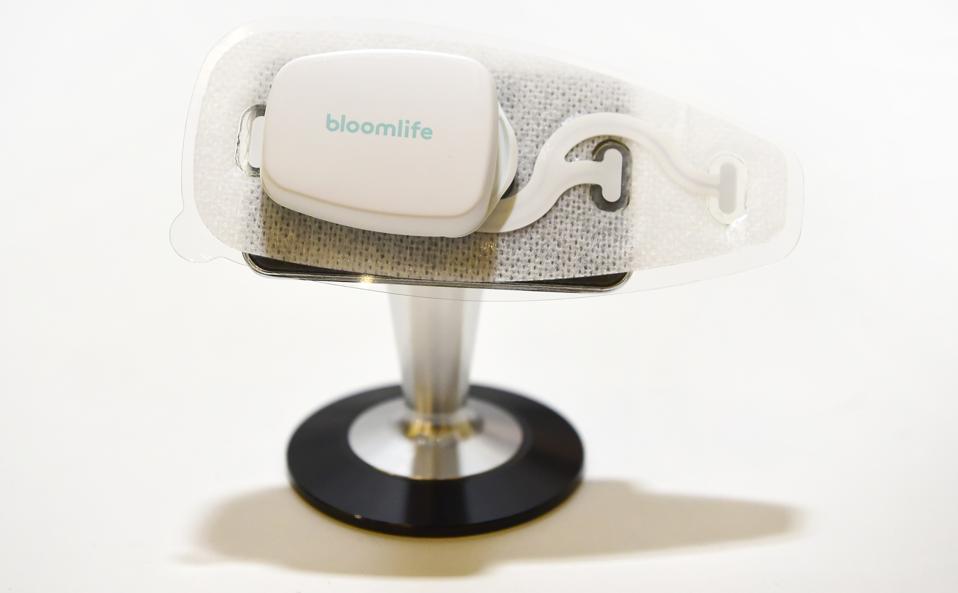
Is it a cramp? A contraction? Is it time? Bloomlife is a wearable detection device that sticks to the belly to monitor contractions. Complete with an app that assesses the frequency, duration and patterns of contractions, expected parents and healthcare providers are able to stay on top of things in anticipation of the big day.
Price: Bloomlife is available to rent for $20/week plus shipping.
Adults are obsessed with their sleep or lack thereof. We download meditation apps, invest in white noise machines and reach for the bottle of melatonin at night. So if you’re looking to obsess over your infant’s sleep habits, super babycam company Nanit has you covered. With a camera dangling where a crib mobile normally would, Nanit Sleep System offers parents a live stream of their bundle of joy napping along with insights on their sleep patterns.
Price: The Nanit Sleep System costs $379, which includes the Nanit Plus Camera, multi-stand (for travel) and wall mount or the floor stand for $70 extra and a 1-year subscription to Nanit Insights to track your baby’s sleep patterns.
Child + Youth
Child + YouthPICTURE ALLIANCE VIA GETTY IMAGES
With no real paid maternity leave in the U.S., a quarter of mothers return to the workforce just 10 days after giving birth and have to ensure that milk is available to the newborn at all times. With breast milk considered the healthier and cheaper option, many working and nonworking moms turn to breast pumps. The downside for moms is most pumps look and feel like the vacuum machines used to milk cows. Enter Elvie, a tubeless, portable breast pump made to fit inside a bra that collects 5 ounces of milk. The Elvie Pump also connects to your phone, ’cause why not track your milk?
Price: U.S. mothers have to join the wait list for the pump, but Elvie retails in the U.K. for £229 for a single pump and £429 for a double pump.
With the joy and responsibility of becoming a parent comes the second-guessing if you’re doing it right. Overactive instincts are naturally inherited with parenthood, especially when it comes to a child’s health. Tyto cuts out excessive and unnecessary doctor visits with an at-home exam kit similar to those found in a pediatrician’s office. Available through health insurance, Tyto takes on telemedicine, bringing the doctor’s office home with a digital otoscope, stethoscope, tongue depressor and basal thermometer, to determine whether a high temperature is just another case of the common cold or worth a trip to the hospital.
Price: Tyto is available through your provider or health insurance.

Police Seek DNA Where Comatose Woman Gave Birth


DNA samples will be collected from all male workers at a long-term care facility in Phoenix, Arizona where a female patient in a vegetative state recently gave birth, police say.
The search warrant to obtain DNA samples from the Hacienda HealthCare-owned facility was served on Tuesday, according to company spokesman David Leibowitz, the Associated Press reported.
The 29-year-old female patient had been in a vegetative state for more than 10 years after a near-drowning. The baby was born on Dec. 29.
Hacienda HealthCare said it welcomed the DNA testing.
“We will continue to cooperate with Phoenix police and all other investigative agencies to uncover the facts in this deeply disturbing, but unprecedented situation,” the company said in a statement, the AP reported.
It’s unclear if facility staff members knew about the pregnancy until the birth. According to its website, the facility serves infants, children and young adults who are “medically fragile.”
The case has prompted reviews by state agencies and put on focus on the safety of severely disabled or incapacitated patients, the AP reported.
The woman was an enrolled tribal member of the San Carlos Apache tribe of southeastern Arizona, according to officials.
“On behalf of the tribe, I am deeply shocked and horrified at the treatment of one of our members,” tribal chairman Terry Rambler said, the AP reported.
“When you have a loved one committed to palliative care, when they are most vulnerable and dependent upon others, you trust their caretakers. Sadly, one of her caretakers was not to be trusted and took advantage of her. It is my hope that justice will be served,” Rambler said.
Arizona Gov. Doug Ducey’s office has called the case “deeply troubling.” Phoenix police so far not commented, the AP reported.
The case is “disturbing, to put it mildly,” said Jon Meyers, executive director of The Arc of Arizona, an advocacy group for people with intellectual and developmental disabilities.
“I can’t believe someone receiving that level of constant care wasn’t recognized as being pregnant prior to the time she delivered,” Meyers told the AP.

Former Insys CEO pleads guilty to opioid kickback scheme


The former chief executive of Insys Therapeutics Inc pleaded guilty on Wednesday to participating in a nationwide scheme to bribe doctors to prescribe an addictive opioid medication and has agreed to become a government witness.

Michael Babich, who resigned as the Arizona-based drugmaker’s CEO in 2015, pleaded guilty in federal court in Boston to conspiracy and mail fraud charges after entering into a cooperation deal with prosecutors.
His plea comes less than three weeks before five former Insys executives and managers including John Kapoor, its onetime billionaire founder and former chairman, face trial after being charged with participating in the scheme.
Babich, 42, faces up to 25 years in prison. But the Arizona resident could receive a more lenient sentence by testifying at Kapoor’s Jan. 28 trial. Assistant U.S. Attorney Fred Wyshak in court said Babich committed his crimes at Kapoor’s direction.
Kapoor and his co-defendants have pleaded not guilty to racketeering conspiracy. Beth Wilkinson, Kapoor’s lawyer, had no comment after attending Wednesday’s hearing.
Prosecutors allege that from 2012 to 2015, Kapoor, Babich and others conspired to pay doctors bribes in exchange for prescribing Subsys, an under-the-tongue fentanyl spray for managing severe pain in cancer patients.
Fentanyl is an opioid 100 times stronger than morphine.
Prosecutors said Insys paid doctors kickbacks in the form of fees to participate in speaker programs ostensibly meant to educate medical professionals about Subsys that were actually sham events.
Prior to working at Insys, Babich had worked at Kapoor’s venture capital firm.
Insys in August said it had agreed to pay at least $150 million as part of a settlement with the U.S. Justice Department. The company has said it has taken steps to ensure it operates legally going forward.
Prosecutors called the case a major example of their efforts to combat the nation’s opioid epidemic. According to the U.S. Centers for Disease Control and Prevention, opioids were involved in a record 47,600 overdose deaths in 2017.
Babich’s plea comes after Alec Burlakoff, Insys’ former vice president of sales, pleaded guilty in November and agreed to testify as a government witness.
Babich is married to a former Insys sales representative, Natalie Babich, who in 2017 pleaded guilty to conspiring to pay kickbacks.
She testified last month at the trial of Christopher Clough, a former physician assistant in New Hampshire accused of accepting kickbacks from Insys. A federal jury in Concord, New Hampshire, convicted Clough on Dec. 18.

AI-Based Liver Allocation More Equitable Than Current MELD Score


Liver transplant candidates may get a fairer shake from an artificial intelligence-based organ allocation system than that offered by the current Model for End-Stage Liver Disease (MELD) scoring system, investigators contend.
A retrospective analysis of data from candidates on the waitlist for a deceased-donor liver indicated use of a machine-learning model trained to predict the probability of a candidate’s death or removal from the list within 3 months would have resulted in an average annual reduction in deaths of 418 patients compared with the MELD score.
In simulations, the artificial intelligence model, dubbed Optimized Prediction of Mortality (OPOM), was associated with improved survival across all candidate demographics, geographic regions, and diagnoses. OPOM was substantially more accurate than the MELD score at predicting risk across all disease severity groups, according to Dimitris Bertsimas, PhD, from the Massachusetts Institute of Technology in Cambridge, and colleagues.
The researchers published their findings online November 9 in the American Journal of Transplantation.
“The application of an OPOM-based allocation system would more accurately adhere to the ‘sickest-first’ principle. Indeed, the decrease in waitlist mortality/removal achieved through utilization of OPOM would not only represent the potential for more equitable allocation, but also would represent an important facet towards alleviating the discrepancy between supply and demand,” they write.
The MELD score has been used since 2002 to rank liver transplant candidates by disease severity, but the system’s method of “exception points,” which are intended to account for patients at imminent risk for death or disease progression, has resulted in what the authors called “inequitable and undesirable outcomes.”
Specifically, the exception point policy gives too much weight to candidates with hepatocellular carcinoma at the expense of candidates without exception points, the researchers maintain.
The investigators sought to determine whether a machine-learning approach using a technique known as Optimal Classification Tree modeling could be better than the MELD score at answering the following question: “What is the probability that a patient will either die or become unsuitable for liver transplantation within 3 months, given his or her individual characteristics?”
They applied the OPOM to data from the Organ Procurement and Transplantation Network Standard Transplant Analysis and Research dataset, including information on patients on the waitlist from January 1, 2002 through September 5, 2016.
The researchers first trained the system to predict the probability of a patient dying or becoming unsuitable for transplant within 3 months as a dependent variable, given observations of certain patient characteristics as independent variables. The independent variables included demographic and clinical characteristics.
After applying the trained model to the data, the researchers determined that liver allocation according to OPOM scores would have resulted in 417.96 (17.6%) fewer deaths annually among patients on the waitlist compared with the Match MELD (ie, MELD with exceptions) score. Additional analysis showed that OPOM would reduce deaths compared with MELD across all United Network for Organ Sharing regions.
“Notably, a higher number of female candidates received transplants when OPOM allocation was utilized,” the researchers write.
Compared with the Match MELD score, the OPOM score would have decreased deaths among patients on the waitlist, patients removed from the list, and post-transplant by 23.3%, 21.5%, and 1.8%, respectively.
Although OPOM allocated more livers to patients without hepatocellular carcinoma than MELD, OPOM decreased both waitlist deaths and list removals for patients with and without hepatocellular carcinoma.
The OPOM model “considerably outperformed” MELD for all patient exception statuses at predicting the 3-month probability of death or becoming unsuitable for transplant, as evidenced by a higher area-under-the curve of receiver operating characteristics.
“OPOM more accurately and objectively prioritizes candidates for liver transplantation based on disease severity, allowing for more equitable allocation of livers with a resultant significant number of additional lives saved every year. These data demonstrate the potential of machine learning technology to help guide clinical practice, and potentially guide national policy,” the researchers write.
The study had no specified funding. The researchers have reported no relevant financial relationships.
Am J Transpl. Published online November 9, 2018. Abstract

1st patient has been treated under the controversial “right to try” law


A patient diagnosed with an aggressive form of brain cancer became the first person in the US to access an experimental treatment under Right to Try. Signed into law by President Donald Trump in May 2018, it has been touted as a new way to help people with terminal illnesses and few options, although until now, no patients had ever used it.
ERC-USA and the University of California, Irvine initiated treatment with the company’s investigational compound ERC-1671 — known as Gliovac in Europe — and which is in Phase 2 clinical trials in the US. The patient’s treatment with ERC-1671 began at the university in late November 2018.
The patient resorted to Right to Try after failing to qualify for enrollment in the ongoing trial. But rather than work around the agency that may eventually approve the experimental treatment, the company said in August that it informed the FDA that it intended to make the experimental treatment available to this one patient. FDA acknowledged acceptance of the company’s notification on 13 July, ERC said.
Other companies, including Therapeutics Solutions International, have announced their intentions to use Right to Try, though according to Goldwater Institute, no other patients have yet to use the new law.
The law has proven to be a thorn in the side of FDA, which has said it will work to implement it in a manner consistent with congressional intent and with FDA’s public health mission, but the agency still has its own process for helping terminally ill patients receive experimental treatments, known as expanded access. FDA grants about 99% of the expanded access requests it receives.
According to BioCentury, FDA’s Oncology Center of Excellence is also working on a new initiative, known as Project Facilitate, under which the agency will provide a telephone number that patients and physicians seeking expanded access to an experimental treatment can call. FDA staff will answer calls and fill out the form required to apply for a single-patient IND request. The paperwork will be forwarded to the manufacturer. A pilot version of this initiative is expected to launch in the first half of 2019.

Machine Matches Docs for Arrhythmia Detection


For detecting a variety of arrhythmias, ambulatory ECG data analysis with a deep neural network (DNN) did better than cardiologists in most cases, researchers found in an experimental setting.
The DNN developed by Awni Hannun, PhD, of Stanford University in California, and colleagues, achieved an average area under the receiver-operating characteristic curve (ROC) of 0.97 when confirmed against independent test data annotated by a committee of board-certified practicing cardiologists.
A so-called F1 score that combined sensitivity and positive predictive value was 0.780 for human cardiologists versus 0.837 for the DNN, Hannun and colleagues wrote in Nature Medicine.
There is limited data available regarding whether an end-to-end deep learning method can be implemented to analyze the raw ECG information used to group a broad spectrum of diagnoses, the researchers explained. They said previous research aimed at using DNNs for ECG interpretation had looked at single facets of the ECG process, like feature extraction or noise reduction, or else was limited by detecting only certain heartbeat types such as fusion, ventricular, normal, and supraventricular ectopic, or rhythm diagnoses such as ventricular tachycardia or atrial fibrillation.
“Lack of appropriate data has limited many efforts beyond these applications. Most prior efforts used data from the MIT-BIH Arrhythmia database (PhysioNet), which is limited by the small number of patients and rhythm episodes present in the dataset,” Hannun and colleagues wrote.
Clinical practice could benefit from an accurate machine system for differential diagnosis of arrhythmia, Hannun told MedPage Today. “Automating arrhythmia detection can make heart monitoring with ECG more accessible and useful as a first-line diagnostic tool. In certain clinical settings, these results have the potential to lead to reduced rates of currently misdiagnosed computerized ECG interpretations and improvements in efficiency of expert-human ECG interpretation,” he said.
The researchers developed the DNN from a training dataset comprising 53,549 patients (mean age 69 and 43% women) with data recorded on the Zio ambulatory ECG monitor and provided by the device’s manufacturer with patients’ identities hidden. They grouped the data into 12 rhythm classes including noise, sinus rhythm, trigeminy, atrial fibrillation and flutter, ventricular tachycardia, and Wenckebach, among others.
Hannun and colleagues then validated the DNN on a different dataset of 328 ECG records from 328 patients (mean age 70 and 38% women), which was annotated by a team of cardiologists. The researchers then calculated F1 values for the “average cardiologist” from these data.
Notably, when it came to ventricular tachycardia, the model had greater sensitivity (94.1%) than the average cardiologist (78.4%) — as was the case for all the other arrhythmia types — but in this case specificity suffered markedly. “Ventricular tachycardia is a clinically important rhythm for which the model had a lower F1 score than cardiologists,” the researchers highlighted. F1 scores for the other 11 groups all favored the DNN.
A total of 16 recordings were misclassified by the DNN as ventricular tachycardia, but the researchers said “that ‘mistakes’ made by the algorithm were very reasonable.”
“One of the key limitations,” Hannun told MedPage Today, “is that we only studied single-lead ambulatory ECG as opposed to 12-lead which is another important standard. Detecting arrhythmias in ambulatory ECG is in some ways a more difficult problem given the amount of noise present and the lower resolution. However, it remains to be seen if our work generalizes to other settings.”
Hannun did not report any relevant conflicts of interest.