Search This Blog

Thursday, October 14, 2021

FDA advisor panel set to discuss Merck COVID-19 antiviral pill Nov. 30

 The Food and Drug Administration (FDA) scheduled a meeting for late next month for its advisory panel to discuss Merck’s antiviral pill designed to treat mild-to-moderate COVID-19.

The medication could be a game changer in the U.S.’s fight against the virus.

The federal agency announced on Thursday that the advisory committee will meet on Nov. 30 to review data on molnupiravir. If approved, the oral pill would be given to adults who recently tested positive for COVID-19 and are at high risk of severe illness, hospitalization and death. 

Merck applied for an emergency use authorization for the drug, developed with Ridgeback Biotherapeutics, earlier this week after trials showed it reduced the risk of hospitalization by 50 percent. 

In the results that top infectious diseases expert Anthony Fauci called “impressive,” no deaths were reported among patients who received molnupiravir while eight people died from the placebo group. 

“We believe that, in this instance, a public discussion of these data with the agency’s advisory committee will help ensure clear understanding of the scientific data and information that the FDA is evaluating to make a decision about whether to authorize this treatment for emergency use,” Patrizia Cavazzoni, the director of the FDA’s Center for Drug Evaluation and Research, said in a statement.

The five-day oral treatment could be key in getting the U.S. closer to the light at the end of the tunnel in the pandemic, experts have said, along with authorization for the vaccine to be given to younger children. 

The U.S. government has agreed to purchase 1.7 million doses of Merck’s treatment if the FDA grants it emergency use authorization, although former FDA Commissioner Scott Gottlieb said the amount is “not enough.”

But White House health officials, including Fauci, have emphasized that the COVID-19 vaccines would still be needed even with Merck’s antiviral pill to avoid infection in the first place. 

The FDA advisory panel this week is considering whether to recommend booster shots for Moderna and Johnson & Johnson recipients. 

The committee voted unanimously on Thursday to recommend a third dose of Moderna for those aged 65 and older and adults at high risk of severe COVID-19 due to their medical conditions, jobs or living situations.

https://thehill.com/policy/healthcare/576842-fda-advisory-panel-scheduled-to-discuss-merck-covid-19-antiviral-pill

SPAC TLGY Acquisition files for a $175M IPO, targets biopharma, tech-enabled B2C

 TLGY Acquisition, a blank check company formed by TLGY Holdings targeting the biopharma and tech-enabled B2C industries, filed on Thursday with the SEC to raise up to $175 million in an initial public offering.


The Wilmington, DE-based company plans to raise $175 million by offering 17.5 million units at $10. Each unit consists of one share of common stock, one-half of a warrant, exercisable at $11.50, and a contingent right to receive at least one-fourth of a warrant following the initial business combination redemption time. At the proposed deal size, TLGY Acquisition would command a market value of $219 million.

The company is led by CEO and Chairman Jin-Goon Kim, the founder of private investment firm TLGY Holdings and a former Partner with TPG Capital. The company plans to target industries where it believes management's expertise will provide a competitive advantage, including biopharma or technology-enabled business-to-consumer (B2C) industries globally.

TLGY Acquisition was founded in 2021 and plans to list on the Nasdaq under the symbol TLGY.U. The company filed confidentially on September 3, 2021. Mizuho Securities is the sole bookrunner on the deal.

Healthcare technology SPAC Digital Health Acquisition files for a $150 million IPO

 Digital Health Acquisition, a blank check company targeting healthcare technology, filed on Thursday with the SEC to raise up to $150 million in an initial public offering.


The Boca Raton, FL-based company plans to raise $150 million by offering 15 million units at $10. Each unit consists of one share of common stock and one warrant to purchase one-half of a share, exercisable at $11.50. At the proposed deal size, Digital Health Acquisition would command a market value of $193 million.

The company is led by CEO and Chairman Scott Wolf, the founder of Aerin Medical, a company developing non-surgical therapies for common nasal airway problems, and Zeltiq Aesthetics, the maker of CoolSculpting. The company plans to target established, healthcare technology-focused businesses with enterprise values between $175 million and $500 million.

Digital Health Acquisition was founded in 2021 and plans to list on the Nasdaq under the symbol DHACU. The company filed confidentially on June 22, 2021. A.G.P. is the sole bookrunner on the deal.

Walgreens, Safeway Did Years Of "Due Diligence" On Theranos Without Thoroughly Examining Its Test Device

 Sometimes, it isn't until the inevitable fraud trial that we find out just how little due diligence corporations, analysts and investors do on companies.

The latest not-so-surprising bombshell to come out of the trial of Elizabeth Holmes, former CEO of Theranos, is that the company's partners, including major chains like Walgreens and Safeway, spent almost no time examining the company's device or its results.

Executives from both chains were led to believe Theranos' lies after "years of due diligence", the Wall Street Journal reported. They even consulted with lawyers and medical experts. But their Achilles Heel was, of course, not spending "significant" time studying the machine itself. 

Walgreens Chief Financial Officer Wade Miquelon said in court testimony: “Our common understanding was the technology worked as we were told.”

He continued, telling the court that the company did its own due diligence by "leaning in part on staff healthcare experts". Walgreens also reportedly hired a lab firm to evaluate the tests. It then asked experts from Johns Hopkins University to meet with Holmes and her boy-toy, Sunny Balwani. 

“Due to the new-to-the world nature of the technology, it required some work to understand,” Miquelon said.

Despite never getting a device to examine, these experts decided the technology "was sound", the WSJ reported.

Safeway said he also consulted with lab directors at Johns Hopkins. Additionally, he reached out to the University of California, San Francisco. Safeway's former CEO said that the Johns Hopkins crew received a Theranos machine to examine, but the company "took it back" before it could be researched. 

In sum, Safeway conducted "hundreds of hours" of due diligence on Theranos. Executives communicated daily with Holmes, the report says.

And finally, in what should have been a clue, former Safeway CEO Steven Burd even had his blood tested via a finger prick from the Theranos machine. 

"The machine malfunctioned and didn't provide the results," the WSJ article concluded.

This is hardly the first major revelation from the Holmes/Theranos trial. Recall, in late September we wrote about a key Theranos whistleblower being unmasked during the ongoing trial.

Lab director Adam Rosendorff resigned from the company in 2014 and testified on Tuesday that he later got a phone call from the Journal's John Carreyrou, whom he spoke with off the record, according to Bloomberg Law

“I felt obligated to alert the public. I didn’t quite know how I should do that. But when this opportunity presented itself I took advantage of it,” Rosendorff said at trial.

Following their talk, Carreyrou wrote a series of stories in 2015 that catalyzed scrutiny on Theranos. In 2018, his work was made into a book called “Bad Blood: Secrets and Lies in a Silicon Valley Startup.”

Rosendorff, in the book is referred to under the pseudonym Alan Beam.

“Adam Rosendorff was my first and most important source. I couldn’t have broken the Theranos story without him. Hats off to his integrity and his courage. He’s one of the heroes of this story," Carreyrou said.

https://www.zerohedge.com/markets/walgreens-and-safeway-did-years-due-diligence-theranos-without-thoroughly-examining-its

Half of COVID Survivors Report Effects Beyond 6 Months: Review

 More than half of patients with persistent postacute sequelae of COVID-19 (PASC or long COVID) reported experiencing effects longer than 6 months after recovery, according to a systematic review of 57 studies that included more than 250,000 patients.

The results indicate that long COVID is common and persistent and will necessitate reevaluating future demands on the healthcare system, experts say.

According to the researchers, half of the survivors (nearly 80% in this study had been hospitalized for COVID-19) developed an "array of pulmonary and extrapulmonary clinical manifestations, including nervous system and neurocognitive disorders, mental health disorders, cardiovascular disorders, gastrointestinal disorders, skin disorders, and signs and symptoms related to poor general well-being, including malaise, fatigue, musculoskeletal pain, and reduced quality of life."

The findings were published online October 13 in JAMA Network Open.

Effects "Could Overwhelm Existing Health Care Capacity"

"These long-term PASC effects occur on a scale that could overwhelm existing health care capacity, particularly in low- and middle-income countries," the authors write.

Researchers identified 2100 studies. Of those, 57 studies, involving 250,351 COVID-19 survivors, met inclusion criteria. The average age of the patients was 54 years; 197,777 (79%) were hospitalized while having acute COVID-19. There were no limitations on country of publication or language; non–English language articles were translated.

The primary outcome was the frequency of PASC, which was defined as having at least one abnormality that was diagnosed through laboratory investigation, radiologic pathology findings, and clinical signs and symptoms.

The median (interquartile range [IQR]) of the proportion of survivors who experienced at least one PASC at 1 month was 54.0% (45.0% to 69.0%); at 2–5 months, 55.0% (34.8% to 65.5%); and at 6 months or longer, 54.0% (31.0% to 67.0%).

"Extrordinarily Debilitating"

The authors sorted prevalence by World Bank income groups and found that the PASC frequency (IQR) was 54.6% (33.0% to 68.3%) in high-income countries and 56.0% (43.5% to 67.0%) in low- and middle-income countries. PASC rates were similar for studies in which the prevalence of hospitalized patients was higher (60%) and for those in which the prevalence was lower (<60%).

Dr David Putrino

"We need attention to this issue ASAP. We need to understand that a large portion of individuals are experiencing persistent symptoms from their acute COVID-19 infection, and many of the persistent symptoms are extraordinarily debilitating and can lead to inability to participate in daily activities," David Putrino, PhD, PT, director of rehabilitation innovation for Mount Sinai Health System, New York City, told Medscape Medical News.

"There was a lot of expectation that this novel virus would be similar to the flu ― that individuals might get very sick, but when they recovered, they would be fully recovered," said Putrino, who was not part of the study. "The misunderstanding has been what happens when a novel type of virus ravages through the human body and leaves a toll behind."

He noted that persistent symptoms are occurring in patients whether or not they were hospitalized and whether they were symptomatic or asymptomatic, and it "has been a bit of a wake-up call."

Putrino said his team primarily sees patients who have "invisible" but debilitating symptoms after COVID-19 despite the fact that the results of testing of organs are normal.

"We've been working with this population of about 1600 patients in New York to rehabilitate them over time," he said.

Patients often report extreme fatigue or postexertional symptom exacerbation, meaning that if they cognitively, emotionally, or physically exert themselves, they experience symptoms for many days after the event. Other commonly reported symptoms include chest pain, brain fog, suddenly feeling hot, then cold, or discomfort after eating.

Putrino's team works closely with Mount Sinai's Center for Post-COVID Care, which has a much larger group of patients who have complex but medically explainable conditions.

With long COVID, better testing is needed, such as blood tests that can point to some of the complications this article describes, Putrino said.

He added that continuous remote monitoring will be important because symptoms "hit patients hard and then recede.

"This is when we'll start to see a lot of the physiological dysfunction we might miss in the course of a routine physical examination in a doctor’s office," Putrino said.

"Every Organ"

Study coauthor Paddy Ssentongo, MD, MPH, PhD, assistant professor at the Center for Neural Engineering, the Pennsylvania State University, University Park, Pennsylvania, told Medscape Medical News the biggest surprise in the article may be how many survivors of COVID-19 have persistent symptoms for so long.
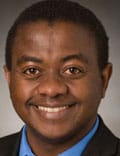
Dr Paddy Ssentongo

He said another key point in the article is in regard to the vast array of symptoms patients experience: "Every organ is hit ― even the brain."

That presents challenges. Because of the fractured healthcare system In the United States, these patients will need to seek care on different days with different physicians, unless they receive care in a long COVID or other one-stop center, Ssentongo said.

Mental health effects after long COVID are vastly underestimated, he said. "We're not prepared for neuropsychiatric or mental health outcomes for the survivors," he noted.

If those problems are not addressed, the result could be increased numbers of patients with depression, Ssentongo said. He pointed out that mental health had not been widely prioritized even before the pandemic.

He said that the COVID-19 pandemic may lead to the integration of mental health care and physical healthcare.

"This is our best opportunity, since everyone is focused on COVID-19," Ssentongo said.

Prior studies have been limited with respect to the duration of the effects of COVID-19. The authors say that to their knowledge, this is the first review to consolidate the trends and systematically characterize the evolution of sequelae from the short term to the long term.

Limitations include the fact that the definition of PASC varies from one study to another. Some studies define PASC as symptoms that last more than 3 weeks; in other studies, the definition is more than 12 weeks. Researchers were also not able to stratify cases on the basis of how severe the initial illness was and whether, for example, it required intensive care or life-sustaining measures. They were also not able to stratify cases on the basis of the number of preexisting comorbidities.

A co-author has consulted for Allergan outside the submitted work. The other authors and Putrino have disclosed no relevant financial relationships.

JAMA Netw Open. Published online October 13, 2021. Full text

https://www.medscape.com/viewarticle/960890

Chicago Police Union Head Urges Cops to Defy Vaccine Mandate

 The head of the Chicago police officers union has called on its members to defy the city's requirement to report their COVID-19 vaccination status by Friday or be placed on unpaid leave.

In the video posted online Tuesday and first reported by the Chicago Sun-Times, Fraternal Order of Police President John Catanzara vowed to take Mayor Lori Lightfoot's administration to court if it tries to enforce the mandate, which requires city workers to report their vaccine status by the end of the work week. After Friday, unvaccinated workers who won't submit to semiweekly coronavirus testing will be placed on unpaid leave.

Catanzara suggested that if the city does enforce its requirement and many union members refuse to comply with it, "It's safe to say that the city of Chicago will have a police force at 50% or less for this weekend coming up."

In the video, Catanzara instructs officers to file for exemptions to receiving the vaccine but to not enter that information into the city's vaccine portal.

He said that although he has made clear his vaccine status, "I do not believe the city has the authority to mandate that to anybody, let alone that information about your medical history."

During a news conference Wednesday, Lightfoot accused Catanzara of spreading false information and dismissed most of his statements as "untrue or patently false." She said COVID-19 vaccines are proven to be effective and that getting vaccinated would protect city workers and their families.

"What we're focused on is making sure that we maximize the opportunity to create a very safe workplace," Lightfoot said. "The data is very clear. It is unfortunate that the FOP leadership has chosen to put out a counter narrative. But the fact of the matter is, if you are not vaccinated, you are playing with your life, the life of your family, the life of your colleagues and members of the public."

She said the city is prepared to deal with any fallout related to the vaccination requirement.

Violent crime has spiked in the city this year, from expressway shootings to a rise in carjackings. Chicago police reported 629 homicides this year through early October, compared with 605 during the same period last year and 402 in the same time frame in 2019.

First responders around the country have been hit hard by the virus but have been resisting vaccine mandates. More than 460 law enforcement officers have died of COVID-19, including four members of the Chicago Police Department, according the Officer Down Memorial Page. On Tuesday, Dean Angelo, who once held Catanzara's union position, died of the disease.

Los Angeles police and county sheriff, and Seattle police are among the departments either under vaccine mandates or facing one.

Catanzara has clashed with the mayor over a host of issues. After the city announced the vaccine mandate in August, the union head compared it to something that might happen to Nazi Germany, telling the Sun-Times, "This ain't Nazi ... Germany (saying) 'Step into the ... showers, the pills won't hurt you.'"

Lightfoot blasted Catanzara for his "offensive outburst" and Catanzara posted a video on the union's YouTube channel apologizing for his choice of words, saying he was not trying to link vaccinations to what happened during the Holocaust.

https://www.medscape.com/viewarticle/960883

Many Scientists Face Serious Threats for Speaking About COVID: Survey

 Scientists who speak about COVID-19 to the media or comment about the pandemic on social media often meet with harassment and abuse, according to a survey published in Nature.

The survey of 321 scientists, largely from the United States, the United Kingdom, and Germany, found that 22% were threatened with physical or sexual violence and that 15% received death threats.

More than one quarter of scientists surveyed said they "always" or "usually" received comments from trolls or were personally attacked after speaking out about COVID-19. More than 40% suffered emotional or psychological distress as a result.

Some scientists said the experience of being trolled online or receiving personal attacks had a chilling effect on their willingness to speak to the media in the future.

Even scientists who had a high profile before the COVID-19 pandemic said in the Nature article that the abuse was a "new and unwelcome phenomenon tied to the pandemic."

Some scientists reported anonymously that they were hesitant to speak about some topics after witnessing the abuse received by others.

"Shocking" Results Require Action

An editorial in Nature calls the results of the survey "shocking" and says institutions at all levels must do more to "protect and defend scientists, and to condemn intimidation.

"Intimidation is unacceptable on any scale, and the findings should be of concern to all those who care about scientists' well-being. Such behavior also risks discouraging researchers from contributing to public discussion — which would be a huge loss, given their expertise, during the pandemic," the editorial states.

"Scientists and health officials should expect their research to be questioned and challenged, and should welcome critical feedback that is given in good faith. But threats of violence and extreme online abuse do nothing to encourage debate — and risk undermining science communication at a time when it has never mattered more," the editorial concludes.

A number of scientists weighed in on the survey in a statement from the UK nonprofit organization, Science Media Center.

"Undoubtedly there is a danger that scientists who have themselves been, or had colleagues who have been attacked in ways that disturb one's equilibrium, may decide to disengage from the media. This will be sad and result in overall harm," warned Stephen Evans, MSc, with the London School of Hygiene and Tropical Medicine.

Simon Clarke, PhD, with the University of Reading, who responded to the Nature survey, said he is "glad to see so many fellow scientists took the time to reflect on their experiences."

Clarke said he is "shocked and saddened to hear that so many fellow scientists have experienced death threats or threats of physical or sexual violence, simply for doing their job trying to communicate the scientific facts that are so important for society in understanding and responding to this global health emergency."

Clarke said he too has had some "bad experiences after appearing in the media, particularly after calling out conspiracy theorists and some politicians, who seem to dislike having their pet theories debunked. I have on occasion been threatened with various forms of death, violence and lifelong imprisonment. I am fortunate to have felt able to ignore the threats I've received, but I know that some colleagues have had far worse experiences."

Michael Head, PhD, with the University of Southampton, said there's been "a huge amount of abuse aimed at everyone contributing to the pandemic response. This has included NHS frontline staff, and also scientists and academics providing thoughts and explanatory comments to the public.

"I myself have received plenty of abuse throughout the pandemic. For those of us who have been pulling apart anti-vaccine misinformation from pre-pandemic times, the presence of these attempts at intimidation is very wearying, but not surprising," said Head.

"As a white, male academic, I would imagine I'm far less likely to receive abuse than a scientist making similar points but from a different demographic," he said.

Susan Michie, FMedSci, with the University College London, said the findings of harassment and abuse of scientists during the pandemic align closely with what she and many UK women colleagues who have been prominent in speaking to the media have endured.

"The online abuse occurs most intensively after media engagements and especially after those that address restrictions to social mixing, the wearing of face masks or vaccination," Michie said.

"This abuse has not put off many women colleagues I know from speaking to the media," she said. "I think this is because they are well established in their careers and/or brave and very committed to communicating scientific understanding.

"They have also set up a variety of networks to support each other. However, I am concerned that it discourages early career scientists, especially young women and young women from minoritized ethnic backgrounds, from engaging with the media," she said.

Nature. Published online October 13, 2021. Full textEditorial

https://www.medscape.com/viewarticle/960821