Search This Blog

Monday, October 31, 2022

DEFENCE TO APPLY TECH IN DESIGN OF MESSENGER RNA ANTI-CANCER VACCINES

 Defence Therapeutics Inc. (“Defence” or the “Company”), a Canadian biopharmaceutical company specialized in the development of immune-oncology vaccines and drug delivery technologies, is initiating a new research and development program designed to exploit the AccumTM technology in engineering messenger (m)RNA vaccines targeting cancer. AccumTM is designed for intracellular accumulation with capabilities to deliver an increased drug delivery to the targeted cells.

According to Precedence Research, the mRNA therapeutics market size is projected to surpass around USD 128.14 billion by 2030 and growing at a registered CAGR of 13.03% from 2022 to 2030.

https://www.marketscreener.com/quote/stock/DEFENCE-THERAPEUTICS-INC-122508759/news/DEFENCE-TO-APPLY-ITS-PROPRIATRY-ACCUMTM-TECHNOLOGY-IN-THE-DESIGN-OF-MESSENGER-RNA-ANTI-CANCER-VACCIN-42133281/

Inventiva: AbbVie stops development of cedirogant

 Inventiva (Euronext Paris and Nasdaq: IVA), a clinical-stage biopharmaceutical company focused on the development of oral small molecule therapies for the treatment of non-alcoholic steatohepatitis (NASH), mucopolysaccharidoses (MPS) and other diseases with significant unmet medical needs, today announced that AbbVie communicated during their third-quarter financial results1 on Friday October 28th, that they decided to stop the development of cedirogant (ABBV-157), an oral RORg inverse agonist jointly discovered by Inventiva and AbbVie for the treatment of autoimmune diseases, following the analysis of a recently concluded nonclinical toxicology study.

The Company’s cash runway, including the expected $12 million upfront payment from Sino Biopharm and the €25 million from the EIB credit facility2, is not impacted by the discontinuation of the cedirogant clinical program and should allow to fund as previously announced operations through Q4 20233. Inventiva’s R&D capabilities and objectives remain unaltered.

https://finance.yahoo.com/news/inventiva-provides-development-cedirogant-abbvie-070000880.html

Money Always Goes Somewhere

 By Nick Colas of DataTrek Research

“Money always goes somewhere” is one of our core beliefs about capital markets. Capital is clearly fleeing US Big Tech. That is because earnings growth for these names has slowed dramatically from the 2020 – 2022 pandemic era. Capital continues to embrace Energy and Health Care, however, our 2 favorite large cap sectors. A lower Big Tech weighting is ultimately good for the S&P 500, as it allows other sectors to have more of an impact on index returns.

One of our core investment mantras is “money always goes somewhere”. Aside from market crashes, when value literally evaporates, capital simply sloshes around. It moves to assets where investors see a potentially better future return from assets where they see diminishing opportunities.

For this week’s Story Time Thursday, we have 2 related examples of this idea and a summary thought at the end of this section:

#1: Let’s start with the elephant in the market’s room – the terrible performance of US large cap tech stocks. Only Apple has outperformed year to date, and just barely (+1.6 percentage points). The rest are lagging the S&P 500’s 20 percent YTD decline, and badly so: Microsoft (-33 pct), Alphabet/Google (-36 pct), Amazon (-33 pct through today’s close, more after hours), Tesla (-36 pct), Meta/Facebook (-71 pct) and Nvidia (-55 pct).

Even with this terrible YTD performance, however, almost all these names are still beating the S&P since the start of 2020:

  • S&P 500 since 2019YE: +18 percent
  • Apple: +97 percent
  • Microsoft: +44 pct
  • Alphabet/Google: +38%
  • Amazon: +20 pct (note: AMZN is back to flat vs. 2019YE after hours tonight)
  • Tesla: +70 pct
  • Meta/Facebook: -52 pct (the one egregious exception)
  • Nvidia: +124 pct

A substantial increase in earnings power explains why most of these names are still so far above their pre-pandemic levels (save Meta, of course, and now apparently Amazon). The companies of the S&P 500 improved their collective earnings per share by a compounded annual growth rate (CAGR) of 11 percent/year from 2019 – 2022 ($163/share to $223/share).

The Big Tech names mostly did much better:

  • Apple: 27 percent 3-year CAGR
  • Microsoft: 19 pct
  • Alphabet/Google: 25 pct
  • Amazon: earnings power reduced to zero in 2022 from $1.17/share in 2019
  • Tesla: swung to profit in 2022 ($4.00/share estimate from a 2019 loss of $4.92/share)
  • Meta/Facebook: 15 pct
  • Nvidia: 14 pct

The problem markets have been seeing all year, and why capital is flowing out of these names, is that their expected future earnings growth is typically well below the CAGRs of the last 3 years. Here are the earnings per share growth rates Wall Street analysts expect over the next 12 months:

  • Apple: +6 percent
  • Microsoft: +6 pct
  • Alphabet/Google: +14 pct
  • Amazon: not meaningful (a return to modest profitability, $2.26/share)
  • Tesla: +37 pct, below Elon Musk’s target of 50 pct growth in unit volumes
  • Meta/Facebook: +7 pct
  • Nvidia: +37 pct

Takeaway: US Big Tech’s 2020 – 2022’s pandemic era earnings growth rates are proving to be unsustainable, so markets are revising their estimate of fair value for these stocks. That may not seem fair since these companies are all expected to show bottom line growth in 2023, but that’s how markets work. Accelerating growth earns higher valuations, and decelerating growth forces valuations lower. Wall Street has a very short menu.

#2: Now that we have discussed where capital is leaving and why, let’s look at where it is going. Our approach will be to look at YTD changes in S&P 500 weightings by individual names. Here is the change this year in index weightings for the Tech names discussed in the prior point:

  • Apple: +0.15 points in S&P 500 weight YTD (positive, since it has outperformed)
  • Microsoft: -0.90 points
  • Alphabet/Google: -0.82 points
  • Amazon: -0.41 points
  • Meta/Facebook: -1.17 points
  • Tesla: -0.27 points
  • Nvidia: -1.0 points

The total here is 4.42 points of S&P 500 weighting, and by our mantra (and simple math) it must have gone somewhere else in the index. It has, and mostly into stocks in our 2 preferred sectors, namely Energy and Health Care:

  • ExxonMobil (+76 pct YTD): +0.74 point increase in S&P 500 weighting YTD
  • Chevron (+52 pct YTD): +0.43 points
  • ConocoPhillips (+76 pct YTD): +0.26 points
  • Occidental (+148 pct YTD): +0.11 points
  • Schlumberger (+73 pct): +0.13 points
  • Johnson & Johnson (+1 pct YTD): +0.46 points
  • UnitedHealth (+8 pct YTD): +0.40 points
  • Eli Lilly (+29 pct YTD): +0.33 points
  • Merck (+30 pct YTD): +0.29 points
  • Amgen (+19 pct YTD): +0.13 points
  • Cigna (+38 pct YTD): +0.11 points

Takeaway: These 11 names have soaked up just over three quarters (3.39 points, 77 percent) of the index weighting lost by the 7 US Big Tech names this year. Energy is still just 5.2 percent of the S&P 500, less than either Apple (7.0 pct) or Microsoft (5.3 pct). Health Care is 15.0 percent of the index currently, below the 16.0 percent that represents the upper end of its historical band. We believe both sectors can continue to take index weighting “share” from Tech and, by extension, outperform going forward.

Final thought: The only investment positive behind Big Tech’s ongoing declines (such as Amazon after hours tonight) is that they reduce these names’ impact on future S&P 500 returns. That has two benefits. First, it gives other stocks and sectors a better chance to affect overall index performance. Second, it makes the S&P 500 less leveraged to interest rates since it reduces the index’s price/earnings multiple. Bottom line: the S&P 500 doesn’t need Tech stocks to rally to show reasonable gains between now and year end. It does, however, need them to stop falling.

https://www.zerohedge.com/markets/money-always-goes-somewhere

Why You Might Want to Retire Soon If You Have a Pension

 Imagine you are on the verge of retirement and you have a pension plan with your employer. Every year you have to make two decisions regarding your plan. First, you have to decide whether to retire (and start claiming benefits) or whether to work for another year. Generally, every additional year of work increases the future benefits you will receive from the plan, all else equal. Second, if you do decide to retire, you then have to decide on how to take those benefits. You can either: (1) receive a fixed monthly payment for the rest of your life, or (2) receive a large lump sum (at retirement).

What you may not know is that your lump sum payment isn’t consistent over time. It changes every year on what the plan calls the recalculation (or revaluation) date. On this date, the plan takes the prevailing interest rates (i.e. the minimum present value segments rates provided by the IRS) and uses them to calculate the lump sum value of your benefits.

In most years, this recalculation is a formality and your lump sum barely moves because interest rates typically don’t change that much throughout the year. However, with the rapid increase in interest rates in 2022, pension participants are in for a rude awakening once these plans recalculate lump sums for 2023 and beyond. Though this might seem like a bad thing, it actually presents a rare opportunity to arbitrage your pension plan for a riskless profit. Let me explain.

The Pension Plan Free Lunch (Thanks to Rising Rates)

Imagine its the beginning of 2022 and you just received your statement from your pension plan. On the statement it says that, if you retire in 2022, you will receive either: (1) $1,600 a month for life or (2) a $500,000 lump sum. Let’s assume that your plan uses a 1% interest rate (for calculating the lump sum) and that you will live for 30 years in retirement.

Well, as 2022 unfolded, interest rates shot up from 1% to 4%. If your plan were to recalculate your benefits based on this change in rates, the value of your lump sum would decline to $337,000, or about $163,000 lower than what it was at the beginning of the year. As a reminder, when interest rates rise, future cash flows become worth less today, and when they fall, they become worth more.

Given this, you can understand why your lump sum declined by $163,000. That’s the bad news. But, there is good news too. Your pension plan won’t be recalculating your benefits until 2023. This means that, for the next few months, you can still claim your $500,000 lump sum offer from the beginning of 2022 before the recalculation occurs. This is where your opportunity lies.

More importantly, if you do decide to retire and take the $500,000 lump sum, you would be able to buy an annuity for $337,000 that pays you $1,600 a month for the rest of your life. In doing so, you would replicate the benefits provided by your pension plan (i.e. $1,600 a month for life) while also pocketing an extra $163,000 in the process. It’s true arbitrage. Of course, money isn’t the only factor to consider when thinking about when to retire, but it can be the deciding factor in the extremes.

While this example is a bit simplistic and ignores many other issues, it is representative of the choice that many near retirees will need to make in the coming months. As you can see on the IRS website, from Aug 2021 to August 2022, the first segment rate went from 0.66% to 3.79% (similar to the 1% to 4% example I used above). This large change in rates will wreak havoc on the lump sum payouts offered to pension plan participants in 2023 and possibly for the plans as well.

Will Pensions Have a Problem?

Given the issues highlighted above, you can see how a tidal wave of early retirements might be coming for pension plans. However, I’m not worried. Since only 15% of private sector workers have a defined benefit pension plan in the U.S., I doubt that there will be any major impact across the industry. Some near retirees won’t know about this opportunity, some won’t be able to take advantage of it (i.e. because they can’t retire), and some won’t want to take advantage of it (i.e. because they won’t retire).

Either way, the obvious solution to this problem is for pension plans to recalculate the lump sum amounts offered to participants more frequently (i.e. quarterly). In doing so, they would prevent these kinds of arbitrage opportunities from ever existing in the first place. Given this, why haven’t they adopted a more frequent recalculation schedule for lump sum benefits? I’m not sure, but incentives may play a role. As Ben Hunt recently stated:

The problem is that interest rates have been going down for 30 years, and really going down for the past 15 years. Which means that, from this accounting perspective, pension fund liabilities have been going up for 30 years, and really going up for the past 15 years.

When interest rates are going down, participant benefits are going up. As a result, if you are pension fund manager, you have no incentive to recalculate benefits any more frequently than you are required to (i.e. annually). But, now that rates are going up, the opposite is true. You are incentivized to recalculate more frequently to lower the amounts you offer to participants. Though a change in calculation frequency is unlikely to happen, I am interested to see how this plays out over the next few months.

The Bottom Line

While deciding whether to retire early to take a lump sum from a pension plan probably doesn’t apply to you, the framework for thinking about this decision does. Anytime you have an arbitrary pricing mechanism (i.e. annual pension recalculations) pitted against a real-time pricing mechanism (i.e. interest rates), there are bound to be moments when you can take advantage of timing (and pricing) mismatches.

And I say this as someone who isn’t a market timer. I don’t believe that you should try and time most of your financial decisions. However, some opportunities are too good to pass up. For example, when you have historically low interest rates, refinancing your mortgage can be a great idea. When you have historically large market declines, buying the dip can work wonders. And so forth.

These kinds of moments are rare, but they can be impactful to those who take advantage of them. There is no silver bullet to our finances. We must always consider the context and how that context might change when we make our decisions.

https://ofdollarsanddata.com/why-you-might-want-to-retire-soon-if-you-have-a-pension/

Sunday, October 30, 2022

Hochul administration cut access to life-saving medical care for 1.2M NY workers, retirees: lawsuit

 New York Gov. Kathy Hochul’s administration is being accused in a lawsuit of secretly slashing access to specialty doctors — and potentially life-saving medical treatment — for 1.2 million government workers and retirees, The Post has learned.

The explosive claims, laid out in a suit filed in Albany Supreme Court, accuse Hochul officials of illegally ignoring state law when making changes to the Empire Health Plan, which serves state and local government employees.

The suit says Acting Commissioner Rebecca Corso and the state Department of Civil Service, who oversee the health insurance program, have dramatically slashed the reimbursement rates that “out of network” doctors can receive for providing services to plan members.

“Some of my members, their families and millions of Empire Plan enrollees may be prevented from seeing physicians that they have treated with for years,” said Bridge and Tunnel Officers’ Benevolent Association President Wayne Joseph in an affidavit filed in the case.

Joseph, one of the plaintiffs — along with another Empire Health Plan beneficiary and 18 out-of-network doctors and medical practices — charged that the allegedly illegal “unilateral action” and “life changing event” was “never communicated” to the 1.2 million enrollees.

The suit accuses Hochul officials of relying on a federal law, over state legislation, in order to set lower reimbursement rates for out-of-network doctors.

But state officials counter that they’re complying with the law and are imposing cost controls to protect taxpayers and plan premiums and to prevent doctors from gouging the program.

The explosive claims come as Hochul is locked in a tight election battle with Republican rival Rep. Lee Zeldin.

The incumbent Democrat in June announced a five-year labor deal with the Civil Services Employees Association of New York representing more than 52,000 state workers that includes raises of 2% each for the first two years and 3% each for the remaining three years — plus a one-time lump bonus of $3,000 — in exchange for the union agreeing to encourage in-network employee utilization to help control health insurance costs.

“The Empire Plan unilaterally determined itself no longer subject to New York insurance law or Department of Financial Services’ regulation. Consequently, the Empire Plan considers itself no longer obligated to reimburse out-of-network physicians at the long-standing UCR [Usual, Customary and Reasonable] rates used in New York,” the suit initially filed by plaintiffs’ lawyer Roy Breitenbach of Harris Beach said.

“As a result, starting in 2022, Empire Plan unilaterally cut reimbursement to out-of-network physicians by more than 80%,” it states.

The suit says doctors can no longer file a payment dispute complaint or an appeal with state regulators.

“If these actions do not immediately cease, thousands of high-quality, well-respected out of network physician practices that provide medically necessary surgical and specialty medical services to Plan enrollees will go out of business or drastically curtail their services,” the suit said.

“The current accessibility of quality medical care available to Empire Plan’s 1.2 million enrollees will be severely impacted, and irreparably so for those patients that require such care now.”

The slash in payments will impact emergency care at hospitals and “will cause Plan enrollees, and patients in this state as a whole, to lose access to life-saving emergency treatment,” the suit alleges.

Patients recently informed of the payment dispute by their doctors were horrified about losing access to specialty and life-saving care.

“This will have a huge impact on me. I had spinal cord surgery twice,” said Empire Health Plan member Kathleen Makridakis, 56 of Rockville Centre, whose husband works for the Town of Hempstead.

“They were only doctors out of network who could do the surgery. If I have to worry about these doctors getting paid, that screws me up. I can’t afford owing a doctor a $100,000.”

Loretta Post, whose husband works for the Long Beach Transportation Department and is an Empire Plan member and plaintiff in the case, said in an affidavit, “The net effect of this pronouncement is that my long standing physicians have advised that they may not be able to provide critical services that I have grown accustomed to for years.”

But state officials, in response briefs, defended their actions as legal and reasonable.

Daniel Yanulavich, of the Department of Civil Services’ Employee Benefits Division, said the Empire Plan provides adequate patient protections and claims the real spat is about out-of-network doctors wanting more money.

In a June 3 affidavit, he complained that many of the out-of-network doctors “willingly refuse to negotiate with the Empire Plan” regarding payments, adding, “This is not a coincidence given the Empire Plan’s generous out-of-network reimbursement formula.”

Yanulavich  said the Empire Plan pays network doctors a range of 120 percent to 300 percent of what Medicare, the federally-run health care insurance program for senior citizens, pays medical providers.

He said out-of-network providers were getting an average of 540% of what Medicare pays doctors and anesthesiologists were changing up to 3,000% of what Medicare pays — and it’s time for the state to rein in those costs.

The state, Yanulavich said, has a responsibility to manage the Empire Plan “in a fiscally responsible manner” and “not be be made to continue to subsidize these physician practices,” adding, “As a self-funded health plan, it is within the right of the Empire Plan to determine  a reasonable reimbursement rate to out-of-network providers in the case of surprise bills.”

The state Department of Financial Services and its Superintendent Adrienne Harris, who regulates health insurance plans, are also listed as defendants, along with United HealthCare Insurance Co., which helps administer the program.

Attorney General Letitia James’ office, which is defending the Hochul administration in the case, also said the plaintiffs are misreading the law and claim that a self-funded Empire Plan is not covered by the Surprise Bill Law that is used to regulate other health plans.

William Scott, the AG’s lawyer, suggested doctors were engaging in unwarranted alarmism and hadn’t even tested how much they will get paid under the new reimbursement system and therefore couldn’t prove any harm to their practices or patients. Neither could other plaintiffs who are plan members.

Hochul’s office had no further comment.

A CSEA spokesperson had no immediate comment on the lawsuit, but said the negotiated changes in heath care savings in the labor contract don’t go into effect until 2023, “so we haven’t received any feedback yet.”

https://nypost.com/2022/10/30/hochul-administration-cut-access-to-life-saving-medical-care-for-1-2m-ny-workers-retirees-lawsuit/

Warning signs that a crowd is dangerously dense

 If you’re in a crowd and people are close enough to bump against you, it could be getting too crowded.

That’s according to G. Keith Still, a visiting professor of crowd science at the University of Suffolk and head of GKStill International, a consultancy that trains event organizers on how to spot danger.

Such events, like the apparent crowd surge at packed Halloween festivities in the South Korean capital of Seoul and the tragedy at Houston’s Astroworld Festival in November 2021, have led to multiple deaths and injuries.

Still, who has been studying the dynamics of crowd behavior and safety for over 30 years, said organizers can help prevent crowd-crushing incidents by monitoring a crowd’s density in real-time and regulating the flow of people into a venue.

Crowd density can be calculated in number of people per square meter, roughly a square yard. Younger, smaller people occupy less space than older and larger people, but as a rule things get uncomfortable once you reach five people per square meter, Still said — and anything more crowded can become dangerous.

1 person / m²

Here’s what one person per square meter looks like from above, as depicted in a simulation projected on two tennis courts. (Each square on the grid is 25 square meters, or about the area of six king-size beds.)

2 people / m²

Here are the same tennis courts with two people per square meter.

3 people / m²

At three people per square meter, it’s busy, but not packed, and everyone has some space around them. Still said this level of density is typical for an evening at a bar or pub, especially before the Covid-19 pandemic.

4 people / m²

At four people per square meter, everyone is a bit closer together but still not in each others’ personal space. Still said it’s similar to the distance people keep while in line in the United Kingdom or the United States.

5 people / m²

With a density of five people per square meter, there’s more physical contact between people. This could still be safe in calm spectator situations but can start to become a problem if there’s pushing or shoving.

6 people / m²

At six people per square meter, the situation can start to get dangerous. There’s more physical contact and it’s harder for each person to keep a wider stance, making it much easier for people to tip over. At this point, those in the crowd can easily lose the ability to control their own movement.

“When bodies are touching, that high energy and density can give rise to these surges and crowd collapses,” Still said.

One sign a crowd has become too dense is what Still called a “field of wheat effect,” where people are uncontrollably swaying. He said an example is visible in online videos of a 2005 Oasis concert in Manchester, England, just before a big surge rippled through the crowd toward the stage.

Keeping people safe means being able to spot when a crowd is becoming too dense, but that’s trickier than it sounds. Among other things, he said, it depends on the angle of view, say from a helicopter or stage.

Can you tell which of these simulated gatherings is the most crowded?

It’s a trick question: They all show the same density — four people per square meter — from different angles.

Compare the last image to this one, which shows a more dangerous density of six people per square meter.

While these last two images look very similar, the “tell,” Still said, is the gap between people.

In his crowd-safety classes, Still encourages event organizers to post versions of these images on the wall of the command center, or even a DJ table, and repeatedly compare the reference images of varying densities with what they see before them or on television monitors, he said.

The key to preventing a disaster, Still said, is for organizers to watch the density and, if it starts to get high, slow or stop the flow of people entering the area. He said it’s much harder to reduce crowding once the situation has become too dense.

If a venue does get too crowded, Still said, performers should stop and ask everyone to take a step back. Over the years, several performers, including A$AP Rocky and Linkin Park, have done exactly that.

Following crowd-related disasters such as a crush at the Hillsborough soccer stadium in 1989, a fire at the Station nightclub in 2003 and a stampede at the E2 nightclub the same year, many jurisdictions adopted crowd-related regulations and required licensed “crowd managers” to be on site to enforce safety rules.

A 56-page operations plan for the Astroworld event, obtained by CNN, includes a section about “incident management” that reads, “The Festival employs experienced, licensed event security to assist with crowd management and security at the scene of an incident.” Another section says, “Crowd management techniques will be employed to identify potentially dangerous crowd behavior in its early stages in an effort to prevent a civil disturbance/riot.”

If you’re in a crowd, Still said you can help yourself stay safe by watching out for areas likely to become most crowded, and making your way out of the crowd if you don’t have enough personal space.

Amy Cox, who produces festivals and events as senior vice president at Deep South Entertainment, said she has a simple rule of thumb in an event crowd. “Personally, for me it’s: Can I put my hands on my hips comfortably without touching anyone else?”

https://edition.cnn.com/interactive/2021/11/us/crowd-density-dangerous-warning-signs/

Did NikiLeaks Just Kill The Dovish Fed Narrative He Launched

 As Goldman's Matt Fleury wrote earlier today, since Nick Timiraos, also known as NikiLeaks, tweeted that the Fed was going to slow its pace of hiking last Friday...

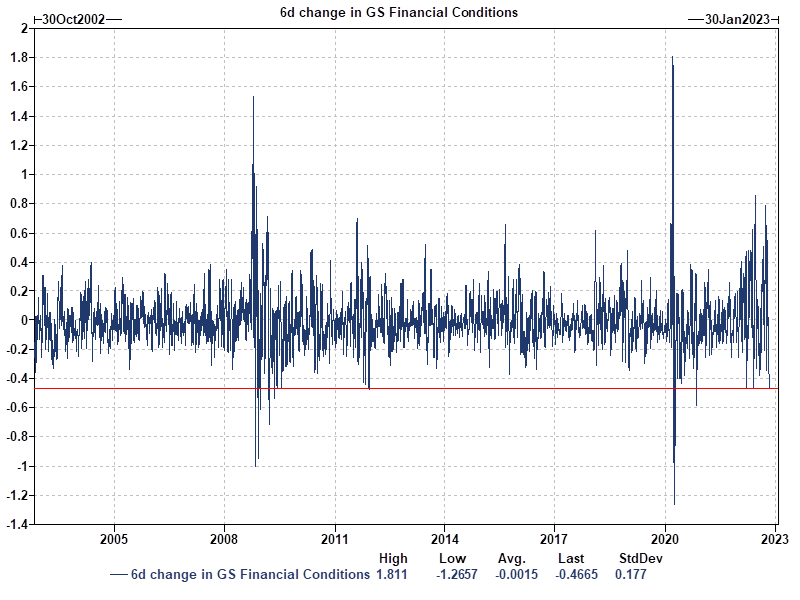
... we have had one of the largest bouts of financial conditions easing this century.

But, according to the Goldman trader, in the latest series of NikiLeaks tweets this morning, the WSJ's Fed mouthpiece is seen as aggressively trying to dial that back ahead of the Fed’s meeting on Wednesday by suggesting that the US consumer is much stronger than otherwise perceived (this is dead wrong, of course, but as a reminder, this is all about setting up the narrative that contains the Fed's reaction function):

“Consumers have a big cushion of savings. Corporations have lowered their debt-service costs. For the Fed, a more resilient private sector means that when it comes to rate rises, the peak or “terminal” policy rate may be higher than expected“ (Cash-Rich Consumers Could Mean Higher Interest Rates for Longer).

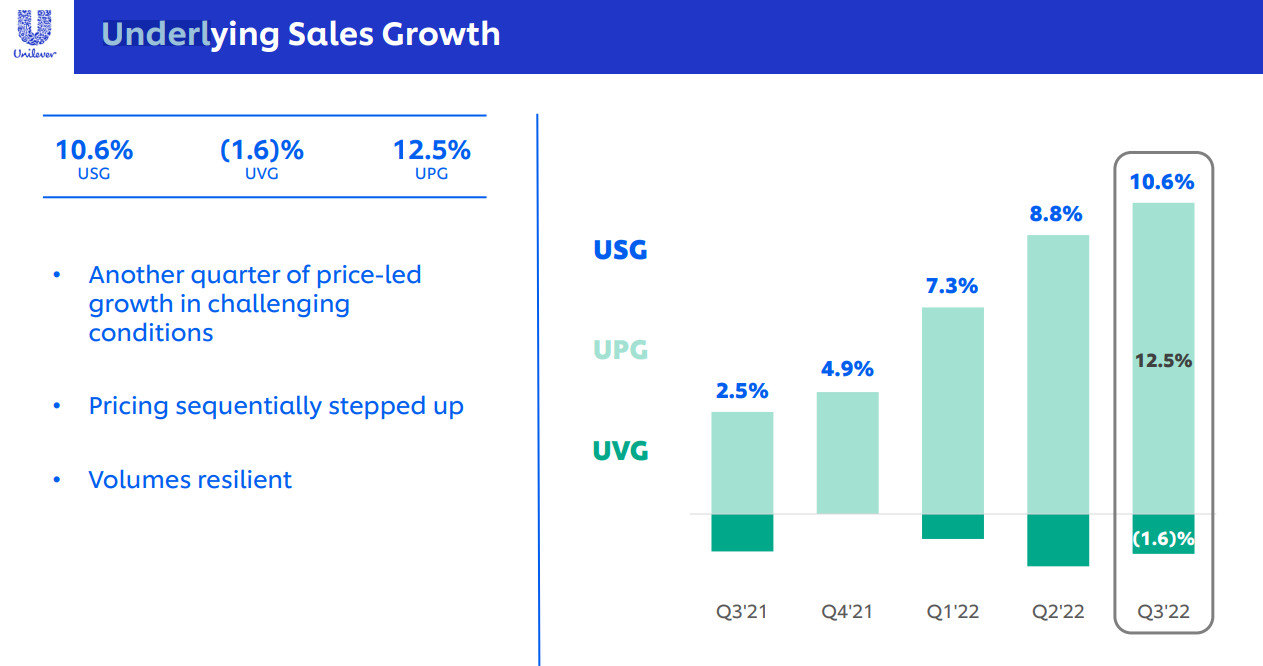
As Fleury adds, one particular comment in the WSJ article was "This is not the earnings season the [Fed] wanted to see" – indeed this slide from Unilever results this week highlights that corporations are pushing through price increases at increasing pace.

Incidentally, Goldman's chief economist Jan Hatzius updated his Fed hike estimates yesterday heading into this week’s FOMC and adds a 25bp hike at the March meeting. Which simply means that he is now aligned with consensus. His note is available to pro subs in the usual place.

Finally, here is Nikileaks appearing on the Sunday morning circuit, with an even more vocal hawkish warning "Even though the risk of doing too much is a recession, the risk of not doing enough is that inflation just stays high and you have to have a bigger downturn later."

Translation: those who think the Fed would not dare crash the market 6 days before the midterms may want to reassess.