When I was a child, I watched syndicated episodes of the original Star Trek. I was dazzled by the space travel, sure, but also the medical technology.
A handheld "tricorder" detected diseases, while an intramuscular injector ("hypospray") could treat them. Sickbay "biobeds" came with real-time health monitors that looked futuristic at the time but seem primitive today.
Such visions inspired a lot of us kids to pursue science. Little did we know the real-life advances many of us would see in our lifetimes.
Artificial intelligence helping to spot disease, robots performing surgery, even video calls between doctor and patient — all these once sounded fantastical but now happen in clinical care.
Now, as we move into the 23rd year of the 21st century, you won’t believe what we’ll be capable of next. Three especially wild examples are moving closer to clinical reality.
Human Hibernation
Captain America, Han Solo, Khan — all were preserved at low temperatures and then revived, waking up alive and well months, decades, or centuries later. These are fictional examples, to be sure, but the science they’re rooted in is real.
Rare cases of accidental hypothermia prove that full recovery is possible even after the heart stops beating. The drop in body temperature slows metabolism and reduces the need for oxygen, stalling brain damage for an hour or more. (In one extreme case, a climber survived after almost nine hours of efforts to revive him.)
Useful for a space traveler? Maybe not. But it’s potentially huge for someone with life-threatening injuries from a car accident or a gunshot wound.
That’s the thinking behind a breakthrough procedure culminating decades of research on pigs and dogs, now in a clinical trial. The idea: A person with massive blood loss whose heart has stopped is injected with an ice-cold fluid, cooling them from the inside, down to about 10°C.
Doctors already induce more modest hypothermia to protect the brain and other organs after cardiac arrest and during surgery on the aortic arch.
However, this experimental procedure — called Emergency Preservation and Resuscitation (EPR) — goes far beyond that, dramatically "decreasing the body’s need for oxygen and blood flow," says Samuel Tisherman, MD, a trauma surgeon at the University of Maryland Medical Center and the trial’s lead researcher. This puts the patient in a state of suspended animation that "could buy time for surgeons to stop the bleeding and save more of these patients."
The technique has been carried out on at least six patients, though none were reported to survive. The trial is expected to include 20 participants by the time it wraps up in December, according to the listing on the US clinical trials database. Though given the strict requirements for candidates (emergency trauma victims who are not likely to survive), one can’t exactly rely on a set schedule.
Still, the technology is promising. Someday we may even use it to keep patients in suspended animation for months or years, experts predict, helping astronauts through decades-long spaceflights, or stalling death in sick patients awaiting a cure.
Artificial Womb
Another sci-fi classic: growing human babies outside the womb. Think the fetus fields from the Matrix, or the frozen embryos in Alien: Covenant.
In 1923, British biologist J.B.S. Haldane coined a term for that – ectogenesis. He predicted that 70% of pregnancies would take place, from fertilization to birth, in artificial wombs by 2074. That many seems unlikely, but the timeline is on track.
Developing an embryo outside the womb is already routine in in vitro fertilization. And technology enables preterm babies to survive through much of the second half of gestation. Normal human pregnancy is 40 weeks, and the youngest preterm baby ever to survive was 21 weeks and 1 day, just a few days younger than a smattering of others who lived.
The biggest obstacle for babies younger than that is lung viability. Mechanical ventilation can damage the lungs and lead to a chronic (sometimes fatal) lung disease known as bronchopulmonary dysplasia. Avoiding this would mean figuring a way to maintain fetal circulation — the intricate system that delivers oxygenated blood from the placenta to the fetus via the umbilical cord. Researchers at Children’s Hospital of Philadelphia (CHOP) have done this using a fetal lamb.
The key to their invention is a substitute placenta: an oxygenator connected to the lamb’s umbilical cord. Tubes inserted through the umbilical vein and arteries carry oxygenated blood from the "placenta" to the fetus, and deoxygenated blood back out. The lamb resides in an artificial, fluid-filled amniotic sac until its lungs and other organs are developed.
Fertility treatment could benefit, too. "An artificial womb may substitute in situations in which a gestational carrier — surrogate — is indicated," says Paula Amato, MD, a professor of obstetrics and gynecology at Oregon Health Sciences University. (Amato is not involved in the CHOP research.) For example: when the mother is missing a uterus or can’t carry a pregnancy safely.
No date is set for clinical trials yet. But according to the research, the main difference between human and lamb may come down to size. A lamb’s umbilical vessels are larger, so feeding in a tube is easier. With today’s advances in miniaturizing surgical methods, that seems like a challenge scientists can overcome.
Messenger RNA Therapeutics
Back to Star Trek. The hypospray injector’s contents could cure just about any disease, even one newly discovered on a strange planet. That’s not unlike messenger RNA (mRNA), the breakthrough technology that enabled scientists to quickly develop some of the first COVID vaccines.
But vaccines are just the beginning of what this technology can do.
A whole field of immunotherapy is emerging that uses mRNA to deliver instructions to produce chimeric antigen receptor-modified immune cells (CAR modified immune cells).
These cells are engineered to target diseased cells and tissues, like cancer cells and harmful fibroblasts (scar tissue) that promote fibrosis in, for example, the heart and lungs.
The field is bursting with rodent research, and clinical trials have started for treating some advanced stage malignancies.
Actual clinical use may be years away, but if all goes well, these medicines could help treat or even cure the core medical problems facing humanity. We’re talking cancer, heart disease, neurodegenerative disease1 – transforming one therapy into another by simply changing the mRNA’s "nucleotide sequence," the blueprint containing instructions telling it what to do, and what disease to attack.2
As this technology matures, we may start to feel as if we’re really on Star Trek, where Bones pulls out the same device to treat just about every disease or injury.
Sources:
Samuel Tisherman, MD, trauma surgeon, University of Maryland Medical Center, Baltimore.
Paula Amato, MD, professor of obstetrics and gynecology, Oregon Health and Science University, Portland.
Memory Alpha: "Tricorder," "Biobed."
StarTrek.com: "Hypospray."
Scientific Reports: "Therapeutic hypothermia after cardiac arrest increases the plasma level of B-type natriuretic peptide."
Annals of Emergency Medicine: "Hypothermic Cardiac Arrest With Full Neurologic Recovery After Approximately Nine Hours of Cardiopulmonary Resuscitation: Management and Possible Complications."
Defense Technical Information Center: "Safety and Feasibility of Emergency Preservation and resuscitation for CardiacArrest from Trauma (EPR CAT)."
ClinicalTrials.gov: "Emergency Preservation and Resuscitation (EPR) for Cardiac Arrest From Trauma (EPR-CAT)."
University of Alabama at Birmingham: "UAB Hospital delivers record-breaking premature baby."
Science: "CAR T cells produced in vivo to treat cardiac injury."
Do you ever wish you had a 24/7 scribe, an overly ambitious medical student, or a clone who could do all your research, writing, and, essentially, paperwork for you? Don't we all? Dishing out scut work feels inhumane…to a human, but not a computer.
In this episode of the Hospitalist Retort, we'll take a closer look at how ChatGPT is being used to reduce physician burnout.
Chatbot technology has the potential to help alleviate some of the causes of burnout by handling routine tasks such as scheduling appointments and answering frequently asked questions. It can also automate patient triage and provide patients with self-help resources. Additionally, chatbot technology can provide physicians with more efficient communication and coordination in between healthcare providers, allowing them to make more informed decisions and improve the overall patient experience.
Fun reveal. The entire paragraph above was written by ChatGPT. I typed in a quick prompt and there it was — full sentences and complete thoughts. I read through it to make sure I agreed with everything, and we were good to go. Are you already brainstorming the many ways we can use this? I am.
A quick overview: ChatGPT is a natural language processing model. ChatGPT stands for Chat Generative Pre-trained Transformer. I am not going to pretend to understand the computer science behind this, but you can research it and nerd out.
I started messing around and trying to find creative ways that I could use this as a pediatric hospitalist. I typed in "Provide instructions for giving albuterol at school." I then typed "Explain how to monitor blood glucose in type 1 diabetics in Spanish." I was amazed at how thorough these instructions were. I then typed in "Write an Instagram post explaining winter sports safety in children," and I swear what I saw looked exactly like a generic post you would see from a children's hospital.
Now, someone may wonder, how is this different from just searching for something on Google? Well, ChatGPT will give you complete sentences and thoughts. The other day, I actually used it to answer a specific patient question. I typed in "How much radiation is in an x-ray compared to flying on an airplane. Include citations," and it typed out this eloquent answer, including a citation from the National Council on Radiation Protection and Measurements, and explained how a 5-hour flight gives you roughly the same radiation dose as one chest x-ray.
I read about someone who used ChatGPT to write a cover letter and almost got hired, but apparently the letter lacked personality. Sounds like an easy fix.
Members of the medical community started to think about ways that we can use this tool to offload some of our writing-based workload. I started to think about all those generic emails and notes I have to write: the clinical summaries, the patient instructions, the background research for presentations and articles, and then there are hospital notes.
We already use note templates. For example, if I pull up a template for bronchiolitis, the outline of it is there, so I just hit F2 and fill in the details.
Sooner or later, we're going to figure out how to use ChatGPT to do the work, where you type in symptoms, location, duration, physical exam findings, you hit enter, and you get a complete note that's accurate and has the necessary lingo for medical coding in much less time.
I even had a colleague recently joke with me about using the program to write an Institutional Review Board proposal, and I bet you could pull that off if you had the right prompts.
It's not that surprising, but this all sounds like a setup for a sci-fi movie in which some nefarious healthcare company uses artificial intelligence to brainwash the masses to put profits over patients. It doesn't sound that farfetched. There are some limitations and ethical concerns about using chatbots in healthcare, with the big question being whether these tools will be used to further academic progress or be abused.
Compared with a physician, chatbots can't take individuality or hidden context clues into account to provide a detailed assessment. It's more black and white. They're only as good as the information that they receive. There's also a concern about excessive patient-directed care if many people start using these tools for symptom management. Computers are more accessible, and some people may feel more comfortable typing their problems out to a computer rather than talking to a person.
In the end, I'm on team "use technology to reduce the amount of paperwork we have to do and fight burnout," and I'm not alone. According to Medscape's Physician Burnout and Depression report in 2022, 60% of respondents cited bureaucratic tasks as a major cause for burnout. Maybe ChatGPT and its successors are the answer.
Do you like where this is all going? Why or why not?
In consideration of your practice and your workflow, you may have some creative ideas for how we can use a 24/7 unpaid employee like ChatGPT. Share those ideas.
Alok S. Patel, MD, is a pediatric hospitalist, television producer, media contributor, and digital health enthusiast. He splits his time between New York City and San Francisco, as he is on faculty at Columbia University/Morgan Stanley Children's Hospital and UCSF Benioff Children's Hospital. He hosts The Hospitalist Retort video blog on Medscape.
Between 2014 and 2019, US tax dollars werefunneledto the Wuhan Institute of Virology via EcoHealth Alliance. Given that US scientists have far more virology expertise than the Chinese, this begs an obvious question: what type of research were US tax dollars paying for in Wuhan, China? Dr. Fauci’s surprisingstatementin an interview might provide the short answer to this question: “You don’t want to go to Hoboken, NJ or Fairfax, VA to be studying the bat-human interface that might lead to an outbreak, so you go to China.”
Given what we’ve endured for the past three years, Fauci’s “so you go to China” comment suggests that he hadn’t considered the global implications of a highly transmissible coronavirus leaking from a Chinese lab plagued by serious safety issues.
Unwilling to admit that he, EcoHealth Alliance, and their Chinese collaborators, are suspects in one of the largest crimes against humanity, Fauci instead opted to conspire with his boss, Francis Collins, to declare “lab leak” a “destructive conspiracy” that must be “put down.” Sadly, it’s clear that from the beginning, these two distinguished scientists made up their minds about virus origin without evidence from both sides of the debate.
Even worse, renowned scientists that rely on Fauci for their research funding, fearful of sanctions being placed on their life’s work, rallied around the “anti-lab leak” stance. One of the premier scientific journals, Science, whose political bias has become very apparent, attempted to provide legitimacy to Fauci’s position by publishing a paper by authors that claimed “dispositive evidence” that SARS-CoV-2 emerged from an animal at the Wuhan market. This paper allegedly “crushed” the lab-leak hypothesis, despite leaving much room for debate.
The good news is that Big Tech, scientific journals, and most media sources were forced to stop censoring countervailing evidence as it reached critical mass and began spilling over into the public domain. Far from being a “conspiracy,” there is a lot of evidence that strongly suggests SARS-CoV-2 is an engineered virus that spread from a Wuhan virology lab. Before getting into the evidence that SARS-CoV-2 was engineered and leaked from a lab, let’s start a debate around the “dispositive evidence” that SARS-CoV-2 is natural and emerged from the Wuhan market.
The “market origin hypothesis” is based on four debatable premises
The entirety of the “dispositive evidence” for market origin cited by Dr. Fauci and others can be summed up as follows: 1) “Early” cases allegedly lived near the market, 2) “early” SARS-CoV-2 lineages were allegedly associated with the market, 3) wild animals susceptible to COVID-19 were sold at the market, and 4) positive SARS-CoV-2 samples were found in the environment around the market and were allegedly “linked to human cases.” For many reasons, some of which are discussed here, none of this evidence is anywhere near “dispositive.” This is why reviewers forced the authors to remove the phrase “dispositive evidence” as a requirement for publication.
Did “early cases” really live near the market?
The Science paper relied on a joint World Health Organization (WHO)-China report to define “early cases” as those that occurred in December 2019. However, the joint WHO-China report also states: “Based on molecular sequence data, the results suggested that the outbreak may have started sometime in the months before the middle of December 2019.”
This statement seems more in line with other evidence that the pandemic started earlier than December 2019. Urgent communications from the highest levels of the Chinese government circulating at the Wuhan Institute of Virology in November 2019 reported a “complex and grave situation” at the lab. Was this “grave situation” the start of a SARS-CoV-2 “lab leak” unfolding in real -time, weeks before the rest of the world was made aware of the imminent pandemic?
There were also multiple reports from Chinese media and even the venerable Lancet that documented initial cases started before December 2019, as well as lab-based evidence of international spread as early as November 2019. Furthermore, shouldn’t we be alarmed that a group led by Chinese military scientists applied for a COVID-19 vaccine patent in February 2020?
If the first COVID-19 cases really were in December 2019, this means that inexperienced Chinese military researchers somehow managed to produce a COVID-19 vaccine based on traditional, less efficient methodology, in a little over a month. For comparison, it took vaccine giant Pfizer about 9 months to produce their vaccine based on more efficient mRNA methodology. Accurately pinpointing the true start date of the pandemic would allow us to assess how meaningful the “early cases” data are. If countervailing evidence is correct and cases that preceded December 2019 were missed or ignored, then a dataset beginning in December would most likely lead to flawed conclusions about pandemic origin.
Were “early virus lineages” really associated with the market?
In perhaps the clearest evidence of a crime scene coverup, Chinese scientists quietly removed from public databases at least 13 genome sequences representing the earliest SARS-CoV-2 strains.There is no legitimate reason for doing that. Fortunately, the files had been backed up before they were removed, allowing Dr. Jesse Bloom to be the first to retrieve them from Google Cloud and analyze them.
This is proof that the Science paper many claimed to have “crushed” the lab leak was unlikely to be fully representative of the viruses spreading at the start of the pandemic. Adding to the intrigue, one of the authors of the Science paper attempted to intimidate Dr. Bloom so he would not publish his findings. If the evidence for a natural origin of SARS-CoV-2 is so “dispositive,” why would anyone feel the need to censor an expert like Dr. Bloom?
Animals susceptible to COVID-19 were sold at the market but none tested positive.
Some of the animals trafficked at the market had been experimentally infected with SARS-CoV-2 in labs or deemed theoretically susceptible based on the presence of compatible receptors. However, the WHO-China Report revealed that none of the 457 samples taken from 188 animals at the market tested positive for SARS-CoV-2. A criticism of these negative results is that the market was “under-sampled.” The SARS-CoV-1 pandemic of 2003-2004 spread around the world causing about 8,000 documented infections, resulting in about 800 deaths. Chinese scientists mobilized immediately and within a few months discovered an identical virus that naturally occurs in palm civet cats that were sold in Chinese markets.
Yet here we are, three years later, thousands of additional animals have been sampled, millions of genomic sequences analyzed, and nothing close to SARS-CoV-2 has yet to be detected in nature. Why is that?
Positive environmental samples found at the market were taken too late to infer virus origin
SARS-CoV-2-positive environmental samples were detected at the market. However, the samples were taken between January and March 2020. By January, the virus had likely been spreading in Wuhan for more than a month, and had already spread internationally, so how much can we deduce from these samples taken from the heavily trafficked market, weeks after the pandemic started? In fact, those responsible for collecting the samples concluded, “Tthe market might have acted as an amplifier due to the high number of visitors every day.”
In other words, infected people most likely entered the crowded market and spread the virus. It’s notable that many of the positive samples came from vendor stalls in which “aquatic products,” seafood, and vegetables were sold. None of these products could be a natural reservoir for SARS-CoV-2. In fact, the WHO-China report concludes that many of the environmental samples reflect “contamination from cases” (i.e., infected people) given how widely distributed the virus was by then.
The following is a review of some of the lab-based and circumstantial evidence supporting “lab leak.” Hopefully, this analysis will lay the foundation for honest, thoughtful discussion, leading to a true understanding of the origin of SARS-CoV-2. If we can’t have honesty, how will we ever minimize the chances of this happening again?
Early strains of SARS-CoV-2 were unnaturally human adapted
The “natural origin” hypothesis contends that SARS-CoV-2 spilled over into humans from an animal in December 2019. A virus that so recently jumped to humans from an animal should not bind to human cells with higher affinity than the animal host it came from. However, at the beginning of the pandemic, Dr. Nikolai Petrovsky’s lab made the startling discovery that the earliest known strains of SARS-CoV-2 were unnaturally human-adapted.
In fact, these strains showed highest affinity for human cell receptors over receptors from bats, pangolins, and about eleven other animals known to harbor coronaviruses. Dr. Petrovsky submitted this important research to a top journal, Nature,in August 2020. In an egregious example of censorship, Nature delayed publishing the paper until June 2021, corresponding to when Dr. Fauci finally admitted that a lab leak could have started the pandemic.
There was financial motivation and established methodology for creating pandemic viruses
A rejected 2018 grant proposal submitted to DARPAthat includes EcoHealth Alliance and Wuhan Institute of Virology (WIV) collaborators gives us enough information to figure out the motivation and methodology that likely created SARS-CoV-2. The primary goal of the grant was to create a “complete inventory” of SARS-like coronaviruses taken from several bat caves in China.
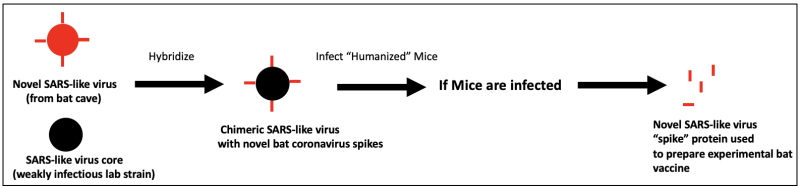
What follows is a streamlined version of the workflow proposed by the researchers: 1) add the spike proteins from these novel bat coronaviruses to a previously characterized SARS-like bat coronavirus core, and insert genetic modifications to spike proteins for enhanced infectivity if necessary, 2) infect “humanized” mice with these lab-made viruses, 3) flag chimeric viruses capable of infecting the mice as potential pandemic strains, and 4) prepare “spike” protein vaccines from these potential pandemic strains and use them to “immunize” bats in caves (Fig. 1).
Fig. 1. Risky research methodology used by EcoHealth Alliance, WIV, and their collaborators to attempt to create bat vaccines. There’s no way of knowing in advance the pandemic potential of unnatural, chimeric SARS-like viruses created in this workflow.
The authors of the DARPA proposal discuss the importance of spike protein cleavage by human enzymes such as furin in the ability of coronaviruses to spread optimally and become pandemic strains. Notably, they proposed to insert “human-specific cleavage sites” (e.g., furin cleavage site, FCS) in spike proteins that lack the functional cleavage sites and then “evaluate growth potential” of the modified viruses in human cells.
They further proposed to modify cleavage sites in highly abundant, low-risk SARS-like viruses taken from Chinese bat caves. These studies are precisely the type of work that could accidentally or intentionally create pandemic viruses. Although the proposal states that chimeric virus work would be done at the University of North Carolina, by Fauci’s own admission, “I can’t guarantee everything that’s going on in the Wuhan lab, we can’t do that.” Furthermore, whenever a proposal this large (i.e., a $14 million request) is submitted, a great deal of the work will have already been done in advance to provide the “proof of concept” needed to sway reviewers.
The unique furin cleavage site in SARS-CoV-2 is evidence of genetic engineering
Many natural coronaviruses contain an FCS, so why is an FCS in SARS-CoV-2 so suspicious? The answer is that the genomes of thousands of coronaviruses from hundreds of different animals have been sequenced, and it’s clear that only distant relatives of SARS-CoV-2 have an FCS (see Fig 1A, Table 1).
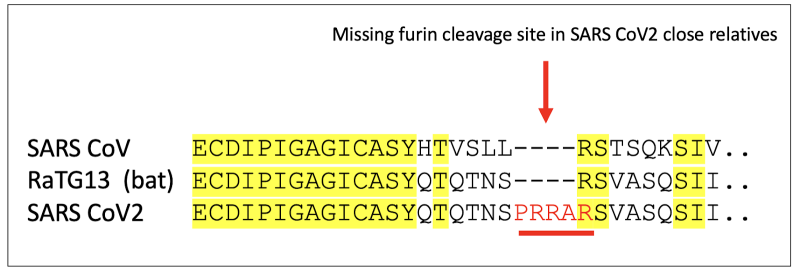
The closest known sibling of SARS-CoV-2, a bat coronavirus named RaTG13, at best weakly infects human cells and lacks an FCS. SARS-CoV is another sibling of SARS-CoV-2, and like all the other known siblings, also lacks an FCS. Without an FCS, SARS-CoV-1 spread around the world in 2003-2004 but fizzled out after infecting about 8,000 people. A comparison of the short stretch of amino acids in the spike protein clearly reveals the missing FCS in these SARS-CoV-2 siblings (Fig. 2).
Fig. 2. Comparison of partial spike protein amino acids showing the FCS of SARS-CoV-2 (i.e., “PRRAR”), and the lack of FCS in two of its siblings. Different letters represent unique amino acids. Identical amino acids in all three viruses are highlighted in yellow; dashed lines indicate the missing FCS.
The unique genetic code of the SARS-CoV-2 furin cleavage site is evidence of genetic engineering
In coronaviruses, the blueprint for assembling proteins such as the surface spikes needed for infection lies in their RNA genome. The specific genomic sequence that encodes the short, all-important FCS within the SARS-CoV-2 spike is: CCU CGG CGG GCA CGU. Each three-letter bit of code (i.e., codon) dictates the specific amino acid to be used in building the FCS. Thus, CCU encodes “P” (for proline), CGG encodes “R” (for arginine), GCA encodes “A” (for alanine), and CGU also encodes “R.”
As you can see, there is redundancy in the genetic code (e.g., there are six different codons that a virus can use to encode arginine). The odd feature of the SARS-CoV-2 FCS is the double CGG codons. In fact, CGG is one of the rarest codons in human coronaviruses,yet there just so happens to be two right next to each other in the FCS, one of the most important sequences in the entire 29,903 “letters” making up the SARS-CoV-2 genome.
In fact, these are the only two CGG codons out of the 3,822 “letters” encoding the SARS-CoV-2 spike protein, and they are the only instance of a CGG-CGG doublet in any of the closest relatives of SARS-CoV-2. Notably, an arginine-rich FCS enhances the ability of coronaviruses to infect cells. At this point, it should not surprise anyone that CGG codons are the preferred code for genetic engineers who wish to produce an arginine-containing protein in human cells. It’s hard to deny that the CGG-CGG in the SARS-CoV-2 FCS is “smoking gun”-level evidence of genetic tampering.
Suspicious cut sites in the SARS-CoV-2 genome are evidence of genetic engineering
One method to create chimeric viruses utilizes specialized genome-cutting enzymes called “Endonucleases.” Endonucleases can be used to cut virus genomes in specific places, then the pieces can be strategically recombined to create chimeric viruses. Cut sites are randomly distributed in the genomes of natural viruses, but they can be precisely inserted or removed by scientists to make chimeric viruses in a laboratory. BsmBI and BsaI are two examples of endonucleases that co-authors of the DARPA grant used in previous work to make chimeric coronaviruses.
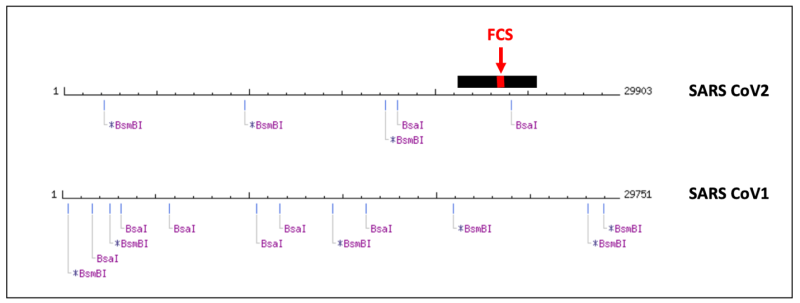
When present, the distribution of BsmBI and BsaI cut sites in viruses isolated from nature (e.g., SARS-CoV-1) are randomly distributed throughout the genome. Meanwhile, the distribution of cut sites in SARS-CoV-2 appear to be non-random and suggest genetic manipulation in a laboratory (Fig. 3). Curiously, a previous study involving EcoHealth Alliance described the insertion of two BsaI cut sites in a bat coronavirus called “WIV1” (i.e., Wuhan Institute of Virology 1), allowing scientists to make changes to the spike protein (see S9 Fig. Spike substitution strategy).
Two BsaI cut sites can be found in the SARS-CoV-2 genome (Fig. 3) in the same location as BsaI cut sites engineered into WIV1 back in 2017. The astronomical odds of this being coincidence cannot be overstated. According to the authors, “BsaI or BsmBI sites were introduced into the [spike]. Then any spike could be substituted into the genome of [lab engineered WIV1] through this strategy.” The same strategy might have been used in the construction of what would become the SARS-CoV-2 genome.
Fig. 3. Distribution of BsmBI and BsaI cut sites in the genomes of the two pandemic SARS viruses. SARS-CoV-1 is a natural virus with cut sites that are randomly distributed, while distribution of cut sites in the SARS-CoV-2 genome appear to be non-random. The black bar represents the location of the spike gene; the FCS region is highlighted in red. BsaI can be used to cut out and replace most of the SARS-CoV-2 spike, including FCS, to alter virus infectivity.
Strong circumstantial evidence supports the lab- leak hypothesis
Three years into the current pandemic, with thousands of animals sampled and millions of genome sequences analyzed, nothing close to SARS-CoV-2 has been found in nature. In stark contrast to 2003-2004, China’s early response to COVID-19 was “disappearing” scientists and journalists, obfuscation, and deflecting blame for starting the pandemic away from themselves onto everything from the US Army to imported frozen fish. This is exactly the type of behavior you might expect from a guilty party.
No one (except maybe the dishonest Chinese government) has ever denied that the epicenter of the COVID-19 pandemic is Wuhan, China. But what are the odds that such an explosive outbreak originated at the Wuhan market? This is just one market out of about 40,000 markets scattered around China, and it happens to be a few miles away from a lab that in 2017 became the first high-security virology lab on the Chinese mainland.
Here, a counterargument is that SARS-CoV-1 was a natural spillover from a market, so there’s precedence. But even the far less transmissible SARS-CoV-1, not long after being brought into the lab for study, eventually “leaked” with fatal consequences.
The origin of SARS-CoV-2 is the most important question of the pandemic, with implications that extend exponentially beyond scoring political points. At the start of the pandemic, even the journal Nature was sounding the alarm about the increasing role China’s military has been playing in secretive biomedical research in China. Yet, three years later all we have is obfuscation from China and Fauci and nothing even close to a natural ancestor of SARS-CoV-2. Throughout the pandemic, people parroted empty phrases like “Follow the science” without really following the science. So, let’s do that, let’s “follow the science” (and the logic), because the genetic and circumstantial evidence for lab leak is impossible for any reasonable person to deny.
Pat Fidopiastis is a Professor of Microbiology at California Polytechnic State University,
Sen.Jon Tester(D-MT), the chairman of the defense appropriations subcommittee, announced on Friday a hearing on theChinese balloonsuspected of spying on nuclear military sites in Montana.
The Pentagon announced the balloon's presence over Tester's home state on Thursday, though President Joe Biden was made aware of the aircraft two days earlier. The Pentagon advised the White House not to shoot down the balloon, reasoning that it does not pose a "military or physical threat to people on the ground," according to U.S. defense officials.
The incursion, which led Secretary of State Antony Blinken to postpone a trip to China, sparked bipartisan outrage.
"I’m demanding answers from the Biden Administration. I will be pulling people before my committee to get real answers on how this happened, and how we can prevent it from ever happening again," Tester said in a Friday statement.
The discovery of the balloon exacerbates already tense relations between the United States and China. In the first weeks of the new Congress, the House prioritized bills targeting the Chinese Communist Party and stood up a select committee to counter its growing influence.
Minnesota lawmakersare considering a bill that would establish the state as a "trans refuge" for children who are seeking transgender medical procedures but who may be blocked by laws in other states.
The legislation, HF146, was introduced by Rep. Leigh Finke of the Democratic-Farmer-Labor Party.
HF146 "would make Minnesota into a trans refuge state by protecting trans people, their families and medical practitioners from the legal repercussions of traveling to Minnesota to receive gender-affirming care," Finke said.
"This need is desperate in my community. This is not a hypothetical scenario," Finke said of the bill. "There are gender-diverse people in Minnesota right now receiving gender-affirming care. More are fleeing their home states asking where they should turn."
HF146 would prevent law enforcement from removing a child from parental custody in accordance with an order from outside Minnesota.
This clause is meant to ensure children undergoing gender transition procedures allowed under Minnesota law cannot be governed by child protection laws of other states.
It is not yet clear when the bill will go to debate in the Minnesota legislature.
Roughly110,000 Americansdied from a drug overdose between February 2021 and February 2022. That figure is part of a larger troubling trend. Overalllife expectancy in the U.S. fell in 2020 and again in 2021, after decades of progress—and deaths linked to alcohol, drugs, and suicide are a major part of that change. (So are deaths from COVID, of course.) Overdoses, suicides and other “deaths of despair”—a label proposed by economists Anne Case and Angus Deaton—have been climbing since the 1990s and may have accelerated in recent years.
What exactly is driving this phenomenon, and what can be done to address it? To answer these urgent questions, many scholars are focusing on economic stress and psychological states such as depression and hopelessness. That approach makes sense: by definition, despair involves the absence of hope. Losing a job, recovering from an accident or illness, and experiencing divorce or financial difficulties may trigger desperation. People may use drugs and alcohol to ease these uncomfortable mental states.
But there is another important factor that studies of despair sometimes miss. Scientific evidence shows that one common denominator in this cycle of stress, anxiety, depression and substance abuse is physical pain. As a behavioral scientist, I study how socioeconomic, psychosocial and behavioral elements may contribute to pain. The findings from my work and others in this field suggest that tracking a community’s physical aches and agonies is important.
The relationship between despair and pain is multifaceted. As most people know from personal experience, physical pain increases psychological distress and anxiety. Several studies have found that people with severe pain—as opposed to those with low or moderate pain—are more likely to worry about their affliction and its possible consequences. And pain may lead to poor sleep quality, which in turn increases the risk of anxiety and depression.
The reverse relationship is also possible: psychological distress can cause physical pain. For instance, job strain, anxiety caused by social discrimination, stressful family relationships and adverse experiences in early adulthood can exacerbate physical pain. Neuroscientists have even discovered a mechanism that could explain these findings. When someone is in a negative mood, researchers have found, the brain areas that play a role in physical pain also engage.
Lastly, physical pain is important when we consider the harmful behaviors involved in deaths of despair. For example, some people use drugs and alcohol to manage their pain. One 2020 study found that drug misuse was more strongly linked to physical pain than to poor mental health. For that matter, feeling severe or chronic pain can lead to self-harm or suicide.
The opioid epidemic may be the most prominent example of how physical pain and despair interact. The misuse of painkillers, especially opioids, generates changes in the brain that trigger higher pain sensitivity, as well as greater tolerance of and addiction to these drugs. As a result, people are more likely to overdose on these medications. At the same time, excessive use of drugs and consumption of alcohol can trigger physical pain that in turn reinforces the negative behavioral cycle of pain.
Taken together, research makes it clear that pain and despair are powerfully linked. Tracking pain can help doctors treat patients but can also help societies track well-being. Unfortunately, a central tool for this kind of research is falling out of favor. Many American physicians are challenging the use of self-reported pain assessments because these questionnaires sometimes prompt doctors to prescribe opioids. In fact, in 2016 the U.S. Centers for Medicare & Medicaid Services decided to remove some questions about pain medications from a national hospital survey for that reason. But losing these pain data also means losing crucial insights into people’s needs, mental states and behaviors.
In addition, my research shows that understanding physical pain at a larger scale may be an essential step to confront rising deaths of despair. For example, using more than a decade of data from 146 countries, my colleague Andrew Oswald and I published a study in 2021 that showed that reports of physical pain were greater when the unemployment rate was high. We argue that recessions can create financial stress that in turn leads to greater physical pain. This idea has important implications. If deaths from despair in the U.S. map onto financial insecurity, policy makers need to think critically about how to help families cope with difficult economic times.
The U.S. is not the only country that stands to gain from such policies. Late last year I published an analysis using global data that found that physical pain has increased substantially in recent years. In 2009 one in four people around the world reported physical pain. Today one in three are in pain. Much like despair in the U.S., inequality adds a striking dimension to these data. My study found that the increase in physical discomfort is greatest among women, young people and individuals with less income or education. In response to these patterns, it is imperative that societies record and monitor pain data. Only then can we understand how to address these urgent trends.
Lucía Macchia is a behavioral scientist at City, University of London. She studies the socioeconomic, psychosocial and behavioral determinants of physical pain. She has also written about pain for the Harvard Business Review.