Search This Blog

Wednesday, February 22, 2023

Cereal, pasta, and other food companies blast the FDA for a too-strict definition of ‘healthy’

 General Mills, Kellogg’s, and the rest of the country’s cereal makers are mad at the FDA. So are the packaged food companies, the pasta industry, and the pickle lobby (yes, it exists).

The companies behind America’s favorite culinary indulgences are worried their products wouldn’t be considered “healthy” under a recent Food and Drug Administration proposal — and they’re urging regulators to reconsider.

SNAC International, which represents companies like chip makers Frito-Lay and Utz, say the FDA’s restrictions around added sugars and salt are too restrictive.

Barilla and De Cecco and the other brands represented by the National Pasta Association, meanwhile, argue that noodles are healthy because pasta eaters often have higher-quality diets, and eat more vegetables. (It funded the peer-reviewed study that backs up that claim.)

Pickle Packers International says pickles won’t be considered healthy under the FDA’s rules because they’re too salty – even though “pickles have a role to play in a healthy diet because they are predominantly comprised of vegetables and serve as a delicious condiment to other nutrient-dense foods.”

Even the maker of the frozen-aisle favorite, Healthy Choice, says it couldn’t follow the FDA’s new guidelines “without alienating consumers.”

“If the food does not taste good, people will not buy it, and Healthy Choice® — and the health benefits it has conferred for over 30 years — may disappear from the market,” wrote Conagra, the food giant behind the brand.

The FDA put out the guidelines at issue back in September, arguing that to be marketed as “healthy,” foods would have to include a certain amount of key nutritious ingredients, like fruits and vegetables, and have little added sugar, sodium, and saturated fat. The agency’s proposal would not ban unhealthy foods; those that don’t meet the FDA’s standard simply couldn’t be labeled as healthy.

The backlash could have a real impact on the FDA’s push to update food labels.

The Consumer Brands Association, which represents packaged food corporations like Hostess, Mondelēz, General Mills, and both Pepsi and Coca-Cola, is so upset by the FDA’s proposal that it is implying it may sue. In a lengthy, 54-page comment, the group says that the regulation infringes on food companies’ First Amendment rights.

“Manufacturers have the right to label foods that are objectively ‘healthy’ as such, based on a definition of ‘healthy’ that is truthful, factual, and non-controversial,” the group wrote. “We are concerned that limiting the truthful and non-misleading use of the word ‘healthy’ in product labeling could harm both the consumer and the manufacturer.”

It’s unclear whether the Consumer Brands Association or its members will actually bring a lawsuit if the regulation is finalized. A spokeswoman for the group told STAT that its comments were not meant to imply the group would sue but to raise “concerns that the FDA’s proposal is riddled legal vulnerabilities.”

The Consumer Brands Association has pitched its own alternative framework that would make it easier for foods to qualify as healthy. Foods high in nutrients like fiber and potassium, for example, could qualify under CBA’s proposal, even if they don’t include a meaningful amount of healthy foods, like fruits and vegetables.

The swift backlash from the food industry is a clear exemplification of the challenges the FDA has faced trying to more closely regulate nutrition in the United States. It took the FDA nearly six years to come up with its proposed “healthy” guidelines. All the while, other nations have set much more stringent restrictions on unhealthy foods. Countries like Mexico, Chile, and Israel, for example, require food makers to include large warnings on the front of their packages when they contain excess sodium, fat, or sugar. (The FDA announced in January that it was studying how to implement a similar warning, more than a decade after Congress directed the federal government to consider the idea.)

“It’s baffling to see the amount of pushback,” said Eva Greenthal, a senior policy scientist at the Center for Science in the Public Interest. “The FDA has its work cut out for [it], but the agency just has to focus on its mission to protect public health and resist pressure from industry, whose only mission is to profit even at the cost of our health.”

Federal regulators did set a high bar for a food to be labeled healthy. A frozen Salmon meal with green beans and rice can’t have more than 2.5 grams per serving of added sugar, more than 690 milligrams of sodium, and more than 4 grams of saturated fat to be considered healthy, according to FDA’s website. (Healthy Choice’s Barbecue Seasoned Steak Dinner has 16 grams of added sugar, though it meets the FDA’s criteria for both sodium and saturated fat.)

Even backers of more stringent nutrition policies acknowledge that most foods Americans eat won’t be able to bear the label.

“Hardly anything would qualify, so of course food manufacturers don’t like the idea,” said Marion Nestle, an emeritus professor of nutrition and public health at New York University, who added the FDA’s regulation “automatically excludes the vast majority of heavily processed foods in supermarkets, as well as a lot of plant-based meat, eggs, and dairy products,” from bearing the healthy claim.

But the FDA’s proposal got overwhelmingly positive remarks from nutrition experts, who say it is a significant advance from the FDA’s previous rules governing healthy foods, which were finalized in the 1990s. The proposal was supported by the American Society for Nutrition, the Association of State Public Health Nutritionists, and the Robert Wood Johnson Foundation. In fact, many of those groups are asking the FDA to go further, noting that some of the FDA’s rules could be gamed to allow unhealthy foods to still bear the healthy label.

The FDA’s added-sugar requirement is probably the most controversial among food makers.

The National Confectioners Association, which represents Hershey’s, Haribo, and Tootsie Roll, told the agency to loosen the sugar proposal, and instead to “meet people where they are.” (The group’s spokesman insists it does not have a problem with the FDA’s proposal overall.)

Under the proposal, grains and dairy products can only have 2.5 grams of added sugar per serving. Other products, like fruits, vegetables, meats, nuts, and eggs can’t have any added sugar at all. That requirement would prevent a number of foods Americans have come to know as healthy, like Raisin Bran cereal, from bearing the healthy label.

Kind, the granola bar company, which first petitioned the FDA in 2015 to revise its definition of healthy, is raising concerns with the agency’s approach toward sugar, too. While the FDA granted Kind’s main request — ensuring nuts wouldn’t count against the amount of saturated fat allowed in a healthy food — the company also has problems with the agency’s strict added sugar rules.

Yogurt maker Chobani raised similar concerns, noting that “reducing sugars to the level proposed by FDA for the ‘healthy’ claim would result in significant, deleterious effects to product quality, taste, and texture.”

Some of the backlash is to be expected: The FDA’s previous rules around healthy labeling placed similar limits on saturated fats and salts, but did not include any limits on allowable added sugar.

The Consumer Brands Association even argues that the FDA may not have the legal authority to set such a strict limit on added sugar “given the lack of scientific consensus on the relationship between sugar intake and diet-related disease.” (The group does not provide substantiation for that claim.)

The American Heart Association, by contrast, applauded the sugar limits, noting, “Added sugars are a significant source of excess calories and are associated with greater overall calorie intake and higher body weight [and are] also linked to several metabolic abnormalities, a shortfall of essential nutrients, and increased risk of high blood pressure, high cholesterol, diabetes, and inflammation in the body.”

STAT’s coverage of the commercial determinants of health is supported by a grant from Bloomberg Philanthropies. Our financial supporters are not involved in any decisions about our journalism.

https://www.statnews.com/2023/02/21/cereal-pasta-fda-healthy/

Battle Over the ‘Orphan Drug’ Program Leaves Patients’ Pocketbooks at Risk

 A prescription drug that helps Lore Wilkinson walk and talk despite a rare muscle disease cost her so little for more than a decade that she didn’t even use her insurance to pay for it. But now, her Medicare insurance is shelling out about $40,000 for a one-month supply of the drug, and she fears she’ll be slammed with a $9,000 copayment.

“Who can afford that?” said the 91-year-old, who lives in Rochester, Minnesota. (Her first name is pronounced LOR-ee.)

Wilkinson, like millions of other people with rare diseases nationwide, is caught up in an ongoing legal and political debate about how the U.S. supports pharmaceutical companies and their research. The FDA made its latest move in the tug of war in late January by saying it would largely ignore a U.S. court ruling involving Firdapse, the drug Wilkinson needs.

Firdapse was approved in 2018 by the FDA as an “orphan drug,” a designation that rewards drug companies for developing treatments for rare diseases. When a drugmaker wins approval for an orphan drug, the company is entitled to seven years of exclusive rights to the marketplace, which means the FDA won’t approve another company’s application for a competitive drug for the same use during that period.

But after the 11th U.S. Circuit Court of Appeals denied a motion in early 2022, the FDA stopped reviewing applications for certain drugs or handing out exclusivity, agency spokesperson April Grant said. The delay left drugmakers in limbo.

Often, drugs granted exclusivity are among the highest priced in the U.S. market. For example, Zolgensma, a one-time treatment for spinal muscular atrophy, carries a $2.25 million price tag. Mary Carmichael, a spokesperson for its manufacturer, Novartis, said Zolgensma has treated more than 3,000 patients globally and nearly all U.S. patients taking the drug as approved by the FDA are covered by commercial or government insurance.

The company also continues to invest in research and development as well as clinical studies for the drug to reach more patients, Carmichael said. Most drugs enter the U.S. market armed with a variety of patents and intellectual property protections that stave off competition and allow drugmakers to set prices as they see fit. For drugs that treat rare diseases, the seven years of market exclusivity is part of that armor.

A year’s supply of Catalyst Pharmaceuticals’ Firdapse, which Wilkinson takes to treat her Lambert-Eaton myasthenic syndrome, or LEMS, sells for about $375,000 after discounts, said Catalyst spokesperson David Schull. He said the company has financial assistance programs and donates to charitable foundations to help those in need. The goal, Schull said, “is that no LEMS patient is ever denied access to medication for financial reasons.”

Catalyst was granted exclusive market rights for Firdapse in 2018, which meant that Wilkinson and other LEMS patients could no longer get a similar drug from another company free of charge.

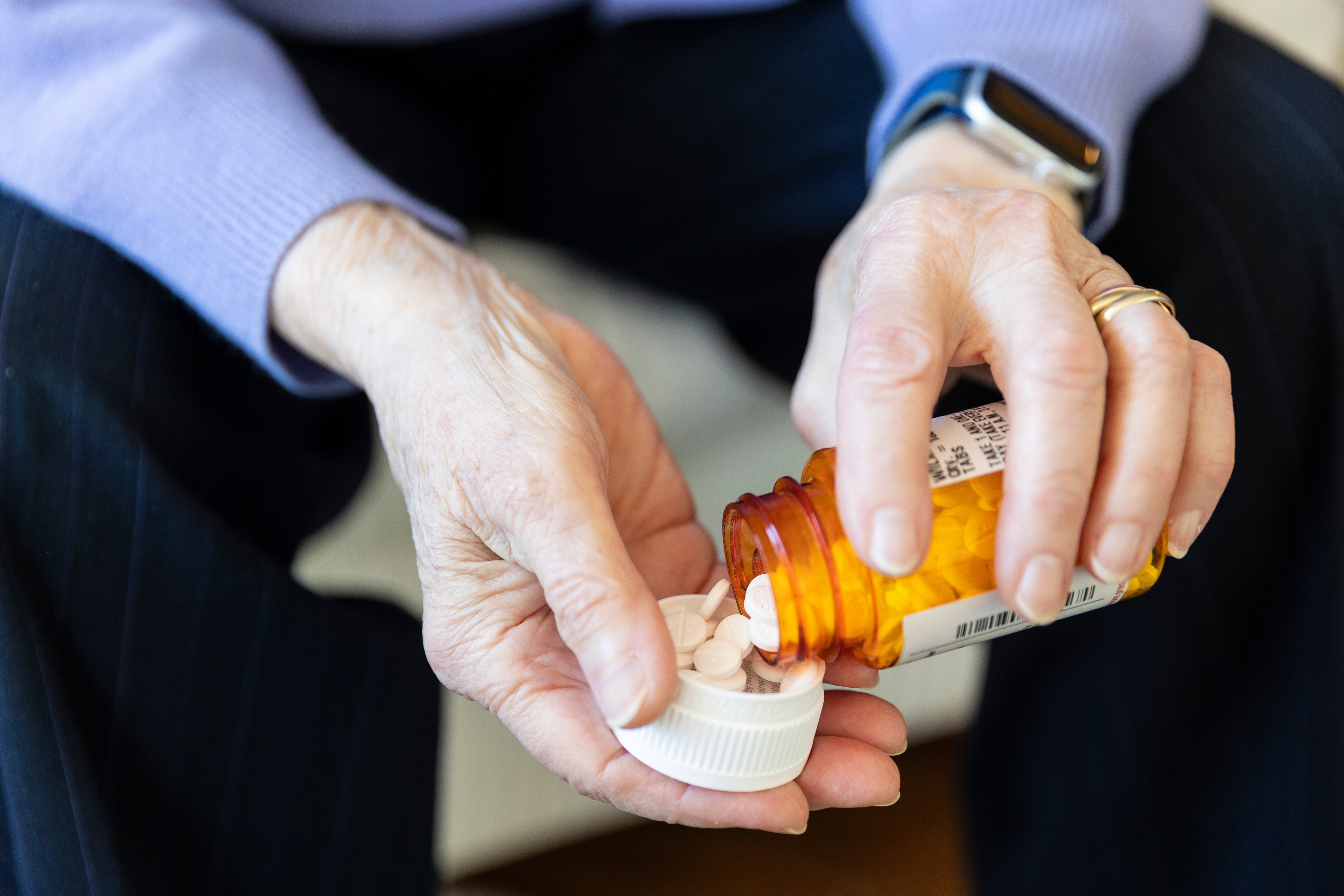
A photo shows Lore Wilkinson opening a bottle of Firdarpse, her medicine.
Firdapse is the drug Wilkinson uses to treat her muscle disease.(LIAM JAMES DOYLE FOR KHN)

In 2019, amid a patient uproar about the cost, which Sen. Bernie Sanders weighed in on, the FDA granted another company, Jacobus Pharmaceutical, the right to market a competitive product for a subset of pediatric patients.

Then Catalyst filed suit against the federal government, contending it had rights to be the exclusive provider for all LEMS patients, regardless of age. The case, Catalyst Pharmaceuticals Inc. v. Becerra, had potentially “far-reaching implications,” wrote Grant, the FDA spokesperson, in an email to KHN. The court’s decision also “raised several novel questions,” she said.

The 11th Circuit sided with Catalyst in September 2021. But the FDA’s recent move to effectively disregard the court’s decision is “in the best interest of public health, rare disease patients and rare disease product development,” Grant wrote.

Still, the multiyear saga highlights lingering questions about orphan drug exclusivity and how the FDA’s policies may influence drug prices. At issue is the Orphan Drug Act, a 1980s-era law that incentivizes drug companies to research and develop rare-disease drugs. And it’s not the first time the orphan drug program has raised concerns.

For decades, the FDA has overseen a two-step process: A drug is first granted an orphan designation because it shows promise to treat a rare disease or condition. Then, once the pharmaceutical company studies and develops the rare-disease drug, the FDA approves its use and awards seven-year market exclusivity, preventing competition.

That final step, granting exclusivity, was in the spotlight in Catalyst’s lawsuit against the FDA. Since the Orphan Drug Act was created, the FDA’s staff routinely handed out exclusivity to companies for orphan drugs that treat a subset of patients, such as pediatrics. The goal was to make sure pharmaceutical companies didn’t get total market control for a drug after doing studies on only the “smallest, easiest-to-study populations,” the agency wrote on its website.

The Catalyst court decision could hurt children, agency officials wrote.

George O’Brien, a partner at Mayer Brown who represents companies regarding the FDA and regulatory practices, said he agreed with the FDA’s decision and its long-term strategy of parceling out exclusivity because a drug’s sales “should be limited to what you studied and got approved.”

“Most people think the way the FDA has done it for years is a very sensible way to do it,” O’Brien said. “Good for patients, good for pharma, and good for the FDA.”

The FDA said that it will comply with the court’s decision regarding Catalyst but that it doesn’t apply to other companies or drugs. In response to the FDA’s January announcement, Catalyst said it would not be affected. In July 2022, Catalyst bought the rights to Ruzurgi, the Jacobus drug.

Now, there is no competitive drug on the market that treats Wilkinson’s disease.

Jacobus had provided Wilkinson with the active ingredient of its drug free of charge from 2004 to 2018: “The only thing I paid was shipping.”

A photo shows Lore Wilkinson walking on a treadmill.
Lore Wilkinson, who has Lambert-Eaton myasthenic syndrome, depends on an “orphan drug” to stay mobile. Without it, “I would be in a wheelchair” she says.(LIAM JAMES DOYLE FOR KHN)

The FDA’s move to largely rebuke the Catalyst case will likely mean another company will sue the agency again, O’Brien said: “They are in a really tough spot.”

“My worry is there is just another lawsuit coming. And its uncertainty. Uncertainty is ultimately bad for patients,” O’Brien said.

Drugmakers have taken the FDA to court before over how the agency administers the Orphan Drug Act. In 2014, Depomed won a suit against the agency demanding an exclusivity label on its drug Gralise, which treated nerve pain.

The FDA had given Gralise an orphan designation and approval but declined to give it exclusivity because it said it was not clinically superior to another drug already on the market. Then-federal district court judge Kentaji Brown Jackson, who was appointed to the U.S. Supreme Court last year, required the FDA to grant exclusivity, blocking a generic.

That case was focused on the clinical superiority of a drug, rather than the scope of exclusivity. After the Gralise decision, the FDA eventually persuaded Congress to amend the law, which may be needed now, O’Brien said. Rachel Sher, a former director of policy at the National Organization for Rare Disorders who is now at Manatt, Phelps, & Phillips, said companies that would benefit from a broader award of exclusivity will sue to force the agency for the same reading of the Orphan Drug Act.

“Congress will need to act at some point,” said Sher, who also spent a decade on Capitol Hill as the FDA counsel for the House Energy and Commerce Committee.

Congress almost passed an amendment last year when it reauthorized the user fees that help fund the FDA. Then-Sen. Richard Burr (R-N.C.) argued to take the committee-added amendment out of the package, saying drugmakers would otherwise lack the incentives needed to develop drugs for rare diseases, according to Bloomberg Law.

Wilkinson, the patient advocate, has her own advice for Congress. The Orphan Drug Act itself — not just the exclusivity provision — needs to be fixed, she said.

“They have to change the law,” she said. Pharmaceutical companies should only win orphan drug status and be given exclusivity when they develop “a really new medication, not just by changing one molecule.”

Until then, Wilkinson said, she and others are still waiting: “I’m an old lady, and I don’t know if it is going to get fixed.”

https://khn.org/news/article/a-bitter-battle-over-the-orphan-drug-program-leaves-patients-pocketbooks-at-risk/

Internal review found ‘falsified data’ in Stanford President’s Alzheimer’s research, colleagues allege

 In 2009, Marc Tessier-Lavigne, then a top executive at the biotechnology company Genentech, was the primary author of a scientific paper published in the prestigious journal Nature that claimed to have found the potential cause for brain degeneration in Alzheimer’s patients. “Because of this research,” read Genentech’s annual letter to shareholders, “we are working to develop both antibodies and small molecules that may attack Alzheimer’s from a novel entry point and help the millions of people who currently suffer from this devastating disease.”

But after several unsuccessful attempts to reproduce the research, the paper became the subject of an internal review by Genentech’s Research Review Committee (RRC), according to four high-level Genentech employees at the time; two were senior scientists and two were scientists who also served as executives. Three spoke on the condition of anonymity because of the sensitivity of the allegations and non-disclosure agreements. The scientists, one of whom was an executive who sat on the review committee and all of whom were informed of the review’s findings at the time due to their stature at the company, said that the inquiry discovered falsification of data in the research, and that Tessier-Lavigne kept the finding from becoming public.

Tessier-Lavigne denies both allegations. Genentech said in a statement that “as part of our diligence related to these allegations, we reviewed the records from that November 2011 RRC meeting and saw no allegations of fraud or wrongdoing.” The company acknowledged that “given that these events happened many years ago … our current records may not be complete.”

After the review, which began in 2011, Genentech canceled research based on the paper’s findings. Till Maurer, a senior scientist at the company from 2009-2018 who said he was assigned to develop drugs based on the 2009 paper, told The Daily that his superior informed him that, in Maurer’s words, “the project is being canceled and it’s because they found falsified data.”

Tessier-Lavigne, who became Stanford’s president in 2016, has been under investigation by the Stanford Board of Trustees since late November, after The Daily revealed concerns that several other papers he had co-authored contained altered imagery. But these latest allegations, about a different paper, are more serious because they involve what was once considered a promising treatment target for Alzheimer’s disease — and because people involved in the review allege that Tessier-Lavigne tried to keep its findings hidden.

Tessier-Lavigne declined multiple requests for interviews over email as well as in person. Stephen Neal, chairman emeritus of Cooley, a prominent law firm representing the president, responded in writing to questions sent to Tessier-Lavigne.

“Dr. Tessier-Lavigne is not aware of any internal investigation of the Paper,” wrote Neal. “Given that there was no investigation of the Paper, Dr. Tessier-Lavigne categorically disputes any allegation by unnamed scientists that he ‘covered up’ any findings regarding such investigation or was opposed to allowing such (non-existent) findings to become public.”

Genentech, in a written statement to The Daily, confirmed that an internal review took place in 2011, a fact that was not previously public. The company characterized the review as “routine.” When asked whether this was accurate, the scientist whom The Daily confirmed belonged to the research review committee said, “no no no no no no.”

“There have not been any formal investigations, allegations, claims or complaints regarding scientific fraud or misrepresentation involving the Nature 2009 paper,” wrote Susan Willson, a Genentech spokesperson. “The project received a regular review by Genentech’s Research Review Committee (RRC), as is routinely done for Genentech’s drug discovery projects.”

She wrote that “neither the RRC meeting nor the decision to conduct follow-up experiments was due to any concern about fraud in the Nature 2009 paper.” Willson would not answer multiple questions about whether any issues were ever discovered in the paper.

The research review committee authorized subsequent experiments to further analyze the paper’s conclusions, Willson wrote, and “based on the results of the genetic experiments at Genentech, the RRC terminated the Genentech research project in 2012.” She would not answer repeated questions about whether there were ever attempts to replicate the experiments in the 2009 paper and if the research was found to be reproducible.

Matthew Schrag, an Alzheimer’s expert with no relation to Genentech or Tessier-Lavigne who reviewed the scientific literature surrounding the paper at the request of The Daily, concluded that parts of the paper implicating a specific pathway in Alzheimer’s “were found in later studies to be inaccurate.” Schrag, who did not have knowledge of the internal review and based his analysis on published information, made clear that “this is not, by itself, evidence of misconduct.”

According to the four senior scientists, including the scientist who served as a member of the research review committee, the committee found that the fundamental science underpinning the 2009 study’s conclusion was fabricated. In the face of a finding of fabrication, retraction of the paper would have been the expected outcome, according to Nature’s policies. The Committee of Publication Ethics, a nonprofit that supports journal editors around the world, recommends retraction in the case of “clear evidence that the findings are unreliable, either as a result of major error (eg, miscalculation or experimental error), or as a result of fabrication (eg, of data) or falsification (eg, image manipulation).” But Tessier-Lavigne “was unwilling to clean up the mess,” said the scientist and former Genentech executive who participated in a series of 2011 meetings about the paper.

Neal, Tessier-Lavigne’s lawyer, asserted the conclusions of the 2009 paper that did not hold up, revolving around caspase 3 and caspase 6, beta secretase, N-APP binding to DR6 and DR6 playing a role in Alzheimer’s disease, were the result of “the normal march of science.” He continued, “no one involved in the experiments described in the Paper forged gels, falsified assays or fabricated experiments.” He did not answer a question about whether any concerns had been raised over the paper or if he believed there were any “issues with the paper.”

A “miracle result” that didn’t pan out

Each of the four senior Genentech scientists was contacted individually by The Daily and was unaware of the others’ accounts. Their independent accounts, given over several hours of interviews, were highly consistent with each other, and also consistent with publicly available information about the research.

Two days after the 2009 paper came out, Genentech’s letter to shareholders called it “groundbreaking basic research about an entirely new way of looking at the cause of Alzheimer’s disease.” At the time, Paul Greengard, a Nobel Laureate, called it “a very exciting paper,” saying “it’s going to have a major impact on the Alzheimer’s field.” And the news wing of Nature published an article entitled “Alzheimer’s theory makes a splash.”

People within the company were similarly excited, at first. One of the senior scientists recalled that Tessier-Lavigne’s initial presentation of the research left the room stunned. “This came out of nowhere,” said the scientist. Another senior executive in the room said, “We all thought: holy shit. This is Nobel Prize stuff…It was the miracle result.”

https://stanforddaily.com/2023/02/17/internal-review-found-falsified-data-in-stanford-presidents-alzheimers-research-colleagues-allege/

Regeneron is off to CHAPLE as FDA starts pozelimab review

 Patients with the ultra-rare rare disease CHAPLE could have a first approved treatment in the summer, now that the FDA has started its review of Regeneron’s dug candidate pozelimab.

CHAPLE – complement hyperactivation, angiopathic thrombosis, and protein-losing enteropathy (to give it its full name) – is an inherited immune disease that causes the complement system to become overactive, leading to abdominal and cardiovascular symptoms.

There are fewer than 100 patients worldwide with the disorder, which can cause severe blood clotting that can be fatal. People with CHAPLE disease lack CD55 protein, and with it the ability to control complement activity.

Pozelimab is a complement C5 inhibitor, in the same class as AstraZeneca/Alexion’s Soliris (eculizumab), which has been used off-label to treat CHAPLE patients and has shown promising results in clinical trials.

Regeneron’s drug is on track to become the first licensed drug for the disease, however, based on the results of a phase 2/3 open-label trial that investigated the efficacy and safety of pozelimab in 10 patients aged one year or older.

At 24 weeks, the co-primary endpoints were achieved, with all 10 patients seeing levels of serum albumin – a disease biomarker – return to normal, along with improvement or no worsening of clinical symptoms.

The drug has the advantage of once weekly administration by subcutaneous injection that can be given at home, after an intravenous loading dose, whereas Soliris is administered intravenously every two weeks, so needs regular clinic visits.

Complement C5 inhibitors are known to pose a risk of life-threatening meningococcal infections, so Regeneron is recommending that patients due to start treatment with pozelimab be vaccinated at least two weeks beforehand.

The FDA is due to make a decision on pozelimab by 20th August, according to Regeneron, which is in line to receive a valuable priority review voucher – which are typically worth around $100 million – if the verdict from the regulator is positive.

While CHAPLE will be a tiny market for Regeneron, the company is also developing the drug for more prevalent diseases, including paroxysmal nocturnal haemoglobinuria (PNH) and myasthenia gravis (MG), where Soliris and AZ’s follow-up Ultomiris (ravulizumab) are already generating blockbuster sales.

Pozelimab is also being tested in phase 3 trials in combination with Alnylam’s small, interfering RNA (siRNA) based complement C5 inhibitor cemdisiran as a combination therapy for PNH and MG under a $1 billion alliance agreed in 2019.

https://pharmaphorum.com/news/regeneron-chaple-fda-starts-pozelimab-review

Amazon completes One Medical takeover after FTC nod, discounts membership

 Amazon.com Inc said on Wednesday it had completed its $3.5 billion takeover of primary care provider One Medical, a day after a U.S. Federal Trade Commission (FTC) official announced that the agency would not challenge the deal.

The acquisition, announced last July, gives the online retailer a virtual health offering as well as offices for in-person medical services for the first time.

It reflects Amazon's long-held ambition to greatly simplify how consumers navigate healthcare in the United States, a lofty goal it has yet to realize even as the company has rolled out a virtual pharmacy and other programs.

In a statement, Amazon's Chief Executive Andy Jassy said the deal would help the company improve, speed up and personalize care for patients. "If you fast forward 10 years from now, people are not going to believe how primary care was administered," he said.

The company also announced it would discount One Medical membership to $144 from $199 for the first year to new customers, irrespective of whether they are subscribers to Amazon's Prime loyalty program. Membership covers access to One Medical's virtual care services, referral and insurance navigation, Amazon said.

The FTC official on Tuesday said the agency would watch for any possible harm to competition caused by the tie-up, along with how consumer data is used. Antitrust agencies can file complaints to undo a merger after it is complete.

The FTC is also probing Amazon's plan to buy iRobot Corp , maker of the autonomous Roomba vacuum, for $1.7 billion.

Amazon said it had no layoff plans for One Medical after closing the deal. Amir Dan Rubin, One Medical's chief executive, will remain with the company and report to Neil Lindsay, senior vice president of Amazon Health Services, the retailer said.

One Medical had 836,000 members at last year's end and 2022 net revenue of $1 billion. It had a physical presence in 27 markets across the United States, from San Diego to Cape Cod, it said in its annual report.

https://www.yahoo.com/now/1-amazon-completes-one-medical-143520089.html

As AI in Hiring Becomes More Widespread, New Regulations Target Discriminatory Practices

 New York City employers who use Artificial Intelligence (AI) tools in hiring will soon be subject to new regulations. Starting April 15, Local Law 144 will go into effect, and employers will be required to notify candidates when they are using AI in hiring.

Local Law 144 is the first piece of U.S. legislation regarding the use of AI in hiring. The NYC Department of Consumer and Worker Protection originally set an enforcement date of Jan. 1, but due to what it called a “substantial volume of thoughtful comments,” the date was pushed back, and the agency stated it will finalize the rule in the coming months. 

As it’s currently written, the law would require employers to: 

  • Conduct a bias audit on an automated employment decision tool prior to its use
  • Notify candidates and employees that the tool is in use
  • Outline to candidates the job qualifications and characteristics that the AI will use

If employers do not comply or violate any of the provisions, they will be subject to a civil penalty. 

NYC isn’t the only government body to address this issue. In January, The U.S. Equal Employment Opportunity Commission (EEOC) posted a draft of a Strategic Enforcement Plan focused on reducing bias in AI hiring technologies.

And in October, the White House released a white paper titled “Blueprint for an AI Bill of Rights: Making Automated Systems Work for the American People.”

New Tools, New Rules 

One of the chief motivators behind these types of laws is the possibility of discrimination and biases that may come as a result of these AI tools. 

In May, the EEOC published guidance on how AI tools can be discriminatory. The agency wrote that because the AI is automated to look for specific keywords, qualifications and requirements, the software will likely exclude qualified candidates that don’t fit that exact mold. 

One example given by the agency was a chatbot that may reject candidates with significant gaps in their resumes. The agency argued the bot would then screen this person out of the qualified candidates, even if that gap was caused by a disability or maternity leave.

At a Jan. 31 hearing titled "Navigating Employment Discrimination in AI and Automated Systems: A New Civil Rights Frontier,” EEOC chair Charlotte Burrows said 83% of employers, including 99% of Fortune 500 companies, now use some type of automated tool as part of their hiring process.

Work with the System, Not Against It 

Of these, a smaller but still significant number of companies report using AI software in addition to automated tools in hiring.

In a poll BioSpace ran three weeks following Burrows' statement, 22% of respondents said their organization uses AI tech in their hiring process. Many of the respondents are part of the life science industry. 

Prestige Scientific, a life sciences recruiting and executive search firm, is one of these. Stephen Provost, managing director and co-founder, told BioSpace that the addition of AI in screening candidates at Prestige was implemented within the past six months. 

“We can see the benefits of AI for the future,” Provost said. “The tool that we use updates information in real time, so it will learn from the different criteria we give it and bring back more accurate results when we conduct a search.”

He emphasized that life sciences candidates, specifically, can work with the system to decrease their chances of being excluded from the AI’s search. He said due to a large number of acronyms and jargon commonly used in the industry, candidates should include those specific words in their resumes.

“Most companies have some type of software filter…that looks for certain keywords,” he said. “In this industry, I suggest using both an acronym and writing out what it stands for because you don’t know how the person setting up the AI will query the database.” 

Anne Hunter is the founder of Hunter Marketing AI, a consultancy focused on helping businesses integrate AI tools. She recommended fighting fire with fire—using AI software that automatically edits a candidate’s resume or cover letter to match the keywords in a job description. 

Hunter highlighted how AI can help prevent discrimination.

“Optimistically, AI screening will help eliminate bias because it looks for a skills match between a candidate and a role instead of judging based on personal characteristics,” she said. “This is a step up from the old biases, such as shared college hobbies or perceived demographic abilities, that a hiring manager might be influenced by upon first glance at a resume.”

Indeed, unintentional biases from an automated recruitment tool are easier to work around than intentional biases from a real person. Still, Provost cautioned against blindly filling one’s resume with certain keywords and phrases.

“I would not suggest candidates add anything to a resume if they have no experience in that area in order to get an interview,” Provost said. “For many HR and talent acquisition professionals, it makes that candidate lose credibility instantly…it’s the number one way to stand out in a bad way.”

As these tools continue to evolve, job seekers must evolve with them if they want to keep up with the competition. Likewise, with new legal actions like New York City’s Local Law 144, employers will soon be forced to do the same.

https://www.biospace.com/article/as-ai-in-hiring-becomes-more-widespread-new-regulations-target-discriminatory-practices/

Trinity Biotech Ups Loan Facility to Fund Potential Acquisitions

  Trinity Biotech plc (Nasdaq: TRIB) (the “Company”), a leading developer and manufacturer of diagnostic products for the point-of-care and clinical laboratory markets, today announced its entry into an increased loan facility to fund potential acquisitions and ongoing operations.

Increase Loan Facility

The Company announced today that it and its subsidiaries entered into an amended and restated senior secured term loan credit facility (the “Term Loan”) with Perceptive Advisors (“Perceptive”), an investment manager with an expertise in healthcare. The amendment to the Term Loan allows for an immediate $5,000,000 increase to its outstanding Term Loan and provides for a $20,000,000 facility to fund potential acquisitions.

The 48-month Term Loan matures in January 2026 and accrues interest at an annual rate equal to 11.25% plus the greater of (a) Term SOFR Reference Rate and (b) one percent per annum, and interest is payable monthly in arrears in cash. The Term Loan does not require any amortization, and the entire unpaid balance will be payable upon maturity. The Term Loan can be repaid, in part or in full, at a premium before the end of the four-year term.

In connection with the increased Term Loan facility, the Company has agreed to reprice the 2,500,000 warrants originally issued to Perceptive (the “Warrants”) under the Term Loan, with the Warrants now having a per ADS price of $1.071 compared to their initial per ADS exercise price of $1.30.

https://finance.yahoo.com/news/trinity-biotech-announces-entry-increased-133000531.html