Search This Blog

Saturday, December 9, 2023

How Fed-Private Speech Police Operated In Election 2020: With Radar Highly Attuned To The Right

by Ben Weingarten via RealClear Wire,

During the 2020 election, the Department of Homeland Security’s Cybersecurity and Infrastructure Agency (CISA) partnered with the Election Integrity Partnership (EIP), a consortium of groups led by the Stanford Internet Observatory, to track and counter what they considered mis- and dis-information.

EIP surveilled hundreds of millions of social media posts and collected from the cooperating government and non-governmental entities that it calls its “stakeholders” potential violations of social media platforms’ policies concerning election speech.

It coordinated its efforts primarily through a digital “ticketing” system. There, one of its as many as 120 analysts or an external partner could highlight a piece of offending social media content, or narrative consisting of many offending posts, by creating a “ticket,” and share it with other relevant participants by “tagging” them. Tagged participants could then communicate with each other, in something of a group chat, about the veracity of the flagged content, concerns about its spread, and what actions they might take to combat it.

For social media companies this meant removing the content outright, reducing its spread, or “informing” users about dubious posts by slapping corrective or contextualizing labels on them.

During the 2020 election cycle, EIP generated a total of 639 tickets, covering some 4,784 unique URLs – representing content shared millions of times – disproportionately related to the “delegitimization” of election results. Major platforms including Twitter, Google, and Facebook responded to tickets in which they were tagged at rates of 75% or higher. The platforms “labeled, removed, or soft blocked” 35% of the URLs shared via EIP.

RealClearInvestigations has obtained data associated with nearly 400 EIP tickets, data produced for the House Homeland Security Committee in connection with its oversight efforts. The tickets come in the form of a series of spreadsheets. Each row represents one ticket. The Stanford group provided no key for the spreadsheets. Much of the information is redacted.

Here are just a few examples of the tickets EIP produced:

Ticket EIP-482 (created October 27, 2020) was originated by the CISA’s Elections Infrastructure Information Sharing & Analysis Center (EI-ISAC). It concerns a tweet from then-President Trump indicating “most” states permit one to change one’s original vote after engaging in early voting, which EIP categorized as potential “Procedural Interference.”

The analysts point to fact-checks from, among other sources, Buzzfeed and ABC News challenging the president’s claim. Following two redacted comments on the ticket, an unnamed commenter writes, “Twitter received and is reviewing.” A subsequent comment reads: “We heard back from Twitter through CISA with this response: Our team concluded that the Tweet was not in violation of our Civic Integrity Policy.”

CISA-produced documentation shows the sub-agency’s chief counter-MDM (mis-, dis-, and malinformation) officer, Brian Scully, had also reported the tweet to Twitter, which responded to him directly about it. Therefore, EIP and its stakeholder, an executive agency, both forwarded the chief executive’s speech to a social media platform for potential censorship.

Ticket EIP-257 (Sept. 29), originated by the EI-ISAC, concerns a social media post from an unnamed user, alleging an absentee ballot had been delivered by mail to his dead father. An EIP stakeholder “flagged the post to Facebook for removal and the link is no longer active which means it has either been taken down or made private to the individual’s Facebook.” A subsequent comment notes that “We also received confirmation from Facebook (by way of CISA) that Facebook took action on this case,” again showing EIP and CISA seemingly working as force multipliers in content moderation.

Ticket EIP-301 (Oct. 2), originated by the EI-ISAC, concerns a “tweet regarding voting machines.” An elected official reported that the since-deleted and unavailable tweet “is false. Voting machines work the vast majority of the time. Old machines do have issues, but to phrase it like [this] vastly overstates the scope of the problem.” CISA inquired as to whether Twitter took the tweet down. It did.

Ticket EIP-954 (Nov. 8), the origins of which are not discernible, concerns social media posts sharing an article from The Federalist, where I am a senior contributor, titled “America Won’t Trust Elections Until The Voter Fraud Is Investigated.” According to the ticket, the article “Misconstrues Disinformation as Evidence.” One tagged post comes from Federalist Editor-in-Chief Mollie Hemingway. A stakeholder writes to Facebook and Twitter in connection with the ticket that “this seems to be the greatest hits from the past 3 days wrapped up in one article. The article links to several of the gateway pundit links which have received action since Tuesday.” Twitter indicates it was reviewing the tweet, though it appears not to have taken action on it. RCI asked Hemingway for comment on the flagging of her tweet and publication’s work. She replied:

This unconscionable censorship of The Federalist and its reporters is sadly unsurprising. The censorship-industrial complex in this country clearly views free speech as its enemy and will do anything to shut it down, including spreading lies and using intimidation to coerce private companies to censor factual, legal speech on behalf of the regime.

Hemingway concluded with a warning: “The censorship-industrial complex better buckle up, because the days of conservatives taking this lying down are over.”

https://www.zerohedge.com/political/how-federal-private-speech-police-operated-election-2020-radar-highly-attuned-right

Number Of Attacks On US Bases In Iraq & Syria Pushes Past 80

US military bases in the Middle East reportedly came under Fresh attack again on Friday, pushing the total number of attacks since mid-October past 80 incidents.

"There were four additional attacks on U.S. forces in Iraq and Syria since yesterday, according to a DOD official. Now 82 overall since Oct. 17," Politico's Pentagon correspondent Lara Seligman wrote. Some media sources have put the figure as high as 85.

While the fresh attack hasn't been widely reported in Western media, Iran's Mehr News Agency is among those regional sources claiming that some four American bases in Syria were hit.

And one regional monitor OSINTdefender said, "The Attacks on U.S. Forces in the Middle East today has been Never-ending, with at least 10 Rocket and Drones Attacks reported against 6 different Bases in both Iraq and Syria in the last 12 Hours."

In a Thursday briefing Pentagon spokesperson Sabrina Sing had said this trend of attacks had lessened since the end of the weeklong Israel-Hamas truce, and that the US is hoping things stay calm in the region.

"In terms of the attacks on our forces, I think it's important to remember that it's good that we have not seen attacks on our forces in the last 24 hours," Singh said. "We would like to see that continue."

The Biden administration has long asserted that it "won't hesitate" to defend American forces in the region; however, recent reporting in Politico has suggested the US is intentionally refraining from a response to Iran-backed Houthi aggression in the Red Sea, on fears of sparking a broader war.

This week for the first time since Oct.7, the US Embassy in Baghdad came under multiple missile salvos. Damage was reported but no injuries.

Likely, attacks will continue to intensify especially in Syria - given that both Syrian national and Iranian forces want to squeeze American forces out of the illegal occupation of the country's oil and gas regions. There have been dozens of US troop injuries, with all of them reported as minor.

Washington has been intent on strangling Damascus and the Syrian population after Assad emerged victorious from the decade-long proxy war there. Turkey also wants to see the US presence end, given the Pentagon's support to the Kurds.

Just this week the Senate voted down a resolution that which have required a quick and full US troop drawdown from Syria, on the basis that there was never explicit Congressional authorization for the occupation in the first place.

https://www.zerohedge.com/military/number-attacks-us-bases-iraq-syria-pushes-past-80

Study questions effectiveness of drugs for ovarian protection during cancer treatment

 A new study from Karolinska Institutet in Sweden has found no evidence that a common drug used to protect the ovaries of women undergoing chemotherapy increases their chances of having children after cancer treatment. The study is published in eClinicalMedicine.

Drugs called GnRH agonists are sometimes used in women with  and other types of cancer during their  treatments, based on small trials that have suggested it could prevent amenorrhea (absence of menstrual periods) and preserve fertility. However, these trials have not been able to evaluate the chance of having children after .

In addition, the studies have not been blinded, meaning that all women participating knew if they received the treatment or not. Those who received the drug may therefore have been more motivated to try to conceive than the women who did not.

The new study used Swedish population-based registers to compare the probability of post-cancer live birth in almost 25,000 women aged 15–45 who received chemotherapy, of which 1.5% received additional treatment with a GnRH agonist.

The researchers found no difference in the likelihood of having children during the follow-up years following cancer treatment between the two groups, after adjusting for factors such as age, type of cancer, and previous parity.

"Our study is the largest and most comprehensive to date on this topic, and challenges the  of using GnRH agonist as a fertility protective measure in women with cancer," says Kenny Rodriguez-Wallberg, adjunct professor at the Department of Oncology-Pathology, Karolinska Institutet and the study's first author.

"More rigorous placebo-controlled and double-blinded randomized  are needed to evaluate the efficacy of this type of drugs for fertility protection," adds the study's last author Frida Lundberg, research specialist at the Department of Medical Epidemiology and Biostatistics, Karolinska Institutet.

More information: Kenny A. Rodriguez-Wallberg et al, Gonadotropin Releasing Hormone agonist (GnRHa) during chemotherapy and post-cancer childbirths—a Nationwide population-based cohort study of 24,922 women diagnosed with cancer in Sweden, eClinicalMedicine (2023). DOI: 10.1016/j.eclinm.2023.102335


https://medicalxpress.com/news/2023-12-effectiveness-drugs-ovarian-cancer-treatment.html

Severe COVID-19 is a thrombotic disease, study claims

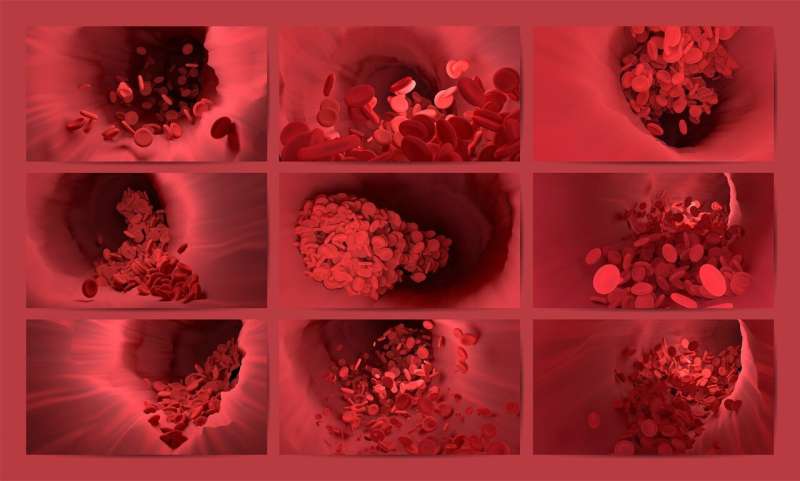
 Blood clotting (thrombosis) in the capillary vessels of the lungs is one of the first consequences of severe COVID-19, even preceding the respiratory distress caused by diffuse alveolar damage, according to a Brazilian study reported in an article published in the Journal of Applied Physiology. Autopsies of nine patients who died after developing the severe form of the disease showed a clearly typified condition involving alterations to lung vascularization and thrombosis.

For the first time, the article describes sub-cellular aspects of the endothelial damage and associated thrombotic phenomena caused by the infection. It notes the impact of acute inflammation on lung microvascular circulation as the key factor in severe COVID-19, contributing to a deeper understanding of the pathophysiology of the disease and the development of novel therapeutic strategies.

"This study furnished the final proof of what we'd been pointing out since the very start of the pandemic—that severe COVID-19 is a thrombotic disease. The virus SARS-CoV-2 has tropism for [is attracted to] the endothelium, the layer of cells that lines blood vessels. When it invades endothelial cells, it first affects microvascular circulation. The problem starts in the capillaries of the lungs [the tiny blood vessels that surround the alveoli], followed by clotting in the larger vessels that can reach any other organ," said pulmonologist Elnara Negri, first author of the article and a professor at the University of São Paulo's Medical School (FM-USP).

She was one of the first researchers in the world to reach the conclusion that severe COVID-19 is a thrombotic disease.

In the study, the researchers used transmission and scanning electron microscopy to observe the effects of the virus on lung endothelial cells from severe COVID-19 patients who died at Hospital das Clínicas, the hospital complex operated by FM-USP.

All nine samples obtained by minimally invasive autopsies displayed a high prevalence of thrombotic microangiopathy—microscopic blood clots in small arteries and capillaries that can lead to organ damage and ischemic tissue injury. The samples came from patients who were hospitalized between March and May 2020, required intubation and intensive care, and died owing to refractory hypoxemia and acute respiratory failure.

It is worth noting that none of the patients included in the study was treated with anti-coagulants, as this was not part of the COVID-19 treatment protocol at the time. Nor were any COVID-19 vaccines available in the period.

Negri explained that the endothelium is itself lined by a gel-like layer of glycoproteins called the glycocalyx, which acts as a barrier to regulate the access of macromolecules and blood cells to the endothelial surface. This barrier prevents clotting in  by inhibiting platelet interaction with the endothelium.

"Previous studies conducted by Helena Nader at UNIFESP [the Federal University of São Paulo] showed that SARS-CoV-2 invades cells mainly by binding to the receptor ACE-2 [a protein on the surface of various cell types, including epithelial and endothelial cells in the respiratory system] but before that, it binds to heparan sulfate [a polysaccharide], a major component of the glycocalyx in ," Negri explained.

"When it invades the endothelium, it triggers shedding and destruction of the glycocalyx, resulting in tissue exposure and intravascular clotting. The process starts in the microcirculation."

Because the virus initially acts on the pulmonary microcirculation, contrast examinations performed during the pandemic to investigate the presence of blood clots in larger vessels in severe COVID-19 patients failed to detect the problem at any early stage, she added. However, endothelial dysfunction is a key phenomenon in COVID-19 since it is directly associated with activation of the inflammatory response that is characteristic of the disease.

"Massive viral invasion and destruction of the endothelium break down the endothelial barrier and impair the recruitment of circulating immune cells, activating pathways associated with thrombogenesis and inflammation," she said.

In the study, the researchers found that endothelial injury tended to precede two common processes in cases of respiratory distress: significant alveolar capillary membrane leakage, and intra-alveolar accumulation of fibrin (associated with blood clotting and wound healing).

A study by the same group at FM-USP, led by Thais Mauad and including transcriptomics (analysis of all RNA transcripts, coding and non-coding), showed that several pathways associated with blood clotting and platelet activation had been activated prior to inflammation in the lungs of patients with alveolar damage.

The analysis also confirmed that the clotting was not typical of the usual process triggered by activation of coagulation factors. "In COVID-19, the clotting is due to endothelial injury and exacerbated by NETosis [an immune mechanism involving programmed cell death via formation of neutrophil extracellular traps or NETs], dysmorphic red blood cells and platelet activation, all of which makes the blood thicker and causes many complications," Negri said.

thrombosis
Credit: Pixabay/CC0 Public Domain

When the blood is thick and highly thrombogenic, she added, the patient must be kept hydrated, whereas diffuse alveolar damage in acute respiratory distress syndromes due to other causes requires reduced hydration. "Also, the timing and rigorous control of anti-coagulation are fundamental," she stressed.

Another study by the same group of researchers, including Marisa Dolhnikoff and Elia Caldini, showed lung damage in severe COVID-19 to be associated with the degree of NETosis: the higher the level of NETs in lung tissue obtained by autopsy, the more the lungs were damaged.

Negri said she began to suspect there was a link between COVID-19 and thrombosis early in the pandemic when she noticed a phenomenon recalling her experience some 30 years ago with patients who had microvascular clotting after  with extracorporeal circulation and a bubble oxygenator, no longer used because it causes endothelial damage.

"It was a widely used technique 30 years ago, but it causes lung injury very similar to that seen in COVID-19. So I'd already seen it. Besides the pulmonary injury, another similarity is the occurrence of peripheral thrombotic phenomena, such as red toes, for example," she said.

"As severe COVID-19 sets in, the drop in  is secondary to pulmonary capillary thrombosis. Initially, there's no buildup of fluid in the lungs, which aren't 'saturated' and don't lose their compliance or elasticity. This means the lungs in early severe COVID-19 patients don't look like sponges full of liquid, as they do in acute respiratory distress syndrome [ARDS] patients."

"On the contrary, the respiratory failure associated with severe COVID-19 involves dehydration of the lungs.The alveoli fill with air but the oxygen can't enter the bloodstream because of capillary clotting. This leads to what we call 'happy hypoxia,' where patients don't experience shortness of breath and aren't aware their oxygen saturation is dangerously low."

While observing the intubation of a severe COVID-19 patient, Negri realized the treatment of such cases should be entirely different from what it was at the start of the pandemic.

"The secret to treating severe COVID-19 patients is keeping them hydrated and using anti-coagulant at the right dose, meaning the dose required in the hospital environment at the onset of oxygen desaturation, i.e. low levels of oxygen in the blood," she said.

"After that, the therapeutic dose of anti-coagulant must be calculated daily on the basis of blood work, always in the hospital environment to avoid any risk of bleeding. Prophylaxis is required for an average of four to six weeks after discharge because that's how long the endothelium takes to regenerate."

This hydration and anti-coagulation protocol is needed because, in contrast with other kinds of ARDS in which oxygen in the lungs is prevented from entering the bloodstream mainly by alveolar inflammation, lung capillary endothelial damage is the main obstacle in early severe COVID-19, she explained.

"No one knew about this difference between COVID-19 and other types of ARDS at the very start of the pandemic. Indeed, this is why so many Italian patients died in ICUs [intensive care units], for example. The treatment protocol used then was different," she recalled.

In 2020, before the study reported in the Journal of Applied Physiology, Negri and her group had already observed that use of the anti-coagulant heparin improved oxygen saturation in critical patients. In 2021, in collaboration with colleagues in several countries, they conducted a randomized clinical trial in which they succeeded in demonstrating that treatment with heparin reduced severe COVID-19 mortality. The findings were published in the British Medical Journal.

"That study helped bring about a global change in COVID-19 treatment guidelines by showing that COVID-19 mortality risk fell 78% when anti-coagulation was started in patients who needed oxygen supplementation but weren't yet in intensive care," Negri said.

Endothelial dysfunction should be reversed without delay in severe COVID-19, using anti-coagulant, she explained. "Blood clotting has to be stopped as soon as possible in order to avert the development of acute  and other consequences of the disease, such as the problems now known as long COVID," she said.

An article recently published in Nature Medicine by researchers affiliated with institutions in the United Kingdom reinforces the thrombotic nature of the disease, reporting a study in which the only long COVID prognostic markers identified were fibrinogen and D-dimer, proteins associated with coagulation.

"The study shows that long COVID results from inadequately treated thrombosis. The microcirculatory problem can persist in several organs, including the brain, heart and muscles, as if the patient were having small heart attacks," Negri said.

More information: Elnara Marcia Negri et al, Ultrastructural characterization of alveolar microvascular damage in severe COVID-19 respiratory failure, Journal of Applied Physiology (2023). DOI: 10.1152/japplphysiol.00424.2023


https://medicalxpress.com/news/2023-12-severe-covid-thrombotic-disease.html

Welltok data breach exposes data of 8.5 million US patients

 Healthcare SaaS provider Welltok is warning that a data breach exposed the personal data of nearly 8.5 million patients in the U.S. after a file transfer program used by the company was hacked in a data theft attack.

Welltok works with health service providers across the U.S., maintaining online wellness programs, holding databases with personal patient data, generating predictive analytics, and supporting healthcare needs like medication adherence and pandemic response.

Earlier this year, the Clop ransomware gang exploited a zero-day vulnerability in the MOVEit software to breach thousands of organizations worldwide, following up with extortion demands and data leaks impacting over 77 million people.

Welltok published a notice of a data incident in late October, warning that its MOVEit Transfer server was breached on July 26, 2023. This occurred despite applying the security updates as soon as those were made available by the vendor.

Patient data was exposed during the breach, including full names, email addresses, physical addresses, and telephone numbers. For some, it also includes Social Security Numbers (SSNs), Medicare/Medicaid ID numbers, and certain Health Insurance information.

The impact of the breach impacted institutions in various states, including Minnesota, Alabama, Kansas, North Carolina, Michigan, Nebraska, Illinois, and Massachusetts, with the following healthcare providers said to be impacted:

  • Blue Cross and Blue Shield of Minnesota and Blue Plus
  • Blue Cross and Blue Shield of Alabama
  • Blue Cross and Blue Shield of Kansas
  • Blue Cross and Blue Shield of North Carolina
  • Corewell Health
  • Faith Regional Health Services
  • Hospital & Medical Foundation of Paris, Inc. dba Horizon Health
  • Mass General Brigham Health Plan
  • Priority Health
  • St. Bernards Healthcare
  • Sutter Health
  • Trane Technologies Company LLC and/or group health plans sponsored by Trane Technologies Company LLC or Trane U.S. Inc.
  • The group health plans of Stanford Health Care, of Stanford Health Care, Lucile Packard Children’s Hospital Stanford, Stanford Health Care Tri-Valley, Stanford Medicine Partners, and Packard Children’s Health Alliance
  • The Guthrie Clinic

Initial estimates about the number of impacted individuals varied as Welltok didn’t immediately disclose this information.

However, earlier today, the firm reported on the U.S. Department of Health and Human Services breach portal that the data breach has been confirmed to impact 8,493,379 people.

This figure places the Welltok breach as the second largest MOVEit data breach after services contractor Maximus, whose data breach affected 11 million people.

https://www.bleepingcomputer.com/news/security/welltok-data-breach-exposes-data-of-85-million-us-patients

Ukraine's Zelenskiy travelling to Argentina, hopes to win Global South's support

 Ukrainian President Volodymyr Zelenskiy was travelling to Argentina on Saturday to attend the inauguration of new Argentine President Javier Milei, his first trip to Latin America.

Zelenskiy's trip, announced on the Telegram messaging app, will focus on Ukraine's longstanding bid to secure the support of countries in the Global South in Ukraine's 21-month-old war against Russia.

The Ukrainian president said he had met the prime minister of the West African country of Cape Verde, Ulisses Correia e Silva, en route to Argentina and thanked him for "condemning Russian aggression" and supporting Ukrainian initiatives.

Zelenskiy hopes to convene a "global peace summit" and has promoted a peace plan rooted in the withdrawal of Russian troops from Ukraine and recognition of its post-Soviet borders of 1991.

Kyiv has been trying to build ties with African, Asian and Latin American governments, but has found its support for Israel at odds with the positions of some of those countries.

Ukrainian media speculated this week that Milei's inauguration could serve as a backdrop for a meeting between Zelenskiy and Hungarian Prime Minister Viktor Orban to resolve differences over Ukraine's bid for European Union membership.

An EU summit next week will decide on whether to start talks with Ukraine and neighbouring former Soviet republic Moldova -- as recommended by the EU Executive Commission -- on their bids to secure membership.

A decision must be taken unanimously and Orban has repeatedly voiced opposition to starting the talks now.

Zelenskiy's chief of staff, Andriy Yermak, said this week that he was trying to arrange a suitable time for a meeting between the president and Orban.

Like the new Argentine president, Orban is an advocate of right-wing views. In a posting on Saturday on X, formerly Twitter, he said he had already met Milei. Orban hailed the electoral success of the right "not only in Europe but all around the world."

https://uk.news.yahoo.com/ukraines-zelenskiy-says-hes-travelling-212719820.html

U.S. offers Argentina's Milei support on IMF, lithium, White House adviser says

 A U.S. delegation gave its support to Argentine President-elect Javier Milei over talks with the International Monetary Fund (IMF) and developing its lithium sector during a meeting in Buenos Aires on Saturday, a White House official told Reuters.

Juan Gonzalez, adviser to U.S. President Joe Biden and the National Security Council's Western Hemisphere senior director, said the talks, a day ahead of Milei's inauguration, were "very positive" and focused on the country's embattled economy.

Argentina is struggling with inflation nearing 150%, while over two-fifths of the population is in poverty. Its $44 billion IMF program has skidded off track, central bank net reserves are deep in the red and a recession is looming.

Milei is set to roll out a series of measures to rein in state spending after his inauguration, a "shock" therapy plan which his backers hope will stabilize the economy, but which is likely to be painful for Argentines at least in the short-term.

"I think priority number one is the economic challenges that Argentina is facing," Gonzalez told Reuters in an interview in Buenos Aires hours after meeting with Milei, adding the country needed space and time to get its house in order.

"Argentina needs to fix those challenges," he said, adding that the grains producing country also needed to come to an agreement on its economic plan with IMF staff.

"We've just been trying to encourage dialogue ... and encourage a constructive outcome between Argentina and the IMF."

The current IMF program, which replaced a failed 2018 deal, has increasingly wobbled as Argentina's economic crisis has worsened, a trend that drove the rise of right-wing outsider Milei, a libertarian economist and former TV pundit.

Gonzalez said that the delegation had discussed lithium with Milei, including the country's hope to benefit from the U.S. Inflation Reduction Act (IRA), which it currently does not as it is not a Free Trade Agreement (FTA) partner.