A massive container ship lost power in the waters around New York City and was brought to a rest near the Verrazzano-Narrows Bridge Friday night — less than two weeks after failure on another massive cargo vessel caused it to smash into Baltimore’s Francis Scott Key Bridge.
The US Coast Guard confirmed that its Vessel Traffic Service received a report that the 89,000-ton M/V Qingdao lost propulsion about 8:30 p.m. as it traversed Kill Van Kull waterway — the shipping lane between Staten Island and Bayonne, New Jersey.
An image shared on X by John Konrad, CEO of maritime-focused news outlet gCaptain, shows the 1,100-foot Qingdao floating uncomfortably close to the span that connects Brooklyn and Staten Island.
In response to the power failure, three tug boats were dispatched to bring the Qingdao under control.
The vessel was reportedly positioned “just north” of the bridge.
“Coast Guard Vessel Traffic Service New York received a report from the M/V Qingdao around 8:30pm, Saturday, that the vessel had experienced a loss of propulsion in the Kill Van Kull waterway,” a Coast Guard spokesperson told The Post in a statement Sunday.
“The vessel regained propulsion and was assisted to Stapleton Anchorage by tugs.”
A container ship lost power near the Verrazzano-Narrows Bridge on April 6, 2024.Gregory P. Mango
The Kill Van Kull waterway is a narrow 3-mile long tidal strait separating Newark Bay — home to the Port Newark Container Terminal — and Upper New York Bay. It is one of the Port of New York and New Jersey’s busiest waterways.
The Coast Guard required the vessel’s propulsion system to be certified that it had been repaired and was fully operational.
The crew was also required to provide a detailed casualty report documenting precisely what contributed to the loss of propulsion.
After meeting those requirements, the vessel was allowed to resume its voyage to Charleston, South Carolina.
The M/V Qingdao lost propulsion as it traveled through the Kill Van Kull waterway between Staten Island and Bayonne, New Jersey.Future Publishing via Getty Images
Despite the unsettling optical illusion, the image instantly brings to mind last month’s deadly Francis Scott Key Bridge disaster in Baltimore, in which six construction workers were killed when cargo ship Dali rammed one of the 1.9-mile bridge’s supports, sending it tumbling into the Patapsco River.
The collapse ground maritime transit to a halt in the vital Port of Baltimore. Speaking on CBS’ “Face the Nation” Sunday morning, Maryland Gov. Wes Moore said it was “realistic” that normal operations would resume on the waterway as early as May.
“It is an aggressive timeline, but we are going to work around the clock to make sure we hit this timeline,” Moore said.
Alarmingly, the Dali also suffered loss of propulsion leading up to the Baltimore crash.
The Qingdao is registered in Malta and owned by French shipping and logistics company CMA CGM. It was bound for Norfolk, Virginia at the time it lost power.
CMA CGM could not be reached Sunday. Konrad did not respond to messages from The Post seeking comment.
The Iranian government is apparently seeking to capitalize on the Israeli public and leadership being on edge due to continuing fears that an Iranian retaliation attack is imminent after last week's Israeli airstrike on Iran's embassy complex in Damascus.
An adviser to Iran’s supreme leader on Sunday has threatened to attack Iran's embassies, or at least strongly suggested it could happen. "The embassies of the Zionist regime are no longer safe," Yahya Rahim Safavi, senior adviser to Iran’s supreme leader Ayatollah Ali Khamenei, said according to ISNA news agency.
He added that the Islamic Republic views confrontation with Israel as a "legitimate and legal right" — given that Israel has just escalated through an unprecedented attack on a sovereign country's diplomatic facilities.
Iranian state media in conveying Safavi's words also featured graphics showing nine types of Iranian missiles that possess ranges capable of hitting Israel (see below).
Defense Minister Yoav Gallant on the same day announced that Israel is prepared and is ready to respond. Israel has "completed preparations for a response against any scenario that would develop against Iran," he said. Israel's embassies and consulates around the world continue to be on a high state of alert.
Meanwhile, an analyst from the Middle East Institute, Jason Brodsky, observed on Friday:
There are reports Iran's regime may be eyeing hitting an Israel diplomatic compound in a third country via drones & missiles. Israel maintains embassies in Bahrain; UAE; Jordan; Egypt; Azerbaijan; & Turkey. I would keep an eye on Jordan.
Currently, Israel is bracing for an inevitable response, and is reportedly calling up extra reserve forces. Hezbollah could also open up a bigger war front:
The leader of Lebanon’s Hezbollah movement said on Friday that Iran would inevitably retaliate after a strike — widely blamed on Israel — destroyed its consulate in Damascus this week, killing two generals. “Be certain that Iran’s response to the targeting of its Damascus consulate is inevitable,” Hassan Nasrallah said in a televised speech marking Quds (Jerusalem) Day — an annual day of pro-Palestinian rallies held by Iran and its allies.
At least so far, the daily tit-for-tat fighting along Israel's northern border has remained contained, but perhaps just barely. Israeli leaders have warned that all of Lebanon could be bombed back to the 'stone age' if Hezbollah starts a full war. Prime Minister Netanyahu earlier spelled out that if a retaliation attack should be launched on Israel from Iranian soil, then Israel would hit back directly at Iran with a "stronger" response. This scenario would likely spiral into a major regional war, something the Biden administration says it is seeking to prevent.
Meanwhile, in Gaza there's been a surprise development Sunday. "The Israeli military says it has withdrawn its ground troops from the southern Gaza Strip, including Khan Younis, amid conflicting reports about the scale and duration of the disengagement," writes Al Jazeera.
"Today, Sunday April 7th, the IDF’s 98th commando division has concluded its mission in Khan Younis. The division left the Gaza Strip in order to recuperate and prepare for future operations," the army said. One brigade has remained, and it's unclear precisely what this means related to the planned Rafah assault.
ASan Franciscolawmaker introduced a proposal that would require grocery stores in the city to provide six months of notice before closing a store and to explore a replacement supermarket at the vacated location.
Dean Preston, a member of the San Francisco Board of Supervisors, introduced what he calls the Grocery Protection Act – which is based on a proposal the board approved in 1984 that was vetoed by then-San Francisco Mayor Dianne Feinstein.
Preston's proposal would require grocery store owners to provide six months written notice to the Board of Supervisors as well as the Office of Economic and Workforce Development (OEWD). The store would also be required to post notices at all entries and exits as a means of informing customers and the general public. The rule wouldn't preclude closures due to a store being unprofitable.
"It was a good idea in 1984, and it's an even better idea now," Preston said in a press release. "Our communities need notice, an opportunity to be heard, and a transition plan when major neighborhood grocery stores plan to shut their doors. Meeting the food security needs of our seniors and families cannot be left to unilateral backroom decisions by massive corporate entities."
The six-month notice requirement would be waived if the closure is caused by business circumstances that weren't reasonably foreseeable at the time notice would've been required, or if the closure was due to a natural disaster or emergency.
It would also not be required if the business is in the process of actively seeking capital or business that would allow the closure to be postponed or avoided, and the business has a reasonable and good faith belief that giving the closure notice would've precluded the store from obtaining the capital or business needed to stay open.
San Francisco considered a similar grocery store closure notice law in 1984, though it was vetoed. (iStock / iStock)
Grocery stores relying on those exceptions would still be required to give as much notice as is practical before closing and also provide an explanation for having reduced the notice period.
The bill would also require that grocery stores "meet and work in good faith with neighborhood residents" and the OEWD to find a workable solution to keep groceries available at the location. Those solutions could include identifying strategies and resources to allow the store to remain open, helping residents organize and open a cooperative and identifying another grocery store operator to take over and continue grocery sales at the location.
Under the legislation, any person affected by a grocery store's failure to comply with the requirements could initiate legal proceedings for damages, injunctive relief, declaratory relief, or a writ of mandate to remedy the violation.
The crises of crime, drugs and homelessness have made it challenging for businesses to operate in San Francisco. (Gary Coronado / Los Angeles Times via Getty Images / Getty Images)
Preston's proposal comes as San Francisco deals with a rise in store and office closures as the city deals with a crime and drug crisis that has made it more difficult for businesses to operate.
Last year, a Whole Foods location in San Francisco closed a little more than one year after it opened. Records indicated that the Market Street location was the scene of 568 emergency calls in a 13-month period due to incidents such as vagrants throwing food, yelling, fighting and attempting to defecate on the floor, according to the New York Times. At least 14 arrests were made at the location.
More recently, Safeway announced in January that it planned to close a grocery store in the city this March, but rescinded that announcement and said it would keep the Webster Street location open until January 2025.
Economists are expressing concern over the increasing number of illegal immigrants in the United States, who they believe are obscuring the actual condition of the jobs market and the U.S. economy.
For the last few years, the headline employment figure has been impressive. The country has recovered the lost jobs from the government-imposed shutdowns during the pandemic and added a few million more, despite a climate of high inflation and rising interest rates.
In 2023, the economy added approximately 3 million new positions. To kick off 2024, more than 800,000 new jobs have been added.
The labor market data is critical as it helps determine the Federal Reserve’s interest rate policy.
Federal Reserve chairman Jerome Powell said on March 20 that the central bank is monitoring the labor market “very carefully” and isn’t observing any “cracks.”
“We follow all the possible stories that are out there about there being cracks, but the overall picture, really, is a strong labor market,” he noted. “Things are returning more to their state in 2019.”
However, a closer look at the household survey of the employment report reveals a more gloomy picture. Employment for native-born Americans has been in decline over the past four years. This means that all of the job gains have gone to foreign-born workers, including both legal and illegal immigrants.
According to the Bureau of Labor Statistics (BLS), the number of immigrants—legal and illegal—working in the United States grew by 3.4 million between February 2020, shortly before the onset of COVID-19, and February 2024. The number of U.S.-born workers, however, declined by 78,000 during the same period.
In addition, during the Biden administration, there have been approximately twice as many illegal immigrants as legal immigrants entering the country, according to a study by the Brookings Institution.
“That’s a big problem,” says economist Stephen Moore.
“What we’re interested in is how the economy is working for American citizens. So, we’re distorting the jobs market with all of the illegal immigrants,” he told The Epoch Times.
Mr. Moore, who served as an economic adviser to former President Donald Trump, criticized the Biden administration for turning the U.S. immigration system “upside down.”
He argued that the U.S. economy “desperately needs” more legal immigrants, who possess high skill levels or special talents, rather than illegal immigrants, who tend to be less educated.
According to the Bureau of Labor Statistics (BLS), the number of immigrants—legal and illegal—working in the United States grew by 3.4 million between February 2020, shortly before the onset of COVID-19, and February 2024. The number of US-born workers, however, declined by 78,000 during the same period.
Construction workers help build a residential building in Miami on Jan. 5, 2024. (Joe Raedle, Getty Images)
‘Very Troubling’
The BLS includes illegal immigrants in the labor statistics, identifying them as “undocumented workers.” However, the agency doesn’t disclose the data publicly and instead groups legal and illegal immigrant job data together.
Many economists have been surprised by the growing employment gap between native- and foreign-born workers since October 2019.
The contrast in the past year is even more striking. According to the BLS, native-born employment fell by 651,000 in March 2024 from the same period last year, while foreign-born employment climbed by nearly 1.3 million.
According to Steven Camarota, director of research for the Center for Immigration Studies (CIS), it is hard to know the exact number of illegal immigrants who have recently entered the country and found employment.
However, he estimates roughly half of the job gains among foreign-born workers have gone to illegal immigrants over the last year.
Mr. Camarota notes that the government should know all economic activity and job creation in America, so counting illegal immigrants is not a problem.
“What I do think is problematic is that you can see a low unemployment rate and more importantly, lots of job growth, but almost all the job growth is going to the immigrants. That’s the distortion,” he told The Epoch Times.
There were a total of 31 million immigrant workers as of March 2024, constituting nearly 20 percent of the U.S. labor force. Mr. Camarota estimates that at the beginning of this year, roughly 9 million of these workers were illegally present.
The Congressional Budget Office estimated that the number of “immigrants with a nonlegal or pending status” increased by 2.4 million in 2023.
This group includes individuals who have been apprehended and released into the country, individuals who have managed to evade the Border Patrol, officially known as “gotaways,” and individuals who have overstayed their visas. The figure is modified to account for deaths, legalizations, and departures.
According to Mr. Camarota, the rise in illegal employment conceals the true state of the U.S. jobs market. There has been a concerning decline in the labor force participation of U.S.-born working-age men from the 1960s to the present. And this decline is more pronounced among the less educated.
Globalization, outsourcing of jobs overseas, generous welfare and disability policies, and wage stagnation are among the factors that have contributed to this drop over the years, Mr. Camarota said.
“That decline in labor force participation, particularly among U.S.-born men, is linked to many social problems, from overdose deaths to crime,” he said.
Hence, he argued that the government is missing the overall picture by focusing on headline data and reporting strong job growth, and not saying it’s fueled primarily by low-wage illegal immigrants.
“That’s very troubling,” he said.
Another issue with more illegal immigration is that it drives down wages for American workers.
According to EJ Antoni, an economist and research fellow at the Heritage Foundation, one of the key reasons President Joe Biden is polling so poorly among voters is “because they are not the ones getting the jobs.”
As a result of the flood of cheap labor, American workers also earn less than they would otherwise, he told The Epoch Times.
The Economic Policy Institute, a Washington-based think tank, rejects the notion that illegal immigrants are hurting U.S.-born workers.
Experts Heidi Shierholz and Daniel Costa at the Institute wrote in a recent report that “the idea that immigrants are making things worse for U.S.-born workers is wrong.”
“The reality is that the labor market is absorbing immigrants at a rapid pace, while simultaneously maintaining record-low unemployment for U.S.-born workers,” they stated.
The SGLT2 inhibitor empagliflozin (Jardiance) did not exactly prevent deaths and heart failure (HF) events when initiated atop other standard therapies for acute myocardial infarction (MI), the EMPACT-HF trial found, but cumulative risk did go down.
Between empagliflozin and placebo groups, there was no difference in time-to-first-event analysis of hospitalizations for HF or deaths from any cause over approximately 18 months (8.2% vs 9.1%), which came out to 5.9 and 6.6 events per 100 patient-years, respectively (HR 0.90, 95% CI 0.76-1.06), reported Javed Butler, MD, MPH, MBA, of Baylor Scott and White Research Institute in Dallas.
Notably, while mortality alone appeared unchanged with empagliflozin (5.2% vs 5.5%), there was a 22% reduction in first hospitalizations for HF (3.6% vs 4.7%, HR 0.77, 95% CI 0.60-0.98), Butler reported at the American College of Cardiology (ACC)opens in a new tab or window annual meeting.
A secondary analysis showed that empagliflozin reduced first and recurrent HF events by 33% (RR 0.67, 95% CI 0.51-0.89). There was also less need for diuretics, renin-angiotensin modulators, and mineralocorticoid receptor antagonists after discharge among patients randomized to empagliflozin.
"The totality of evidence suggests the benefit of empagliflozin for heart failure risk reduction in patients post-AMI without prior heart failure," Butler said, adding that this benefit is consistent with what has been shown "with empagliflozin in other trials in adjacent patient populations."
An estimated 12-15% of patients with MI are hospitalized with HF in the year following their MI, and the presence of HF symptoms at time of MI has been identified as a strong predictor of mortality. It had been hoped that the established HF benefits of SGLT2 inhibitors might extend to the acute MI setting.
This was supported by the EMMY trialopens in a new tab or window, which showed that starting patients on empagliflozin in the acute phase of a large MI resulted in reduced natriuretic peptide concentration, increased left ventricular ejection fraction, and decreased cardiac volume over the next half year.
However, in DAPA-MIopens in a new tab or window, investigators were unable to show that the SGLT2 inhibitor dapagliflozin (Farxiga) prevents death from cardiovascular causes or hospitalization for HF after acute MI. This was a trial deemed inconclusive due to lower than expected event rates, however, despite clear improvements in cardiometabolic measures for the dapagliflozin arm.
EMPACT-HF, too, was "obviously a challenging trial" in which event rates overall were quite low, commented ACC panelist James Januzzi Jr., MD, of Massachusetts General Hospital and Harvard Medical School, both in Boston. He suggested that work is needed to understand who is at risk of developing symptomatic HF despite the "excellent therapies" both in and out of the cath lab for acute MI.
Patrick O'Gara, MD, of Brigham and Women's Hospital and Harvard Medical School, both in Boston, agreed that his interest is in "whether you can pick out who would most likely benefit" from SGLT2 inhibitors.
During a press conference, O'Gara said that the concept of finding heart attack survivors who would benefit further from SGLT2 inhibition adds to a "challenging set of circumstances" when people already get confused about their many medications, pay a lot for them, and sometimes experience side effects.
EMPACT-HF was conducted from 2020 to 2023 in 22 countries. Investigators had adult patients randomized to empagliflozin 10 mg (n=3,260) or placebo (n=3,262) daily in addition to standard of care within 14 days of hospital admission for MI.
Participants were all judged to be at high risk for subsequent HF based on either evidence of a newly developed left ventricular ejection fraction of less than 45% or signs or symptoms of congestion that resulted in treatment during the index hospitalization. Excluded were patients with a previous diagnosis of HF, as well as those who were taking or planning to take SGLT2 inhibitors.
Butler reported similar baseline characteristics between empagliflozin and placebo groups. Average age was just over 63, with about a quarter women. Over 83% of people were white. Nearly 75% of the patients who underwent randomization presented with ST-segment elevation myocardial infarction (STEMI), and revascularization for the index MI was performed in 89.3%.
Median time from MI admission to randomization was 5 days. Follow-up lasted a median 17.9 months.
Adverse events (AEs) were consistent with the known safety profile of empagliflozin. Serious AEs did not differ significantly between treatment and control groups (23.7% vs 24.7%).
Study authors acknowledged the lack of central adjudication for the trial's endpoints. Other limitations include the effects of conducting the trial during the COVID-19 pandemic, and some participating sites being affected by war.
O'Gara added that the trial may have had too short a follow-up to show a clinical benefit of empagliflozin.
Disclosures
The study was funded by Boehringer Ingelheim and Eli Lilly.
Butler disclosed various relationships with industry, including consulting to Boehringer Ingelheim and Eli Lilly.
Januzzi disclosed consultant fees/honoraria from Abbott, Abiomed, AstraZeneca, Eli Lilly, Novartis, Novo Nordisk, Prevencio, Roche Diagnostics, Siemens; serving on data safety monitoring boards for AbbVie, Bayer, CVRx, Takeda Pharmaceuticals; having a fiduciary role in Imbria, Jana Care; and receiving research funding from Abbott, Janssen, and Medtronic.
There’s something about employed intellectuals. When they are trashing popular wisdom and perceptions of regular people, they are truly in their element.
They love nothing better. It’s a way for them to show off their superior understanding, flash their credentials, and dazzle others with the merit of their time and expense in schooling. It justifies their social standing and income. And it assures their jobs.
Where would we be without them? Wallowing in ignorance, no doubt.
The trouble is that very often the popular wisdom is correct whereas the intellectuals are wrong.
We’ve seen many examples of this recently with regard to inflation. It seems that most people think it is getting worse and going in the wrong direction. A recent poll of swing-state voters shows that 74 percent of people say exactly this.
By wrong direction, plain English means: prices are not going down but rather still going up faster than one would desire.
In fact, the commodities markets seem to agree. Look at the record gold and Bitcoin prices. Even the Federal Reserve is worried.
But the Wall Street Journal’s (WSJ) Greg Ip explains that the notion that inflation is still bad and even worsening is “simply not true. I’m not stating an opinion. This isn’t something on which reasonable people can disagree. If hard economic data count for anything, we can say unambiguously that inflation has moved in the right direction in the past year.”
He goes on to explain that over 12 months, the pace at which inflation is worsening is getting worse at a slower pace than previously. This is what Ip calls moving in the right direction. You can tell yourself that as you put on less weight this month than last, but it would not be a good idea to confuse this with losing weight.
As for prices going down, Ip sniffly dismisses that idea: the price level “rarely goes down.”
Oh.
And if someone asks how your diet is going, you can do the same and tell them with absolute certainty that actually losing weight is out of the question.
Mr. Ip is certain that a move from 6 percent to 3 percent inflation is a fall, even though it is really only a slower pace of rising and therefore not really an improvement. He would see this if the numbers were different. What if inflation were running at 40 percent and then rising only 35 percent? Would Ip dare go to print with an article claiming that inflation is improving? Not likely.
Sorry but most people think that an improved and even repaired inflation would restore prices to their 2020 level. That’s not going to happen but that’s actually what most people would like. And I agree. My own sense is that many people are only coming around now to the realization that what happened to us has done permanent damage to purchasing power.
It’s not a good sign that the Biden administration seems to think that the solution is jawboning package sizing back up!
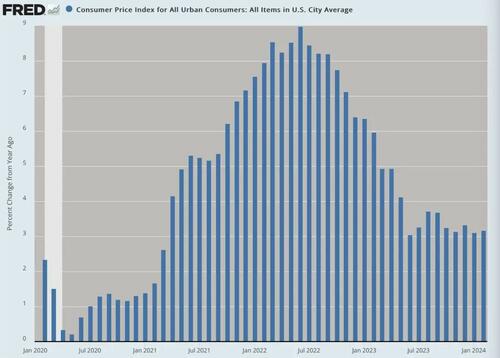
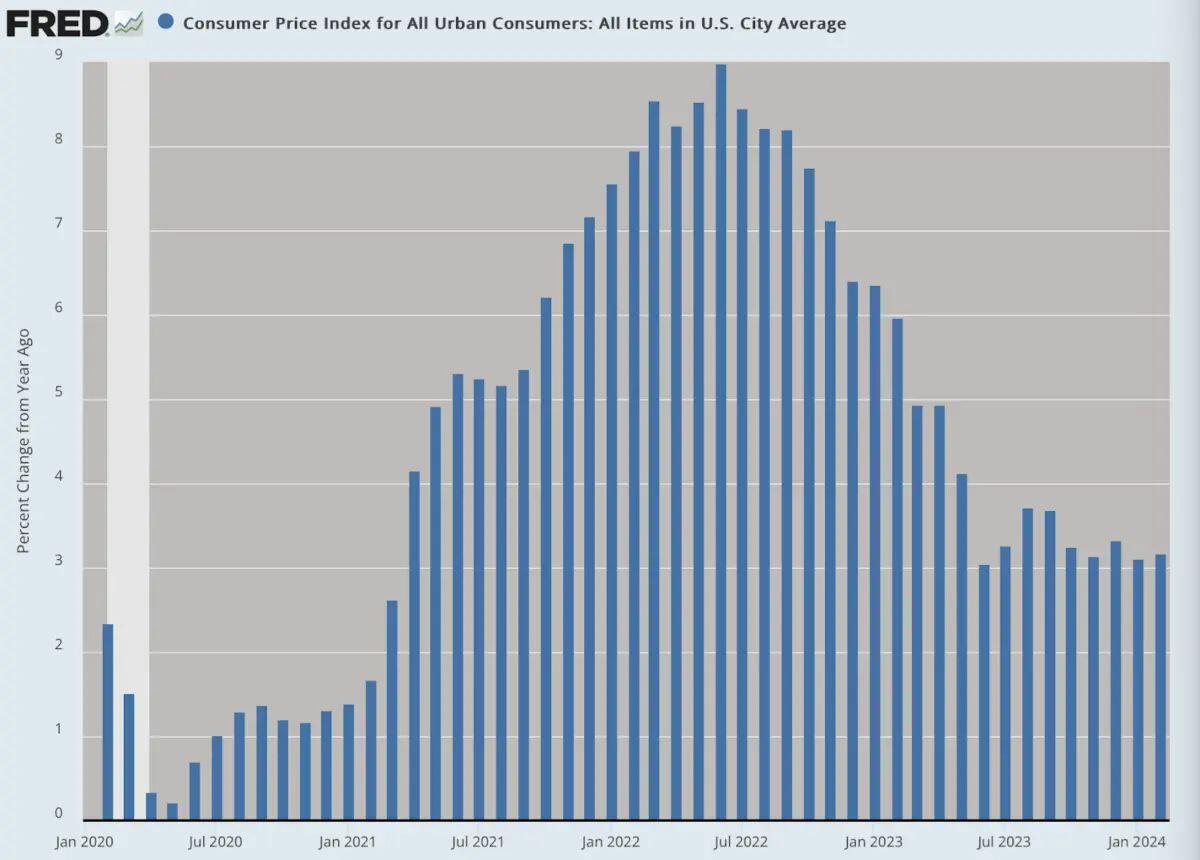
In any case, it’s not even necessarily true that the pace of increase is improving. The latest read of the official CPI (consumer price index) shows that it is going up higher than it did in June 2023. So even by that standard, the popular wisdom is more correct than the experts. By some measures, inflation is worsening at a faster pace.
Also, we are all a bit gun-shy. Who is to say that the next round of brutal inflation is not waiting just around the corner, in a repeat of the 1970s?
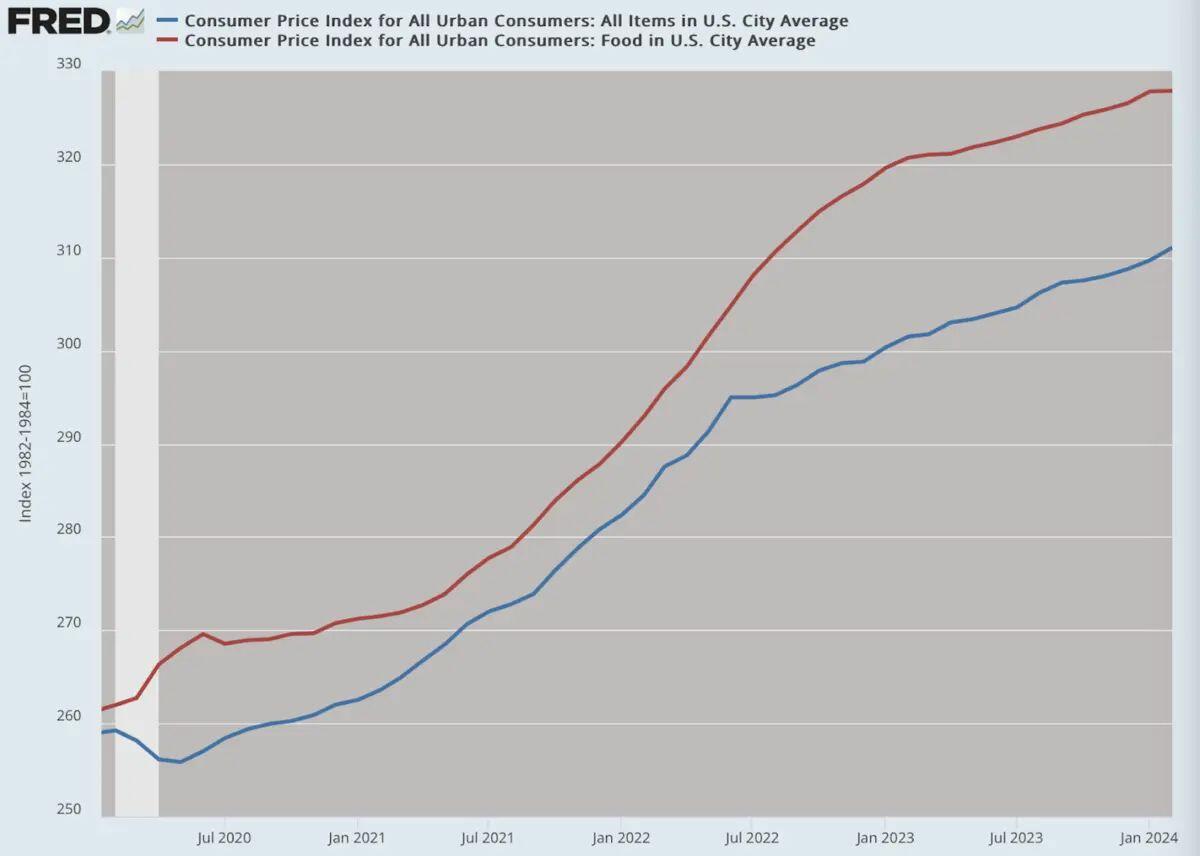
(Data: Federal Reserve Economic Data (FRED), St. Louis Fed; Chart: Jeffrey A. Tucker)
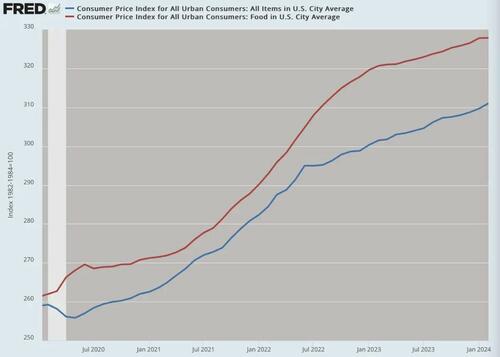
And have a look at food prices, up 35–50 percent since 2019 and still rising. It’s not even of this world to tut-tutting people for feeling that this much of an increase in 5 years amounts to getting worse.
(Data: Federal Reserve Economic Data (FRED), St. Louis Fed; Chart: Jeffrey A. Tucker)
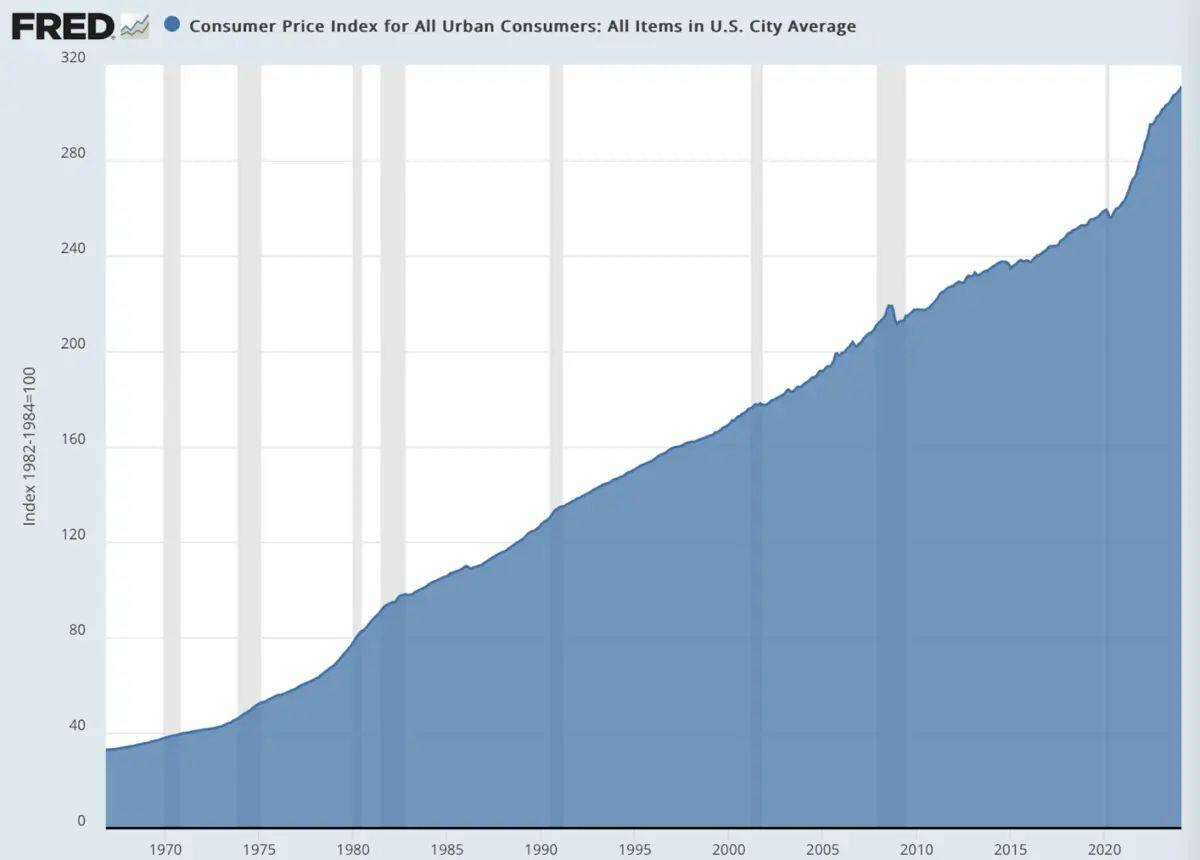
Or just have a broad look at prices generally. No matter what the experts say, we are daily slammed with sticker shock. Remember that people do not buy all the products and services in the CPI daily. They encounter each price increase only in the course of their usual buying habits. It it has been nothing but bad news every time you take out your wallet.
(Data: Federal Reserve Economic Data (FRED), St. Louis Fed; Chart: Jeffrey A. Tucker)
When major journalistic venues come out and say “Oh it’s not that bad, so stop complaining,” it only discredits them.
In addition, Ip complains as follows: “By more than 2-to-1 (56 percent to 25 percent), respondents said the economy had gotten worse rather than gotten better over the past two years. That is difficult to square with robust employment growth, unemployment near its lowest in half a century, or growth in gross domestic product, which actually accelerated last year.”
Here again, the popular wisdom is smarter than the experts.
The jobs data has already experienced a major debunking. Full-time positions are giving way to part-time positions, mostly held by immigrant populations. This is a major factor as to why the establishment and household surveys have diverged so much over the last several years. The job market is not healthy. It is sick, with a continued lack of labor participation and worsening conditions for professional workers.
It’s not obvious from a superficial look at the data but it is clear from a deeper look.
Even the WSJ admits this in a separate piece: “the household employment figures haven’t just shown slowing job growth in recent months, but outright deterioration.”
Oh!
Another corrective comes from the Philadelphia Fed: “In the aggregate, 10,500 net new jobs were added during the period rather than the 1,121,500 jobs estimated by the sum of the states; the U.S. CES estimated net growth of 1,047,000 jobs for the period.”
By now, you surely also know that the GDP data cannot be trusted. It is ginned up by government debt and spending, without which the United States would likely already be in recession. This little tool of analysis was invented in the 1940s and heavily informed by bad economic theory but it somehow survives as a credible estimate of output. It absolutely is not.
Let’s return to inflation now.
It’s not just that rising prices are bad and eat into the standard of living. It’s also the case that the current CPI is wildly underestimated. Adding in the interest-based cost of borrowing puts last year’s inflation rate at 18 percent, which is far worse than we ever saw in the late 1970s. If we add to that the way inflation used to be calculated complete with a correct estimate of health-insurance costs, we are going further still. We could be looking at 20-plus percent on an annualized basis.
All the assurances we get from official economists that life is great achieve absolutely nothing in terms of convincing the public that what they are seeing all around them is not true. The instincts of the public are absolutely correct, contrary to the one thousand articles pouring out of the legacy media that say otherwise.
I’ve always enjoyed Greg Ip’s writing simply because he is a trained economist and speaks the language well. It’s sad (to me) to see his writing go the direction of becoming straight-up Biden administration propaganda.
Remember that line about how inflation was merely “transitional?” They are still saying that after three years.
Let’s face it: many such voices have disappointed us over these past few years, as many journalists and intellectuals have put career over integrity in their jobs.
We know this and see this every day. Still, it never stops disappointing me. Regardless, the public is not listening. Indeed, they have stopped reading, which is why the payrolls of mainstream venues keep shrinking more and more.
Meanwhile, as the intellectuals scribble their excuses, public fury is on the rise.