Search This Blog

Monday, April 8, 2024

Kongeveron Strategy, Clinical Pipeline and 2024 Key Priorities and Goals

  Longeveron Inc. (NASDAQ: LGVN), a clinical stage biotechnology company developing regenerative medicines, today announced that the Company’s CEO, Wa’el Hashad, issued the following letter to Longeveron shareholders.

Dear Shareholders,

I am delighted to mark my first anniversary as CEO of Longeveron this month. It has been an extraordinary journey thus far, and I am immensely grateful for the opportunity to lead such a pioneering organization dedicated to transforming healthcare through innovations in regenerative medicine.

Upon joining Longeveron, I set out with a clear objective: to develop a strategic roadmap building on the strength of our science while acknowledging the realities of the capital market environment. Longeveron's foundation in cutting-edge cellular therapy research, coupled with the promise of Lomecel-BTM, positions us to profoundly impact patients’ lives for the better by addressing numerous unmet medical needs with U.S. market potential opportunities of up to approximately $10-$18 billion.

Today, I am excited to update you on our overall strategy, business objectives, approach to capital allocation, and 2024 key priorities and goals.

Strategic Overview:
Our focus remains steadfast on raising the funds necessary to continue our operations and delivering transformative solutions to patients and creating sustainable value for our shareholders.

Our lead investigational product is Lomecel-B™, which is derived from culture-expanded medicinal signaling cells (MSCs) that are sourced from bone marrow of young healthy adult donors. We believe that by using the same cells that promote tissue repair, organ maintenance, and immune system function, we can develop safe and effective therapies for some of the most difficult diseases and conditions.

In 2024, we are focusing our efforts on two of our most promising programs: Hypoplastic Left Heart Syndrome (HLHS); and Alzheimer’s Disease.

HLHS:

HLHS is a rare pediatric disease affecting approximately 1000 live births per year in the US. The results of our successful Phase 1 trial showed 100% transplant free survival of all subjects at up to 5 years of age. Based on historical data, approximately 20% of patients would have been expected to receive a heart transplant or have died by age five. In response to our positive initial data, the US Food and Drug Administration (FDA) awarded our HLHS program with three distinct and important designations: Rare Pediatric Disease designation, Orphan Drug designation, and Fast Track designation, each of which offer benefits to our development and regulatory processes.

At present, we have completed approximately 60% of the enrollment of our randomized Phase 2 clinical trial that builds upon our successful Phase 1 trial. Our Phase 2 trial will compare outcomes of babies treated with the standard of care (SOC) plus Lomecel-BTM vs. the SOC alone. We expect this trial to finish enrollment in 2024 with data read-out at the end of 2025. We are laser focused on the effective execution of this program and we will be communicating with the FDA regarding the potential to use this trial as a pivotal trial for accelerated or final approval of Lomecel-BTM for HLHS.

Alzheimer’s Disease:

In our Alzheimer’s Disease (AD) program, we recently completed our Phase 2a CLEAR-MIND trial with 49 patients that builds upon our successful Phase 1 trial. The results of our CLEAR MIND trial provided encouraging signals of efficacy that clearly warrant further investigation.

As such, we are aggressively pursuing partnerships and funding opportunities to move this exciting program forward. Given the massive unmet need presented by AD, large resources are potentially available from federal and private funding sources. We will be heavily focused on seeking partnership opportunities and/or non-dilutive funding for this program.

Our Core Business Objectives:

  1. Focus on HLHS as the Main Value Driver:
    • We endeavored to strategically position our Phase 2 study for HLHS as a pivotal head-to-head study, with potential for accelerated or full FDA approval, reflecting our commitment to expedite treatment access.
    • We plan to leverage existing relationships with several treating surgeons in order to maximize our commercialization planning and potential future launch in HLHS.
    • Recognizing substantial revenue potential from worldwide commercialization, we anticipate capitalizing on recent rare disease pricing trends and the unique aspects of our treatment.
    • With in-house manufacturing capacity adequate to meet anticipated global supply demands, we expect that scale-up expenses for commercialization of this indication will be substantially reduced.
    • Possession of a Rare Pediatric Disease priority review voucher associated with HLHS upon successful FDA approval could have significant monetary value and further enhance our product’s value proposition upon approval.
  2. HLHS Commercialization and BLA Readiness:
    • In 2024, there will be increased efforts and focus on organizational readiness for potential BLA filing for HLHS in 2026. These efforts are expected to include strengthening processes, conducting mock audits, and enhancing regulatory interactions which are paramount to expedite BLA readiness and ensure compliance.
  3. Strategic Collaborations:
    • While Alzheimer’s Disease programs hold immense potential, their larger-scale studies and commercialization requirements due to the large size of the affected population necessitate significant investment, prompting our focus on potential strategic partnerships with biotech/pharmaceutical companies or pursuit of grants and other non-dilutive funding sources.
    • Our openness to collaborations with public and private organizations aligns with our mission of advancing therapies across various therapeutic areas.
  4. Leveraging Science and Manufacturing Capabilities:
    • With our significant manufacturing capabilities and expertise, we intend to capitalize on these assets to provide greater strategic diversification and generate additional revenue by further soliciting and engaging in contract development and manufacturing services (CDMO) for third parties.
    • We plan to continue investment in new products and technologies supportive of innovation and potency assay development and fostering long-term competitiveness and product differentiation.
  5. Efficient Resource Management:
    • We plan to continue pursuing strategic advancement as much as possible without increasing headcount in order to maximize efficiency and alignment with strategic priorities.
    • Our termination of the Japan Aging-related Frailty study reallocates resources to our priority programs in order to optimize resource utilization and ensure strategic focus.

These priorities underscore our commitment to delivering value to patients and shareholders alike, and to continue our pursuit of sustainable growth and impact in the healthcare landscape.

Financial Position and Capital Strategy:
Longeveron is working diligently to effectively manage expenses and reduce ongoing costs through strategic initiatives such as terminating the Aging-related Frailty study in Japan, making related staff reductions, and leveraging revenue-generating activities like contract development and manufacturing services (CDMO). However, there is a critical need for additional capital to achieve our business strategy and objectives. The development of pharmaceutical drugs is capital intensive and our current cash resources are insufficient to fund our planned operations or development plans beyond the beginning of the second quarter of 2024. Our ability to continue to execute the plans discussed above is contingent upon the Company obtaining financing, and unless the Company obtains sufficient financing, the Company will have to cut back on their plans discussed in this letter.

To help facilitate securing additional capital, we recently effected a reverse stock split and filed a registration statement with the Securities and Exchange Commission.

The following principles underscore our commitment to responsible financial stewardship:

  1. Long Term Investor Engagement: We are seeking stable investors committed to our work and strategy, fostering long-term partnerships aligned with our vision.
  2. Debt Financing Prudence: We are presently avoiding debt financing to minimize financial risk and optimize capital structure.
  3. Priority-Aligned Capital Allocation: We are working diligently to be prudent stewards of cash and allocating it to the organization’s top priorities to effectuate optimal resource utilization and alignment with strategic objectives.

2024 Goals and Priorities
Our goals for 2024 center on executing our business objectives with speed, efficiency, and quality. The primary operational goal is to fully enroll our ELPIS II Phase 2 study for HLHS by the end of the year. To achieve this goal, we are implementing the following strategies:

  1. Site Optimization: We plan to close non-enrolling sites and add new high-potential sites to accelerate enrollment, leveraging, whenever possible, prestigious academic institutions in this field.
  2. Investigator Meeting: We intend to conduct an investigator meeting in May with the goal of expediting onboarding of new sites and reenergizing existing sites to meet study completion targets.
  3. Advocacy Group Partnership: We expect to further partner with advocacy groups to raise awareness about our clinical program among families of prospective patients, fostering community engagement and support.

Additionally, we plan to meet with the FDA to ensure alignment on our regulatory path forward. We also anticipate completion of the 5-year follow-up from our Phase 1 HLHS study by the second half of 2024 which, if we continue to have similar results, may allow us to announce additional favorable results on continued transplant-free survival. Furthermore, we plan to present data from our Phase 2a CLEAR-MIND Study in Mild Alzheimer’s Disease patients at various scientific conferences and submit our findings for publication.

Conclusion
Longeveron has achieved significant operational and strategic advancements over the past 12 months, delivering promising results for conditions that profoundly impact patients and caregivers. With Lomecel-BTM’s documented safety profile in clinical trials in vulnerable populations and its effects assessed in nearly 500 patients across various indications, we are optimistic about the potential for our drug candidate. We remain committed to executing against our strategic and operational goals with speed, quality, and efficiency. By leveraging our available resources wisely and improving our balance sheet, we are focused on bringing Lomecel-BTM to market to address the needs of patients suffering from these devastating conditions.

We deeply appreciate the support of our stakeholders over the years and look forward to continued collaboration and progress in the future.

Sincerely,
Wa’el Hashad
CEO, Longeveron

https://www.globenewswire.com/news-release/2024/04/08/2859178/0/en/Longeveron-Issues-Letter-to-Shareholders-Highlighting-Corporate-Strategy-Clinical-Pipeline-and-2024-Key-Priorities-and-Goals.html

Broken US border fosters disrespect and is an affront to our country

 When my family arrived in the United States from Cuba, my father took me and my sister aside.

“We are now guests in this country, which was generous enough to invite us in,” he said. “Act accordingly.” We got the message. Not only were we expected to abide by American laws and customs, but we were to behave with the kind of courtesy and respect one would show when visiting someone else’s home.

Many years later, I happened to watch a televised conversation between President Barack Obama and a group of young persons who called themselves “dreamers” — a term I hadn’t heard before.

Dreamers, I learned, were undocumented aliens who had been brought to the US as minors and enjoyed certain protections against deportation. On TV, they behaved nothing like guests. They were full of grievances and accusations, making insistent demands on the president. For his part, Obama sounded defensive and apologetic.

Fast-forward a decade and we observe another president, Joe Biden, offering an abject public apology for having used the words “illegal migrant” with regards to a person who entered the country in disregard of the law. That person, I note, wasted no time on courtesy or respect. He was a vicious criminal who, once inside our borders, perpetrated rape and murder. Yet he still possessed the moral authority to force the president to beg forgiveness.

Something fundamental has changed since I received my father’s admonishment.

We are a nation of immigrants. This has always been so. When I first arrived here, I was amazed to find that my best friend’s mother was Welsh and his grandfather was German. My second-best friend’s mom was a London cockney who barely spoke the English language. Everyone had family who came from somewhere else.

But what is an immigrant? I can offer a personal perspective. An immigrant, first and last, is someone who abandons his home forever and willingly becomes a stranger in a strange land.

That is a painful decision, to be made only for the most powerful of reasons: tyranny, in the case of my family, or penury, in the case of so many arrivals today.

There is heartache and loss, to be sure, but the immigrant isn’t a creature of despair. Having broken traumatically with the past, he is transported to the realm of hope and faith, a child of adventure, a full-time settler in the future.

The immigrant can’t avoid the shock of the new: new language, new culture, new climate. (I remember the thrill of watching snow fall for the first time.) Every moment poses a question about how much to preserve of the old ways. Much depends on the individual. My younger sister seemed to roll off the plane already speaking perfect English and acting totally American. I took a bit longer to figure things out.

Far more depends on the host country. Many governments today favor the Jewish ghetto approach to immigrants. Newcomers are told, in essence, “You are free to be yourselves — so long as you do it away from us.”

Huge enclaves of escapees from shattered countries, together with their children and grandchildren, have been carved out of some regions of Europe, for example, the outskirts of Paris, entire districts of Rotterdam in the Netherlands, and much of the city of Malmo, Sweden.

Backward approach

Everywhere, the old ways have been dissolved by criminality and violence — and the inhabitants are united only by their implacable hostility to the new ways of the host country. The modern ghetto manufactures nihilism.

Europe’s immigration failures highlight the brilliance of the traditional American approach.
Here, historically, immigrants have confronted a different proposition: “You can be like the Amish, you can go mainstream, or you can be anything in between. Your choice.” The way ahead is wide open.

Most of us evolve into that variable-geometry organism: the hyphenated human. To be Cuban-American is not to be one thing or the other, but to feel, very intensely, both. It’s double the fun.

Implicit in the traditional message was an invitation: work hard and do well. When the Cubans arrived in Miami during the Cold War, they were expected to become yet another success story.

The virtue or merit of being a “victim group” received literally zero consideration. Immigrants to this country graduate to citizenship in a solemn oath-taking ceremony. As at a wedding, participants are frequently moved to tears.

The oath itself lays down a heavy responsibility: the new citizen undertakes to “support and defend the Constitution and the laws of the United States of America against all enemies, foreign and domestic.” I think that responsibility is eagerly embraced. Between the immigrant and American society, a protective bond is forged. Whenever the US is criticized, or compared unfavorably to other nations, or accused of injustice and racism, you will find immigrants, who know better, in the front ranks of the defenders.

This is the process being perverted by illegality. When you arrive in violation of “the laws of the United States of America,” you can have no relationship to the society you live in other than one of fear and lies.
As we learned during Prohibition, every system of illegal procurement, by its very nature, will be controlled, exploited, and abused by criminals. So it is with illegal immigration. Criminal “mules” transport people and drugs into the country. Criminal “influencers” broadcast information about US soft spots where benefits are greatest and easiest to obtain. In cities like San Francisco, criminal peddlers run the open-market fentanyl trade.

Exploitative situation

And make no mistake: it’s the ordinary migrant, desperate and unprotected, who suffers, sometimes unto death, at the hand of these hardened cases.

But isn’t it true — as the sign in my neighbor’s yard states — that “no human is illegal”? That question can only be answered with another: What is a country, anyway? If, as some bright minds have suggested, a country is nothing more than an “imagined community,” then we can easily imagine away questions about borders, status and legality.

But if a country is a specific territory under a single constitution and legal system, with a shared memory and a communal project for the future, then the concepts of legality and illegality are not that difficult to understand.

If your first act on arrival in the United States is to violate our immigration laws, then you are here illegally. It really is that simple. Joe Biden may find the term too offensive, even for a murderer — but my father, if he were still alive, would insist on its use, as would an untold number of immigrants to our shores who abide by the law. Yet one rarely hears from them.

The business of illegal immigration is rotten with hypocrisy. Politicians like Biden, who believe in and promote open borders, make stringent demands for perfect “equity” of American society — then allow millions into the country whose lives are controlled by necessity in a manner reminiscent of the medieval serf.

Once again, let me state the obvious: the illegal migrant is an utterly dependent soul — dependent on the criminal class, dependent on underpaying bosses, but most of all dependent on the arbitrary power and largesse of the federal government. Each of those entities benefits from lording it over the helpless peasantry. Each conspires to perpetuate this cruel and anti-democratic relationship.

So the flood of humanity keeps pouring in — the exact number is unknown but no one disputes that it’s in the millions and unprecedented in our lifetimes. Strangely enough, this disaster, at first, elicited celebration in progressive circles, because it seemed like the final defeat of Donald Trump’s restrictive policies.
Then progressive-run cities like New York and Chicago were swamped by the migrant tide.

Where should the arriving hordes be housed — and who should pay? How about health benefits and the schooling of their children? What is their status with regards to work — and should they be allowed to take jobs from local residents?

The answers have been ad hoc and inadequate. At great cost, large migrant populations, with no settled status, have been deposited inside our urban centers yet outside the framework of American life. These arrangements resemble Europe’s ghettos and are likely to breed the same kind of resentment, alienation and criminality.

Dem mismanagement

It has been a remarkable example of political stupidity for the Biden administration to open the migrant floodgates without a thought about how to manage the consequences. The blowback has been severe. Immigration has gone from a dull Republican talking point to one of the most pressing issues for the American public in the 2024 election.

Voters hold Biden responsible for the mess, and rightly so. This is nothing like a progressive triumph —– in fact, a policy more conducive to boosting Trump’s chances of a return to the White House can scarcely be imagined.

How, then, should we proceed? I believe the first step is to distinguish once again between legal and illegal migrants. It shouldn’t be easier or faster to walk over the Mexican border than to acquire legal residency.

Given our history, the approach to legal immigration should be generous both in numbers and diversity of national origin. As a country, however, we have an interest in seeing that migrants are integrated into the variegated strands of American society.

Author Reihan Salam has mustered persuasive evidence showing that educated migrants have little trouble assimilating into what he calls the “middle-class melting-pot.” The legal system should thus prioritize educated migrants, who also bring needed skills and expertise.

The goal should be to consecrate the trajectory so many of us have traditionally followed: from stranger to citizen and from indifference to loyalty and love of country. That won’t happen unless the illegal flood is halted.

Under the current mindless drift, we are importing poverty on a massive scale. Ordinary migrants suffer; so do marginalized Americans. The cohesion of Salam’s “middle-class melting-pot” is put at risk. Only the criminals and exploiters benefit.

We are busy sowing chaos and misery and are likely to reap a permanently alienated underclass for our reward.

Why on earth would we do this to ourselves?

https://nypost.com/2024/04/07/opinion/broken-us-border-fosters-disrespect-and-is-an-affront-to-our-country/

Sunday, April 7, 2024

'Phathom Pharma, Rhythm, Vaxcyte most likely takeover targets in pharma'

 Phantom Pharmaceuticals, Rhythm Pharmaceuticals, and Vaxacyte are top takeover candidates in the pharmaceutical industry, according to a Needham analyst.

https://seekingalpha.com/news/4087726-phathom-pharma-rhythm-vaxcyte-most-likely-takeover-targets-in-pharma-analyst

'Biden admin weighs labels for products made by Israeli settlers in West Bank: report'

 The Biden administration is considering requiring labels on imported goods made by Israeli settlers living in the West Bank, according to a report by the Financial Times citing U.S. officials familiar with the plan.

According to the report, the Biden administration hasn't determined the timing for the move or issued its final approval for the policy – though it almost announced it last month following the announcement of a large land seizure in the West Bank by Israel. 

The administration reportedly views the label requirement as a means of ratcheting up pressure on Israel to tamp down violence by settlers in the West Bank, as well as to show frustration with Prime Minister Benjamin Netanyahu's government amid Israel's war with Hamas in Gaza.

The FT reported that the labeling policy, if it's approved and implemented, would come as a reversal of a 2020 policy advanced by the Trump administration that required goods made in the West Bank be labeled as "Made in Israel." The Biden administration is considering a return to labeling rules that require products made by Israeli settlers in the West Bank to be labeled as being from the West Bank instead of Israel. (Photo by Wisam Hashlamoun/Anadolu via Getty Images / Getty Images)

The Trump administration's policy itself was a reversal of a prior U.S. policy to label products made in the West Bank as being from there, rather than Israel. Prior to the Trump-era change, the Obama administration in 2016 reiterated the West Bank labeling requirements and noted that fines could be issued for non-compliance.

If the Biden administration moves forward with the policy, the U.S. would join the European Union in labeling goods made by Israeli settlers in the contested West Bank as being from the West Bank rather than Israel. Israel opposes such labeling policies.

The State Department did not immediately respond to a request for comment.

Israel took control of the West Bank and Jerusalem during the Six-Day War of 1967, when Israeli forces ousted the Jordanian military amid a war that also involved Egypt, Syria, Iraq and Lebanon fighting against Israel. It has played a pivotal role in the ongoing Israeli-Palestinian conflict in the decades since.

Palestinians view the West Bank as being illegally occupied by Israel and envision it as being a crucial part of a future state. While settlements are regarded as illegal by the international community, Israel disputes that and argues the settlements are legal.

The Israeli government and the Palestinian Authority currently share the administration of the West Bank under the Oslo Accords. The Palestinian Authority controls what's known as Area A, while it shares control of Area B with Israel and the Israeli government controls Area C and East Jerusalem.

Statistics from the Israeli government indicate that there are over 460,000 settlers living in the West Bank, with a further 230,000 settlers in East Jerusalem.

Land swaps involving tracts of contested land in the West Bank and East Jerusalem have been suggested as being part of an eventual peace plan between Israelis and Palestinians, although such a plan hasn't been reached.

https://www.foxbusiness.com/politics/biden-admin-weighs-labels-products-made-israeli-settlers-west-bank-report

UCLA Med School Forces Students To Attend Hamas Supporter's Lecture On "Housing Injustice"

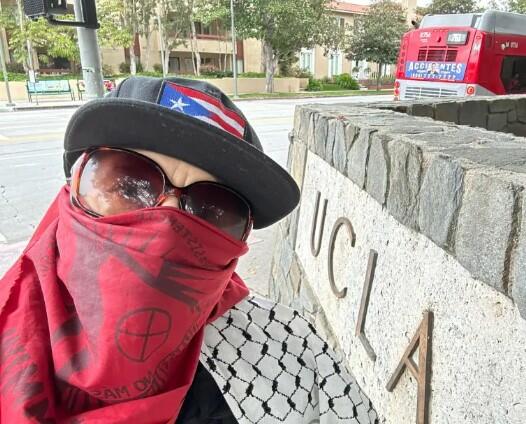
 First-year medical students at UCLA were mandated to attend a lecture by Lisa “Tiny” Gray-Garcia, a supporter of Hamas, who criticized modern medicine as "white science" and urged them to worship "mama Earth", according to a new report from the New York Post.

During the presentation, which was part of the school's curriculum, Gray-Garcia covered her face with a keffiyeh and drew parallels between homelessness and the situation in the Gaza Strip, as shown in a video posted online.

The lecture titled “Housing (In)justice in LA: Addressing Unhousing and Practicing Solidarity” was delivered at the medical school’s Geffen Hall. Naturally, it triggered a complaint by the university’s Jewish Faculty Resilience Group.

Gray-Garcia has, on social media, claimed that the October 7 attack was justified the next day.

She wrote: “As we hold our relatives in Occupied Palestine, and all of Mama Earth in prayer and love, we need to make connections. For us houseless, indigenous, swept/evicted people — we [are] not separate from this struggle — we suffer from the same settler colonial terror.”

The "lecturer" / Photo: Facebook

She then wrote on November 1: “When you resist after decades of relentless policing, killing and terrorizing, that’s not ‘terrorism,’ that’s justice.”

Gray-Garcia said during her totally normal, well-adjusted speech: “Mama Earth was never meant to be bought, sold, pimped or played."

The New York Post reported that Gray-Garcia posted on Tik Tok stating: “Not only are our bodies considered unclean in public, not only are our lives criminalized for being outside without a roof, but politricksters use us for their campaigns.” 

The Post, citing the Washington Free Beacon wrote:

Gray-Garcia went on to note that California spent $30 million “on the removal of our houseless bodies” and asked students to think about how many homes could be built with that money “even in these inflated, ridiculous prices of commodified Mama Earth.”

At another point during the lecture, Gray-Garcia is said to have called modern medicine “white science” and said they were in “what the settlers call LA,” according to the Free Beacon.

She also reportedly led students in a chant of “Free, free Palestine," the report says. Riveting stuff.

Fox News spoke with some students about the event, one of which called it "crazy" and added: “I was very deeply offended and disgusted...I think even probably all students who stood up [during the prayer], a good number felt unsettled regardless of your religious persuasion."

“I think a lot of the students have the sense that this is weird or out of place.”

The Jewish faculty group wrote to UCLA's Chancellor, saying it should have "never" taken place, according to the report: “If anything of that ilk managed to occur on campus notwithstanding efforts to avoid it, the immediate obligation of all administrative staff should have been to end it immediately and to support the students who have been mistreated.” 

“Instead, staff acted exactly to the contrary of their duties.” They wrote that Gray-Garcia also once came to campus wearing a “terrorist-themed costume.”

Tell us again how this helps doctors solve medical issues?

https://www.zerohedge.com/markets/ucla-med-school-forces-students-attend-hamas-supporters-lecture-housing-injustice

Yellen says 'tough conversations' needed on China's overproduction

 Treasury Secretary Janet Yellen said Sunday during her trip to Beijing that the U.S. and China have a "duty" to manage the complex relationship between the countries responsibly and raised concerns about the impact of Chinese firms' overproduction in several key industries.

Yellen met with Chinese Premier Li Qiang, the number two official in the Chinese Communist Party (CCP) behind General Secretary Xi Jinping, for 80 minutes in Beijing on Sunday and Li said the U.S. and China should be partners rather than adversaries and touted the "constructive progress" made during her trip. Yellen's trip to China is her second in the last nine months.

"While we have more to do, I believe that, over the past year, we have put our bilateral relationship on more stable footing," Yellen said. "This has not meant ignoring our differences or avoiding tough conversations. It has meant understanding that we can only make progress if we directly and openly communicate with one another."

Among the issues that Yellen said the two countries need to have "tough" conversations about are China's overproduction of electric vehicles (EVS), solar panels and other clean energy components – which Yellen said have hurt producers and jobs in the U.S. and in other countries.

China's subsidies for electric vehicles have helped Chinese automakers like BYD and Geely gain market share in the world's largest car market, as well as turning China into the world's largest auto exporter with production outpacing domestic demand.

The Economist Intelligence Unit forecasts that China's battery manufacturing capacity will outpace demand by a factor of four by 2027 as the EV industry continues to grow. That rapid growth has meant that excess manufacturing capacity could be between 5 and 10 million EVs per year, according to consulting firm Automobility.

A senior Treasury Department official later said that China's excess industrial capacity and the government's support for those industries were discussed at length during the meeting, and that Li showed some willingness for U.S. and Chinese economic teams explore the issue further.

Although there were some differences of opinion, "there was not ideological or inflammatory pushback," the official said, according to a report by Reuters. "It was a much more legitimate conversation of policymakers."

Chinese state media outlet Xinhua on Sunday quoted Li as saying the U.S. should "refrain from turning economic and trade issues into political or security issues" and view production capacity from a market-oriented and global perspective.

Janet Yellen China

Treasury Secretary Janet Yellen raised concerns about China's overproduction in several industrial areas during her visit. (Photo by PEDRO PARDO/AFP via Getty Images / Getty Images)

The outlet quoted Li as saying that China's clean energy sector, where overcapacity concerns are most acute, will support the global energy transition.

"Overcapacity isn't a new problem, but it has intensified, and we're seeing emerging risks in new sectors," Yellen said Friday in remarks during a meeting in China's southern export hub of Guangzhou.

China has doubled down on Xi's mantra of unleashing "new productive forces" through investments in cutting-edge technologies such as EVs as well as commercial spaceflight and life sciences – areas where many U.S. firms hold competitive advantages.

https://www.foxbusiness.com/economy/yellen-says-tough-conversations-needed-on-chinas-overproduction

AACR 2024: What Cancer Researchers Are Talking About

 The American Association for Cancer Research’s annual conference kicked off Friday as more than 20,000 attendees descend on San Diego. Analysts and researchers who spoke with BioSpace said they’re looking forward to early scientific data, and antibody-drug conjugates (ADCs) will be a key focus.

Stay tuned to BioSpace as we keep you updated on all of the biggest data and news from the conference. 


Updated April 7, 8:00 p.m. EST/5:00 p.m. PST:

Regeneron Touts Durability of Multiple Myeloma Candidate 

Regeneron buttressed its regulatory case for linvoseltamab, an investigational bispecific antibody, with the presentation of positive pivotal data from the Phase I/II LINKER-MM1 trial in relapsed/refractory (R/R) multiple myeloma.

After 11 months of follow-up, treatment with the candidate elicited a 71% objective response rate (ORR), with 46% of patients seeing a complete response or better and 62% achieving a very good partial response or better, Regeneron reported. Median times to reach these metrics were eight months and three months, respectively. After 12 months, the estimated probability of maintaining a response was 78%, progression-free survival was 69% and overall survival was 75%. None of these measures were reached, and Regeneron stated that these data “reinforce [a] high response rate that deepens over time in patients with heavily pre-treated multiple myeloma.”

Linvoseltamab’s safety profile in the Phase I/II LINKER-MM1 trial was less positive, with 85% of patients treated with a 200-mg dose experiencing Grade 3 or worse adverse events (AE), Regeneron reported in December 2023. Fourteen patients—12% of the patient population—died due to treatment-emergent AEs, of which 11 were due to infections.

The FDA in February accepted the Biologics License Application for linvoseltamab in fourth-line R/R multiple myeloma. The candidate is also under review with the European Medicines Agency.


BioNTech/Genentech Cancer Vaccine 'Persistent' in Pancreatic Cancer

BioNTech and Genentech’s messenger RNA (mRNA) cancer vaccine candidate, autogene cevumeran, or BNT122/RO7198457, continued to show promise in a particularly difficult-to-treat form of pancreatic cancer three years after treatment, according to an oral presentation Sunday at AACR. Specifically, patients with resected pancreatic ductal adenocarcinoma (PDAC) continued to see polyspecific T-cell responses and delayed tumor recurrence.

Persistence of T cells “was associated with a longer median recurrence-free survival in cancer vaccine responders,” BioNTech reported in a press release. The company called the results an “early signal” of the candidate’s potential in this indication. PDAC carries a 5-year overall survival rate of only 8% to 10%.

Autogene cevumeran, being jointly developed by BioNTech and Genentech, is currently being studied in three ongoing Phase II clinical trials in adjuvant PDAC, first-line melanoma and adjuvant colorectal cancer.


Opdivo Shows Promise in Neoadjuvant Pancreatic Cancer 

Bristol Myers Squibb’s PD-1 inhibitor Opdivo, when combined with several types of chemotherapy prior to surgery, may improve outcomes for pancreatic cancer patients, a pilot study presented at AACR’s annual meeting on Sunday revealed.

The study observed 24 of the 28 trial participants who were given the Opdivo and chemotherapy combination before surgery and had no grade 2 post-operative fistulas. After two years, the combination led to a median progression-free survival rate of 34.8 months; the median overall survival rate was recorded at 35.1 months. No unexpected safety signals were reported, and the addition of Opdivo did not increase the rates of grade three adverse events.

This is the first trial reported of a PD1 inhibitor in neoadjuvant pancreatic cancer, according to the abstract. A Phase II trial is underway.

https://www.biospace.com/article/aacr-2024-what-cancer-researchers-are-talking-about/