Search This Blog

Friday, April 12, 2024

Prices and Complications in Hospital-Based and Freestanding Surgery Centers

James C. Robinson, PhD, MPH
Christopher M. Whaley, PhD

ABSTRACT

Objectives: To quantify differences in prices paid and procedural complications incurred in hospital outpatient departments (HOPDs) and freestanding ambulatory surgery centers (ASCs).

Study Design: Observational study using deidentified 2019-2020 insurance claims from Blue Cross Blue Shield insurance plans nationally, with information on prices paid and complications incurred for colonoscopy, knee or shoulder arthroscopy, and cataract removal surgery.

Methods: The data include 1,662,183 patients who received a colonoscopy, 53.5% of whom were treated in HOPDs; 259,200 patients who underwent arthroscopy, 61.0% of whom were treated in HOPDs; and 173,664 patients who had cataract removal surgery, 34.7% of whom were treated in HOPDs. Multivariable linear regression methods were used to identify the associations between HOPD and ASC site of care, prices, and complications after adjusting for patient demographics, risk, and geographic market location.

Results: After adjusting for patient characteristics, risk, and geographic market location, prices paid in HOPDs were 54.9% higher than those charged in ASCs for colonoscopy (95% CI, 53.6%-56.1%), 44.4% higher for arthroscopy (95% CI, 43.0%-45.8%), and 44.0% higher for cataract removal surgery (95% CI, 42.9%-45.5%). Adjusted rates of complications were slightly higher in HOPDs than ASCs for colonoscopy over a 90-day interval but similar over the 7- and 30-day intervals. Rates were statistically and clinically similar between the 2 sites of care for arthroscopy and cataract removal.

Conclusions: The higher prices charged in HOPDs for the 3 ambulatory procedures were not balanced by better quality—as measured by rates of procedural complications—compared with procedures performed in nonhospital ASCs.

Am J Manag Care. 2024;30(4):179-184. https://doi.org/10.37765/ajmc.2024.89529

https://www.ajmc.com/view/prices-and-complications-in-hospital-based-and-freestanding-surgery-centers

Biden Punishes Drillers With 15-Fold Increase In Permitting Costs, To Block Arctic Oil Extraction

 One week after the Biden administration slapped new regulations on key power grid components, the Washington Post reports that US oil and gas companies will face a 15-fold increase in costs to drill on federal land, under a new rule released on Friday.

Under it, the Interior Department's Bureau of Land Management will require drillers to pay $150,000 per lease on federal lands, up from $10,000 - the first comprehensive update to the federal oil and gas leasing program in over three decades.

Fossil fuel companies will also be required to pay higher royalties to the government on oil and gas extracted from federal lands - jumping from 12.5% of revenue to 16.67%.

That's not all...

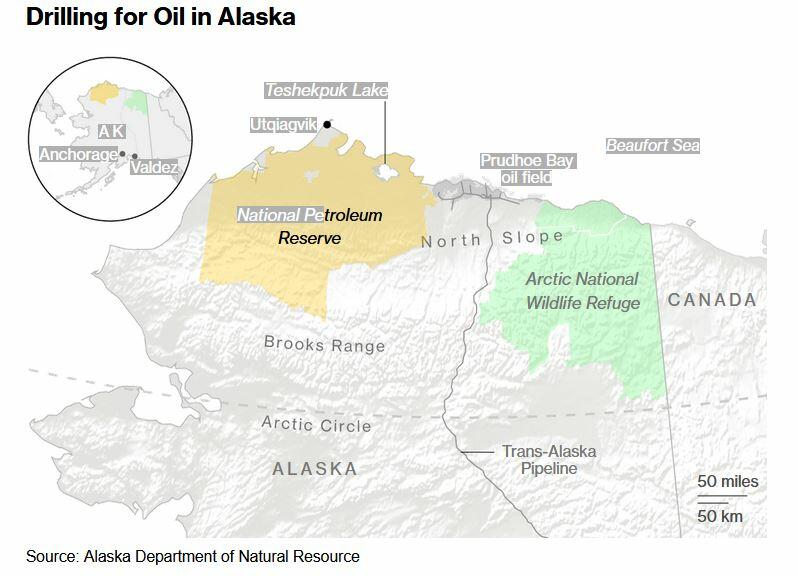
The rule comes as the Biden administration readies a sweeping plan to limit future oil drilling across roughly 13 million acres of Alaska's North Slope, which the US set aside a century ago as an emergency supply.

That initiative, set to be finalized in the coming days per Bloomberg, comes as both oil executives and Alaska lawmakers have sounded the alarm over the plan - saying that it could thwart oil and gas development throughout the reserve, even on existing leases.

The Interior Department said in a preamble the regulation wouldn’t affect existing leases. But the proposed rule text doesn’t offer similar, explicit assurance. Instead, it proposes to give the government broad authority to limit or bar access to existing leases, “regardless of any existing authorization.” Oil leasing and infrastructure development would be presumed not to be permitted unless specific information clearly demonstrates the work can be done with “no or minimal adverse effects” on the habitat.

"This would be bad for America’s energy security," Sen. Lisa Murkowski (R-AK) said on X, adding "It would openly defy federal law while ignoring rising energy prices and growing global volatility. "

"It would yet again sanction Alaska instead of nations like Russia, Iran, and Venezuela," she added.

The Biden administration has argued that the changes are necessary to protect 'sensitive landscapes' that provide habitat for polar bears, migratory birds and caribou.

"We must do everything within our control to meet the highest standards of care to protect this fragile ecosystem," said Interior Secretary Deb Haaland said in announcing the measure last year, Bloomberg continues.

How very inflationary...

https://www.zerohedge.com/political/biden-punishes-drillers-15-fold-increase-permitting-costs-plans-block-arctic-oil

How much will taxpayers foot for Biden's student loan handouts? A half-trillion: UPenn's Wharton

 The White House announced another student loan handout on Friday, bringing the total number of borrowers who have received President Biden’s debt relief so far to 4.3 million. According to the White House, the total student loan cancellation sum is a whopping $153 billion.

"Today, my Administration is canceling student debt for 277,000 more people, bringing the total number of Americans who have been approved for debt relief so far under my Administration to 4.3 million borrowers through various actions," Biden said Friday via the White House.

As for who is footing the bill, Biden has proposed "no new revenue to cover the cost, which means it goes straight on top of the pile of what America owes to its creditors."

So, how much do taxpayers have to pay to afford these programs? According to the Wharton School of the University of Pennsylvania, the sum tops a half-trillion.

On Thursday, the Wharton School's newsletter Budget Model released an analysis of the student loan debt relief provisions which Biden announced on Monday and added that sum to a previous analysis of Biden’s new Income-Driven Repayment ("SAVE") plan.

"We estimate that the New Plans will cost $84 billion in addition to the $475 billion that we estimated for President Biden’s SAVE plan, for a total cost of about $559 billion across both plans," said the analysis.

Biden’s forgiveness proposal announced on Monday included five main provisions, the Department of Education said.

placeholder

These include: Waiving accrued and capitalized interest for millions of borrowers; automatically discharging debt for borrowers otherwise eligible for loan forgiveness under SAVE, even for those who do not enroll in the program; eliminating student debt for borrowers in repayment for 20 years or more; helping borrowers who enrolled in low-financial-value programs or institutions; and, assisting borrowers who experience hardship in paying back their loans.

"These historic steps reflect President Biden’s determination that we cannot allow student debt to leave students worse off than before they went to college," U.S. Under Secretary of Education James Kvaal said in Monday’s announcement. "The President directed us to complete these programs as quickly as possible, and we are going to do just that."

According to the Wharton School newsletter, the plans include "debt relief for about 750,000 individuals residing in households that, on average, earn $312,977 in annual household income."

The analysis also found most of the cost of these plans comes from waiving interest.

"Of the $84 billion, about $58 billion comes from waiving accrued and capitalized interest. The second-largest cost of $19 billion stems from eliminating debt for borrowers in repayment for 20 years or more (or 25 years with graduate student debt)," the analysis said. 

It continued: "The remaining $7 billion is associated with assisting borrowers who are experiencing hardship, which we interpret to imply shorter-term income or cost shocks that are otherwise not covered by the SAVE plan. The costs associated with the other two provisions have already been almost fully accounted for in our previous analysis of the SAVE plan, thereby producing no additional material costs for the New Plans."

Despite the U.S. Supreme Court ruling last summer that Biden’s sweeping student loan handout was illegal, he is forging ahead with additional loan forgiveness initiatives — and he’s not backing down.

"From day one of my Administration, I promised to fight to ensure higher education is a ticket to the middle class, not a barrier to opportunity. I will never stop working to cancel student debt – no matter how many times Republican elected officials try to stop us," Biden said Friday.

The White House has contended the relief of debt would encourage those impacted to increase how much they spend, thus giving some return to the economy. 

https://www.foxbusiness.com/politics/how-much-will-taxpayers-foot-bidens-student-loan-handouts-half-trillion-upenns-wharton-school

Gulf Allies Warn US Not To Launch Strikes On Iran From Their Territory

 America's Gulf allies say they don't want to get caught in the crossfire of any potential US/Israel and Iran shooting war. The United States has made it clear that it is ready to assist Israel in any potential response to Iranian attack. Tehran is poised to imminently retaliate for the April 1st Israeli airstrikes on its embassy in Damascus.

The Arab Gulf countries are worried that the US could launch attacks on Iran from their territories or airspaceMiddle East Eye (MEE) reports, "Gulf monarchies are urging the US not to use American military bases on their territories to strike in response to any potential Iranian attack on Israel," according to security sources.

"The US's Gulf allies are working overtime to shut down avenues that could link them to a US reprisal against Tehran or its proxies from bases inside their kingdoms, according to a senior US official who spoke with MEE on condition of anonymity," the report continues. 

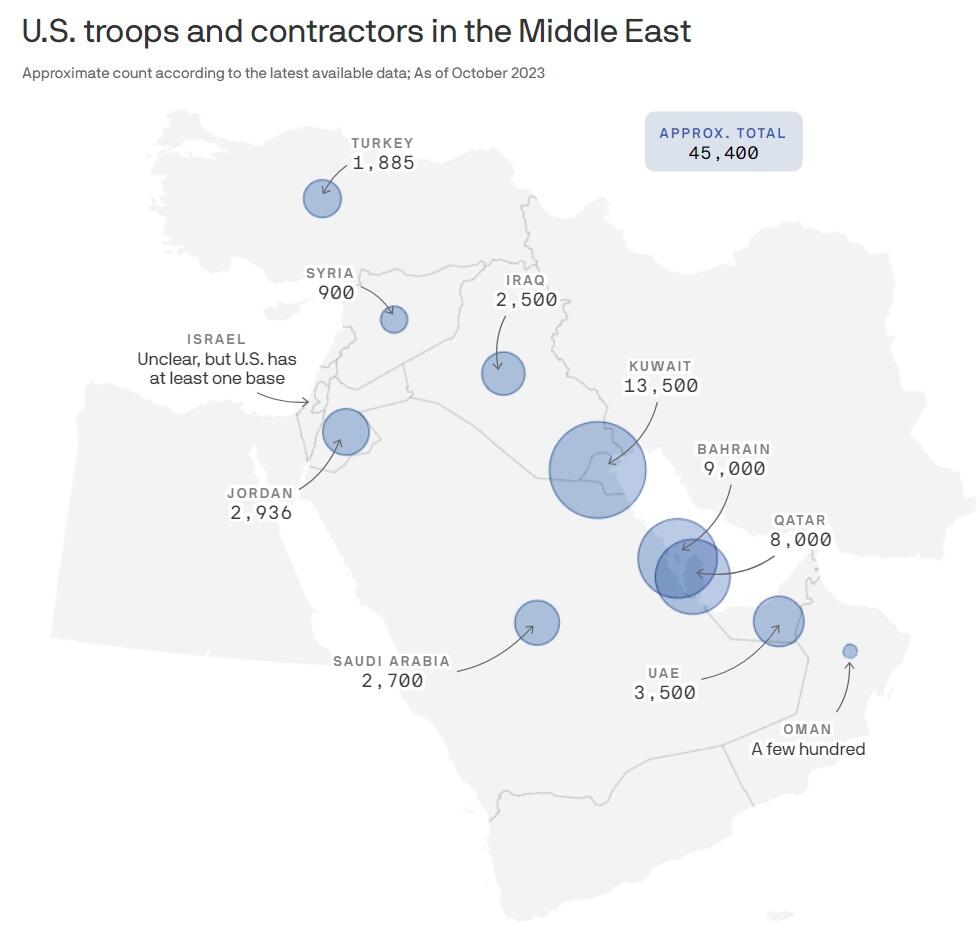
This is to include warplanes, as the US Air Forces utilizes various airbases in the region. US allies said to have expressed serious concern include Saudi Arabia, the UAE, Oman and Kuwait.

Naturally, these countries are worried that Iran could strike back directly on their territories in response to any potential US strikes.

MEE writes that these have "raised questions about the intricate details of basing agreements that permit tens of thousands of US troops to be stationed across the oil-rich peninsula." Further, "They are also moving to prevent US warplanes from flying over their airspace in the event the US conducts a retaliatory strike on Iran."

Rumors have persisted throughout Friday that some countries have even warned that US troops could be banned from their territories should the US carry out aggression against Iran from out of the Gulf region, but such specific threats of shuttering bases have not been confirmed.

Amid reports that the US is now bolstering its its forces and readiness across the region, the below is the latest from President Biden:

US President Joe Biden said on Friday his message to Iran, which has threatened to take military action against Israel, is "don't."

Speaking to reporters, Biden also said: "We are devoted to the defense of Israel. We will support Israel. We will help defend Israel and Iran will not succeed."

Biden and his top officials have of late repeatedly vowed an "ironclad" commitment to ensuring Israel's defense. However, there's reportedly some fierce division among his National Security Council over what precisely this might look like.

Iran has already said that if the US intervenes directly on Israel's behalf, American bases in the region will be struck. In the opening months of the Israel-Gaza war, US bases in Western Iraq and Eastern Syria were repeatedly hit by drone, rocket and mortar fire, but such attacks have calmed of late.

Middle East Eye has reviewed the major Gulf bases where US troops are housed as follows:

Saudi Arabia’s Prince Sultan Airbase is home to the US’s 378th Air Expeditionary Wing which operates F-16 and F-35 jet fighters. The US operates MQ-9 Reaper drones and jet fighters out of the UAE’s Al Dhafra Air Base. Kuwait’s Ali al-Salem Air Base is home to the 386th Air Expeditionary Wing.

Qatar’s Al Udeid Air Base hosts the regional headquarters for US Central Command. It has also hosted some Israeli military officials, MEE has previously reported, but it's not clear if those officials are still in the country.

The island kingdom of Bahrain is home to around 9,000 US troops who belong to the headquarters of the US Naval Forces Central Command and the US Fifth Fleet. Oman also allows the US military overflights and port calls. 

Source: Axios research; Map: Kavya Beheraj/Axios

US officials are still predicting a major Israeli attack on Israel to come anywhere between 24 and 48 hours. Israel's home command is at the same time urging the public "not to panic", also as hospitals are placed on high alert.

https://www.zerohedge.com/geopolitical/gulf-allies-warn-us-not-launch-strikes-iran-their-territory

How the Inflation Reduction Act Failed to Reduced Electricity Costs in Pictures

 Let’s check in on the not exactly impressive energy and inflation results of Biden’s Inflation Reduction Act (IRA).

Data from the BLS, chart by Mish

Biden’s energy policy has been an inflationary disaster. And make no mistake, the IRA was nothing but energy policy, more precisely, climate policy.

The Inflation Reduction Act Is a Climate Bill

Bloomberg flashback, August 15, 2022: The Inflation Reduction Act Is a Climate Bill. Just Don’t Call It One.

“It does seem kind of wacky and counterintuitive for the most consequential climate legislation ever to be called the ‘Inflation Reduction Act,’” says Angela Bradbery, a professor of public interest communications at the University of Florida’s journalism school. “For the public, it’s probably more confusing than anything.”

Congress once passed bills with simpler and more intuitive names, such as the Clean Air Act. But today’s political and media landscape demands that legislation be packaged to steer public debate in a direction the sponsors can better manage. 

“Words matter. Names matter,” says Ed Maibach, director of George Mason University’s Center for Climate Change Communication. “Inflation and the price of gas are top of mind concerns for most Americans today, so calling the bill the Inflation Reduction Act was a stroke of rhetorical genius.”

Since the IRA’s surprise unveiling on July 27, analysts have debated how much its contents pertain to inflation. “The IRA speaks to the high energy costs” Americans are struggling with, says Stokes.

Hoot of the Day: Rhetorical Genius

In retrospect, the name is such a disaster that Biden even admits so.

Green New Deal by Another Name

Biden’s Green-Energy Price Shock

The Wall Street Journal comments on Biden’s Green-Energy Price Shock

Do White House officials pay electric bills? They strangely keep saying the President’s climate agenda is reducing electric-power rates even as the cost of running your dishwasher is sky-rocketing, as illuminated by the Labor Department’s consumer-price index.

By our calculation, electricity prices have increased 13 times faster under Mr. Biden than across the previous seven years. His policies aren’t entirely to blame. But most of it is a result of the left’s climate agenda, and the price increases will get worse.

Federal regulations, renewable subsidies and state green-energy mandates are forcing fossil-fuel and nuclear plants to retire prematurely. Solar and wind need backup from so-called peaker gas plants, usually at a hefty premium. During power shortages, spot prices can hit $10,000 per megawatt hour compared to $30 to $60 on a normal basis.

State net-metering programs also subsidize people with solar panels for excess power they remit to the grid. People without solar then pay more for the grid’s fixed costs, which are also growing as more renewables are added. In California an average customer without solar pays 10% to 20% more to subsidize solar.

How Much Did the IRA Cost?

It’s much worse than Moore suggests.

Inflation Reduction Act Cost

The following chart is courtesy of Penn Wharton.

A year ago I commented The Inflation Reduction Act Price Jumps From $385 Billion to Over $1 Trillion

The true costs begin to emerge. 

The key word in that sentence is “begin”. Expect more revisions to this newly revised $1 trillioncost estimate. 

Nothing in the bill will reduce inflation. It was a known lie right from the start.

Bear in mind, the $1 trillion and counting estimate does not factor in higher energy costs for consumers and businesses.

So let me ask again: How Much Did the IRA Cost?

It’s Been a Bloody Month for Bond Market Bulls

If you are a bond market bull, it’s been a tough month. Let’s review what happened, why, and what’s ahead.

US Treasury Yields from the New York Fed as of 2024-04-10

Earlier today I noted It’s Been a Bloody Month for Bond Market Bulls

Summation

The inflationary pressures include demographics, the IRA, energy policy, regulations, tariffs, child tax credits unless the Senate kills that, and another unconstitutional push by Biden for student debt cancellation.


https://mishtalk.com/economics/how-the-inflation-reduction-act-failed-to-reduced-electricity-costs-in-pictures/ 

Surgery May Be More Cost-Effective Than Wegovy in Adults With a BMI 35+

 A certain type of bariatric surgery may prove more cost-effective over time than a popular weight loss drug, an economic evaluation study suggested.

In an analysis of adults with class II obesity (BMI 35-39.9), endoscopic sleeve gastroplasty (ESG) added 0.06 more quality-adjusted life-years while costing $33,583 less than semaglutide (Wegovy) over 5 years, Christopher Thompson, MD, MSc, of Brigham and Women's Hospital in Boston, and colleagues found.

To be on par with sleeve gastroplasty in terms of cost-effectiveness over a 5-year span, the annual price of semaglutide would have to drop from $13,618 to $3,591, they estimated in JAMA Network Openopens in a new tab or window.

The results suggest "that while semaglutide is effective for weight loss, it is not economically viable over the long term compared with ESG, which remains a cost-saving alternative for this patient population," the researchers wrote.

The findings also fall in line with the conclusions from an Institute for Clinical and Economic Reviewopens in a new tab or window (ICER) analysis that the price of semaglutide needs to be lowered to be cost-effective compared with lifestyle modification, they added.

"The strategic choice of cost-saving yet effective treatment such as ESG compared with semaglutide for specific patient groups could help alleviate the potential budget strain expected from the use of semaglutide," Thompson and co-authors explained. "Given the high prevalence of obesity in the U.S., there is a growing need for cost-effective interventions that can be made accessible to the broader population -- to those without the ability to pay out of pocket or from limited use of effective interventions because of budget constraints -- to address the obesity pandemic."

The popular GLP-1 receptor agonist injectable was first approvedopens in a new tab or window in 2017 for type 2 diabetes under the trade name Ozempic, and was approved in 2021 at a higher 2.4 mg dose for chronic weight management under the name Wegovyopens in a new tab or window. Last month, semaglutide 2.4 mg also picked up an indicationopens in a new tab or window to reduce the risk of cardiovascular death, heart attack, and stroke in adults with cardiovascular disease and either obesity or overweight. With this new indication, Medicare announced it will coveropens in a new tab or window the weight-loss formulation of semaglutide under its Part D drug program for this patient population.

In their economic evaluation, Thompson and co-authors used a base case of a 45-year-old patient with a BMI of 37 treated with two different strategies from September 2022 through May 2023. All costs were adjusted to 2022 U.S. dollars.

Clinical outcomes were based on the clinical trials testing both obesity treatment strategies: the STEP 1 trial of semaglutideopens in a new tab or window and the MERIT trial of endoscopy sleeve gastroplastyopens in a new tab or window. The semaglutide trial excluded all patients with type 2 diabetes, while the surgical trial conditionally included patients with diabetes.

Also considered in the analysis were adverse events associated with each of the two treatment strategies. This included patients on semaglutide stopping treatment due to medication intolerance and surgical patients running into issues such as surgical revision. With the minimally invasive, incisionless endoscopic procedure, surgical patients were assumed to have an initial quality-of-life decrement for the first week after surgery. Meanwhile, it was assumed around 20% of semaglutide patients wouldn't adhere to treatment.

For the base case, the surgical treatment yielded the most quality-adjusted life-years accumulated over 5 years: 3.55 for no treatment, 3.60 for semaglutide, and 3.66 for sleeve gastroplasty. Endoscopic sleeve gastroplasty sustained greater weight loss over this timeframe than semaglutide -- a BMI of 31.7 vs 33.0.

Endoscopic sleeve gastroplasty had an incremental cost-effectiveness ratio of -$595,532 per quality-adjusted life-year over a 5-year time horizon compared with semaglutide. Over 1 year, ESG was not cost-effective compared with semaglutide but when the horizon was extended to 2 years, ESG became cost-saving.

The analysis estimated cost-effectiveness in a patient with class II obesity and findings may not apply to milder cases of obesity or overweight, the researchers acknowledged. Thompson's group also said they didn't include improvement in comorbidities in their model from either treatment, like improvement in hypertension, hyperlipidemia, or type 2 diabetes.

Disclosures

The study was supported in part by a grant from the National Institutes of Health.

Thompson and co-authors reported relationships with Apollo Endosurgery, Boston Scientific, Endoquest Robotics, Fractyl, Fujifilm, GI Dynamics, Lumendi, Olympus, USGI Medical, Medtronic, Softac, Xenter, ERBE, Bariendo, Blueflame Healthcare, ELLES, EnteraSense, EnVision Endoscopy, GI Windows, the Society for Metabolic and Bariatric Endoscopy, Value Analytics Labs, Spatz, USGI Medical, and EndoSim.

Primary Source

JAMA Network Open

Source Reference: opens in a new tab or windowHaseeb M, et al "Semaglutide vs endoscopic sleeve gastroplasty for weight loss" JAMA Netw Open 2024; DOI: 10.1001/jamanetworkopen.2024.6221.


https://www.medpagetoday.com/endocrinology/obesity/109644

'More Medicare $$ Needed to Pay Docs for Treating the Chronically Ill, Senators Told'

 Physicians need to be paid better for taking care of chronically ill patients, and they should also be relieved of onerous paperwork burdens such as prior authorizations, senators and witnesses agreed Thursday at a Senate Finance Committee hearing

opens in a new tab or window.

"Medicare Physician Fee Schedule payments have declined by more than 25% over the past two decades, as clinicians continue to face skyrocketing costs for overhead, equipment, supplies, and staffing needs," said Sen. Mike Crapo (R-Idaho), the committee's ranking member. "The colossal gap between stagnant fees and steep inflation poses a dire threat to long-term patient access."

"For many specialists recent regulatory changes have further intensified these issues, as new billing codes and valuation shifts have triggered drastic cuts under the program's budget neutrality rules," he continued. Because of those rules, "a payment bump for primary care prompts payment reductions for entirely unrelated procedures and services."

"Nine years ago, Congress took concerted action to repeal the draconian sustainable growth rate system, which had threatened cascades of dramatic cuts," Crapo said. "In enacting the Medicare Access and CHIP Reauthorization Act (MACRA), policymakers sought to stabilize the fee schedule and incentivize value-based care. In practice, these reforms have largely failed. The Merit-based Incentive Payment System (MIPS) aimed to establish an accessible on-ramp to participation in quality-driven alternative payment models, or APMs. Instead, this system has buried clinicians in dozens of hours of paperwork each year."

A Fragmented System

The fragmentation of care under the Medicare program is also problematic, said hearing witness Amol Navathe, MD, PhD, professor of health policy and medicine at the University of Pennsylvania, in Philadelphia. "Medicare beneficiaries with chronic conditions see more than five physicians concurrently," he said. "My colleague Matt Press [Matthew Press, MD, MSc, medical director of Penn Medicine's Primary Care Service Line] found that over just 3 months, it takes a PCP [primary care physician] over 50 interactionsopens in a new tab or window with other clinicians and the patient to actively coordinate care for just one important clinical condition."

"With good intentions, CMS [the Centers for Medicare & Medicaid Services] has attempted to [help by] adding more billing codes," said Navathe, who was speaking for himself. "But reducing the important work of clinicians to a list of codes is a fraught task. The result is an administratively complex system of ticky-tack codes that are underused because the cost of billing them is itself unprofitable."

"Addressing fragmentation will require a new way of care, which in turn will require substantial changes to physician payment," Navathe added. "Simply adding more dollars to the current system won't be enough. Physician groups need to be able to invest in new capabilities, use technologies like telehealth when safe, efficient, and effective, and staff practices differently." He advised starting with paying primary care physicians a set monthly fee, in addition to their fee-for-service payments, to compensate them for care coordination and other tasks.

Committee chair Sen. Ron Wyden (D-Ore.) was especially floored by Navathe's comment about the 50 interactions. "We have had some jaw-dropping testimony around here over the years, but to hear that one patient [required] 50 interactions ... That was really extraordinary," Wyden said.

Sen. Marsha Blackburn (R-Tenn.) asked about the usefulness of the MIPS program, which requires physicians to choose from a list of quality measures that they need to report on. "The experience that my colleagues and I have had under MIPS has been one that, frankly, hasn't been that effective," said Navathe. "It's unclear that the measures that we're reporting on are actually in keeping with what beneficiaries really care about. And I think that's a fundamental disconnect."

MIPS's "choose your own adventure" approach makes it very hard to collect a standardized data set, he said. "I think it's very challenging to improve MIPS by making marginal changes to it. I think most likely we need to reimagine it completely and potentially replace it."

Prior Authorization Issues

The hassles caused by prior authorization rules also came under discussion. Sen. Sheldon Whitehouse (D-R.I.) said he and some colleagues were working on a bill that would require Medicare Advantage plans, which are run by private insurers, to get upfront approval from CMS before requiring prior authorization from a provider for a particular procedure. "We've been focusing on applying that to providers that are under a value-based model and have shown that they succeeded" in lowering their costs and qualifying for a payment bonus, he said.

"Presumably, they have no interest in running up bills that would raise their costs and diminish their payment at the end of the day," Whitehouse said. "It doesn't make sense to apply a prior authorization to a provider who has successfully engaged in an at-risk value-based practice. And so we're looking at trying to get rid of that, or make them at least come in first to CMS and say, 'You've got to authorize me requiring prior authorization.'"

Steven Furr, MD, president of the American Academy of Family Physicians, said that although he doesn't have a problem with prior authorization for more expensive procedures and treatments, he does have a problem "when it comes to basic drugs and basic things we need to do. Just to give you a perfect example, if I have a patient with acute [pain in the] abdomen, it's easier to send them to the emergency room -- because they don't have to get a prior authorization there to do a CT scan -- than to do it in my office because it would take me a day or two to get the prior authorization for it," Furr said.

That's just one example of how "prior authorizations, which are meant to control costs, in many ways actually increase costs," he continued. In another instance, "sometimes the best drug might be a more expensive drug that is better for the patient, because it might lower their cardiovascular risk along with taking care of their diabetes or hypertension. So there are all kinds of issues with prior authorization that keep us from providing the best care that we can, and actually drive up costs."

Concerns About the RUC

Medicare's Resource-Based Relative Value Scale Update Committee (RUC), a group of physicians convened by the American Medical Association to develop reimbursement codes along with their "relative values" for use in the Medicare Physician Fee Schedule, also came in for its share of criticism. At the hearing, Sen. Elizabeth Warren (D-Mass.) referred to the RUC as "a secretive committee run by the American Medical Association [that] has played an outsized role in recommending the relative value of physician services, and it has overwhelmingly recommended that specialty services are worth a whole lot more than primary care."

She asked Navathe why that might be true. "The methodology that the committee uses heavily values inputs like time, differentiated skill, and intensity, and these are easier to estimate for concrete things like doing a surgical procedure, more so than a cognitive activity like diagnosing a patient effectively," Navathe said. In response to another question from Warren, he said the committee has an "overrepresentation" of specialists compared with primary care doctors.

Warren said she "strongly agreed" with a recommendation by some medical groups, including the National Academy of Medicine and the Government Accountability Officeopens in a new tab or window, to change the committee structure so that primary care is adequately paid.

https://www.medpagetoday.com/publichealthpolicy/medicare/109636