Search This Blog

Monday, December 9, 2024

Key Findings on Fraud and Abuse from the COVID Select Committee’s Report


On December 4, the Select Subcommittee on the Coronavirus Pandemic of the House Committee on Oversight and Accountability approved a report titled “After Action Review of the COVID-19 Pandemic: the Lessons Learned and a Path Forward.” The 520-page report offers dozens of findings ranging from the origins of COVID-19 virus to the effectiveness of the public health and benefits response and beyond.

Expanded and entirely new benefit programs helped millions affected by COVID and related shutdowns, but the subcommittee also found that “Rampant fraud, waste, and abuse plagued the COVID-19 pandemic response.” The subcommittee reviewed improper payments involving several programs, and their key findings outlined below largely mirror themes Amy Simon and I found in our February 2024 report on improper unemployment benefits. Collectively, the findings should guide lawmakers as they consider reforms to current programs and the proper design of future emergency benefits. 

Ten Key Findings on Improper Payments from the Subcommittee Report

  1. COVID-19, and the government’s response to it, caused significant harm to the labor market and millions of workers.
    • “The COVID-19 pandemic had a profound impact on the U.S. labor market. The rapid spread of the virus led to widespread lockdowns, social distancing measures, and a sudden halt in economic activity. As a result, unemployment rates in the U.S. surged to levels exceeding the 2007-09 Great Recession and not seen since the 1929-39 Great Depression.”

  2. Especially the federal government massively expanded existing and new benefit programs to assist displaced workers.
    • The novel Paycheck Protection Program (PPP) had total funding of almost $814 billion, while the Economic Injury Disaster Loan (EIDL) program “disbursed over $400 billion.”
    • An array of existing and novel unemployment benefit programs provided “an estimated $872 billion” in total assistance.

  3. Unprecedented amounts were lost to improper payments and fraud.
    • “At least 17 percent of all COVID-19 EIDL and PPP funds were disbursed to potentially fraudulent actors. This amounted to approximately $200 billion in fraudulent payments.”
    • The DOL Inspector General “found that at least $191 billion was wrongfully paid out to bad actors” who exploited unemployment benefit programs.

  4. A key factor was the drive to get money out the door quickly.The federal Pandemic Unemployment Assistance (PUA) program proved especially vulnerable to abuse.
    • “These programs were implemented rapidly as Congress, governors, and state legislatures pushed for state workforce agencies to distribute funds efficiently.”
    • “The auditors largely attributed these deficiencies to SBA’s prioritization of the rapid implementation of CARES Act provisions over the establishment of effective internal controls.”

  5. The federal Pandemic Unemployment Assistance (PUA) program proved especially vulnerable to abuse.
    • “In August 2023, DOL reported an improper payment rate of 35.9 percent for the PUA program.”
    • “During the first nine months of the program, claimants were not required to provide any documentation or evidence of earnings.”
    • “This absence of robust verification measures allowed criminals to exploit the system.

  6. Even when discovered, key flaws remained unaddressed.
    • “In an October 2020 report, SBA IG highlighted deficiencies such as inadequate responses to fraud alerts and the issuance of duplicate loans. The IG issued ten recommendations, including the review of suspicious loans and the strengthening of verification controls. While SBA partially agreed with these recommendations and took some corrective actions, many of the concerns raised by both OIG and GAO were not immediately resolved.”

  7. Self-certification of eligibility was a major problem.
    • “During the pandemic, many agencies allowed applicants to self-certify their eligibility for programs, which led to significant fraud and improper payments.”
    • “During the PUA’s first nine months of extended eligibility, claimants were able to self-certify their prior employment or self-employment without any documentation to receive funds.

  8. Identity thieves exploited gaps in the system.
    • “Fraudsters exploited the federal government’s pandemic relief programs by using the SSNs of deceased people and federal prisoners to receive unemployment benefits.”
    • “Most of these losses could have been prevented if Congress and Federal agencies provided up-to-date technologies along with proper verification methods for oversight, something GAO has been specifically recommending for more than ten years.”

  9. International criminal gangs were behind much of the abuse.
    • Transnational “criminal networks engaged in large-scale operations that submitted fraudulent claims, laundered illicit funds through financial systems, and transferred proceeds across borders.”
    • “It is estimated that at least half of the federal funds lost through the PPP and UI relief programs were stolen by international fraudsters.”

  10. Some states proved especially vulnerable to abuse.
    • California’s Employment Development Department “consistently missed critical deadlines and submitted incomplete reports….such failures impeded oversight efforts and exposed taxpayer funds to greater risk of fraud.”

Matt Weidinger is a Senior Fellow and Rowe Scholar at the American Enterprise Institute


4 Years Later, No Letup in Jan. 6 Prosecutions

 by Julie Kelly

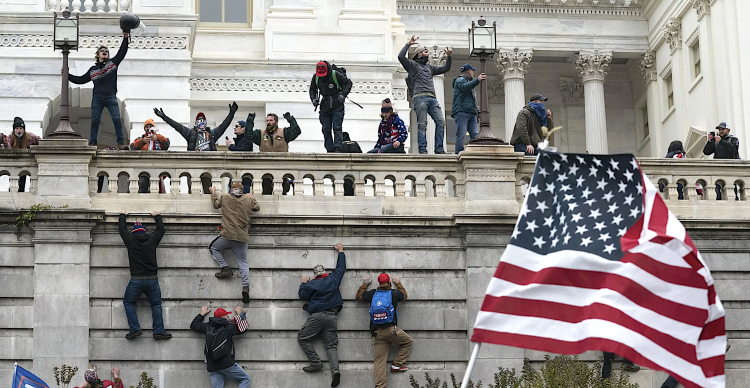
Even as President-elect Donald Trump promised on Sunday to act “very quickly” on pardons for many of the protesters involved in the events of January 6, the Biden administration’s Justice Department is continuing to arrest and try people for actions that occurred almost four years ago while opposing motions to delay trials because of the need for “the prompt and efficient administration of justice.”

AP
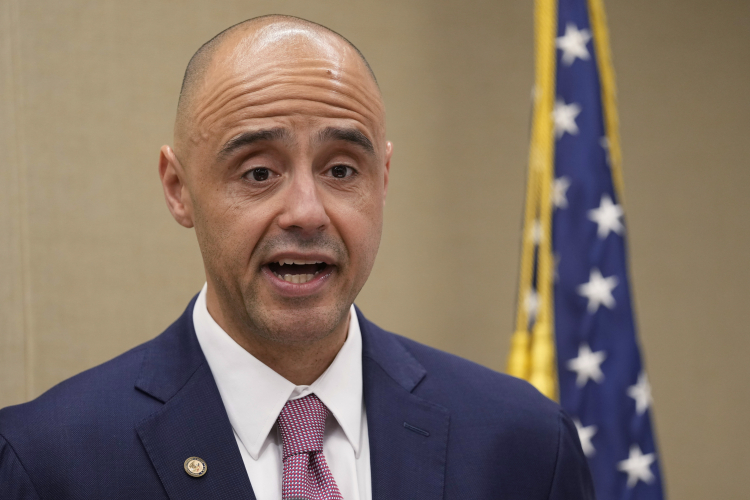
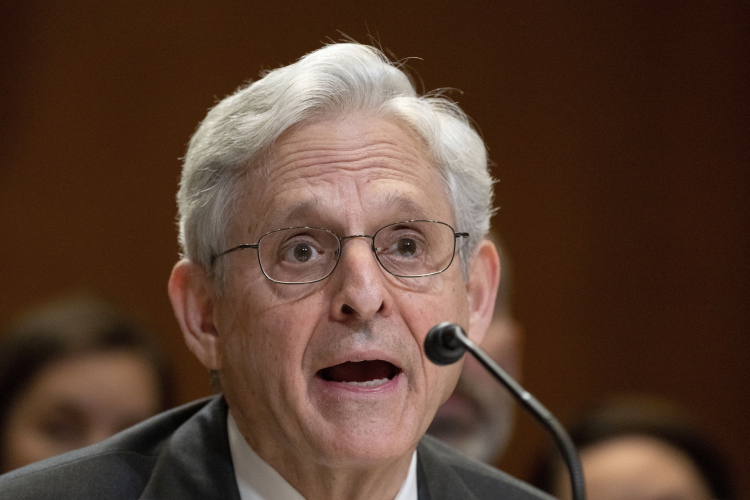
Attorney General Merrick Garland: The biggest criminal investigation in Justice Department history.

If the defeat of Kamala Harris constituted at least a partial repudiation of the lawfare against Trump and his supporters, the message appears to be lost on top brass at the DOJ. Prosecutors are pushing ahead with what they consider the department’s crowning achievement: the so-called “Capitol Siege” investigation into the events of Jan. 6, 2021.

In what Attorney General Merrick Garland describes as the biggest criminal investigation in Department of Justice history, more than 1,560 people have been charged for federal crimes never before used against political protesters, including under a post-Enron obstruction statute overturned by the Supreme Court in June. At least 1,000 of these defendants have been convicted – either at trial or by accepting plea offers –  with some 650 defendants ordered to serve time in a federal prison. Sentences range from a few days in jail to up to 22 years as the DOJ seeks “terror enhancements” to tack on additional time.

Activity in the J6 investigation accelerated the month before the election. At least 16 individuals were arrested; home security camera footage obtained by RCI shows the heavily-armed pre-dawn FBI raid of a subject in California on October 17.

Shortly after the election, DOJ officials instructed attorneys working on J6 cases to carry on regardless of the pending change in leadership. “[Federal] prosecutors in the Justice Department’s Capitol Siege Section received guidance this week about how to proceed in pending Jan. 6 cases … including a directive to oppose any Jan. 6 defendant’s requests for delays,” Ryan J. Reilly of NBC News reported on Nov. 9. “Prosecutors are instructed to argue that there is a societal interest in the quick administration of justice and these cases should be handled in the normal order.”

AP
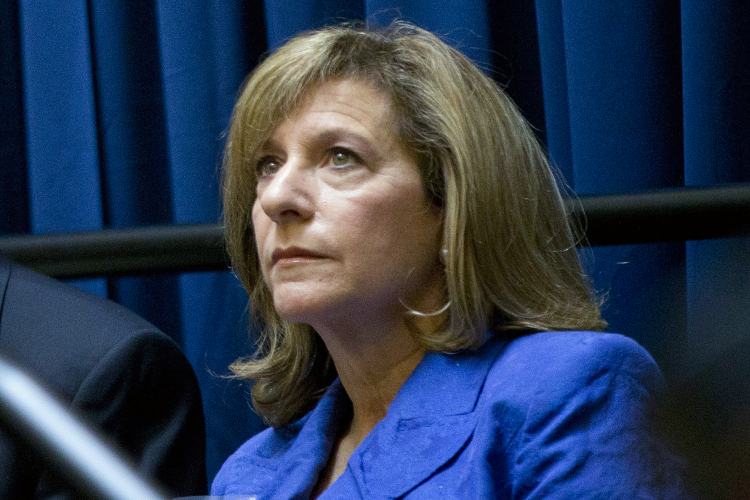
U.S. Attorney Matthew Graves: Unrelenting pursuit.

At the same time, the Biden Justice Department is continuing to apprehend protesters. On Dec. 4, for example, the DOJ announced the arrest of a 44-year-old Alabama man, Robert James Bonham, charging him with a range of crimes, including “assaulting, resisting, or impeding certain officers and obstruction of law enforcement during a civil disorder.” 

If Trump shuts down the department’s “Capitol Siege” section, as he is expected to do, Bonham will never go to trial. But this does not appear to concern Matthew Graves, U. S. Attorney for the District of Columbia. Appointed by President Biden in November 2021, Graves has presided over the sprawling J6 investigation and now continues to advance related cases. 

His office has opposed the J6 defendants’ requests to halt proceedings until after Trump is sworn in next month. Judges began receiving a slew of defense motions starting the day after the election asking to postpone trials and hearings, but Graves said there is “public interest in the prompt and efficient administration of justice” as a reason to continue business as usual.

AP
Judge Dabney Friedrich: She dismissed concerns about a biased DC jury pool.

Federal judges in Washington agree with the DOJ’s approach. According to an analysis by RCI, 44 pardon-related motions including requests to delay trials and sentencings have been filed since November 6. Of those, judges, with the exception of Judge Rudolph Contreras, have denied each one. Several more are pending awaiting the court's decision.

Judge Dabney Friedrich denied a motion to delay a J6 jury trial scheduled to begin the week after the election. Mitchell Bosch, a man from New York charged with several offenses, was set to go on trial on Nov. 13, but his public defenders filed a motion the day after the election  arguing their client “cannot receive a fair trial in the District of Columbia six days from today due to the heightened public emotion and highly publicized media attention surrounding yesterday’s presidential election, which resulted in the re-election of Donald Trump.” 

The attorneys noted that “92.4% of the D.C. electorate voted for Vice President Kamala Harris, with only 6.7% voting for President-elect Donald Trump.”

The attorneys further insisted disgruntled D.C. voters could retaliate with a conviction. “If jurors believe that the President-elect is a threat to democracy, that he does not take the events of January 6, 2021, seriously, and that he will pardon those involved that day, there is a real and significant possibility that, in their aversion to those views, they will punish Mr. Bosch or use this case to send a message that they disagree with the President-elect.”

AP
The Justice Department has a 100% conviction rate in Jan. 6 jury trials.

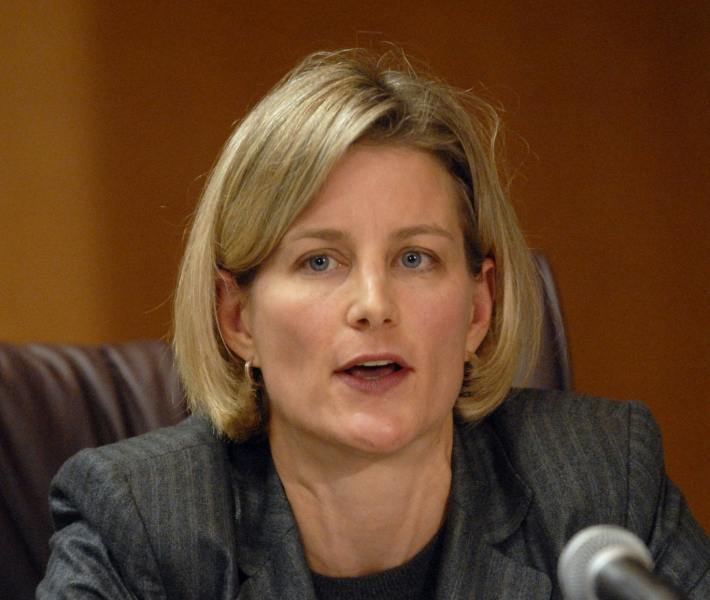
But Friedrich, whose husband, Matthew, worked on the Enron task force with current Deputy Attorney General Lisa Monaco, was unpersuaded. “Despite the recent election, the Court continues to conclude that the Court's voir dire procedures will be adequate to screen out potential jurors who cannot be fair and impartial.”

AP
Judge Amy Berman Jackson: Calls Jan. 6 an "attack on Congress" and a "riot."

And after a single day of deliberations, the jury returned guilty verdicts, two felonies and four misdemeanors, on Nov. 18. (The DOJ has a 100% conviction rate in J6 jury trials; no J6 defendant has been fully acquitted of all charges since trials began in March 2022. Judges also continue to deny all change-of-venue motions.)

Three J6 jury trials are set to begin this week. For the trial of one of those defendants, a man charged with civil disorder and four misdemeanors, Judge Amy Berman Jackson recently entered an order allowing prosecutors to describe January 6 to jurors as an "attack on the Capitol," "attack on Congress," and a "riot.” 

But political bias in the aftermath of Trump’s election is not the only factor judges refuse to consider as they move J6 cases along. Trump’s pledge to pardon most, if not all, J6ers also receives a cold reception in the E. Barrett Prettyman federal courthouse located a few blocks from the Capitol.

DC District Court
Judge Beryl Howell: No delay in sentencing for a nonviolent 18-year-old expecting clemency.

The day after the election, an attorney representing Christopher Carnell, who was convicted of nonviolent misdemeanors following a bench trial in February 2024, asked the judge in his case to delay a scheduled hearing based on the possibility of a pardon. “Throughout his campaign, President-elect Trump made multiple clemency promises to the January 6 defendants, particularly to those who were nonviolent participants,” attorney Marina Medvin wrote on Nov. 6. “Mr. Carnell, who was an 18-year-old nonviolent entrant into the Capitol on January 6, is expecting to be relieved of the criminal prosecution that he is currently facing when the new administration takes office.” 

But Beryl Howell, the former chief judge of the court, immediately rejected her request and set a sentencing hearing for Carnell this week.

Her colleagues on the D.C. federal bench, citing either a public interest in continuing court proceedings or making separation of powers arguments, followed her lead with recent rulings:

Judge Reggie Walton: “[The] potential future exercise of the discretionary pardon power, an Executive Branch authority, is irrelevant to the Court’s obligation to carry out the legal responsibilities of the Judicial Branch.” – November 7 order denying motion to postpone sentencing.

Judge Amit Mehta: “Defendant's speculation that he may receive a pardon is not good cause to stay this matter.” – November 11 order denying motion to continue trial.

Judge Paul Friedman: “Whatever the President-Elect may or may not do with respect to some of those charged for their conduct at the Capitol on January 6, 2021 is irrelevant to the Court’s independent and legal responsibilities under Article III of the Constitution.” – November 12 order denying motion to continue trial.

Judge Colleen Kollar-Kotelly: “The principal bases for [the defendant’s] requested continuance are that President-elect Donald J. Trump has ‘repeatedly stated that he would pardon’ those involved in the January 6 riot and that ‘a new Attorney General may dismiss’ the case against him. The Court joins others in this District in rejecting Defendants' invitation to speculate about future clemency or charging decisions. " – November 21 order denying motion to continue trial.

Chief Judge James Boasberg: “Speculation as to what the incoming Administration may do is not a basis for a continuance.” – December 2 order denying motion to postpone sentencing.

DC District Court
Judge Royce Lamberth: Immediately remanded a J6er to custody this month, apparently to make sure he spent some time in jail before any presidential pardon spared him.

Royce Lamberth, a Reagan appointee, is the most outspoken judge when it comes to any downplaying of what happened on Jan. 6. In an April 2024 Wall Street Journal profile, the 80-year-old jurist was described as “a leading voice pushing back against attempts by Republican politicians to play down the Jan. 6 attack.” Lamberth said he decided to speak out, an unusual move for a federal judge presiding over cases for which he is obligated to remain impartial, because “justifications for the Capitol attack” represent an affront to “the integrity of the judicial system.”

Lamberth is sparing no harsh words in rejecting pleas for relief before Inauguration Day. Accusing J6ers of “[subjecting] our Capitol and our country to the horrific scene of their anti-democratic rage,” Lamberth refused to postpone the sentencing of Philip Sean Grillo, who was convicted of civil disorder and the common four misdemeanors. Any presidential pardon, Lamberth continued, would not undo the work of the courts and D.C. juries.

“To continue Mr. Grillo’s sentencing now simply because he may receive a presidential pardon would discredit the time and thought these citizens expended on the trial and would subvert our criminal justice process and the separation of powers.”

U.S. District Court for DC
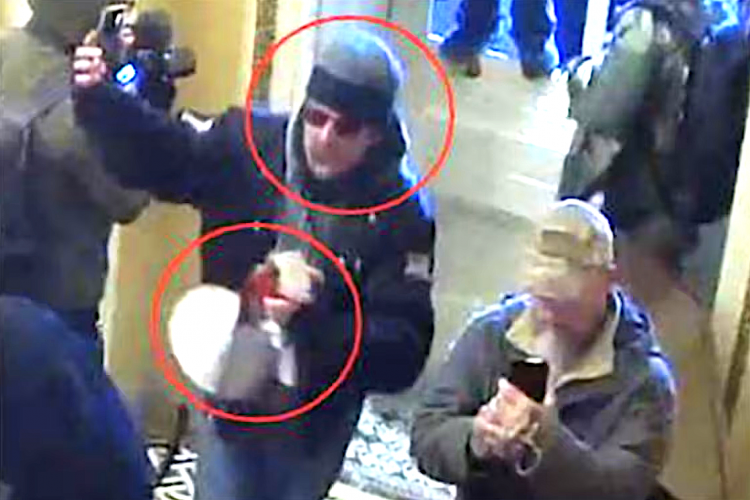
Philip Sean Grillo inside the Capitol on Jan. 6, 2021.
On December 6, Lamberth not only sentenced Grillo to 12 months in federal prison but took the unusual move of remanding him into immediate custody; judges usually allow a defendant to report two to three months following sentencing. Lamberth's decision appeared to make sure Grillo spent some time in jail before a presidential pardon spared him.
Raw News and Politics/YouTube
Phiip Sean Grillo: No mercy.
In a 13-page sentencing document explaining his reasons for imposing such a harsh move, Lamberth again criticized what he believes are attempts to "minimize the events of January 6." Lamberth then erroneously claimed five police officers died as a result of the protest. "One can only wonder what further horrors might have transpired if our elected officials had not gotten out in time. No matter what ultimately becomes of the Capital Riots cases already concluded and still pending, the true story of what happened on January 6, 2021 will never change."
He again took issue with Trump's plans to pardon J6ers and emphasized his independent role as a jurist. "The fundamental American principle of separation of powers would be empty of meaning if the courts allowed themselves to become paralyzed based on conjecture about the coordinate branches’ future actions. I will do my job, as I am bound by oath to do, and the President will do his; it is as simple as that."
And at least one D.C. judge is taking direct aim at Trump for even considering pardons. Trump-appointee Carl Nichols, who presided over Steve Bannon’s contempt case and sentenced the longtime Trump adviser to four months in a federal penitentiary, went so far as to say in a recent court hearing that it would be “beyond frustrating and disappointing” for the incoming president to issue “blanket pardons … or anything close.”
But it’s not just existing cases that are being fast-tracked before the transfer of power. Graves has announced the arrest of at least 10 Jan. 6 protesters since Election Day; last week, Graves charged at least three individuals for their participation in the Capitol protest. 
There is no indication the DOJ will halt the pursuit of J6ers even as the pardon of Hunter Biden raises concerns over the practice of presidential pardons. Shortly after Joe Biden pardoned his son, Trump posted a message on Truth Social referring to the J6ers in what some consider a sign he is considering a similarly broad pardon. “Does the Pardon given by Joe to Hunter include the J-6 Hostages, who have now been imprisoned for years? Such an abuse and miscarriage of Justice!” Trump wrote.
In apparent response, the New York Times editorial board criticized the Hunter Biden pardon not on its merits but because it makes it easier for “ Trump [to] pardon the perpetrators of the violent Jan. 6 attack on the Capitol.”

I worked with Kash Patel to expose Russia hoax and know he's best pick to reform FBI

 President-elect Trump’s nomination of Kash Patel as FBI director has sparked a frenzy of outrage from the fake news media. I’m sure none of this surprises Kash, who has faced it all before. 

Fake news outlets don’t typically attack congressional staffers by name, but years ago they made an exception for Kash. At the time, he was my lead staff investigator on the House Intelligence Committee as we examined allegations that President Trump had colluded with Russia to hack the 2016 presidential election. 

We quickly began uncovering evidence that the entire Russia collusion narrative was a hoax funded by the Democratic Party and the Hillary Clinton campaign and weaponized by our own intelligence and law enforcement agencies. Shockingly, the abuses included the Department of Justice and FBI providing false information to a secret court to get a warrant to spy on Trump campaign associate Carter Page.

Kash Patel

Kash Patel speaks during a campaign rally for former President Trump on Oct. 13, 2024, in Prescott Valley, Arizona. (Getty Images)

placeholder

Back then, Kash was an outstanding sleuth and a bulldog investigator who drew on his own experience as a DOJ prosecutor to figure out what misdeeds these corrupt officials were committing. To get the evidence, we had to overcome their ceaseless stonewalling, over-classification of documents, and countless other tricks and maneuvers they employed to bury the truth. 

Fake news reporters and "resistance" bureaucrats understood the evidence we found undermined their hoax narrative, so they launched an all-out jihad against Kash, with anonymous sources accusing him of committing every conceivable atrocity known to man. 

The attacks on Kash went beyond these information warfare operations—in a face-to-face meeting with us, top DOJ officials, who apparently didn’t appreciate their dirty laundry being aired, threatened to subpoena Kash’s communications. What we only found out years later was that they had already seized Kash’s emails, along with those of other congressional staffers investigating the collusion hoax, including staffers for Sen. Chuck Grassley, R-Iowa. 

In sum, the DOJ secretly spied on their own constitutionally mandated overseers to find out what we knew and how we knew it.  

You can imagine how intimidating it would be for a staffer to be directly threatened by top-level Department of Justice officials. But Kash could not be bullied. He was fearless, methodical, and intelligent, and ultimately played a decisive role in exposing the most consequential and damaging hoax in American history. 

In light of the Russia collusion hoax, the politicized January 6 investigations, assorted surveillance abuses, the misuse of confidential human informants for political purposes, pressure on Big Tech to censor the Hunter Biden laptop story, the investigation of parent protesters at school board meetings, and countless other manipulations, the FBI and DOJ clearly need drastic, fundamental reform. 

Tinkering around the edges isn’t enough – the entire culture of these institutions needs to be revamped, and their workforces must be decentralized so they refocus on fighting criminals and terrorists instead of politics. 

To successfully execute that mission at the FBI, the bureau needs a director who understands the problems and how to fix them. Crucially, this person must have the guts to do it notwithstanding the wailing from the media and the whole galaxy of left-wing interest groups alongside the bitter opposition of the upper echelons of the FBI’s own workforce. 

Kash has an extensive record of distinguished government service as a public defender, terrorism prosecutor, senior staff member at the Office of National Intelligence and the National Security Council, and chief of staff to the Department of Defense. But his record at the House Intelligence Committee alone shows Kash has the courage and commitment to reform the FBI.

It’s amusing to watch discredited former officials leap on cable news shows to decry Kash’s nomination like it heralds the end of the republic. After all, those who abused, politicized, and discredited the FBI, and those who tried to cover up those abuses, have a lot to lose if Kash is confirmed. 

Imagine if these people could no longer rely on the FBI to investigate and arrest everyday Americans with dissenting political opinions, leak false information against their political opponents, and actively undermine presidents whom they are supposed to be serving.

Kash understands surveillance abuses and intimidation tactics because he experienced them himself – and he never backed down. 

If you want an FBI director who will go along to get along, you’re better off with someone else. If you want a director who will follow the Constitution and transform the bureau into an impartial, trustworthy law enforcement agency that zealously goes after criminals instead of political targets, then Kash is, bar none, the right man for the job. 

GSK's drug combo shown to cut risk of death by 42% in type of blood cancer

 British drugmaker GSK GSK.L said on Monday its experimental cancer drug Blenrep in combination with other treatments reduced the risk of death by 42% in multiple myeloma, a common type of blood cancer, at or after first relapse compared to an existing treatment.

An interim analysis of data from a trial dubbed 'DREAMM-7' showed the drug in combination with the drug bortezomib plus the steroid dexamethasone showed statistically significant overall survival results compared to a standard of care daratumumab combination as a second line or later treatment of relapsed or refractory multiple myeloma, GSK said.

Multiple myeloma is the third most common type of blood cancer and is generally considered treatable but not curable.

The data projects that on average, patients on the Blenrep combination will survive nearly three years longer, GSK said.

"This represents an important advancement that could redefine the treatment of relapsed or refractory multiple myeloma," GSK's head of oncology Hesham Abdullah said in a statement.

GSK is gearing up for five major new drug launches in 2025, including Blenrep – which the company expects to have a more than 3 billion pound ($3.83 billion) peak year sales potential.

Blenrep had seen several setbacks over the last couple of years after it was pulled from the U.S. markets in 2022 after failing a late-stage study designed to show that it was better than an existing treatment.

However, positive results from the DREAMM-7 and DREAMM-8 trials over the past year could mean a comeback for the drug.

GSK has recently refiled a license application for Blenrep in combinations with bortezomib plus dexamethasone and pomalidomide plus dexamethasone. The US Food and Drug Administration is expected to make a decision in July 2025.

Earlier on Monday, GSK said the Blenrep combination was accepted for priority review in China in relapsed or refractory multiple myeloma.

https://www.xm.com/au/research/markets/allNews/reuters/gsks-drug-combo-shown-to-cut-risk-of-death-by-42-in-type-of-blood-cancer-53984383

Vivoryon's Alzheimer's asset suffers 2nd phase 2 fail, but hope as kidney drug remains

 Vivoryon Therapeutics’ glutaminyl cyclase inhibitor has failed a second phase 2 Alzheimer’s disease study this year, leaving the German biotech trying to find a silver lining in the drug’s potential to improve kidney function.

The company had been testing the candidate, varoglutamstat, across a pair of phase 2 Alzheimer’s trials centered in Europe and the U.S., respectively. The European trial, dubbed VIVIAD, missed all of its endpoints back in March, wiping off 90% of Vivoryon’s share price.

Early Monday morning, the Munich-based biotech providing an overview of the U.S. study, called VIVA-MIND, and it’s a similar story. When it came to the study’s primary endpoint of a dementia score, or key secondary endpoints that involved various evaluations of cognition, there were “no clinically meaningful and no statistically significant differences” between patients receiving 600 mg of varoglutamstat twice a day or placebo.

Vivoryon CEO Frank Weber, M.D., said these data across the board in Alzheimer’s "confirm the data seen in VIVIAD and are therefore not unexpected.”

To try to put a sunnier spin on the findings, the biotech focused on analysis of kidney function in the study’s patients, which it said revealed a “statistically significant improvement of >4mL/min/1.73m2 in the estimated glomerular filtration rate” (eGFR) in individuals who received varoglutamstat.

“These data reinforce the previously reported beneficial effect of varoglutamstat on eGFR in the completed phase 2b VIVIAD study and support the company’s development strategy to advance into a phase 2 study in diabetic kidney disease (DKD).”

The first Alzheimer’s fail in the spring initially looked like the end of the road for varoglutamstat, with Jefferies analysts saying at the time that it was “difficult to see a path forward” for the drug. But, by July, the company had reassessed the VIVIAD data and decided that hope lay in DKD.

However, details on the planned phase 2 study in this indication remain vague, with the company saying as recently as October that the timing and execution of this trial will be “subject to additional funding/partnership.”

https://www.fiercebiotech.com/biotech/vivoryons-alzheimers-asset-suffers-2nd-phase-2-fail-hope-kidney-drug-remains

AngioDynamics FDA clearance for prostate tissue ablation

 AngioDynamics has won US Food and Drug Administration (FDA) clearance for its NanoKnife system to be used in prostate cancer patients.

The system, which was already FDA-cleared for the surgical ablation of soft tissue, is now indicated for prostate tissue ablation.

Shares in the US company opened 6.2% higher at market open on 9 December following the news compared to a pre-announcement market close. AngioDynamics has a market cap of $354m.

The NanoKnife system uses an approach called irreversible electroporation (IRE), which employs electrical pulses to destroy cancer cells and offers several safety advantages over other techniques such as thermal ablation. The high-voltage pulses in IRE create permanent nanopores in membranes of cancer cells, inducing apoptotic-like cellular death in the target tissue. NanoKnife treatment involves no knives, with the electric current passed through needles instead.

The FDA based its decision on data from AngioDynamics’ pivotal PRESERVE study. The trial met its primary effectiveness endpoint demonstrating the performance of the NanoKnife System for the ablation of prostate tissue in patients at intermediate risk of the disease.

In the US in 2021, 236,659 new prostate cancers were reported. The disease is one of the most common cancers in men, though is treatable if caught early.

At the one-year mark following the procedure, 84% of men were free from clinically significant disease. In addition, NanoKnife led to improved quality of life outcomes, such as short-term urinary continence and the ability to maintain erections. Conventional radical surgery or radiotherapy often results in significant dysfunction in urinary continence and erectile potency, according to the company. AngioDynamics stated the results consolidates previous safety and efficacy evidence from more than 32 clinical studies in over 2,600 patients.

AngioDynamics’ CEO Jim Clemmer said: “This milestone is the first step in recognising our vision to become the standard, function-preserving treatment for men with prostate tumours. As we expand our global footprint and increase access to our technology, we are launching comprehensive education and awareness campaigns to empower physicians with hands-on training and clinical support while engaging patients through innovative outreach initiatives.”


https://finance.yahoo.com/news/nanoknife-gains-fda-clearance-prostate-180334956.html