Search This Blog

Monday, May 5, 2025

Newark chaos worsened by air controllers who took 45-day ‘trauma leave’ after failures: FAA

 The Newark Liberty International Airport mess is being exacerbated by air traffic controllers who took “trauma leave” of up to 45 days to cope with the stress of equipment failures, according to the Federal Aviation Administration.

At least five air traffic controllers have taken the time off under the Federal Employees Compensation Act, CNN’s aviation correspondent reported.

The law was designed to allow federal employees who suffer a “traumatic injury” on the job to take time off to recover while receiving 100% pay.

The air traffic control tower at Newark Liberty International Airport
At least five air traffic controllers that work at Newark Liberty International Airport are taking trauma leave.Christopher Sadowski

“Frequent equipment and telecommunications outages can be stressful for controllers,” the FAA said Monday.

“Some controllers at the Philadelphia TRACON network who work Newark arrivals and departures have taken time off to recover from the stress of multiple recent outages.

“While we cannot quickly replace them due to this highly specialized profession, we continue to train controllers who will eventually be assigned to this busy airspace.”

Crowds at Newark Liberty International Airport's Terminal C.
United has canceled dozens of flights at the airport due to the chaos.Christopher Sadowski

The temporary loss in personnel has led to flying pain for travelers using Newark airport with an avalanche of delays and cancellations wreaking havoc in recent days at the New Jersey transit hub.

The CEO of United Airlines previously slammed air traffic controllers for “walking off the job” following the outages — saying 20% of the FAA staffers overseeing Newark flights had taken leave du to the equipment failures.

A source told The Post that a fried copper wire was to blame for a 90-second outage in radar and comms last week — which trigger the cascade of delays and cancelations at Newark.

https://nypost.com/2025/05/05/us-news/newark-airport-chaos-made-worse-by-air-traffic-controllers-who-took-45-day-trauma-leave-after-failures-faa/

Hillary May Have Unlocked Our Government’s Digital Door


Here’s something most people don’t realize: We didn’t have the type of system-wide, ultra-high-level, utterly catastrophic breaches of the federal government’s network security before a certain server going up in a certain Secretary of State’s bathroom in early 2009. It’s been astonishing to me over the years how nobody seems to have noted this or the timing. Well, it’s about time we did. We’ll do it here. We’ll have a look at how bad it’s been, but first, let’s recall what started it all.

Secretary Hillary Clinton’s server, which former FBI Director James Comey described as having “less security than Gmail,” resulted in a serious and protracted “scandal [which] revolve[d] around questions about classified information, the preservation of government records and the security of her email communication.”

Any one of those issues, whether the utter recklessness with top-level classified information, the outright theft of our public record, or the insanely dangerous vulnerability of it all to our enemies, would have been enough to banish any normal person to the back of beyond. However, being a (D), especially one named Clinton, has its privileges, as we all know all too well.
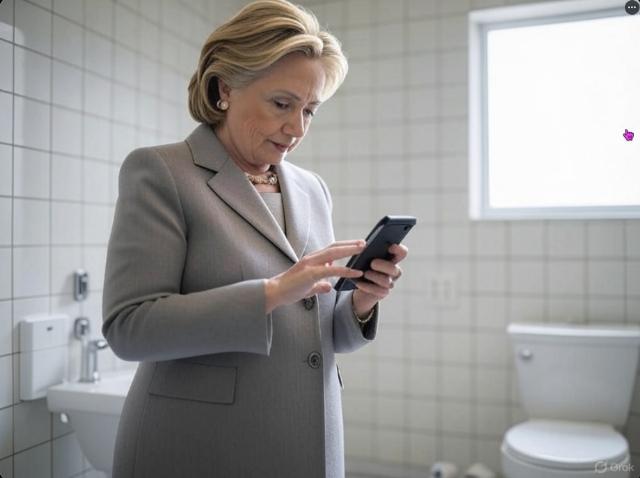
Image created using Grok.

Let’s remember a fact too few do: Hillary declined a “.gov” email when she took the job at State. She made an affirmative choice not to have a government email at all.

It’s not simply that she had a .gov email and neglected to forward her State-related personal email to honor her obligations (which is allowed, with specific limitations). Oh no. She made a clear choice to simply not have one.

That’s an order of magnitude worse than simply being derelict. It shows consciousness of intent—frankly, criminal intent—to steal, or allow others to steal, our records. Our records. Her job belonged to us, not her.

So, when James Comey, in that infamous July 2016 press conference said there was “no” criminal intent, he was flat-out lying, and he damned well knew it. And anyone with even a passing familiarity with the above knew it and knows it to this day.

So now that we recall how grievous Hillary’s crimes were, what of hacks of important federal systems? Well, according to a May 2015 CNN story, which opens with a big picture of Mrs. Clinton and mentions her server in the first paragraph, the 2014-2015 State Department hack was the “worst ever.” When even CNN makes the connection between the two, that’s pretty bad.

[T]he hack of the State email system is the “worst ever” cyberattack intrusion against a federal agency. The attackers who breached State are also believed to be behind hacks on the White House’s email system, and against several other federal agencies, the officials say.

The White House’s email system was hacked then, too? Well, how about that?

Take yourself back to January 2009. BlackBerries were still omnipresent, with iPhones just starting their revolution. (The first iPhone had been introduced only 18 months before, in June 2007.) If you recall, a very big deal was made of newly elected Obama keeping his BlackBerry. Everyone in the legacy media just thought it was cute that this hip, cool POTUS was so attached to his device and shooed any security concerns away.

Do you think that Mrs. Clinton ever emailed Barack Obama BlackBerry-to-BlackBerry? Of course she did. We know she did.

Also, thanks to former Secret Service agent Dan Bongino, who protected Mrs. Clinton when she was First Lady and President Obama, we know that any incoming on POTUS’ Blackberry had to be “whitelisted,” meaning that random emails were not allowed in. You had to be on a pre-approved list of email addresses to get an email to POTUS.

It beggars belief, does it not, that in the four years that Mrs. Clinton was Obama’s Secretary of State (2009-2013), he never once noticed that her email didn’t have a .gov suffix on it? We know whoever did the whitelisting knew.

It strains credulity to believe Obama didn’t know or ever notice, over the course of four years, that Mrs. Clinton was communicating via a rogue email. Amazingly, remarkably, in all these years, I can’t find evidence that a single solitary human has ever once asked him about this. Imagine that. The WHCA (White House Correspondents’ Association) covers itself in glory yet again.

But the New York Times, to show its sophistication, did alert readers in August 2009 to the fact that unguarded computers, including in the government, were vulnerable:

It’s still out there… The program, known as Conficker, uses flaws in Windows software to co-opt machines and link them into a virtual computer that can be commanded remotely by its authors. With more than five million of these zombies now under its control — government, business and home computers in more than 200 countries — this shadowy computer has power that dwarfs that of the world’s largest data centers.

If you have a virus out there which can forward whatever it grabs back to a criminal data center that “dwarfs” even the “world’s largest” legitimate data centers, you’d think Mrs. Clinton might’ve been more careful about setting up her server, but nooooo. Conflicker hit the scene in November 2008 and, by 2009, had infiltrated many “government-level top-security computer networks.

Oh wait… didn’t something else big happen in November 2008? Right! The hippest, coolest, most tech-savvy presidential candidate ever won the White House! And shortly thereafter, Mrs. Clinton was nominated to State.

Surely just a fantastic coincidence.

In May 2011, we find this headline: “Exclusive Report: Is Department of Defense (DoD), Pentagon, NASA, NSA is Secure?” A hacker gained access to the Pentagon’s computers and much, much more.

In October 2014, a breach into the White House was described as “among the most sophisticated attacks ever launched against U.S. government systems.”

In June 2015, the OPM was hacked. The Office of Personnel Management had over 20 million records breached, “including social security numbers, dates of birth, addresses, fingerprints, and security clearance-related information.”

Before Mrs. Clinton’s server went up, there were only two notable attacks on our federal systems in the digital age: one, in June 2001, into the Defense Information Systems Agency computer system, and another, in 2007, into an “unclassified” area of the Pentagon.

Nearly all the other headline, large-scale breaches before January 2009 were on non-U.S. Government systems, like Marriott, Yahoo, Uber, etc. The scale, rate, and seriousness of attacks on our federal systems increased significantly after January 2009.

Now, this may simply be a feature of the technology available becoming more and more sophisticated. That’s a fair assessment. We could choose to believe it’s just a coincidence.

I choose to think not.

https://www.americanthinker.com/articles/2025/05/hillary_may_have_unlocked_our_government_s_digital_door.html

PTC Nosedives Despite Claiming Phase II Win for Huntington’s Hopeful


The biotech’s Huntingtin-targeting molecule lowered blood levels of the protein and elicited functional improvements in earlier-stage patients, but results were not as robust in other biomarkers or with patients at later stages of the disease.

PTC Therapeutics announced new data Monday from a Phase II trial showing that Huntington’s hopeful PTC518 could modify a key disease indicator of the disease. The data received mixed reviews, however, and shares of the biotech nose-dived.

In a Monday afternoon note to investors, William Blair analysts said that a “question regarding correlation between [huntingtin] reductions and clinical benefit remains,” but added that the 24-month data should aid FDA dialogue.

In the Phase II PIVOT-HD trial, PTC518 lowered blood huntingtin (HTT) protein levels by 23% at the lowest dose (5 mg) for patients with both earlier- and later-stage disease, meeting the trial’s primary endpoint.

At a higher 10mg dose, patients at the early stage saw a 39% reduction, with patients at a later stage seeing a 36% drop. Patients with early-stage disease also saw functional improvements and slow-down in disease progression.

PTC trumpeted the data as a huge win. “We look forward to discussions on the next development and regulatory steps including the potential for accelerated approval as we work to potentially bring the first disease-modifying therapy to those affected by Huntington’s disease,” CEO Matthew Klein said in a statement.

William Blair analysts, citing data presented on the company’s follow-up call Monday, were intrigued but less enthusiastic, noting that patients with later-stage disease did not show any functional benefit on PTC518 and protein reduction in cerebrospinal fluid (CSF) was less robust in these patients.

Despite the mixed results, the analysts wrote that they “believe the biomarker and clinical outcomes data at 12 and 24 months in the [earlier stage] patients are likely sufficient for productive conversations with the FDA regarding a registrational path in patients with less advanced disease.”

Either way, Wall Street does not seem to be buying PTC’s new data, as the company’s stock slid about 17% by Monday afternoon after the morning announcement.

Novartis, for one, appears to believe in PTC518. PTC signed a deal with the Swiss pharma late last year worth up to $2.9 billion. Under the terms of the agreement, PTC would be responsible for development through Phase II, at which point Novartis would take over. If the drug is successfully brought to market, PTC will be entitled to 40% of U.S. profits while Novartis would take 60%.

PTC518 is a small molecule that includes a premature stop codon in the Huntingtin mRNA, inducing degradation by cells and lower levels of HTT protein in the cell. Mutations in this protein are thought to be the largest culprit in Huntington’s disease.

Regardless of the market reaction, these biomarker data are welcome news for the Huntington’s space, which in the past five years has been beset by disappointments as Roche, Wave Life Sciences and NeuBase Therapeutics have all seen clinical failures or ceased work altogether.

There have also been glimmers of light, however, with Prilenia Therapeutics’ pridopidine being accepted in November for European Marketing Authorisation Review. And Wave bounced back last summer with data showing that its next-generation antisense oligonucleotide, WVE-003, lowered HTT levels by 46% in patients’ CSF.

https://www.biospace.com/drug-development/ptc-nosedives-despite-claiming-phase-ii-win-for-huntingtons-hopeful

Exagen Record $15.5M Revenue as New Lupus Test Launch Sparks Growth Path to Profitability

Exagen reported record Q1 2025 revenue of $15.5 million, driven by growth in AVISE CTD test volume and expanded average selling price (ASP). The company's trailing twelve-month ASP increased to $419, up $42 per test compared to Q1 2024. Despite revenue growth, Exagen posted a net loss of $3.75 million and adjusted EBITDA loss of $2.51 million. The company ended Q1 with $11.2 million in cash and secured a $25 million credit facility with Perceptive Advisors in April. Key developments include the launch of new SLE and RA biomarkers, publication of T-cell research, and commercial expansion plans. Exagen provided 2025 guidance of at least $65 million in revenue and expects positive adjusted EBITDA by Q4 2025.

Groups behind ‘grassroots’ anti-Trump protests in US propped by billionaires, dark-money network

 Dozens of lefty groups behind the country’s supposedly “grassroots” May Day protests have been largely bankrolled by two billionaires and a dark-money network of progressive nonprofits.

More than $500 million from Swiss billionaire Hansjorg Wyss’ organizations, hedge-fund tycoon George Soros’ Open Society Foundations and the dark-money Arabella network flowed to the progressive groups between fiscal years 2016 and 2023, according to an analysis shared with The Post.

The funding wasn’t intended for the May Day protests per se, but it has been propping up many of the self-styled “grassroots” progressive activist groups over time.

Many of the organizations behind this year’s US May Day protests have engaged in similar demonstrations since President Trump took office.James Keivom

“The hypocrisy of the May Day protests is glaring,” said Caitlin Sutherland, executive director of Americans for Public Trust, to The Post.

“These organizations project the illusion of being driven by everyday Americans, but in reality they’re being bankrolled by some of the biggest dark-money megadonors in politics.”

Starting Thursday, on May Day, organizers put together more than 1,000 protests across the country to demonstrate against President Trump, activity that spilled into the weekend.

Although the day is not generally a significant phenomenon in the US, in some countries, it is a holiday to mark International Workers’ Day and spring festivities. Oftentimes, labor movements overseas use it to protest for certain causes.

The “50501” movement — or “50 protests, 50 states, 1” effort, an anti-Trump organization that formed in January — is widely credited for trying to move that international energy into the US by orchestrating the widespread stateside protests last week.

US organizers framed the demonstrations as a fight against “Trump and his billionaire profiteers” — despite records showing that prominent plutocrats were funding many of the participating activist groups.

Many of the protests were also directed at tech baron Elon Musk, who is poised to dramatically reduce his cost-cutting role in the Trump administration by the month’s end.

Billionaire George Soros’ Open Society Foundations had shelled out cash to many of the groups that participated in the protests.Bloomberg via Getty Images

“Trump and his billionaire profiteers are trying to create a race to the bottom – on wages, on benefits, on dignity itself,” the “50501” movement said on its website ahead of the demonstrations.

“We are demanding a country that puts our families over their fortunes – public schools over private profits, healthcare over hedge funds, prosperity over free market politics.”

About three dozen of the participating groups have raked in about $293.6 million from Wyss’ groups, $47 million from the Arabella network and $194.2 million from Soros’ Open Society Foundations, according to an assessment reviewed and checked by The Post.

Some of the most prominent left-wing activist groups in the anti-Trump demonstrations last week were the Sunrise Movement, Indivisible and Planned Parenthood.

Tax filings and other records show that the Sunrise Movement took in $2,070,000 from funders in the so-called Arabella network, and Indivisible got $107,000 from the Arabella network, $6.5 million from Wyss groups and $7.6 million from Soros’ Open Society Foundations, while Planned Parenthood Federation of America accrued $1.6 million from the Arabella network, almost $6 million from Wyss’ groups and $19.7 million from Soros’ group.

“The Open Society Foundations did not fund or coordinate the May Day protests,” a rep for the Open Society Foundations told The Post.

Swiss billionaire Hansjorg Wyss’ groups have also given millions of dollars to the lefty groups that held the protests.

“We support a wide range of organizations committed to justice and democratic participation, but how they choose to engage in political moments is up to them.”

An Arabella representative said, “Arabella Advisors has no connection to the May Day protests.

“We are a nonpartisan professional services firm that provides operational and administrative support to philanthropists and nonprofit organizations.”

The Arabella network data includes IRS Form 990 information for the Sixteen Thirty Fund, North Fund, New Venture Fund and Hopewell Fund — nonprofit groups that the Washington, DC-based Arabella Advisors services with operational and administrative support.

Wyss’ groups include activities from the eponymous Wyss Foundation — his charitable group — and the Berger Action Fund, his advocacy arm.

Because of his Swiss citizenship, Wyss, 89, is precluded from donating to US political candidates. But he has emerged as a top backer of lefty causes in America nonetheless by pumping cash into dark-money groups.

Dark money in these cases refers to political spending that is not subject to financial disclosure requirements, which helps shield donor identities.

Wyss made his fortune from the medical-device-maker company Synthes, which he sold more than a decade ago to Johnson & Johnson.

Protesters railed against billionaires like President Trump and Elon Musk.Getty Images
One of the largest groups to partake in protests that benefited from Wyss was Families Over Billionaires, the trade name for the massive liberal dark-money Sixteen Thirty Fund, which received more than $278 million from his organizations, records show.

A Wyss representative did not return a Post request for comment.

The May Day demonstrations across the US were the latest in anti-Trump protests that have taken place since his 2024 election victory, which have been orchestrated by groups that have, in part, received billionaire cash.

https://nypost.com/2025/05/05/us-news/lefty-groups-behind-grassroots-may-day-protests-in-us-propped-up-by-billionaires-and-dark-money-network/

Vertex misses quarterly results on weaker-than-expected sales for cystic fibrosis drug


Vertex Pharmaceuticals missed Wall Street estimates for quarterly results on Monday due to lower-than-expected sales of its cystic fibrosis (CF) drug Trikafta, sending shares down 2.5% after the bell.

However, the drugmaker raised the lower end of its revenue forecast, expecting its newer CF drugs and its acute pain drug Journavx to drive growth.


BMO Capital Markets analyst Evan Seigerman said the revenue miss is likely to draw scrutiny, as Vertex needs to execute the launch of Journavx.

The drug has generated more than 20,000 prescriptions from its launch in March through April 18. Seigerman said that the prescription numbers are "a good start", but he wants to see pull-through to revenues.

In December, the U.S. Food and Drug Administration approved Vertex's next-generation treatment, Alyftrek. This once-daily treatment for a rare and progressive genetic disease further strengthens Vertex's market dominance in CF treatments.


CF is an inherited disorder resulting from the absence of a specific protein, which disrupts the movement of salt and water in and out of cells in various organs.

In the first quarter ended March 31, sales of the company's older CF treatment, Trikafta, rose 2% to $2.53 billion but missed analysts' average expectation of $2.58 billion, according to LSEG data.

Vertex has activated more than 65 authorized treatment centers globally and 90 patients have begun cell collection for its gene therapy Casgevy, which treats a rare blood disorder that requires regular blood transfusions.

Vertex sees 2025 revenue between $11.85 billion and $12 billion, compared to the previously projected range of $11.75 billion to $12 billion.

Total quarterly revenue rose 2.7% to $2.77 billion, missing analysts' estimates of $2.85 billion.

On an adjusted basis, the company reported a profit of $4.06 per share for the quarter, compared with analysts' expectations of a profit of $4.32 per share.

https://finance.yahoo.com/news/vertex-misses-quarterly-results-weaker-201759680.html