Search This Blog

Sunday, April 10, 2022

Eisai takes baton from Biogen with next Alzheimer's prospect

 Eisai made history last year as Biogen’s partner on Aduhelm, the first approved Alzheimer’s treatment in decades. And yes, they know the launch could have gone better.

“Lessons learned? Yes, there were many. We can go on hours about things that we could have done better,” said Ivan Cheung, Eisai’s chairman and global president of the neurology business group. “But that's what it is to be the first.”

Now Eisai will have a chance to be second, too, or at least race Eli Lilly for the honor. The Japanese pharma and Biogen are moving their follow-up treatment, lecanemab, through the rolling submission process, hoping to obtain an accelerated approval just like the predecessor therapy did.

And this time, Eisai is in the driver’s seat. While Biogen took the lead on Aduhelm's clinical development, regulatory interactions with the FDA and commercial rollout, the script has flipped for lecanemab.

Cheung knows his team is heading into challenging terrain with lecanemab, but this is a place Eisai has been before. In 1996, the company launched Aricept, a daily oral treatment for Alzheimer’s, jointly marketed with Pfizer, that was groundbreaking at the time.

Ivan Cheung (Eisai)

When Aricept launched, Alzheimer’s was not very well understood by the general public. Some even questioned whether it was a disease to be treated or just a part of the natural aging process, Cheung said.

Aricept, which is known generically as donepezil, treats symptoms of dementia caused by Alzheimer’s and was eventually approved for all stages of the disease in 2006. But the therapy’s effects are temporary, only lasting as long as the patient takes it. Symptoms are managed while taking Aricept, but the treatment does not affect the underlying cause of disease. That’s what Biogen and Eisai are trying to do with Aduhelm, and soon, lecanemab.

“It was extremely difficult in the beginning days of Aricept, and you can ask me whether the beginning of Aduhelm was more difficult than that of Aricept, I don't know how to compare,” Cheung said. “But we have experiences to tell you it's never easy to be the first, and we knew that.”

Lecanemab is not being set up as a “me too” treatment behind Aduhelm. Cheung has big hopes that the up-and-coming treatment will take over the market just as Aricept did two decades ago.

One thing lecanemab can potentially improve upon is Aduhelm's rate of amyloid-related imaging abnormalities (ARIA), a problem that shows up in MRI imaging that suggests swelling or bleeding in the brain. This is a known side effect associated with amyloid therapies that has cropped up in Aduhelm trials. In November 2021, one trial patient taking Aduhelm reportedly died after an ARIA diagnosis.

With Aduhelm, a pooled analysis of two phase 3 studies found MRI abnormalities in 41% of patients, compared to just 10% of placebo patients. The adverse event was asymptomatic in 76% of cases, and only 0.3% were reported as serious.

Michael Irizarry, M.D., Eisai’s senior VP of clinical research and deputy chief clinical officer of the neurology business group, said that a midstage study of lecanemab showed about a 10% incidence of ARIA, with only 2% reported as symptomatic. With the lessons learned from Aduhelm, Eisai has a monitoring plan in place for any patient identified to have ARIA.

Another way lecanemab is setting itself apart from its predecessor is that the phase 3 clinical trial, called Clarity AD, is geared toward discovering the therapy's clinical benefits. Remember, Aduhelm was controversially approved on the basis of biomarker data—the new Alzheimer’s buzzword—which means the therapy showed it reduced beta amyloid in the brain. Researchers believe beta amyloid builds up in the brain of Alzheimer's patients, causing problems. 

The FDA green light was not based on evidence that Aduhelm is clinically beneficial and mitigates cognitive decline. For that, Biogen and Eisai are working on a phase 4 confirmatory trial to prove clinical benefit and maintain the FDA approval.

Michael Irizarry, M.D. (Eisai)

This time around with lecanemab, Eisai is shooting to have those data in hand much sooner in the product's life span. The phase 3 trial completed enrollment in March and will try to verify earlier findings that the therapy can reduce amyloid in the brain and therefore have an impact on clinical benefit and that amyloid biomarker.

Earlier studies of lecanemab have shown consistent reduction of amyloid and improvements in clinical decline, Cheung said. These data were published in a peer-reviewed journal.

“We as a team are confident in that clinical efficacy from that phase 2b data, but of course, that’s only one study. That’s why we’re doing Clarity AD to prove it one more time,” Cheung said.

The Clarity study, which is expected to read out in the fall, will be much bigger than the midstage test and is being done with “rigor” in terms of recruitment and how it’s conducted, Irizarry added.

Eisai also said Wednesday that enrollment has begun in the phase 2/3 Tau NexGen study being conducted by the Washington University School of Medicine in St. Louis, which will use two of the Japanese pharma's Alzheimer's therapies. Lecanemab will serve as the background anti-amyloid therapy, while an earlier-stage asset, tau antibody E2814, will be the investigational medicine. The study features asymptomatic and symptomatic patients with dominantly inherited Alzheimer’s, a type of the disease that is caused by genetic mutations and is passed down in families.  

Calling back to the Aricept days, Cheung said another thing that’s different this time around is that Alzheimer's patients are identified earlier in the disease course. So new Alzheimer’s treatments can be offered earlier in a patient’s journey to prevent damage that can’t be corrected later.

Explaining the difference between a biomarker and clinical efficacy remains a communication challenge for patients, though. Not to mention the fact that treatments like Aduhelm or lecanemab are meant to address the disease, not necessarily reverse symptoms.

“What it means to receive a so-called disease-modifying therapy versus receiving a symptomatic treatment, I think the majority of the public don't understand that,” Cheung said. “This is about early diagnosis, early treatment, and then you can slow down the progression of the disease. It’s a fairly different concept.”

To help with the public understanding of lecanemab, Eisai is laying all the data out for the world to see.

“We don't believe in any easy path. I think Alzheimer's is challenging, but we are confident and at the end of the day the data speaks for itself,” Cheung said.

https://www.fiercebiotech.com/biotech/eisai-takes-baton-from-biogen-as-next-alzheimer-s-prospect-follows-aduhelm-s-footprints

State and Local Leaders Who Aren’t Ready to Give Up Pandemic Power

 While many government leaders sound the all clear message on COVID-19, dropping vaccine restrictions and mask mandates, some states and municipalities are clinging to the emergency powers that allowed them to govern people's behavior in unprecedented ways.

Citing the need to direct emergency funding and oversee hospitals, they have held on to their emergency orders even as many restaurants, shopping centers, and sports arenas are once again packed and lingering pandemic concerns have faded into the background of a more normal life.

Emergency orders at the state level are usually issued in response to temporary threats, especially weather disasters, and are wrapped up in a few days or weeks. Soon after the new coronavirus exploded in March 2020, most governors issued broad executive orders. Under these powers, governors banned crowds, closed businesses, and imposed mask and vaccination mandates. They have also deferred to unelected public health officials in imposing restrictions.

Critical lawmakers are now challenging the power to take such sweeping actions – and keep the measures in place indefinitely – saying pandemic lockdowns exposed leaders’ unduly stringent authoritarian impulses.  

(Steve Marcus/Las Vegas Sun via AP)
Gov. Steve Sisolak of Nevada, Democrat: A state of emergency in perpetuity.

Ruling by decree over an extended period during the pandemic “is part of a broader move to condense power to the executive branch,” said Nick Murray, policy analyst at the conservative Maine Policy Institute, who has studied emergency policies. “You see these things come into play during a crisis and then [remain in place] to give more executive power,” Murray said. “It’s a theme that has devolved into bureaucracy.”

In Nevada, the state of emergency has been declared in perpetuity, even as state lawmakers have unsuccessfully tried to pass measures limiting the authority of Democratic Gov. Steve Sisolak.

In Kansas, the emergency authority of Gov. Laura Kelly, also a Democrat, extends to January 2023. She has clung to the order even as the state’s director of public health – a now-estranged former political ally – questioned the need for a continued state of emergency.

(AP Photo/John Hanna)
Gov. Laura Kelly of Kansas, Democrat: Clinging to emergency authority until next year.

And in North Carolina, Democratic Gov. Roy Cooper in November vetoed legislation that would require wider input from elected leaders if he wished to continue his ability to issue restrictions under a declared emergency. The Republican-controlled legislature got around the veto by attaching provisions to the state’s budget bill, which prevent Cooper from again declaring a state emergency and exercising singular authority for longer than 30 days. Yet Cooper last week extended the emergency due to expire in April even as cases waned. 

Lawmakers in most states have either passed laws or introduced legislation aimed at curtailing governors’ emergency authority. These laws include prohibiting mask mandates and business closures and set time limits on emergency orders.

Twelve states, seven of them with a Democratic governor and legislature, have emergency orders still in place. The remaining states have either ended their emergency or have announced a date to terminate it.  

Supporters of an extended emergency, which include many in the health care field, argue that the effort to limit the ability of governors and health care officials to respond to future crises is dangerous.

“You can’t have this sweeping legislation based on a single event,” said Lori Tremmel Freeman, CEO of the National Association of County and City Health Officials, which represents workers in 2,800 municipal public health offices and which issued a report last year criticizing legislative moves to rein in the authority of public health officials and governors. “There is a balance that can be found, but some of these have gone to the opposite end of the spectrum that allows them to prohibit [health officials] from doing anything.”

Jason Mercier, director of the right-leaning Center for Government Reform in Washington State, largely agrees with Freeman. “We’re not as worried about emergency orders; it’s the restrictions that need to be subject to legislative oversight,” he said.

(AP Photo/Eric Gay)
Gov. Greg Abbott of Texas, Republican: Cities and counties defy him by imposing masking and other measures.

States have varying laws regarding the ending of emergency power; in some states, only the governor can end an emergency. In others, legislators can. Mercier noted that in his state, where the party of Democratic Gov. Jay Inslee also controls the statehouse, a state of emergency can be extended indefinitely and has been, with Inslee insisting he can rule without agreement from any other officials.

“What we have here is one person behind closed doors enacting policy,” Mercier said.

The struggle over emergency powers is also happening within states. Some cities and counties also declared emergencies in early 2020, using them to enact local restrictions, often in political clashes with state leadership they did not agree with.

In Texas, leaders in mostly urban cities and counties have ignored Republican Gov. Greg Abbott’s COVID-19 rules, insisting they have the right under a local state of emergency to impose masking and other measures. Abbott contends he has full authority to issue emergency orders, which void local mandates declared under the same state emergency statute. Legal battles have moved through the court system since summer 2021.

Some municipalities, like the city of Phoenix, have refused to set a date to lift the declaration. City Council spokeswoman Stephanie Barnes did not respond to an email seeking comment.

“Most existing emergency management statutes, with some exceptions, are blunt instruments,” said Luke Wake, an attorney with the California-based Pacific Legal Foundation. The conservative group represented several businesses in legal battles to remain open.

“The orders are either on or off, but as long as they remain in place the governor has all of the power,” Wake said. “This experience has taught us that we need to rethink how broad the powers we give these people are. Most people had never looked at this, and [COVID-19] gave us all a good reason to do so.”

Ghost Golf
Teed off: This indoor recreation center in Fresno continues to challenge Gov. Newsom’s order to close. 

California Gov. Gavin Newsom locked down people and closed businesses under the state’s emergency powers act, which remains in place despite persistent calls by mostly Republican forces for it to be removed.

Dozens of lawsuits challenging emergency authority have been filed against governors of both political stripes. The plaintiffs run from business owners and open meetings advocates to regular citizens who insist emergency powers used in some places are unconstitutional. Many of these cases have been settled as restrictions ended or agreements were struck.

Wake and the Pacific Legal Foundation are handling the case of Ghost Golf, an indoor recreation center in Fresno that challenged Newsom’s order to close. Several other businesses also sued the state to remain open, but dropped their cases when Newsom allowed businesses to open in June 2021. The Ghost Golf case continues, however.

The governor lifted the restrictions, but he could reimpose those at any point as long as the emergency exists,” Wake said. “With every variant, people have to worry that the reason the governor hasn’t allowed it to lapse is to make it possible for him to take the same action again.”

(Foto AP/Patrick Semansky)
Gov. Gretchen Whitmer of Michigan, Democrat: Despite a court ruling, emergency powers live on.

In Michigan, it took a 4-3 state Supreme Court ruling to remove the vast emergency powers invoked by Gov. Gretchen Whitmer, which she used to issue sweeping and detailed restrictions in the first year of the pandemic. At one point, her orders prohibited residents from purchasing specific “nonessential” items, including house paint, while the state’s recreational marijuana dispensaries were allowed to remain open.

Whitmer sidestepped the court ruling by handing over those same powers to the Michigan Department of Health and Human Services, where a political appointee and public health official enforced her orders. A group calling itself Unlock Michigan has battled Whitmer and her administration, filing petitions challenging the authority of her and her health department.

“To upend society and destroy people’s business, you should get some elected officials involved,” Fred Wszolek, a spokesman for the group, said. “We want whoever takes control in an emergency to have checks and balances.”

The authoritarian impulses of governors are not limited to Democrats. When legislatures in three GOP-controlled states passed bills curbing the emergency powers of chief executives, the Republican governors of Ohio, North Dakota, and Indiana vetoed the bills. Those vetoes were successfully overridden, however, and enacted into state law.

Proponents of strong emergency powers also claim that because legislatures in most states are not full time, a prompt response to a crisis requires that a single individual be able to designate a situation as a lethal health crisis.

Yet, four of the states with the most extensive restrictions during the pandemic all have full-time legislatures. All four (Michigan, California, New York, and Pennsylvania) are led by Democratic governors, although two of them – Michigan and Pennsylvania – have Republican-controlled legislatures.

Andy Baker-White, senior director for state health policy for the Association of State and Territorial Health Officials, noted in a recent legislative briefing to association members that maintaining legal authority to impose mask-wearing and other restrictions is “crucial” to preparing for outbreaks.

Baker-White said in an interview with RCI that some of the proposals to limit emergency authority “are like tying a hand behind your back before getting into the boxing ring.”

“These powers and authorities are part of the toolbox to prevent the spread of infectious disease,” he added. “These often need to be flexible and swift when dealing with these diseases. Limiting these powers can have an impact on the ability to respond, and without an adequate response, a disease can cause more harm.”

The flexibility to govern in an authoritarian fashion, though, is exactly what is being targeted by state lawmakers around the U.S.

“It’s so bonkers that any legislature did not put an expire time on these emergency orders,” said Wszolek of Unlock Michigan. “When you consider what these powers allow, we really need to think about that. This is a muscle that really got used.”

https://www.realclearinvestigations.com/articles/2022/04/06/the_state_and_local_leaders_who_arent_ready_to_give_up_their_pandemic_power_824949.html

Text messages nudge people toward COVID vaccines? Not yet

 Text messages to people who are reluctant to get their flu shots—or simply forget—have helped boost uptake in the past, but these “nudges” didn't move the needle when it came to COVID vaccines.

That’s the conclusion in a new report from Brown University’s Policy Lab, published in Nature on Wednesday. Researchers found that text message reminders sent out to unvaccinated Rhode Islanders in late spring 2021 didn’t increase COVID-19 vaccine uptake.

The problem was not the texts themselves, however, the report’s authors argue. It was bad timing: By the time unvaccinated people in the Ocean State received the nudges in May 2021, most state residents had been able to get a shot for months. 

“In the beginning of 2021, the vaccines were still a novelty,” said Kevin Wilson, associate director of data science at the Policy Lab and a co-author of the study. “Everyone who wanted a vaccine was strategizing how to get one as early as possible. I remember friends frantically calling me, saying, ‘You need to log in to the appointment system at exactly 12:00 and fill out the form as quickly as possible!’ I would have been ecstatic to get a text message with a link that showed me exactly where to go and what to do.

“But three months later, it’s going to be more difficult to get good results from a text campaign. There’s an abundance of vaccines, there’s less urgency, and the number of people who could get vaccinated has shrunk.”

The authors say that “far from a repudiation of those results,” the report in fact “offers important additional information on when text-message vaccination campaigns work and when they don’t”

These takeaways could be helpful to health officials across the U.S. as they work to keep people healthy and out of hospitals by promoting COVID-19 and influenza vaccine uptake, the team concluded.

“We now have more information that can help people who are thinking seriously about how and when to make public health interventions,” said Wilson. “We’ve unlocked another piece of the puzzle.”

Nathaniel Rabb, a project manager at the Policy Lab, added that the study confirms it’s crucial for public health officials to kick off text-message campaigns at the right “inflection point,” when there’s an increased demand for vaccinations.

There’s a reason text message campaigns for the flu shot work better in October than in February, he said: It’s a key juncture at which children have recently returned to school, physicians emphasize the importance of immunization and the flu season begins.

The team had used a variety of messaging for the COVID vaccine texts, and all the messages contained what researchers call “ownership language,” or words and phrases that speak directly to the message’s recipient—exactly the sort of thing typically used for flu shot nudges.

“Ownership language could be a way of cutting through the perception that getting a vaccine is complicated,” Rabb said. “It conveys this message of, ‘We’re going to make this easy for you. There’s no red tape. We’ve got a vaccine ready, set aside, just for you.’”

But regardless of what content was used, the text messages had no meaningful effect on COVID vaccine uptake. Even the text message that had the biggest positive effect on uptake—which described how the vaccine could prevent “bad COVID-19 outcomes”—didn't deliver a statistically significant result. It drove just 2.2% of recipients to get a vaccine, compared to 2% of those who didn’t receive any message.

Want your message to work? Make sure you get the timing right.

https://www.fiercepharma.com/marketing/text-message-nudge-campaigns-covid-shots-failed-boost-uptake-timing-rather-messaging

More critically ill COVID patients develop chronic kidney disease

 Critically ill, mechanically ventilated patients with COVID-related acute kidney injury (AKI) were at high risk for lasting kidney issues, according to a retrospective case-control study.

Among intubated patients with COVID-19 pneumonia, those who developed incident AKI while hospitalized had a 148% higher risk for subsequently developing chronic kidney disease (CKD) within 90 days compared with those who had bacterial pneumonia (HR 2.48, 95% CI 1.06-5.78, P=0.036), reported Sherida Edding, MD, of Lincoln Medical and Mental Health Center in the Bronx, New York, during the National Kidney Foundation Spring Clinical Meetings.

Likewise, after adjusting for comorbidities, mechanical ventilation days, and highest AKI stage, COVID patients had a higher likelihood of developing CKD by day 90 after AKI versus bacterial pneumonia patients (OR 2.62, 95% CI 1.06-6.45, P =0.037), she noted.

"We already had an idea that patients with pneumonia who are critically ill requiring mechanical intubation are at risk of developing AKI," Edding told MedPage Today. "But it was still surprising to note that those who were put on a ventilator because of COVID had worse prognosis and higher risk of progression to CKD regardless of comorbidities, mechanical ventilation days, or highest AKI stage during admission."

"This goes to show that there might be additional pathophysiology of the COVID virus to the kidneys that makes them sicker," she added. "As clinicians, this translates to also closely monitoring our patients' renal function when we see them as outpatients, on top of evaluating them for other long COVID symptoms."

"Of the patients who survived and were eventually discharged alive, we were curious if this incident AKI will put them at risk of progression to CKD," she explained.

AKI was a common occurrence among hospitalized patients with pneumonia, affecting 45% and 55% of those with COVID-19 pneumonia and bacterial pneumonia, respectively. However, fewer patients with COVID pneumonia experienced renal recovery:

  • COVID-19 pneumonia with AKI: 68% had renal recovery; 30% progressed to CKD
  • Bacterial pneumonia with AKI: 84% had renal recovery; 16% progressed to CKD

When comparing the highest serum creatinine levels during admission, COVID-19 pneumonia patients hit higher average peaks than bacterial pneumonia patients -- 2.16 mg/dL versus 2.03 mg/dL. However, both groups had average levels of 0.90 mg/dL after 90 days.

Significantly more COVID-19 patients newly required in-patient hemodialysis (20% vs 7%, P<0.043), and more COVID patients continued to need dialysis after hospital discharge compared with bacterial pneumonia patients (18% vs 3%, P<0.005).

"New York City was one of the hardest hit during the early stage of the COVID pandemic," Edding noted. "At that time, we already realized that the virus not only affects the lungs but also the kidneys. A lot of our patients, especially those who were mechanically intubated, developed AKI -- either needing dialysis or not, and this has portended a graver prognosis."

This study compared 125 intubated patients in 2020: 56 with COVID-19 pneumonia and 69 with bacterial pneumonia. All patients developed AKI during admission, had similar baseline characteristics, and were discharged alive from Lincoln Medical and Mental Health Center. AKI was defined according to Kidney Disease: Improving Global Outcomes criteria.

Edding said that her research team is continuing to follow these patients.


Disclosures

Winners and Losers of the Proposed Insulin Cost Cap

 Approximately 9 million Americans with diabetes rely on insulin to prevent life-threatening complications from high blood glucose levels. Improving insulin affordability for these patients is an urgent national priority, as high costs are forcing some patients to take less insulin than they need. To achieve this goal, the U.S. House of Representatives recently passed legislation that would require Medicare and private plans to limit out-of-pocket costs to $35 per 30-day supply of insulin or 25% of the price negotiated between insurers and manufacturers, whichever is lower. The U.S. Senate is currently considering a similar bill sponsored by Sen. Raphael Warnock (D-Ga.).

In Part 1 of this two-piece series, we discuss the potential winners and losers of the proposed federal insulin cost-sharing cap. We argue this cap must be coupled with additional reforms to improve insulin affordability -- reforms that we will explore in Part 2.

Winners

Insured patients who use insulin for diabetes

Our previous work suggests that a federal insulin cost-sharing cap, such as the one proposed in the House bill, could greatly improve insulin affordability for a sizable number of insured patients with diabetes. For example, using national private insurance claims data from 2018, we assessed the potential benefits of a federal law that capped insulin cost-sharing to $25 per 30-day supply among privately insured children and young adults with type 1 diabetes -- a condition in which insulin access literally means the difference between life and death. In our analysis, the patients paid an average of $494 for insulin in 2018; 1 in 8 patients paid more than $1,000. The federal $25 cap would lower annual insulin out-of-pocket spending for 60% of patients. Among these patients, this spending would decrease by an average of around $480, from $741 to $261.

In another analysis, we used 2019 national prescription dispensing data from IQVIA to assess the benefits of a federal law that capped insulin cost-sharing to $35 per 30-day supply among Medicare patients who use insulin. We estimated that such a cap would lower annual insulin out-of-pocket spending for 39% of patients. Among these patients, out-of-pocket spending would decrease by an average of $338, from $687 to $349. In the same analysis, we also used Medicare Advantage claims data from 2019 to demonstrate that the $35 cap would benefit a higher proportion of patients with type 1 diabetes than type 2 diabetes.

Insulin manufacturers

The three major insulin manufacturers in the U.S. -- Eli Lilly, Novo Nordisk, and Sanofi -- could also benefit from a federal insulin cost-sharing cap. These manufacturers set the list prices that dictate the amount many patients pay for insulin at the pharmacy counter. By improving insulin affordability, the cap could reduce political pressure to lower these list prices, which have risen sharply over the past decade. Additionally, the cap could increase insulin use among insured patients who previously were rationing insulin owing to cost, thus increasing revenues. Finally, to support sales, the three manufacturers are currently investing heavily in efforts to mitigate insulin cost-sharing via patient assistance programs and coupons. A federal insulin cost-sharing cap would decrease the need for these initiatives and therefore the amount of money the manufacturers spend on them, further increasing profits.

Losers

Insurers, their enrollees, and American taxpayers

A federal insulin cost-sharing cap would not address the underlying problem of high insulin list prices. For the privately insured, the cap would instead shift the burden of paying for insulin from patients to private insurers, which could respond by increasing premiums for all enrollees. In Medicare, the cap would shift the burden of paying for insulin both to Medicare Part D plans and to the federal government. Because federal spending is subsidized by taxpayers, all Americans would ultimately foot this bill.

Uninsured patients with diabetes and patients facing financial toxicity for other prescription drugs

Uninsured patients with diabetes are fully exposed to insulin list prices. Because of this, national data indicate they pay an average of $1,288 per year for insulin, more than double the corresponding amount for the privately insured. In addition, exposure to list prices prompts uninsured patients to use cheaper and older insulin products, which result in drops in blood glucose more often than newer products. Unfortunately, the uninsured would not benefit from the federal cost-sharing cap proposed by the U.S. House of Representatives, which only applies to insured patients. If implementation of a cost-sharing cap reduces the urgency to rein in insulin list prices, uninsured patients with diabetes could indirectly be harmed.

More broadly, millions of Americans struggle to afford prescription drugs other than insulin. The outrage over insulin unaffordability has sparked policy momentum to reduce prescription drug prices and patient exposure to these prices. By defusing this outrage, an insulin cost-sharing cap could unintentionally inhibit this momentum, harming patients who face financial toxicity from other prescription drugs.

Moving Beyond a Stopgap Measure

In summary, the insulin cost-sharing cap proposed by the U.S. House of Representatives could benefit a large number of Americans who depend on this life-saving drug to manage diabetes. However, the cap would not address the underlying problem of high insulin list prices set by drug manufacturers or improve insulin affordability for the uninsured. While the cap is an important stopgap measure, other reforms to improve the affordability of insulin are urgently needed. We will explore these reforms in Part 2 of our series next week.

Kao-Ping Chua, MD, PhD, is an assistant professor of pediatrics in the Susan B. Meister Child Health Evaluation and Research Center at the University of Michigan Medical School. Rena M. Conti, PhD, is an associate professor of markets, public policy, and law, and co-director of the Technology and Policy Research Initiative in the Questrom School of Business at Boston University.

https://www.medpagetoday.com/opinion/second-opinions/98123

Saturday, April 9, 2022

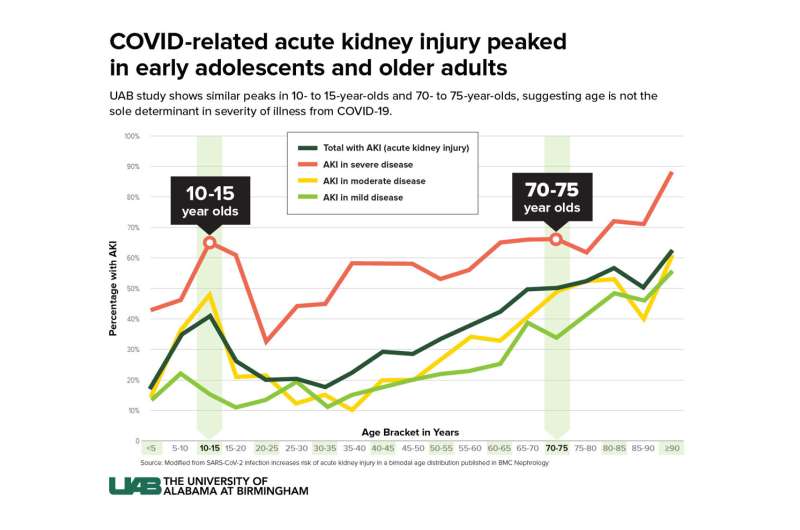
Similar rates of COVID-related acute kidney injury in early teens, older adults

 Similar rates of COVID-related acute kidney injury found in early adolescents and older adults, study shows

Credit: University of Alabama at Birmingham

Acute kidney injury (AKI) is increasingly recognized as a significant complication caused by COVID-19 infection. Researchers from the University of Alabama at Birmingham and Children's of Alabama studied the epidemiology of coronavirus-related AKI and discovered peaks in AKI in early adolescents and adults older than 60.

"Since the beginning of the pandemic, there has been the assumption that the severity of COVID-19 related illness is linear with age—the older one is, the more at risk they are for ," said Erica Bjornstad, M.D., Ph.D., assistant professor in the UAB Marnix E. Heersink School of Medicine and Children's Division of Pediatric Nephrology. "Our findings indicated increased risk in both early adolescents and older adults, suggesting factors besides age could be determinants in severity of illness from infection."

The , recently published in BMC Nephrology, used the Viral Infection and Respiratory Illness Universal Study initiated by the Society of Critical Care Medicine in January 2020. The analysis included patients admitted between January 2020 to March 2021. Of the 6,974 patients, 39.6% developed AKI within the first seven days of hospitalization. Among those younger than 20 years of age, 28% developed AKI.

AKI, a sudden episode of kidney damage or failure, can cause buildup of waste products in the bloodstream and makes it harder for kidneys to balance bodily fluids. Symptoms from AKI range from a decrease in urine output, swelling and fatigue to seizures and coma and require dialysis in severe cases. The risk of developing  and kidney failure increases every time an AKI occurs, according to the National Kidney Foundation.

The specific cause of COVID-related AKI is still unknown. Some cases may be caused by typical risk factors of AKI, such as critical illness and dehydration. However, after evaluating the pattern of AKI related to age, the research team theorizes there may be additional causes in COVID-related AKI. The age distribution suggests there could be a combination of COVID-related diseases that affect  along with hormonal influences. The virus has a propensity to attack endothelium tissue, which lines blood and lymphatic vessels. Damage to the endothelium can cause a sudden drop in blood flow, which can cause AKI.

"In older adults, endothelium tissue ages and is more prone to damage," Bjornstad said. "As for early adolescents, the team believes it is possible that a hormonal influence leads to a higher chance for endothelium damage, but the exact reason for the peaks of COVID-related AKI in adolescents and older adults needs further study."

Analysis consistently showed the odds of developing COVID-related AKI were similar for early adolescents ages 10 to 15, as well as adults between 70 and 75 years of age, increasing 2.5-fold over  ages 30 to 35. The pattern remained after adjustments for other potential variables such as comorbidities, preexisting conditions, sex, race and ethnicity. The same pattern also occurred when participants were categorized into severe, moderate and mild coronavirus infection.

Bjornstad also notes there are unknown biological mechanisms that could contribute to the pattern of increased risk in adolescents and  as the study could not account for different strains of coronavirus in participants. However, their findings are one of many studies that reiterate COVID-related AKI at any stage increases patients' morbidity and mortality.

"More in-depth exploration is needed to fully understand the age pattern found in our study," Bjornstad said. "As the pandemic lingers, outbreaks continue and  remain unvaccinated, it is important to understand this age phenomenon—whether it is biologically based or caused by certain risk factors—to help guide clinical care improvements in COVID-related AKI."


Explore further

COVID vaccination of children age 5-11 cut omicron hospitalizations by 68%

More information: Erica C. Bjornstad et al, SARS-CoV-2 infection increases risk of acute kidney injury in a bimodal age distribution, BMC Nephrology (2022). DOI: 10.1186/s12882-022-02681-2
https://medicalxpress.com/news/2022-03-similar-covid-related-acute-kidney-injury.html

How inflammation increases COVID-19 vulnerability

 New research hints at a possible explanation as to why people with diabetes, asthma and other conditions that involve chronic inflammation are more susceptible to the coronavirus and tend to experience more serious COVID-19.

The pre-print study—which is being submitted to a scientific journal but hasn't yet undergone peer review by other researchers—found the virus that causes COVID-19 infected more cells in lab-made blood capillaries, or tiny blood vessels, that were treated with an inflammatory agent.

To conduct this study, Oregon Health & Science University researchers engineered blood capillaries in small, transparent devices etched with tiny channels. The scientists filled those channels with cultures of two types of cells: stem and endothelial. Endothelial cells line the interior of blood vessels and capillaries and are also involved in the body's inflammatory response, while  have the unique ability to develop into other cell types. Inside the transparent device, the stem cells naturally developed into pericyte cells, which wrap around endothelial and help manage blood flow in blood vessels and capillaries.

The researchers describe their setup as vasculature-on-a-chip, and were inspired by the research approach known as an organ-on-a-chip, which creates microscopic organ models for laboratory research. This study builds on previous research, which has indicated pericytes are involved in COVID-19 symptoms such as myocarditis, cognitive challenges and long COVID.

"This study adds another piece to the puzzle as we work to unravel COVID's inner workings," said the study's senior author, Luiz Bertassoni, D.D.S., Ph.D., who is an associate professor of biomaterials and biomechanics in Oregon Health & Science University's School of Dentistry, as well as an associate professor of biomedical engineering in the OHSU School of Medicine and the OHSU Knight Cancer Institute.

The study's first author, Cristiane Miranda França, D.D.S., M.S., Ph.D., a research assistant professor of restorative dentistry in the OHSU School of Dentistry, and colleagues created two models to simulate large and small blood capillaries. Copies of each model size were either treated with a pro-inflammatory chemical known as TNF-alpha to recreate inflamed capillaries, or went without this treatment to recreate healthy capillaries. The researchers exposed the lab-made capillaries to spike proteins from the virus that causes COVID-19, and then compared the tissues under a microscope.

They found significantly more  attached to the lab-made  that were treated with the inflammatory agent. The authors hypothesized that chronic inflammatory health conditions, such as obesity, diabetes and asthma, could be particularly dangerous to pericytes. The researchers suggest this could, in turn, make it easier for SARS-CoV-2 to pass through vessels, proliferate and spread throughout the body.

"Inflammation appears to expose pericytes more to SARS-CoV-2, the virus that causes COVID-19," Bertassoni said. "Better understanding [of] the vascular mechanisms behind this could help us find new ways to treat or prevent COVID."

While further research is needed, Bertassoni and colleagues describe their study as a proof of principle.


Explore further

Evidence suggests SARS-CoV-2 virus attacks brain endothelial cells

More information: Vascular inflammation exposes perivascular cells to SARS-CoV-2 infection, (2022). 10.1101/2022.04.05.487240 www.biorxiv.org/content/10.110 … /2022.04.05.487240v1
https://medicalxpress.com/news/2022-04-inflammation-covid-vulnerability.html