The White House continues to send mixed signals on America’s support for Israel. That emboldens Hamas and needs to stop.
At a Tuesday fundraiser, President Joe Biden vigorously defended the Jewish state, saying that the United States is “not going to do a damn thing other than protect Israel in the process. Not a single thing.” He later added, “Without Israel as a free-standing state, not a Jew in the world is safe,” The New York Times reported.
Yet at that same fundraiser, Mr. Biden publicly warned Israeli leaders that they risked losing international support for their response to the Oct. 7 terror attack if they continue “indiscriminate bombing.” And by the end of the week, the administration’s national security adviser, Jake Sullivan, was pressuring Israel to wrap up its military campaign and accept a Gaza run by the Palestinian Authority.
This is unhelpful. Hamas has made clear that its goal is to eliminate the state of Israel. It has carried out unspeakable attacks on civilians and continues to hold hostages — including eight American citizens — that it took during its barbaric Oct. 7 incursion. The terror group intentionally hides military targets among civilians, revealing a callous disregard for the lives of its own people. Last week, Israeli soldiers arrested dozens of Hamas fighters at a hospital in northern Gaza, the BBC reported.
The conflicting rhetoric makes it only more difficult for Israel to achieve its goals. On Thursday, White House National Security Council spokesman John Kirby allowed that, “The last thing we would want to do is telegraph to Hamas what they’re likely to face in coming weeks and months.”
Next
Stay
volume_off
-0:17
sd
share
fullscreen
Auto (225p)
225p
360p
480p
720p
Subtitles Off
1 injured in explosion, fire at Cold Creek home
0:17
Former Nye County Sheriff Sharon Wehrly dies
0:24
CCSD says it has used almost all of its COVID relief money
0:29
Postal Service shares deadlines for mailing holiday cards, packages
0:19
Historic hotel formerly owned by Tony Hsieh is up for sale
0:27
Super Bowl weekend creating ‘historical’ room demand
0:15
Person with active tuberculosis visited 27 CCSD locations
0:38
UNLV health opening new clinic
0:24
Photos with Santa at Southern Hills Hospital
0:33
Tickets for Super Bowl events on sale now
0:16
arrow_back_ios_new
arrow_forward_ios
Really? What other practical effect does the administration’s public stance that Israel wind everything down and avoid “indiscriminate” attacks have than to telegraph to Hamas that it will live to terrorize the Jewish state another day if it can postpone defeat for a few months?
Who knows what the American message has been in back-channel diplomatic conversations with Israel. Perhaps the president’s attempt to have it both ways is just a ham-fisted way to appease the radical progressives that have taken over the Democratic Party and would just as soon leave Israel out in the cold. But either way, Mr. Biden’s public criticisms and attempts to micromanage the Israeli war effort invigorate the enemy.
“It will require a long period of time,” Israeli Defense Minister Yoav Gallant said last week. “Hamas is a terrorist organization that built itself over a decade to fight Israel, and they built infrastructure under the ground and above the ground, and it is not easy to destroy them.”
The task becomes even more difficult when Mr. Biden and his advisers repeatedly imply that American support for Israel is wavering. It must not.
Rich Baris of "Big Data Polls" discusses the "major shift in non-white voters' support for Trump" with Charlie Kirk.
"This is generational. Some of the older non-whites have this stronger connection to the Democratic Party, but younger ones don't. And their lives stink! That's what they tell us," Baris said. "And things were just better under Donald Trump. Something has happened, this veil has been lifted."
"And that strong partisan connection to the Democratic Party with some of these voting groups that Republicans have not been able to break through is starting to fracture and crack," Barus said. "We can see it in the polls... It has been happening since Trump came on the political scene, it just was really slow. It's been 6%, 8%, 12% with black voters. And now it has just boomed."
"Some people disagree, but when it comes to younger black voters, I really think these indictments made Donald Trump relatable to some of these people," Baris also said. "They've been looking at an unjust system for years, and a lot of us didn't pay attention to it because it doesn't affect us, now that it happened to him, they feel like they have a common enemy."
"With Hispanics, the simple answer is the economy. Hispanics really do care about the economy. As new generations enter the political system, they have different rational policy choices," he said. "This is Biden's big problem. He has a guy he is going to run against who also has a record. We haven't seen this before, it is a Grover Cleveland situation."
As the old adage goes, what goes up must come down.
The pandemic proved to be a boon for a wide range of companies, from Zoom (ZM) to Peloton (PTON) to DoorDash (DASH). But once the hype faded, some companies translated their burst of popularity to a long-term business, while others are looking like one-hit wonders with dying fads.
The most famous pandemic darling remains Zoom, which vaulted from a moderately successful company to becoming a verb. In October 2020, Zoom's stock shot to a record $559 a share. Today, its shares are trading at around $72.
he company has been struggling as people return to business as usual with in-person work and socializing, said Dave Mawhinney, executive director at Carnegie Mellon's Swartz Center for Entrepreneurship.
"Zoom faces intense competition from other video conferencing platforms like Microsoft Teams, Google Meet, Cisco WebEx, and so on,” Mawhinney pointed out. “To remain successful long term, it needs to be 'compellingly better' or 'compellingly cheaper' than alternatives."
It's a test that Zoom has failed, Mawhinney argues, as its products have not been significantly better or cheaper. When the company reported its results for 2020, it boasted a 326% jump in revenue (to $2.65 billion), while its net income rocketed to $671.5 million, from $21.7 million the year prior.
Two years later, Zoom is sporting a revenue of $4.39 billion for 2022, a 7% year-over-year increase, while its net income has dropped to $103.7 million.
Zoom represents a broader problem for pandemic-era successes: securing what it gained during the lockdowns.
"Zoom didn't invest that much in advertising during the pandemic, perhaps for obvious reasons. But now Zoom is investing a lot in marketing and sales, almost threefold compared to the 2021," said Pablo Hernandez-Lagos from Yeshiva University’s Sy Syms School of Business.
So far, additional marketing hasn’t stopped the bleed for Zoom. This month, the company was dropped from the Nasdaq 100 in favor of DoorDash, whose stock has shot up 110% this year.
"With demand for delivery broadening beyond restaurants during the pandemic, DoorDash launched convenience (April 2020), DashMarts (August 2020), grocery (August 2020), and alcohol (September 2021) and acquired Wolt (May 2022)," wrote Andrew Boone of Citizens JMP Securities.
"To that end, we believe demand for these newer businesses is scaling, helping to improve unit economics ... DoorDash has optimized each of these launches, which supports persistent contribution margins and higher profitability going forward."
Rival Uber (UBER) is a top pick for JP Morgan, according to a client note by JPMorgan analyst Doug Anmuth. His team projects continuing demand for food delivery in 2024, particularly in newer categories like groceries.
ShiftKey, a startup that focuses on flexible healthcare work, offers insight into what sustainable post-pandemic success can look like. Its platform connects healthcare professionals, like nurses, with open shifts at nearby hospitals.
The company experienced a meteoric rise during the pandemic and has since held on to that boom.
"We started in a position where we were serving a very focused area of the country. We were born and bred in Dallas, Texas," said ShiftKey CEO Mike Vitek. The company now operates in over 120 markets across the US.
During COVID, ShiftKey's scheduled hours grew by 20 times, and those scheduled hours are now 24 times of what they were pre-COVID. The company, valued at a reported $2 billion, closed a $300 million funding round last January amid a difficult VC market.
The lesson for public companies is this: If the pandemic changed something permanently, or revealed something essential, you'll be okay. Otherwise, you're in limbo. Coming from a place of strength, for example, facilitated a continued upward trajectory, as was the case for Nvidia (NVDA) and Microsoft (MSFT).
"Microsoft … finally acquired Blizzard, and really shored up Teams as an enterprise," said Carnegie Mellon professor Ari Lightman. "And the pandemic's when you started to see the setup for the surging of Nvidia — even before the craziness of generative AI, they were pushing some really amazing chipsets that were competing with Intel."
There are some pandemic losers who may turn into winners, Gene Munster, managing partner at Deepwater Asset Management, told Yahoo Finance. Take real estate tech company Opendoor (OPEN), which buys and sells residential properties online. Its stock catapulted to over $34 per share in 2021. But in 2022, the company was losing more than $1.3 billion and entrenched in an existential cost-cutting push; its shares dropped to as low as $1.02.
"I think Opendoor is going to find a way to be an important part of the homebuying decision now ... They're gonna return to growth next year and likely be profitable at the end of next year and no one's doing what they are," Munster said.
Despite the losses, Opendoor nearly doubled its revenue in 2022 to $15.6 billion. Over the last 12 months, its shares are up 222%.
Peloton, on the other hand, is in a tricky spot, said Munster. Its stock is down 24% this year and 96% from its high in December 2020. While demand swelled during the lockdown, permanent changes in people’s exercise habits are tough to come by.
"I don't think they're a real long-term growth story … Ultimately I think Apple buys Peloton,” Munster predicted. “It's just a very hard business to get to grow.”
In the end, as the pandemic retreats, it has revealed who had the most sustainable businesses when the pandemic began.
"Crises are usually seen as, think of a wave that wipes out old sand and leaves the rocks, so it leaves the fundamental needs of our society," said Hernandez-Lagos.
A judge told St. Petersburg, Fla.-based Johns Hopkins All Children's Hospital it would not decide on a retrial for its lawsuit case that was brought to light in a Netflix documentary until after the holidays,Fox 13 Newsreported.
Johns Hopkins returned to court Dec. 15 demanding a retrial after a jury ruled on Nov. 9 that the hospital must pay the Kowalski family $211 million.
The November verdict concluded that Johns Hopkins had falsely imprisoned then 10-year old Maya Kowalski, engaged in fraudulent billing practices toward her family, inflicted severe emotional distress, and that a social worker Catherine Bedy had committed battery against her.
The family of 17-year-old Maya Kowalski had sued the hospital after it reported her mother, Beata, for suspected child abuse in 2016 after she requested ketamine to treat her daughter for chronic pain. The girl was removed by the state and sheltered at the hospital for three months, a time during which Beata Kowalski died by suicide. The Netflix documentary "Take Care of Maya," released in June, was viewed nearly 14 million times in the first two weeks.
Legal representatives for the hospital have submitted multiple motions asserting instances of juror misconduct and bias. The latest motion filed by the hospital contends that a juror had prejudice against Johns Hopkins and its witness, Sally Smith, MD, a now retired physician for Child Protective Services.
According to the hospital's defense team, a juror incorporated a Nazi symbol in his notes when mentioning Dr. Smith. Attorneys from Johns Hopkins claim that the juror spelled her name using sharply shaped "S's" resembling those associated with the Nazi SS.
"Printing the first letter of Dr. Smith's first and last name in this manner makes clear Juror No. 1's bias and prejudice against Dr. Smith (and thus Defendant), equating Dr. Smith with a notorious Nazi organization," the legal team for the hospital wrote in their demand for a retrial.
The attorneys representing the Kowalskis dismiss the accusation as an "inflammatory" and "desperate" effort to smear the reputation of a juror, asserting that the juror did not engage in any wrongdoing.
A previous motion from Johns Hopkins filed Nov. 22 also alleges that the juror shared trial information with his spouse, who purportedly proceeded to express her opinions on the case through social media.
Having heard arguments from both parties, Judge Hunter Carroll said he wouldn't issue a ruling on the motions before the Christmas holiday, but indicated that he would inform the attorneys on both sides if he opts to proceed with a juror interview. This could be decided as early as next week, according to the publication.
North Korea fired an unidentified ballistic missile on Sunday, Japan's Coast Guard and the South Korean military said, as Pyongyang condemned U.S.-led military shows of force as tantamount to "a preview of a nuclear war".
The missile was launched towards the sea off North Korea's east coast, according to the South Korean Joint Chiefs of Staff.
About 20 minutes after initially reporting the launch, the Japanese coast guard said the missile had already fallen.
It appeared to have fallen outside Japan's exclusive economic zone (EEZ), broadcaster NTV reported.
No further details were immediately available.
The launch came after warnings from officials in Seoul and Tokyo that nuclear-armed North Korea was preparing to test-fire a missile, including one of its longest-range intercontinental ballistic missiles (ICBMs) this month.
All of North Korea's ballistic missile activities are banned by United Nations Security Council resolutions, though Pyongyang defends them as its sovereign right to self defence.
Less than half an hour after the launch, North Korean state media carried a statement from the defence ministry criticizing "military gangsters" in the United States and South Korea for raising tensions with drills, displays of force, and nuclear war planning.
The statement by an unnamed ministry spokesman cited the arrival of the U.S. nuclear-powered submarine USS Missouri in the South Korean port city of Busan on Sunday.
"The armed forces of the DPRK will thoroughly neutralize the U.S. and its vassal forces' attempt to ignite a nuclear war and thus reliably ensure peace and security in the Korean peninsula," the statement said, using the initials of North Korea's official name, the Democratic People's Republic of Korea.
The spokesman also criticized South Korea and the U.S. for holding their second Nuclear Consultative Group meeting in Washington on Friday, as part of efforts by the allies to streamline war planning and increase military shows of force as a warning to North Korea.
Republican presidential candidate Nikki Haley is racking up endorsements from key conservative fundraisers ahead of the 2024 primaries. She already has solid backing from wealthy donors in Silicon Valley, including those who typically donate to the Democratic Party, as well as her network of political action committees.
According to Federal Election Commission (FEC) filings and her campaign's spending ahead of the Iowa Caucuses, the former United Nations ambassador's main political action committee is SFA Fund Inc. However, Ms. Haley is also linked to two other super PACs and a 501(c)(4) organization.
PACs and nonprofits
Collectively, the PACs SFA Fund Inc., Team Stand For America, and Stand For America PAC had a total of about $19.5 million on hand at the end of June, according to FEC records. Most of the money was in SFA Fund, which held about $17 million. Those funds had raised $28 million through June, the last time that the FEC required PACs to disclose their fundraising activities.
A super PAC can solicit or make unlimited contributions from individuals, corporations, labor unions, and other political committees, according to the regulatory agency.
SFA Fund is a hybrid PAC. This, according to the FEC, means that it can solicit and accept unlimited contributions from individuals, corporations, labor unions, and other political committees. It must maintain two bank accounts—one for independent spending on advertisements or voter drives, and another for making direct contributions to federal candidates.
Stand For America
Ms. Haley is linked to a nonprofit 501(c)(4) organization: Stand For America Inc. According to 2021 Internal Revenue Service records obtained by The Epoch Times, the group's president at the time was Michael Haley, Ms. Haley's husband. Stand For America was registered as a nonprofit by the IRS in 2019, shortly after she left her position as the U.S. ambassador to the U.N.
According to the IRS, A 501(c)(4) is a social welfare organization. The earnings of a 501(c)(4) group must not inure—or enrich—any private shareholder or individual. A 501(c)(4) social welfare organization may engage in some political activities, as long as that isn't its primary activity.
In 2021, Stand For America Inc. stated that it had collected about $8.6 million, spent about $8.5 million, and ended the year with about $2.3 million. Its 2022 990 filing isn't yet publicly available.
Stand For America PAC, a traditional political action committee, was formed in January 2021, well ahead of Ms. Haley's February 2023 announcement that she was running for president.
Between January 2021 and December 2022, Stand For America PAC raised about $17.5 million. During that same period, it sent about $1.7 million back to Stand For America Inc. It also spent about $5.4 million with Arlington, Virginia, consultancy Targeted Victory.
Additionally, during this period, the Stand For America PAC sent money to the election campaigns of numerous Republicans. Most notably, it sent $10,000 to [Iowa Gov.] Kim Reynolds for Iowa in June 2021. Ms. Reynolds, a Republican, has endorsed and is now campaigning with Florida Gov. Ron DeSantis, also a Republican, in his bid for the GOP's presidential nomination.
In 2023, Stand For America PAC raised about $2.3 million through the end of June. It held about $2.2 million. In June 2023, Stand For America PAC sent $1 million to SFA Fund.
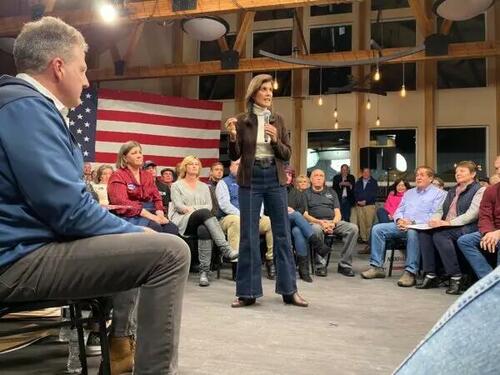
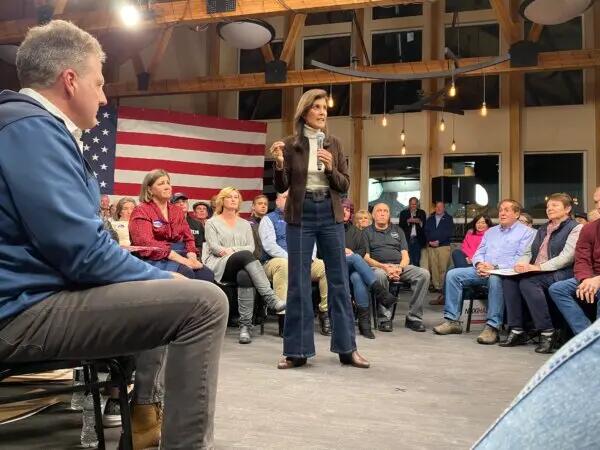
Presidential candidate Nikki Haley speaks to supporters at the McIntyre Ski Area in Manchester, N.H., after winning the endorsement of New Hampshire Gov. Chris Sununu. (Photo by Alice Giordano/The Epoch Times)
Team Stand for America
Team Stand for America, a joint fundraising committee, was founded in November 2022 and shares an address with Stand For America Inc. It raised about $7 million in the first six months of this year and sent most of the money to Ms. Haley's principal campaign committee, Nikki Haley for President Inc., or a committee related to her campaign.
Joint fundraising, according to the FEC, is an election-related fundraising activity conducted jointly by a political committee and one or more other political committees or unregistered organizations.
Through June, Team Stand for America sent about $2 million to Nikki Haley for President, about $1.3 million to Stand For America PAC, and about $770,000 to SFA Fund. At the end of September, Ms. Haley's principal campaign committee had raised about $18.7 million and retained about $11.6 million on hand.
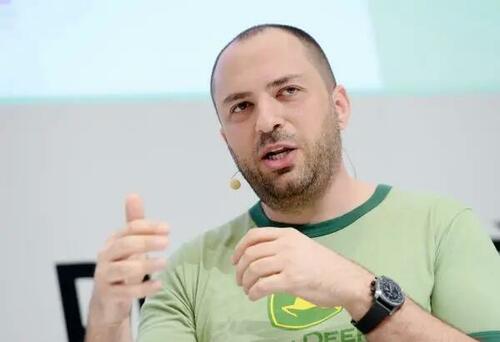
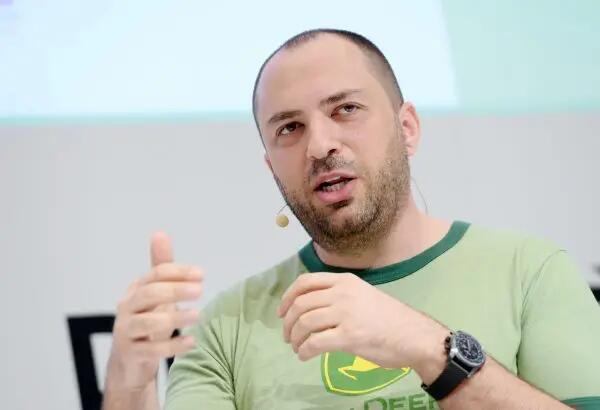
Jan Koum, co-founder and CEO of WhatsApp, speaks at the Digital Life Design conference in Munich, Germany, on Jan. 18, 2016. (Tobias Hase/AFP/Getty Images)
Jan Koum
The largest single donor to SFA Fund is Ukranian-American billionaire Jan Koum. He gave $5 million to SFA Fund Inc. between February and June.
Mr. Koum is a co-founder and former CEO of messaging application WhatsApp. The application was acquired by Facebook Inc. in 2014 for $19.3 billion. Forbes estimates that Mr. Koum is worth $15.3 billion.
According to data collected by watchdog group Open Secrets, Mr. Koum began donating to Republican Party causes in 2021. Most of his contributions have gone to the Republican Jewish Coalition Victory Fund and the United Democracy Project (UDP). The UDP, according to FEC records, has sent about $2.5 million to the American Israel Public Affairs Committee between January and June.
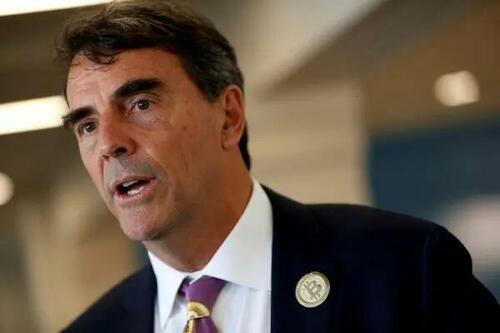
Venture capitalist Tim Draper speaks about his plan to partition California into six states at a press conference in San Mateo, Calif., on April 12, 2018. (REUTERS/Stephen Lam/File Photo)
Tim Draper
Tim Draper, the founder and managing partner of San Mateo, California-based Draper Associates and a member of the wealthy Draper family, gave $1.25 million to SFA Fund in June. Forbes estimates that Mr. Draper is worth $1.2 billion.
Mr. Draper, who campaigned in 2018 to split the state of California into six states, is a prolific donor but not one to splurge on political causes. He's given to both Republican and Democratic candidates, according to Open Secrets records. His SFA gift was his largest political contribution ever.
The Epoch Times reached out to representatives of Mr. Draper but did not receive a reply by press time.
Vivek Garipalli
Vivek Garipalli, co-founder and executive chairperson of Franklin, Tennessee-based Clover Health, gave $1 million to SFA Fund in March. The health care entrepreneur is a consistent political donor who typically gives to Democratic Party causes.
According to Open Secrets records, Mr. Garipalli gave $250,000 to the Democrat-supporting Senate Majority PAC in June. He's given $750,000 to that cause since 2019. Additionally, he's given $265,500 to the DNC Services Corp.—the Democratic National Committee—since 2014.
The Epoch Times reached out to representatives of Mr. Garipalli but did not receive a reply by press time.
Laurel Asness
Laurel Asness is the wife of Clifford "Cliff" Asness, the managing and founding principal of Greenwich, Connecticut-based AQR Capital Management LLC. Ms. Asness gave $1 million to SFA Fund in February. It was her largest-ever political contribution.
Ms. Asness, who lists herself as a philanthropist and a homemaker on federal filings since 2017, is a consistent supporter of Republican causes like the Republican National Committee (RNC), National Republican Congressional Committee (NRCC), and National Republican Senatorial Committee (NRSC), according to Open Secrets records. Her $1 million gift to SFA Fund is the largest contribution she's ever made.
Likewise, Mr. Asness is a major Republican Party donor. He's repeatedly given gifts of $100,000 or more to causes like the Republican-backing Senate Leadership Fund and Congressional Leadership Fund, according to Open Secrets records. Forbes estimates Mr. Asness is worth $1.6 billion.
In the 2016 election cycle, Mr. Asness gave $1 million to Our Principals PAC, which opposed former President Donald Trump. He also gave $1 million to Conservative Solutions PAC, which supported Sen. Marco Rubio (R-Fla.) in his 2016 presidential run.
In 2023, Mr. Asness is backing former New Jersey Gov. Chris Christie, a Republican seeking the party's presidential nomination. He gave $250,000 to the Christie-aligned Tell It Like It Is PAC in June.
The Epoch Times reached out to representatives of Ms. Asness but did not receive a reply by press time.
Christopher Redlich Jr.
Christopher Redlich Jr., a member of the board of the San Francisco-based Gladstone Foundation and the board of overseers at the Hoover Institution at Stanford University, gave a total of $1 million to SFA Fund between March and June. Mr. Redlich, formerly chairman of Marine Terminals Corp. of San Francisco, now lives in Murfreesboro, Tennessee.
Mr. Redlich is typically a Republican donor, according to Open Secrets records. The SFA Fund gifts are the largest he's ever given. However, he made small donations—$2,800—to President Joe Biden in 2020 and gave former Secretary of State Hillary Clinton $2,300 in 2007.
The Epoch Times reached out to representatives of Mr. Redlich but did not receive a reply by press time.
Steven Stull
Steven Stull, the president of New Orleans-based Advantage Capital Partners, gave $1 million to SFA Fund in June. The contribution to SFA Fund was the largest he's ever made to a political cause.
According to Open Secrets records, Mr. Stull has supported both Democratic and Republican candidates and made other, smaller contributions to funds connected to Ms. Haley.
The Epoch Times reached out to representatives of Mr. Stull but did not receive a reply by press time.
Ronald Simon
Ronald "Ron" Simon is the founder and chairman of Newport Beach, California-based RSI Equity Partners. He gave $1 million to SFA Fund in June.
Mr. Simon, according to OpenSecrets records, is a consistent Republican Party donor. His contribution to SFA Fund was his largest ever.
The Epoch Times reached out to representatives of Mr. Simon but did not receive a reply by press time.
The U.S. stock market has rallied sharply off its late October lows, bringing us to fresh highs in several large cap indexes. On Thursday we saw particular breadth strength with over 2500 stocks across the major indexes registering fresh monthly highs and over 1700 making new three-month highs. At the same time, only 188 and 86 stocks hit new one- and three-month lows. Thanks to the dovish shift by the Federal Reserve and a dramatic turn lower in interest rates, the buying was broad, lifting both small and large cap shares. When we see large moves across asset classes--fixed income, currencies, equities--we know that something fundamental is afoot among macro investors. But what comes next? After such broad strength, do we see further upside momentum or reversal? Let's take a look at recent market history.
As I have indicated in the past, strength (as measured by the number of shares making fresh new highs) and weakness (as measured by new lows) need to be considered as relatively independent variables. To be sure, the two are related--since 2016 (almost 2000 market days), the correlation between 1 month new highs and lows is -.54 and between 3 month new highs and lows is -.46. What this means is that only about 25% of the variance in new lows is accounted for by the number of new highs and vice versa. (All data from Barchart.com).
When we examine the historical data since 2016, we can see the importance of considering strength and weakness separately. For instance, we've only had 24 days in that time where three-month new highs exceeded 1000. Over the next 10 trading sessions, SPY averaged a loss of -.11%, compared with +.23% for the remainder of the sample. Over the next 50 trading sessions, however, SPY gained an average of +3.81%, well more than the average gain of +2.39% for the remainder of the sample. Indeed, when we have had an explosion of new highs, the market was up 21 times, down only 3 over the next 50 days. Over the next 10 days, it was up 11 times, down 13.
Conversely, when three-month new lows are below 100 (N = 475), returns have been superior over the next 20 trading sessions, averaging a gain of +1.99% vs. an average gain of +.59% for the remainder of the sample. In other words, when new highs are high, we have seen momentum over a longer time horizon; when new lows have been low, we see shorter-term upside momentum. When new highs are high *and* new lows are low, the pattern has been similar to that for elevated new highs: weak returns over the next ten trading sessions; superior returns over a 50-day horizon.
No doubt, forward news on inflation and growth will impact rates markets and that, in turn, could move stocks. During rising trending/momentum markets, I have found it to be helpful to look for short-term oversold points in the market (points during which the majority of stocks close below their 3 and/or 5 day moving averages) that occur at higher price lows. Those dips are opportunities to participate in the broader trend and also create logical spots to stop out if the uptrend is broken. At least for now, markets are treating the Fed news as a game changer. Recent historical evidence suggests that the rising tide lifting all boats often continues, though not necessarily in the short run.