Migrant arrivals are surging, with crossings now by train: early this month 12,000 migrant encounters on a single day were reported, breaking records
Two rail bridges carrying freight between Mexico and Texas are being closed by the Border Patrol to try and stem the 'recent resurgence' in cargo carriages being used by migrants.
It is not the first time the bridges have been closed, but the economic impact is severe. In September, a three-day closure left $1 billion worth of produce sitting idle in trains stuck on either side.
Price of oil that’s similiar to supplies curbed by Saudis dips
So-called medium-sour oil like Al-Shaheen, Oman crude affected
In a typically resilient corner of global oil markets, crudes similar to those being withheld by Saudi Arabia are plunging in a latest sign of fundamental weakness.
So-called medium sour oil from the Middle East is plummeting against the region’s Dubai benchmark on the back of muted Chinese demand and a spike in prompt supplies, said traders. Last week, Qatar’s Al-Shaheen grade traded at a discount to the marker for the first time since October 2020, while Oman prices also dipped.
Indian online marketplace IndiaMART has been removing unauthorized listings of Novo Nordisk's blockbuster weight-loss drug Wegovy after holding talks with the Danish drugmaker in early October, a source familiar with the matter told Reuters.
The drugmaker's India legal team held discussions with IndiaMART's top executives to develop a "framework" for regularly alerting the online marketplace about listings by counterfeiters in an effort to curtail illegal sales, the source said on condition of anonymity.
Novo Nordisk is the sole patent holder of semaglutide, the active ingredient in both Wegovy and Novo's diabetes drug Ozempic, which are not yet approved for sale in India. A spokesman for Novo India did not respond to multiple requests seeking comment.
"Dozens of such listings have been removed from the platform after Novo reached out to IndiaMART saying the sellers do not hold the trademark for Wegovy," the source said without providing a specific number.
Extraordinary demand for Novo's weight-loss drugs has been fueling a global surge in counterfeit versions.
Novo's global spokesperson said the drugmaker regularly looks for suspicious or illegal online sales and "where possible" engages with these platforms on a protocol to ensure they work to prevent or respond to such illegal offers. The company did not comment on specific efforts in India.
In late September, Novo Nordisk's India Managing Director Vikrant Shrotriya told Reuters the illegal sellers were "difficult to trace."
IndiaMART, one of India's top online marketplaces, allows dealers to sell on its website after a nominal background check and says it has minimal control over what is advertised and sold.
A leading U.S. government agency named IndiaMART on its 'Notorious Markets' list for 2022, highlighting how counterfeit goods on the marketplace remained "a serious concern".
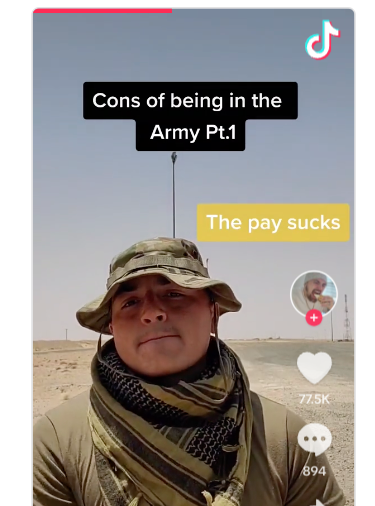
Gen-Zers in the civilian world have already taken to the Chinese social media platform 'TikTok' to blast Washington and the military-industrial complex that they will not fight America's endless wars. Even enlisted Gen-Zers are bashing the military amid a worsening recruitment crisis while neocon warmongers in the White House drag the world closer to World War III.
A new report from DailyMail shows a number of enlisted TikTokers, with millions of followers, are bashing the military as a morale crisis spreads like a virus across the ranks.
Military influencer Anthony Laster posted a video that emphasized the Army life is now for him: "Privacy, The Pay Sucks, Sh***y Food, Disrespectful Leadership, NO SLEEP!" The video was viewed more than 600,000 times.
Laster has more than a million followers on TikTok. His negative press on military life leaves a terrible impression on recruits.
"Politicians from both sides have concerns about the platform's links with China and accuse it of pushing subversive anti-US propaganda," DailyMail pointed out.
Another TikToker told thousands of followers not to join the military.
Here's another TikToker.
And another...
DailyMail spoke with a defense official who said:
"DoD Components are required to review and approve non-official mobile applications for use on government-issued devices.
"The DoD never authorized the use of TikTok, and several organizations have already banned its download onto its mobile devices. Users are required to sign a user agreement when the device is issued.
"The agreement informs them of the proper device use requirements and their responsibilities for the appropriate use and download of unmanaged applications. Additionally, all DoD personnel are required to take the Annual Cyber Awareness Challenge which has modules specific to mobile devices, social media, and geolocation capabilities."
The official added:
"DoD Mobile Application policy requires DOD Components to review and prohibit the use of applications that pose potential risk. DoD is currently updating its mobile application security policy to establish a process for prohibiting the installation of any application that DoD believes is inappropriate to be downloaded to a government device as well."
In some cases, warfare has shifted from destroying men and military machinery to paralyzing and controlling the mind.
According to the military publication Defstrat, the sixth domain of warfare is cognitive warfare. The Chinese understand cognitive warfare exceptionally well with the TikTok virus spreading through America's military, which comes amid a worsening recruitment crisis. Meanwhile, radical neocons in the White House are gunning for World War III.
The FDA may have moved early on bluebird bio’s Lyfgenia, which was approved two weeks before its originally scheduled review date of Dec. 20, but the agency is still quite active. In the next two weeks, it will release regulatory decisions on investigational treatments for a rare hereditary disorder, non-small cell lung cancer and more.
Calliditas Strives for Full Tarpeyo Approval in IgAN
On or before Dec. 20, the FDA is expected to release its decision regarding full approval of Calliditas Therapeutics’ Tarpeyo (budesonide) delayed release capsules for the treatment of adults with IgA nephropathy (IgAN) who are at risk of rapid disease progression. Tarpeyo won accelerated approval in this indication in December 2021.
Calliditas is supporting Tarpeyo’s supplemental New Drug Application (sNDA) with data from the Phase III NefIgArd trial, which showed that a once-daily 16-mg dose of the drug induced a statistically significant improvement in estimated glomerular filtration rate (eGFR) over a two-year study period, as compared with placebo.
In the August sNDA acceptance announcement, Calliditas Chief Medical Officer Richard Phillipson said Tarpeyo’s eGFR benefits, combined with its ability to reduce proteinuria, “provide strong rationale for establishing Tarpeyo as the standard of care for IgAN patients.”
Ionis and AstraZeneca Propose Eplontersen for ATTRv-PN
Ionis Pharmaceuticals and AstraZeneca are proposing their investigational antisense therapeutic eplontersen to treat hereditary transthyretin-mediated amyloid polyneuropathy (ATTRv-PN). The FDA’s verdict is due on December 22.
Eplontersen’s NDA, accepted in March 2023, is backed by data from the Phase III NERUO-TTRansofrm study, showing that at 35 weeks, patients treated with the antisense therapeutic saw a significant drop in serum transthyretin levels, alongside a significant improvement in neurologic impairment. Eplontersen treatment likewise led to significantly better patient-reported quality of life.
ATTRv-PN is a progressive and debilitating neurological disease characterized by the accumulation of transthyretin across major organs, slowly compromising their function and causing widespread nerve damage throughout the body and ultimately leading to death. Eplontersen works by reducing the production of transthyretin.
Amgen Aims for Full Approval of Lumakras in NSCLC
Amgen’s KRAS G12C inhibitor Lumakras (sotorasib) won the FDA’s accelerated approval in May 2021 for KRASG12C-mutated non-small cell lung cancer (NSCLC). On December 24, the regulator will decide whether or not to grant it full approval.
Amgen’s chances don’t look good, however. This October, the FDA’s Oncologic Drugs Advisory Committee voted 10-2 against full approval of Lumakras in this indication, contending that the data from the confirmatory Phase III CodeBreaK 200 study could not reliably be interpreted.
The FDA’s own reviewers, in a briefing document posted ahead of the adcomm meeting, flagged potential systemic bias in the confirmatory study, including a high rate of study dropouts in the comparator group as well as early crossover into the Lumakras arm.
Merck’s Chronic Cough Drug Again Faces the FDA
After an initial rejection in January 2022, Merck is once again seeking regulatory approval for its chronic cough drug candidate gefapixant. The FDA’s deadline for a decision is December 27.
As with Amgen, however, the odds don’t seem to be in Merck’s favor. Last month, the FDA’s Pulmonary-Allergy Drugs Advisory Committee overwhelmingly voted against gefapixant’s approval, saying the drug did not provide a clinically meaningful benefit to patients with refractory or unexplained chronic cough.
With a 12-1 split, the panel of external experts agreed with the FDA’s reviewers, who in a briefing document released prior to the adcomm meeting said gefapixant induces only a “small reduction” in cough frequency, and questioned whether the candidate’s efficacy is clinically meaningful.
In a statement following the adcomm, Merck disagreed with the advisers, insisting it has provided strong data to establish gefapixant's efficacy.
FDA to Decide on Zealand’s Congenital Hyperinsulinism Drug
Closing out the year, the FDA will issue a decision regarding Zealand Pharma’s investigational glucagon receptor agonist dasiglucagon for the treatment of pediatric patients aged 7 days and older with congenital hyperinsulinism. The target action date is December 30.
Dasiglucagon is designed as a subcutaneous continuous infusion delivered using a wearable pump system. It works by inducing the liver to release stored sugar into the bloodstream. The FDA first approved dasiglucagon in May 2021 to treat severe hypoglycemia in diabetic patients aged six years and above. For this indication, dasiglucagon is marketed as Zegalogue.
Zealand is supporting dasiglucagon’s most recent NDA with data from two pivotal Phase III trials and interim results from an ongoing extension study. Taken together, Zealand reported that the studies demonstrated that dasiglucagon reduced the need for intravenous glucose infusion, the patients’ time in a state of hypoglycemia and the number of hypoglycemic events compared with standard of care.
As CAR T cell therapy developers reel in funds and attract big pharma partners, many pipelines are expanding to include both autologous and allogeneic programs. With the former being highly expensive and time-consuming to manufacture, the latter, off-the-shelf allogeneic approach would seem more attractive on the surface. But experts say it’s not quite that simple, and that both approaches have their strong suits.
Autologous Leads While Allogeneic Gains
Autologous cell therapies utilize cells that are taken directly from a patient, modified and then reintroduced to that patient. The FDA has already approved half a dozen autologous CAR-T therapies for different blood cancers, including multiple myeloma and types of lymphomas. Most companies tend to start with an autologous portfolio with an allogeneic approach behind it, Mike Paglia, chief technology officer for ElevateBio BaseCamp, told BioSpace.
Mike Paglia
“The validation of autologous is a little bit easier,” Paglia said. “You can get to that proof of concept with an autologous approach a little bit more rapidly because the ... regulated path is already proven.”
One of the biggest hurdles for autologous therapies, aside from the staggering cost estimated between $100,000 to $300,000, is the vein-to-vein time frame. Development involves myriad steps from the time the cells are withdrawn from the patient before being returned as therapy. Extracted cells are shipped to a manufacturing facility to be manipulated, expanded and tested in the lab before being returned to the healthcare facility where the patient has been prepped to receive them. This multi-faceted process can add up to five to six weeks, Paglia said.
Considering that the current therapies on the market are approved for use only in later lines of treatment—for those for whom other treatments have failed—eligible patients tend to have more advanced disease and often die while waiting, he said.
Paglia noted that several companies are developing technology to reduce the cost and speed of manufacture, with the ultimate goal of dropping delivery time to less than 10 days.
In parallel, companies are increasingly pursuing allogeneic therapies, those developed from healthy donor cells. Such therapies could be available to patients off-the-shelf, with little to no wait time. While only a handful have been approved by the FDA so far, the technology is rapidly advancing.
“We view allogeneic as an emerging opportunity, but the technology is still at its relative infancy,” Guowei Fang, chief scientific officer at Legend Biotech, told BioSpace.
Guowei Fang
Legend and ElevateBio have invested in technologies for both cell therapy types. While Legend’s pipeline is primarily composed of autologous candidates—including a handful of late-stage therapies being developed in partnership with Janssen—Fang said the company saw the potential in the allogeneic approach and began investing in an appropriate platform five years ago.
AlloVir, one of ElevateBio’s portfolio companies, is working on a pipeline of allogeneic T cell therapies for immunocompromised patients at high risk for a handful of life-threatening viral infections. These treatments could potentially be given to a patient with a viral infection within 24–72 hours, Paglia said.
No Slam Dunks
CAR T cell therapies have shown high levels of success in patients with hematological malignancies such as B-cell lymphomas, boasting complete response rates between 70% and 94% across different trials. Yet, as illustrated by the FDA’s recently announced probe into malignancies linked to BCMA- or CD19-directed autologous CAR-T therapies, safety risks persist.
While autologous treatments are generally considered safer, both types of cell therapies come with an inherent risk of toxicity-related events. These include potentially deadly cytokine release syndrome and CAR T–related encephalopathy syndrome, which can lead to neurologic complications. Allogeneic therapies have a higher risk of rejection and graft-versus-host disease if the body recognizes the donor’s altered cells as foreign, Paglia said.
Moreover, cell therapies are not universally effective. Some patients simply don’t respond at all and those that do are at risk for reduced efficacy over time, leading to relapse. Up to 50% of patients receiving CAR T cell therapy relapse within a year after treatment, according to Genedata Profiler.
Hematological cancers, the initially preferred target for CAR-T therapies, account for only about 10% of all malignancies. However, the use of cell therapies in solid tumors has been limited, in part because the tumor microenvironment is difficult to infiltrate and is a hostile environment for immune cells.
Increased Investment
Technology is advancing to overcome the distinct challenges in autologous and allogeneic approaches. Examples include building in kill switches and tweaking therapy design to dampen the potential for cytokine release syndrome.
And big pharma is here for it. In October, Bristol Myers Squibb announced an expanded agreement for a second CAR-T program with Cellares, which had raised $255 million in Series C funding to complete its New Jersey cell therapy manufacturing facility. The same month, Bayeropened its first cell therapy manufacturing facility in Berkeley, California. The $250 million plant is ready to produce an investigational cell therapy for Parkinson’s disease being developed by Bayer subsidiary BlueRock Therapeutics, among other cell-based therapeutics from Bayer. Less than a month later, AstraZenecadropped $245 million for exclusive rights to up to 10 cell and gene therapy products from Cellectis, which is developing allogeneic CAR T therapies for cancer. Cellectis claims its TALEN technology is protective against graft-versus-host disease and mitigates the risk of rejection.
Cell and gene therapies are “taking up huge amounts of capital,” Graig Suvannavejh, a senior biopharma and biotechnology equity research analyst at Mizuho Americas, told BioSpace. “You get what we call therapeutic crowding.”
Suvannevejh called the allogeneic approach to cell therapy a better solution “simply because it’s less expensive” and would be a readily available option to patients. Yet the continued advancement of autologous technology and research shows that there is indeed room at the table for both approaches.
“The rapidness at which these autologous therapies get released and manufactured is going to get better” and more cost effective, Paglia said. “I think there’s still a place for autologous cell therapy [though] allogeneic will prevail in certain indications.”
Fang views the two approaches as sharing a “complementary landscape” and sees a need for allogeneic approaches, particularly in very aggressive disease. For a patient with a survival time of a few months, the month or more it takes to manufacture an autologous therapy is not practical.
Autologous and allogeneic therapies “are not necessarily in an all or none relationship,” Fang said. As technology advances for both approaches, indications beyond cancer are also possible, he said. While Legend’s current pipeline assets are cancer-focused, Fang said the company is actively exploring other areas.
The global cell therapy market is projected to hit more than $83 billion by 2032.