Search This Blog

Wednesday, February 7, 2024

Expensive Generics: Where Direct-to-Consumer Pharmacies Fall Short

 Many of the most expensive generic drugs aren't available at direct-to-consumer (DTC) pharmacies like Mark Cuban Cost Plus Drugs or Amazon, a cross-sectional study showed.

About 20% of the 100 most expensive generic drugs -- treatments for HIV, cancer, or multiple sclerosis, for instance -- weren't available at any of five of the most common DTC pharmacies, Hussain Lalani, MD, MPH, MSc, of Brigham and Women's Hospital in Boston, and colleagues reported in the Journal of General Internal Medicineopens in a new tab or window.

Common, inexpensive generics like blood pressure drugs and statins, on the other hand, were widely available at these pharmacies, they found.

"For the more expensive specialty generic drugs, where patients probably stand to benefit the most, it's far more variable in terms of whether they're available," co-author Benjamin Rome, MD, MPH, also at Brigham and Women's Hospital, told MedPage Today in an interview.

Even when those expensive generics were available at these DTC pharmacies, the lowest price for each drug also varied widely, Rome said.

"It wasn't true that you could always go to Costco, or you could always go to Mark Cuban's pharmacy, and that would always have the lowest price," Rome said. "If you're a patient and you're seeking the best price, you would still have to shop around."

That poses a "big barrier," to DTC pharmacies being helpful for competing on generic drug prices, he said. "You have to shop around, find the best price, get your doctor to send the prescription to the right pharmacy, and then the next month, the prices might change, and you have to shop around again."

"That's a ton of work that I don't think consumers are ready for or equipped to handle," Rome continued. "It also creates equity concerns for patients who are vulnerable and don't have the resources or knowledge to do that sort of shopping."

For their study, Lalani and colleagues looked at the availability and pricing of 100 of the most expensive generic drugs and 50 of the most commonly used generics at five national DTC pharmacies: Amazon, Costco, Mark Cuban Cost Plus Drugs, Health Warehouse, and Walmart. They assessed those companies' websites in April and May 2023.

They determined the most expensive and most common generics by looking at Medicare Part D data from 2020. They then compared pricing info to retail pricing information from GoodRx.

The average spend per patient in Medicare Part D in 2020 on expensive generics was around $16,000, and a median of 3.3 million patients filled a prescription for each common generic that year.

Overall, 80% of expensive generics and 98% of common generics were available at one or more DTC pharmacies, they found.

Expensive generics were available at an average of 1.9 of the five pharmacies compared with 4.1 for common generics (P<0.001), they reported.

Among the expensive generics that were available, 47% had the lowest cost at Amazon, 26% at Mark Cuban Cost Plus Drugs, 14% at Health Warehouse, and 13% at Costco, they reported.

Among the common generics that were available, 31% had the lowest prices at Costco, 27% at Amazon, 20% at Walmart, 12% at Health Warehouse, and 10% at Mark Cuban Cost Plus Drugs.

The median cost savings for expensive generics was $231, or about a 76% discount, they found, with a comparable (75%) discount for common generics -- though that translated to a median savings of just $19.

Lalani and colleagues called for more transparent prices at traditional retail pharmacies, as well as better tools to help patients and prescribers know the true costs of medications.

"The complexity of the current retail pharmacy and [pharmacy benefit manager] PBM space is at fault here," Rome said. "We want this to be a streamlined process so that no matter where you want to fill the medicine, you should be getting competitive pricing."

He called for "fixing the existing system to make sure that the prices that patients are paying are real competitive prices, not inflated prices that are being skimmed off the top through multiple parts of the supply chain like the pharmacy benefits managers."

Disclosures

The work is part of PORTAL, Program on Regulation, Therapeutics, and the Law, at Harvard Medical School and Brigham and Women's Hospital in Boston.

The study was funded by Arnold Ventures.

Co-authors reported relationships with the Commonwealth Fund, Elevance Health Public Policy Institute, and the National Academy for State Health Policy. A co-author also reported serving as an expert witness in a case on behalf of a group of state attorneys general and private insurance carriers relating to generic drug pricing.

Primary Source

Journal of General Internal Medicine

Source Reference: opens in a new tab or windowLalani HS, et al "Availability and cost of expensive and common generic prescription drugs: A cross-sectional analysis of direct-to-consumer pharmacies" J Gen Intern Med 2024; DOI: 10.1007/s11606-024-08623-y.


https://www.medpagetoday.com/special-reports/features/108627

Dem Wyden blocks request to strip tech companies of legal immunity related to child pornography

 Senate Finance Committee Chairman Ron Wyden (D-Ore.) on Tuesday objected to a request to pass by unanimous consent a bill approved by the Senate Judiciary Committee to strip big tech companies of legal immunity for child pornography and other child predatory material posted on their social media platforms.

Wyden argued the legislation would weaken the encryption safeguards of popular websites and apps and inadvertently make it easier for predators to gain access the communications and photos of children.

The bill, sponsored by Sen. Josh Hawley (R-Mo.) and Senate Judiciary Committee Chairman Dick Durbin (D-Ill.), passed through the Judiciary Committee unanimously in May of 2023.

But despite receiving overwhelming bipartisan support on the committee level, the legislation has sat in limbo for months.

Hawley on Tuesday tried to move it on the Senate floor by asking for unanimous consent to consider and approve the measure.

“It’s largely, overwhelmingly young teenage girls, young women, who are bombarded with the most unbelievable pictures, content, conduct as soon as they get on to these platforms,” he said.

“It’s time for Congress to act. Let’s take the work we’ve done, let’s put it on the floor,” he said.

Hawley’s bill, the Strengthening Transparency and Obligation to Protect Children Suffering from Abuse and Mistreatment (STOP CSAM) Act, would roll back tech companies’ legal immunity under Section 230 of the Communications Decency Act, which protects social media platforms from facing legal liability for material posted to their sites.

Specifically, the legislation would allow the victims of child pornography or other child exploitation to circumvent Sect. 20 to sue a tech platform for intentionally, knowingly or recklessly hosting child sexual abuse material.

Hawley said Section 230 immunity is a “sweetheart deal” that gives major tech companies little incentive to crack down on child pornography and other indecent material targeting minors.

“Until victims can get into court and have the rights and dignity of every other American challenging any other company this will not change,” Hawley said. “Congress created this problem. Congress created it by giving the most powerful companies in the world a sweetheart deal they still have to this day.”

Wyden, however, stood up on the floor to object to Hawley’s request.

He argued that Hawley’s bill would give courts a path to punish tech companies for using strong encryption technology.

“The bill would weaken the single strongest technology that now protects children and families. That’s strong encryption. It will make it easier to punish sites that use encryption to secure private conversations and personal devices,” Wyden asserted.

The Oregon lawmaker insisted he takes “a backseat to no one when it comes to helping kids and punishing predators” but warned the bill would threaten “the privacy and security of every single law-abiding American.”

A coalition of groups joined the ACLU in September to write a letter to Senate Majority Leader Chuck Schumer (D-N.Y.) warning the bill would allow the government to “eavesdrop on private conversations.

The ACLU and its allies argued that giving victims of child exploitation the right to bring suit in court would put pressure on apps and websites to scan all content on their platforms to remove material that would expose them to liability.

Wyden argued the law would inadvertently make it easier for predators to keep secret their conversations and attempts to contact children.

“Weakening encryption is probably the single biggest gift that you can give to the predators and the monsters who want to stalk and spy on kids. Sexual predators will have a far easier time stealing and extorting photographs for children, tracking their phones, and spying on their private messages once encryption is breached,” he warned.

Hawley dismissed Wyden’s arguments as “big tech talking points.”

“The problem is they’re entirely false. I have the bill text in front of me,” he said. “The text that passed unanimously out of the Senate Judiciary Committee explicitly exempts encryption technology,” citing the relevant lines of the bill.

https://thehill.com/homenews/senate/4452124-democrat-blocks-request-to-strip-tech-companies-of-legal-immunity-related-to-child-pornography/

RIP Medical Debt re-emerges "to abolish medical debt in Black Belt region' of Alabama

 The medical debt nonprofit RIP Medical Debt will be abolishing medical debt for thousands in Alabama’s Black Belt region thanks to a partnership made possible by former Gov. Don Siegelman (D).

The partnership will relieve a total of $4,193,799.11 for 5,411 residents in Alabama, according to Siegelman. This debt was bought out by RIP Medical Debt through a donation of roughly $24,000 from local entrepreneur Bart McCorquodale, an acquaintance of Siegelman’s, who runs a moving and decorating company out of Birmingham.

“The donation from Mr. McCorquodale not only cleared medical debt for people living in Alabama’s ‘Black Belt’ region, but also for those in Alabama who live in areas demographically identical to Alabama’s Black Belt, including Jefferson, Madison, Montgomery, and Mobile counties,” a statement from Siegelman read.

This latest initiative came from a conversation in September between Siegelman, McCorquodale and Gary Furr, an Alabama pastor, on improving health care in the state’s Black Belt. They initially met to discuss efforts to expand Medicaid in the state.

Siegelman, being friends with someone connected to RIP Medical Debt, put together the plan to relieve debt for the most underserved parts of Alabama.

“This gift is given in the hope that by paying off this burden it will lead to expanded Medicaid, and better medical emergency facilities and to solutions to keep this cycle of debt from repeating,” Siegelman said in a statement. “Much of this debt could’ve been avoided if Alabama had expanded Medicaid.”

The Black Belt of the U.S. Southeast is a stretch of land distinguished by its fertile black soil. The quality of the soil led to plantations being established in this area which in turn brought high concentrations of enslaved Black Americans. Today, Black Americans make up a high percentage of the population in this area.

RIP Medical Debt operates by buying out medical debt from hospitals and abolishing it for eligible patients. The organization has so far abolished more than $10 billion worth of debt. Patients cannot apply for debt forgiveness, but they instead will receive notice from the organization that their debt has been bought out and will never be collected.

The charity has launched debt forgiveness campaigns across the country including in Ohio, Arizona, Florida, Texas and New York.

A few years ago RIP Medical Debt may not have been able to operate this widely as it requires local hospitals to be willing to negotiate the sale of their debts. But co-founder Jerry Ashton told The Hill that the organization has since gained far more notice that has allowed it to expand.

“We’re being noticed, obviously, by a lot more people, and where hospitals used to ignore us —we have 23 hospitals, that we’re in conversation with us across the country,” said Ashton.

Ashton said his organization is open to working with “anybody and everybody” interested in relieving medical debts in their communities.

“The process is you go to RIP Medical Debt, and you email them and say, ‘I would like to create a campaign or I would like to make a donation,'” Ashton explained. “In either case, someone will then contact you and start the process of discovering who you are, where you are, if the debt is available, what the pricing would be.”

https://thehill.com/homenews/4453778-former-alabama-gov-nonprofit-partner-to-abolish-medical-debt-in-black-belt-region/

'Biden health officials press pharmacies on Paxlovid affordability'

 The Biden administration is pressing pharmacies to ensure that patients with COVID-19 are not being charged thousands of dollars for Paxlovid. 

Health and Human Services (HHS) Secretary Xavier Becerra met virtually this week with CEOs from Walgreens, CVS, Walmart and Kroger, as well as trade group leaders, to discuss the importance of pharmacist education and clear, accurate communication to patients about the costs of the COVID-19 therapeutic. 

Pfizer’s COVID-19 antiviral has been underutilized despite its effectiveness at preventing hospitalization and death, likely due to the high cost and providers’ reluctance to prescribe it. The list price is nearly $1,400 for a five-day supply. 

The federal government no longer distributes Paxlovid for free, so patients are subject to the commercial marketplace just like other prescription drugs.  

According to HHS, the administration has been closely monitoring the commercialization process, including anecdotal reports that patients are being charged high co-pays or even the full price. 

Becerra “made it clear that no patient should be charged hundreds of dollars for Paxlovid at the pharmacy counter,” HHS said in a readout of the meeting.  

The Biden administration negotiated with Pfizer on ways to ensure the drug is affordable. Individuals on Medicare and Medicaid will be able to access Paxlovid for free through the end of 2024 through a patient assistance program, and uninsured individuals can receive Paxlovid for free through 2028. 

Pfizer will operate a copay assistance program for individuals with commercial insurance through 2028. 

“During Monday’s meeting, we briefed attendees on how we’re training our pharmacy teams and having them take extra steps to ensure affordable patient access. Additionally, we’ve provided HHS and Pfizer recommendations as to how the patient assistance program could be improved to reduce billing issues and increase access to the medication,” CVS said in a statement. 

https://thehill.com/policy/healthcare/4454284-biden-health-paxlovid-covid-19/

Biotech IPOs Jump More Than 20% as Momentum Builds for Listings


  • Kyverna, Metagenomi are next tests for industry’s debutants
  • Industry IPO proceeds of $786 million is best start since 2021

Drug developers are capitalizing on the industry’s momentum by tapping public investors for the first time, as corporate takeovers and a welcoming market lift optimism about biotechnology.

When Kyverna Therapeutics Inc. and Metagenomi Inc. sell shares in the coming days, they’ll mark the fourth and fifth biotech initial public offerings on US exchanges in 2024. The first three raised $786 million collectively, in the strongest start for the sector since 2021, data compiled by Bloomberg show.

https://www.bloomberg.com/news/articles/2024-02-07/biotech-ipos-jump-more-than-20-as-momentum-builds-for-listings

New York's Illegal Alien Compounds Exposed: Stabbings, Drugs, Deaths

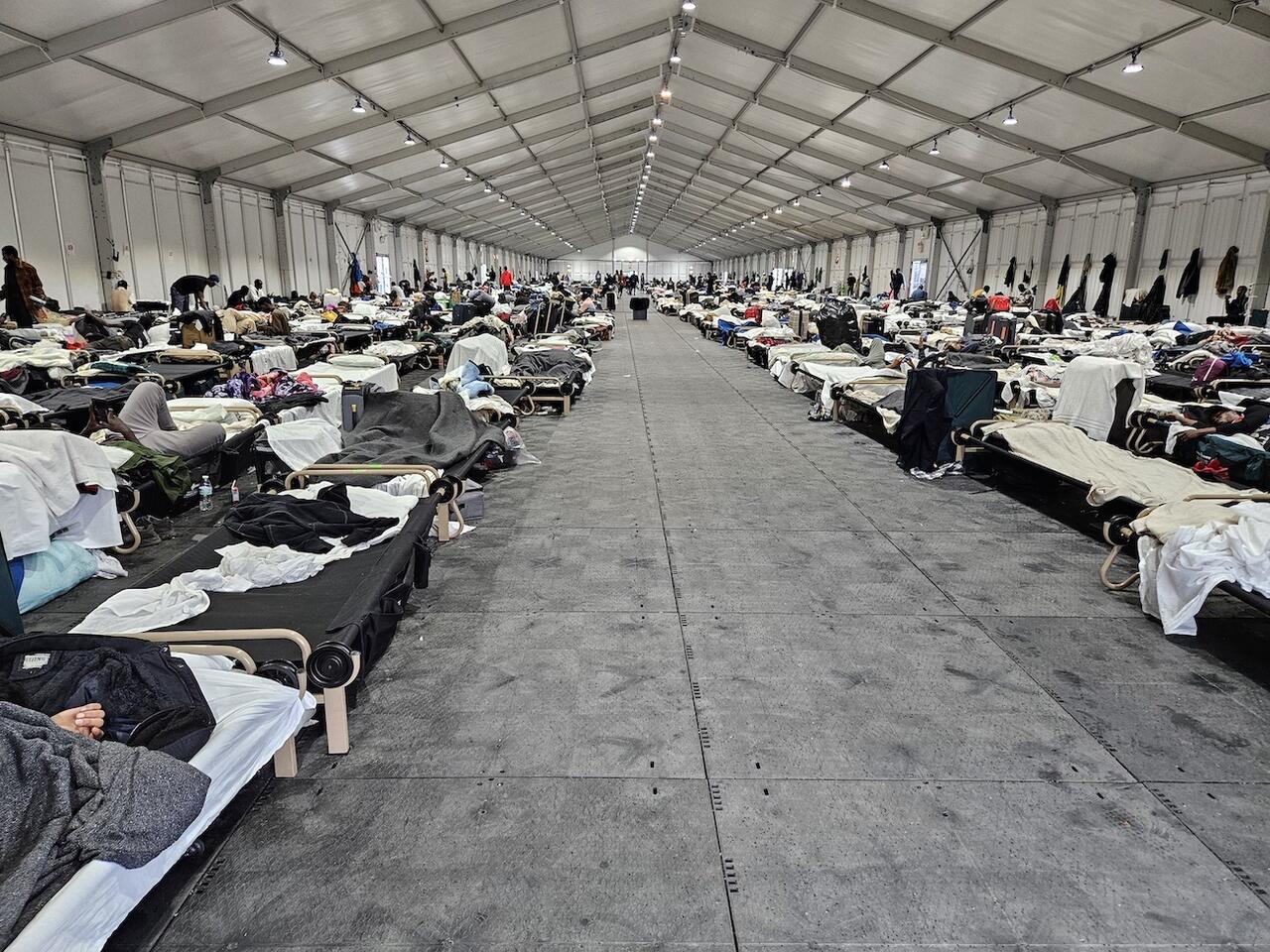
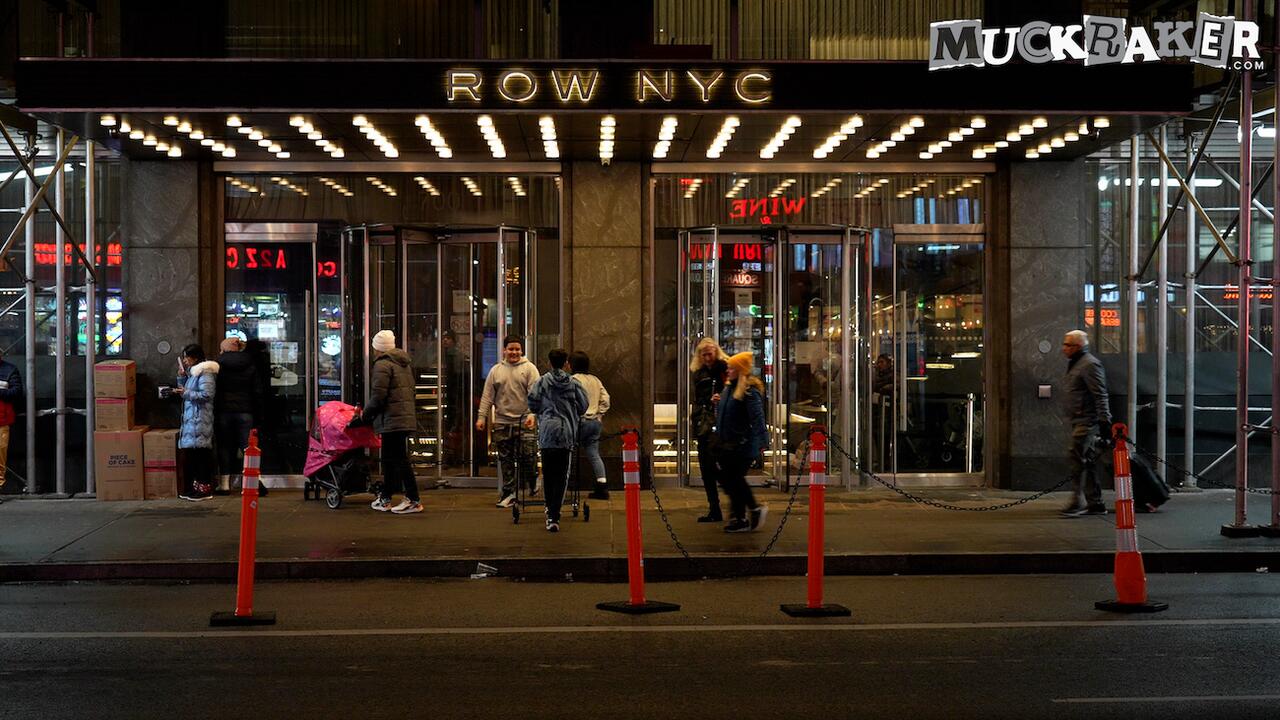
Muckraker.com has obtained never-before-seen undercover footage from inside three of New York's secret illegal alien compounds, at The ROW NYC, Randall's Island, and Floyd Bennett Field.


The footage includes conversations with security guards who speak of stabbings, drugs, deaths, and other events inside these facilities. It also includes interviews with numerous illegal aliens living inside these compounds as they wait for Medicaid and government issued ID's.

The ROW NYC is the 5th largest hotel in New York City. It has recently been turned into an illegal alien shelter. At max capacity, it holds around 5,000 people and it is estimated to cost roughly $500 per person.

In the video, on duty security guards can be seen talking about cases of domestic violence and suicide in the hotel. One guard tells a story of a man who killed himself by jumping off the roof, another committed suicide by cutting herself.

Randall's Island has lost a community soccer field to a massive illegal alien compound. The max population of the facility is around 3,000 and there is a large population of military aged men from Africa. Some countries include Senegal, Morocco, Guinea, Mauritania, Somalia. In the video security guards at Randall's speak of illegal aliens being caught with weapons and marijuana and reveal recent stabbing incidents at the facility. It is also revealed that security guards are not allowed to search illegal aliens at the compound.

An abandoned airstrip at Floyd Bennett Field has now been repurposed to be a base for a massive illegal alien facility. The max population is around 2,000 and the shelter is comprised mostly of family units from South America. The video interviews with illegal aliens inside the Floyd Bennett Field facility who give their support for Biden, and talk about how they spend their days hanging out while they wait for Medicaid and work permits.


'Biden Poised to Limit American Personal Data Going to China'


  • Administration plans to act as soon as next week, people say
  • Order would restrict data said to threaten national security

The Biden administration intends to unveil as soon as next week a new effort to prevent foreign adversaries such as China from accessing troves of Americans’ sensitive personal data, according to people familiar with the planned executive order.

An order to be signed by President Joe Biden will direct the attorney general and the Department of Homeland Security to issue new restrictions on transactions involving data that could threaten national security if obtained by “countries of concern.”

https://www.bloomberg.com/news/articles/2024-02-07/biden-poised-to-restrict-americans-personal-data-going-to-china