Search This Blog

Wednesday, December 11, 2024

Russia will boost global AI clout despite Western sanctions, Sberbank first deputy CEO says

 Russia has the potential to significantly improve its position in global AI ratings by 2030 despite Western sanctions due to a focus on generative AI and supportive regulation, Alexander Vedyakhin, first deputy CEO of Russia's largest lender Sberbank, told Reuters.

Sberbank is spearheading AI development in Russia, which currently ranks 31st of 83 countries by AI implementation, innovation and investment on UK-based Tortoise Media's Global AI Index, well behind not only the United States and China but also fellow BRICS members India and Brazil.

"I am confident that Russia can significantly improve its current positions in international rankings by 2030 through its own developments and supportive regulation in the field of generative AI," Vedyakhin said in an interview.

Vedyakhin stressed that Russia is lagging the United States and China by 6 to 9 months while Western sanctions have limited the country's capacity to boost its computer power.

"The sanctions were aimed at limiting Russia's computing power, but we are trying to compensate for the shortage with our talented scientists and engineers," he said.

Vedyakhin said that Russia will not compete with the U.S. and China in building giant data centres, but will focus on development of smart AI models similar to Meta's Llama. He said that Russian language generative AI models guaranteed technological sovereignty.

"I believe that any country that sees itself as independent on the world stage should have its own large language model," Vedyakhin said. Russia is among ten countries, which are developing its own national generative AI models.

https://www.marketscreener.com/quote/stock/META-PLATFORMS-INC-10547141/news/Russia-will-boost-global-AI-clout-despite-Western-sanctions-Sberbank-first-deputy-CEO-says-48575701/

Germany Is An Economic Model For What Not To Do

 by Rainer Zitelmann via RealClearMarkets.com.,

Many Germans liked to see their country as a global leader in the fight against climate change. Despite Germany being responsible for only 1.5 percent of man-made CO2 emissions worldwide, advocates for climate action argued that Germany could serve as a role model for other nations. These self-appointed “saviors of the world” believed that if Germany led the way, others would soon follow.
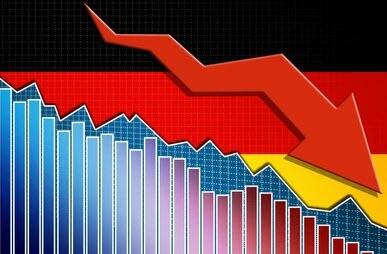
But it would now seem that Germany has become more of an anti-role model than a role model. Germany’s economic situation is getting worse every month. Growth is lower than in almost any other OECD country.

BASF, once the largest chemical company in the world, is cutting thousands of jobs in Germany and redirecting several billion euros of investment to China. Germany's largest steel manufacturer, ThyssenKrupp, last week announced plans to cut 11,000 jobs. The company had received two billion euros in subsidies on condition that it transition to producing “green steel” using hydrogen, which is totally uneconomical. BASF and ThyssenKrupp both cited Germany’s exorbitant energy prices and gargantuan bureaucracy as reasons for their decisions.

There has been a significant increase in the number of companies filing for insolvency. The current rate is 66 percent higher than the average for the month of October in the years 2016 to 2019, prior to the COVID-19 pandemic.

According to a study conducted by EY, fewer and fewer foreign companies want to invest in Germany. The number of foreign direct investment (FDI) greenfield and expansion projects in Germany has decreased by 12 percent compared to the previous year. This marks the sixth consecutive decline and the lowest level of investment activity since 2013.

EY identified Germany’s energy policy as a major deterrent for industrial investors. The combination of a recessionary environment, high energy prices, and uncertainties surrounding energy supply are all highlighted as key factors, along with high labor costs and bureaucratic complexities, all of which serve to further discourage foreign investors.

Estimates of the total costs of the German climate transition vary between 1.8 trillion euros (ifo Institute) and 6 trillion euros (McKinsey). But the indirect costs are even higher. A key component of German and European climate policy is the “mobility transition,” which entails a mandated shift towards e-mobility. The EU has banned the registration of cars with combustion engines from 2035. Consequently, the German automotive industry has been plunged into a severe crisis. Volkswagen has announced plans to lay off tens of thousands of employees and close multiple plants in Germany. Major automotive suppliers such as ZF, Continental, and Bosch have also announced tens of thousands of redundancies.

The German automotive industry, once a global leader that the whole world looked up to with admiration, has become a basket case. The heart of the German economy is stuttering.

Housing construction in Germany has also slumped dramatically. On the one hand, the number of immigrants arriving in Germany keeps on rising, while on the other, less and less new housing is being built. There are 20,000 building regulations and countless rules that have made building more ‘climate-friendly’ and far too expensive.

The origins of Germany’s current economic woes can be traced back to the administration of Angela Merkel, rather than Olaf Scholz’s recently collapsed government. The economic situation in Germany was good not because of, but in spite of her policies. She benefited from the market reforms and tax cuts implemented by her predecessor, Gerhard Schröder. Merkel not only failed to introduce any new reforms during her time in office, she instead exacerbated existing problems, particularly in the realm of energy policy. As was noted here five years ago, Germany’s energy policy is the dumbest energy policy in the world.

The battle against climate change is often cited as the number one objective of our day and age, the one paramount issue that should guide all political decision-making. However, Germany’s decision to shut down its nuclear power plants has led the country to rely on imported nuclear power and electricity from coal-fired power plants overseas. And, despite banning fracking domestically, Germany continues to import LNG gas produced through fracking from the United States. An irrational policy riddled with contradictions.

Is Germany at least the world champion in climate protection? No, Germany holds a respectable third place in the Environmental Performance Index, but in the category of climate protection, of all things, it only comes in seventh place (Great Britain is in fifth place).

Germany wanted to be world champion not only in climate policy, but also in migration and social policy. But the combination of generous social benefits and open borders has not worked.

Today, 64 percent of those on welfare, known as Bürgergeld (“citizen’s income”) have a migration background. The social system is overloaded, crime is rising sharply.

Instead of being a role model for the rest of the world in climate policy and migration policy, as many German politicians had hoped, Germany has now become a cautionary tale. Once again, the model of a planned economy has failed: In a market economy, it is the companies, and ultimately the consumers, who decide what is produced. In contrast, in a planned economy, decisions are made by politicians who believe they know better than millions of entrepreneurs and consumers. In this respect, the rest of the world can learn something from Germany, namely a lesson in what not to do.

https://www.zerohedge.com/economics/germany-economic-model-what-not-do

Lonza to exit capsules and health ingredients business, focus on contract development

 Lonza said on Thursday it plans to exit the capsules and health ingredients business, as the Swiss contract drugmaker faced a decline in demand for pharmaceutical supplies that had surged during the pandemic but has since dropped.

The move will take place at the appropriate time, with next steps to be determined in 2025, the Basel-based company said during an investor update.

The group will focus on the contract development and manufacturing organization (CDMO) business, Lonza said, as lacklustre demand for hard capsules for pills and lab equipment weighed on sales.

The CDMO business will be restructured into three business platforms, from previously three divisions and nine underlying businesses, it said.

Integrated Biologics business will comprise mammalian and drug product services, Advanced Synthesis will consist of the former small molecules division and bioconjugates, and Specialized Modalities will pioneer and scale new technologies including cell and gene technologies, mRNA, microbial and bioscience, Lonza said.

"This will allow us to achieve and maintain leadership across modalities with high therapeutic and commercial value, while pioneering the manufacturing technologies of the future," CEO Wolfgang Wienand said in a statement.

The new structure will be operational from the second quarter of 2025, Lonza said.

Lonza, which also produces monoclonal antibodies used in a new class of Alzheimer's drug, provided its outlook for 2025, excluding its CHI business.

It expects constant exchange rates sales growth to approach 20%, including a sales contribution of around 500 million Swiss francs ($565.74 million) from its Vacaville site acquisition, and core earnings before interest, tax, depreciation and amortisation (EBITDA) margin to approach 30% in 2025.


https://uk.finance.yahoo.com/news/lonza-exit-capsules-health-ingredients-061548069.html

Trump invites China's Xi Jinping to attend inauguration

 U.S. President-elect Donald Trump has invited Chinese President Xi Jinping to attend his inauguration next month, CBS News reported on Wednesday, citing multiple sources.

The invitation to the Jan. 20 inauguration in Washington occurred in early November, shortly after the Nov. 5 presidential election, and it was not clear if it had been accepted, CBS reported.

The Chinese embassy in Washington did not immediately respond to a request for comment.

Trump said in an interview with NBC News conducted on Friday that he "got along with very well" with Xi and that they had "had communication as recently as this week."

It would be unprecedented for a leader of China, a top U.S. geopolitical rival, to attend a U.S. presidential inauguration.

Trump has named numerous China hawks to key posts in his incoming administration, including Senator Marco Rubio as secretary of state.

The president-elect has said he will impose an additional 10% tariff on Chinese goods unless Beijing does more to stop trafficking of the highly addictive narcotic fentanyl. He also threatened tariffs in excess of 60% on Chinese goods while on the campaign trail.

In late November, China's state media warned Trump that his pledge to slap additional tariffs on Chinese goods over fentanyl flows could drag the world's top two economies into a mutually destructive tariff war.

Separately on Wednesday, China's U.S. Ambassador Xie Feng read a letter from Xi to a U.S.-China Business Council gala in Washington, in which the Chinese leader said Beijing was prepared to stay in communication with the U.S.

"We should choose dialogue over confrontation and win-win cooperation over zero-sum games," Xi said in the letter.

Xie added that the two countries should not decouple supply chains. But Nicholas Burns, the U.S. ambassador to Beijing, said in a prerecorded video address that China at times tried to "sugar coat" challenging and competitive relations.

"No amount of happy talk can obscure our profound differences," Burns said.

https://www.yahoo.com/news/trump-invites-chinas-xi-jinping-001457564.html

Taiwan officials visit US for quiet talks with Trump's circle, say sources

 Two senior members of Taiwan's government are in the United States to meet people connected to President-elect Donald Trump's transition team, five sources told Reuters, in an effort by Taiwan to establish ties with the incoming administration.

Lin Fei-fan and Hsu Szu-chien, both deputy secretaries-general of Taiwan's National Security Council and several of their staff have traveled to the Washington area for meetings through this week, the sources said on condition of anonymity.

Reuters was not able to confirm who from the U.S. side would join the meetings or the agenda.

Taiwan's presidential office said the national security team's visit and "exchanges" were a routine part of their work, and that it had no further comment.

China's embassy and the Trump transition team did not respond to requests for comment.

The visit by Lin and Hsu comes as China's military has stepped up activity near the Taiwan Strait, in what Taiwan has said is Beijing's effort to set a "red line" for the incoming Trump administration and U.S. allies.

One of the sources said the meetings were with individuals in Trump transition circles but would not include nominees for top positions in Trump's next administration, given sensitivity in Beijing over any talks between Taiwanese and U.S. officials.

The meetings are with "Republicans likely to populate mid-tier political positions" in the Trump administration, a second source said. A third source said it was "safe to say" Lin and Hsu were meeting the Trump transition team.

A fourth source added that visits to the United States at such a level are not rare and that they are to meet "old friends", including people in Trump's circle.

The United States does not have formal diplomatic relations with Taiwan, a democratically governed island that China claims as its own territory. Taiwan rejects Beijing's sovereignty claims, saying only the island's people can decide their future.

HOPE AND WORRY IN TAIWAN

Trump's electoral win in November has sparked hope in Taipei that he will pursue a tough line with China but also anxiety given his comments that the island should pay the U.S. for its defense.

Trump has named numerous China hawks to key posts in his incoming administration, including Senator Marco Rubio as secretary of state, who has called for unfettered interaction between U.S. and Taiwan officials.

Those nominations have been encouraging for Taipei, which Reuters has reported may place large new arms deals to show it takes seriously Trump's statements that Taiwan should pay "protection" money to the United States.

Engagement to date between Taiwan and the incoming administration appears to fall in a gray area of unofficial contact and has been low-key. That's a departure from the period before Trump's first term, when in December 2016, the month before his inauguration, he held a phone call with then-Taiwan president Tsai Ing-wen.

That call marked the first time since 1979 that a U.S. president-elect had spoken with the island's president, a move that angered China.

Ahead of his second inauguration, scheduled for Jan. 20, CBS News reported on Wednesday that Trump had invited Xi to attend the event, something that would be unprecedented for a Chinese leader.

The president-elect's camp and China did not immediately respond to a request for comment on the report, but Trump said in a interview with NBC News conducted last Friday that he "got along with very well" with Xi and that they had "had communication as recently as this week."

https://www.yahoo.com/news/taiwan-officials-visit-u-quiet-004546694.html

US military airfields in Indo-Pacific too easily taken out of action, report says

 Chinese strikes on airfields will stymie U.S. military aircraft in the Indo-Pacific region if there is a conflict, a new study says, recommending that the United States invest in cheap, uncrewed aircraft and runway repair capabilities.

The central problem, the researchers say, is that bases inside the first island chain - a collection of archipelagos running roughly from Indonesia in an arc northeast to Japan, encompassing the South China Sea and East China Sea - are in range of thousands of Chinese missiles.

If those weapons are dedicated to destroying or disabling runways, they could close airfields in Japan for a minimum of 11.7 days. Those farther away, in Guam and the Pacific Islands, could be closed for a minimum of 1.7 days.

"In practice, however, China could disrupt U.S. combat operations for much longer by denying the United States the use of runways to conduct aerial refuelling operations," the report states.

The report, "Cratering Effects: Chinese Missile Threats to US Air Bases in the Indo-Pacific," was published on Thursday by the Stimson Center, a defence and security think tank.

It recommends investing in a large number of inexpensive, uncrewed aircraft and electronic warfare to complicate Chinese strike planning; developing more crewed aircraft that can operate with short runways; developing more runway-repair and base resilience capabilities; and nurturing alliances so that friendly countries are more willing to open airfields for U.S. use.

U.S. Indo-Pacific Command, which oversees American forces in the region, did not respond to a request for comment.

China's ministry of defence did not respond to a request for comment.

U.S. military planners have in recent years built around the concept of distributed operations - spreading forces throughout the region. As part of the Pacific Deterrence Initiative, hundreds of millions of dollars have been spent upgrading airfields in places such as Australia and the island of Tinian.

In recent years the Air Force also developed a program called Rapid Airfield Damage Recovery (RADR), the report noted, meant to reopen runways quickly after an attack and keep them active for "thousands" of sorties.

The U.S. is also counting on missile defences - it is planning a multibillion-dollar "layered" network of interceptors to protect Guam - to keep airfields and other bases operating.

A former U.S. Air Force logistics officer with direct knowledge of Indo-Pacific conflict simulations said the report offered a good assessment of the problem.

The officer said RADR and missile defences would be more effective than the report estimated, and noted that Chinese strike planners would most likely use a mix of munitions rather than 100% anti-runway submunitions, as the report assumed.

"While I don't think I much agree with the exact numbers... I do agree that the analysis is broadly directionally correct," said the officer, speaking on condition of anonymity because of the sensitivity of the matter.

The report calculated the effect of Chinese strikes by creating a statistical modelling script in Python that considered variables such as runway size, Chinese weapon accuracy and U.S. defences.

"In the last year, I started to hear more and more policymakers and analysts suggesting that it would be feasible for the United States to sink enough Chinese vessels and defend Taiwan so long as the United States had access to bases in Japan and Guam," said Kelly Grieco, one of the report's authors. "At least in open source, no one had tested these propositions."

https://www.yahoo.com/news/us-military-airfields-indo-pacific-040308469.html

Syria's rebel leader vows to dissolve Assad regime security forces, close prisons

 Syrian rebel leader Ahmad al-Sharaa - better known as Abu Mohammed al-Golani - told Reuters in a written statement on Wednesday that he would dissolve the security forces of the toppled regime of Bashar al-Assad.

His forces swept across Syria in a lightning offensive that overthrew 50 years of Assad family rule, replacing it with a three-month transitional government of ministers that had been ruling a rebel enclave in Syria's northwest.

The military command affiliated with his group, which is known as Hayat Tahrir al-Sham, already said they would grant an amnesty to military conscripts.

He would now also "dissolve the security forces of the previous regime and close the notorious prisons," Sharaa said in a statement shared exclusively with Reuters by his office.

Syrians have flocked to the infamous prisons where the Assad regime is estimated to have held tens of thousands of detainees, desperately looking for their loved ones. Some have been released alive, others were identified among the dead and thousands more have not yet been found.

Sharaa also said he was closely following up on possible chemical weapons depots and coordinating with international organisations to secure them. The group had already announced it would not use those weapons under any circumstances.

He reiterated that he would form a government of technocrats. The current transitional government is set to rule until March 2025, according to a statement by his group.

https://www.yahoo.com/news/exclusive-syrian-rebel-leader-says-194554233.html