Search This Blog

Thursday, October 8, 2026

'Peskov: Ukraine is not ready for peace'

 Kremlin Press Secretary Dmitry Peskov claimed on Thursday that the threats made by Ukrainian President Volodymyr Zelensky against Russia prove Ukraine's "unwillingness and unpreparedness to embark on any kind of peaceful trajectory."

Peskov assured that Moscow supports a comprehensive and lasting peace in Ukraine. However, the press secretary agreed with United States Secretary of State Marco Rubio that there is no possibility for a diplomatic resolution of the conflict at the moment.

Peskov commented on the Indian three-point peace proposal, claiming that such a resolution is "unlikely for now, although we naturally welcome the efforts of our Indian friends."

https://breakingthenews.net/Article/Peskov:-Ukraine-is-not-ready-for-peace/67262029

ADC raises $86.6 million in PIPE financing and amends royalty, loan deals to extend cash runway into 2029


  • Amended royalty and loan agreements expected to reduce debt and remove a change‑of‑control payment requirement.
  • ADC reports preliminary Q3 ZYNLONTA net sales of $21 million.
  • ADC Therapeutics reports a total cash balance of $189.2 million.

Wells Fargo upgrades Editas to Overweight, lifts target to $6


 after Australian clearance for first-in-human EDIT-401 trial

  • Australian regulatory and ethics approvals enable Phase 1/2 Strive trial of in vivo gene-editing therapy EDIT-401 to proceed.
  • Strive Phase 1/2 study of EDIT-401 will enroll patients with heterozygous familial hypercholesterolemia for in vivo gene-editing treatment.
  • Patient dosing with EDIT-401 is expected to begin this year following Australian regulatory and ethics approvals.
  • Initial safety data from the Strive trial are anticipated in the first quarter of 2027.

Neurogene started at Overweight by JP Morgan

 Target $60

https://finviz.com/stock?t=NGNE&p=d

Roche taps Chinese biotech Defand in reported $1B deal


Roche has partnered with China’s Defand Therapeutics to discover molecular glue degraders for cancer and immune diseases, in a research and licensing agreement reportedly worth close to $1 billion (€895 million).


Why it matters: The Swiss drugmaker is buying access to a discovery platform, with Defand tasked with finding molecules against multiple disease targets. The approach could help Roche reach proteins that conventional drugs struggle to address.

The deal: Hangzhou-based Defand will use its screening platform to identify molecular glue degraders and advance programs to agreed R&D stages. Roche will then take over further preclinical and clinical development and hold exclusive global commercialization rights.Defand will receive an upfront payment and could earn milestones and tiered royalties on net sales. Roche also has an option to expand the collaboration to additional targets.
Neither company disclosed financial amounts in Defand’s announcement (in Chinese). Endpoints News reported an upfront payment of less than $10 million (€9 million) and a potential total near $1 billion, citing a source familiar with the terms. Most of that reported value would therefore depend on future milestones.

How it works: Molecular glue degraders bring a target protein into contact with an E3 ubiquitin ligase, part of the cell’s protein disposal machinery. This interaction marks the target for destruction, removing the protein rather than simply blocking its activity.Defand, founded in 2023, says its platform can screen cytoplasmic, nuclear, transmembrane and viral proteins. It has established screening cell lines for more than 100 clinically relevant targets and built compound libraries focused on several E3 ligases.
“The platform enables large-scale parallel screening across dozens of targets, substantially accelerating the discovery of MGDs,” Defand’s chief operating officer Huanwei Ru said in the announcement, translated from Chinese.

The big picture: The agreement is Roche’s fourth China collaboration in seven weeks. The Swiss drugmaker has also partnered with DualityBio on antibody-drug conjugates, Simcere on T-cell engagers and Earendil on bispecific antibodies.The big pharma’s appetite for dealmaking seems insatiable lately, as it also signed pacts with two U.S. startups, Dualitas Therapeutics and Atavistik Bio last month.

What to watch: The announcement does not identify the selected targets, specify the development milestones that trigger a handoff to Roche or give a timeline for entering clinical trials. The next meaningful test will be whether Defand’s screening platform produces candidates ready to move beyond discovery.

FDA Approves Tecentriq Plus Chemotherapy for Stage 3 dMMR Colon Cancer


The Food and Drug Administration (FDA) approved Tecentriq (atezolizumab) in combination with chemotherapy on Oct. 8 as an adjuvant (after-surgery) treatment for adults and children 2 years and older with stage 3 mismatch repair deficient (dMMR) colon cancer, according to a news release from the agency.


Under the approval, Tecentriq is given with a fluoropyrimidine and oxaliplatin, two types of chemotherapy. The FDA also approved Tecentriq Hybreza (atezolizumab and hyaluronidase-tqjs), a form of Tecentriq given as an injection under the skin, with the same chemotherapy for adults and children 12 years and older who weigh 40 kilograms or more with stage 3 dMMR colon cancer.
What did the ATOMIC trial show in stage 3 dMMR colon cancer?

The approval was based on results from the ATOMIC trial, in which patients who received Tecentriq plus chemotherapy had a 50% lower risk of their cancer returning or death compared with those who received chemotherapy alone.

The trial’s main measure of success was disease-free survival, or the length of time after treatment that patients lived without their cancer coming back, as assessed by the investigators. The median disease-free survival, the point at which half of patients had their cancer return or died, was not reached in either group. That means more than half of patients in each group had not had a recurrence or died when the data were analyzed. The difference between the two groups was unlikely to have come about by chance.
How was the ATOMIC trial in stage 3 dMMR colon cancer designed?

ATOMIC enrolled 711 adults and one pediatric patient with stage 3 dMMR colon cancer. All patients had surgery to fully remove the original tumor, and none had signs of cancer remaining in the lymph nodes or cancer that had spread to other parts of the body.

Patients were split evenly into two groups at random. One group received Tecentriq with mFOLFOX6, a chemotherapy regimen made up of oxaliplatin, leucovorin and fluorouracil, for 12 cycles, followed by six months of Tecentriq monotherapy. The other group received mFOLFOX6 alone for 12 cycles. The trial was open label, meaning patients and their doctors knew which treatment they were receiving.
How is Tecentriq given for stage 3 dMMR colon cancer?

Adults receive Tecentriq through an IV every two, three or four weeks, depending on the dose, alongside chemotherapy for six months. Tecentriq then continues as monotherapy for six months or until the cancer returns or side effects become too severe. Children receive a dose based on their weight on the same schedule.

Tecentriq Hybreza is given as one injection under the skin every three weeks with chemotherapy for six months, followed by six months of Tecentriq Hybreza monotherapy or until the cancer returns or side effects become too severe. A recommended dose has not been set for children under 12 or for patients 12 and older who weigh less than 40 kilograms.
What side effects are associated with Tecentriq in stage 3 dMMR colon cancer?

The prescribing information includes warnings for immune-related side effects, in which the immune system can affect healthy organs and tissues, as well as infusion-related reactions. It also warns of complications in patients who later receive an allogeneic stem cell transplant (a transplant using cells from a donor) and of possible harm to an unborn baby.
What does the Tecentriq approval mean for patients with stage 3 dMMR colon cancer?

Patients with stage 3 dMMR colon cancer who have had surgery now have an FDA-approved option that adds Tecentriq to standard chemotherapy after surgery, with a version available as an injection under the skin for eligible patients.

The FDA reviewed the applications under priority review and through Project Orbis, a program that allows drug applications to be reviewed at the same time by regulators in multiple countries. Reviews by health agencies in Australia, Canada, Israel and Switzerland are ongoing.


https://www.curetoday.com/view/fda-approves-tecentriq-plus-chemotherapy-for-stage-3-dmmr-colon-cancer


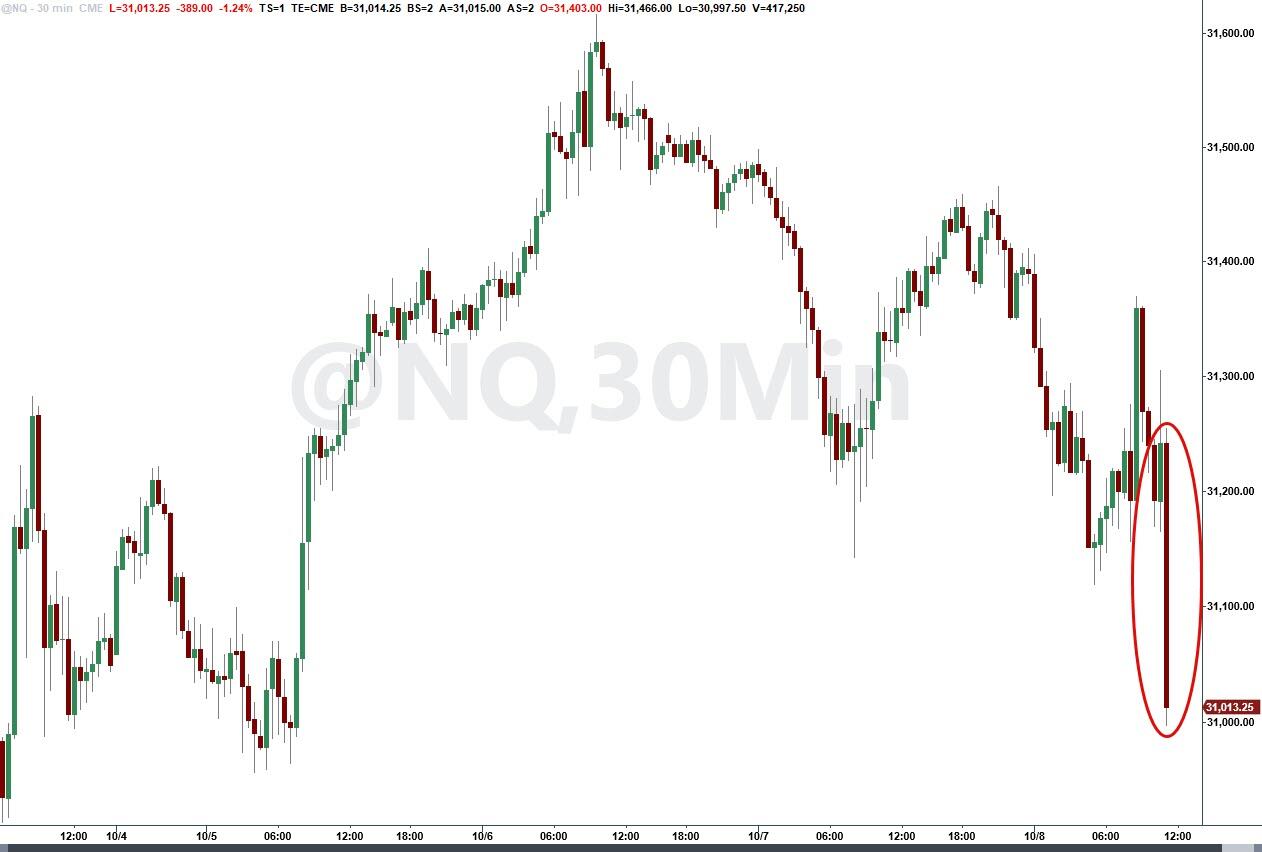
Nasdaq Tumbles After FT Reports OpenAI Revenues Disappointing

 ...and just like that, the massive AI CapEx boom "excess demand" narrative is in doubt...

The Financial Times reports that OpenAI’s annualised revenue is about $20bn less than has been previously signalled, according to financial documents shared with investors, a massive gap likely to damp optimism about the growth of AI demand.

The company has recently told investors its revenues were approaching $50bn on an annualized basis at the end of September, far short of the $70bn reported by the FT and other media outlets late last month based on information that was provided to investors.

The most immediate reaction was in Nasdaq which tumbled over 1%...

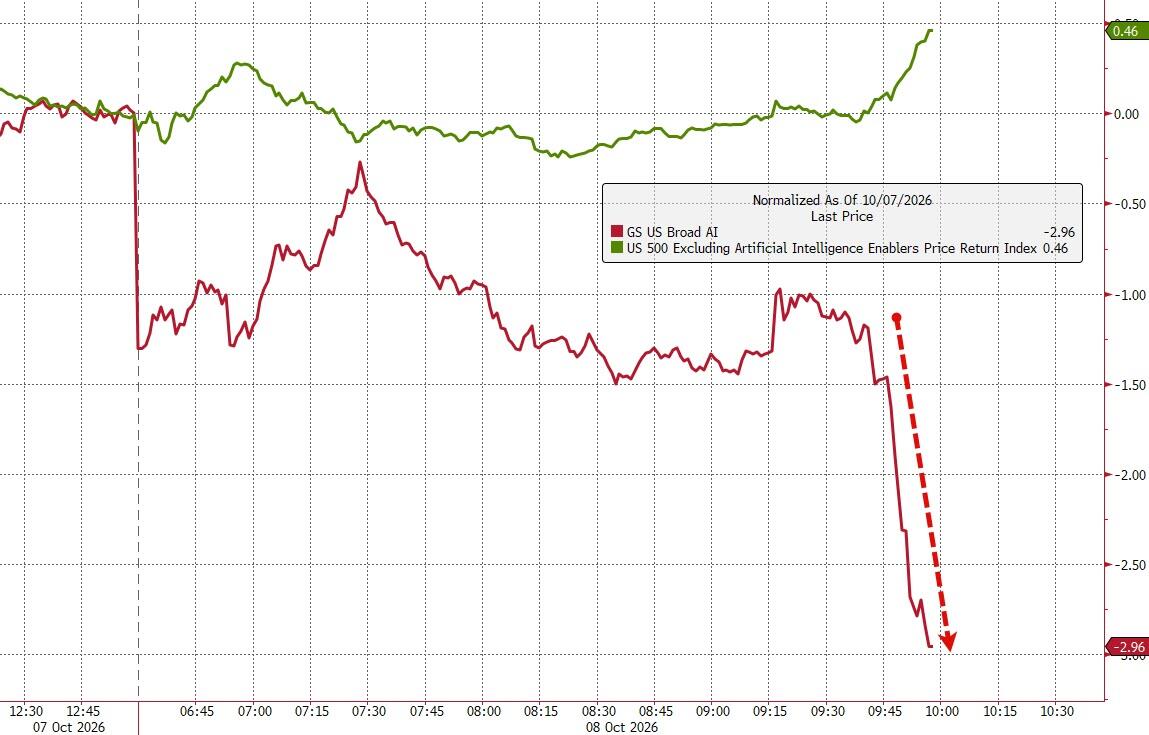
The Broad AI basket is getting whacked...

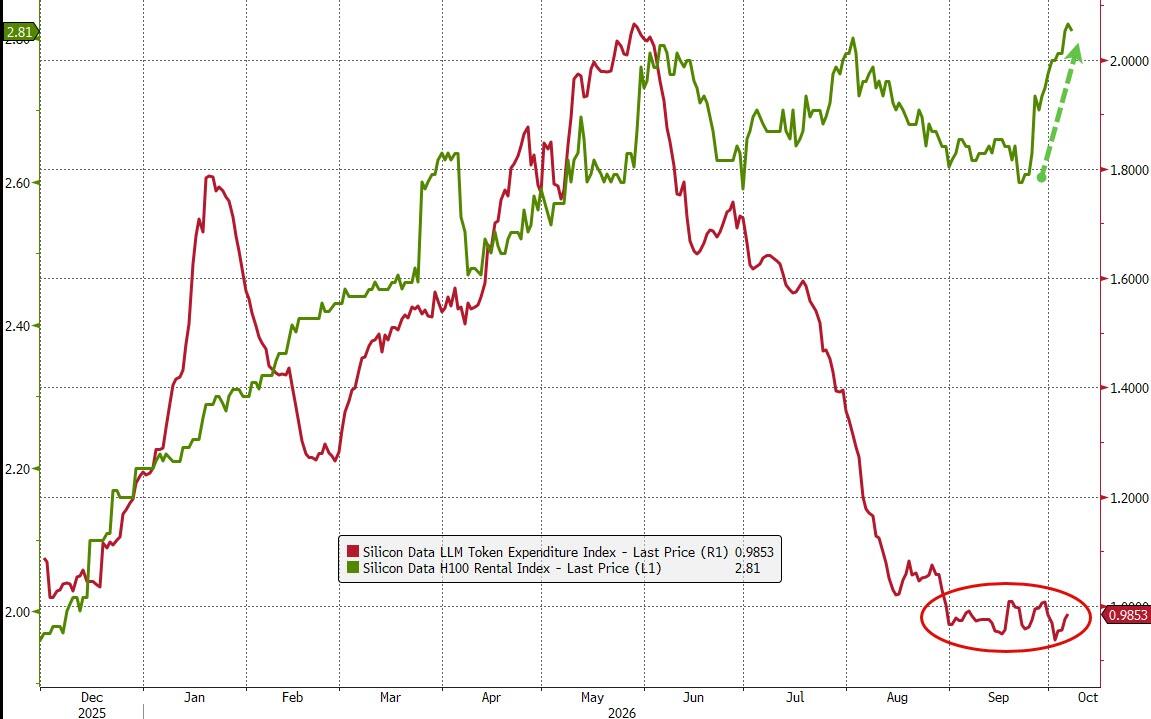
Who could have seen that coming with Token Costs plumbing new lows?

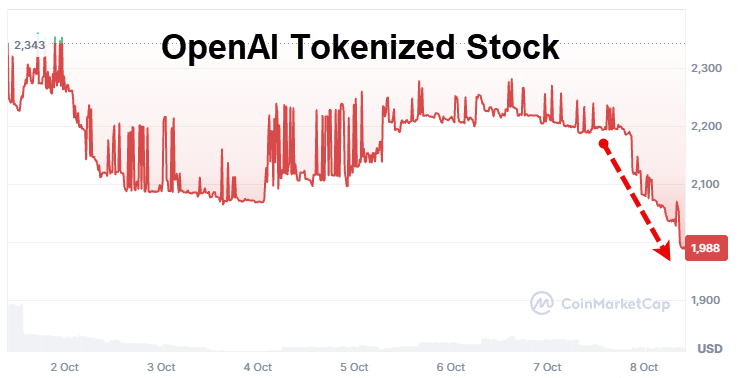
And in the tokenized stock market for OpenAI (PreStocks), things aren't looking great: 

How many more of the prior statements are about to be proved false?

The entire shell-game is based on the 'demand'... and if revenues are that big a miss from expectations, there is an even bigger disconnect relative to liabilities...

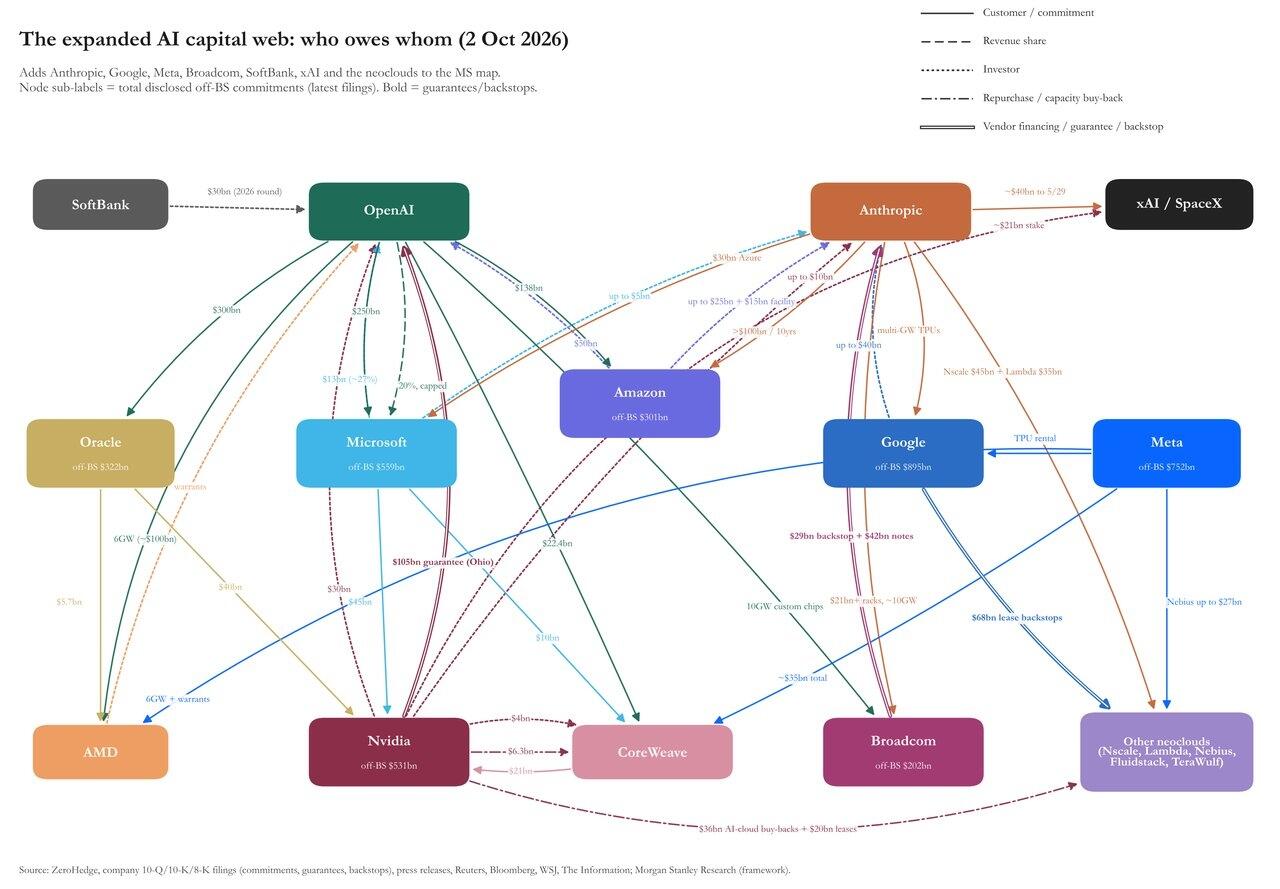
That's ok, OpenAI only has $1.5 trillion in commitments to... checks circular financing diagram... EVERYONE...

How long before the spins and denials?


https://www.zerohedge.com/markets/nasdaq-tumbles-after-ft-reports-openai-revenues-disappointing