In the early 1970s, a graduate student at Rockefeller University in New York City pitched an idea to his mentor, the physician who had given the world methadone maintenance: What if you could create a vaccine to train the immune system to intercept a drug before it reached the brain?
The mentor, Vincent P. Dole, MD, was skeptical. Methadone already existed and was being used successfully. They also already had naloxone. Why would anyone choose a vaccine that took weeks to work over a pill that worked right now?
The graduate student was Thomas Kosten, MD, now a professor of psychiatry at Baylor College of Medicine in Houston. Despite his mentor’s skepticism, Kosten spent the next five decades pursuing the idea. He built a cocaine vaccine at Yale University, New Haven, Connecticut, first testing it in humans in 2000. It went through three phases of clinical trials only to be rejected by the FDA. The vaccine worked in two-thirds of recipients, but the agency required an intent-to-treat analysis. When the responders were pooled with the nonresponders, the signal vanished.
“My commercial partner at that point said, ‘Well, nice talking to you. Bye.’ That was it,” Kosten said.
Now, decades later, investigators have built on Kosten’s pioneering work to develop an experimental vaccine against fentanyl that is being tested for the first time in humans. In June, manufacturer ARMR Sciences reported interim data showing that the vaccine, called Fentanyl Armour, was well tolerated in a phase 1/2 trial and generated anti-fentanyl antibodies at the lowest dose tested — the first time anti-fentanyl antibodies had ever been measured in a human being.
Other efforts to prevent fentanyl overdose are also underway. Researchers at the University of Washington in Seattle are working on a multivalent vaccine targeting oxycodone, heroin, and fentanyl. And two companies — CounterX Therapeutics and Cessation Therapeutics – are developing anti-fentanyl monoclonal antibodies. Cessation’s CSX-1004 antibody emerged from Janda’s lab and has received FDA Fast Track designation.
What all four programs share is the same 50-year-old bet: that the immune system can fight a drug the way it fights a pathogen. Results of these trials will determine whether that bet finally pays off — or if fentanyl vaccines join nicotine and cocaine on the list of immunological promises that couldn’t make the cut.
How a Fentanyl Vaccine Works

When Kim Janda, PhD, first published on a fentanyl vaccine in 2016, “no one cared about it. I couldn’t get funding for it, and I had a hard time publishing,” said Janda, a professor of chemistry at Scripps Research in La Jolla, California.
But then the death toll began to rise. In 2013, roughly 3000 Americans died from synthetic opioid overdoses. By 2022, the number was nearly 74,000.
Conjugate drug vaccines — whether targeting fentanyl, cocaine, heroin, or nicotine — all work on the same basic principle. They train the immune system to produce antibodies that intercept a specific drug in the bloodstream, preventing it from reaching the brain. The specific components differ across programs, but the underlying mechanism does not.
A fentanyl vaccine works nothing like the opioid receptor antagonist naloxone, which binds mu-opioid receptors with higher affinity than opioids, rapidly reversing the effects of an overdose and physically blocking any more drug from binding. But naloxone can only be given after an overdose is already underway and requires a bystander to administer it. With the influx of more potent forms of fentanyl and analogs like carfentanil in the illicit drug supply, naloxone is “actually being less and less effective,” said Seth Toback, MD, ARMR’s chief medical officer.
A fentanyl vaccine works upstream, in the blood, before the drug ever reaches the brain. It contains a synthetic molecule shaped like fentanyl but with no opioid activity, called a hapten. Fentanyl Armour and the fentanyl component of the multivalent vaccine under development at the University of Washington is linked to CRM197, a carrier protein already used in pneumococcal and meningococcal vaccines.
Fentanyl Armour uses a formulation developed by Kosten, along with foundational hapten chemistry developed by Janda. It also contains an adjuvant called dmLT to amplify the immune response.
Together, they train the body to produce antibodies that recognize fentanyl’s molecular shape and binds it when the drug enters a vaccinated person’s bloodstream, forming complexes too large to cross the blood-brain barrier. The drug is cleared from the body without ever reaching opioid receptors, meaning someone with the fentanyl antibodies “won’t feel the euphoric effects [of fentanyl], and they certainly won’t overdose,” said Colin Haile, PhD, a research associate professor of psychology at the University of Houston, Houston, who led the preclinical work on the vaccine and co-founded ARMR Sciences.
The antibodies are also selective in ways that matter clinically. Published data show they do not bind morphine, methadone, buprenorphine, naloxone, or naltrexone. An immunized patient can stay on addiction maintenance therapy, receive morphine for pain, and still be rescued with naloxone if needed.
Janda noted that the vaccine does not treat addiction and should not be understood as a cure. It would merely prevent a fentanyl-related overdose.
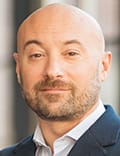
But skeptics argue that existing rescue medications should be sufficient to prevent that outcome. Marco Pravetoni, PhD, a professor of psychiatry at the University of Washington in Seattle, who is developing the multivalent vaccine and leads CounterX Therapeutics, has heard the objection many times. If rescue medications were enough, “we wouldn’t have all these people dying of overdose,” he said.
The crisis extends beyond people with addiction. Fentanyl now contaminates counterfeit versions of common pharmaceuticals, such as Xanax or Adderall. A 2023 CDC report showed that the number of overdose deaths linked to counterfeit pill use more than doubled between 2021 and 2023, and fentanyl was implicated in 41% of those deaths.
Two Vaccines, Two Strategies
The Fentanyl Armour trial, sponsored by ARMR Sciences, is a phase 1/2 study in healthy adult volunteers in Netherlands. In the initial stage, participants received only the vaccine, no fentanyl. Investigators vaccinated one person and monitored them for adverse reactions before proceeding to the next, Toback said. Side effects resembled those of an authorized influenza vaccine, he said, mostly headache and pain at the injection site.
In a planned challenge phase now underway vaccinated participants will receive a pharmaceutical-grade dose of fentanyl under the supervision of an anesthesiologist while researchers track respiratory rate, breathing strength, and oxygen and carbon dioxide levels.
Fentanyl kills by suppressing the drive to breathe, and investigators are using the attenuation of that signal as a “proxy for a fatal overdose,” Toback said. Administering a lethal dose of fentanyl in a clinical trial would be unethical, so the question isn’t whether the vaccine prevents death, he noted, but whether it keeps someone breathing.
Fentanyl is active at microgram doses, so “you really don’t need huge levels of anti-fentanyl antibodies to block fentanyl’s effects,” Haile said. Nicotine and cocaine require mg, a far larger antibody burden that cause problems in prior vaccine attempts for those substances.
But Janda, whose published hapten chemistry underlies much of the current field and whose former graduate students now lead the science at both ARMR and Cessation Therapeutics, cautioned that quantity alone is not enough. What matters, he said, is how tightly each antibody grabs the drug. “If you don’t have antibodies that have higher affinity for the drug than it does for the mu-opioid receptor, it’s not going to work,” he said.
Pravetoni is taking a different approach. Rather than targeting fentanyl alone, he’s building individual vaccines against oxycodone, heroin, and fentanyl, with the goal of combining them into a single multivalent product.
It’s slow-going because the FDA required that each component be tested separately, a ruling that, at academic-lab scale, adds years to the development timeline. “If you have to do phase ones of each component, and then you have to combine it, that is going to take decades,” Pravetoni said. “We’re not Pfizer. We don’t have those kinds of resources.”
The first component of the multivalent program, an oxycodone vaccine, was trialed in a phase 1 study at Columbia University Irving Medical Center, New York City, led by Sandra Comer, PhD. But the trial was delayed 2 years after a participant death in a separate, unrelated study at Columbia triggered an FDA hold across all the university's clinical operations. Recruitment recently resumed.
Pravetoni’s fentanyl vaccine isn’t as far along as Fentanyl Armour, though he said the preclinical is complete and manufactured vaccine vials, produced to the FDA’s Good Manufacturing Practice standard required for human trials, are sitting in storage. But amid broader shifts in federal research funding, National Institutes of Health funding for the phase 1 trial was pulled. “I had money to fund the project. And that money was taken away from us,” said Pravetoni.
The vaccine program is not over, he said, but without new funding, the vials sit idle. Researchers are now looking to run the trial outside the US, where costs are lower, he said.
A Faster Alternative?
No major pharmaceutical company has invested in any of the vaccine programs, which is part of the reason both Pravetoni and Janda have turned to monoclonal antibodies.
While a vaccine teaches the immune system to produce antibodies to fentanyl, a process that can take weeks and works differently in each individual, a monoclonal antibody is pre-manufactured, injected directly into the body, works the same in everyone, and circulates in the bloodstream, ready to bind to fentanyl on contact. Those features make the monoclonal approach more appealing to investors, Pravetoni added.
Cessation Therapeutics’ monoclonal antibody CSX-1004, co-discovered in Janda’s lab, has completed a phase 1 safety trial and received FDA Fast Track designation.
Another company, CounterX Therapeutics, founded by Pravetoni, is developing a second antibody, CTRX-101, with a phase 1 trial planned.
“For our field, we need a win. If you commercialize at least one product, that would open up to other products,” Pravetoni said.
What Remains Unknown
Just how long either of these approaches will protect against overdose is unknown. Pravetoni said a monoclonal antibody would likely remain effective for 1-3 months, something future studies will measure. A vaccine's protective benefits last considerably longer. Toback estimated Fentanyl Armour would remain effective for 6-12 months, with boosters likely needed to extend efficacy. Kosten put the range at 1-2 years. Researchers expect to learn more during the 6-month follow-up in the trial.
But perhaps the largest unknown for the vaccine is whether it will yield an adequate level of antibodies in enough study participants to demonstrate efficacy. Failure to meet that goal has sunk every other drug vaccine to date.
More than two decades ago, when Kosten was working on a cocaine vaccine, only two thirds of study participants generated antibody levels high enough to blunt the drug’s euphoric effects. Antibody levels in the other third were too low to block those effects, which may have led some to use more cocaine, increasing the risk for overdose.
“They were getting a partial blockade of the cocaine, and they had to use more to overcome it,” Kosten said. With fentanyl, where a lethal dose is measured in mg, even a small increase in use could kill. Whether enough vaccinated people produce antibodies of sufficient quantity and potency to demonstrate efficacy will determine the program’s fate.
There are other challenges as well. The vaccine partially binds sufentanil, an anesthetic commonly used in surgery. ARMR said it is working with anesthesiologists on ways to flag vaccination status in medical records, but no system exists yet.
A fentanyl vaccine also does nothing against nitazenes, the structurally unrelated synthetic opioids increasingly found in the drug supply, nor against xylazine or medetomidine, veterinary tranquilizers now commonly mixed with fentanyl that is resistant to antibodies and naloxone.
Political Challenges Await
Scientific hurdles aside, a vaccine that prevents overdose without requiring abstinence enters contested political territory.
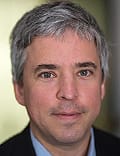
In April, the Substance Abuse and Mental Health Services Administration cut funding for fentanyl test strips and syringe exchange programs, calling them practices that facilitate illicit drug use. A fentanyl vaccine is unlikely to draw the same objection on its merits, said Caleb Alexander, MD, co-director of the Center for Drug Safety and Effectiveness at Johns Hopkins University in Baltimore.
“It’s unlikely that a vaccine such as this would encourage or foster greater illicit opioid use,” he said, noting that if the trials bear fruit, the benefits would far outweigh any theoretical unintended consequences.
The more important question, Alexander said, is who would be pressured to take it, noting that coercion does not require a formal mandate. A judge could order it as a condition of parole, or a child welfare agency could make it a factor in custody decisions. And if the vaccine is framed as immunization against bad choices, it reinforces the idea that addiction is a moral failing rather than a disease.
“You don’t need a law forcing the shot. You just have to make refusing it costly,” Alexander said.
While important, it’s premature to consider political ramifications. First, researchers have to find out in a vaccine or monoclonal antibody will work to prevent an overdose.
Every previous attempt to vaccinate against a drug of abuse has failed in late-stage trials, and for Janda, the stakes extend beyond any single product.
“I’m really, really hopeful the ARMR vaccine works,” he said, “because if it doesn’t, we’re going to really take a hit.” Nicotine and cocaine vaccines both failed in late-stage trials. Another high-profile failure could discredit the entire approach, he said.
A home run is not required, he added. “It just has to show some efficacy.”
Haile reported being a co-founder of and scientific consultant for ARMR Sciences and holding provisional patents on anti-fentanyl vaccine technology. Toback reported being chief medical officer of ARMR Sciences and receives salary and stock options. Pravetoni reported being founder and chief scientific officer of CounterX Therapeutics and holding patents on vaccines and antibodies targeting opioids. Alexander reported having no relevant financial disclosures. Janda reported being a scientific advisor and consultant to ARMR Sciences, though he reported having no financial disclosures.
https://www.medscape.com/viewarticle/after-50-years-failed-attempts-drug-vaccine-close-2026a1000yux

No comments:
Post a Comment
Note: Only a member of this blog may post a comment.