Search This Blog

Tuesday, September 1, 2020

Jounce inks license deal with Gilead valued up to $805M

Jounce Therapeutics (NASDAQ:JNCE) enters into an agreement with Gilead Sciences (NASDAQ:GILD) under which the latter will have exclusive global rights to preclinical immuno-oncology candidate JTX-1811, a monoclonal antibody designed to selectively deplete immunosuppressive tumor-infiltrating T regulatory (TITR) cells via targeting a chemokine receptor called CCR8. An IND, a regulatory application seeking sign-off for clinical trials, should be filed in H1 2021.

Under the terms of the deal, Jounce will receive $85M upfront, a $35M equity investment at a premium, up to $685M in milestones and high single-digit-to-mid-teen royalties on net sales.

The transaction should close this year.


Altimmune reports favorable ALT-801 data in rats and monkeys in NASH

Altimmune (NASDAQ:ALT) has successfully completed its multiple dose toxicity and toxicokinetic studies of ALT-801, a GLP-1/glucagon dual receptor agonist for the treatment of non-alcoholic steatohepatitis (NASH).

ALT-801 was well tolerated in both rats and cynomolgus monkeys and no-observed-adverse-effects were seen.

The most remarkable finding was significant weight loss versus the control groups in both species. No evidence of significant GI toxicity or intolerability, including vomiting, was observed in the animals.

Recently completed toxicology studies also suggest that ALT-801 can be well tolerated in humans and not require dose titration, potentially enabling higher levels of weight loss and liver fat reduction than existing GLP-1 receptor agonist-based compounds.

The nonhuman primate data also showed an ALT-801 pharmacokinetic profile that is expected to support weekly dosing in humans.

Based on these preclinical toxicology studies, Altimmune plans to initiate first-in-human studies of ALT-801 in Q4, with data readouts on safety, pharmacokinetics, and important measures of activity such as weight loss and liver fat reduction in the Spring of 2021.


Humanigen’s lenzilumab shows positive effect in COVID-19 in study

Results from a 39-patient case-control study in hospitalized COVID-19 patients showed a significant treatment benefit from Humanigen’s (OTCQB:HGEN) lenzilumab, its Humaneered anti-human granulocyte macrophage-colony stimulating factor (GM-CSF) monoclonal antibody. The data were just published in Mayo Clinic Proceedings.

12 severely ill patients received lenzilumab and 27 contemporaneous matched control patients, identified from an electronic registry of COVID-19 patients matched for age, sex, disease severity and baseline oxygen requirements, received standard-of-care (SOC) treatment.

The relative risk of invasive mechanical ventilation (IMV) and/or death was reduced 80% in the lenzilumab group. Specifically, the risk of IMV and/or death was 8% in lenzilumab-treated patients compared to 41% in the control group (p=0.07).

Median time to resolution of acute respiratory distress syndrome (ARDS) was one day in lenzilumab patients versus eight days in the control group (p<0.01). Median time to discharge was shorter in the lenzilumab group, five days versus 11 days (p=0.008).

Lenzilumab was also associated with a significant reduction in an inflammatory marker called c-reactive protein and improved lymphocyte counts.

The antibody is currently being evaluated in a Phase 3 NIH study called COVID-19 Big Effect.


Plus Therapeutics rallies on Orphan Drug tag for glioblastoma treatment

Nano cap Plus Therapeutics (NASDAQ:PSTV) jumps 24% premarket on robust volume in reaction to U.S. Orphan Drug status for lead drug Rhenium NanoLiposomes (RNL) for the treatment of recurrent glioblastoma, an aggressive type of cancer of the brain or spinal cord.

RNL, designed to deliver a very high dose of radiation (up to 25x more than external beam radiation therapy) directly into the brain tumor, is currently being tested in a Phase 1 dose-finding study called ReSPECT.


Inspire Medical Systems’ Inspire therapy to be covered by Humana

Inspire Medical Systems (NYSE:INSP) announced today that Humana will provide coverage for its Inspire therapy; effective August 27, 2020.

Humana is a national healthcare company that provides health insurance coverage to ~16.7M individuals in the U.S.

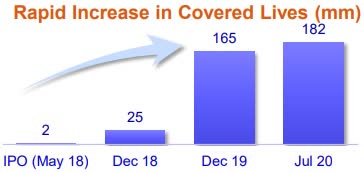
“With the addition of Humana, we now have 59 coverage policies, representing over 207M lives, that cover Inspire therapy,” president & CEO Tim Herbert commented.

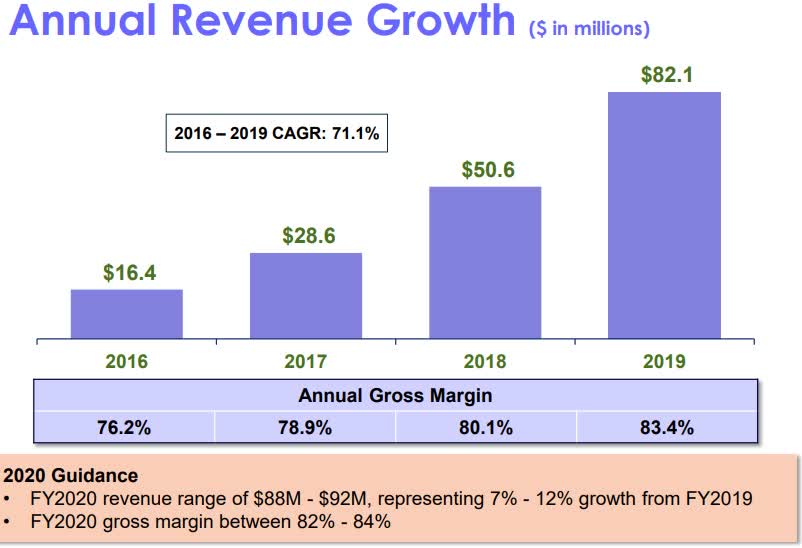
A quick look at its annual revenue growth with FY20 guidance:


Humana coverage decision includes the expanded age range approved by the U.S. FDA in April 2020 to include patients 18 years and older.

Since its IPO launch in May 2018, the company has recorded a significant growth in covered lives:


Monday, August 31, 2020

Cold Chain (And Colder Chain) Vaccine Distribution

OK, it looks like we’re finally going to be talking about a vaccine logistics issue that many people (including me) have been worried about. Specifically, how are these things going to be transported and stored? If you’re not in the biomedical field, that question might seem a bit boring and bring up mental pictures of 18-wheel trucks and forklifts of cartons, but remember, these vaccines generally aren’t dry powders. Some of them are infectious viruses themselves (the adenovirus vectors and others in that category), some of them are purified proteins (such as the Novavax candidate), and some of them are mRNAs that are packaged in very specific lipoprotein nanoparticles.

If that last category sounds like it might be the most fragile, well, you are correct-o-matic. There have been brief mentions of the stability of these candidates over the last few months, but now that things are getting very serious indeed, we’re starting to get a more detailed look at things. So let’s talk about the “cold chain”. That’s the distribution system for things (like most vaccines) that need to be kept refrigerated until they’re used in the clinic. This document from the WHO will tell you a lot more than you ever wanted to know (or thought there even was to know) about the subject. Details get down to how large the packages are (the vials in the middle will feel the effects of refrigeration last, and then warm up the slowest), the design of refrigerated trucks and their airflow, the various options for “cold pack” devices inside containers, where things are placed in chilled storage units of various sizes and how they’re retrieved, how long things need to be kept out at room temperature in order to be used and how long they must not be kept at room temperature before they have to be thrown away, and so on. There’s a lot of experience with this, and a lot of infrastructure.

But let’s qualify that last statement: there’s a lot of infrastructure in the developed world. Cold-chain distribution has always been a major challenge in places that are remote, less developed, or have generally higher ambient temperatures. You can probably think of plenty of locations that are all three of those at once. Ideally, you’d want something like a vaccine to be able to be distributed far and wide to all sorts of point-of-care locations, but in many instances people have to come to where the refrigeration is. Which is less desirable from a lot of angles.

And let’s qualify that earlier statement again: there’s a lot of infrastructure in the developed world for refrigerated cold-chain distribution. But what we’re looking at for the Moderna and Pfizer/BioNTech candidates, both of which are promising and are well into Phase II/III trials, is not just refrigeration. Moderna’s vaccine needs to be shipped and stored at -20 C (minus four Fahrenheit), while the Pfizer/BioNTech one needs to be at -70 C (-94 F). The former is enough of a challenge – freezer temperatures instead of refrigerator ones. But the latter. . .well, biology research labs all have freezers that go down that far (it’s where cell culture samples, oligonucleotide constructs, and recombinant proteins get stored), but you’re not going to find one down at the local pharmacy, which is perhaps where you were picturing lining up for a coronavirus shot.

This news sent both companies’ stock prices down late last week, because it’s definitely not what people wanted to hear. Pfizer has provided these details to the CDC about shipping and storage of their candidate: the vaccine can be shipped in “dry ice pack” boxes, but that dry ice will need to be replenished within 24 hours of receipt. The shipping carton needs to be closed within one minute of opening, and not opened more than twice per day. Vaccine vials, once removed, can be kept at refrigerator temperatures for up to 24 hours or at room temperature for no more than 2 hours after thawing. So this is going to take a very organized approach to make sure that the vaccine is handled properly without wastage. We’re looking at a lot of dry ice and a lot of orders for ultra-cold freezers if this is the candidate that gets heavy nationwide distribution. And mind you, I’m talking about organized distribution in Little Rock and Long Beach. What about La Paz and Lahore? What about Lubumbashi? Even back inside the US, what’s the nearest source of dry ice in Shiprock, New Mexico or Oceana, West Virginia?

A -70C storage regime looks like some type of centralized distribution for many areas; it just doesn’t seem practical for many point-of-care locations. It would be “thaw out a batch and get as many people through the door as you can before it goes bad”. Moderna’s candidate is surely easier to deal with, since we do at least have a lot more “standard freezer” type capacity both in distribution and local storage, but even that is going to require plenty of thought (and plenty of discipline on the receiving end). And there’s talk that a Moderna Emergency Use Authorization might include the lower temperatures anyway. Let’s keep an eye on this story, and on the requirements for the other vaccines in testing. You would have to expect the recombinant-protein candidates (Novavax and others) to need less stringent storage conditions, but I don’t know about the adenovirus vector ones (and very much look forward to more details). This could be a big factor.

Update: see the comments for thoughts from some cold-chain specialists. Some are saying that this is more doable than it looks (given sufficient spending!), but the end-user problem remains. . .

40 comments on “Cold Chain (And Colder Chain) Distribution”


  1. Gary Cornell says: 31 August, 2020 at 1:14 pm I did a back of envelope calculation about what will be needed to distribute the Pfizer vaccine, which it seems requires the most refrigeration (-70c), that may interest you, It’s actually quite doable if we get started now at building out the infrastructure: https://garycornell.com/2020/08/30/back-of-envelope-calculation-the-number-and-the-costs-of-freezers-needed-for-the-pfizer-vaccine/

Canada eyes ‘front of line’ for Covid vax, in deals with Novavax and J&J

Canada reached an agreement in principle on Monday with both Novavax Inc and Johnson & Johnson for millions of doses of their experimental coronavirus vaccines, Prime Minister Justin Trudeau said.


Canada’s two agreements follow separate deals with Pfizer Inc and Moderna Inc announced weeks ago, and are the latest example of countries rushing to secure access to vaccines.

Canada is also in “the final stages of negotiations” to secure AstraZeneca’s potential vaccine and is in talks to secure more doses of the Pfizer vaccine candidate, Procurement Minister Anita Anand said.

“What we are trying to do is make sure that when a vaccine is developed, we are at the front of the line,” Anand told reporters.

Canada has a population of about 38 million, and the four vaccine agreements signed so far “give Canada at least 88 million doses with options to obtain tens of millions more,” Trudeau said when he announced the deals in Montreal.

All four agreements announced so far have options to purchase further doses if needed, officials said.

Trudeau also said the government will invest C$126 million (72.3 million pounds) over two years to build a biomanufacturing facility at the Human Health Therapeutics Research Centre in Montreal capable of producing up to 2 million doses of a vaccine per month by next year.

Last week, Canada’s National Research Council said it had ended its partnership on a coronavirus vaccine with China’s CanSino Biologics because the company lacked the authority to ship the vaccine.

Separately, Canada extended to the end of October a program to provide loans of up to C$40,000, a quarter of which is forgivable, to small businesses struggling amid the pandemic. It had been due to expire on Monday.

Novavax said it expects to finalize an advance purchase agreement to supply doses of the vaccine, beginning as early as the second quarter of next year.

Novavax has agreed to supply up to 76 million doses of its experimental vaccine, while Johnson & Johnson will supply up to 38 million doses of its vaccine candidate.

Both agreements are subject to the vaccines obtaining licenses from Health Canada.

Financial terms of the agreement were not disclosed.