Search This Blog

Sunday, December 5, 2021

Fauci Downplays Severity Of Omicron Strain

 One week after the US media and its "scientists" rolled out a full-blown panic parade over the Omicron variant, setting the stage for a new round of lockdowns as a result of a strain which nobody knew much about, yet which was conveniently viewed as a greenlight for trillions more in stimmies, the narrative is gradually turning.

First a note out of South African's Medical Research Council discussing the recent development in the Tshwane District, which is the global epicenter of the Omicron Outbreak, and the Gauteng Province Fourth Wave, with the weekly number of cases rising exponentially over several weeks...
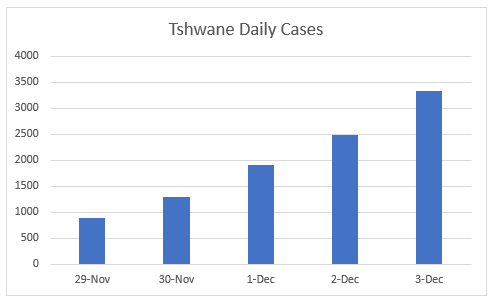
... confirms what we pointed out last weekend, namely that while much more tranmissible, the Omicron strain is also far more mild and its rapid propagation across the globe could, in fact, be a blessing in disguise as a far less dangerous, "flu-like" variant promptly becomes the dominant one. This, as a reminder, is also a point subsequently made by JPM's Marko Kolanovic. Here is the conclusion from the SA MRC note:

the first impression on examination of the 166 patients admitted since the Omicron variant made an appearance, together with the snapshot of the clinical profile of 42 patients currently in the COVID wards at the SBAH/TDH complex, is that the majority of hospital admissions are for diagnoses unrelated to COVID-19. The SARS-CoV-2 positivity is an incidental finding in these patients and is largely driven by hospital policy requiring testing of all patients requiring admission to the hospital.

The exponential increase in the positivity rate in these patients is a reflection of the rapidly increased case rate for Tshwane but does not appear to be associated with a concomitant increase in the rate of admissions for severe COVID (pneumonia) based on the high proportion of patients not requiring supplemental oxygen.

The relatively low number of COVID-19 pneumonia hospitalizations in the general, high care and ICU wards constitutes a very different picture compared to the beginning of previous waves...

For those interested in a more detailed breakdown of the latest South African data, we recommend reading

In any event, with almost two weeks since the first appearance of the Omicron variant and with a distinct lack of any evidence that the new strain is more dangerous, or results in a greater number of more acute hospitalizations than the Delta or other variants, the narrative by the "scientific establishment" - which has burned through most if not all of its credibility in the past year by constantly 'moving the goal posts' to serve various political agendas - appears to be changing once again, and earlier today none other than the chief health propaganda shaman of the Biden admin, Anthony Fauci, indicated that "the U.S. was encouraged by reports from South African officals that the rapid spread of omicron hadn’t yet resulted in a spike in hospitalizations in that country, an indication that the strain could be less virulent."

Though it’s too early to really make any definitive statements about it thus far, it does not look like there’s a great degree of severity to it," Fauci said on Sunday in a CNN interview. He added that more review is needed to confirm that Omicron causes less illness than other variants, such as Delta, “but thus far, the signals are a bit encouraging.”

Of course, making a blanket "all clear" determination would have made a mockery of all the fearmongering that was unleashed just last week, and so Fauci cautioned that it was too soon to make any “definitive statements” about the variant and encouraged Americans to get vaccinations and booster shots, adding that “you got to hold judgment until we get more experience."

Fauci’s comments came as the Biden administration reported that Omicron had spread to 16 US states. The new variant’s many mutations suggest that it might not be effectively treated with some Covid-19 therapeutics and that it could evade the immunity provided by current vaccines, CDC director Dr Rochelle Walensky said on Sunday in an ABC News interview.

Despite the concerns over jab efficacy, Fauci said getting more Americans to take vaccine booster shots will be “really critical in addressing whether or not we’re going to be able to handle this.” As with Delta, boosters will elevate immunity levels to help prevent infections, or at least reduce the severity of illnesses caused by the variant, he said as it becomes apparent that the narrative is now shifting to using Omicron as a talking point for widespread use of booster shots.

“The vaccines that we are distributing now in the United States and throughout the world are directed against the original, ancestral or Wuhan strain,” Fauci told Jake Tapper, who unlike his pal Chris Cuomo, has yet to be fired.

He added that "we feel certain that there will be some degree, and maybe a considerable degree, of protection against the Omicron variant if, in fact, it starts to take hold in a dominant way in this country."

Meanwhile, the Biden admin is suffering from blowback for the very same "xenophobic" policies it recently adopted and which it previously criticized Trump for implementing, after banning visitors from South Africa and seven other African nations on November 26.

Tapper noted that the US hadn’t banned travel from the dozens of other nations where Omicron cases have been confirmed and that UN chief Antonio Guterres referred to restrictions targeting southern African countries as “travel apartheid.” Fauci replied that too little was known about Omicron at the time the ban was imposed.

“That ban was done at a time when we were really in the dark -- we had no idea what was going on... When the ban was put on, it was put to give us time to figure out just what is going on,” Fauci said adding that the decision is being re-evaluated as more data become available so the ban may be lifted in a “reasonable period of time. I mean, we all feel very badly about the hardship that might have put upon not only South Africa, but the other African countries.”

Biden's ban prompted criticism from international officials, with United Nations Secretary General Antonio Guterres last week likening the restrictions to “travel apartheid.” World Health Organization Director-General Tedros Adhanom Ghebreyesus called on countries to maintain “rational, proportional risk-reduction measures.”

https://www.zerohedge.com/covid-19/fauci-downplays-severity-omicron-strain

Court On A Hot Tin Roof: Airing Out 'The Stench" From Oral Argument Over Abortion

 by Jonathan Turley,

Below is a version of my column in The Hill on the statement of Justice Sonya Sotomayor on the “stench” of politics in the oral argument in Dobbs v. Jackson Women’s Health Organization, a challenge to the Mississippi abortion law.

The statement seemed directed at Sotomayor’s three new colleagues and the effort to use the new court composition to seek the reduction or overturning of Roe v. Wade.

Here is the column:

In Wednesday’s Supreme Court oral argument in Dobbs v. Jackson Women’s Health Organization, Justice Sonya Sotomayor got a whiff of something she did not like. She said many abortion opponents, including the sponsors of the Mississippi abortion law at issue, hoped her three new colleagues would allow for the reversal or reduction of Roe v. WadeWith Justices Brett Kavanaugh, Neil Gorsuch and Amy Coney Barrett listening, she asked, “Will this institution survive the stench” created from such political machinations — and then answered: “I don’t see how it is possible.”

Of course, when justices begin to declare their disgust at the very thought of overturning precedent, there is another detectable scent in the courtroom.

Indeed, it felt like a scene from Tennessee Williams’ play, “Cat on a Hot Tin Roof.” The only thing missing was the play’s central character, “Big Daddy” Pollitt, asking: “What’s that smell in this room? … Didn’t you notice a powerful and obnoxious odor of mendacity in this room? There ain’t nothin’ more powerful than the odor of mendacity.”

Justices Sotomayor and Stephen Breyer insisted that overturning Roe in whole or in part would bring ruin upon the court by abandoning the principle of stare decisis, or the respect for precedent. Yet neither showed the same unflagging adherence to precedent when they sought to overturn conservative doctrines.

Notably, Sotomayor pointed out another allegedly “political” decision in the court’s recognition of an individual right to bear arms; she and Breyer both indicated a willingness to overturn the ruling in that case, District of Columbia v. Heller. After that decision, both continued to dissent and arguing that “the Framers did not write the Second Amendment in order to protect a private right of armed self-defense.” Indeed, they may reaffirm that position this term.

Sotomayor’s nose for judicial politics was also less sensitive when she recently called upon students to campaign against abortion laws — a major departure from the court’s apolitical traditions. After telling the students that “You know, I can’t change Texas’ law but you can and everyone else who may or may not like it can go out there and be lobbying forces in changing laws that you don’t like.” She added: “I am pointing out to that when I shouldn’t because they tell me I shouldn’t.” That was more than a whiff of politics, but the same legal commentators applauding her “stench” comment were entirely silent in condemning her direct call for political action on abortion. There also were no objections to the stench of politics when the late Justice Ruth Bader Ginsburg publicly opposed a presidential candidate.

They are not the only figures showing such selective outrage. During the confirmation hearing for Justice Kavanaugh, Sen. Sheldon Whitehouse (D-R.I.) demanded that Kavanaugh promise to respect stare decisis on cases like Roe, but then called for overturning cases like Citizens United v. Federal Election Commission. Democratic groups often decry the conservative majority as “partisan” while demanding the packing of the court to guarantee an immediate liberal majority.

On Wednesday, Kavanaugh and other justices balked at claims that Roe is somehow untouchable due to the passage of 50 years. The 1896 ruling of Plessy v. Ferguson was overturned in Brown v. Board of Education of Topeka, roughly 58 years after it was written; the court ruled that its Plessy decision was egregiously wrong — one in a long list of reversals celebrated today. This includes Lawrence v. Texas, which overturned prior precedent allowing the criminalization of homosexual relations.

There is a major difference, though, between the oral arguments in Brown and those in Dobbs. In Brown, the court had extensive discussion of the constitutional foundation for the “separate but equal” doctrine; in the oral argument on Dobbs, there was comparably little substantive defense of the analysis in Roe or its successor case, Planned Parenthood v. Casey.  Indeed, the thrust of much of the pro-choice argument was that, even if Roe was incorrectly decided, it takes more than being wrong to overturn such an “established” precedent.

When it was released, Roe was widely ridiculed as being extraconstitutional and excessive. That includes some who are now calling to pack of the Court criticized RoeFor example,  Harvard Professor Laurence Tribe objected  that “behind its own verbal smokescreen, the substantive judgment on which it rests is nowhere to be found.”

Even Justice Ginsburg once criticized it, declaring: “Roe, I believe, would have been more acceptable as a judicial decision if it had not gone beyond a ruling on the extreme statute before the court. … Heavy-handed judicial intervention was difficult to justify and appears to have provoked, not resolved, conflict.”

In the Dobbs hearing, Roe was the opinion that many wanted to preserve but few seemed willing to defend. Part of the problem is that Roe died long ago. In Casey, the Supreme Court gutted Roe and adopted a new standard barring state actions that impose “an undue burden” on abortions. So it is hard to tell what precedent is being defended as “established” beyond a de facto right to abortion. Moreover, Casey was a mere plurality, and the court has often split 5-4 on later abortion cases.

While defending abortion as a “liberty interest,” efforts to explore the actual basis for Roe were largely brushed aside. Even when justices tried to push pro-choice advocates to defend the key “viability” standard, counsel defended it as a “principled” or “workable” line but did not actually say how it was constitutionally compelled. That seems odd, since this case is about whether Mississippi can impose a 15-week limit. (The United States is one of only seven among the world’s 198 countries that allow abortions after 20 weeks.)

It appeared particularly frustrating to Chief Justice John Roberts, who finally stated: “Viability, it seems to me, doesn’t have anything to do with choice. If it really is an issue about choice, why is 15 weeks not enough time?” He never received an answer, and the pro-choice counsel effectively declined to offer a meaningful alternative test when it was repeatedly requested by the justices.

Likewise, rather than defending the analysis underlying Roe, most legal commentators prefer to attack justices as ideologues for questioning such “established precedent.” Even Sotomayor portrayed the arguments against abortion as little more than a “religious view,” a statement that is wildly off-base and ignores the many secular critics of Roe as a legal case or of abortion as a medical practice. Others picked up on that theme, and one law professor demanded that Barrett recuse herself because of her own religious beliefs. It was a continuation of the disgraceful attacks on Barrett’s faith during her confirmation hearing by senators like Dianne Feinstein (D-Calif.).

That is the problem with both politics and mendacity: They are a stench that one tends to smell only in others — and tends to be more pungent when one is in dissent.

There is no problem with changing one’s rationale for reproductive rights, or even changing one’s views on constitutional interpretations; that is part of honest intellectual development. However, the mere fact that a case is constitutional precedent — or even “super precedent,” according to some — is no substitute for constitutional principle.

Breyer and Sotomayor are known for often profound, detailed opinions. I expect both will ably defend reproductive rights in Dobbs, even if they do not defend the actual analysis in Roe. But Roe should stand or fall on constitutional merits — not on feigned outrage over changing constitutional precedent.

https://www.zerohedge.com/political/court-hot-tin-roof-airing-out-stench-oral-argument-over-abortion

Stem-cell-derived pancreatic endoderm cells secrete glucose-responsive C-peptide in type 1 diabetes


PDF: https://www.cell.com/cell-stem-cell/fulltext/S1934-5909(21)00415-X#

Introduction

Diabetes mellitus is a chronic disease that affects over 460 million people worldwide () and bears a significant financial, disability, and mortality cost for health care systems and patients globally (). Almost 130,000 new cases of type 1 diabetes are diagnosed each year, and patients face a lifetime of exogenous insulin therapy (). In 2000, a scientific breakthrough occurred in Edmonton, Canada, with the development of an islet transplantation protocol that successfully yielded insulin independence for seven patients with type 1 diabetes (). Since then, over 1,500 islet transplantation procedures have been performed worldwide, and between 2007 and 2010, 44% of patients registered with the Clinical Islet Transplant Registry achieved insulin independence at 3 years post-transplantation (). Median HbA1c levels dropped more than 1.5%, and 87.5% met HbA1c goals 1 year post-transplantation (; NCT00434811), leading to reduced risks of both acute hypoglycemic events and progression of chronic complications (). Despite these encouraging findings, widespread adoption of this procedure remains limited because of the paucity of islets from deceased donors.
Given the potential for an islet cell therapy to give patients insulin independence and to mitigate the complications of diabetes, there is a need for an abundant alternate supply of insulin-producing cells. Alongside interest in porcine islets, development of insulin-secreting cell lines, and in situ cellular reprogramming strategies, use of human pluripotent stem cells has made tremendous progress toward becoming a viable clinical option for the mass production of insulin-producing cells (). In 2001, Assady et al. reported spontaneous in vitro differentiation of human pluripotent embryonic stem cells (ESCs), which included the generation of cells with characteristics of insulin-producing β cells (). Based upon prior knowledge of pancreas development and empirical determination, stepwise protocols were created to control and direct ESCs to definitive endoderm () and subsequently pancreatic endoderm (). Pancreatic endoderm cells (PECs), marked by the transcription factors homeobox protein Nkx-6.1 (NKX6.1) and pancreatic and duodenal homeobox protein 1 (PDX1), produce little insulin but can adequately complete differentiation into pancreatic islet cells after implantation into mice to prevent onset of hyperglycemia following destruction of endogenous mouse β cells () and to reverse established diabetes in mice (), including when implanted subcutaneously in macroencapsulation devices (). Some protocols have been developed to differentiate ESCs to a more mature β cell phenotype in vitro (), but challenges with lower cell yield, longer culture time, higher oxygen requirements, and higher cost () have been motivations to explore the clinical use of less mature PECs.
In 2014, ViaCyte launched a phase 1/2 prospective, multicenter, open-label trial (clinicaltrials.gov: NCT02239354) to investigate the safety, tolerability, and efficacy of their VC-01 product candidate. VC-01 is a combination of PECs (the drug candidate PECs produced by ViaCyte have been named “PEC-01”) in macroencapsulation devices (named “PEC-Encap” by the manufacturer) designed to be immunoprotective via use of a cell-impermeable layer. Although full results have not been released, the first 19 patients were reported to tolerate the product well and had few complications (). Although insulin-immunoreactive cells were identified in some explanted grafts 2 years post-implantation, cell survival was inconsistent because of a foreign body response to the encapsulation devices, and there was no reported evidence of insulin secretion ().
In an effort to mitigate cell loss due to device fibrosis, ViaCyte initiated a follow-up trial in 2017 (clinicaltrial.gov: NCT03163511) to investigate the safety, tolerability, and C-peptide production of PEC-01s macroencapsulated in non-immunoprotective devices that include portals designed to enable direct capillary vascular permeation into the device interior (the VC-02 combination product has been named “PEC-Direct” by the manufacturer). This approach requires use of immunosuppression to limit alloimmune, and possibly autoimmune, reactions to implanted cells. We present our initial results from a single site from this trial and provide evidence that PEC-01s survived and matured into glucose-responsive insulin-secreting cells within 26 weeks post-implantation and that patients spent more time in targeted blood glucose range. These findings support the conclusion that PEC-01s contained within vascularizing macroencapsulation devices can survive and mature into functional β-like cells when implanted subcutaneously in patients with type 1 diabetes.

Results

Patients underwent screening (full inclusion and exclusion criteria and the Consolidated Standards of Reporting Trials [CONSORT] flow diagram available; Methods S1 and S2) and were enrolled between November 2017 and March 2020. Patients had been diagnosed with diabetes for 10 to 54 years, were both sexes (male = 7, female = 8), had ages ranging from 36 to 56 years, predominantly identified as white (n = 14, one patient identified as “Hawaiian or native pacific islander”), and had variable degrees of chronic complications of diabetes (Table 1). During the first year of follow-up, all patients reported adverse reactions (total 175), of which three were serious adverse reactions (Table S1). Two patients terminated the study before 1 year because they elected to withdraw consent to take immunosuppressive medications after having serious adverse reactions: patient 04 withdrew consent after 6 months because of typhlitis (grade four) and a liver abscess (grade four), and patient 02 withdrew consent after 10 months because of a parvovirus B19 infection associated with aplastic anemia requiring treatment with intravenous immunoglobulin (grade three). Complications were documented as being “possibly related to immunosuppression,” given that tacrolimus and mycophenolate mofetil (MMF) are well documented to cause bone marrow suppression and increased risk for infections (). Five other patients (03, 08, 10, 11, and 12) were recommended to withdraw after 9 months because of failed risk-benefit assessment by the clinical trial sponsor, based primarily on undetected C-peptide by the contract research organization (limit of detection 33 pM) and histological assessment, as well as consideration of patient HbA1c, exogenous insulin requirements, and Clarke hypoglycemia awareness score. All data collected during the first year of patient enrollment and prior to final patient withdrawal have been included.

Fauci: US 'hopefully' will lift Africa travel ban in 'reasonable period of time'


Anthony Fauci on Sunday said the U.S. will “hopefully” be able to lift its travel ban on African countries “in a quite reasonable period of time,” as more information emerges regarding the omicron variant and its existence in the U.S.

“As we're getting more and more information about cases in our own country and worldwide we're looking at that very carefully on a daily basis. Hopefully we'll be able to lift that ban within a quite reasonable period of time,” Fauci told co-host Jake Tapper on CNN’s “State of the Union.”

He said the administration is reevaluating the policy “in real time, literally, on a daily basis.”

The U.S. implemented a travel ban on individuals departing from South Africa, Botswana, Zimbabwe, Namibia, Lesotho, Eswatini, Mozambique and Malawi last week in an effort to control the spread of the new COVID-19 omicron variant.

That move, however, has sparked backlash worldwide, especially after cases started being detected in U.S. states.

World Health Organization Director-General  Tedros Adhanom Ghebreyesus on Wednesday said it was "deeply concerning" that African countries are being "penalized" with travel restrictions after detecting and reporting the omicron variant.

Fauci on Sunday said the administration implemented the travel restrictions at a time when the U.S. was “really in the dark, we had no idea what was going on except that there seemed to have been an explosion of cases of omicron in South Africa.”

Be said the ban was implemented “to give us time to figure out just what was going on.”

“So when the ban was put on it was put to give us time to figure out just what is going on.

https://thehill.com/homenews/sunday-talk-shows/584386-fauci-hopefully-us-will-be-able-to-lift-african-countries-travel

Conn. Gov predicts omicron won't lead to surge in hospitalizations in state

 Connecticut Gov. Ned Lamont (D) on Sunday predicted that his state will be able to avoid another surge in COVID-19 hospitalizations, pointing to the high rate of vaccination that has been achieved so far.

Appearing on CBS's "Face the Nation" Lamont said the omicron case that was detected in Connecticut is mild and that the infected individual does not require hospitalization. Host Margaret Brennan asked Lamont how concerned he was about a wider infection in his state.

"I'm concerned. Look, omicron is coming up from New York on the I-95 corridor, but delta's coming down from New Hampshire, Vermont, Massachusetts, And no state is an island and no country is our island," said Lamont.

"So good news is we have 95 percent of our folks over the age of 12 have had some vaccines. So I think we are prepared and I'd like to think that we're not going to have the surge in hospitals you see in some less vaccinated states," he added.

Brennan asked Lamont if he was considering mandating booster shots for  those living in assisted living facilities. According to Lamont, this sort of measure was complicated as Connecticut is struggling to retain nurses in such places.

"We're having a hard time keeping nurses getting nurses in the nursing homes. Some wings are closing down and they're turning back some patients. So I've got to get the right balance," said the governor.


Lamont also stated that he has seen an increase in booster dose administration since news of omicron first broke.

"Look, we've tried a lot of incentives to get people vaccinated. You know. you had a drinks on us, other people did lotteries. Nothing gets people vaccinated and boostered like the fear of another variant coming," said Lamont.

https://thehill.com/homenews/sunday-talk-shows/584403-connecticut-governor-predicts-omicron-wont-lead-to-surge-in

COVID Outbreak On US Cruise Ship Despite Fully Vaxxed Passengers

 Despite every cruise line requiring passengers and crew to be fully vaccinated before boarding, a cruise ship returning from a sail across the Gulf of Mexico and the Caribbean Sea with thousands of passengers onboard detected an outbreak of COVID-19, according to AP News

Norwegian Breakaway, owned by Norwegian Cruise Line Holdings Ltd, departed from the Port of New Orleans on Nov. 28 and sailed to Belize, Honduras, and Mexico, with more than 3,000 people on board. 

Ahead of returning to its homeport in New Orleans, the cruise line detected ten COVID infections among its guest and crew. Those who were infected were fully vaccinated and were forced into quarantine

Governor John Bel Edwards, the City of New Orleans, and the Port of New Orleans were notified about the incident and contacted the CDC. The infected passengers and crew will either travel directly to their homes or self-isolate at an undisclosed location. 

According to the vessel-tracking website CruiseMapper, Norwegian Breakaway docked in New Orleans early Sunday morning. All passengers and crew will be subjected to a COVID test before exiting the ship. 

Despite a 100% vaccination rate on the vessel, there was still an outbreak of COVID, suggesting that vaccine effectiveness is severely waning. 

A recent study of the three primary COVID vaccines showed a 'dramatic' drop in efficacy over six months. So as cruise ship operators begin hitting the high seas with only fully vaxxed passengers and crews that have waning defenses against the virus, one would suspect additional outbreaks on ships as new infections surge across the US. 

Even in Europe, where vaccine passport schemes and high vaccination rates are highly enforced, countries are experiencing a surge in infections. 

So what are cruise ship operators going to do now? Only allow passengers and crew who are not just fully vaccinated but have their booster shots?

https://www.zerohedge.com/covid-19/covid-outbreak-us-cruise-ship-despite-fully-vaxxed-passengers

Gottlieb: Variant-specific vaccines 'may not work'

 Former Food and Drug Administration Commissioner Scott Gottlieb said on Sunday “there’s reason to believe” that variant-specific immunizations might not work against other COVID-19 variations.

“Face the Nation” moderator Margaret Brennan asked Gottlieb on CBS if the Biden administration needed to look at getting vaccine manufacturers to “reboot” existing COVID-19 vaccines in order to tackle the new omicron variant.

Noting that companies, including Pfizer, were doing so, Gottlieb said that “this is going to be a really critical decision because what we've seen in the past, for example, when we engineered a vaccine to specifically target 1351, the old South African variant, was that vaccine worked well or appeared to work well against 1351. But [it] didn't appear to provide as good coverage against all the other variants.”

“And there's reason to believe that as you develop vaccines that are very specific to some of these new variants, they may not work as well against the full complement of different variants that we've seen. So you wanted to try to stick with the ancestral strain, the Wuhan strain, in the vaccine I think as long as possible,” Gottlieb continued.

The former FDA commissioner, who also serves on Pfizer's board, said that as the virus begins to mutate, it “probably starts to hide some of the viral targets on its surface” and therefore the vaccine developed does not give as “broad immunity to the full complement of targets on its surface.”

The news comes as scientists are trying to rapidly learn more about the omicron variant, which has been detected in over a dozen states in the U.S. since it was first officially reported in South Africa.

Scientists are unsure if the variant is more or less contagious than previous strains or how effective the COVID-19 vaccines will be against omicron. 

https://thehill.com/homenews/sunday-talk-shows/584395-gottlieb-variant-specific-vaccines-might-not-work-against-other