Moderna Inc will collaborate with privately-owned Life Edit Therapeutics Inc under an agreement to discover and develop mRNA gene-editing therapies, the companies said on Wednesday.
The tie-up will apply Life Edit's diverse collection of new technology for gene editing with the Moderna mRNA platform that was behind its COVID-19 vaccine.
Under the agreement, the companies will collaborate on research and preclinical studies funded by Moderna to develop curative therapies for some of the most challenging genetic diseases.
Moderna will also assume responsibility for manufacturing and commercialization.
Life Edit will get an upfront payment and is eligible to receive potential milestone payments and royalties on global net sales of products from the collaboration.
The two companies did not disclose financial details of the deal.
Messenger RNA vaccines and therapies work by instructing cells to make relevant proteins that help in combating disease.
There are no "Pablo Escobar" or "El Chapo Guzman" named buildings at the University of Oxford in Oxford, England, but the disgraced billionaire Sackler family, partially responsible for thedeadly US opioid epidemic, still has naming rights plastered all over the university.
Documents obtained by the Financial Times -- including letters, bank statements, and event attendee lists between 2020-22 -- show Oxford has yet to sever ties with the Sacklers despite their company, Purdue Pharma, reaching a deal with US states in bankruptcy court to funnel billions of dollars for addiction treatment programs.
Recall Purdue was the maker of the prescription painkiller OxyContin. The pharmaceutical company downplayed the drug's addictive qualities that enriched the Sackler family by billions of dollars. But the cost was at the expense of blue-collar workers who became addicted to the drug and helped spark the opioid epidemic. Estimates show more than half a million Americans have died from opioid overdoses since 1999.
ome of the documents reviewed by FT relate to departments across the university, including the Ashmolean Museum, the university's museum of art and archaeology, and Worcester College.
In January 2020, a few months after Purdue filed for bankruptcy, Lord James Lupton, chair of the board of visitors at the Ashmolean, wrote to Dame Theresa Sackler, a former longstanding board member of Purdue, who is identified in several of the lawsuits.
"As the new face on the board, I am 'all ears' to the views of our most important patrons and supporters, and I very much hope that you will contribute your ideas over the next few weeks," Lupton said. In his letter, he shared his telephone number at the House of Lords and his email at Greenhill investment bank, where he is a senior adviser. In what appears to be an inside joke, Lupton added in pencil: "PS: As you might imagine, I think I am going to love this rôle."
In what appears to be an inside joke, Lupton added in pencil: "PS: As you might imagine, I think I am going to love this rôle."
OxyContin heiress Dame Theresa Sackler is the third wife of the late Mortimer Sackler, the former CEO of Purdue. She is the chair of the Sackler Trust and a trustee of the Dr. Mortimer and Theresa Sackler Foundation and is very well known in philanthropic circles.
While other universities and art galleries have stripped the name "Sackler" off their buildings and ceased communication, Oxford appears still to have a friendly relationship with the disgraced family.
The Sacklers' two UK-based charities have given more than £10mn to Oxford since 1991. Most notably, the family funded the building of the Sackler Library, part of the university's renowned Bodleian Libraries.
In 2021 the Oxford Development Trust, which seeks to "secure the advancement of education" at the university, received £50,332 from the Sackler Trust to fund previously pledged research positions held by Worcester College and the Ashmolean. The university has not applied for any fresh donations since 2019.
In April 2022, Dame Theresa Sackler still had access to exclusive social networks at Oxford, highlighting what years of 'philanthropy' can buy.
She was an "external attendee" at a private viewing of the annual Oxford and Cambridge boat race. The event was hosted onboard the Erasmus, by the chancellor and vice-chancellor of the university. The guest list for the event, compiled by the University of Oxford Development Office, noted that Sackler was invited as a member of the "Chancellor's Court of Benefactors."
In September, Sackler was also invited to the annual Ashmolean gala dinner.
The Sackler name remains emblazoned on many buildings in Oxford. As well as the Sackler Library, there are two Sackler galleries in the Ashmolean, and Mortimer Sackler's name is inscribed on the Clarendon Arch.
The Sacklers also retain "naming rights" to multiple academic positions: the Sackler Keeper of Antiquities, the Sackler Education Officer, and the Sackler Research Fellow at the Ashmolean, as well as science fellowships.
Megan Kapler, an activist at Prescription Addiction Intervention Now, said the Sacklers are part of "toxic philanthropy."
"We would call on Oxford to pay attention to the origin of the money of their benefactors and also the social and historical implications of keeping people like Theresa Sackler in this court," Kapler said.
Despite the fact that Sacklers are no different than cartels, both make money off highly addictive drugs that destroy communities. The names of Escobar and El Chapo don't appear on any notable buildings.
Oxford has an addiction to the Sacklers that it just can't break.
A recent study found that a Medicaid program in Colorado can help address the shortage of home healthcare workers for children with complex medical needs by offering family members certified nursing assistant (CNA) training and paying them for at-home medical care their child requires. Results show that children who received family-CNA care were not more likely to be hospitalized than children cared for by a non-family CNA. Children with family-CNA caregivers also experienced greater care continuity since turnover was not an issue as it tends to be with traditional home healthcare workers. Findings were published in the Journal of Pediatrics.
There is a general shortage of healthcare workers nationally across the board, which worsened with the COVID pandemic. The shortage of home healthcare workers has been an even longer standing concern and often drives families to leave a job or reduce work hours to care for their child with complex medical needs. In addition to the financial burden on families, the lack of professional home healthcare services can lead to unnecessarily prolonged hospitalizations and institutionalization.
Some states allow non-parent family members, such as grandparents, to be paid to provide care. But most states do not allow parent guardians to be paid to provide medical care to their children, except for some select programs that make exceptions for parents who are registered nurses (RNs) or licensed practical nurses (LPNs). Illinois Medicaid has committed to finding alternative ways for parents to be paid caregivers and is exploring ways for that to be implemented.
"Our study provides evidence that paid family caregiving as a concept is feasible and can be successfully applied to meet the home care needs of children with medical complexity," said lead author Carolyn Foster, MD, MS, from Ann & Robert H. Lurie Children's Hospital of Chicago and Assistant Professor of Pediatrics at Northwestern University Feinberg School of Medicine. "States should consider adopting policies that promote avenues to allow for parents to obtain CNA or other relevant credentials and to be paid for their child's at-home medical care. Such policies would enable state programs to meet their legal obligation to provide medical services for enrolled children while also reducing family financial strain and providing care continuity for these children."
Dr. Foster and colleagues stress that according to previous research, care continuity results in higher quality care. Broader literature also demonstrates cost savings to the health system with reduced employee turnover. The lack of costs for re-training and onboarding employees may be a source of savings in family CNA programs.
The study compared the characteristics and healthcare utilization of children with medical complexity who received paid CNA care by a family member and by a traditional non-family CNA from 2017 to 2019, as part of the Medicaid program in Colorado. Researchers analyzed de-identified billing claims data for 861 children, including information such as hospitalization frequency and hospital lengths of stay.
"Colorado's family-centered model addresses the significant shortage of healthcare workforce while providing additional income to parents who are compelled to leave work to care for their children. This program may not be a fit for all situations but is a meaningful option for many children going without enough services," said Dr. Foster.
Research at Ann & Robert H. Lurie Children's Hospital of Chicago is conducted through Stanley Manne Children's Research Institute. The Manne Research Institute is focused on improving child health, transforming pediatric medicine and ensuring healthier futures through the relentless pursuit of knowledge. Lurie Children's is ranked as one of the nation's top children's hospitals by U.S. News & World Report. It is the pediatric training ground for Northwestern University Feinberg School of Medicine.
Journal Reference:
Carolyn Foster, Soyang Kwon, Christy Blakely, Kristin Carter, Sarah A. Sobotka, Denise M. Goodman, Rishi Agrawal, Mark Brittan. Paying Family Medical Caregivers for Children’s Home Healthcare in Colorado: A Working Medicaid Model. The Journal of Pediatrics, 2023; DOI: 10.1016/j.jpeds.2022.12.043
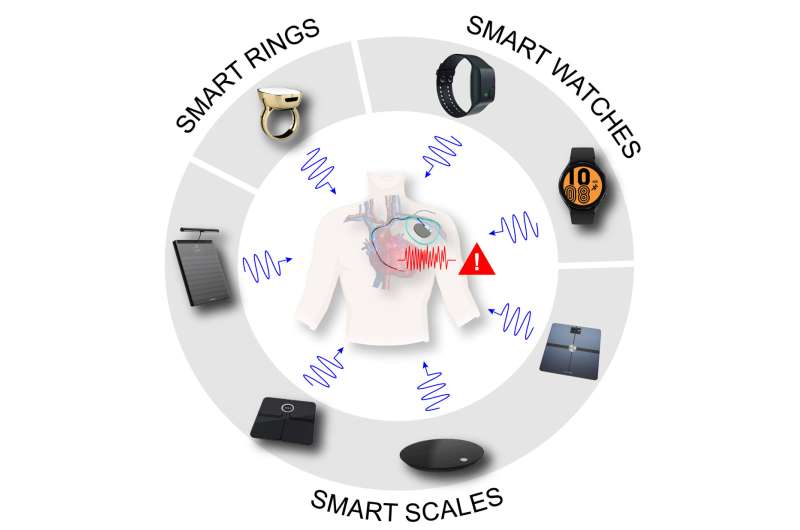
In this high-tech era, wearable devices such as smartwatches have proven to be invaluable companions for the health conscious. But a new study from the University of Utah shows that for a small group of people, some of these electronic fitness gadgets could possibly be risky to their health—even potentially deadly.
University of Utah electrical and computer engineering assistant professor Benjamin Sanchez Terrones and U associate professor of medicine Benjamin Steinberg have published a new study that shows wearable devices such as the Samsung Galaxy watch 4, Fitbit smart scales, or Moodmetric smart rings, among others, have sensing technology that could interfere with cardiac implantable electronic devices (CIEDs) such as pacemakers, implantable cardioverter defibrillators (ICDs), and cardiac resynchronization therapy (CRT) devices.
"This study raises a red flag," says Sanchez Terrones. "We have done this work in simulations and benchtop testing following Food and Drug Administration accepted guidelines, and these gadgets interfere with the correct functioning of the CIEDs we tested. These results call for future clinical studies evaluating the translation of our findings to patients wearing CIEDs and using these wearable devices."
Their study was published in the newest edition of the journal, Heart Rhythm. The paper was authored by U electrical and computer engineering graduate student Gia-Bao Ha, Sanchez Terrones, Steinberg, U internal medicine professor Roger Freedman, and Universitat Autònoma de Barcelona cardiology professor Antoni Bayés-Genís.
At issue are specific wearable smartwatches, at-home smart scales, and smart rings that utilize bioimpedance, a type of sensing technology that emits a very small, imperceptible current of electricity (measured in microamps) into the body. For smartwatches like the Samsung Galaxy Watch 4 or the Fitbit Aria 2 smart scale, the electrical current flows through the body and the response is measured by the sensor to determine the person's body composition such as skeletal muscle mass or fat mass. For smart rings like the Moodmetric smart ring, bioimpedance sensing technology is used to measure a person's level of stress.
Certain fitness and wellness trackers could pose serious risks for people with cardia\\But after conducting comprehensive testing of bioimpedance on three cardiac CRT devices from manufacturers Medtronic, Boston Scientific, and Abbott, Sanchez Terrones' team learned the slight electrical currents from these wearable gadgets can interfere and sometimes confuse cardiac implantable devices into operating incorrectly.
In the case of a pacemaker, which sends small electrical impulses to the heart when it is beating too slowly, the bioimpedance's tiny electrical current could trick the heart into thinking it is beating fast enough, preventing the pacemaker from doing its job when it is supposed to.
"We have patients who depend on pacemakers to live," Steinberg, a cardiac electrophysiologist, says. "If the pacemaker gets confused by interference, it could stop working during the duration that it is confused. If that interference is for a prolonged time, the patient could pass out or worse."
For other types of medical devices such as implantable cardioverter-defibrillators, which not only act as a pacemaker but can also shock the heart to restore a regular heart rhythm, a wearable device with bioimpedance could trick the defibrillator into delivering the patient an unneeded electric shock, which can be painful.
Nearly all if not all implantable cardiac devices already warn patients about the potential for interference with a variety of electronics due to magnetic fields, such as carrying a mobile phone in your breast pocket near a pacemaker. But Sanchez-Terrones says this is the first time a study has discovered problems associated with a gadget's bioimpedance sensing technology.
"The scientific community doesn't know about this," he says. "No one has looked at whether this is a real concern or not."
Sanchez Terrones and Steinberg emphasize that the research does not convey an immediate or clear risk to patients who use these kinds of wearable devices, but they believe it's a first step for further study.
"We need to test across a broader cohort of devices and possibly in patients with these devices," Steinberg said.
"Ultimately, more studies are needed to evaluate the clinical translation of our findings and ensure the health of our patients," Sanchez Terrones added.
More information: Safety evaluation of smart scales, smart watches, and smart rings with bioimpedance technology shows evidence of potential interference in cardiac implantable electronic devices, Heart Rhythm (2023). DOI: 10.1016/j.hrthm.2022.11.026
Actinium Pharmaceuticals’ Iomab-Bmet the primary endpointin the Phase III SIERRA trial, demonstrating durable Complete Remission (dCR) at six months in patients with elapsed or refractory acute myeloid leukemia (r/r AML).
Among patients treated with the targeted radiotherapy candidate, 75% showed initial remission following bone marrow transplant (BMT), as opposed to 6.3% in the control group.
Complete remission persisted through six months in 22% of patients in the Iomab-B cohort, an effect Actinium deemed highly statistically significant. Those who reached six-month dCR had a survival rate of 90% at one year and 60% at two years. Median overall survival has not yet been reached in these patients.
None of the patients in the control arm achieved a six-month dCR.
SIERRA, a pivotal, randomized and controlled trial, sought to evaluate the potential of Iomab-B in 153 patients with r/r AML aged 55 years and older, comparing it against a physician’s choice of salvage therapy.
Aside from six-month dCR, SIERRA assessed the therapy’s efficacy through the secondary endpoints of event-free and overall survival. Compared with the control arm, treatment with Iomab-B cut the probability of an event occurring by 78%. Events included death, relapse and not receiving BMT.
In addition, Iomab-B doubled one-year and median overall survival relative to controls. The radiotherapy also allowed 100% of its recipients to undergo BMT engraftment, while 18% of control comparators could undergo the procedure.
Actinium documented lower rates of treatment-related adverse events in favor of Iomab-B, including febrile neutropenia, mucositis and acute graft-versus-host disease.
Sergio Giralt, M.D., deputy head, division of hematologic malignancies, attending physician, Adult BMT Service, Memorial Sloan Kettering Cancer Center, called these dCR and two-year survival data “practice changing.”
Along with significantly better overall and event-free survival, and a good safety profile, Iomab-B can become “a new standard of care for active, r/r AML,” Giralt said.
Iomab-B is designed to improve access to potentially curative BMT by rapidly and substantially depleting a patient’s immune, blood cancer and bone marrow cells. In previous studies, treatment with Iomab-B has resulted in near-universal access to BMT, leading to better survival outcomes, Actinium reported.
Actinium is preparing to submit a Biologics License Application for Iomab-B in 2023.
House Republicans want former Hunter Biden associate Vuk Jeremic to testify about the origins of the first family’slucrative venture with CEFC China Energy— calling him a “key witness” who could describe President Biden’s own role in the enterprise.
Jeremic, a former foreign minister of Serbia and president of the United Nations General Assembly, appears to have helped Biden family members connect with CEFC leaders in late 2015, when Joe Biden was still vice president.
In a Nov. 30, 2015, email recovered from Hunter Biden’s laptop, Jeremic told another Biden associate, Eric Schwerin, that he would dine in Washington with CEFC chairman Ye Jianming.
“He’s very young and dynamic (39), with the top-level connections in his country. They have recently started making big investments abroad (billions of dollars), and plan on doing much more,” Jeremic wrote.
“I would like to invite Hunter to join me at this private dinner (small dinner — this is not an event of any kind). I am confident that many interesting projects may come out of that in the future,” he added.
Schwerin responded, in part: “We actually were approached by an acquaintance of Hunter’s about setting up a meeting for Hunter with the same gentleman [Ye] for next week as well. We weren’t sure if it was worthwhile but the fact that he is friend’s [sic] with you makes us feel better about this.”
House Republicans want to Vuk Jeremic (left), a former Hunter Biden associate, to testify about the first family’s relations with China.Wang Zhao-Pool/Getty Images
“I know Hunter will be traveling back from overseas on Sunday and might not be able to make the dinner, but let us get back to you,” Schwerin added.
The now-defunct CEFC was reputed to be part of Beijing’s “Belt and Road” foreign influence campaign and paid first son Hunter Biden and first brother James Biden at least $4.8 million in 2017 and 2018, according to the Washington Post.
Joe Biden allegedly discussed the CEFC endeavor with Hunter Biden business associate Tony Bobulinski in May 2017 shortly after Biden left office as VP — and an email the same month described the “big guy” getting a 10% cut.
Rep. Comer asked Jeremic to provide documents relating to members of the Biden family.Alex Wong/Getty Images
Bobulinski and that message’s author, James Gilliar, identified Joe Biden as the “big guy,” and an October 2017 email identifies Joe Biden as a participant in a call about CEFC’s attempt to purchase US natural gas.
House Oversight Committee Chairman James Comer (R-Ky.) asked Jeremic ina letterto provide “all documents and communications” relating to Hunter and James Biden, as well as Schwerin, Gilliar, fellow business partner Devon Archer and CEFC vice chairman Patrick Ho.
Ye famously gave Hunter Biden a 3.16-carat diamond worth about $80,000 and Hunter referred to Ho as the “f–king spy chief of China” in an email recovered from his laptop. Ho was convicted in 2018 on US charges for attempting to bribe African officials.
Comer asked Jeremic to comply with his requests by March 14 and also to “make yourself available for a transcribed interview with Committee staff.” If Jermeic refuses, the request could turn into a legally binding subpoena.
The House Oversight chairman has fired off a raft of similar requests, including asking Hunter Biden’s Soho art dealer Georges Berges to hand over a list of the supposedly anonymous buyers of his novice works, for which Hunter has asked up to $500,000.
Jeremic could not immediately be reached for comment by The Post and a White House spokesman did not immediately respond to a request for comment.
“Vuk Jeremic is a key witness in our investigation of Joe Biden’s involvement in his family’s international and domestic business schemes,” Comer said.
“Mr. Jeremic’s previous testimony regarding business relationships with officials who participated in international bribery schemes raises red flags that there may be evidence showing the Biden family and associates peddled influence and attempted to sell access, including to individuals connected to the Chinese Communist Party.
“If President Biden is compromised by deals with foreign adversaries, this is a clear threat to national security,” Comer added.
Biden on Feb. 16 laughed dismissively and told The Post, “Give me a break, man,” when asked if his ability to deal with China was “compromised” by his family’s business relations.
Hunter Biden has been known for his fishy business deals after the recovery of his laptop.Tom Williams/CQ-Roll Call, Inc via Getty Images
Comer wrote to Jeremic that his records and testimony were needed to clarify important details.
“During the Patrick Ho trial, you testified that CEFC paid you hundreds of thousands of dollars annually to act as ‘consultant,’ and in turn, you would ‘open doors’ by introducing CEFC employees to business and political leaders in various countries,” Comer wrote.
“Indeed, in December 2015, you attempted to introduce Chairman Ye and CEFC to Hunter Biden and his associates. Although it does not appear the meeting took place on that date, Hunter Biden would later develop a lucrative business relationship with Chairman Ye and CEFC. By 2017, Hunter Biden forged a partnership with Chairman Ye and planned to share office space with him and then former-Vice President Biden at the House of Sweden in Washington, D.C.”
Republicans accuse Joe Biden of having, at a minimum, conflicts of interest in foreign relations relating to countries where his family did business, often with his alleged involvement.
House Republicans are on the lookout for the Bidens since the president hasn’t properly confronted China on certain issues.Teresa Kroeger/Getty Images for World Food Program USA
Biden claims that he has “never spoken” with his son about “his overseas business dealings” and that “I have never discussed, with my son or my brother or with anyone else, anything having to do with their businesses.”
In a second Biden family business relationship in China, business records suggest Hunter Biden still owns a 10% stake in Chinese state-backed BHR Partners, which says it manages $2.1 billion in assets, despite his father’s insistence that there would be no family business deals abroadduring his presidency.
Hunter co-founded BHR Partners in 2013 within weeks of joining then-Vice President Biden aboard Air Force Two on an official trip to Beijing, according to the Wall Street Journal. Hunter introduced his dad to BHR CEO Jonathan Li and Joe Biden later wrote college recommendation letters for Li’s children.