Company submitting software workaround to customs agency
ITC order set to restrict US sales of watches on Dec. 25
Apple Inc., just days away from a US ban of its smartwatches, is plotting a rescue mission for the $17 billion business that includes software fixes and other potential workarounds.
Engineers at the company are racing to make changes to algorithms on the device that measure a user’s blood oxygen level — a feature that Masimo Corp. has argued infringes its patents. They’re adjusting how the technology determines oxygen saturation and presents the data to customers, according to people familiar with the work.
U.S. health officials are investigating whether three brands of recalled cinnamon apple puree and applesauce that left dozens of American children sickened may have been intentionally contaminated with lead.
The U.S. Food and Drug Administration (FDA) first reported adverse events in children as young as 1 year old in October. The agency has since launched an inspection at a plant in Ecuador that produced the cinnamon-flavored applesauce products.
Jim Jones, the FDA's deputy commissioner for Human Foods, told Politico in an interview published on Dec. 14 that although the investigation is still ongoing, investigators believe the adulteration may have been "an intentional act."
"We're still in the midst of our investigation. But so far all of the signals we're getting lead to an intentional act on the part of someone in the supply chain and we're trying to sort of figure that out," Mr. Jones said.
"My instinct is they didn't think this product was going to end up in a country with a robust regulatory process," he added. "They thought it was going to end up in places that did not have the ability to detect something like this."
The affected products were marketed to parents and children under the brands WanaBana apple cinnamon fruit puree and Schnucks- and Weis-branded cinnamon applesauce pouches. They were sold nationwide by grocery chains such as Dollar Tree, as well as online retailers such as Amazon.
In its latest update on the lead poisoning outbreak, the U.S. Centers for Disease Control and Prevention (CDC) said it has identified a total of 125 cases from 22 states across the nation.
Of those cases, 46 are confirmed, 68 are probable cases, and 11 are suspected, according to the CDC. So far, all of the children are aged 6 or younger.
'Economically Motivated Adulteration'
Meanwhile, the FDA said health officials are looking into several theories as to why or by whom the lead was added to the applesauce pouches, pointing out that the agency currently believes the adulteration was "economically motivated."
"The FDA can confirm that one of the theories the agency is exploring is the potential that the cinnamon contamination occurred as a possible result of economically motivated adulteration," an FDA spokesperson told Consumer Reports, stressing additional investigation is needed before the agency reaches any conclusions.
According to the FDA, economically motivated adulteration refers to someone intentionally leaving out, taking out, or substituting an ingredient to make the product appear better or of greater value.
Asked why U.S. food safety laws wouldn't have prevented the tainted products from entering the country, Mr. Jones said intentional adulteration is "always going to be tricky to absolutely stop."
"We have limited authority over foreign ingredient suppliers that do not directly ship product to the U.S. because their food undergoes further manufacturing/processing prior to export," the FDA spokesperson told Politico, which first reported the story.
More Details
According to the CDC, there is "no safe blood lead level" for young children. The agency said it uses a marker of 3.5 micrograms per deciliter to identify children with elevated blood lead levels—higher than most American children aged between 1 and 5 years.
In a report released on Nov. 13, the CDC said an investigation found 22 children who had consumed the lead-contaminated applesauce pouches had blood lead levels as high as 29 micrograms per deciliter, far above the CDC's marker of 3.5 micrograms per deciliter.
Three recalled applesauce products—WanaBana apple cinnamon fruit puree pouches, Schnucks-brand cinnamon-flavored applesauce pouches and variety pack, and Weis-brand cinnamon applesauce pouches. (FDA via AP)
Three recalled applesauce products—WanaBana apple cinnamon fruit puree pouches, Schnucks-brand cinnamon-flavored applesauce pouches and variety pack, and Weis-brand cinnamon applesauce pouches. (FDA via AP)
The children experienced signs and symptoms including headache, nausea, vomiting, diarrhea, change in activity level, and anemia, according to the CDC.
Lead is toxic to humans, and exposure at any age or health status can lead to serious symptoms. In adults, high blood lead levels can increase their risk for high blood pressure, other cardiovascular effects, kidney problems, adverse reproductive outcomes, and gout.
Although most children with lead exposure have no obvious immediate symptoms, parents and caretakers should consult a health care professional if they suspect a child may have been exposed to lead, according to the FDA.
Short-term exposure to lead could result in headaches, abdominal pain/colic, vomiting, and anemia, while longer-term exposure could result in irritability, lethargy, fatigue, muscle aches or muscle prickling/burning, constipation, difficulty concentrating/muscular weakness, tremor, and weight loss.
According to the American Academy of Pediatrics, heavy metals like lead can get into food products from the soil, air, water, or industrial processes.
Apple said on Monday it would pause sales of its Series 9 and Ultra 2 smartwatches in the United States from this week, as it deals with a patent dispute over the technology that enables the blood oxygen feature on the devices.
The move comes after an order in October from the U.S. International Trade Commission (ITC) that could bar Apple from importing its Apple Watches after finding the devices violate medical technology company Masimo's patent rights.
The decision is under review by President Joe Biden until Dec. 25, but Apple said it is taking steps to comply should the ruling stand. The Office of the U.S. Trade Representative, the part of the Biden administration handling the case, said that Ambassador Katherine Tai "is carefully considering all factors in this case."
If not vetoed, the ban would go into effect on Dec. 26.
The company said it would pause sales of the watches from its website starting on Dec. 21 and from Apple retail locations after Dec. 24. Other models that do not contain the blood oxygen sensor, like Apple's lower-priced Apple Watch SE model, are unaffected by the dispute.
Ryan Reith, program vice president for research firm IDC's mobile device tracking efforts, said that U.S. holiday sales of Apple Watches will not suffer and that the full impact of the ruling, if it stands, will come in January and February, typically some of Apple's slowest sales months in the U.S.
"Apple has plenty of inventory of Watch 8 and SE so they will have products available during that time," Reith said. "The bigger implication is around whether or not Apple can use the blood oxygen sensor technology that is in question on future devices, or if they'll have to reach a settlement or come up with a new solution."
Masimo CEO Joe Kiani told CNBC in October that he was open to negotiating a deal with Apple. In a statement on Monday, Masimo said the ITC decision "should be respected, protecting intellectual property rights and maintaining public trust in the United States' patent system and encouraging US industry."
Apple has about a quarter of the global smartwatch market, according to Counterpoint Research - a share that tends to rise to more than a third in the fourth quarter during the U.S. and European holiday sales seasons. Both the Series 9 and the Ultra 2 would remain available for purchase outside of the United States, including during the Lunar New Year season in Asia.
Apple said it believes the ITC's finding was erroneous, should be reversed and that it intends to appeal the decision to the Federal Circuit.
Apple shares closed 0.9% lower on Monday.
Masimo has accused Apple of hiring away its employees, stealing its pulse oximetry technology and incorporating it into the popular Apple Watch.
A jury trial on Masimo's allegations in California federal court ended with a mistrial in May. Apple has separately sued Masimo for patent infringement in a federal court in Delaware and has called Masimo's legal actions a "maneuver to clear a path" for its own competing smartwatch.
The U.S. Patent and Trademark Office rejected Apple's requests to review the validity of the patents at issue in the ITC decision earlier this year.
Engineers at Apple are moving to make changes to algorithms in the smartwatches, adjusting how the technology determines oxygen saturation and presents the data to customers, Bloomberg reported on Monday, citing people familiar with the work.
Apple is working on a range of legal and technical options, if the ban holds. It has begun preparing stores for the change, sending new signs to its retail outlets that promote the Apple Watch without showing photos of the Series 9 and Ultra 2 — two models targeted by the ban, the report added.
An Apple spokeswoman told Bloomberg that the company is working on submitting a workaround to the U.S. customs agency, which is in charge of approving changes to get a product back on the market.
"The patents in question cover hardware. Masimo believes that Apple needs to change the hardware," a Masimo spokesperson told Reuters about the Bloomberg report, while Apple did not respond to a request for comment.
Apple did not comment on Bloomberg's report but earlier on Monday said it was working on "technical options" to ensure Apple Watches are available to customers and that it would "take all measures" to get the devices back to shelves if the ITC order stands.
A presidential administration has not vetoed an ITC ruling since 2013, when President Barack Obama's administration overturned an import ban on Apple's iPhones and iPads from a patent dispute with Samsung.
The Biden administration in February chose not to veto a separate import ban on Apple Watches based on a patent-infringement complaint from medical technology company AliveCor. The ITC has placed the ban on hold for other reasons.
Apple's wearables, home and accessory business, which includes the Apple Watch, AirPods earbuds and other products, brought in $8.28 billion in revenue during the third quarter of 2023, according to a company report.
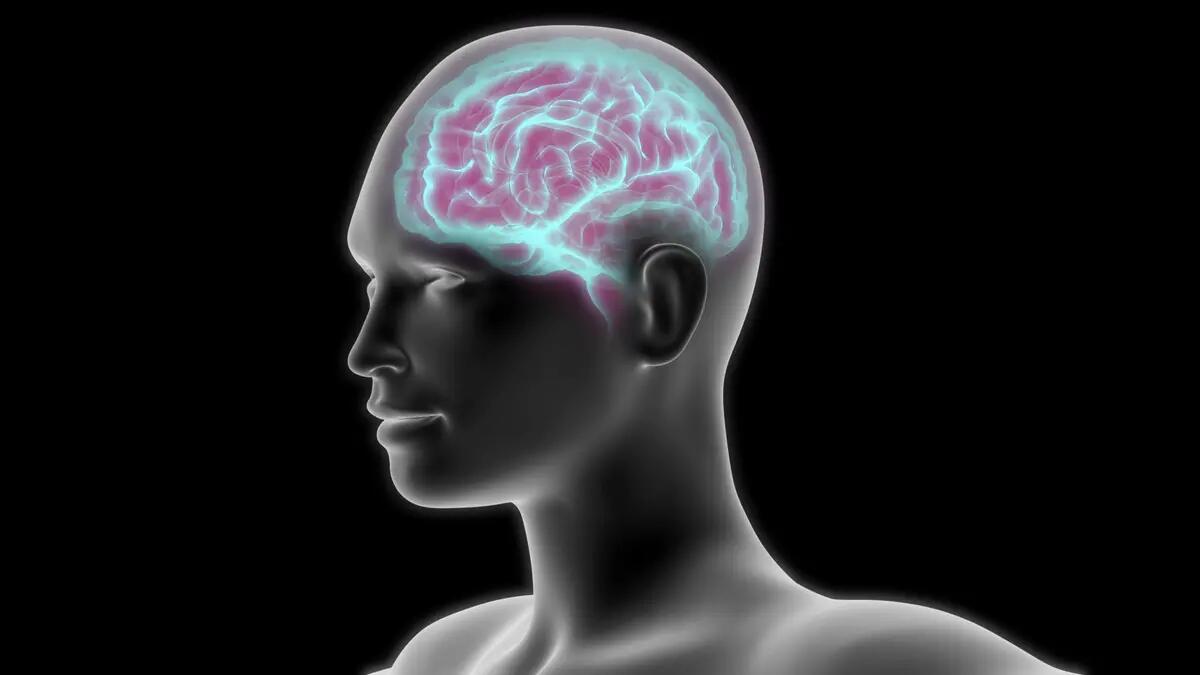
Smoking cigarettes shrinks the size of the brain, and stopping doesn’t reverse the damage, a new study shows. The findings help explain why smokers have a higher risk of developing age-related cognitive decline and Alzheimer’s disease.
But there is good news: As soon as someone stops smoking, the shrinking stops.
The study, published in Biological Psychiatry: Global Open Science, looked at data from 32,094 individuals of European descent who smoked daily. The data came from the UK Biobank, a biomedical database available to the public that contains genetic, health, and behavioral information on approximately 500,000 people.
The research team from Washington University School of Medicine in St. Louis found that total brain volume, including gray and white matter, decreased when a person smoked daily. Gray brain matter decreased more than white brain matter did, according to the analysis. Gray matter houses neural cell bodies, axon terminals, and dendrites; much of it is found in the cerebellum, cerebrum, and brain stem. It is responsible for the central nervous system, which enables a person to control movement, memory, and emotions. White matter is filled with bundles of axons coated with myelin. Its job is to send signals up and down the spinal cord when the brain receives a stimulus.
The analysis of the UK Biobank data showed that the more a person smoked, the more brain mass they lost. The realization that smoking affects the brain isn’t entirely new information, the research team admitted. “The adverse effect of smoking extends into the brain, and this is shown by the association between smoking and dementia,” they wrote.
The research team noted that areas like the hippocampal area, which is affected by Alzheimer’s disease, are particularly impacted by daily smoking. “This finding is consistent with smoking, which has been identified as a risk factor for Alzheimer’s disease, accelerating the development of this illness,” the research team wrote. In fact, the researchers suggested that 14 percent of Alzheimer’s cases across the world could be attributed to smoking.
Alcohol Also Reduces Brain Volume
In addition to smoking, the team found that drinking alcohol also has adverse effects on the brain. Like smoking, heavy alcohol use can reduce brain size, specifically subcortical brain volume. The subcortex is involved in overseeing emotions, memory, and hormone production. Subcortical structures also help people maintain their posture, gait, and other movements.
The risk of developing Alzheimer’s disease or dementia occurs even after someone stops smoking or drinking alcohol, researchers noted, because the brain damage is permanent.
Scientists believe Alzheimer’s disease is caused when proteins build up in and around brain cells, sort of like plaque on teeth. One of these proteins is called amyloid, and another is called tau. Tau tangles can interfere with the way the brain receives signals. Researchers admit they’re uncertain about the mechanisms that kickstart this process but know it can take years. Over time, however, the brain begins to shrink, which can lead to Alzheimer’s.
The Washington University team noted that some people have a genetic predisposition that leads them to smoke. In other words, part of the population is born with an increased risk of picking up the habit. As such, these people have a higher risk of reduced brain volume and of developing dementia or Alzheimer’s disease.
According to the World Health Organization (WHO), in 2020, 22.3 percent of the world population used tobacco. Tobacco use kills over 8 million each year, including 1.3 million nonsmokers exposed to secondhand smoke.
On 5 December, a U.S. company called Orchid Health announced that it would begin to offer fertility clinics and their hopeful customers the unprecedented option to sequence the whole genomes of embryos conceived by in vitro fertilization (IVF). “Find the embryo at lowest risk for a disease that runs in your family,” touts the company’s website. The cost: $2500 per embryo.
Although Orchid and at least two other companies have already been conducting more limited genetic screening of IVF embryos, the new test offers something more: Orchid will look not just for single-gene mutations that cause disorders such as cystic fibrosis, but also more extensively for medleys of common and rare gene variants known to predispose people to neurodevelopmental disorders, severe obesity, and certain psychiatric conditions such as schizophrenia.
That new offering drew swift backlash from genomics researchers who claim the company inappropriately uses their data to generate some of its risk estimates. The Psychiatric Genomics Consortium (PGC), an international group of more than 800 researchers working to decode the genetic and molecular underpinnings of mental health conditions, says Orchid’s new test relies on data it produced over the past decade, and that the company has violated restrictions against the data’s use for embryo screening.
PGC objects to such uses because its goal is to improve the lives of people with mental illness, not stop them from being born, says University of North Carolina at Chapel Hill psychiatrist Patrick Sullivan, PGC’s founder and lead principal investigator. The groupsignaled its dismay on the social media platform X(formerly Twitter) last week, writing, “Any use for commercial testing or for testing of unborn individuals violates the terms by which PGC & our collaborators’ data are made available.” PGC’s response marks the first time an academic team has publicly taken on companies using its data to offer polygenic risk scores.
Orchid didn’t respond to Science’s request for a comment and PGC leaders say they don’t have any obvious recourse to stop the company. “We are just a confederation of academics in a common purpose. We are not a legal entity,” Sullivan notes in an email to Science. “We can publicize the issue (as we are doing!) in the vain hope that they might do the right thing or be shamed into it.” (After this story was published, an Orchid spokesperson told Science the company did not use PGC’s data, but declined to share whose data it used or whether it gathered such data itself.)
Andrew McQuillin, a molecular psychiatry researcher at University College London, has previously worked with PGC and he echoes the group’s concern. It’s difficult for researchers to control the use of their data post publication, especially when so many funders and journals require the publication of these data, he notes. “We can come up with guidance on how these things should be used. The difficulty is that official guidance like that doesn’t feature anywhere in the marketing from these companies,” he says.
For more than a decade, IVF clinics have been able to pluck a handful of cells out of labmade embryos and check whether a baby would inherit a disease-causing gene.Even this more limited screening has generated debateabout whether it can truly reassure potential parents an embryo will become a healthy baby—and whether it could lead to a modern-day form of eugenics.
But with recent advances in sequencing, researchers can read more and more of an embryo’s genome from those few cells, which can help create so-called polygenic risk scores for a broad range of chronic diseases. Such scores calculate an individual’s odds of developing common adult-onset conditions that result from a complex interaction between multiple genes as well as environmental factors.
Orchid’s new screening report sequences more than 99% of an embryo’s DNA, and estimates the risk of conditions including the irregular heart rhythm known as atrial fibrillation, inflammatory bowel diseases, types 1 and 2 diabetes, breast cancer—and some of the psychiatric conditions that PGC studies. In an August preprint on bioRxiv, Orchid scientists concluded that their whole genome sequencing methods using a five-cell embryo biopsy were accurate and effective at reading the depth and breadth of the genome.
But even with the most accurate sequencing, polygenic risk scores don’t predict disease risk very well, McQuillin says. “They’re useful in the research context, but at the individual level, they’re not actually terribly useful to predict who’s going to develop schizophrenia or not.”
In an undated online white paper on how its screening calculates a polygenic risk score for schizophrenia, Orchid cites studies conducted by PGC, including one that identified specific genetic variants linked to schizophrenia. But James Walters, co-leader of the Schizophrenia Working Group at PGC and a psychiatrist at Cardiff University’s Centre for Neuropsychiatric Genetics and Genomics, says the data use policy on the PGC website specifically indicates that results from PGC-authored studies are not to be used to develop a test like Orchid’s.
Some groups studying controversial topics such as the genetics of educational attainment (treated as a proxy for intelligence) and of homosexuality have tried to ensure responsible use of their data by placing them in password-protected sites. Others like PGC, however, have made their genotyping results freely accessible to anyone and relied on data policies to discourage improper use.
Orchid’s type of embryo screening may be “ethically repugnant,” says geneticist Mark Daly of the Broad Institute, but he believes data like PGC’s must remain freely available to scientists in academia and industry. “The point of studying the genetics of disease is to provide insights into the mechanisms of disease that can lead to new therapies,” he tells Science.
Society, McQuillin says, must soon have a broader discussion about the implications of this type of embryo screening. “We need to take a look at whether this is really something we should be doing. It’s the type of thing that, if it becomes widespread, in 40 years’ time, we will ask, ‘What on earth have we done?’”
If you could flip ahead a few pages in the story of your life, would you take a peek? Artificial intelligence (AI) may now offer a version of this choice, say researchers behind a study out today inNature Computational Science. By crunching data from millions of people’s lives, the authors note,a fortune-telling algorithm can predict a person’s life outcomeswith eerie accuracy, such as their lifetime earnings or their likelihood of facing an early death. The finding adds to a recent trendblending machine learning with the social sciences.
If the approach can be shown to work across different societies, it could give social scientists a new tool to explore how traits and events affect a person’s fate, says Matthew Salganik, a sociologist at Princeton University who was not involved in the work. “I think it raises more questions than it answers. And I mean that in a positive way.”
Previously, Salganik and collaborators—along with more than 100 other teams—attempted to develop machine learning models to predict life outcomes using data on health, family relationships, and education from about 5000 children over 15 years. Yet none of their models yielded accurate predictions.
In the new study, researchers turned to a different type of model: large language models, like the kind that power ChatGPT. These algorithms first analyze huge amounts of text, looking for patterns in strings of words and sentences. The models then use the information they have learned to predict which words should come next in a sentence.
Sune Lehmann, a network and complexity scientist at the Technical University of Denmark, and colleagues wondered whether these models could also find meaning in other sequences—such as those that make up our life stories. “Just like language, the order in which life events happen is really important,” he says. Receiving a cancer diagnosis just after landing a job with good health benefits is likely to have a different impact from if those events were reversed, for instance.
For data to plug into the algorithm, the researchers turned to the Danish national registers, which contain work and health records for each of the country’s approximately 6 million citizens. The team translated details such as salary, social benefits, job title, and hospital visits and diagnoses into a synthetic language in which single life events became sentences. For example, “In August 2010, Agnes earned 30,000 Danish kroner as a midwife at a hospital in Copenhagen.” By placing these events on a timeline, the model recreated each person’s digital life story.
The researchers trained the model, called “life2vec,” on every individual’s life story between 2008 to 2016, and the model sought patterns in these stories. Next, they used the algorithm to predict whether someone on the Danish national registers had died by 2020.
The model’s predictions were accurate 78% of the time. It identified several factors that favored a greater risk of premature death, including having a low income, having a mental health diagnosis, and being male. The model’s misses were typically caused by accidents or heart attacks, which are difficult to predict.
Although the results are intriguing—if a bit grim—some scientists caution that the patterns might not hold true for non-Danish populations. “It would be fascinating to see the model adapted using cohort data from other countries, potentially unveiling universal patterns, or highlighting unique cultural nuances,” says Youyou Wu, a psychologist at University College London.
Biases in the data could also confound its predictions, she adds. (The overdiagnosis of schizophrenia among Black people could cause algorithms to mistakenly label them at a higher risk of premature death, for example.) That could have ramifications for things such as insurance premiums or hiring decisions, Wu adds.
Lehmann and colleagues also found that their model accurately predicted other aspects of people’s lives, such as whether they were more or less likely to be extroverted. That’s not so surprising, says Sandra Matz, a computational social scientist at Columbia Business School. Even simpler algorithms could correlate certain vocations—a hairstylist, say—with extraversion. “Whether it could predict all kinds of behavior, I’d be somewhat skeptical.”
Lehmann says he imagines the model might one day be useful for identifying a person’s disease risk, which could help them take steps to stay healthy. Such applications come with a host of questions about data privacy, he notes, which will need to be sorted before his model can help anyone. “The best way I can think of to start this discussion is by forming an image of what’s even possible.”