Search This Blog

Tuesday, April 22, 2025

Roche to park $50B in U.S. over five years, create 12,000 jobs

 Swiss pharma giant Roche (OTCQX:RHHBY) (OTCQX:RHHBF) will invest $50B in the U.S. over the next five years in an attempt to avoid President Trump's tariffs.

This substantial investment aims to expand, upgrade its manufacturing and R&D facilities across multiple states, including Kentucky, Indiana, New Jersey, Oregon, California, Pennsylvania, and Massachusetts.

The investments are expected to create more than 12,000 new jobs, including nearly 6,500 construction jobs, as well as 1,000 jobs at new and expanded facilities.

The company said that, once all new and expanded manufacturing capacity comes on-line, it will export more medicines from the U.S. than it imports.

Additionally, it will build a manufacturing plant to support the expansion of next-generation weight loss medicines, though it didn’t disclose the location of the facility.

"Our investments of $50 billion over the next five years will lay the foundation for our next era of innovation and growth, benefiting patients in the U.S. and around the world," said CEO Thomas Schinecker.

https://www.msn.com/en-us/money/markets/roche-to-park-50b-in-u-s-over-five-years-create-12-000-jobs/ar-AA1DmH1L

Vietnam clamps down on fraud on US exports, document shows

 Vietnam's trade ministry has issued a directive to crack down on illegal transhipment of goods to the United States and other trading partners as it tries to avoid steep US tariffs, according to a document reviewed by Reuters.

The ministry in the directive, which was dated and effective Apr 15, said trade fraud was likely to increase amid growing tension caused by US tariffs.

That in turn would make it "more complicated to avoid sanctions that countries will apply to imported goods" if fraud is not prevented, it said. The directive did not specifically name any countries where transhipment fraud might originate. However, Vietnam imports nearly 40 per cent of goods from China and Washington has openly accused Beijing of using the Southeast Asian nation as a transhipment hub to dodge US duties.

Vietnam has been slapped by the Trump administration with 46 per cent "reciprocal" tariffs, currently paused until July, which if applied could seriously undermine a growth model that relies on exports to the United States and large investments in the country by foreign manufacturers.

Under the directive, officials at the trade ministry, customs and other agencies are told to strengthen supervision and inspection on imported goods to establish their origin, "especially imported raw materials used for production and export".

New stricter procedures are to be implemented to inspect factories and supervise the release of "Made in Vietnam" labels, "especially for enterprises with a sudden increase in the number of applications for certificates of origin", the Vietnamese trade ministry's document said.

It instructs officials to propose when needed "specific measures to prevent illegal transhipment". The directive was issued after an emergency meeting held by Vietnam's government office early in April, hours after US President Donald Trump announced the duties.

https://www.channelnewsasia.com/asia/vietnam-clamps-down-fraud-us-exports-document-shows-5080206

Monday, April 21, 2025

Exposing Beijing's 'Gray Trade' Tariff Avoidance Scheme

 by James Gorrie via The Epoch Times,

Is a new boom in deceptive trading practices taking shape in many parts of the world? As the U.S.–China trade war intensifies, it certainly looks that way.

China’s Gray Trade Strategy Blunts Impact of US Tariffs

With U.S. tariffs reaching 145 percent on Chinese imports—at least at the time of this writing—Beijing’s new strategy seems to include the use of so-called gray trade to bypass American trade barriers. Gray trade involves rerouting goods through low-tariff countries, such as Vietnam, Mexico, or Malaysia, to conceal their Chinese origin and thereby reduce U.S. import duties.

This sneaky tactic has surged as a response to President Donald Trump’s aggressive tariff policies, making China’s goods less competitive in the U.S. market due to their added cost.

Gray Trade Loophole Strategy

The simple idea behind gray trade is to exploit loopholes in U.S. Rules of Origin, the trading guidance for determining a product’s country of origin for tariff purposes. Chinese goods, for example, will remain unassembled or may be about 90 percent manufactured before being shipped to an intermediary country. There, they undergo final production, assembly, processing, repackaging, or relabeling to qualify as originating from that country, rather than from China.

For example, Chinese electronic parts may be sent to Vietnam, assembled into a product, and then labeled, “Made in Vietnam.” This enables China to benefit from the 10 percent tariff on Vietnamese imports under Trump’s 2025 reciprocal tariff regime, instead of the 145 percent tariffs on Chinese goods.

It’s a perfectly sensible response by Beijing, and there’s no doubt that Chinese firms are rerouting goods through Vietnam, Mexico, and Turkey to exploit lower tariffs on goods sourced from those countries. A related tactic occurring in Mexico involves dividing goods into packages that are below the $800 tariff-free threshold for non-Chinese origins, a tactic called the “Tijuana two-step.”

China Has to Resort to Gray Trade

But gray trade isn’t new or even unfamiliar to the second Trump administration. During Trump’s first term, Chinese solar manufacturers bypassed 30 percent tariffs by partnering with their neighbors in Southeast Asia. In 2025, tracing the movement and provenance of vast numbers of products is complex at best and nearly impossible at worst, making it a challenge to disrupt gray trade.

It’s no mystery why Beijing is engaging in gray trade. With its exports to the United States accounting for 10 percent of its trade and supporting between 10 million and 20 million jobs, some experts say the world’s largest manufacturer faces an estimated 80 percent decline in its exports over the next two years, if the gray trade were to cease.

As domestic economic conditions decline due to the anticipated extensive trade tensions, China’s 2025 GDP projections have fallen from 5 percent to as low as 4 percent, potentially resulting in a 20 percent drop in GDP growth in just one year. With joblessness among its young people (ages 16 to 24) already approaching 17 percent, the Chinese Communist Party (CCP) faces a growing resentment among its people. The Party would like to avoid an uprising by its younger generation.

The gray trade has provided a much-needed cushion against the blow of the Trump administration’s high tariffs. For instance, according to official data, China’s exports surged by 12.4 percent in March, with exports to ASEAN increasing by 11.6 percent and exports to Vietnam climbing by nearly 19 percent.

Impact on Low-Tariff Countries

But it’s not just China that gains from gray trade. Its low-tariff country partners also gain economically from gray trade but face risks, too. Gray trading partners, such as Vietnam, Malaysia, and Mexico, profit from trade and processing fees, with some estimates on the social media platform X reaching as high as 10 percent. It’s worth noting that between 2017 and 2022, Vietnam replaced almost half of China’s lost market share in U.S. imports.

However, gray trading partner countries risk the consequences of U.S. pushback, resulting in a delicate balancing act for these countries caught between gray trade with China and managing important trading relationships with the United States.

Economic and Geopolitical Implications

Economically, gray trade preserves China’s U.S. market access for the moment, but it raises costs as intermediaries take their cut, with logistics costs also increasing. For U.S. consumers, it may delay steep price hikes, but won’t eliminate them.

Geopolitically, Beijing’s retaliatory 125 percent tariffs on U.S. goods, plus adding barriers to U.S. beef and LNG imports, raise tensions even higher. CCP leader Xi Jinping’s recent visits to Vietnam, Malaysia, and Cambodia could have secured their gray trade hubs going forward.

A Rough Road Ahead?

But the impact of gray trade is perhaps deeper and wider than many may expect. On the one hand, it’s a reasonable response on China’s part to U.S. tariffs. But on the other hand, there are greater risks. The United States could expand tariffs or use the International Emergency Economic Powers Act (IEEPA) to close loopholes.

That, too, may be a rational response by the United States, or it could make things worse.

“The global trade system for the past ninety years is collapsing, leaving it difficult for people to forecast the economic impact and tell where the bottom for a market is,” Vincent Chan, a China strategist at Aletheia Capital Ltd., told Bloomberg.

As new phases of U.S. trade policy and responses unfold, the biggest risk may be uncontrolled escalation in both tariff retaliation and other forms of retaliation. In short, the impact of the gray trade may be deeper and wider than many expect, and it could even lead to a global trade war, with its own far-reaching implications.

https://www.zerohedge.com/geopolitical/exposing-beijings-gray-trade-tariff-avoidance-scheme

Fed transportation officials buck long-held practice of using ‘road diets’ to slow speeders

 A stylist was just starting her shift at a salon in Kansas City, Missouri, when a car smashed through the storefront window and landed in the waiting area a few feet away.

Such crashes were so common along 31st Street that business owners regularly texted one another photos showing the damage caused by vehicles speeding along the four-lane road lined with shops, bars and restaurants, which drivers used as a shortcut between major highways.

“A wide road makes people think, ‘We’ll just drive as fast as we want on it,'” said Ryan Ferrell, who owns the property housing the salon, a bookstore and apartments above.

When concrete sidewalk barriers didn’t work, Ferrell and other business leaders campaigned to put the street on a “road diet.”

Removing lanes has been a tool numerous cities have used for years to calm traffic, despite resistance from some Republican governors. President Donald Trump’s administration doesn’t like it either.

Federal transportation officials once heralded road diets for cutting crashes by 19% to 47%, but criteria for an upcoming round of road safety grants say projects aimed at “reducing lane capacity” should be considered “less favorably,” the administration said.

Forcing travelers into more constrained spaces “can lead to crashes, erratic maneuvers, and a false sense of security that puts everyone at risk,” the U.S. Department of Transportation said in an email statement to The Associated Press. “The update reflects the Department’s concerns about the safety hazards associated with congestion.”

Kansas City saved some money when it converted 31st Street in 2022 because a gas line was going in anyway. It reopened with one lane in each direction instead of two, a shared turn lane near the signalized intersections, better pedestrian crossings and protected on-street parking spaces.

Road diets are now an almost automatic part of the process in Kansas City whenever a street is up for repaving. For years, federal guidelines said lane reductions were usually appropriate on roads carrying fewer than 25,000 vehicles a day. Most of the city’s four-lane roads don’t meet that threshold.

Bobby Evans, an urban planner at the Mid-America Regional Council who has worked on Kansas City’s road diets, calls the strategy “a smashing success” and one of the most effective tools at reducing speed, crashes and injuries.

“In the architectural world you’d call it environmental determinism,” Evans said. “You want to make it so they don’t feel comfortable going too fast. You’re really not slowing them down. You’re bringing them back to the speed limit.”

Numerous other cities have credited road diets with improving safety.

Philadelphia cited a 19% drop in injury crashes. Portland, Oregon, saw a more than 70% decline in vehicles traveling at least 10 mph (16 kph) over the speed limit. The average speed in Fort Lauderdale, Florida, fell by 5 mph (8 kph) on some roads within months.

But Jay Beeber, executive director for policy at the National Motorists Association, an advocacy organization for drivers, said most road diets represent an ill-advised effort to force vehicles off the road. The number of vehicles may decline on dieted roads, but then surrounding roads have to absorb the traffic, he said.

“Those cars have to go somewhere,” he said. “Cars are like water. They seek their own level.”

Leah Shahum, who directs the Vision Zero Network, a nonprofit advocating for street safety, said road diets are inexpensive and supported by years of research. Cities in Republican-led states are among the converts and Shahum isn’t sure if the Trump administration’s new guidance will make them reconsider.

“I certainly hope that does not bleed over into indirectly discouraging communities from using this proven safety countermeasure,” Shahum said. “That would be a real loss.”

Trump’s transportation department cited delivery and emergency vehicles among its concerns.

When University of Iowa researchers surveyed first-responders in Cedar Rapids, their study published last year found no noticeable difference in response time when a road diet was in place. There was, however, a perceived need to educate drivers about what to do when an ambulance uses a center turn lane to pass.

Cara Hamann, an associate professor of epidemiology who co-authored the study, said she recalled no major examples of EMS or fire trucks being unable to get through.

“The road diet didn’t cause a level of congestion that slowed them down,” she said.

Even before Trump, skepticism was growing in some red states.

San Antonio spent years planning to repurpose a formerly state-owned portion of its Broadway Street by removing vehicle lanes and improving a stretch for bikes and pedestrians. But Texas abruptly reclaimed the road in 2022 and nixed the project as GOP Gov. Greg Abbott ran for reelection and called for an end to anti-car policies.

“They basically used Broadway as a political football,” said Bryan Martin, owner of Bronko Bikes, an electric bike repair shop.

Florida’s Republican Gov. Ron DeSantis signed a bill last year calling for a 180-day review period and several other steps before a local government can eliminate a lane. He said it would prevent activists from intentionally clogging roads to slow vehicles.

Not all the pushback has come from Republican-led states. During the pandemic, Culver City, California, implemented a road diet to prioritize walking, biking and transit. But when cars returned and traffic backed up for miles, the city reversed the plan.

Some residents sued in Vancouver, Washington, saying the city should have put its road diets up for a public vote.

“I’ve seen people passing in the shoulder or the bike lane,” said Justin Wood, one of the opponents. “It creates more opportunity for conflict.”

Evans, the planner in Kansas City, said road diets can’t stop all reckless drivers.

“If you are bound and determined to go 12 miles over the speed limit on a three-lane road, you’re going to have to engage in some stupid, dangerous driving,” Evans said.

https://thehill.com/homenews/ap/ap-business/ap-trump-administration-reverses-long-held-guidance-on-road-diets-for-traffic-safety-2/

UnitedHealth spent no money on security for slain executive Thompson in 2024

 UnitedHealth Group spent over $1.6M on executive security in 2024, yet none covered Brian Thompson, who was tragically killed in December

https://seekingalpha.com/news/4433006-unitedhealth-spent-no-money-security-slain-executive-thompson-2024

Protectionism is Good

 by Josiah Lippincott via American Greatness,

Independence is freedom. Dependence is slavery. The more independence you have, the more choices you can make and the freer you are.
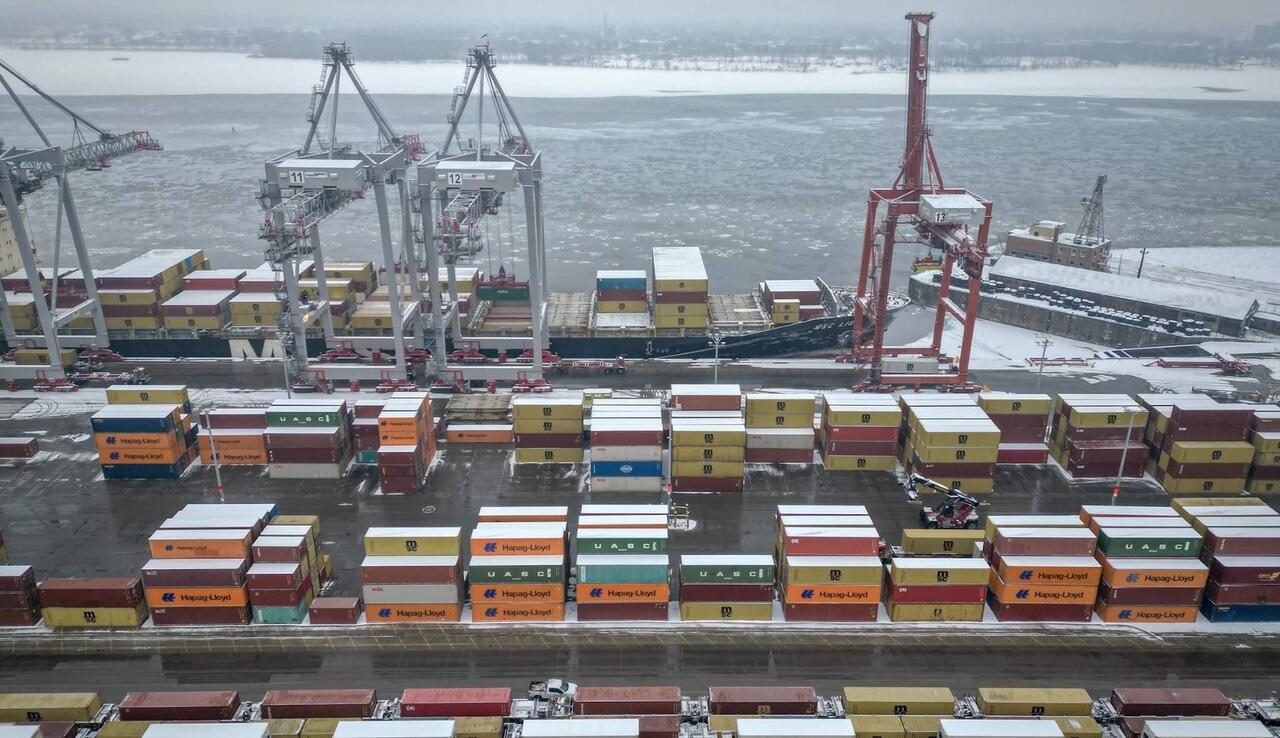
The more you need things from other people, the fewer choices you have, and the more you must obey the whims of others.

If you are poor, then you must work in order to live. You must trade your time and energy for sustenance, or you will die. Therefore, you must give up your freedom of choice to live.

Necessity constrains you.

Wealth, by contrast, gives you choices. You don’t have to take the first menial job you see just to put food on the table. Your money gives you power and flexibility. You can be your own boss.

Self-sufficiency—being independent—is critical to freedom and happiness. Relationships of desire replace those of necessity and convenience; friendship replaces subordination.

In this life, we can never wholly be free of necessity, but it is best to minimize our needs as much as possible. The frugal and prudent man sets up hedges around his wealth. He takes out “insurance” against the possibility of trouble and saves for a rainy day. He is moderate in his spending, avoids debt, and pays off his creditors quickly.

This common-sense wisdom is just as applicable at the national as at the individual level. A prudent nation does not sell off its future for cheap pleasures in the present; it works to liberate itself from dependence on foreigners and enemies; it prepares for hard times.

A prudent nation is, to the maximum extent possible, self-reliant and frugal.

The globalist liberal economic regime is none of these things. Indeed, the free traders insist that the wisdom of prudence and frugality is folly and even tyrannical, that autarky, or self-sufficiency, is ruin, and that dependence on foreigners is prosperity and power.

They are wrong.

Trade, of course, is a source of wealth. Specialization creates efficiency, and efficiency creates wealth. Instead of doing many things poorly, a worker can focus on doing one thing extremely well. He then trades the excess of his labor with others for what he needs and wants.

On a large enough scale, this trade between different specialists or workers creates far greater prosperity than if every man had to care for himself. In the state of nature, self-sufficiency is painful and hard to acquire. The individual by himself is vulnerable to injury, death, robbery, and famine.

A thousand dangers threaten him on every side. But when he allies with others, he is less weak. The more cords you wrap together, the stronger the rope becomes. Strength compounds strength.

But this strengthening has an upper limit. An alliance between men must be a true alliance. The members must care for one another and share their mutual commitment to the same high degree.

You cannot ally with people who hate you or who seek to defraud you. An alliance is a two-way street.

Globalists don’t understand this principle, however. 

In the aftermath of WWII, the Allied nations, giddy with victory and smug in their liberal values, believed that the whole world could live as one, that the population of the earth could enter into one giant alliance. It is from this idea that we get the “United Nations,” quite literally the nations of the earth were to be united into one global community rooted in shared democratic values. After the fall of the Soviet Union, it appeared that this liberal project had been realized.

Every nation on earth had entered into a new era free from tyranny and the petty jealousies of the old geopolitical order.

Liberals used this rationale to justify massive outsourcing in the American economy. 

Shipping jobs abroad lowered labor costs, brought cheaper prices, and raised the value of American companies. With fewer liabilities on their balance books, stocks rose to soaring heights. Returns blossomed. Investments boomed.

True enough, the United States had outsourced innumerable key industries abroad. Today, 99 percent of our medications, shoes, and fish are acquired from abroad, primarily from China. But for liberals, this was a small price to pay.

Free trade makes a nation wealthy. Global free trade should make it even wealthier. And where wealth goes, democracy is sure to follow. Democracy means peace. Peace means happiness. All would be well.

This promise was a lie. The nations of the earth do not share a fundamental interest. Democracy does not guarantee peace. Free trade does not make for endless prosperity. The delusions of a global order of freedom are hollow to the core. Indeed, they are evil.

COVID lockdowns made this clear. If liberalism and free trade lead to ever more freedom, how does one explain the global panic over a respiratory virus, a panic so intense it led to the American government unilaterally suspending the rights of free association, worship, and speech for years at a time?

It wasn’t just America, either. Western nations transformed themselves into open-air prison camps. After the initial wave of hysteria passed, relentless vaccine mandates came. The freedom of bodily autonomy was suspended on an almost global scale.

COVID threw back the curtain on the liberal world order and revealed its rotten, tyrannical, and insane heart, but it was not the only warning sign. Far from it.

The nations of the earth do not share a common interest. The explosion in BLM violence, anti-White DEI policies, and the relentless condemnations of American history for its bigotry and White supremacy make clear that no such reconciliation has yet occurred or is even possible.

The more migrants pour into America, the more our social cohesion frays, and the more our once-shared history is condemned and destroyed.

China and America, for instance, obviously pursue different interests. If they were the same, then we should simply unite and form one nation with a common citizenship. This would not work, of course. No one today would even dream of proposing such a thing.

The idea of uniting with Russia is even more absurd. Liberals foam at the mouth over Putin’s actions in Ukraine, viciously condemning the foreign policy of our one-time ally in WWII. The Russians, moreover, have no interest in being adversaries or even junior partners in the neoliberal world order. They want respect and a seat at the table, and they are willing to fight for them.

At home, America’s rural communities are in shambles. Once high-paying middle-class factory jobs have been wiped out. Empty factories dot the plain. Large swaths of America look like they lost a war: the buildings are falling apart, and the population is filled with foreigners.

The “interdependent” global economy has made Americans worse off in virtually every possible way. The only pathway to success today is through the “new economy.”

Every single one of my non-STEM college-educated millennial peers is working in law, finance, real estate, marketing, the non-profit sector, or for the government. They do not own businesses making real goods or employing real people. They are in industries that depend on government largesse, donations from the wealthy (derived primarily from equities), or working for the same stock-rich individuals.

Wealth increasingly concentrates in fewer and fewer hands. A few major cities—San Francisco, New York City, and Washington, DC—wield immense political and economic power. The scramble to get access to this wealth has given enormous influence to those in power.

It is much easier to cancel someone who works in a coveted laptop class job than it is to cancel a small-business owner who makes key components for a critical national industry.

Centralization makes censorship and gatekeeping much easier.

It is obvious to those with eyes to see and ears to hear that our contemporary economic situation is not sustainable. We cannot keep going on like this. COVID was a blaring warning of the grave dangers of globalism.

America must choose a new path. We must choose the path of self-reliance, frugality, moderation, and prudence. We must choose to embrace national sovereignty and rejuvenation.

For 80 years, the American ruling class has been selling America off for parts. Our privileged geopolitical situation, isolated from Asia and Europe by vast oceans, our intelligent and industrious population, our ethnic homogeneity, our vast natural resources, and our open space are an immense source of wealth. For decades, the grifters and parasites were able to sell and sell and sell. They defrauded their countrymen of jobs, opportunities, and possibilities. We have indebted our children and sold off their inheritance to enjoy pleasures in the present.

All of this is disgusting and contemptible. We need a reckoning.

Tariffs and borders will deliver the national economy we deserve.

In the short run, asset valuations and wages are inversely correlated. 

The more a company must pay its workers, the less profit it can offer investors. For a corporation, high wages are a liability. Yet, this logic is stupid.

In the long run, the greatest asset a company has is the workers who make it up. Without their labor and insight, the company would not exist. High wages make our civil society stronger. Workers who feel like they have skin in the game are more patriotic, more motivated, and more eager to sacrifice for the greater good.

If forced to choose between corporate profits or higher wages, we should choose higher wages. Exporting jobs abroad to cheap Chinese laborers is a form of fraud. It is a betrayal. Good jobs should exist right here in America.

High wages mean better working conditions and better worker safety. America wouldn’t need minimum wage laws if the labor market were tight enough. True, corporations sacrifice profits in this arrangement, but those profits weren’t ever theirs to sacrifice. Workers and owners need each other.

We cannot sell out either one (through outsourcing or socialist revolution, respectively) without incurring deep economic and political wounds.

Capitalism and private property work best when capital and property are distributed broadly and freely.

In the 1970s, CEO compensation to average worker salary was about 20:1. This is a fair deal. It is right for those in charge, who ensure the business exists at all, to be better compensated than those who merely clock in and out. But today, this ratio has grown out of all proportion: it is now 400:1. The average CEO makes 400 times what his worker makes.

American workers deserve more respect. Without them, none of our national wealth would be possible! Competition with cheap foreign labor is a race to the bottom. It is suicide. We need the American worker to have purchasing power and excess capital. We need him to be confident and strong.

This means protecting him from foreign competition that sacrifices living standards for money. Americans deserve their dignity.

We need strong borders, too. There is no point in re-shoring factories only to fill them with immigrants. Third-world immigrants, especially, are a blight. They are often clannish, resentful, and grasping. They do not care about the nation or its history. They want money. They think the older White majority is racist and bad. They vote overwhelmingly Democrat. They need to go.

Immigration drives up housing prices, too. God isn’t making any more land. Artificially inflating the price of homes and space by an endless flow of migrants is a government subsidy towards those who already own homes at the expense of those who wish to acquire them. This is not fair.

Due to America’s vast resources and our (still) high-quality native population, we should have become less dependent on foreign trade as we became wealthier, not more. Trade is a product of excess wealth beyond the needs of life.

Early in the life of the American republic, our native industries were small and inefficient compared to those of Europe. American farmers, therefore, would trade commodities for relatively cheap manufactured goods abroad. But this dynamic created dependency. Americans became wealthier due to trade, but they also became needy. They had to have these manufactured goods to keep growing.

Tariffs incentivized Americans to pour their excess labor into making manufactured goods instead of more commodities made abroad. That policy made America into an industrial powerhouse in its own right instead of a satellite of Europe.

We need a similar policy now in order to recover high middle-class wages and a stable internal economy that isn’t dependent on foreign trade to maintain prosperity.

From an individual or global perspective, foreign trade creates prosperity. From the standpoint of the nation-state, it is a sign of misallocated capital. If America can only eat 50 million bushels of wheat, but we grow 100 million bushels, then this is a sign we have too many people making wheat. In the short run, it is better to ship that excess abroad in order to trade for luxuries.

In the long run, it is better to turn the excess labor of making wheat for export into making the foreign luxuries right here at home.

In a nation with as many resources and as much space as the United States, autarky is much more feasible than for nations like Japan or North Korea. While true autarky is not achievable or desirable—foreign trade and travel are part of individual freedom—it is good to encourage internal manufacturing as much as is reasonable.

Tariffs strike the right balance: they impose costs on foreign goods while channeling revenue back into the nation. The individual maintains access to foreign goods, even though this can harm domestic manufacturers, while paying into the commonwealth of the nation.

Tariffs are good. They protect the high American standard of living, make us more independent of foreign countries, and encourage innovation right here at home. Tariffs benefit us all. They are a necessary hedge to protecting American wealth.

https://www.zerohedge.com/economics/protectionism-good

Comer Requests DOJ Prosecute Andrew Cuomo For Allegedly Lying To Congress

 House Oversight Committee Chairman James Comer of Kentucky on Monday afternoon referred current New York City mayoral candidate Andrew Cuomo to the Department of Justice (DOJ) for criminal prosecution.

Comer said the former governor “knowingly and willfully made false statements to Congress” regarding his involvement in a state government report that underreported the number of deaths in New York nursing homes during the COVID-19 pandemic. Comer’s recommendation that Attorney General Pam Bondi prosecute Cuomo for “lying to Congress” follows the Biden DOJ’s decision to ignore a previous referral from House Republicans in October 2024.

Cuomo testified before the House Select Subcommittee on the Coronavirus Pandemic in September and gave closed-door testimony to the subcommittee in June regarding his administration’s controversial policies that enabled thousands of positive COVID-19 patients to be admitted to nursing home facilities in the state.

House Republicans have accused Cuomo of deliberately seeking to avoid accountability by allegedly lying to Congress about his involvement in a state government report that undercounted nursing home deaths. Comer, in a Monday press release, alleged the former governor’s testimony to Congress about his handling of the nursing home crisis and ensuing coverup were “demonstrably false.”

“Andrew Cuomo is a man with a history of corruption and deceit, now caught red-handed lying to Congress during the Select Subcommittee’s investigation into the COVID-19 nursing home tragedy in New York,” Comer said. “This wasn’t a slip-up — it was a calculated cover-up by a man seeking to shield himself from responsibility for the devastating loss of life in New York’s nursing homes.”

“Let’s be clear: lying to Congress is a federal crime,” Comer said. “Mr. Cuomo must be prosecuted to the fullest extent of the law. The House Oversight Committee is prepared to fully cooperate with the Justice Department’s investigation into Andrew Cuomo’s actions and ensure he’s held to account.”

Cuomo’s March 2020 guidance that prohibited nursing homes from rejecting patients solely because of a COVID-19 diagnosis led to the deaths of thousands of senior citizens, according to State Attorney General Letitia James’ report in 2021.

The Daily Caller News Foundation first reported in May 2020 that the New York State Department of Health knowingly miscounted nursing home deaths by altering its classification system. James’ report said that Cuomo’s administration may have undercounted nursing home coronavirus deaths by nearly 50%.

“This is nothing more than a meritless press release that was nonsense last year and is even more so now,” Cuomo’s spokesperson Rich Azzopardi told NOTUS Monday. “As the DOJ constantly reminds people, this kind of transparent attempt at election interference and law-fare violates their own policies. Referrals like these — which have been also made against Planned Parenthood, Hillary Clinton and Anthony Fauci — don’t have to be resubmitted with a new administration, so the only point to doing this is politics.”

Cuomo is the current frontrunner in New York City’s Democratic mayoral primary to succeed Mayor Eric Adams, according to recent polling. The former governor is running as a moderate in a crowded primary field.

New York State Sen. Jessica Ramos, one of Cuomo’s opponents for the Democratic mayoral nomination, suggested the former governor did not act maliciously during his testimony to Congress because he allegedly suffers from cognitive decline.

“I don’t think the City of New York can afford a Joe Biden moment,” Ramos told the New York Post in an interview on April 17. “I think that there are real reasons why he’s not answering questions.”

“Even when he went before Congress, he just can’t remember details about what he did,” Ramos added. “I imagine having to resign in disgrace must have really taken a toll on, at the very least, at the very least, his ego, but most certainly his mental health.”

Cuomo resigned from office in August 2021 following a spate of accusations and a report from Attorney General Letitia James alleging he sexually harassed 11 women and retaliated against several who raised complaints about him. Cuomo has denied wrongdoing.

https://dailycaller.com/2025/04/21/james-comer-requests-doj-prosecute-andrew-cuomo-for-allegedly-lying-to-congress/