Search This Blog

Saturday, October 3, 2026

Lavender Oil Cuts Core Symptoms of Major Depression

 An oral lavender oil preparation produced broad antidepressant effects in patients with mild-to-moderate major depressive disorder (MDD), with a symptom profile similar to that of the SSRI sertraline.

Results of a randomized controlled trial involving nearly 500 patients showed that the preparation, known as Silexan, was significantly more effective than placebo after 8 weeks for five of nine symptoms assessed with the Montgomery-Åsberg Depression Rating Scale (MADRS), including apparent and reported sadness, reduced appetite, concentration difficulties, and lassitude.

The findings point to an “independent, direct antidepressant effect,” the investigators led by Hans-Jürgen Möller, MD, Ludwig Maximillian University, Munich, Germany, noted. 

The findings were published in the September issue of the International Journal of Neuropsychopharmacology. 

From Anxiety to Depression 

Silexan is a standardized oral essential oil derived from Lavandula angustifolia and is registered as a medicinal product for anxiety disorders. In previous randomized, placebo-controlled trials, it not only reduced anxiety symptoms but also improved co-morbid depression. 

An antidepressant effect was also observed in patients with mixed anxiety and depressive disorder, raising the possibility that its benefits extend beyond anxiolysis. 

The researchers point out that MDD is highly heterogeneous: Patients present with different constellations of symptoms. To characterize the antidepressant effects of Silexan, they looked beyond the overall MADRS score and examined changes in individual items. 

In addition, to better understand which depressive symptoms were driving overall benefit, the investigators conducted a preplanned exploratory analysis of individual MADRS items.

In the previously reported double-blind, double-dummy LEAD trial, Silexan 80 mg/d and sertraline 50 mg/d were both more effective than placebo after 8 weeks in terms of total MADRS total score in patients with mild-to-moderate MDD. 

In the current preplanned exploratory analysis of the same trial, the investigators examined whether those overall improvements were reflected across individual depressive symptoms. 

The analysis included 498 predominantly White adults from sites in Germany and Poland with mild or moderate, single or recurrent MDD. Participants were randomly assigned to 8 weeks of Silexan, sertraline, or placebo. Nine individual MADRS items were assessed.

Core MDD Symptoms Improve 

Participants were randomly assigned to receive Silexan (n = 170; mean age, 45.8 years; 69.4% women), sertraline (n = 171; mean age, 44.7 years; 64.3% women), or placebo (n = 157; mean age, 46.6 years; 63.1% women) for 8 weeks.

Results showed that both Silexan and sertraline were superior to placebo in reducing MADRS total scores (P = .008 and P = .001, respectively). 

Additionally, Silexan was significantly superior to placebo on five MADRS items: apparent sadness (P = .014), reported sadness (P = .011), reduced appetite (P = .048), concentration difficulties (P = .011), and lassitude (P = .003). 

Silexan also showed adjusted mean differences of more than 0.2 point vs placebo for inner tension and inability to feel, although both narrowly missed statistical significance (P = .051 and P = .058, respectively). Overall, item-level outcomes with Silexan and sertraline were largely comparable.

The most pronounced improvements with Silexan were observed in symptoms central to MDD, including depressed mood, anhedonia, and loss of energy.

However, the researchers noted that the item-level analyses were exploratory and not adjusted for multiple comparisons. 

The researchers emphasized that the LEAD study was also not “intended nor powered” to demonstrate superiority at the individual-item level, and no validated threshold exists for determining a clinically meaningful between-group difference for individual MADRS items.

Even so, the investigators said the analysis provides additional insight into how Silexan may affect specific symptoms of MDD.

The study was funded by the manufacturer of Silexan. Disclosure information for the study investigators is available in the original study publication.

https://www.medscape.com/viewarticle/lavender-oil-cuts-core-symptoms-major-depression-2026a10010v3

UTI Drug Improves Symptoms Within a Day

 More than half of women treated with gepotidacin for uncomplicated urinary tract infections (UTIs) experienced symptom improvement within 24 hours of starting the antibiotic, according to a study published this week in JAMA Network Open.

Nearly 80% of patients' symptoms improved by 48 hours, although complete symptom resolution took a little over a week. For patients with recurrent UTIs, an increasing incidence of drug-resistant bacteria can leave clinicians with fewer oral treatment options. In those cases, gepotidacin may provide another choice before intravenous antibiotics become necessary, said Nazema Siddiqui, MD, associate professor of obstetrics and gynecology in the Division of Urogynecology & Reconstructive Pelvic Surgery at Duke University in North Carolina. 

But she cautioned that the results should not be used as evidence that gepotidacin works faster than other antibiotics.

"Everyone wants to feel better faster," but because the study did not include a comparison group, "you can't take this out of context and basically say that this means that this is going to work faster than other [antibiotics]," Siddiqui said. 

Gepotidacin is a first-in-class oral antibiotic approved by the FDA in 2025 for females aged 12 years and older to treat uncomplicated UTIs when caused by certain bacteria that are susceptible to the drug. Earlier phase 3 trials found gepotidacin worked at least as well as nitrofurantoin, a commonly used UTI antibiotic.

The new phase 3b study was designed to examine how quickly patients began to feel better. Researchers enrolled 97 girls and women with at least two symptoms of uncomplicated UTI, including dysuria, increased urination frequency and urgency to urinate, and lower abdominal or pelvic pain. Ninety were included in the primary 24-hour analysis. Participants received 1500 mg of gepotidacin twice daily for 5 days and were assessed at 24, 48, 72, and 96 hours, then again on day 10. There was no comparison group.

Clinical symptom improvement was defined as at least a 1-point decrease from baseline on a 12-point scale measuring pain/burning during urination and other symptoms, without the need for another systemic antibiotic.

At 24 hours, 54.4% of clinically evaluable patients had improved. At 48 hours, 79.8% had improved. By day 10, 95.6% had improved and 90% had complete symptom resolution.

The 24-hour data fill a gap left by the earlier trials, which assessed symptom improvement between days 2 and 4, and may provide clinicians clearer expectations on when a patient might feel better, a spokesperson for GSK told Medscape Medical News.

The larger question is where a new antibiotic should fit into treatment as resistance increases, Siddiqui said. For patients with recurrent UTIs, drug-resistant bacteria can leave clinicians with fewer oral treatment options. In those cases, gepotidacin may provide another choice before intravenous antibiotics become necessary, Siddiqui said. But she cautioned against treating it as a "magic bullet."

"If we start overutilizing this [gepotidacin], then we're going to start to get drug-resistant bacteria to this also," she said. 

That concern reflects the principle of antimicrobial stewardship — using the right antibiotic for the right patient at the right time while avoiding unnecessary antibiotic use, Siddiqui said.

Among the study's other findings, 27 of the 97 participants experienced at least one adverse event. Gastrointestinal events occurred in 24% of cases, including diarrhea in 16%. Three patients discontinued treatment because of mild or moderate adverse events. 

Siddiqui said gastrointestinal symptoms are common with antibiotics generally and should be weighed against a patient's need for treatment. 

GSK funded the study and manufactures gepotidacin.

Various study authors reported being employees and stockholders in GSK.

https://www.medscape.com/viewarticle/uti-drug-improves-symptoms-within-day-2026a10010vd

Sunday talkies: Alito, Blanche, Wright, Lawler, Hassett, Donalds, Giuffra, Devine, Domenech, Kennedy

 NewsNation’s “The Hill Sunday”: Rep. Mike Lawler (R-N.Y.).

CBS News’s “Face the Nation”: Energy Secretary Chris Wright, Sen. Mark Kelly (D-Ariz.).

CNN’s “State of the Union”: National Economic Council Director Kevin Hassett, Thomas Giuffra.

Fox News’s “Fox News Sunday”: Attorney General Todd Blanche, Justice Samuel Alito.

NBC News’s “Meet the Press”: Rahm Emanuel, Sen. John Kennedy (R-La.), Steve Kornacki.

Fox News’s “Sunday Morning Futures”: National Economic Council Director Kevin Hassett, Sen. Dave McCormick (R-Pa.), Miranda Devine, Ben Domenech, Rep. Byron Donalds (R-Fla.).

ABC News’s “This Week”: Lina Khan.

https://thehill.com/homenews/sunday-talk-shows/6127755-trump-midterm-campaign-iran-war/

'Khamenei adviser warns UAE as tensions with Tehran escalate'

 Asenior adviser to Iran’s supreme leader issued a pointed warning to the United Arab Emirates on Saturday, saying “imported security has an expiration date” as tensions between Tehran and Abu Dhabi continue to rise.

“A neighbor remains, and a guest leaves,” Ali Akbar Velayati, a former foreign minister and longtime foreign-policy adviser to the supreme leader, wrote on X.

He was referring to Israeli Prime Minister Benjamin Netanyahu’s visit to Abu Dhabi last Sunday, where he met UAE President Sheikh Mohamed bin Zayed Al Nahyan.

Supreme National Security Council Secretary Mohsen Rezaei said Wednesday that hosting US military bases had not brought the UAE security and warned that hosting Netanyahu would likewise not have “positive consequences.”

The warnings come after months of sharply deteriorating relations during the US-Israeli war on Iran.

Tehran repeatedly struck the UAE, while reports of growing Emirati-Israeli security cooperation, including Israel’s deployment of an Iron Dome battery and personnel to the UAE, fueled anger in Iran.

Tensions were further heightened by an attempted attack aboard a Flydubai flight from Dubai to Tel Aviv, with US President Donald Trump saying investigators were examining a possible Iranian connection, although no evidence of Tehran’s involvement has been made public.

Abu Dhabi has maintained that it is not a party to the war and did not allow its territory, waters or airspace to be used for attacks on Iran.

‘Imported security expires’

Velayati also attacked the UAE over its renewed claim to Abu Musa and Greater and Lesser Tunb, three strategically located Persian Gulf islands controlled by Iran and claimed by Abu Dhabi.

“A country whose political life does not reach half a century makes claims from the UN podium about islands that have been recorded under Iran’s name in historical documents and maps from past centuries,” he wrote.

“Geography does not change with statements.”

The UAE renewed its call at the UN General Assembly last weekend for the dispute to be settled through direct negotiations or the International Court of Justice. Iran rejects the UAE’s sovereignty claim.

Velayati accused the UAE of hypocrisy for invoking “Arab rights” and “Islamic solidarity” a week after hosting Netanyahu, before ending with the warning: “The experience of the region has shown that imported security has an expiration date.”

https://www.iranintl.com/en/202610038850

'Iran air defenses hit ‘hostile aircraft’ over Qeshm - state media'


Iranian air defenses intercepted what state-linked media described as a “hostile aircraft” over Qeshm island in the Strait of Hormuz, Fars and Tasnim reported Saturday.

The outlets cited local residents as saying at least one aircraft was hit during the air-defense activity.

They also released a short video that they said showed the interception.

The reports did not identify the aircraft, say who operated it or provide further details about the incident.

https://www.iranintl.com/en/202610033818

Israel probes whether Iranian, Iraqi and Syrian pilots flew into country


Israeli authorities are investigating whether Iranian, Iraqi and Syrian pilots may have flown to Israel in recent years using dual nationality, Channel 12 reported, as scrutiny widens following the attempted attack aboard a Flydubai flight.

The review follows revelations that pilots from countries without diplomatic relations with Israel had been allowed to operate Israel-bound flights.

Channel 12 previously reported that dozens of Omani pilots had flown into Israel despite restrictions intended to prevent pilots from such countries from doing so.

The UAE said Saturday that the Omani co-pilot of Flydubai flight FZ1073 attacked the captain with an axe and attempted to seize control of the aircraft on September 30, describing the incident as a terrorist attack.

https://www.iranintl.com/en/202610034699

'Smartwatches on Iran's security chiefs spark row within the inner circle'


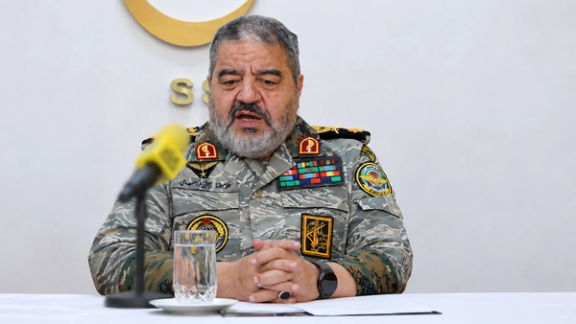
IRGC General Gholamreza Jalali has been heading Iran’s National Organization for Passive Defense since 2005.

Senior Iranian military and security officials have been photographed wearing smartwatches, drawing fresh criticism of their basic security discipline after years in which Israel has tracked and killed Iranian commanders through the devices around them.

The images were posted on X on Friday by Ali Gholhaki, a conservative commentator with ties to Iran's security establishment. Some Iranian outlets describe him as close to parliament speaker Mohammad-Bagher Ghalibaf.

They show smartwatches on the wrists of three men: Gholamreza Jalali, who heads the Passive Defense Organization, the body that protects Iran's critical infrastructure; Reza Farahi, a Defense Ministry official; and Ali Shamkhani, the former secretary of the Supreme National Security Council.

Shamkhani was killed in US-Israeli airstrikes on February 28, on the first day of the current war. He had survived an Israeli strike in June 2025.

Asked about his watch by a Fars News reporter, Jalali asked whether people had smart televisions at home and said his device was effectively the same thing.

Gholhaki rejected the comparison. The man in charge of protecting the country's critical infrastructure, he argued, faces a different order of risk from an ordinary citizen, and such devices are hard to justify for senior security officials when Israel has repeatedly exploited electronic lapses to track Iranian personnel.

Smartwatches can transmit location and activity data through GPS, Bluetooth, Wi-Fi or a paired phone, and some carry microphones and other sensors.

The US military has long restricted location-tracking devices, smartwatches included, in operational areas because they can expose movements and routines; in 2018, a fitness app's public heat map revealed the outlines of American bases from soldiers' running routes.

'Careless use'

The row touches a much larger argument inside the Islamic Republic about repeated intelligence failures.

During the 12-day war in June 2025, Iran's Cyber Security Command banned officials and their security teams from using any device connected to public communication or telecommunications networks, Fars reported, as concern grew that mobile tracking was being used for targeted assassinations.

The directive named smartphones, laptops and smartwatches, and warned that switching a device off might not prevent it from being located.

It came too late. The New York Times later reported, citing Iranian and Israeli officials, that Israel tracked and targeted senior Iranian leaders and nuclear scientists in that war by hacking the phones of their bodyguards and drivers.

On June 16, 2025, the Supreme National Security Council met in a bunker deep beneath a mountain in western Tehran; none of the officials carried phones, but the Israelis found the meeting through the phones of the bodyguards who had driven them there. The bodyguards had long been exempt from the strict phone bans imposed on the commanders themselves, even after earlier assassinations.

Gholhaki tied the smartwatches directly to those failures, arguing that complacency had helped Israel and the United States kill senior military, security and political figures in successive wars. He called for fundamental changes in security practice and renewed his demand for a broad postwar inquiry into how the failures happened.

Gholhaki himself was among a group of Telegram channel operators arrested by the Revolutionary Guards' counterintelligence arm in 2022, accused of disturbing public opinion and publishing classified documents.

A blogger on death row

The judiciary has shown no such tolerance for ordinary Iranians accused of far smaller breaches.

Marziyeh "Sevda" Ebrahimi Shamsabadi, a 33-year-old blogger from Bandar Abbas who has been held since March, was sentenced to death in August by a Revolutionary Court on charges including insulting the supreme leader, intelligence activity on behalf of hostile governments, and taking and sending photographs to Persian-language media abroad.

One allegation concerned a photograph she was said to have taken, from a distance, of a site hit by a missile. She was held in solitary confinement for 20 days and faced severe pressure during interrogation.

https://www.iranintl.com/en/202610027377