Search This Blog

Thursday, October 8, 2026

"Can't Be Part Of Lost Generation": Bolsonaro Wins 4 Key Party Endorsements Ahead Of Brazil Runoff

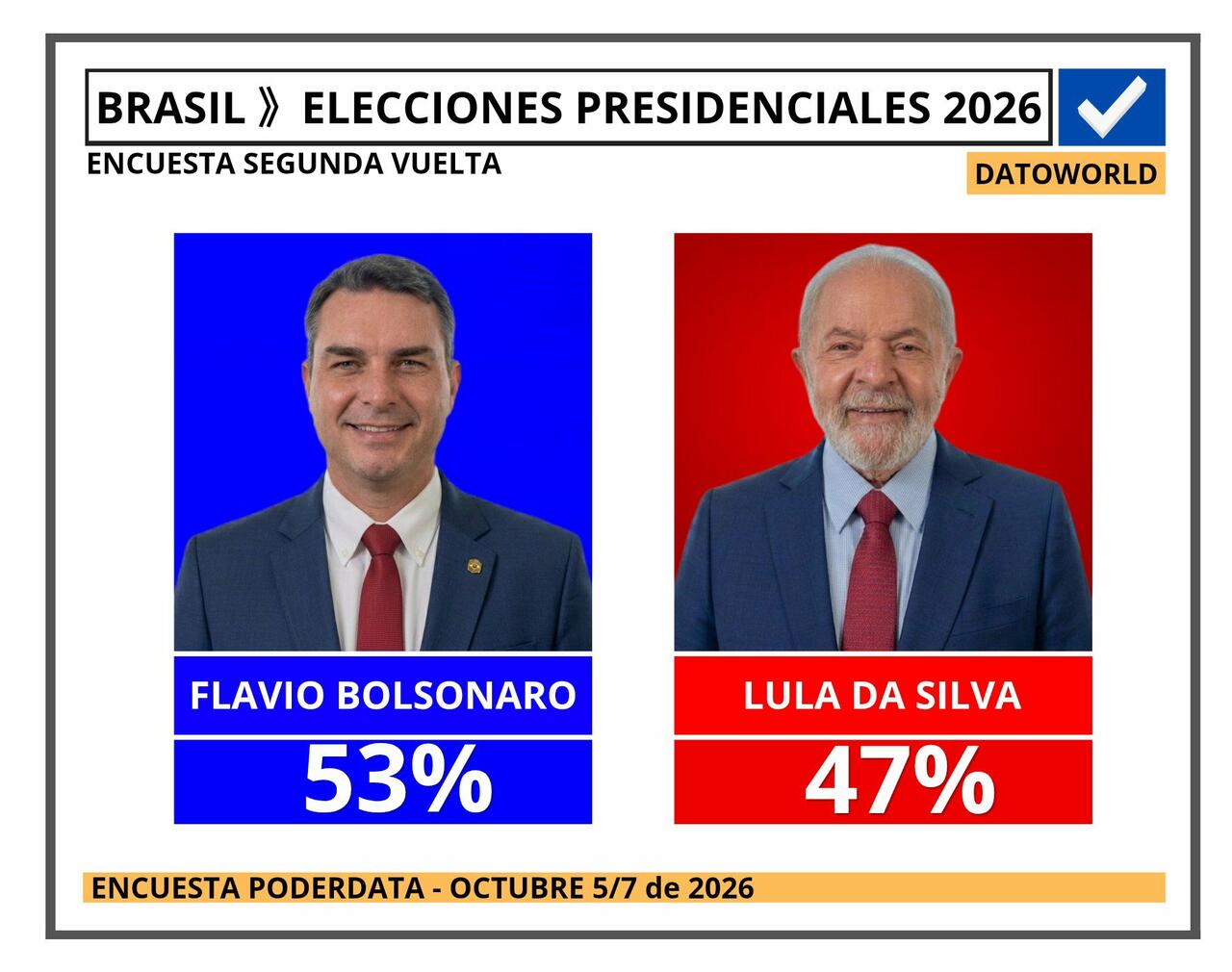
 In a postmortem published Wednesday on Sunday's first-round Brazilian presidential election, Alberto Ramos, Goldman Sachs' chief Latin American economist, described a "conservative wave" that swept the country, culminating in right-wing Senator Flávio Bolsonaro's win over unhinged socialist President Luiz Inácio Lula da Silva.

Bolsonaro's momentum continued mid-week after he secured endorsements from four center-right parties, strengthening his coalition ahead of the October 25 runoff election against Lula. 

Bloomberg reports that Uniao Brasil, Progressistas, Republicanos and Novo backed Bolsonaro on Wednseday, one day after former rival Ronaldo Caiado backed him. 

"We can't be part of a lost generation," Sao Paulo Governor Tarcísio de Freitas told Bolsonaro at a Republicanos event late Wednesday.

Freitas added, "We have to deliver on the work that your father started."

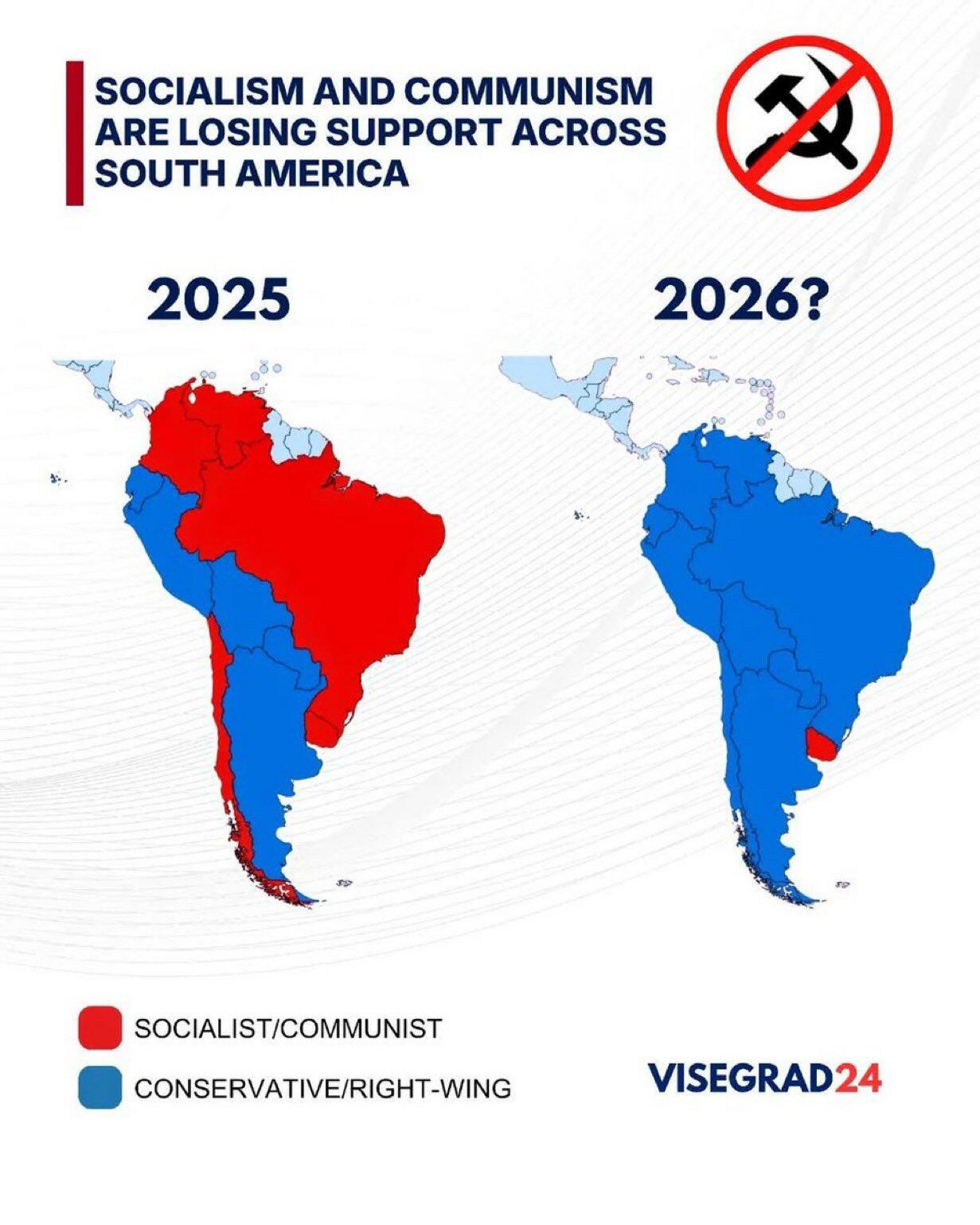
Freitas is describing the nation-killing socialist policies of Lula and how a once-in-a-generation conservative sweep has shifted South America from left-wing to right-wing after years of economic despair under socialist rule. 

If Bolsonaro wins the runoff, it would cement the South American shift from left to right, with the continent's largest GDP joining it. 

Goldman's Ramos commented on the upcoming runoff:

Whether Senator Bolsonaro or President Lula wins, the next president will need to build a multiparty coalition. 

If elected, Senator Bolsonaro would likely need centrist support to form a governing coalition, but he would begin with a strong right- and center-right base (PL, PP, União Brasil, Republicanos, and Novo) for passing ordinary legislation. 

By contrast, a runoff victory by President Lula would likely leave his administration facing even greater challenges in Congress because of the larger conservative opposition bloc and the fact that his political capital will be limited because he cannot seek reelection in 2030.

Separately, David Beker, Bank of America's chief Brazil economist, commented on the economic challenges for Brazil that lie just ahead, saying:

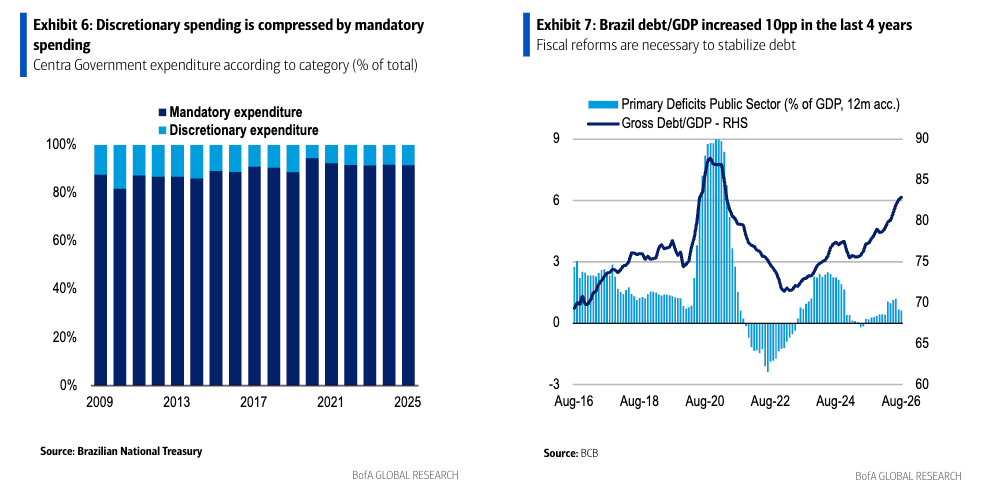
For markets, the key challenge following Brazil's elections will be ensuring debt sustainability. Brazil's gross debt-to-GDP ratio is set to increase by more than 10 percentage points during President Lula's third term, making fiscal reform the top priority for the next administration to foster a more sustainable macroeconomic environment. 

We currently forecast debt-to-GDP at 83.0% by YE26, rising to 90.4% by year-end 2028. Stabilizing the debt trajectory would require a primary surplus of roughly 3.0% of GDP, implying an additional fiscal adjustment of approximately 3.5% of GDP, as we project the public sector balance to deteriorate to a deficit of 0.6% of GDP by YE28.

Meanwhile, the Brazilian real strengthened and the benchmark Bovespa stock index rallied sharply earlier this week, signaling the market has had enough with socialists and welcomes Bolsonaro, who would pursue greater fiscal discipline. The moves come as his economic team prepares to outline a plan to curb out-of-control spending under Lula's administration.

UBS hosted Ideia Big Data on Tuesday and came to the consultancy firm assigned Bolsonaro an 85% probability of victory (read report).

https://www.zerohedge.com/political/we-cant-be-part-lost-generation-bolsonaro-wins-four-key-party-endorsements-ahead-brazil

Canada approved woman for MAID euthanasia because she could no longer make Sunday dinners

 by Eric Utter

To understand just how slipshod Canada's euthansia program has gotten, two Canadian psychiatrists, Gary Rodin and Madeline Li, recently laid out their concerns about Canada’s Medical Assistance In Dying program, known as MAID, warning in a New York Times op-ed that:

... Canada’s system for assisted death is no longer an option of last resort.

They cited two examples that suggest that anyone can be euthanized for anything, including issues that have nothing to do with illness and that people can be talked out of.

In “We Implemented Canada’s Assisted Dying Law. We’re Concerned,” they wrote:

We’ve seen how beneficial it is to pause and reflect with our own patients. One of them, a woman in her 70s, was the matriarch of her family, the one who made Sunday dinners. She sought and received approval for assisted dying after she lost the ability to cook. She felt she had lost her value to her family. Through counseling, she came to understand that her family valued who she was, not what she did for them. She decided not to go through with ending her life, at least for now. That Christmas, her family gathered and she sat proudly at the table, while others did the cooking and serving.

God be praised, but what the hell? She was allegedly approved to have the government kill her because she could no longer cook “Sunday dinners” for her family? Maybe Muslim values really are Canadian values.

If being unable to cook makes one eligible for MAID, then millions of women — and men — could be put to death because they are food prep-challenged, too. Talk about “ableism!” Are you a lax housekeeper? Don’t have a green thumb? Terrible with pets? Not good at your job? You, too, may qualify to be offed by your government!

Can it be a coincidence that the more “progressive” Canada claims to be, and the more Muslim immigrants it lets in, the more it approves of eugenics?

But what can one expect of a nation that passed Bill C-9, effectively criminalizing parts of the Bible?

The increasingly godless nation has also banned public prayer in the military -- and at military functions and observances. The new policy does, however, allow for the inclusion of “aboriginal practices” that “contain spiritual elements.” And, of course, Muslims can pray in the streets of the largest Canadian cities, such as Toronto and Montreal, without worry.

In summation, Canada, like the members of its military, doesn’t have a prayer.

https://www.americanthinker.com/blog/2026/10/canada-approved-woman-for-maid-euthanasia-because-she-could-no-longer-make-big-sunday-dinners/


Stupidity: Is It The New Political Power?

 by Allan J. Feifer

We have spent centuries building societies on the assumption that people can govern themselves. Our institutions are premised on individual responsibility, private property, free expression, voluntary association, markets, constitutional limits, and the belief that adults can generally be trusted to govern themselves.

Yet much of today’s politics appears to be moving in the opposite direction.

Competence increasingly seems negotiable, perhaps even disqualifying. Expertise is often treated with suspicion. Complex problems are compressed into slogans. Identity matters more than accomplishment, authenticity more than knowledge, and how a politician makes people feel more than that politician’s ability.

Why? And more importantly, what happens to our democracy when understanding a political argument matters less than producing the politically correct reaction?

That is a different question from whether conservatives or liberals are right. It is a question about self-government itself. The old populist argument was simple: the elites have failed you, so “power to the people.”

The emerging version may be something stranger: you don’t need knowledge; you only need someone or something to blame.

That’s a very different kind of populism.

Self-government is hard work. It requires citizens to absorb facts, recognize tradeoffs, distinguish evidence from assertion, remember history, tolerate disagreement, and occasionally accept outcomes they don’t like.

None of that is particularly riveting. Anger, outrage, fear, and identity are.

And the modern infosphere is exceptionally good at delivering them.

A politician no longer needs to explain how a complicated policy will work. A social-media influencer doesn’t need expertise in the subject he is discussing. A political movement doesn’t necessarily need to persuade anyone through argument. Identify an enemy, construct a grievance, provide a slogan, and you have an audience that can be controlled emotionally.

Citizens become consumers of political content, and content is rewarded for holding attention, not for its veracity.

This may explain the increasing importance of political performance. People respond to charisma and physical attractiveness. Presentation affects perception. Voters often rely on selective information sources rather than examining issues neutrally.

None of that is new. But technology has rewritten the rules. A candidate can become a celebrity before proving an ability to govern, gaining millions of followers without demonstrating expertise beyond attracting followers. A compelling personality can overwhelm a simple question without addressing—or even understanding—the problem.

At some point, this stops being merely a question of political style.

What if political systems have evolved to reward incompetence?

Not because voters consciously want incompetent leaders. Rather, evaluating competence requires effort, information, and judgment. A politician who answers difficult questions honestly will inevitably disappoint some people. A politician who avoids them can promise almost anything.

That creates a peculiar political incentive:

The less citizens demand intellectually, the easier it is to mislead them.

That’s why this new populism is destabilizing. Traditional populism claimed elites were denying ordinary people their rightful political power. The emerging version turns that proposition on its head. It gives people the sensation of enormous political power while quietly diminishing the power they actually possess.

Citizens get to vote, post, protest, rage, boycott, and demand. But increasingly, political appeals are reduced to choosing your tribe:

Left or right. Us or them. Victim or oppressor. Choose your tribe and never be troubled with thinking again.

Are we witnessing an evolved populism?

Traditional populism mobilized ordinary people against established power. What we’re seeing now increasingly involves mobilizing people through identity, grievance, emotional attachment, and simplistic narratives rather than through arguments about how society actually functions.

Are contemporary political movements organic expressions of what millions of people independently believe? Or are those beliefs being shaped—sometimes deliberately, sometimes accidentally—by social-media algorithms, political organizations, universities, corporations, bureaucracies, advocacy groups, entertainment, foreign influence operations, and an opinion industry devoted to delivering specific outcomes?

No secret room is needed to coordinate the process. Systems don’t require conspirators to produce coordinated effects. Embedded incentives will do the job on their own.

If outrage attracts attention, outrage will be amplified. If grievance mobilizes voters, grievances will be cultivated. If identity produces loyalty, identity becomes the objective. If fear generates clicks, fear will be supplied.

And if citizens consume politics this way, politics accelerates the process. The result is a feedback loop: the public becomes more emotional because politics has become more emotional, while politics becomes more emotional because emotional appeals work.

That brings us to a larger question about the direction in which Western societies are moving.

For centuries, the West developed certain assumptions about the individual. Individuals possessed rights. Property could be privately owned. Government had limits. Markets could operate without central direction, and people were responsible for their choices.

No system is perfect, but those assumptions produced an extraordinary civilization. Today, many of them are being challenged. That’s okay. Every generation should challenge inherited ideas.

But there is a question almost nobody asks loudly enough:

What replaces them?

If individual responsibility declines, what replaces it? If open markets are rejected, who allocates? If private property becomes less secure, who decides what belongs to whom? If institutional authority is weakened, what replaces it? If competence becomes subordinate to identity, how do complex societies keep functioning? And if citizens lose the habit of independent judgment, who’s left to govern?

Perhaps our greatest vulnerability is also our greatest strength. Free people are difficult to control. But they can also be persuaded to surrender their freedoms if you convince them that those freedoms are responsible for their problems.

Individualism can slide into selfishness, while freedom can decay into license. Skepticism can become nihilism, and populism can become tribal. Democracy can weaken the very conditions that make democracy viable.

Collapse is not inevitable, but we should recognize the warning signs.

Failure is unlikely to arrive as tanks in the streets or governments falling overnight. It will be more mundane: institutional competence mattering less; political loyalty mattering more than truth; citizens becoming increasingly unable to agree on basic facts; disagreements becoming moral emergencies; government assuming responsibilities once reserved to individuals; and political leaders being rewarded for promises rather than results.

The most troubling sign may be simpler still:

People become increasingly certain of what they believe while becoming increasingly incapable of explaining why they believe it.

That’s how a civilization becomes stupid—not by losing intelligence, but by losing the habit of using it.

And that may be the most consequential issue facing our civilization.

Not whether the left or right is winning. Not even whether populism is winning.

What if the real winner is a political system that no longer requires citizens to think for themselves?

If that is happening, we should probably figure it out before we discover the answer the hard way.

https://www.americanthinker.com/articles/2026/10/stupidity-is-it-the-new-political-power/
What Do South Americans Know That U.S. Voters Don’t?

 By all accounts, socialists and their brethren in the Democratic Party will sweep the upcoming midterm elections, which the press will describe as a stunning rebuke of President Donald Trump.

But down in South America, voters are going in the exact opposite direction, getting rid of their failed socialist governments and embracing conservative, free-market leaders in the mold of Trump.

Anyone want to guess why?

It wasn’t that long ago that we were being told that South America was “poised to swing decisively to the left” in what was described, lovingly by the press, as a “pink tide.” Socialists had been in control of Venezuela since 1998. In 2021, Chile and Honduras voted for leftist leaders. The next year, socialists won in Colombia and Brazil. Last year, almost the entire continent was ruled by leftist governments.

The leftist leaders all promised voters “more equitable distribution of wealth, better public services and vastly expanded social safety nets.”

But what they delivered was inflation, stagnation, and corruption.

Then a funny thing happened. One by one, South Americans started kicking the socialists out of office.

By this June, Brazil was left as a “left-wing island,” as one newspaper put it. And from the looks of this week’s election, it won’t be an island anymore, as conservative Flávio Bolsonaro got more votes than incumbent left-wing Lula da Silva, leading to a run-off that favors Bolsonaro. Even Cuba seems poised to liberate itself from the Castro-style dictatorship that has oppressed its people for nearly 70 years.

It’s true that the continent has undergone seismic political shifts over the past decades. But this time, we think, it’s different. South Americans now have the clearest evidence not only of the failure of the left to produce the goods, but are witnesses to the success of Argentine free-market evangelist Javier Milei, who was elected president in 2023 and quickly turned his country around. (See: Here’s Something Trump Should Be Eager To Import, and Where Is Our Javier Milei?)

They also have a leader in Washington who is, in stark contrast to his predecessors, paying attention to our own hemisphere.

One of Trump’s first acts in his second term was the stunning arrest of Venezuela’s leftist dictator Nicolas Maduro and the policing of the continent’s narco terrorists. The dismantling of USAID has starved leftist organizations of funds they’d relied on to keep themselves in power.

As Benny Johnson put it:

Yet, here in the U.S., voters are about to hand control of Congress to a bunch of socialists who are promising, besides impeaching Trump for the umpteenth time, to deliver “more equitable distribution of wealth, better public services, and vastly expanded social safety nets.”

Thankfully, for the next two years, the best Democrats can hope for is gridlock as they engage in an orgy of retribution against Trump. But the risk is that two years from now voters will put a Democrat in the White House, giving the radical left the best chance it’s ever had to “remake” America.

South Americans know where this leads. Are we Gringos really going to ignore the lessons they can teach and trod down that same dead-end path?

https://issuesinsights.com/2026/10/08/what-do-south-americans-know-that-u-s-voters-dont/

Rubio’s Magnificent Speech Meant for Europe... and US

 by Roger Simon

Although there have been stemwinders with amusing and touching moments, it’s been a long time since an American politician has made a speech worthy of serious commentary. Perhaps the last one was when Ronald Reagan delivered the “tear down this wall” speech at the Brandenburg Gate in West Berlin in 1987.

Secretary of State Marco Rubio’s “Remarks from the Acropolis in Athens, Greece” on the not-accidental date of October 7 was such a speech. It may not have the ramifications of Reagan’s address, at least not immediately, but it should.

Rubio chose his delivery location on Pnyx hill overlooking the Parthenon to dramatize his subject matter—that Western Civilization and democracy itself, much of which emanated from the discussions on that same Acropolis, is “at an inflection point.”

At that very moment, much of Western Europe—France, Spain, the UK, the Netherlands, Belgium, Italy, even Germany— was and is in the midst of various forms of a cultural and political nervous breakdown, possibly suicide or suicidal empathy, as Gad Saad would put it.

France has been living out Houellebecq’s 2015 novel “Submission” with a combination of supposed students (aka “les jeunes”), second- and third-generation immigrants from Morocco, Algeria, and elsewhere in the Islamic world, flying Palestinian flags, along with hardline Marxists mouthing tired Bolshevik slogans, taking over the streets all over France while hurling Molotov cocktails, burning cars, smashing windows, and sending myriad police to the emergency rooms. Ironically, in Houellebecq’s novel, the takeover was far more peaceful—a Muslim party simply wins the country’s 2022 election with the help of the socialists.

I don’t know if Rubio was thinking of “Submission,” or even if he’s read it, but he certainly was addressing the problem, the threat to Western Civilization we have before us, when he spoke:

480 years before Christ, the armies of Xerxes arrived in this city and they put its sanctuaries to the torch. Most Athenians had by then evacuated by ship to a nearby island. But there was a handful of them that refused to leave their home. So instead, they barricaded themselves in the rocky fortress of the Acropolis to fight an extraordinary last stand, heaving massive stones down the cliffs onto the Persian invaders and holding the greatest empire of the age at bay for days. They were eventually overwhelmed. The Persians plundered the temples, burned the shrines, and razed the Acropolis to the ground but when the Athenians returned, they gathered the broken remains of the old Acropolis and buried them in the hill where it had stood. And decades later, under Pericles, they raised the Parthenon.

For 25 centuries since, the Parthenon has stood. Empires have risen and fallen beneath its shadow. And the progeny of the men who built it – the sons of Athens and Rome – have carried their civilization with them to the ends of the Earth.

Two and a half centuries after the founding of the American republic halfway across the world from where I stand now – I stand here today as the Secretary of State of that republic, and a great-grandson of settlers who arrived in the new world from Spain – I stand here to testify to a debt that no lapse of time, no distance of space can ever extinguish.

Unlike many of us, myself included at times, Secretary Rubio has not given up on Europe. But he tells us what has disappeared from our civilization in words that not only should have resonance for the Europeans, but for Americans as well, because we share the same now nearly fatal weaknesses, only not as severely as the Europeans… yet.

The thumos, as the ancient Greeks called it – the fire of passion, strength, courage, pride – is the heart of great civilization. And without it? Without it, nations lose their will to fight, the will to strive, the will to survive.

Today, too much of the West has forgotten this quality. Over time, we in the West came to feel ashamed of the very things that made us exceptional. We felt embarrassed that our achievements set us apart from the rest of the world. Our prosperity somehow became a source of guilt. We no longer believed we deserved and had earned our greatness.

The word “nationalism” became a dirty word. And so we tore down our monuments; we condemned our own history. And in too many places, we taught our children to be ashamed of the countries they would inherit. In the process, we opened our borders and outsourced our industry, and allowed our militaries to wither and to decay

Our prosperity became a source of guilt. We taught our children to be ashamed of the country they would inherit. How wonderful it is to have a statesman actually sound like. statesman!

Is Paris listening? Is New York? Is Los Angeles?

After decades in which the media and the schools teach that nationalism, that patriotism, is uncool, it could take a while. Perhaps events have to get worse for people to see. A hundred El Sayeds have to get elected. I hope not—deeply—though that could happen.

Nevertheless, think good, and it will be good.

President Rubio: I like the sound of it.

BOOK REPORT

I have have been communicating frequently with a person in Western Iran (slightly more of a hint) as research for the sequel to EMET. This person in his/her forties, extremely bright, a former English teacher now unemployed. He/she tells me all of their friends are. They have a real “affordability crisis” as opposed to our largely media-created one. More than just the obvious economic issues, they are terrified that they are constantly watched, with new Chinese video cameras with facial recognition installed everywhere. They are very aware of what’s going on here, almost too reliant on it, my contact says, because they have allowed themselves to trust the US too much. Also, there is the natural passivity of a culture that has been beaten down so many times. They have considerably more faith in Israel helping them than the Americans at this point. Of course, I am getting this view filtered through one person, so take that for what it’s worth. Nevertheless, this person is clearly honest about his life and the situation there as they see it. I am getting a lot of information for the sequel, hoping to make it as authentic as possible.

Regarding EMET, as a reminder, it is now available in four editions—Kindle, paperback, hardcover, and audio. I’m trying to make the sequel stand alone, but it will be much more fun to read if you have read EMET first.

https://americanrefugees.substack.com/p/rubios-speech-was-meant-for-europe

Saudi Aramco hires US firm to upgrade shared oil field as Iran lags behind

 Saudi Aramco has hired a US engineering firm to upgrade an offshore oil field it shares with Iran, which has fallen far behind several neighbors in developing shared energy reserves.

KBR said on October 6 that it would provide engineering and project execution services for offshore processing facilities, gas compression and power systems at Marjan in the Persian Gulf. The work is intended to maintain production capacity and improve associated-gas processing. The company did not disclose the contract’s value.

The award follows a wider expansion of Marjan, whose total budget was put at $21 billion by industry publication Oil & Gas Middle East in a 2023 report.

Aramco said the Marjan project added 300,000 barrels a day of production capacity at the end of 2025. The expansion was designed to bring the field’s capacity to 800,000 barrels a day.

Iran calls its side of the reservoir Forouzan. Iran Open Data estimated Iranian production at about 35,000 barrels a day in a January 21 assessment, attributing the country’s wider difficulties developing shared fields to underinvestment and management constraints.

Saudi Arabia has also expanded its gas-processing infrastructure. Aramco said the Tanajib plant began operations in December 2025 and was expected to reach a raw-gas processing capacity of 2.6 billion cubic feet a day in 2026, handling supplies from both Marjan and Zuluf.

On the Iranian side, the Oil Ministry’s SHANA news agency reported in February that a project to collect gas otherwise burned off at Forouzan and other offshore fields was 76% complete. It said operations were expected to begin in 2028, subject to financing.

Saudi Arabia and Kuwait advance disputed gas project

Saudi Arabia and Kuwait are also moving ahead with development of the Durra offshore gas field, which Iran calls Arash and claims a share of.

Industry publication MEED reported in August that Al-Khafji Joint Operations had awarded contracts for two offshore packages and one onshore package worth an estimated $6.7 billion. The venture is jointly owned by Aramco Gulf Operations Company and Kuwait Gulf Oil Company, subsidiaries of the two countries’ state energy companies.

Iran says part of the field extends into its waters and that it should participate in development. Saudi Arabia and Kuwait reject that claim and maintain that rights to the field belong exclusively to them.

Iran’s wider production gap

The disparity extends to fields Iran shares with other neighbors. In its January assessment, Iran Open Data estimated UAE production from shared oil fields at 130,000 barrels a day, against 58,000 for Iran.

It put Iraq’s extraction from shared oil fields at roughly twice Iran’s and Qatar’s oil-layer output from the South Pars/North Field reservoir at 13 times Iran’s.

Oman was an exception: the assessment put each country’s production from the Hengam field, known as West Bukha in Oman, at about 10,000 barrels a day.

Iran’s national crude production has since fallen sharply during the war. The International Energy Agency estimated output at 2.16 million barrels a day in August, down from 3.59 million in February—a decline of about 40%.

https://www.iranintl.com/en/202610082345