Signs of potential major escalation, or the next round at least (which Trump has hinted will come after the midterm elections), just hit The Wall Street Journal, and sent oil prices soaring. A quick summary:
- The Pentagon is sending a third aircraft-carrier strike group and additional Marine Corps ships to the Middle East, adding 9,000 to 10,000 more troops to the region.
- The ships, jet fighters, Marines and sailors will arrive in the region by the end of November, as President Trump considers renewing strikes on Iran after the midterm elections.
- The additional servicemembers will add to the more than 50,000 troops already in the region, with the deployments coming after Trump rejected Iran's latest proposal for a seven-day ceasefire.
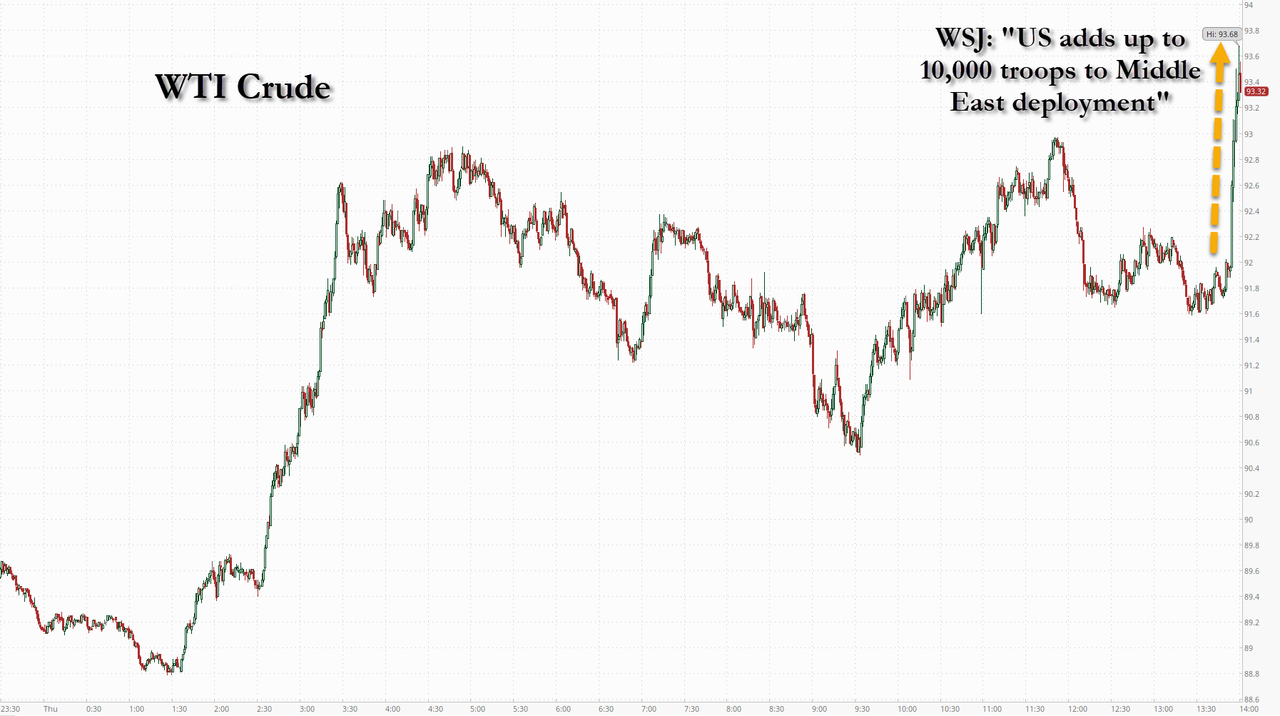
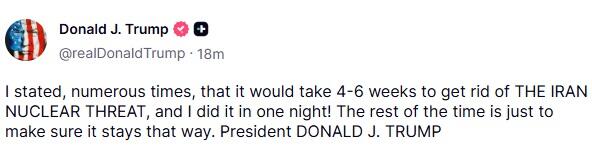
The Trump administration is deploying a third aircraft carrier to the Middle East along with additional Marines, an American official also told Israeli media on Thursday. And later, in the afternoon, Trump posted a new Truth Social message as follows:
The USS Theodore Roosevelt is en route to US Central Command's (CENTCOM) area of operations after having just left San Diego this week. It is expected to relieve the Japan-based USS George Washington, which entered regional waters in mid-August.
But both carriers could also stay on extended deployments. The WSJ writes further:
The additional moves will further strain the U.S. Navy, however, which has experienced supply shortages and faced near-record deployments during the conflict. Iran has in recent weeks fired ballistic missiles at American warships. The crew of the Roosevelt is prepared for a longer-than-normal deployment as well, according to senior Navy officials.
Carriers which more frequently had Indo-Pacific deployments have been increasingly diverted to the Middle East in recent years, a trend which had only picked up steam amid tensions with Iran and the Houthis out of Yemen.
Also on Thursday Al Jazeera is newly reporting that three carriers will stay in regional waters, "By the end of November, three aircraft carriers and two landing groups will be deployed around Iran," a US official told the Qatar-based outlet.
And USNI News earlier detailed:
On September 28, USNI News reported that a U.S. defense official had confirmed the carrier’s departure from San Diego the previous day. Navy officials had also warned families that the deployment could exceed seven months, with eight months being used as the planning baseline.
Carrier Strike Group 9 includes Theodore Roosevelt, Carrier Air Wing 11, Destroyer Squadron 23, Information Warfare Squadron 9 and the Ticonderoga-class guided-missile cruiser USS Chosin (CG-65). Its embarked air wing brings together several combat and support aircraft. The strike component includes F-35C Lightning II fighters from VFA-86, F/A-18E Super Hornets from VFA-211 and VFA-25, and F/A-18F aircraft from VFA-154. VAQ-137 operates the EA-18G Growler for electronic warfare, while VAW-115 flies the E-2D Advanced Hawkeye for airborne surveillance and command and control.
Whether one of the carriers ends up leaving the theatre or not, the extra deployment does mean President Trump will have a wider range of options for more possible military actions against the Islamic Republic.
He has in a freshly published TIME interview this week reiterated that he may be escalating attacks on Iran after the November midterms if an acceptable deal can't be reached.
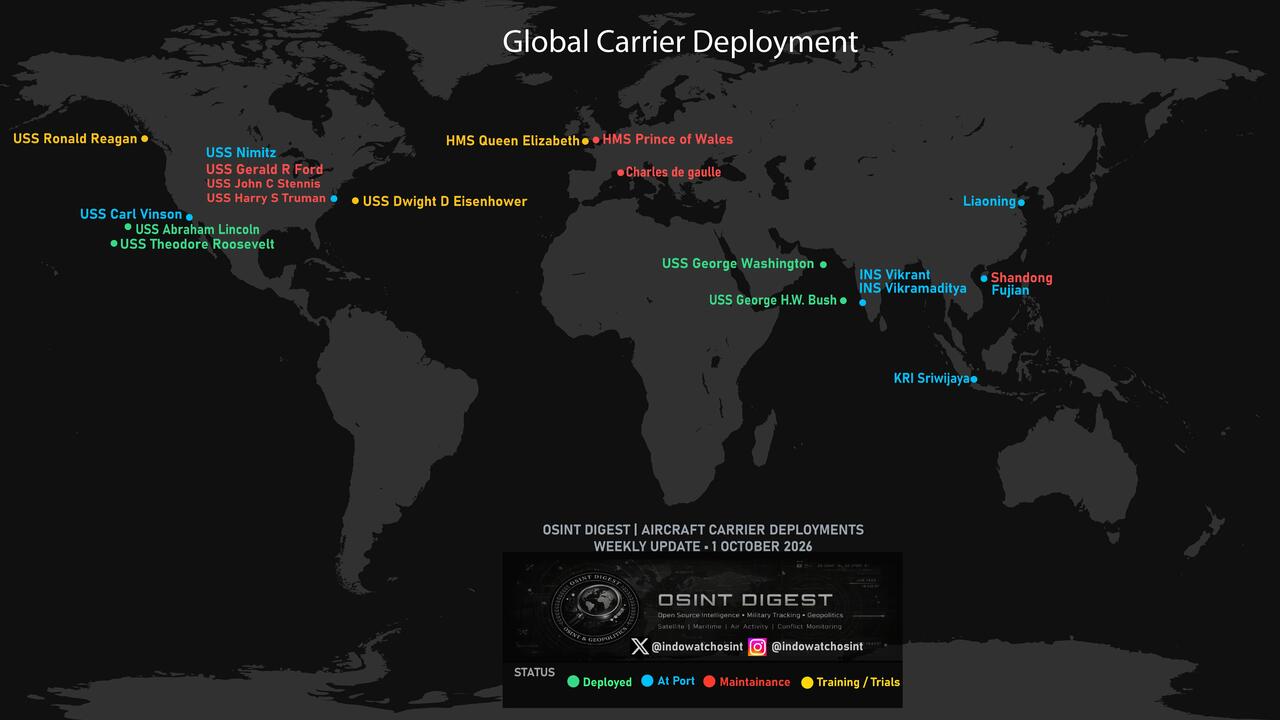
As for the new carrier deployment, it was additionally confirmed: "During a town hall on August 31, Chief of Naval Operations Adm. Daryl Caudle said USS Theodore Roosevelt would be the next carrier sent to the Arabian Sea and was expected to relieve USS George Washington."
But again, follow-up reports suggest it will not be to relieve one of the carriers, but to serve as a likely third floating base of support for Iran operations.

No comments:
Post a Comment
Note: Only a member of this blog may post a comment.