Search This Blog

Saturday, September 22, 2018

AstraZeneca ceo warns of medicine shortages after Brexit


Britain could see widespread medicine shortages if there is no deal to prevent friction at the border with the European Union after Brexit, the AstraZeneca chief executive told the Sunday Times.

The company said in July it would stockpile drugs as a Brexit safety net, and CEO Pascal Soriot told the Sunday Times in an interview that the complexity of the supply chain in pharmaceuticals meant that delays would be likely.
“We have products that go back and forth between the UK and Europe at different stages of manufacturing,” he was quoted as saying. “If drugs are stuck, you have a problem.”
Separately, the Sunday Times reported that Jaguar Land Rover was considering following BMW’s lead and bringing forward its annual summer factory shutdown to coincide with Britain’s departure from the EU in case there is no deal, but added no decision had been taken.

FDA issues warning on pet reactions to common flea medicine


Flea medicines protect your pet, but some animals can have serious side effects from products containing isoxazoline, U.S. health officials warn.
Although most dogs and cats handle this powerful pesticide just fine, others can have severe reactions, the U.S. Food and Drug Administration said Thursday.
Isoxazoline products have been associated with neurologic reactions, including muscle tremors, loss of  and seizures. Most dogs and cats don’t have bad reactions to these products, but seizures can occur even if they haven’t happened before, the agency said.
The FDA-approved drugs in this class are:
  • Bravecto
  • Credelio
  • Nexgard
  • Simparica
Although these products can be safely used for most cats and , the FDA advised that you check with your  to review your pet’s medical history to be sure these products are safe for your pet.
The FDA said that many types of tick and flea products are available. Discussing the various options with your veterinarian can help you make an informed choice that’s best for your pet.
Should your cat or dog develop any of the negative symptoms linked with isoxazoline, consult your veterinarian, the FDA advised.
Because the agency keeps track of the negative side effects of these , you and your veterinarian can report cases to the manufacturer of the product, who will pass that report to the FDA. You can also report problems directly to the agency.
To report a problem or to get more information about the product you use, contact the following companies directly:
  • Merck Animal Health (Bravecto): 800-224-5318
  • Elanco Animal Health (Credelio): 888-545-5973
  • Merial (Nexgard): 888-637-4251
  • Zoetis (Simparica): 888-963-8471
If you or your veterinarian have additional questions, contact the FDA at AskCVM@fda.hhs.gov, or call 240-402-7002.
More information: To report a problem with isoxazoline, visit the U.S. Food and Drug Administration.

Maxim Cuts New Age Beverages to Hold; Price ‘Rise Not Based on Fundamentals’


Analyst Anthony Vendetti downgraded New Age Beverages Corp (NASDAQ: NBEV) from Buy to Hold.
The analyst cited:
  • NBEV’s market price has significantly exceeded our prior $3 price target, which we derived using a 10-year DCF analysis and comparative valuation, due to a substantial run up in share price that is not based on fundamentals, in our opinion. Therefore, we would not initiate any new positions in the stock at this time.
  • Yesterday, NBEV announced it expects to debut its portfolio of cannabidiol (CBD) infused beverages at the North American Convenience Store (NACS) show.
  • According to a report from BNN Bloomberg published on September 17, 2018, Coca-Cola Co. (KO – NR) is closely eyeing the cannabis market and is potentially looking to develop a CBD-infused beverage.
  • On August 24, 2018, NBEV completed a $9.5M equity offering at $1.28 per share. This also unlocked a new asset-based credit facility with Siena Lending Group.

Boston Scientific new device lets 1 surgeon easily remove kidney stones


The device represents one of several in the works aimed at inefficiencies and unmet needs in kidney stone procedures, the company said. (Boston Scientific)

uBiome grabs $83M, new digs and Joe Jimenez as it expands into therapeutics


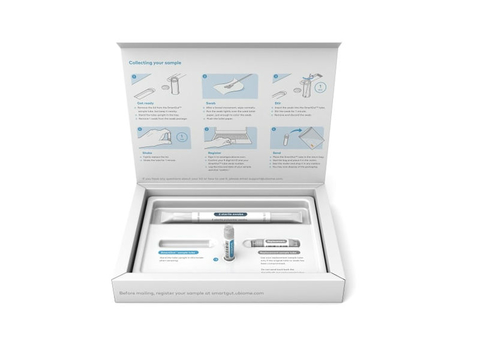
A white box with the SmartGut sample collection kit in it
OS Fund, Y Combinator, 8VC and Dentsu Ventures participated in uBiome’s $83 million series C round. (OS Fund led the $83 million series C, while Y Combinator, 8VC and Dentsu Ventures also participated.)

Smart tech finds home in senior care

Forget rotary phones and dial-up internet. Modern-day senior housing could just as likely to feature voice activation and virtual reality, with the technology industry turning attention to an often-overlooked generation of customers.
And with an aging population bringing a growing demand for senior-living communities in Connecticut and beyond, companies that build them, including Westport-based Maplewood Senior Living, are following a growing trend as they look to provide the latest in quality-of life technology for their residents.
“We are taking every opportunity to inject all sorts of new technology from iPad to smart boards to even telemedicine,” said CEO Greg Smith, touring one of the company’s newest developments in Fairfield. “The technology that we’re putting into this building is something that is truly unique for us and even for the industry itself.”
Expanded experiences
As development of Maplewood Southport continues, the company is integrating tablets and smart screens, Amazon Alexa with voice activation, and even virtual reality into the community’s daily operations.
With locations in Connecticut, Massachusetts, New York and Ohio, the upscale senior living company will be debuting its 98-unit facility at 17 Mill Hill Terrace, in Fairfield by June on a 27-acre parcel just off Interstate 95.
Among Maplewood’s amenities are “smart apartments” that allow residents to control appliances including lights, temperature and the television. They can also let people communicate with staff and family while providing information on dining menus and scheduled events upon command.
“We’re leveraging Amazon and Alexa technology to do that now,” Brian Geyser, Maplewood’s vice president of clinical innovation and population health.
Virtual reality systems, provided by Rendever, can be used for recreational tours as well as in some cases as therapy for residents with dementia, offering the possibility of people visiting childhood homes or other much-loved locations.
“It’s so pleasurable for them to go back in time because that’s where they feel they are in their mind, and so we’re able to bring them back in time using virtual reality,” Geyser said, adding that the company has plans to retrofit some of its newest technology features into its existing communities.
At-home care
Technology isn’t new to the senior and assisted living industry, but it has grown as a crucial component to improving care, for people at home or elsewhere, according to industry experts.
“We’re finding assisted technology is incredibly helpful as part of an overall plan of care to keep a person in their home,” said Marie Allen, executive director of the Southwestern Connecticut Agency on Aging.
The Bridgeport-based agency focuses on improving the care of seniors through funding and resource programs geared toward allowing residents to age in place. SWCAA helps more than 3,500 people who are receiving at-home care with a combination of human assistance and technology including emergency response, video cameras, telemedicine and telehealth equipment and more.
That array of devices has recently extended into the smart-tech realm with companies like Apple and Amazon breaking new ground on ease of use.
Apple’s latest version of its smart watch serves as an example, with its electric heart sensor and new fall-detection feature that can summon help if the wearer is unconscious or immobilized.
“These are things that we never had in the past and couldn’t use to supplement care plans,” Allen said.
The growing list of devices has created a means for more cost-effective home care, according to Allen, who said people can receive nursing-home-level care from their homes for roughly half the price they’d pay to live elsewhere.
SWCAA is the state contractor for Medicaid, which Allen said helps pay for a variety of assisted living and emergency detection devices and software. “Tech is one thing that does cross all different demographics from the low income to the most affluent,” she said.
But even as tech finds new customers, generational difference remain. For many people, depending on devices and trusting them to do what they’re supposed to goes against a lifetime of experience.
“Everyone who is creating new products in the market that could have an impact on people who are 50-plus needs to understand that their design process is going to be different,” said Kyle Rand, co-founder and CEO of Boston-based tech company Rendever, which focuses on adapting virtual reality systems for seniors. “Because those people have grown up in a much different world.”

AstraZeneca expands role in China, to include robots and health tech


AstraZeneca is planning to expand its role as a drug supplier in China to becoming a wider provider of healthcare through its use of robotics and other tech.
The pharma giant will use artificial intelligence (AI), robotics and digital applications to boost the way that diseases are managed in the country.
Products such as diabetes kits, smarter and faster cancer diagnostics and using AI to improve the way people with chest pain are moved to hospital will not have a huge impact on the company’s bottom line, but will help to embed the business in the Chinese healthcare market through strong relationships.
AstraZeneca’s CEO Pascal Soriot says that digital technology has allowed patients timely access to medicines in China’s crowded healthcare system.
Speaking at the World Internet of Things Exposition in Wuxi, China, Soriot told Reuters that tech could help to transform diagnosis and disease management.
Such measures could be particularly beneficial as China’s health needs are soaring as the population ages and the incidence of non-communicable diseases, such as cancer and diabetes, rises sharply.
Innovation, says Soriot, will help patients to access medicines far more quickly than they would be able to otherwise.
Earlier this year, pharmaphorum reported on AstraZeneca’s investment in an R&D site in Wuxi City after striking a deal with WuXi App Tec a few years ago.
This move has enabled AstraZeneca to gain a foothold in the city’s health tech so it is at the forefront of knowing what medical interventions are needed in China so it can help to bring these about using technology.
One example Soriot cited was AstraZeneca’s platelet therapy Brilinta (ticagrelor), which lowers patients’ chances of having another heart attack or from dying of a heart attack or stroke.
Soriot said: “We can leverage digital tools to better treat patients. With Brilinta we have technologies to diagnose patients in the ambulance, send them to the right hospital and make sure they have the appropriate treatment.”
Also, he added, technology can help to address China’s lack of hospital capacity by directing people to where their needs will be best met.