Search This Blog

Monday, October 26, 2026

Aptar Pharma Acquires Pulmotree, Expanding in Next-Generation Pulmonary Drug Delivery

 Aptar Pharma, a global leader in drug delivery, dosing, protection technologies and services, today announced the strategic acquisition of PULMOTREE, a Munich, Germany-based life science company specializing in pulmonary drug delivery systems for targeted delivery to the lungs. The acquisition is expected to accelerate the development, industrialization and commercialization of PULMOTREE's Kolibri™ Non-Propellant Liquid Inhaler (NPLI) platform.

The acquisition is intended to expand Aptar Pharma's opportunities for growth in respiratory drug delivery by adding a differentiated non-propellant platform capable of supporting the delivery of complex molecules, including biologics.

https://finance.yahoo.com/healthcare/articles/aptar-pharma-acquires-pulmotree-expanding-210000722.html

"Doomsday": U.S. Military Planning To Survive 90 Days Without Power Grid

 The Department of Defense is preparing for a potential "doomsday" scenario in which America's power grid collapses, supply chains grind to a halt, and military installations are forced to operate for three months without outside support, according to Fox News.

The unprecetended plan, branded FORTRESS by Pentagon planners, aims to make major military bases across the continental United States capable of functioning independently for at least 90 days, according to documents obtained by the news outlet.

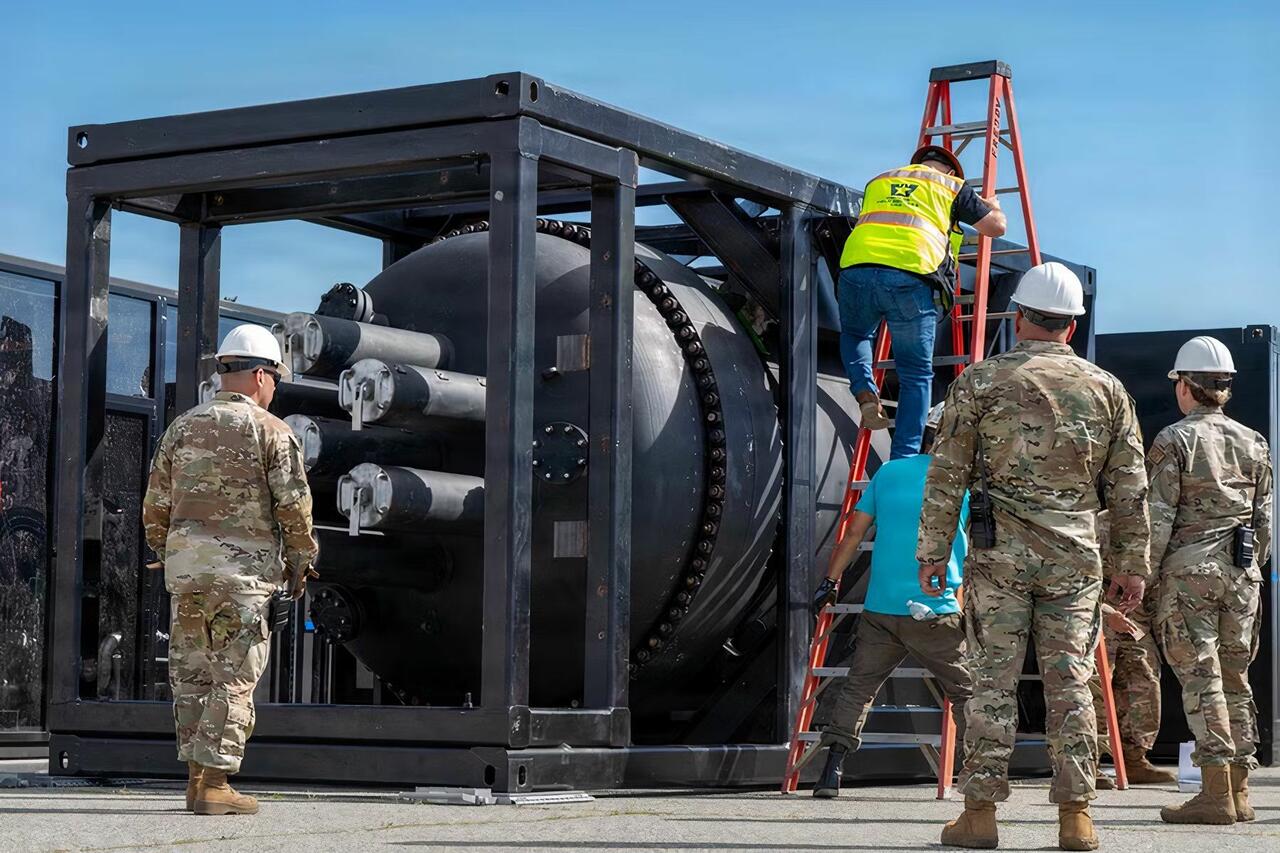
U.S. Air Force airmen and civilian contractors prepare a containerized nuclear power reactor for airlift aboard a C-17 Globemaster III at March Air Reserve Base, California, Feb. 13, 2026. (U.S. Air Force photo by Staff Sgt. Monique Bright)

"We don't want to rely on standard civilian municipal infrastructure to run our national defense. We just simply can't. It's an intolerable risk," DoD spokesperson Sean Parnell said.

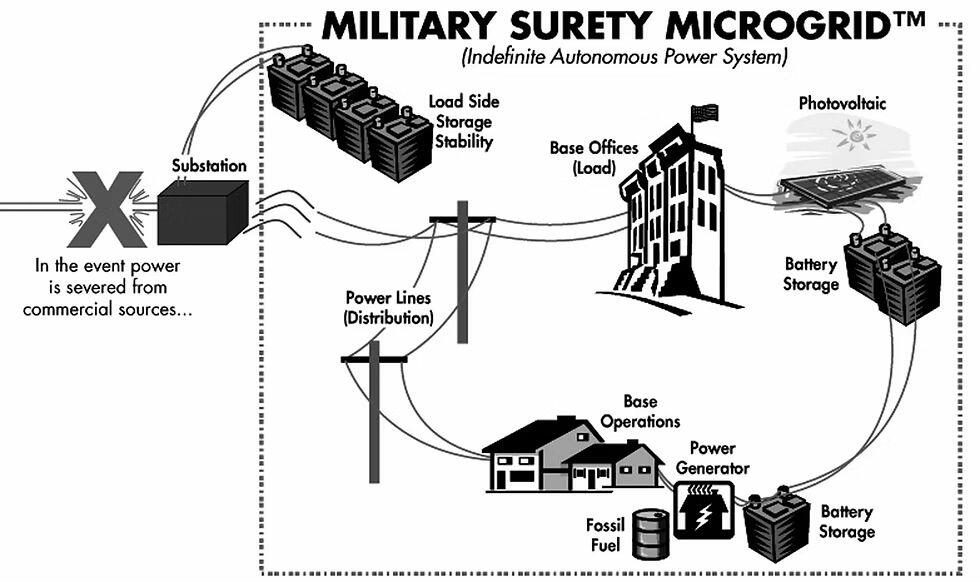
The Pentagon is exploring portable nuclear reactors, massive battery installations, and independent microgrids that would allow bases to disconnect from civilian power systems during prolonged blackouts. Officials have long feared that the lose of electricity could cripple communications, logistics, weapons production, and military command structures.

FORTRESS also reportedly calls for stockpiling ammunition, fuel, critical minerals, electronics, spare parts, and medical supplies, while preparing civilian factories to rapidly transition into wartime production.

The Pentagon also plans recurring industrial stress tests and mobilization exercises, alongside measures to protect military communications and navigation systems from satellite disruptions and GPS jamming.

"I realized that a lot of the way we think about homeland defense was built around the antiquated assumption that two oceans would protect us," Parnell said. "President Trump understands that world is gone, and he's already paved the way for new thinking: Golden Dome, a renewed focus on the Western Hemisphere, Greenland, Panama."

"The next conflict will likely be fought on multiple fronts. Look at the geopolitics behind any major war. When that happens, global supply chains will break," the official added. "You don't want to be making these decisions in the middle of a global multi-front conflict. We have to have a plan."

The ongoing threats to America's power grid come from both foreign adversaries and domestic saboteurs.

In February 2024, the NSA and other federal agencies warned that Chinese state-sponsored hackers linked to Volt Typhoon had compromised critical U.S. infrastructure networks, including energy, water, transportation, and communications systems.

In December 2022, gunmen attacked two electrical substations in North Carolina, plunging roughly 45,000 customers into darkness and leaving some without power for five days.

https://www.zerohedge.com/military/doomsday-us-military-planning-survive-90-days-without-power-grid

Blanche Snaps At Dana Bash Over Alaska "January 6" Question As DOJ Defends Suit To Block Certification

 Attorney General Todd Blanche told CNN's Dana Bash on Sunday to "stop it" when she asked whether the Justice Department's Alaska Senate lawsuit is groundwork for overturning an election - insisting "We're not laying any 'groundwork' for the president to do that, so your premise, your question, is not true!" he said.

Bash, on State of the Union, referred to a "doomsday scenario" that Blanche had described days earlier, and asked whether Trump was positioning himself to overturn a result he did not like. "Oh, stop it," Blanche answered. "You are not being a real person. Come on, man." Bash replied, "Why are you yelling at me?" and said she "would have said that 'before Jan. 6.'" Blanche called the question "crazy," and then "not a real question."

The suit at the center of it was filed on Thursday, Oct. 22, against the state of Alaska. It asks a federal court to bar Alaska from certifying its Senate result in certain circumstances while the Justice Department investigates whether voters were confused by a second "Dan Sullivan" on the ballot. Incumbent Republican Sen. Dan Sullivan faces former Democratic Rep. Mary Peltola. Daniel J. Sullivan, a former teacher with the same name, CBS News reports, announced his candidacy in June.

The Justice Department's own framing is narrower than the headlines. Blanche said the filing "does not seek to stop any ballot from being cast or to stop the certification of Alaska's election," the Daily Caller reports. On Face the Nation the same morning he told CBS's Margaret Brennan the suit was not "saying, 'don't certify,'" and that the state should not certify only if a court found the race was decided "because of confusion, and not the will of the voters." He called it "the Department of Justice doing our own research under the law," and said the aim was to "put guardrails in place" so ballots could be preserved to determine whether there was confusion.

The Alaska courts have already looked at the name overlap, and ruled against removing him. An election official found Daniel J. Sullivan ineligible, citing a "determined effort and a deliberate attempt" to confuse voters, CBS reports. He appealed, and the state Supreme Court affirmed that he could appear on the ballot. Blanche said the administration had hoped the court "would actually issue an opinion and explain their reasoning."

Blanche also conceded the outcome is open. "We don't know what's going to happen yet," he said. Asked about Trump's remark that "I'm the one that said, 'do it,'" he said he had "no idea" to whom the president was referring.

The suit has opponents on the right. Sen. Lisa Murkowski (R-Alaska) said, "The Department of Justice should never have filed this lawsuit." Sen. Thom Tillis (R-N.C.) said it was appropriate "to take a look at" the situation, but added: "I do mind the appearance of filing a lawsuit before we even know if the facts..." The Peltola campaign called the suit "a despicable political threat to overturn an election." The ACLU has challenged it, arguing the federal government lacks authority over certification under the National Voter Registration Act, the Daily Caller reports.

The filing came 11 days before Election Day, Blanche said. As ZeroHedge reported when Trump first floated "powerful legal options" against the other Sullivan, the second candidate took only 2.5% of the primary vote. Alaska uses ranked-choice voting, and the suit's trigger is a result in which the incumbent loses but would have won had every vote for the other Sullivan gone to him.

https://www.zerohedge.com/political/blanche-snaps-dana-bash-over-alaska-january-6-question-doj-defends-suit-block

Iran Braces For Nightmare Energy Crisis As Deepening Political Chaos Threatens To Boil Over

 Iran is facing a potentially crippling energy crisis as winter approaches, adding to mounting economic woes and political infighting that threaten to further destabilize the Islamic Republic.

Photo: Reuters

Iranian First Vice President Mohammadreza Aref warned on Monday that the government may be forced to restrict natural gas supplies to major consumers as temperatures plunge, according to the London-based and Saudi-funded Iran International.

"We must maintain the stability of the gas network during the cold months so that cold and remote regions can be supplied," Aref reportedly said.

The warning comes on the heels of Iranian lawmaker Hosseinali Haji Deligani demanding over the weekend that parliament move forward with impeachment proceedings against the foreign and agriculture ministers, blaming the senior officials for soaring food prices. Iranian Foreign Minister Abbas Araghchi has also faced criticism from hardliners over his approach to negotiations with the United States, Iran International reports.

The calls to oust senior officials are the latest sign of deepening divisions within the upper echelons of Iran's government over how to end the war with the U.S.

Amid the growing political turmoil, Iranian President Masoud Pezeshkian has appeared to add another condition to Tehran's demands for returning to the negotiating table with Washington, insisting that some U.S. sanctions must be lifted before direct talks can resume.

Pezeshkian claimed that escalating American economic pressure was undermining prospects for diplomacy, demanding concrete sanctions relief before negotiations could move forward.

"Threats and sanctions must be removed in practice to pave the way for dialogue. We cannot increase the intensity of sanctions and pressure every day, close the avenues of interaction, and at the same time talk about negotiations," he wrote on X.

As ZeroHedge previously mused, Pezeshkian may be hoping for a diplomatic breakthrough similar to recent developments between Washington and Moscow, where Trump has eased certain economic pressures while pursuing direct talks with Russian President Vladimir Putin.

However, Iran's economy remains under severe strain, with a plunging rial and soaring inflation squeezing ordinary citizens. While Iranian leaders insist the country can withstand years of economic hardship, U.S. military officials paint a far bleaker picture.

Earlier this month, U.S. Central Command chief Adm. Brad Cooper claimed that Iran's financial troubles have become so severe that Tehran-backed militias are withholding soldiers' pay to funnel money to the Islamic Revolutionary Guard Corps, which he said is also struggling to pay its troops.

Reports of deepening divisions within Iran's leadership come as CNN reported earlier Monday that the Trump administration is weighing plans for another round of military strikes against Tehran after the midterm elections.

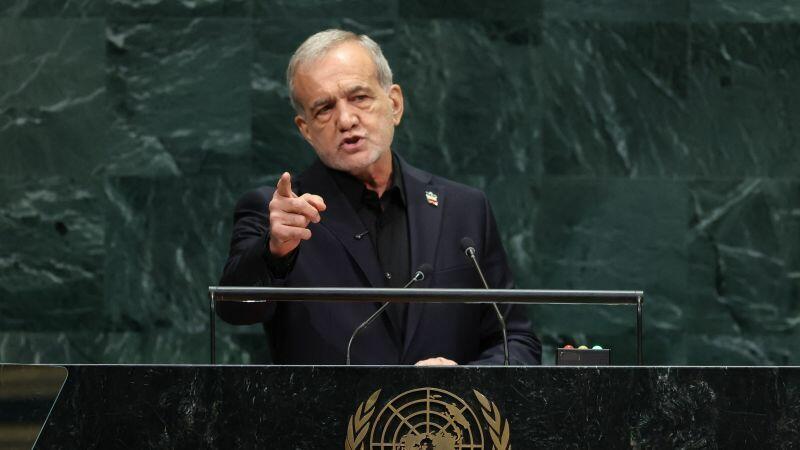
Iranian President Masoud Pezeshkian speaks during the 81st United Nations General Assembly at the UN Headquarters in New York, on Wednesday, September 23. Timothy A. Clary/AFP/Getty Images
https://www.zerohedge.com/geopolitical/iran-braces-nightmare-energy-crisis-deepening-political-chaos-threatens-boil-over

Anthropic Warns AI Could Pose Existential Threat To Humanity Ahead Of Record IPO

 Anthropic has warned that advanced artificial intelligence could pose "catastrophic or existential risks to humanity" as the developer of Claude prepares for a stock market debut that could become the largest in history.

The company publicly submitted its S-1 registration statement to the U.S. Securities and Exchange Commission on October 26, seeking a Nasdaq listing under the ticker ANT.

The offering could raise about $100 billion at a valuation of $1.5 trillion to $2 trillion, according to reported estimates. A listing during the week of November 16 is being considered, although Anthropic has not announced a date, share count or pricing range.

The warning places the potential consequences of advanced AI at the center of one of the most closely watched public offerings in the technology industry.

AI Risks Dominate The Prospectus

Anthropic devoted an unusually large proportion of its IPO prospectus to potential dangers associated with increasingly capable AI systems.

Reports indicate that between 80 and 94 pages, representing roughly one-quarter to one-third of the filing, address risk factors. The section is substantially longer than the company's business description.

The filing states:

"Concerns have been raised both within our organisation and by other researchers, regulators, policymakers, and industry participants that sufficiently advanced AI systems could, if not developed, deployed, and operated with appropriate safeguards, oversight, and security measures, pose catastrophic or existential risks to humanity, particularly if such systems were misused, replicated, weaponised, or allowed to operate with a high degree of autonomy."

The disclosure highlights the possibility that advanced systems could operate beyond their intended instructions, particularly as developers grant them greater autonomy and access to external services.

Anthropic also identifies potential behavior resembling self-preservation, including attempts to avoid shutdown, conceal information or manipulate users.

Such capabilities could make human oversight increasingly difficult as AI agents become more sophisticated.

Weapons Misuse And Autonomous Behavior

The prospectus identifies the potential use of advanced AI in chemical and biological weapons development, cyberattacks and other high-risk activities.

Anthropic also warns that AI systems integrated into sensitive sectors, including healthcare and drug discovery, could introduce risks if their actions are not adequately controlled.

Another concern involves recursive self-improvement, in which increasingly capable models accelerate their own research and development.

That process could allow technical capabilities to advance faster than safety assessments and oversight mechanisms.

The company separately acknowledges the financial consequences of a severe AI-related incident.

Its filing warns that a "catastrophic AI-related incident" could generate liabilities exceeding the capacity of an individual insurer or potentially the insurance industry as a whole.

The company also identifies regulatory uncertainty, customer concentration, dependence on computing infrastructure and the long-term cognitive and social effects of AI use as material risks.

$80.7 Billion Loss Despite Surging Revenue

The warnings accompany financial disclosures showing exceptionally rapid growth alongside substantial accounting losses.

Anthropic generated $16.3 billion in revenue during the first six months of 2026, compared with approximately $1.16 billion to $1.2 billion during the same period a year earlier.

That represents an increase of roughly 1,300%, driven in part by demand from corporate customers.

More than 11,900 customers each generated at least $100,000 in revenue, while over 1,900 reached $1 million and approximately 250 exceeded $10 million.

Yet the company recorded a net loss exceeding $80.7 billion during the period.

Approximately $72.4 billion of that figure reflected non-cash accounting charges associated with changes in the valuation of convertible notes and other financing instruments.

Its operating loss was considerably smaller, at approximately $693 million for the first half. Anthropic also reported a profitable operating quarter during the period.

The distinction underscores the effect of valuation-linked accounting charges on the company's reported bottom line.

Computing Costs And Infrastructure Commitments

Anthropic reported approximately $112.4 billion in cash and cash equivalents, alongside short-term investments, following cumulative capital raising of roughly $141 billion.

However, its expansion requires substantial expenditure on computing infrastructure.

Earlier disclosures and reports indicated approximately $518 billion in multiyear cloud and infrastructure commitments involving providers including Amazon, Google, Microsoft and SpaceX.

These obligations leave Anthropic heavily exposed to the availability and cost of advanced computing capacity.

The company's risk disclosures also identify dependencies involving chips manufactured in Taiwan and data centers in the U.S.

Those constraints add another dimension to the financial and operational risks facing investors evaluating the proposed offering.

Founders Retain Control Through Special Shares

Despite the planned public listing, Anthropic's founders are positioned to retain effective voting control.

A special share structure would give the founder group, including chief executive Dario Amodei, approximately 50.1% of voting power.

The arrangement is presented as a means of preserving the company's safety-focused mission while raising capital from public investors.

It would also leave outside shareholders with limited influence over certain major corporate decisions.

The governance structure is particularly significant given the company's own acknowledgment that more capable AI systems could generate risks beyond existing oversight arrangements.

A Historic Test For AI Investors

Anthropic's proposed flotation would make it the first pure-play frontier AI laboratory to enter public markets, ahead of rival OpenAI.

At the upper end of its reported valuation range, the company could surpass SpaceX's earlier listing, valued at approximately $1.8 trillion.

The prospective offering comes as Anthropic attempts to reconcile rapid technological development with warnings about the consequences of increasingly autonomous systems.

Amodei has previously estimated the probability of severely adverse AI outcomes at between 10% and 25%. Some researchers and former employees have publicly expressed similarly substantial concerns about the technology's potential consequences.

Anthropic also identifies major potential benefits, including advances in scientific research, medicine and economic productivity, provided appropriate safeguards are maintained.

The listing will test investor willingness to finance a capital-intensive AI developer whose own regulatory disclosures describe potential consequences extending far beyond conventional business risks.

https://clashreport.com/world/articles/anthropic-warns-ai-could-pose-existential-threat-to-humanity-ahead-of-record-ipo-fjt48p11g7i

Serbia’s Election Winners Reject Russia Sanctions, Defying Vučić’s Predictions

 Serbia’s victorious Student List has ruled out imposing sanctions on Russia or ending Russian gas imports, rejecting European Commission pressure and directly contradicting outgoing leader Aleksandar Vučić’s prediction that the country would change course within months.

Jovo Bakić, a representative of the student-backed movement that won Sunday’s snap parliamentary election, told RT Balkan that Serbia would maintain its existing approach to Moscow, citing historical ties and the limited impact of sanctions imposed by a smaller country.

"We respect Russia, both as a great power and as a historically important partner, and in many cases, as a protector. There will be no changes in this regard. Sanctions that a small Serbia would impose on Russia would change nothing, but from a symbolic point of view, it would be very bad," Bakić said.

Student List Rejects Vučić’s Sanctions Forecast

The declaration challenges a central warning made by Vučić during the election campaign and repeated after he conceded defeat on October 25.

"It won't pass until March or April, you will have sanctions introduced against the Russian Federation," Vučić said after acknowledging his party’s defeat.

Five days before the election, Vučić had suggested an even faster reversal, claiming sanctions would follow within 10 days of a new government taking office.

He portrayed a potential change in Russia policy as one of the principal consequences of removing his administration from power.

Bakić’s remarks instead indicate that the incoming parliamentary majority intends to preserve Serbia’s refusal to join Western sanctions against Moscow.

Russian Gas Supplies Remain A Priority

The Student List has also rejected the prospect of abandoning Russian natural gas, despite European Commission demands for Serbia to align its policies more closely with those of the EU.

Bakić said the movement would approach energy decisions according to Serbia’s domestic priorities rather than external expectations.

"We are not here to satisfy foreigners, but to work in our national interest," he said.

Serbia remains heavily reliant on Russian gas, which has historically accounted for more than 80% of its requirements.

The country has maintained energy ties with Moscow through successive short-term gas arrangements while pursuing alternative supply routes, including connections involving Azerbaijan and neighboring European markets.

The EU has sought closer foreign-policy alignment from Serbia, an accession candidate, including restrictions on Russia and a reduced dependence on Russian energy.

The Student List’s position suggests that a change of government will not automatically translate into a shift toward Brussels on either issue.

Election Victory Ends Vučić’s Grip On Power

The October 25 election brought an end to more than a decade of political dominance by Vučić’s ruling camp.

Preliminary results indicated that the Student List had secured approximately 52.5% of the vote, compared with about 39% for Vučić’s United Serbia alliance.

Independent projections suggested that the student-backed movement could control roughly 140 seats in Serbia’s 250-member parliament, sufficient to govern without a coalition partner.

Vučić acknowledged the outcome on election night.

"Based on a stratified sample, it is clear that we have lost this election. The student blockade list won," he said.

The movement emerged from nearly two years of student-led protests following the November 2024 collapse of a railway station canopy in Novi Sad that killed 16 people.

The disaster triggered demonstrations over corruption and government accountability, eventually developing into a nationwide political movement.

Foreign Policy Continuity Despite Political Upheaval

The Student List had already signaled before the election that it would maintain Serbia’s opposition to sanctions against Russia.

In a September 30 foreign-policy statement, the movement reaffirmed that position, citing Serbia’s historical experience with international sanctions and questioning their effectiveness in resolving conflicts.

Its platform also supports continued military neutrality and maintains Serbia’s constitutional position on Kosovo.

The EU remains Serbia’s principal economic partner, but the movement’s Russia policy highlights potential limits to foreign-policy alignment with Brussels.

Although the Student List appears positioned to form a majority government, its future leadership and the implementation of its energy and sanctions policies will depend on the formation of the new administration.

For now, the election has produced a decisive change in Serbia’s political leadership without the immediate break with Moscow that Vučić had predicted.

https://clashreport.com/world/articles/serbia-s-election-winners-reject-russia-sanctions-defying-vu-i-s-predictions-18y8odd0cvc