Search This Blog

Wednesday, May 30, 2018

Nasal ‘Contact Lens’ May Help in Fight Against Obesity


A soft device inserted in the nose to cut an individual’s ability to smell may lead to significant reduction in body weight and a loss of appetite for fattening foods, according to the results of a pilot study presented here at the European Congress on Obesity (ECO) 2018.
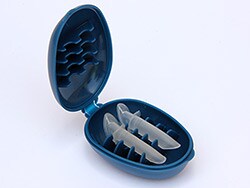
The device, which will be marketed under the name NozNoz (Beck Medical), is a wearable nasal insert that inhibits an individual’s sense of smell without affecting the ability to breath.
It is designed to fit the anatomy of the nose and act as a physical barrier, changing airflow in the nose by directing it into the lower respiratory tract and thus bypassing the olfactory system.
Likened to a nasal “contact lens,” the device is designed to be worn up to 12 hours a day and then disposed of after 2 weeks. It will be marketed as a wellness, not medical, device and will be available direct to consumers.
In the current study of 65 obese adults, researchers found that those who wore the device while eating a hypocaloric diet had significant reductions in weight and body mass index (BMI) compared with controls. In addition, they also significantly reduced their consumption of sweet foods and beverages and showed a reduction in insulin levels.
Speaking at a press conference, study presenter Dror Dicker, MD, Hasharon Hospital, Rabin Medical Center, Petah Tikva, Israel, said that the device “is one of the solutions we can use” to help combat obesity.
He added: “It’s not a medication, it’s very easy to use, and it helps the lifestyle intervention to lose weight and not to regain [it].”
Session co-chair Gabriella Segal Lieberman, MD, head of the Israeli Center for Weight Management at the Sheba Medical Center, Tel HaShomer, Ramat Gan, Israel, who was not involved in the study, told Medscape Medical News that “olfaction is important in weight management.”
She said, “It’s much more important in rodents than it is humans beings, but I think it’s important in human beings and it’s interesting to explore that field.”  However, she pointed out that the control in the trial, which consisted of daily saline drops in the nose, “was not really a control group…and I was wondering if just sticking something up your nose wouldn’t affect things other than smelling.”
Segal Lieberman also cautioned against overinterpreting the findings. “The bottom line is important. If you lose weight with a device and lose less weight without it, that’s impressive in itself…. But if you’re talking about mechanisms and you’re trying to imply that the mechanism is via affecting the olfactory system, I’m not sure that this study is really proving that. It’s more like a proof of concept.”

Benefit Only in Younger Patients

During his presentation, Dicker explained that addressing obesity via olfaction is plausible given previous data. For example, studies have shown that food odors and an individual’s sense of smell can significantly influence how much they eat and their dietary preference. Moreover, olfaction is linked to hormonal and peptide expression, while leptin, insulin, and ghrelin levels have affected olfactory sensitivity.
Dicker also pointed out that being overweight or obese has been linked to altered sensitivity to smells and higher appetite stimulation upon exposure to food odors.
The researchers therefore sought to determine whether using the nasal insert could not only reduce an individual’s sense of smell but also reduce their body weight, alter their dietary preferences, and improve metabolic dysfunction.
They recruited individuals aged 18 to 65 years who had a BMI of 30 to 43 kg/m2. Participants were excluded if they were pregnant or had diabetes, high blood pressure, thyroid dysfunction, or other medical conditions.
After a brief run-in period, the participants were randomly assigned to the device group or the control group, who put saline drops in their nose. Participants in the device group were instructed to wear the nasal device in both nostrils every day for 5 to 12 hours a day.
Both groups were assigned to a hypocaloric diet, which reduced their intake by 500 kcal per day, and were required to keep a food diary. Participants also completed an eating preferences and habits questionnaire, in addition to which blood samples were taken at baseline and at the final visit, from which cholesterol, triglyceride, glucose, and insulin levels were determined. The researchers also used the samples to calculate insulin resistance by using homeostatic model assessment.
The device and control groups were well matched, with a mean baseline BMI of approximately 36 kg/m2 and a mean age of 50 to 52 years. Fifty-seven percent of the participants were male.
A total of 65 individuals competed the study, including 37 in the device group and 28 in the control group. The nasal device significantly decreased individuals’ ability to smell (P < .001), with no difference in change in olfaction among those in the control group.
Overall, both groups lost weight during the study, with no significant difference between the two groups after 14 weeks, at a mean weight reduction of 6.6% in the device group and 5.65% in the control group.
However, Dicker pointed out that previous studies have shown that olfaction declines with age, typically starting around 50 years of age. When the researchers restricted their analysis to the 29 participants age 50 years or younger, they found that the device was associated with significantly greater weight loss (7.7% vs 4.0%; < .01).
These changes were accompanied by significant reductions in BMI among individuals aged 50 years or younger, from a mean of 35.9 kg/mto 33.1 kg/m2in the device group vs 36.5 kg/mto 35.0 kg/m2 in the control group (< .01).
Surprisingly, the team saw that, across all ages, the device was associated with significantly less sugar consumption (= .015), less artificial sweetener consumption (P = .02), and reduced consumption of sweet beverages (= .001) compared with the control group.
In each comparison, the decrease was greater among individuals age 50 years or younger using the device, who also consumed significantly fewer alcoholic beverages than control participants (= .000).
Participants in the device group also had significant reductions in insulin levels over baseline (= .015), which was not seen in the control group. There was a trend for a difference in insulin change between the two groups (= .08).
Dicker told the press conference that they are not sure how exactly the device works, “but we just opened a window to an area that wasn’t really researched.” He said that they would like to follow up with functional MRI studies, but they hypothesize that, by blunting olfaction, they are blunting the effect of hormones on appetite.
Dicker told Medscape Medical News that the device was highly acceptable to patients.  He said it was “easy to persuade” the participants to try the device “because obese patients want to lose weight, but we had a percentage of dropout like every other obesity trial [of] around 50%”.
However, he pointed out that only 16% dropped out because of the device itself, with the remaining dropouts related to follow-up and visits.
Beck Medical Funded the study. Adva Beck is the entrepre­neur and main shareholder in Beck Medical Ltd. Elhanan Greenberg serves as advisory to Beck Medical, E.N.T Head and Neck Surgery Specialist, and is a shareholder.
European Congress on Obesity (ECO) 2018. Abstract O8.2. Presented May 25, 2018.

FDA clears Pfizer’s Xeljanz for ulcerative colitis


The U.S. Food and Drug Administration said on Wednesday that it had approved Pfizer Inc’s drug, Xeljanz, to treat adults with moderate-to-severe active ulcerative colitis.
The effectiveness of Xeljanz in treating ulcerative colitis was shown in three controlled clinical trials, including two trials that showed the drug caused disease remission in about 17-18 percent of the patients.
The drug is already approved by the FDA to treat rheumatoid arthritis and psoriatic arthritis.
Xeljanz is expected to bring in sales of $2.16 billion in 2019, according to Thomson Reuters I/B/E/S. It had generated sales of $1.35 billion in 2017.
Ulcerative colitis is a chronic, inflammatory bowel disease that affects the colon and causes recurrent flares of abdominal pain and bloody diarrhea.
More than 900,000 people suffer from the disease in the United States, according to the FDA.

Protect your pets from the Dog Flu this summer


We are finally in the clear this flu season but your pets may still be at risk. One local veterinarian is encouraging you to get your furry friends vaccinated.
There are two known strains of the Canine Flu that can make dogs sick. The first came from horses more than a decade ago, and the second brought into the United States from Asia in 2015. Both strains have been confirmed in Wisconsin.
“It’s not just a seasonal problem for dogs. It’s all year-round,” said Brook-Falls Vet Hospital & Exotic Care Owner, Dr. Denise Follett.
Dr. Denise Follett — a veterinarian with Brook-Falls Vet Hospital & Exotic Care in Menomonee Falls — keeps a fridge stocked full of the vaccine.
“One hundred percent of dogs who come in contact with this virus get sick from it,” said Dr. Follett.
Often, she says dogs only become mildly ill but if not treated properly, the virus can be deadly.
“About 80 percent will show clinical signs, about ten percent of those do die from it,” Dr. Follett said.
Social dogs, Dr. Follett says, are more prone to “fetching” the virus.
“We take them with us on vacation, we take them camping, we take them hiking, we meet at dog parks,” Dr. Follett said.
At Muttland Meadows in Grafton, Paul Bamberger’s dog ‘Fred’ had the shot last year, but his vet didn’t suggest it this season.
“I specifically asked about it and they said at this point, ‘no,'” said Bamberger.
Follett says, dogs can swap the virus with a simple sip of water, and can “dig up” the virus 2-5 days before you even notice they’re sick.
“You could be at the dog park, and the dogs look perfectly healthy but they can be shedding it to each other,” said Dr. Follett.
Still, Susie Morter, who brings her pup to the park almost everyday, says she isn’t concerned — at least not yet.
“It’s a wonderful park,” Morter said. “It outweighs the worries of them getting sick from a flu virus. Now I think if there was a point where all the sudden a lot of dogs were getting sick… then you’d have to re-evaluate.”
Dr. Follett says, young puppies and older dogs with underlying health issues are more susceptible to coming down with the flu. CLICK HERE to read more about Canine Influenza.

Gilead wins Chinese OK for hep C med, but emerging market getting crowded


Epclusa was just greenlighted by China’s Drug Administration (CDA). For hepatitis C patients in China, that means the first pangenotypic treatment will soon be available to them. But for Gilead, it might be too little, too late.
The Chinese authority based its decision on five international phase 3 studies that showed Epclusa’s ability to reach 92% to 100% cure rates across all six hepatitis C genotypes. Before China’s recent updates to its drug approval policies that further align them with those used in developed countries, foreign drugs often had to go through China-specific clinical studies.
“With high cure rates across all HCV genotypes, Epclusa could increase HCV treatment in China by potentially eliminating the need for genotype testing, which can be a barrier to treatment in many settings,” said Professor Lai Wei of Peking University in a statement.
However, the question is never about Epclusa’s efficacy profile, but more about the size of market left for Gilead.
With the dwindling patient base in the U.S. and Europe and the arrival of fierce rivals, sales of Gilead’s HCV franchise have dramatically declined from $14.83 billion in 2016 to $9.14 billion in 2017. For the first quarter of 2018, the number plummeted by 59% to a mere $1 billion.

China represents a new opportunity. The country has about 10 million HCV patients, with about 200,000 new diagnoses each year, according to the nation’s health department. But competition from both Gilead’s multinational pharma archrivals, and local biotechs, is building at an unprecedented speed thanks to China’s recent policy changes designed to hasten approvals for innovative therapies.
It was only last April when Bristol-Myers Squibb’s dual-drug regimen Daklinza and Sunvepra became the first direct-acting antiviral agents approved in the country. Gilead then won approval for Sovaldiin September, the same time AbbVie got its ombitasvir and dasabuvir combo through.
Epclusa’s nod comes just a few weeks after Merck’s Zepatier was approved to treat patients with HCV genotypes 1 and 4. Besides, domestic firm Ascletis is also expected to reach the market in the third quarter with Ganovo (danoprevir) and file an application for its pan-genotypic DAA ravidasvir around the same time.

The bigger concern for Gilead is, of course, the 8-week pangenotypic therapy Mavyret vs.12 weeks for Epclusa. Mavyret is one big reason behind Gilead’s HCV freefall. Since its launch last year, the drug has occupied 45% of the market, said CEO Richard Gonzalez on the company’s first-quarter earnings call. AbbVie filed for Chinese approval last month.
Gilead has said it expects its market share to stabilize by mid-2018, with more predictable but slightly declining patient starts. It hasn’t updated its full-year HCV guidance that now rests at around $3.5 billion to $4 billion, on par with AbbVie’s projection of about $3.5 billion for its HCV business.
Getting their HCV treatments on the Chinese market is only the first step for drugmakers. What comes next is a process of carefully negotiating a price with the government to win coverage on the National Reimbursement Drug List, which entails taking a huge discount to reach a much larger patient population. Securing national insurance coverage could mean do-or-die for a pricey drug sold in the price-sensitive China, especially if a competitor has it.

Aslan started at buy by BTIG


Aslan Pharmaceuticals initiated with a Buy at BTIG. BTIG analyst Robert Hazlett initiated Aslan Pharmaceutical with a Buy rating and a price target of $16. The analyst notes that this “innovative oncology therapeutics” company has “important pivotal readouts” coming for its Varlitinib program as the management drives its clinical development in Asia. Hazlett estimates that global peak revenue for the treatment in biliary tract cancer and gastric cancer could reach $1.3B, as both of those programs have readouts in the second half of this year / 2019 respectively. The analyst also sees “material promise” for Aslan’s oral DHODH inhibitor in mid-stage development in AML, with phase 2 data readout anticipated for the second half of 2018 as well.

Amicus jumps over 7% after initiating Fabry treatment in Japan


Earlier today, Amicus Therapeutics announced it has initiated the commercial launch of the oral small molecule pharmacological chaperone Galafold capsules 123mg for treatment of patients aged 16 years and older with a confirmed diagnosis of Fabry disease and who have an amenable mutation. Galafold is the first and only oral precision medicine for Fabry disease in Japan. John F. Crowley, Chairman and CEO of Amicus Therapeutics, Inc., stated, “The launch of Galafold in Japan, less than one year after our J-NDA submission, provides a significant opportunity for us to deliver this oral and differentiated precision medicine to amenable Fabry patients living in Japan. This is the result of Amicus employees, Japanese regulators, and the Fabry community working together to advance Galafold, in particular those physicians and patients who participated in the clinical studies of Galafold and their families. An estimated 850 people are currently known to be living with Fabry disease in Japan. We believe a significant portion of these Fabry patients have amenable mutations that could benefit from treatment with Galafold. Introducing Galafold in Japan is very important to our patient-focused vision to provide Galafold to Fabry patients with amenable mutations throughout the world as soon as possible. We also hope to have many future opportunities to deliver new medicines for people living with rare metabolic diseases in Japan.” Shares of Amicus are up 7.17% or $1.12 to $16.85 per share in early afternoon trading.

Exact Sciences eyes expanding Cologuard indication after new guidelines


Exact Sciences announced that it “strongly supports” the American Cancer Society’s update to its colorectal cancer screening guidelines announced today. The new guidelines recommend colorectal cancer screening begin at age 45 for people at average risk of the disease. With more than 20 million Americans age 45-49, Exact Sciences affirmed its commitment to seek U.S. Food and Drug Administration approval for making Cologuard, its noninvasive colorectal cancer screening test, available to those in this population who are at average risk for colorectal cancer. Cologuard is currently available to individuals age 50 and older who are at average risk for colorectal cancer. Exact Sciences will seek to expand the product’s current indication to people age 45 and older who are at an average risk for colorectal cancer.