Search This Blog

Thursday, January 28, 2021

BeiGene’s Tislelizumab Improves Survival in Esophageal Cancer

 BeiGene continues its roll with anti-PD-1 monoclonal antibody tislelizumab, announcing topline data yesterday from its fourth positive Phase III trial, this time in esophageal squamous cell carcinoma (ESCC).

Tislelizumab met its primary endpoint of improving overall survival, compared with chemotherapy, in the RATIONALE 302 trial of 512 advanced unresectable or metastatic ESCC patients who previously received a systemic treatment.

This caps a month that already saw positive interim Phase III data for tislelizumab in squamous non-small cell lung cancer (NSCLC), in combination with two chemotherapeutics, and tislelizumab’s first full approval in China, as a first-line therapy for advanced squamous NSCLS in combination with chemotherapy.

Tislelizumab, a checkpoint inhibitor, also has conditional approvals in China for Hodgkin’s lymphoma and urothelial carcinoma but has not been approved anywhere else. Beijing- and Cambridge, Mass.-based BeiGene also inked a new deal with Novartis worth $650 million up front to develop and commercialize tislelizumab in North America, Europe, Japan and Russia.

The latest Phase III results tested tislelizumab against the investigator’s choice of paclitaxel, docetaxel or irinotecan. Although the U.S. Food and Drug Administration (FDA) has approved two immunotherapies in the indication – Bristol Myers Squibb’s Opdivo and Merck & Co.'s Keytruda – the standard of care to date is still chemotherapy.

“Recent years have seen a paradigm-shift in advanced ESCC treatment from chemotherapy and radiation to immunotherapy,” said lead investigator Lin Shen, VP of clinical oncology at Beijing Cancer Hospital. She added that the new data raised hope tislelizumab could be a new treatment option in esophageal cancer, an area with “significant unmet medical need with rapid progression and high mortality.”

According to BeiGene, the disease kills about 550,000 patients per year, in part because it is typically advanced or metastatic when it is diagnosed. Median survival time is under 10 months.

BeiGene has not yet disclosed detailed data yet, but said improvements to overall survival were statistically significant and “clinically meaningful.” The company said it plans to disclose more data at an upcoming medical conference.

Aside from the ESCC and squamous NSCLC trials reporting data recently, BeiGene is sponsoring at least 14 additional Phase III or pivotal Phase II trials that could potentially lead to registration for tislelizumab. Those trials for the immunotherapy, alone or in combination with chemotherapies, are in lymphoma and solid tumors including urothelial cancer, hepatocellular carcinoma, esophageal carcinoma, gastric cancer, nasopharyngeal cancer and several lung cancers.

Approvals in those areas would set up tislelizumab to challenge Keytruda, which has so far been approved in 26 solid and liquid cancers.

https://www.biospace.com/article/beigene-s-tislelizumab-improves-survival-in-esophageal-cancer-study/

Amgen: Sotorasib Responses Positive in Phase 2 Lung Cancer Study

 Amgen Inc. said Thursday its investigational drug, Sotorasib, has shown rapid, deep and durable response in a Phase 2 study.

The biotechnology company said 37.1% of patients with advanced non-small cell lung cancer responded to the treatment, with a median duration of response of ten months. Meanwhile, Median tumor shrinkage among all responders was 60%.

"We are extremely pleased that Sotorasib has successfully demonstrated rapid, deep and durable responses in this registrational Phase 2 study that was conducted in record time," Executive Vice President of Research and Development David Reese said.

https://www.marketscreener.com/quote/stock/AMGEN-INC-4847/news/Amgen-Sotorasib-Shows-Positive-Responses-in-Phase-Two-Study-32302821/

Smoking's Long Decline Is Over

 The decadeslong decline in U.S. cigarette sales halted last year as people in lockdown lit up more frequently and health concerns around e-cigarettes caused some vapers to switch back to cigarettes.

Before the pandemic, U.S. cigarette unit sales had been falling at an accelerating rate, hitting 5.5% in 2019, as smokers quit or switched to alternatives like e-cigarettes. The pandemic put the brakes on that slide. In 2020, the U.S. cigarette industry's unit sales were flat compared to the previous year, according to data released Thursday by Marlboro maker Altria Group Inc.

People had more opportunities to smoke because they spent more time at home and had more money to spend on cigarettes because they spent less on gas, travel and entertainment, Altria said. They drank more liquor, too, buoying spirits makers.

At the same time, some e-cigarette users turned back to combustible cigarettes because of increased e-cigarette taxes, bans on flavored vaping products and confusion about the health effects of vaping, consumers and industry officials say. Altria on Thursday didn't offer a projection for cigarette sales in 2021, saying it would depend in part on the rollout of the Covid-19 vaccine and how consumers' behavior changes after they are vaccinated.

U.S. cigarette sales were even stronger last year than they were in 2015, when gas prices dropped sharply, allowing consumers more discretionary spending, and many people switched back to cigarettes after trying first-generation vaping devices. Those early products didn't deliver nicotine effectively enough to satisfy some addicted cigarette smokers. But e-cigarette sales took off again in 2017, spurred by the popularity of a new vaporizer called Juul.

E-cigarette sales were booming in the fall of 2019 when the U.S. Centers for Disease Control and Prevention, investigating an outbreak of a mysterious lung illness, warned consumers not to use any vaping products. Sales took a nosedive. The illness later was linked to vitamin E oil in marijuana vaping products, but the public's perception of e-cigarette safety hasn't rebounded and neither have sales.

Bisher Kunbargi, a software developer in San Antonio, gave up Marlboros for e-cigarettes around 2018 and switched back to cigarettes in late 2019.

"Trust the devil you know," said Mr. Kunbargi, who is 28. "I keep smoking, it's going to give me cancer. Whereas vaping is much more uncharted territory."

Working at home with a laptop outside on his front patio during the pandemic, he said, he is smoking more than he did before -- as many 10 cigarettes a day.

"I can't take 10 breaks a day" at the office, he said. At home, "I can have a cigarette whenever I want."

Public health officials say that while e-cigarette use isn't risk-free, it poses significantly less risk than cigarette smoking, which is associated with more than 480,000 deaths in the U.S. each year. Yet according to a Euromonitor survey in early 2020, 73% of U.S. respondents said vaping products were as harmful or more harmful than cigarettes. Euromonitor reported that public perceptions of e-cigarette safety worsened in all 20 of the countries it surveyed.

"This weakness was undoubtedly a factor in the relative robustness of cigarette volumes in 2020," the research firm said.

Adults using e-cigarettes as an alternative to cigarettes shouldn't go back to smoking, said Brian King, a deputy director of the CDC's Office on Smoking and Health and a senior official involved in the agency's vaping-related illness response. Those people should consider using FDA-approved smoking cessation medications, and if they choose to use e-cigarettes, they should switch completely from cigarettes, he added.

During the lung-illness investigation, the CDC promptly shared the latest data with the public and refined its recommendations based on available scientific evidence, Dr. King said. The CDC now recommends that people avoid vaping products containing THC, the psychoactive ingredient in marijuana, particularly from informal sources like friends, family, or in-person or online dealers.

Other adult smokers said in interviews that restrictions on fruity and minty e-cigarette flavors have nudged them back to cigarettes.

Seeking to curb an uptick in underage vaping, federal legislation in 2020 raised the legal tobacco purchase age to 21 and the Food and Drug Administration took some sweet and mint-flavored e-cigarette refill cartridges off the market.

Those measures appear to have worked. In a federal survey conducted between January and March of 2020, 19.6% of high-school students said they had vaped in the past 30 days, compared with 27.5% in the same period a year earlier. But vaping also declined among adults. The number of vapers 21 years or older in the U.S. fell to 9.8 million last year from 11.8 million in 2019, according to Altria's estimates.

An FDA spokeswoman said changes in tobacco consumption couldn't be attributed to a single policy, event or piece of legislation. She noted that adult consumers still had access to flavored vaping products like disposable e-cigarettes and tank systems.

"Covid-19 has created a drastic change in daily life, including increased stress and anxiety, that may contribute to a smaller-than-expected reduction in cigarette sales," she said. She added that because cigarette smoking increases the risk of more severe illness with Covid-19, "There has never been a better time to try to quit."

Altria, the biggest U.S. tobacco company, reported that sales rose 4.9% to $6.3 billion in the quarter ended Dec. 31 from $6.0 billion a year earlier. Its revenue from cigarettes and cigars was $5.6 billion.

E-cigarette market leader Juul Labs Inc. reported $1.9 billion in sales in the first nine months of 2019. The CDC in September that of year warned people not to vape, and Juul later that autumn voluntarily stopped selling its sweet and mint-flavored refill pods in anticipation of federal flavor restrictions. The company's revenue dropped to $1.1 billion in the first nine months of 2020 and was an estimated $340 million in the last quarter of the year. Altria holds a 35% stake in Juul.

https://www.marketscreener.com/quote/stock/ALTRIA-GROUP-INC-4837/news/Smoking-s-Long-Decline-Is-Over-4th-Update-32301402/

Heparin can target coronavirus spike protein

 Heparin targets coronavirus spike protein, research shows

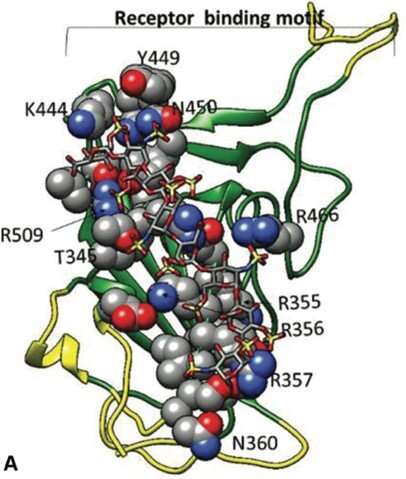
Molecular modelling of interactions of heparin saccharides (coloured stick and balls) with the receptor binding domain of the Spike protein of SARS-CoV2 virus (yellow/green ribbon), which interfere with its binding to the ACE2 receptor on human cells. Credit: Mycroft-West et al.

An international team of researchers led by the Universities of Liverpool and Keele, working with Public Health England, has found that the common anticoagulant drug heparin inhibits the SARS-Cov2 virus spike protein, by reducing the virus' ability to attach to human cells and infect them.

The research, published in the journals British Journal of Pharmacology, and Thrombosis and Haemostasis, found that  interacts with the spike protein on the surface of coronavirus (SARS-CoV2), destabilizing its structure and preventing it from docking with the ACE2 receptor on human cells.

Molecular modeling by collaborators at Queensland University in Australia showed how heparin can stick to the surface of the spike protein to achieve these effects, and studies with live SARS-CoV2 virus carried out at Public Health England's Porton Down laboratory showed that unfractionated heparin (but not low molecular weight heparins) could inhibit cell infectivity at doses similar to those currently used in  as an anticoagulant.

Crucially, the data strongly supported the clinical testing of inhaled (nebulized) unfractionated heparin, since the doses known to be delivered to the lungs would have very strong anti-viral effects.

Professor Jeremy Turnbull from the Department of Biochemistry and Systems Biology at the University of Liverpool said: "This is exciting news since heparin could be rapidly repurposed to help alleviate COVID-19 infections, or possibly as a prophylactic treatment for high-risk groups such as medical staff or care workers. The results have also led us to investigate other novel compounds which mimic heparin that could potentially be effective against SARS-CoV2."

Dr. Mark Skidmore from the School of Life Sciences at Keele University co-led the research. He said: "We also know that heparins inhibit a range of other viruses, so studying these drugs could provide new therapeutic strategies, and possibly a first-line of defense against emerging viral threats in the future, for example while vaccines are developed."

Professor Miles Carroll, of the National Infection Service, Public Health England added: "New treatments which target the SARS-CoV2 virus are urgently needed. Heparin, with its well-known clinical safety profile, is certainly an interesting candidate for repurposing against COVID-19."

"The COVID-19 pandemic has had a significant impact on the delivery of NHS services and local communities. These results strengthen the need for further investigation of heparin as a treatment in COVID-19 patients," said Dr. Quentin Nunes, Consultant at the East Lancashire Hospitals NHS Trust, who is leading efforts to begin clinical trial of nebulised heparin in ITU patients in the UK.

The early release of preprint data from this study in March 2020, now published in peer-reviewed journals, has stimulated international efforts to explore the use of heparins for COVID-19 treatment. Further work is now ongoing to explore the potential of heparin and heparin-mimicking compounds as potential broad-spectrum antiviral drugs for COVID-19 and other emerging viral threats.

More information: Courtney J. Mycroft-West et al, Heparin Inhibits Cellular Invasion by SARS-CoV-2: Structural Dependence of the Interaction of the Spike S1 Receptor-Binding Domain with Heparin, Thrombosis and Haemostasis (2020). DOI: 10.1055/s-0040-1721319

https://medicalxpress.com/news/2021-01-heparin-coronavirus-spike-protein.html

Why 2 shots for mRNA vaccines to do antibody-creating best

 With the U.S. facing vaccination delays because of worker shortages and distribution problems, federal health officials now say it's OK to push back the second dose of the two-part vaccine by as much as six weeks.

As an infectious disease doctor, I've been fielding a lot of questions from my patients as well as my friends and family about whether the COVID-19  will still work if people are late receiving their second dose.

Why you need two doses 3-4 weeks apart

Two doses, separated by three to four weeks, is the tried-and-true approach to generate an effective immune response through vaccination, not just for COVID but for hepatitis A and B and other diseases as well.

The first dose primes the immune system and introduces the body to the germ of interest. This allows the immune system to prepare its defense. The second dose, or booster, provides the opportunity for the  to ramp up the quality and quantity of the  used to fight the virus.

In the case of the Pfizer and Moderna COVID-19 vaccines, the second dose increases the protection afforded by the vaccine from 60% to approximately 95%.

Why the CDC decided receiving the second dose within 42 days is OK

In the clinical trial, the second dose of the Pfizer vaccine was administered as early as day 19 and as late as day 42 to 93% of the subjects. Since protection was approximately 95% for everyone who was vaccinated within this time "window," there is little reason not to allow some flexibility in the timing of the second dose 2.

As more vaccine becomes available, the timing of the second dose should be close to four weeks for the Pfizer and Moderna vaccines. But the good news is that even while supplies remain limited, the science suggests that there's nothing bad about getting a second dose as late as 42 days after the first.

What the immune system does between the first and second dose

The biology through which the mRNA vaccines induce their protection from COVID-19 is fundamentally different from that with other vaccines.

Pfizer and Moderna vaccines use messenger RNA that encodes the spike glycoprotein. Upon injection of the vaccine, the mRNA enters into immune cells called dendritic cells. The  use the instructions written in the mRNA to synthesize the hallmark spike glycoprotein, which characterizes the SARS-CoV-2 virus that causes COVID-19. These  then show the spike glycoprotein to B-cells, which then make anti-spike antibodies.

The mRNA vaccines are uniquely capable of inducing a special kind of immune cell – called a T-follicular helper cell—to help B-cells produce antibodies. The T-cells do this through direct contact with the B-cells and by sending chemical signals that tell the B-cells to produce antibodies. It is this help in antibody production that makes these vaccines so effective.

But not all B-cells are the same. There are two kinds that make anti-spike antibodies: long-lived plasma cells and memory B-cells. The long-lived plasma cells, as their name implies, live in the bone marrow for years after vaccination, continuously churning out antibody—in this case anti-spike antibody. These long-lived B-cells do not need to be boosted.

The memory B-cells, on the other hand, live in a state akin to hibernation. They do not produce antibodies until stimulated by a booster of the vaccine, or are exposed to infection with the  that causes COVID-19. That is the reason we need that second dose. Together these two types of B-cells provide a constant level of protection.

What happens if you don't get the Pfizer or Moderna second dose on time?

With current vaccine shortages, and problems with setting up the infrastructure to vaccinate millions of people, many physicians are concerned that the second dose of vaccine won't be delivered in the prescribed three-to-four-week window.

That booster shot is necessary for the T-cells to stimulate the memory B-cells to produce massive quantities of antibodies. If the booster isn't given within the appropriate window, lower quantities of antibodies will be produced that may not provide as powerful protection from the virus.

https://medicalxpress.com/news/2021-01-shots-mrna-vaccines-antibody-creating.html

How remdesivir works to inhibit coronavirus

 More effective antiviral treatments could be on the way after research from The University of Texas at Austin sheds new light on the COVID-19 antiviral drug remdesivir, the only treatment of its kind currently approved in the U.S. for the coronavirus.

The study is published today in the journal Molecular Cell.

Remdesivir targets a part of the  that allows it to make copies of itself and spread through the body. For the first time, scientists identified a critical mechanism that the drug uses and unearthed information that  can use to develop new and improved antivirals to take advantage of the same trick.

According to co-author Kenneth Johnson, the finding could also lead to more potent drugs, meaning a patient could take less of a dose, see fewer side effects and experience faster relief.

"Right now, it's a five-day regimen of taking quite a bit of remdesivir," said Johnson, professor of molecular biosciences at UT Austin. "That's inconvenient and comes with side effects. What if you could take just one pill and that was all you needed to do? That would make a huge difference in terms of the here and now."

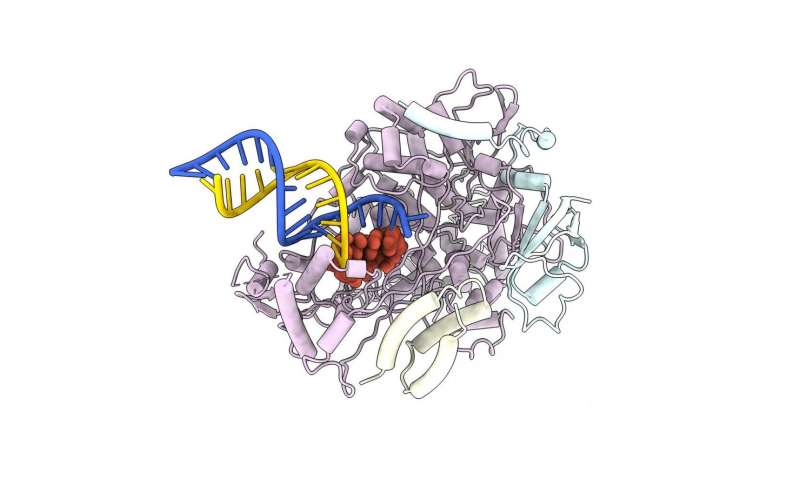
Study co-author David Taylor likens the trick the team identified to a paper jam in the virus's photocopier. Remdesivir shuts down this photocopier—called an RNA polymerase—by preventing copying of the virus's genetic code and its ability to churn out duplicates and spread through the body. The team detected where the drug manages to gum up the gears, grinding the machine to a halt.

Scientists discover how remdesivir works to inhibit coronavirus
Remdesivir molecules (red) block the copying of an original strand of RNA (blue) into a new copy (yellow) by the coronavirus' RNA polymerase. Credit: University of Texas at Austin.

"We were able to identify the point where that paper jam happens," said Taylor, an assistant professor of molecular biosciences. "We know now exactly what's creating this block. So, if we want to make the blockage even worse, we could do so."

The search for more potent antivirals could soon become more urgent as new strains of SARS-CoV-2, the virus that causes COVID-19, regularly emerge.

"We might need other drugs that are like remdesivir, but different enough that they can then go after the mutated forms," Johnson said. "It's like having a , like having an emergency parachute in case the main chute doesn't work."

The study's co-first authors are postdoctoral researcher Jack Bravo and graduate student Tyler Dangerfield.

The team re-created in a lab dish the process that plays out in a patient who is infected with SARS-CoV-2 and then receives remdesivir. In a scientific first, the scientists developed a method for producing fully functional RNA polymerases to copy the viral genetic material. Next, they added a form of remdesivir. As the  did its work, the researchers paused the process just after the reaction with remdesivir was completed (15-20 seconds) and took a 3-D snapshot of the molecules in exquisite detail using a cryo-electron microscope in UT Austin's Sauer Structural Biology Laboratory. The image allowed them to reconstruct exactly how  gums up the copying process.

Johnson said that SARS-CoV-2 is the third coronavirus to make the leap from animals to humans in less than 20 years. So even if this pandemic is brought under control soon, it still makes sense to continue developing weapons against coronaviruses.

"This is not the last unique coronavirus that's going to come after us," Johnson said. "Having better antivirals could buy us time to develop vaccines against potential future outbreaks."

More information: Jack P.K. Bravo et al. Remdesivir is a delayed translocation inhibitor of SARS CoV-2 replication. Molecular Cell. Published:January 28, 2021 DOI:doi.org/10.1016/j.molcel.2021.01.035

https://medicalxpress.com/news/2021-01-scientists-remdesivir-inhibit-coronavirus.html

Blue Shield of California to oversee state's COVID-19 vaccine distribution

 Blue Shield of California reached an agreement with Gov. Gavin Newsom to oversee the distribution of COVID-19 vaccines, according to the Los Angeles Times

Under the agreement, Blue Shield will oversee the state's vaccine rollout to California counties, pharmacies and private healthcare providers, according to the news report. The change marks a shift from a previous distribution strategy run by state and local governments, which was criticized for being inconsistent and slow. 

Blue Shield President and CEO Paul Markovich confirmed in a Jan. 27 statement that the insurer would help with distribution, but provided little information about what that would look like beyond quickly distributing vaccines across California with a focus on disparately affected areas. Under the agreement, Blue Shield will work with Yolanda Richardson, California's secretary of the government operations agency, who leads the state's vaccine team. 

A spokesperson from the California Department of Public Health said Jan. 27 that the contract with Blue Shield should be finalized soon, and the transition in oversight will take several weeks, according to the Los Angeles Times. Terms of the contract weren't released. Separately, Oakland, Calif.-based Kaiser Permanente will run its own vaccination program for members, as well as provide help to the state.

Blue Shield said it will release more details about its part in the program in coming days.