Search This Blog

Wednesday, December 20, 2023

'Planning to Stop That Benzodiazepine? Think Twice'

 Stopping long-term benzodiazepine treatment was tied to a higher risk of death, according to a comparative effectiveness study using claims data.

An intention-to-treat analysis showed that among people who weren't simultaneously taking an opioid, the adjusted cumulative incidence of death over 1 year was 5.5% for those who stopped benzodiazepine treatment compared with 3.5% for those who didn't, according to Donovan Maust, MD, MS, of the University of Michigan in Ann Arbor, and colleagues.

Those who were on concomitant opioids also had a higher incidence of death over 1 year if they stopped benzodiazepines compared with those who continued treatment (6.3% versus 3.9%), they reported in JAMA Network Openopens in a new tab or window.

Mortality risk for those who stopped benzodiazepines was 1.6 times higher than for those who stayed on treatment, with or without concomitant opioid use (95% CI 1.5-1.7 and 95% CI 1.6-1.7, respectively), they reported, noting that all of these risks held in a per-protocol analysis, and were slightly higher.

"Decades of research have demonstrated harms associated with benzodiazepine use, such as fall-related injury and increased risk of overdose -- so the assumption has been that less benzodiazepine use would mean fewer harms," Maust told MedPage Today in an email. "Our analysis suggests that, at least in those who have been receiving stable long-term treatment, risk of mortality appears to be higher in those individuals who have the benzodiazepine prescription stopped."

"I think the findings speak to the importance of carefully considering the risk/benefit balance of continuing a benzodiazepine prescription," he added.

Clinicians should be careful about letting their patients become long-term benzodiazepine users, especially if they plan to follow the standard of tapering those patients at some point, Maust added.

"I think it is important to revisit the assumption that tapering stable long-term users should be the default and instead, perhaps, focus on those with clearly elevated risk of harms," he said.

Philip Muskin, MD, of Columbia University, who was not involved in the study, agreed that the results suggest clinicians should be even more deliberate about starting patients on benzodiazepines.

While the absolute risk shown in the study is small, Muskin said, "it's real, and I think we need to respect that."

Some people need and benefit from benzodiazepines, and they appear to be better off remaining on these drugs long-term, Muskin said. Based on these results, clinicians also likely need to diligently monitor any patient who begins to taper off benzodiazepines, even long after they discontinue the treatment, he added.

Increases in overdose deaths involving benzodiazepines have risen over the past several years, leading to a number of FDA actions including a 2016 warning related to co-prescribingopens in a new tab or window with opioids and a 2020 class-wide boxed warningopens in a new tab or window about the risks of abuse, misuse, addiction, physical dependence, and withdrawal reactions.

The FDA is also developing an evidence-based clinical practice guideline for the safe tapering of benzodiazepines, Maust and colleagues wrote. However, no studies have looked at the risks of discontinuation, they said. Stopping benzodiazepines may be "particularly fraught" as it can have both physiological and psychological implications, they added.

For their study, Maust and colleagues assessed claims data from Optum on patients with a benzodiazepine prescription from 2013 through 2019, totaling 213,011 without concomitant opioids and 140,565 with opioids. Mean age was about 62 and nearly two-thirds in each group were women.

Discontinuation was defined as having no benzodiazepine prescription for 31 consecutive days during a 6-month period after baseline. Patients were followed for about 1 year after baseline benzodiazepine prescriptions.

The researchers also found the risks of secondary outcomes including nonfatal overdose, suicidal ideation, and emergency department use were higher among those who stopped benzodiazepines, whether or not they also used opioids (relative risk 1.2, 1.4, and 1.2, respectively).

The study was limited in that it wasn't a randomized controlled trial and couldn't account for all possible confounders. Also, risks may vary by the speed of tapering, which the researchers did not investigate, Maust said. Finally, his team used a strict definition for stable long-term use of benzodiazepines, so this population may have been more likely to experience discontinuation-related distress and adverse effects.

Still, the researchers concluded that the findings are "at odds with the assumption underlying ongoing policy efforts that reducing benzodiazepine prescribing to long-term users will decrease harms," adding that future work should examine possible mechanisms underlying these findings.

"It is possible that, having become physiologically dependent on benzodiazepines, patients experience adverse outcomes from withdrawal," they wrote. "Alternatively, patients may experience adverse consequences if they seek alternative sedating substances (e.g., cannabis or alcohol) following benzodiazepine discontinuation."

Disclosures

The study was funded by the National Institute on Drug Abuse.

The authors reported no relevant financial disclosures.

Primary Source

JAMA Network Open

Source Reference: opens in a new tab or windowMaust DT, et al "Benzodiazepine discontinuation and mortality among patients receiving long-term benzodiazepine therapy" JAMA Netw Open 2023; DOI: 10.1001/jamanetworkopen.2023.48557.


https://www.medpagetoday.com/psychiatry/generalpsychiatry/107959

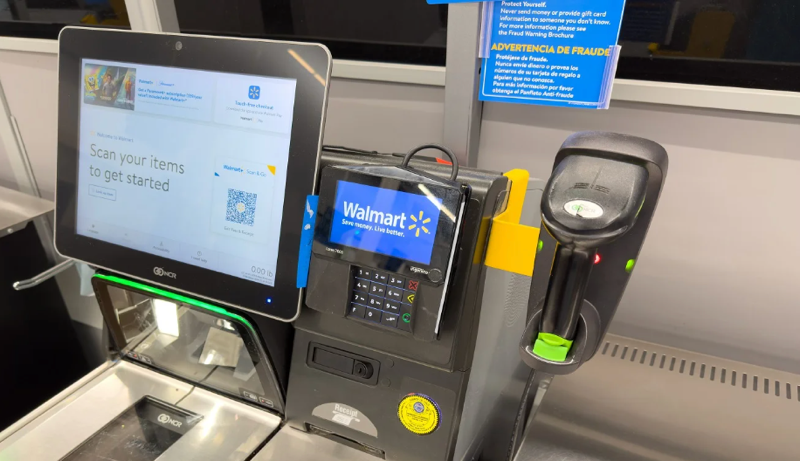
Self-Checkout Kiosks At 4,500 Walmarts Now Offer 'Buy Now, Pay Later' Loans For Basic Items

 "Buy now, pay later" (BNPL) loans surged in popularity during Black Friday and Cyber Monday in late November. As Christmas is less than a week away, Walmart shoppers have been greeted with a new BNPL payment at the checkout line. The increased use of BNPL is incredibly problematic for consumers with insurmountable credit card debt and depleted savings

Affirm Holdings announced Tuesday that its BNPL service has been expanded to self-checkout kiosks at 4,500 Walmart stores nationwide. Customers can purchase electronics, apparel, toys, and many more items (except groceries) by spreading payments out from three months to 24 months. 

"Recent Affirm research revealed that more than half of Americans (54%) are looking for retailers to offer a buy now, pay later option at checkout. Moreover, we've found that 76% of consumers would either delay or not make a purchase without Affirm," said Pat Suh, Affirm's SVP of Revenue.

Suh continued, "Expanding our partnership with Walmart and bringing Affirm's transparent monthly pay-over-time options to their self-checkout kiosks in the US will help even more consumers increase their purchasing power during the holiday shopping season and beyond." 

A number of government agencies and even the central bank of central banks (Bank for International Settlements) have warned about the BNPL craze. 

Last month, the US Office of the Comptroller of the Currency (OCC) - the powerful federal banking regulator - sounded the alarm over increased usage of BNPL. 

OCC warned about the overuse and poor understanding of the BNPL payment structure that could lead to disastrous outcomes for consumers if payments are missed. 

A report published earlier this month by the Bank for International Settlements said BNPL is mainly being used by young adults, particularly those with low education and maxed-out credit cards.

Other major retailers might follow Walmart's lead. It's never a good sign when retailers expand the purchasing power of broke consumers. 

https://www.zerohedge.com/markets/self-checkout-kiosks-4500-walmarts-now-offer-buy-now-pay-later-loans-basic-items

Temu shoppers risk buying items made by forced labour, MP warns

 Christmas shoppers ordering cheap gifts from Temu risk buying items made using forced labour, an MP has warned.

The Chinese app, popular for its huge range of clothing, toys and gadgets at ultra low prices, was downloaded 19 million times in the UK in 2023.

But Alicia Kearns, head of the foreign affairs select committee, told the BBC she'd "long been concerned about the rise of Temu and the risks it poses".

Temu said it "strictly prohibits" the use of forced, penal, or child labour.

The warning comes after a US government investigation found an "extremely high risk" that products sold on Temu could have been made with forced labour.

The Senate Committee reported the only measure Temu took to ensure this did not happen was to insist that suppliers agree to terms and conditions that prohibit the use of forced labour.

'Shop like a billionaire'

Temu is backed by Chinese e-commerce giant Pinduoduo and launched in the US in 2022.

Since its UK launch earlier in 2023, Temu's has regularly topped app download charts. The app has 9 million monthly users according to figures given to the BBC by data analyst Sensor Tower.

The online marketplace with the slogan "shop like a billionaire" allows consumers to buy directly from Chinese manufacturers at rock-bottom prices.

It told the BBC by offering more affordable options for everyday items, it had helped "numerous families mitigate the impact of rising living costs".

Rina Descartin Rina opening a Temu packageRina Descartin
Single mum Rina has posted videos of her unpackaging Temu orders online

Single mum Rina agrees. She started using Temu after watching unboxing videos of people opening packages online.

The 32-year-old, who lives in Bedfordshire with her four-year-old son, says shopping on the Chinese marketplace has helped her save money to pay her rent and bills.

"Sometimes I feel guilty, you know, but I need to prioritise myself first... I don't like when my son would ask me for something. I want to have some money to buy it," Rina explains.

She says this Christmas she has spent £100 on gifts, compared with the years before Temu when she spent between £200 and £300.

"As a single mom, I need to be looking for a bargain. It's scary at first, but it's just so cheap. So I just disregard the bad things".

Rina vlogs her shopping on Youtube, and says she was approached by Temu and offered £100 to do an unboxing video.

'Inundated with adverts'

The company has spent millions on marketing, including brand partnerships with online influencers, social media adverts and even a 30-second advert at this year's Super Bowl - the price of a prime tv slot like this has been known to be as high as $5m (£3.8m).

Temu's online search presence is huge - with items from the site consistently appearing in the top results when shoppers use a search engine to look for an item.

Alicia Kearns MP has been one of those "inundated" with Temu adverts, telling the BBC "it's been difficult to get away from them".

She is calling for greater scrutiny of the online marketplace to make sure "consumers are not inadvertently contributing to the Uyghur genocide".

Getty Images Uighur family pictured outside their homeGetty Images
The Uyghurs are the largest minority ethnic group in China's north-western province of Xinjiang

China has been accused of detaining more than one million Uyghurs in Xinjiang against their will over the past few years.

The region produces about a fifth of the world's cotton and human rights groups have voiced concerns that much of that cotton export is picked by forced labour. China denies all allegations of human rights abuses in Xinjiang.

But speaking about a lack of transparency around its supply chains, Ms Kearns warned the reality of cheaper prices could come from a "reliance on slave labour".

"When you look into where Temu gets its goods from, where in China it is producing them, you can see that these are areas where we know that there is the use of force Uyghur slave labour," said Ms Kearns.

"My request to Temu would be show us your supply chain. Show us that you are not using Uyghur slave labour," she urged.

'Slave labour'

Ms Kearns' comments have been echoed by leading anti-slavery charities in the UK.

Chloe Cranston from Anti-Slavery called on Temu to provide "full transparency on its supply chain," while the chairman of Unseen, Andrew Wallis OBE, said "It is imperative consumers, but also governments, know the circumstances and the situations in which goods are manufactured and brought to market.

"The question consumers need to ask themselves is, these are goods that are in essence made by slaves? Is that the kind of gift you want to give at Christmas?"

Temu told the BBC anyone doing business with it must "comply with all regulatory standards and compliance requirements".

"Employment by all our merchants and suppliers must be voluntary. We explicitly reserve the right to terminate any business relationship if a third party violates our platform's Code of Conduct or the law," the spokesperson added.

https://www.bbc.com/news/business-67752413

Pennsylvania Abruptly Cuts Short Contract With Voter Registration Firm

 by Beth Brelje via The Epoch Times (emphasis ours),

The State of Pennsylvania terminated its contract earlier this month with a firm tasked with modernizing its voter registration system, citing the contractor's inability to adequately address issues with the system.

The state had contracted KNOWiNK, an election software company, to replace the Statewide Uniform Registry of Electors (SURE) system, which manages the voter registration information of more than 8 million Pennsylvania voters. The SURE system stores the data of every legitimate, eligible voter, but there were problems with the system, according to an election official.

The Pennsylvania State Department terminated the contract on Dec. 4, stating in a letter sent to members of the Pennsylvania County Board of Elections that KNOWiNK would not adequately address “identified deficiencies” in the new SUREVote system meant to replace the current software.

Jonathan Marks, Pennsylvania’s deputy secretary for elections and commissions, sent the letter.

Questions about the progress of improving the SURE system have routinely come up in Senate hearings and in the halls of the state capitol. The letter verified the work was behind schedule. It described how over the course of nine months the State Department worked with KNOWiNK, trying to correct the course of the project, “including procuring expert mediation and project management services, bringing on the expertise of a chief modernization officer, and collaborating with our vendor to address Pennsylvania’s contractual project standards,” the letter reads.

“This administration has made the successful completion and implementation of the SUREVote System a priority … Unfortunately, the Department has concluded that the vendor will not meet … timelines and contractual standards,” the letter states.

The State Department said it would find another vendor to do the work. It will take time to write and approve a new request for proposals, vet, and hire a new vendor.

In his letter, Mr. Marks stressed several times that the decision to end the contract would not affect the 2024 election.

But former State Rep. Frank Ryan is questioning the move. A longtime certified public accountant, Mr. Ryan left his seat in the Pennsylvania House last year specifically to work on election security, believing he could have a bigger effect on public policy outside the legislature than from within.

“If I were chair of an audit committee, I'd ask, is there an incentive on the part of the Democratic Party to kill the changes to the SURE System until they get to the next presidential election? Because [President Joe] Biden is behind in the polls with [former President] Donald Trump in 2024. I can't make that allegation because we don't have enough data, but it would be a hypothesis that I would want to run down."

The push to overhaul the SURE System came after a scathing report released in December 2019 by Pennsylvania’s then-Auditor General Eugene DePasquale, who identified internal control weaknesses in the SURE System related to input and maintenance of voter records. The audit revealed examples of potential inaccuracies, which the report said should be sent to counties to be investigated.

The report states that the State Department refused to cooperate during its investigation and that it denied auditors access to critical documents or excessively redacted documents, leaving the Auditor General’s Office unable to fully achieve three of the eight objectives it had been assigned.

The auditor, according to the report, was unable to assess the accuracy of the records maintained in the system, was unable to review security protocols of the system, and was unable to review the external controls and methodology for external audits.

The 2019 audit also identified potential needed areas of improvement related to computer security, information technology, general controls, and interference controls that it felt it could not mention in a publicly available report.

The audit found issues that it specifically excluded from the report “because of the sensitive nature of this information due to the security concerns over the commonwealth's critical elections infrastructure. These conditions and our recommendations have been included in a separate, confidential communication, to [State Department] management,” the 2019 report reads.

The report made 50 recommendations to strengthen State Department policies, including addressing duplicate voter records and records of potentially deceased voters on the voter rolls.

Because of everything revealed in the report, the auditor general was “unable to establish with any degree of reasonable assurance that the SURE System is secure and that Pennsylvania voter registration records are complete, accurate, and in compliance with applicable laws, regulations, and related guidelines.”

This SURE System has been in continuous use since the report and is slated for use in again in 2024.

“At the beginning of this administration, several months ago, we decided to utilize our tested, accurate and safe legacy system for the upcoming 2024 election,” Mr. Marks’s Dec. 4 letter reads.

$3 Million Spent

The contract to build the SUREVote system to replace the SURE System had an unconventional beginning. The state signed a nearly $10 million contract with South Dakota-based software company BPro. The 603-page contract signed on Dec. 28, 2020, was to be valid through December 2024. But 42 days later, BPro announced publicly that it had been purchased by KNOWiNK. The Department of State filed an emergency procurement on Feb. 2, 2021, requesting $3 million more for KNOWiNK to fulfill the BPro contract.

“BPro did not let the Dept. of State know about the acquisition until mid-December, after the agency contract was going through the signature process,” the request, signed by Mr. Marks, reads. “Since BPro is implementing a new system for our Elections Bureau, it is highly time sensitive. It is the desire of the Department to have the deliverables started ASAP, and we would like to create the Emergency Purchase Order with KNOWiNK to pay for deliverables and monthly expenses until the new Agency Contract is in place.”

The request for additional money was denied.

Pennsylvania has made payments totaling more than $3.6 million to BPro and KNOWiNK since Feb. 2021, payment records from the Pennsylvania Treasury show.

KNOWiNK did not respond to a request for comment.

The company offers states and counties a selection of election-related software, including TotalVote, described on the KNOWiNK website as a centralized voter registration and election management system that securely captures all election information.

It also provides ePulse, which monitors polling places on Election Day, tracking voter wait times and turnout. Another product KNOWiNK offers is Poll Pad, a set of tablets that replace the poll books voters sign at polling places.

“Poll Pad has replaced the outdated and inefficient paper model that is often the cause of long lines at the polls and inefficient election record keeping,” the KNOWiNK website reads.

The company is working in 36 states and Washington, D.C.

https://www.zerohedge.com/political/pennsylvania-abruptly-cuts-short-contract-voter-registration-firm

BriaCell Therapeutics' Cancer Drug Shows Preliminary Survival, Clinical Benefit

 BriaCell Therapeutics Corp 

+ Free Alerts
 reported preliminary survival and clinical benefit data in a new subset of advanced breast cancer patients treated with BriaCell's Bria-IMT regimen: patients that have developed resistance to (and failed to respond to) Antibody-Drug Conjugates (ADCs).

Kaplan-Meier analysis showed median overall survival (OS) that was up to twice that reported in the literature, with some patients recording survival of over a year.

The disease control rate of 40% was observed in evaluable patients, further indicating clinical benefit.

Progression-free survival (PFS) was similar or better than that of the patient's prior therapy in 40% of patients, highlighting the clinical benefit and tolerability of the Bria-IMT regimen.

17 of 23 patients remain alive today, suggesting the efficacy, tolerability, and survival benefit of BriaCell's Bria-IMT regimen. The data will continue to mature as patients remain on the study.

All patients received BriaCell's therapy with no toxicity-related discontinuations.

There were no cases of Interstitial Lung Disease with Bria-IMT – a well-documented serious side effect of ADCs. 

https://www.benzinga.com/general/biotech/23/12/36327042/briacell-therapeutics-cancer-drug-shows-preliminary-survival-clinical-benefit-in-pretreated-patie

Fusion's Pharma's Targeted Cancer Therapy Potential Gets RBC Eye

 RBC Capital Markets initiated coverage on Fusion Pharmaceuticals Inc FUSN, saying the radiopharmaceutical industry is a burgeoning area in therapeutics following the green light for Novartis AG's NVS Pluvicto, providing an influx of capital from strategic ventures and new company establishments

This validates mergers and acquisitions as major players seek fresh Radiopharmaceutical Therapy (RPT) capabilities to craft distinctive oncology platforms.

RBC analysts note that Fusion is competitively positioned based on its proprietary target alpha therapy platform, diverse pipeline, deep radiopharma pedigree, and established manufacturing expertise, which are key to commercial success. 

The analysts initiated with an Outperform (Speculative Risk) and a price target of $12.

https://www.benzinga.com/analyst-ratings/analyst-color/23/12/36330070/fusions-pharmas-targeted-cancer-therapy-potential-gets-this-analyst-bullish-sees-10