Search This Blog

Thursday, December 21, 2023

Sanofi ends program after NSCLC Phase 3 trial did not meet primary endpoint

 Sanofi announces end of program evaluating tusamitamab ravtansine after a 2L NSCLC Phase 3 trial did not meet a primary endpoint

  • CARMEN-LC03 trial did not meet dual primary endpoint of improving progression-free survival; tusamitamab ravtansine clinical development program will be discontinued
  • Sanofi reinforces commitment to broader oncology development program including CEACAM5-directed antibody drug conjugates (ADC) with additional anticipated trials

What Donald Trump's Ukraine Strategy Could Look Like

 by Lt. General (ret.) Keith Kellogg and Dan Negrea via The National Interest,

Far from abandoning Ukraine, a second Trump administration would lift restrictions on Ukrainian military aid in order to force a peace settlement...

Donald Trump has vowed that in a second presidential term, he would end the war in Ukraine “in twenty-four hours.” Mainstream analysts have dismissed the president’s statements as hyperbole, but there is a strong possibility that Trump will be back in the Oval Office in just over a year’s time. Foreign policy experts, therefore, should take the former President’s statements seriously and assess how a Trump administration might deal with the largest conflict in Europe since World War II.

Let us start by recognizing that Biden’s Ukraine strategy leaves much room for improvement. His weaknesses encouraged Putin to launch the invasion in the first place. Biden’s own Supreme Allied Commander in Europe assessed that Biden’s botched withdrawal from Afghanistan led to Putin’s decision to re-attack Ukraine. Biden’s feeble attempts at “integrated deterrence,” threatening sanctions and aid to Ukraine, failed in their intended purpose of deterring Putin’s aggression. 

Putin invaded Ukraine under both Obama and Biden, but he did not attack while Trump was president. Trump has stated that the Russia-Ukraine war would “never have happened” under his watch.

Following Putin’s invasion, Biden pursued an overly cautious wartime strategy. Instead of clearly defining a goal of victory, Biden vowed to help Ukraine “as long as it takes.” But this only raises the question: as long as it takes to do what? Biden should have provided Ukraine with the weapons it needed to win quickly, but instead, he was afraid of potential Russian “escalation” and provided a cautious IV-drip of arms. Biden opposed providing many major weapons systems, like tanks, aircraft, and long-range artillery before changing his mind. The result is that Ukraine has had enough weapons to fight but not enough to win.

Biden’s revealed wartime strategy was to spend billions of dollars only to produce a bloody and inconclusive stalemate.

In contrast, based exclusively on his public statements, one can divine a very different Trump doctrine for Ukraine. He has argued that he would use his personal relationship with Zelenskyy and Putin to negotiate a settlement to the conflict “in one day.” The one-day timeframe may be overly ambitious as neither Putin nor Zelenskyy has expressed an interest in a negotiated settlement. Both sides appear to believe that they can still prevail on the battlefield.

But Trump’s proposed approach could change that calculation. Trump said“I would tell Putin, if you don’t make a deal, we’re going to give him a lot. We’re going to give [Ukraine] more than they ever got if we have to.”

Trump’s past actions make that threat credible. While in office, Trump showed that he was willing to push boundaries, lifting Obama-era restrictions on the rules of engagement in the fight against ISIS and killing Iranian general Qassem Soleimani. If Putin refuses to negotiate, Trump might very well remove the Biden-eras constraints on arms transfers and give Ukraine the weapons it needs to win, including long-range weapons to strike within Crimea and Russia. If faced with the prospect of a costly military defeat, Putin may very well prefer negotiations. 

To bring Kyiv to the table, Trump said, “I would tell Zelenskyy, ‘no more.’ You got to make a deal.” Ukraine can only sustain the war effort due to large-scale Western support, and the prospect of losing aid would be a strong inducement to negotiation.

A ceasefire along the current lines and subsequent negotiations would preserve a sovereign, democratic Ukraine anchored in the West and capable of defending itself. Kyiv would maintain its internationally-recognized claims to sovereignty over all of Ukraine. A halt to hostilities would also facilitate the provision of reliable security guarantees, including possible NATO and EU membership, to deter Russia from resuming the conflict. While less satisfying than (what increasingly appears to be an unachievable) total military victory, this outcome would represent a strategic defeat for Russia and a strengthening of American national security and the Western alliance.

Some Republicans argue that the Ukraine conflict is a European matter of no consequence to the United States. Strategically, as his public comments reinforce, Trump disagrees. He sees ending the war as a major foreign policy issue—one that he plans to accomplish on day one

https://www.zerohedge.com/geopolitical/what-donald-trumps-ukraine-strategy-could-look

"I Am Going To Red-Pill You About Vegetable Oils"

In a post on X, Sao Paulo-based 'Dr. Simon Goddek' announced, "I am going to red-pill you about vegetable oils." In a detailed bullet point list, he outlined the potential health risks of cooking with vegetable oils.

To summarize Goddek's list, he noted that the extraction process for vegetable oils like canola, soybean, and corn oil involves unnatural methods such as high heat and chemical solvents, leading to oxidation and trans fats. These oils, a modern dietary phenomenon, have seen tremendous use since the early 1990s, paralleling the increase in chronic health issues.

He pointed out that Omega-6 fatty acids can cause chronic inflammation and are linked to autoimmune diseases due to an imbalance with Omega-3. Studies link diets high in vegetable oils to oxidative stress, mitochondrial dysfunction, genetic damage, and an increased risk of cancer and heart disease.

Goddek provided two notable studies that found significantly higher rates of heart attacks, strokes, and cardiovascular deaths in groups consuming high amounts of these oils.

Here's the list:

  1. Unnatural Extraction Process: Unlike coconut or olive oil, which can be extracted through pressing, seed oils like canola, soybean, and corn oil require unnatural methods for extraction. They undergo processes involving high heat and chemical solvents like petroleum, leading to oxidation and the formation of trans fats even before they reach your kitchen​.

  2. A Modern Dietary Addition: Industrial seed oils are a recent addition to our diet, exploding in consumption from virtually zero in the early 1900s to 70 lbs per year per person today. This dramatic increase corresponds with a surge in chronic health issues, suggesting a link between seed oil consumption and modern diseases.

  3. Omega-6 and Inflammation: Vegetable oils are high in Omega-6 fatty acids, especially linoleic acid, which is a precursor to pro-inflammatory eicosanoids. These molecules can cause chronic inflammation and contribute to autoimmune diseases. The excessive consumption of Omega-6, without the balance of Omega-3, exacerbates these health issues.

  4. Oxidative Stress and Cancer: Studies have shown that diets high in vegetable oils, particularly linoleic acid, lead to oxidative stress, mitochondrial dysfunction, and genetic damage. These factors are instrumental in promoting cancer, with some studies revealing a fourfold increase in metastasis in diets high in these oils​.

  5. Heart Disease Risk: The Minnesota Coronary Experiment found that participants who increased their intake of corn oil and margarine had an 86% higher incidence of heart attacks. Despite lower cholesterol levels, the vegetable oil group had a significantly higher mortality rate from heart attacks.

  6. Cardiovascular Deaths: The MARGARIN Study revealed that the group consuming margarine high in linoleic acid from vegetable oils had a 700% higher rate of strokes, heart attacks, and cardiovascular deaths compared to a group consuming Omega-3-rich fish oil. This stark difference underscores the health risks of high vegetable oil consumption​.

"Remember, the key to a healthier life is understanding what you're putting into your bodyRethink your oil choices and opt for natural, minimally processed fats," Goddek concluded in the post that has gone viral. 

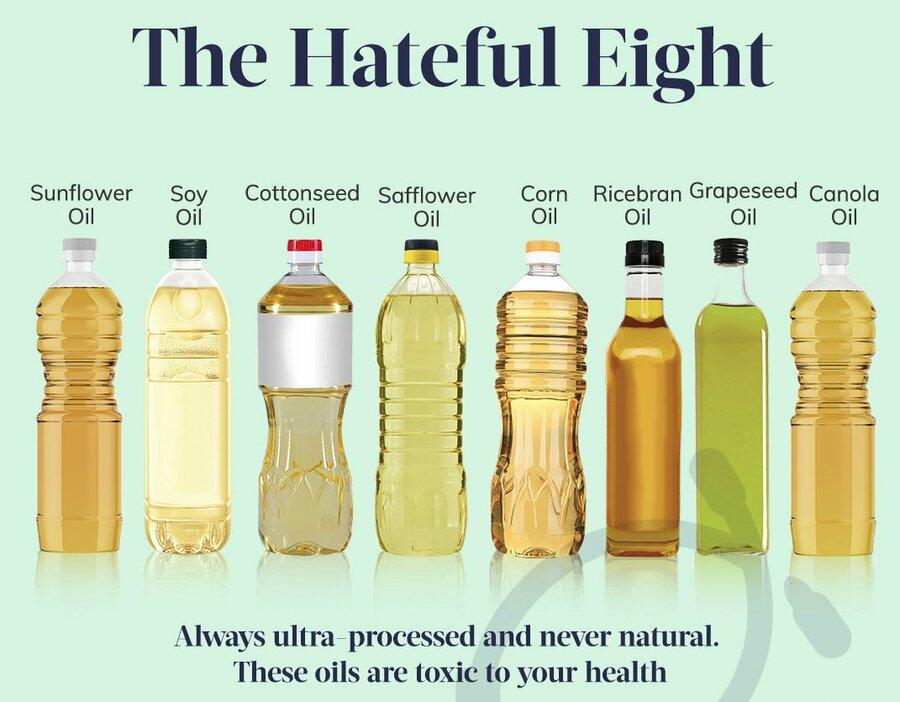
Attached to Goddek's post is an image titled "The Hateful Eight": 

Americans should be aware that mega-corporations controlling the nation's food supply have been force-feeding folks with junk food, one of the main contributors to the obesity crisis. This also impacts public health and is considered a national security threat, particularly regarding military readiness

Folks need to ditch crime-ridden urban areas for rural communities and become their own food producer to break away from the government and mega-corporations that control the food supply. 

https://www.zerohedge.com/commodities/i-am-going-red-pill-you-about-vegetable-oils

Wednesday, December 20, 2023

Who Is Maduro Ally Alex Saab, Who Was Granted Clemency in Prisoner Swap?

 U.S. President Joe Biden has decided to grant clemency to Alex Saab, an ally of Venezuelan President Nicolas Maduro, as part of a deal in which Maduro's government released Venezuelans linked to the political opposition and 10 detained Americans.

Here are some details of the U.S. criminal case against Saab, a 51-year-old Colombian businessman.

WHEN WAS SAAB ARRESTED?

Saab was arrested in Cape Verde in June 2020 pursuant to a U.S. indictment after his plane stopped to refuel. Venezuela's government said at the time Saab had been designated a diplomat to negotiate shipments of fuel and humanitarian aid from Iran.

He was extradited to the United States in October 2021 and held in federal jail in Miami while awaiting trial.

WHAT ARE THE CHARGES AGAINST HIM?

Federal prosecutors in Miami charged Saab with siphoning around $350 million out of Venezuela through the United States as part of a bribery scheme linked to Venezuela's state-controlled exchange rate.

Saab and an associate were accused of bribing Venezuelan government officials to secure payment in U.S. dollars at a favorable rate, and laundering money through a scheme involving building low-income housing in Venezuela.

WHAT DOES HIS DEFENSE SAY?

Saab pleaded not guilty to the charges. His U.S. defense attorneys have called the corruption charges a "cryptically alleged scheme" and said their client denied the allegations.

In a statement on Wednesday, Saab's lawyer Joseph Schuster said the prisoner swap agreement "allows an innocent Venezuelan diplomat to return home after serving over three and a half years in custody."

WHAT IS THE STATUS OF THE CASE?

A trial had initially been scheduled for October 2022, but was delayed as Saab appealed U.S. District Judge Robert Scola's denial of his bid to dismiss the charges on grounds of diplomatic immunity.

The 11th U.S. Circuit Court of Appeals had not yet ruled on Saab's appeal at the time the prisoner swap deal was announced.

WHY IS SAAB A SIGNIFICANT FIGURE?

Venezuela's opposition once held out hopes that Saab would provide information to the U.S. government that could help disrupt Maduro's efforts to evade economic sanctions imposed by Washington. The United States accuses Maduro of violating human rights and rigging his 2018 re-election, which Caracas denies.

U.S. Court filings showed that Saab agreed to be an "active law enforcement source" for the Drug Enforcement Administration before his arrest, though one of his lawyers said he only met with U.S. law enforcement officials to explain that his companies had done nothing wrong.

https://www.usnews.com/news/world/articles/2023-12-20/explainer-who-is-maduro-ally-alex-saab-who-was-granted-clemency-in-prisoner-swap

Global State Of Waste Management

 The safe management of household and commercial solid waste is not yet widespread in many nations in Asia and Africa.

The latter continent receives the worst marks, with 15 countries rated at no more than 10 out of 100 points on the Yale Environmental Performance Index waste management subranking.

Infographic: The Global State of Waste Management | Statista

Four Asian nations score equally poorly - Myanmar, Afghanistan, Kyrgyzstan and Tajikistan. South Asian nations as well as Cambodia, Mongolia, Uzbekistan and Laos only rank a little bit higher, however.

The World Bank assumes that waste generation in Sub-Saharan Africa and South Asia will grow fastest until 2050 due to the regions' high populations that are still in the process of gaining access to modern consumer markets. While exhibiting slower growth, East Asia-Pacific is already the region generating the most waste today and will remain in this position in the future. Both developments point to increased challenges for safe waste management in the years to come.

According to Yale, solid waste produces 5 percent of greenhouse gas emissions globally while also being a source of contamination and pollution of soil, water, air and food through leaching, burning and vermin when managed poorly. As it is often reaching oceans, plastic waste can be a serious threat to a wide array of marine life. The report concludes that waste management has not kept pace with growing waste generation in countries of all income levels.

The most poorly rated nations in the Americas are Haiti and Venezuela, while in Europe, Albania and Montenegro are the least successful at waste management. Developed Asian countries Singapore and South Korea meanwhile are among the top 10 best-rated nations together with Scandinavian and German-speaking nations as well as Luxembourg and the Czech Republic. Australia comes in rank 12 while the United Kingdom is ranked 26th and the United States 46th.

https://www.zerohedge.com/commodities/what-load-rubbish-global-state-waste-management

Enlivex to Start Phase II Trial Evaluating Allocetra In Patients With Sepsis


  • Enrollment completed in placebo-controlled, randomized, dose-finding, multi-country, multi-center Phase II sepsis study
  • Topline Data Expected in late Q1 2024

Unitedhealth Group: HSBC downgrades to reduce from hold

 price target reduced from USD 550 to USD 480.

https://www.marketscreener.com/quote/stock/UNITEDHEALTH-GROUP-INC-14750/