Search This Blog

Friday, October 16, 2026

Supreme Court Leaves Self-Described Antifa Member Jailed Before Trial

 The Supreme Court this week turned down an emergency request to let Kyle Wagner, a 37-year-old self-described Antifa member from Minneapolis, out of jail before his trial. Wagner is charged in federal court in Michigan with one count of cyberstalking and one count of transmitting interstate threats. 
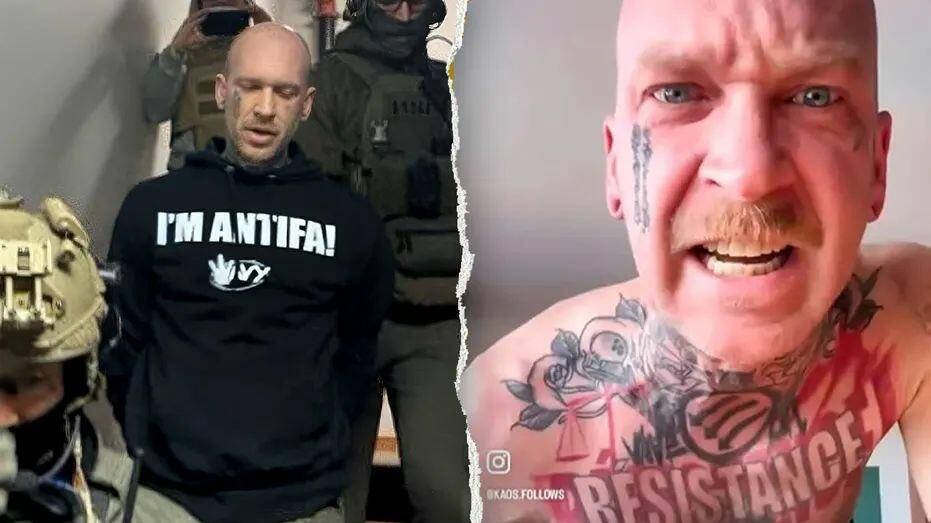
Kyle Wagner

Both counts stem from his dealings with a man identified in court documents as J.S., a pro-ICE social media figure. Prosecutors say that on Jan. 29 Wagner doxxed J.S. - posting his name, phone number and address, along with what he believed were his parents' details, and wrote, "we can all knock on strangers doors." According to the Solicitor General's filing opposing release, which quotes the Sixth Circuit's account of the record, the posts around it were far broader: he declared that Minneapolis was "kill or be killed," told followers to "hunt" ICE and lamented that protesters had not marched on the Whipple federal building "with guns." The same account says he raised between $10,000 and $15,000 from followers to help him evade detection, and that Instagram deleted his account before he resurfaced under a new handle.

Wagner's lawyers say the record shows a protester, not a plotter - noting that he has no violent criminal history, owned no weapons and advocated nonviolent protest, and Courthouse News reports he offered limits on his movements and internet use. His lawyers argued he is "being detained not on the basis of a history of violence, but rather based on his speech." 

A magistrate judge in Minnesota first ordered him held, citing the posts, his lack of stable work or housing and his stated desire to evade law enforcement. U.S. District Judge Denise Page Hood then revoked that order, though she acknowledged the government had made "a very strong argument" on public safety. She released him to his mother's home in Minnesota with GPS monitoring, a ban on social media posting and limits to two approved devices. On Aug. 12, a divided Sixth Circuit panel reversed her. Judges Hermandorfer and Norris held that no set of conditions would protect J.S. and the public, and Judge Bloomekatz dissented.

It gets better...

Wagner faces additional charges for conspiracy to impede or injure federal officers in a separate case. Federal prosecutors claim Wagner and others engaged in coordinated efforts to disrupt federal operations during Operation Metro Surge in the Twin Cities.

A different judge ordered Wagner to be released on those charges, however, leaving him in detention solely based on the cyberstalking case. -Courthouse News

The Sixth Circuit's own opinion, as the government's brief quotes it, gives Wagner some ground. It conceded that he has no violent criminal history, a factor it said weighed "slightly against dangerousness," and it ruled for the government anyway. The majority leaned on the threats, on his alleged willingness, in a Signal chat two days before his arrest, to entertain a request to help "kill" a former senior government official, and on a record of missed state court dates that included an "absconder" listing and an active Iowa warrant. It also held that Judge Hood's remark that public protection depends on "what side of the street you're on" had no bearing on the question. Prosecutors say Wagner shoved and spat at the arresting agents and flashed his middle fingers in his booking photo, saying it was "for the judge." Bloomekatz read the "barrel of a gun" post as describing followers being threatened, and said the Signal exchange weighed only slightly toward dangerousness.

The Supreme Court was not asked to decide whether the posts were threats. Wagner wanted a stay while the justices consider his Sept. 18 petition, which asks whether appeals courts must defer to a district judge's release decision or review it from scratch. The Solicitor General answered that this is no emergency. The government says the dispute becomes moot when trial opens Jan. 12, 2027, after Wagner himself delayed it four times. The postponements ran from April to July, September, November and now January, and the brief says he admits the aim was to keep the issue alive. It also noted the Court turned down the same standard-of-review question in 2022. The reports on Tuesday's order did not address the petition itself.

The prosecution arrived with an announcement. In a Feb. 5 statement the Epoch Times quotes, then-Attorney General Pam Bondi said the man "allegedly doxxed and called for the murder of law enforcement officers" and "proudly claimed affiliation with the terrorist organization Antifa." The Justice Department announced the arrest in a release. Courthouse News notes that Antifa is a decentralized movement with no official organization, though President Donald Trump designated it a domestic terrorist organization by executive order last year.

As we reported, that September order told agencies to investigate and dismantle the group and anyone acting on its behalf, and what we called the first Antifa terrorism case ended with five guilty pleas over an attack on a Texas detention center. The Michigan charges against Wagner are a different kind of test: they rest on what he wrote and posted online, not on an attack.

https://www.zerohedge.com/political/supreme-court-leaves-self-described-antifa-member-jailed-trial

Novartis (NVS) Halts Fabhalta Lupus Nephritis Trial Amid Strategic Shift

 On October 16, 2026, Novartis AG (NYSE: NVS) announced it is discontinuing enrollment in its mid-stage clinical trial for Fabhalta (iptacopan), an oral Factor B inhibitor targeting lupus nephritis, citing strategic reasons. This decision comes despite Fabhalta generating approximately $505 million in sales last year, supported by strong growth momentum.

Novartis' decision to halt enrollment in the Fabhalta lupus nephritis trial marks a notable pivot in its clinical development strategy. The study, which involved 81 patients assessing Fabhalta's efficacy alongside standard care, will no longer accept new participants. While the company cited strategic reasons rather than safety or efficacy concerns, this move may reflect a reallocation of resources toward other pipeline priorities or market dynamics. Fabhalta remains a commercial success, having achieved $505 million in sales last year with over 150% year-over-year growth in Q4 adjusted for currency fluctuations, underscoring its importance to Novartis' immunology portfolio.

https://www.gurufocus.com/news/9128173/novartis-nvs-halts-fabhalta-lupus-nephritis-trial-amid-strategic-shift

ALkermes restarted at Buy by Truist

 Target $55

https://finviz.com/stock?t=ALKS&p=d

Amazon said it may move thousands of workers out of NYC over Mamdani labor bill

 Amazon has said it may close more than a dozen warehouses and move thousands of workers out of New York City over a labor bill being pushed by Mayor Zohran Mamdani — and the e-commerce giant is likely to make good on the threat if the controversial legislation is enacted, industry observers told The Post. 

The Delivery Protection Act would force Amazon to directly hire upwards of 5,000 delivery workers citywide who are currently employed by third-party contractors. Proponents say the legislation will increase workers’ pay and improve safety conditions at Amazon and other delivery firms including FedEx and DoorDash.

But Amazon doesn’t directly employ delivery workers anywhere else in the country — and has a history of fiercely resisting efforts to change its policies in the US and abroad. The result, according to experts, could be not only that those 5,000 delivery jobs move out of the city, but also that Amazon shutters its 15 last-mile warehouses in the Big Apple and fires the additional 2,000 workers that staff them.

Early last year, Amazon closed seven warehouses in Quebec near Montreal amid a labor fight involving one of its last-mile facilities. The union, Confédération des syndicats nationaux (CSN), had organized the 300 workers at a warehouse in the town of Laval.

By March 2025, some 1,900 Canadians across seven warehouses and 2,800 delivery contractors for those facilities had lost their jobs. 

“Amazon will retaliate, because it has to send a firm message to the rest of the country that ‘If you mess with us, this is what will happen,’” said Marc Wulfraat, president and founder of Montreal-based logistics consulting firm, MWPVL International.

“When you look at Amazon’s global operations, they close buildings left, right and center when there is union activity.” 

According to real estate listings, the Montreal facilities are now vacant, with Amazon still paying rent on more than 1.6 million square feet of space that it spent hundreds of millions of dollars to build, according to Wulfraat. At least two facilities are being offered as subleases.

The Delivery Protection Act — first introduced a year ago by Queens Council Member Tiffany Cabán and reintroduced in 2026 — has strong support in the City Council with some 34 co-signers. But several, including Speaker Julie Menin, are “uncomfortable” with potential job losses, a source close to negotiations said.

“This bill will have to pass in some form,” particularly since the mayor supports it, the source told The Post, adding that the final result may make “both sides unhappy.”

Compromises that have been discussed include allowing independent contractors to continue to perform deliveries while requiring Amazon to provide more safety guarantees for workers, the source said. No vote has been scheduled.

Industry experts say parallels between Quebec and New York can’t be ignored, even as Amazon employs directly or indirectly more than 12,000 hourly workers in New York — more than twice as many as it did in Quebec.

Those include the 2,000 workers that staff last-mile warehouses and 5,000 more to deliver the goods. The Delivery Protection Act wouldn’t affect 5,500 workers at Amazon’s giant JFK8 fulfillment center on Staten Island, who voted to unionize in 2022 — a first at an Amazon US facility — but who still lack a collective bargaining agreement.

While Amazon employs unionized workers in Europe, it has made headlines since the pandemic battling unions in the US. It’s now locked in litigation over allegedly hardball tactics it has used to fight labor organization in Bessemer, Ala., and Staten Island.

In April, the National Labor Relations Board ordered Amazon to the bargaining table with the Teamsters in Staten Island, but Amazon has filed lawsuits questioning the legitimacy of the NLRB.

“Amazon will say or do whatever it takes to deny workers stronger rights and wages and abdicate its responsibilities for its own employees,” the Teamsters said in a statement.

The risks posed by the Delivery Protection Act are not lost on the 40 independent companies that employ the 5,000 delivery workers in New York City.

“Look at what happened in Quebec,” Kris Basmagy, owner of DashWave Delivery, which handles Amazon’s deliveries on Manhattan’s Upper East Side, told The Post. “There was pressure on Amazon’s model, and it pulled out.”

Basmagy, who employs 150 delivery workers, added that nothing is stopping Amazon from replacing its New York City facilities with some of the “warehouses being built along the New Jersey Turnpike.”

Amazon is still tied up in litigation in Quebec, where it denies that it closed its warehouses because of CSN’s organizing activity. The union filed a complaint with Quebec’s labor tribunal, but even if it proves that Amazon violated labor laws, Amazon faces at most a fine and potential consumer backlash, according to a CBC News report.

A class action lawsuit filed by an Amazon Prime customer in Quebec in February 2025 claims that the warehouse closures slowed Amazon’s delivery times beyond the one- and two-day guarantee for Prime service — with some deliveries instead taking as long as four to six days.

In May, a Quebec court ruled that the case can proceed. Still, plaintiffs who are seeking refunds admit the disruption only lasted about two months, according to the complaint. Amazon says service hasn’t suffered since a large Canadian logistics company, IntelCom, took over its Quebec deliveries.

“Then they got their act together and stopped the delays,” said Saro Turner, a partner in the law firm Slater Vecchio, which filed the suit.

Speaker of the New York City Council Julie Menin is uncomfortable with the prospect of potential job losses associated with the delivery bill. Brigitte Stelzer for NY Post

In New York, Amazon maintains that delivery times and prices for customers would increase if it closed its warehouses. New York is “fundamentally different” from Quebec, where Amazon operated “far fewer sites,” according to Amazon spokesperson Steve Kelly.

The company bankrolled a study by AKFR showing that the Delivery Protection Act would cost New Yorkers an extra $664 extra a year — or about $5.20 per package. That figure covers deliveries made by other companies, including FedEx and Doordash.

“New York City is one of the largest and most complex delivery regions in the country,” Kelly said in a statement. “It’s best served by a network of local small businesses deeply embedded in their communities and leveraging our operations infrastructure.”

Amazon deliveries in New York would slow permanently if it closed its last-mile facilities in the city, according to a source with knowledge of Amazon’s operations. Same-day deliveries and those that occur within hours of placing an order would take the biggest hit. The number of items that fall under the Prime promise would also shrink, this source said.

“There are a lot of same-day and same-morning deliveries in the city” that could arrive the next day, the source said.

Some 5,000 delivery jobs are at risk if Amazon is forced to hire its own delivery employees.Christopher Sadowski

Amazon’s last-mile facilities in Brooklyn and Queens include one in Red Hook at 270 Richards St. and another in Maspeth at 55-15 Grand Ave. Last-mile warehouses in Manhattan include an 87,000-square-foot facility at 706 11th Ave., according to a report on safety issues from New York City Comptroller Mark Levine.

“Amazon wouldn’t blink about shutting down the 15 facilities in New York City if it felt that the legislation was a threat to its business model,” said Brittain Ladd, a logistics and retail consultant and former Amazon executive. “This is about a model that could be copied in other cities.”

The delivery companies say they are the collateral damage in this struggle.

“There is a laser focus on punishing Amazon no matter what the repercussions might be, what it does to us as business owners, fathers and husbands,” Basmagy said. “It’s as if we no longer exist.”

WGA Transit, which has actively recruited formerly incarcerated and homeless workers to deliver Amazon packages in Harlem, will be forced out of business if the Delivery Protection Act is enacted in its current form, owner Joe Artus told The Post.

“I have a 21-month-old daughter,” Artus told The Post. “If this thing passes, there is no way for my company to exist or to keep my 189 employees.”

https://nypost.com/2026/10/16/business/amazon-vows-to-ax-thousands-of-nyc-workers-if-mamdani-labor-bill-passes-what-experts-say/

Israel said to prepare for election assassination attempts

 Israel is reportedly preparing for a range of security threats during the election period, including potential assassination attempts, terrorist attacks, and foreign interference, sources told i24News diplomatic correspondent Guy Azriel on Friday.

Namely, Israeli Prime Minister Benjamin Netanyahu held a security meeting with senior security officials last night to review developments on several fronts, assess the threat from Iran, and discuss potential efforts to disrupt election security. According to Israeli media, Netanyahu also spoke with US Secretary of State Marco Rubio by phone last night.

It was previously reported that Netanyahu is said to have discussed the possibility of renewed military action against Iran with US President Donald Trump.

https://breakingthenews.net/Article/Israel-said-to-prepare-for-election-assassination-attempts/67337232

Spontaneous Abortion Risk Higher With Some Migraine Drugs, U.S. Study Shows


  • Anti-CGRP monoclonal antibodies are effective treatments for migraine prevention, but CGRP is important in placental development.
  • Pregnant migraineurs who used anti-CGRP monoclonal antibodies in a cohort study had a higher risk of spontaneous abortion than nonusers.
  • Propranolol was not associated with this risk, supporting current guidelines.

Women exposed to anti-calcitonin gene-related peptide (CGRP) monoclonal antibodies for migraine prevention early in their pregnancies had a higher risk of spontaneous abortion, retrospective U.S. data showed.

Among 7,100 pregnant migraineurs, anti-CGRP monoclonal antibody exposure was associated with a 42% higher risk of spontaneous abortion compared with no exposure (adjusted HR 1.42, 95% CI 1.12-1.80), reported Anick Bérard, PhD, of the Centre Hospitalier Universitaire Sainte-Justine in Montreal, and colleagues.

Women who used propranolol for migraine prevention did not have this risk (adjusted HR 1.02, 95% CI 0.71-1.47), Bérard and co-authors wrote in JAMA Neurology.

"Our study is the first large-scale study looking at the safety of anti-CGRP during pregnancy for the prevention of chronic migraine," Bérard told MedPage Today.

"Our findings are in line with the current guidelines on migraine preventive therapies, which recommend discontinuation of anti-CGRP at least 5 months before conception and switching to established migraine preventive therapies such as propranolol," she stated.

CGRP is a potent vasodilator thought to play a significant role in migraine. In 2018, erenumab (Aimovig), an injectable treatment targeting CGRP receptors, was the first monoclonal antibody approved for migraine prevention; fremanezumab (Ajovy), galcanezumab (Emgality), and eptinezumab (Vyepti) soon followed.

CGRP is important in placental development, the researchers observed.

"Safety concerns during pregnancy stem from CGRP's role in vascular regulation, implantation, placental development, and uteroplacental blood flow, and have led to recommendations to discontinue anti-CGRP monoclonal antibodies 5 to 6 months before conception due to their 1-month half-life," they wrote.

New migraine prevention guidelines from the American Academy of Neurology and the American Headache Society also note that women with migraine have higher risks of preeclampsia, preterm birth, and cerebrovascular and cardiovascular events during pregnancy. Whether migraine prevention during pregnancy decreases these risks is unknown.

Bérard and co-authors used data from 2018 to 2021 in the AM-PREGNANT cohort, which was built from the Merative MarketScan commercial database. The study included 7,119 women with pregestational migraine with a mean age of 31.6 years who had 7,579 singleton pregnancies.

The researchers assessed outcomes for women treated with one of the four approved anti-CGRP monoclonal antibodies -- erenumab, fremanezumab, galcanezumab, or eptinezumab -- or propranolol. Overall, 6,946 pregnancies were not exposed to any of these drugs; 350 were exposed to anti-CGRP monoclonal antibodies, and 283 were exposed to propranolol. Exposures were defined as one or more prescriptions for the drugs and were modeled as time-varying.

The main outcome measure was spontaneous abortion at 20 weeks or less gestation, based on medical claims. A total of 1,862 (24.6%) spontaneous abortions occurred during the study period, including 100 spontaneous abortions (28.6%) during anti-CGRP exposed person-time and 37 (12.8%) during propranolol-exposed person-time.

Women who used anti-CGRP treatments had greater healthcare use, depression, and concomitant medications, Bérard and colleagues said. A bias analysis to account for residual confounding by migraine severity modestly weakened the relationship between anti-CGRP monoclonal antibodies and spontaneous abortion (HR 1.33), they noted.

MarketScan data are based on a commercially insured U.S. population, and findings may not apply to uninsured or publicly insured individuals, the researchers pointed out. Pregnancy intention was unknown and may have contributed to residual confounding.

The study likely excluded very early pregnancy losses as the outcome definition captured only clinically recognized spontaneous abortions recorded in administrative health data. Exposure misclassification also was possible because prescription records do not confirm medication use, Bérard and colleagues acknowledged.

Disclosures

This research was funded by the Canadian Foundation for Innovation.

Bérard reported grants from the Canada Research Chair Tier 1 on Medications and Pregnancy and from the Canadian Foundation for Innovation.

Co-authors reported relationships with pharmaceutical firms, nonprofit groups, publishers, and other entities.

Trump says US 'may have to' strike Iran's Pickaxe Mountain nuclear site in future

 President Donald Trump has confirmed that the United States is evaluating Iran's heavily fortified Pickaxe Mountain nuclear complex as a potential target for future military action, stating, "We may have to go there... We'll knock it out fast" in a Thursday interview. Trump ruled out the use of nuclear weapons or the deployment of U.S. ground troops, but left the door open for conventional air strikes. The comments follow recent reports that the Pentagon has drawn up options involving massive conventional ordnance against Iranian infrastructure, even as Trump expressed optimism that ongoing back-and-forth tensions and negotiations could bring a swift end to the conflict.

https://www.foxnews.com/live-news/iran-war-trump-strait-hormuz-oil-prices-midterms-october-16